Explore 18 September

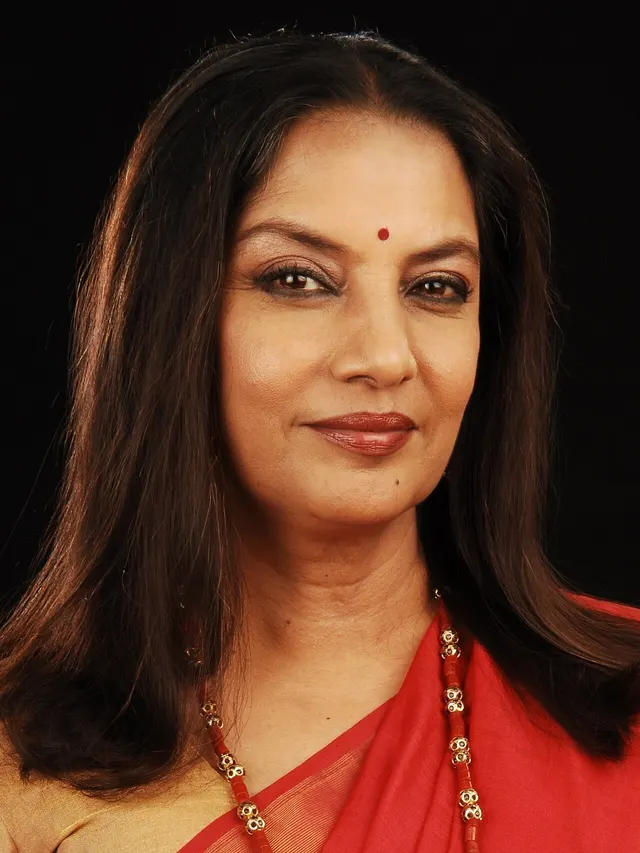
Explore 18 September: Chile forms its first national junta, George Washington lays the cornerstone of the United States Capitol, an explosion on a railway line near Mukden opens Japan’s seizure of Manchuria, Dag Hammarskjöld is killed in an air crash near Ndola and Scotland votes on independence. Born today: Léon Foucault, Agnes de Mille and Shabana Azmi.

This day through time →16 verified events across 5 eras

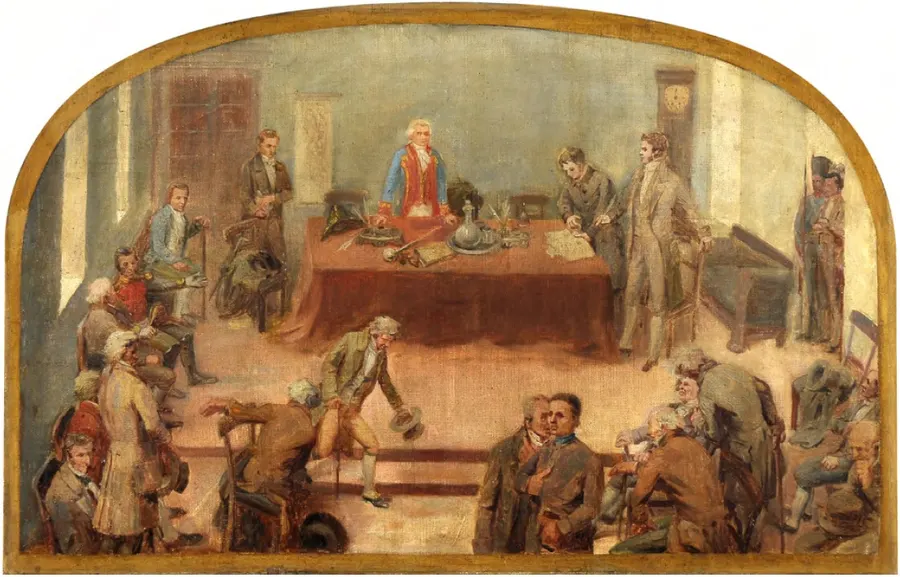
The first Government Junta of Chile, 18 September 1810, in a painting by Nicolás Guzmán Bustamante
Image creditNicolás Guzmán Bustamante · Public domainResized and cropped for display.

Chile forms its first national junta

In 1808 Napoleon invaded Spain, took King Ferdinand VII prisoner and put his own brother on the throne. Across Spanish America, colonies that owed loyalty to the king were left asking who now had the right to govern them. In Chile an unpopular governor, Francisco Antonio García Carrasco, was forced out in July 1810 and replaced by an elderly local nobleman, Mateo de Toro y Zambrano, the Count of la Conquista.

On the morning of 18 September 1810 several hundred leading citizens of Santiago met in an open town meeting, a cabildo abierto. They agreed to set up a governing junta of their own, with Toro y Zambrano as its president, to rule in the captive king’s name until he was restored. Its members swore loyalty to Ferdinand, but for the first time Chileans were governing themselves, and the step led on to a national congress, to war and to the declaration of independence in 1818. Chile keeps 18 September as its national day.

Read the full storyHistory & Timeline →Source: Memoria Chilena, Biblioteca Nacional de Chile: Primera Junta de Gobierno (1810) ↗
George Washington laying the cornerstone of the Capitol in 1793, as painted by Allyn Cox in a mural in the Capitol
Image creditU.S. Government · Public domainResized and cropped for display.

George Washington lays the cornerstone of the United States Capitol

In 1790 the United States Congress decided to build a new capital city on the Potomac River. The French-born engineer Pierre L’Enfant chose a hill at its heart for the building where Congress would meet, and a competition for its design was won by William Thornton, a doctor and amateur architect born in the British West Indies. President George Washington praised the plan for its grandeur, simplicity and convenience.

On 18 September 1793 Washington crossed the Potomac with a company of artillery and joined members of the Masonic lodges of Virginia, Maryland and the new federal city. They marched in procession, with music and flags, to the building site, where Washington, wearing a Masonic apron, set the cornerstone at the south-east corner of the foundations. The day ended with a barbecue. Congress moved into the unfinished building in 1800. Despite several searches, the stone itself has never been identified for certain.

Read the full storyHistory & Timeline →Source: Architect of the Capitol: Capitol Cornerstone Ceremony, 1793 ↗
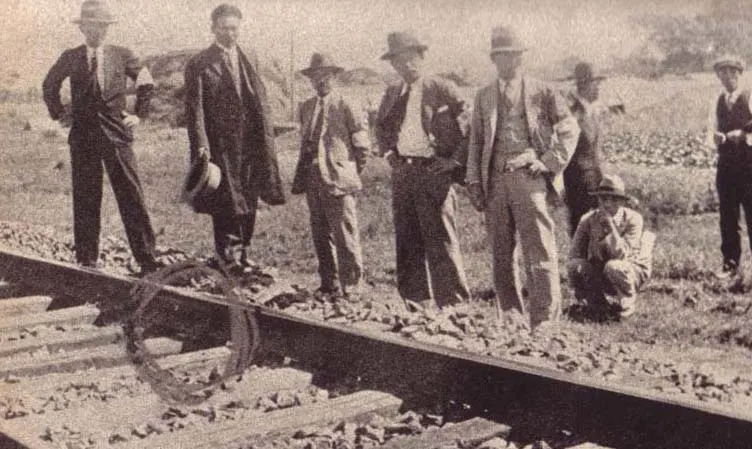
Japanese investigators inspect the site of the explosion on the South Manchuria Railway near Mukden in September 1931
Image creditUnknown author · Public domainResized and cropped for display.

An explosion on a railway near Mukden opens Japan’s seizure of Manchuria

After its war with Russia in 1904-05 Japan controlled the South Manchuria Railway, which ran through north-eastern China, and kept an army there, the Kwantung Army, to guard it. By 1931 some of its officers, alarmed by the growing strength of Chinese nationalism and impatient with their own government in Tokyo, had decided to take the whole of Manchuria by force.

On the night of 18 September 1931 a small charge exploded beside the railway track near Mukden, today’s Shenyang. It did so little damage that a train passed over the spot soon afterwards, but the Japanese army blamed Chinese soldiers, attacked the nearby barracks and occupied the city by morning. Within months it held all of Manchuria and set up a puppet state there. A League of Nations commission found against Japan, which left the League in 1933. The incident is widely seen as a step on the road to the Second World War in Asia.

Read the full storyHistory & Timeline →Source: Britannica: Mukden Incident ↗
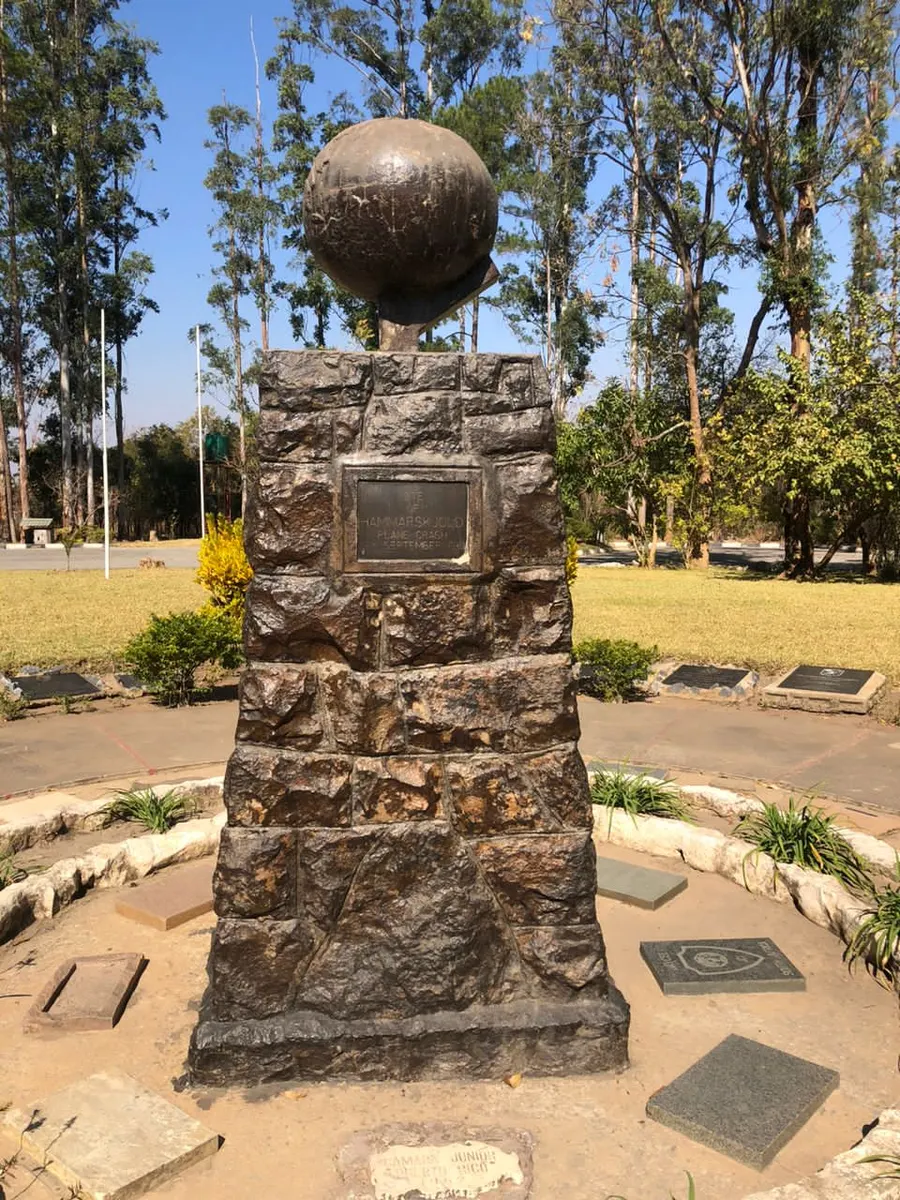
The memorial at the site near Ndola, Zambia, where Dag Hammarskjöld's aircraft crashed in 1961
The memorial at the site near Ndola, Zambia, where Dag Hammarskjöld’s aircraft crashed in 1961
Image creditJr the one · CC BY-SA 4.0Resized and cropped for display.

Dag Hammarskjöld is killed in an air crash near Ndola

Dag Hammarskjöld, a Swedish economist and diplomat, had been Secretary-General of the United Nations since 1953 and had made the office a far more active force in world affairs. In 1960 the newly independent Congo fell into crisis when its mineral-rich province of Katanga broke away, and the UN sent a large peacekeeping force. In September 1961 fighting broke out between UN troops and Katanga’s forces.

Hammarskjöld set out to meet the Katangan leader, Moïse Tshombe, to arrange a ceasefire. Shortly after midnight on the night of 17-18 September 1961 his chartered DC-6 crashed in the bush as it approached the airport at Ndola in Northern Rhodesia, now Zambia. All sixteen people on board died; the one man found alive, the security officer Harold Julien, died of his injuries a few days later. An early inquiry pointed to pilot error, but the cause has never been settled, and later UN investigations have judged it plausible that the aircraft was attacked or threatened from outside. Hammarskjöld was awarded the Nobel Peace Prize after his death.

Read the full storyHistory & Timeline →Source: United Nations: 63 years later, mystery still surrounds death of Dag Hammarskjöld ↗
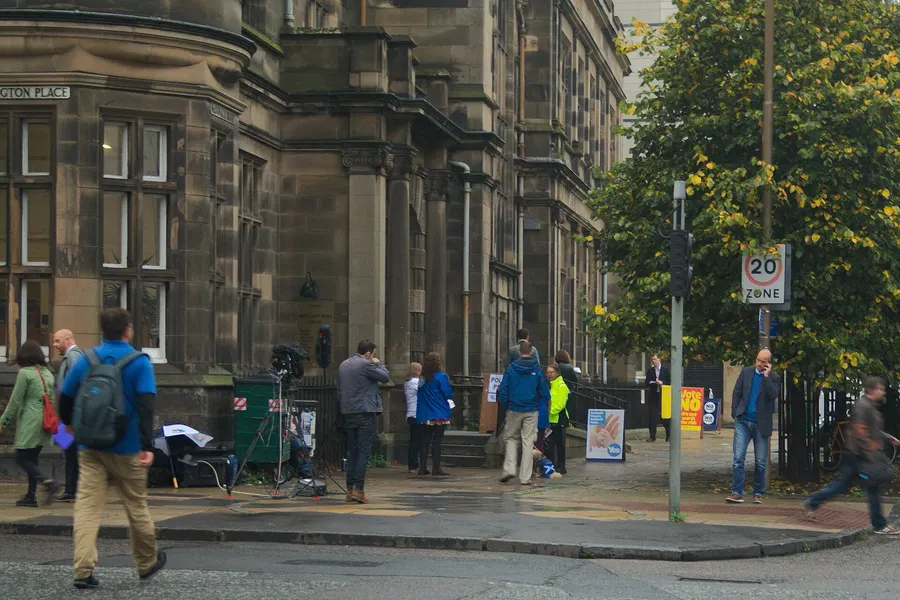
The polling station at Macdonald Road Library in Edinburgh on the morning of the referendum, 18 September 2014
Image creditBrian McNeil · CC BY 3.0Resized and cropped for display.

Scotland votes to stay in the United Kingdom

Scotland and England have shared a parliament since the union of 1707, and Scotland has had its own devolved parliament in Edinburgh since 1999. In 2011 the Scottish National Party, which wants independence, won a majority there, and the following year the British and Scottish governments agreed that a referendum should settle the matter. Voters were asked a single question: ‘Should Scotland be an independent country?’

The vote was held on 18 September 2014 after a long and passionate campaign, and for the first time 16- and 17-year-olds could take part. Turnout was 84.6 per cent, the highest in any Scottish election or referendum since everyone gained the vote. No won by 2,001,926 votes to 1,617,989, or 55.3 per cent to 44.7. Glasgow and Dundee were among four council areas that voted Yes. The first minister, Alex Salmond, announced his resignation the next day, and further powers were later passed to the Scottish Parliament.

Read the full storyHistory & Timeline →Source: Electoral Commission: Report on the Scottish independence referendum ↗

♙
PEOPLE

Born Today

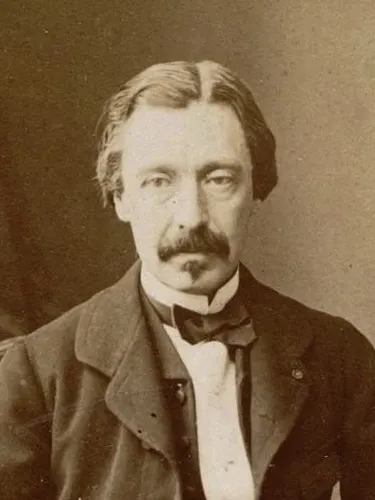
Léon Foucault
Image creditBertall & Cie · Public domainResized and cropped for display.

Léon Foucault

French physicist who showed the Earth turning with a great pendulum in Paris in 1851, measured the speed of light and named the gyroscope.

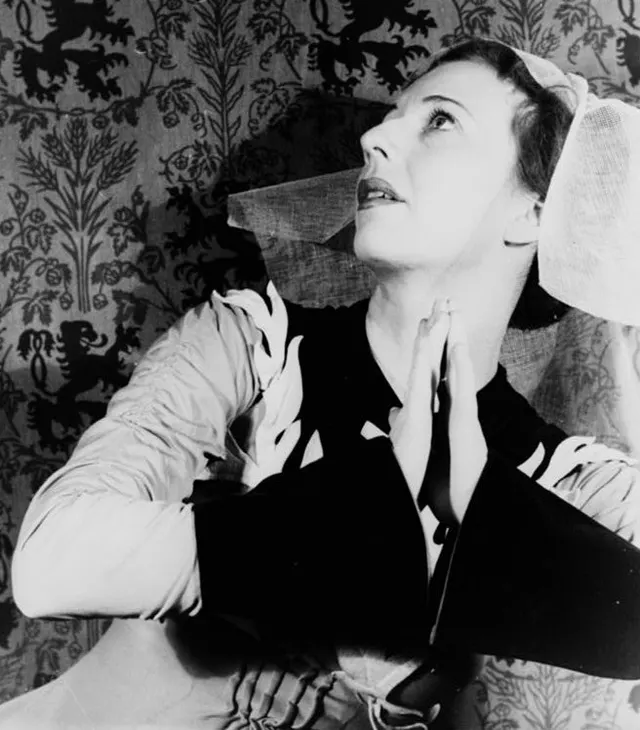
Agnes de Mille
Image creditCarl Van Vechten · Public domainResized and cropped for display.

Agnes de Mille

American dancer and choreographer whose ballet Rodeo and dances for the musical Oklahoma! changed dance on the American stage.

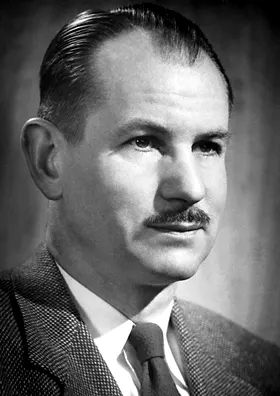
Edwin McMillan
Image creditNobel Foundation · Public domainResized and cropped for display.

Edwin McMillan

American physicist who made neptunium, the first element heavier than uranium, and shared the 1951 Nobel Prize in Chemistry.

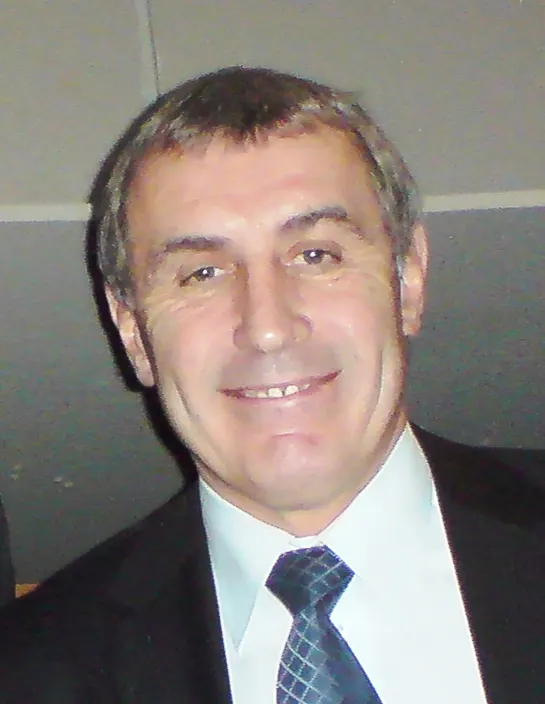
Peter Shilton
Image creditJoebloggsy · CC BY-SA 3.0Resized and cropped for display.

Peter Shilton

English goalkeeper who won a record 125 caps for his country and two European Cups with Nottingham Forest.

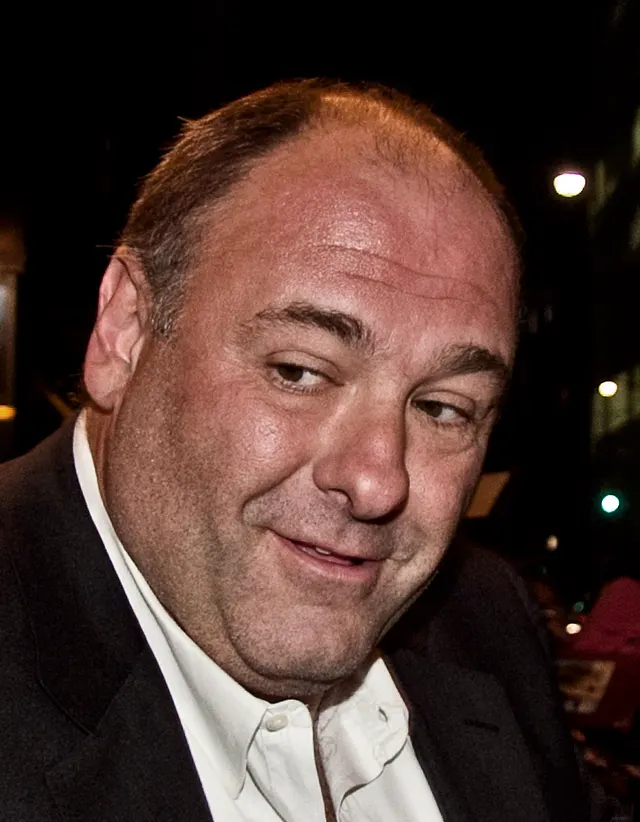
James Gandolfini
Image creditgdcgraphics · CC BY-SA 2.0Resized and cropped for display.

James Gandolfini

American actor who won three Emmy awards as the troubled mob boss Tony Soprano in the television drama The Sopranos.

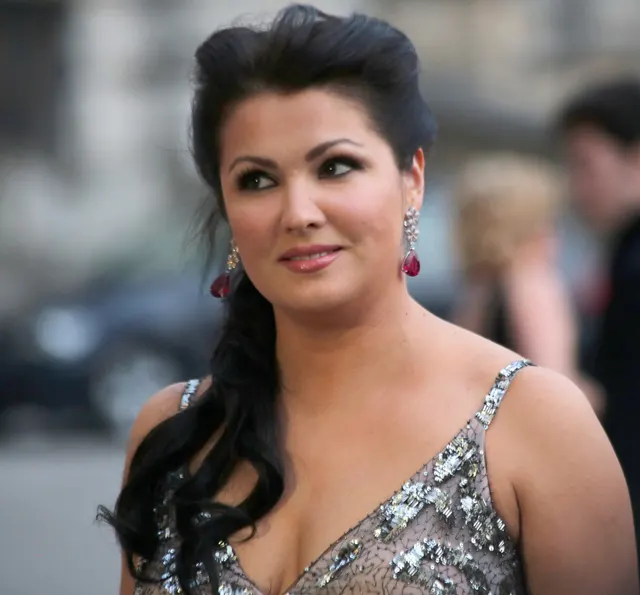
Anna Netrebko
Image creditManfred Werner (Tsui) · CC BY-SA 3.0Resized and cropped for display.

Anna Netrebko

Russian-born soprano, one of the most celebrated opera singers of her generation, who rose to fame at the Mariinsky Theatre in St Petersburg.

Mark Shuttleworth
Image creditJonnymccullagh · CC BY-SA 3.0Resized and cropped for display.

Mark Shuttleworth

South African entrepreneur who founded the company behind the Ubuntu operating system and in 2002 became the first African in space.

◉
IDEAS THAT CHANGED THINGS

Firsts, Science & Discoveries

The crescent Earth and Moon, photographed together by Voyager 1 on 18 September 1977; the Moon, at the top, has been brightened so that both can be seen
Image creditNASA · Public domainResized and cropped for display.

Voyager 1 takes the first picture of the Earth and Moon together

Voyager 1 was launched from Cape Canaveral on 5 September 1977 on a journey to Jupiter and Saturn. Its cameras were built to study distant planets, but in the first days of the flight the mission team turned them back towards home to test them.

On 18 September 1977, from 11.66 million kilometres away, Voyager 1 recorded the Earth and the Moon as two crescents in a single frame, the first picture of its kind taken by a spacecraft. The probe was then directly above Mount Everest, and eastern Asia, the western Pacific and part of the Arctic can be made out on the Earth. Because the Moon is much darker than the Earth, it was brightened by computer so that both would show in prints. Voyager 1 went on to leave the Solar System’s bubble altogether, and is now the most distant object ever made by people.

Read the full storyHistory & Timeline →Source: NASA: Voyager 1 takes the first image of the Earth-Moon system in a single frame ↗
☆
SPORTING HISTORY

Sporting Moments

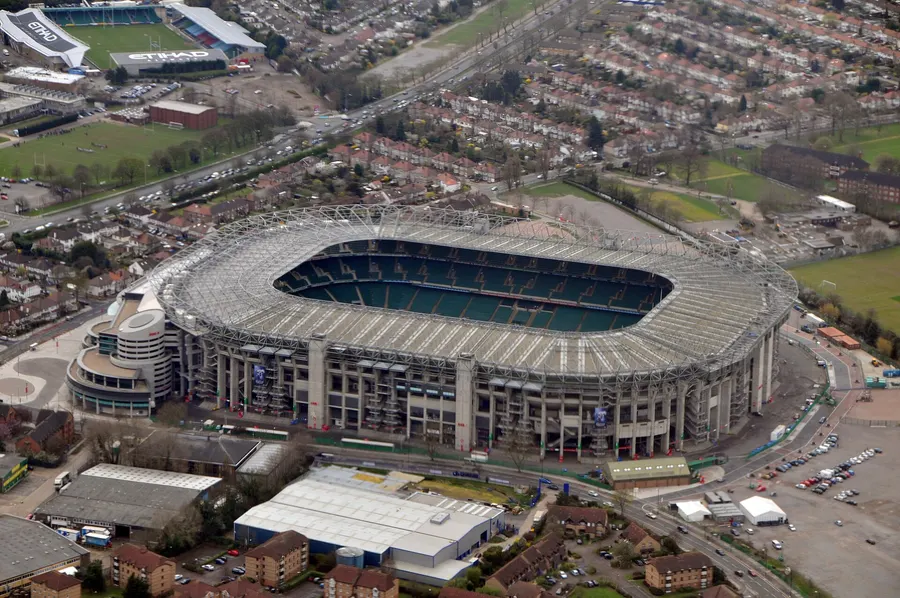
An aerial view of Twickenham Stadium in south-west London, the home of English rugby union
Image creditTijani59 · CC BY-SA 2.0Resized and cropped for display.

England beat Fiji as the Rugby World Cup opens at Twickenham

The eighth Rugby World Cup was hosted by England, with some matches in Cardiff. It opened at Twickenham on the evening of 18 September 2015, when England met Fiji after the opening ceremony.

England won 35-11. They were awarded an early penalty try, the full-back Mike Brown scored twice, and Billy Vunipola forced his way over in the last move of the match to earn a bonus point; Nemani Nadolo scored Fiji’s try. It was as good as the tournament got for the hosts. Defeats by Wales and Australia made England the first sole host nation to go out at the pool stage. New Zealand beat Australia in the final on 31 October and became the first team to retain the trophy.

Read the full storyHistory & Timeline →Source: World Rugby: The road to Rugby World Cup 2015 ↗
♫
MUSIC • FILM • BOOKS • CULTURE

Culture Stories

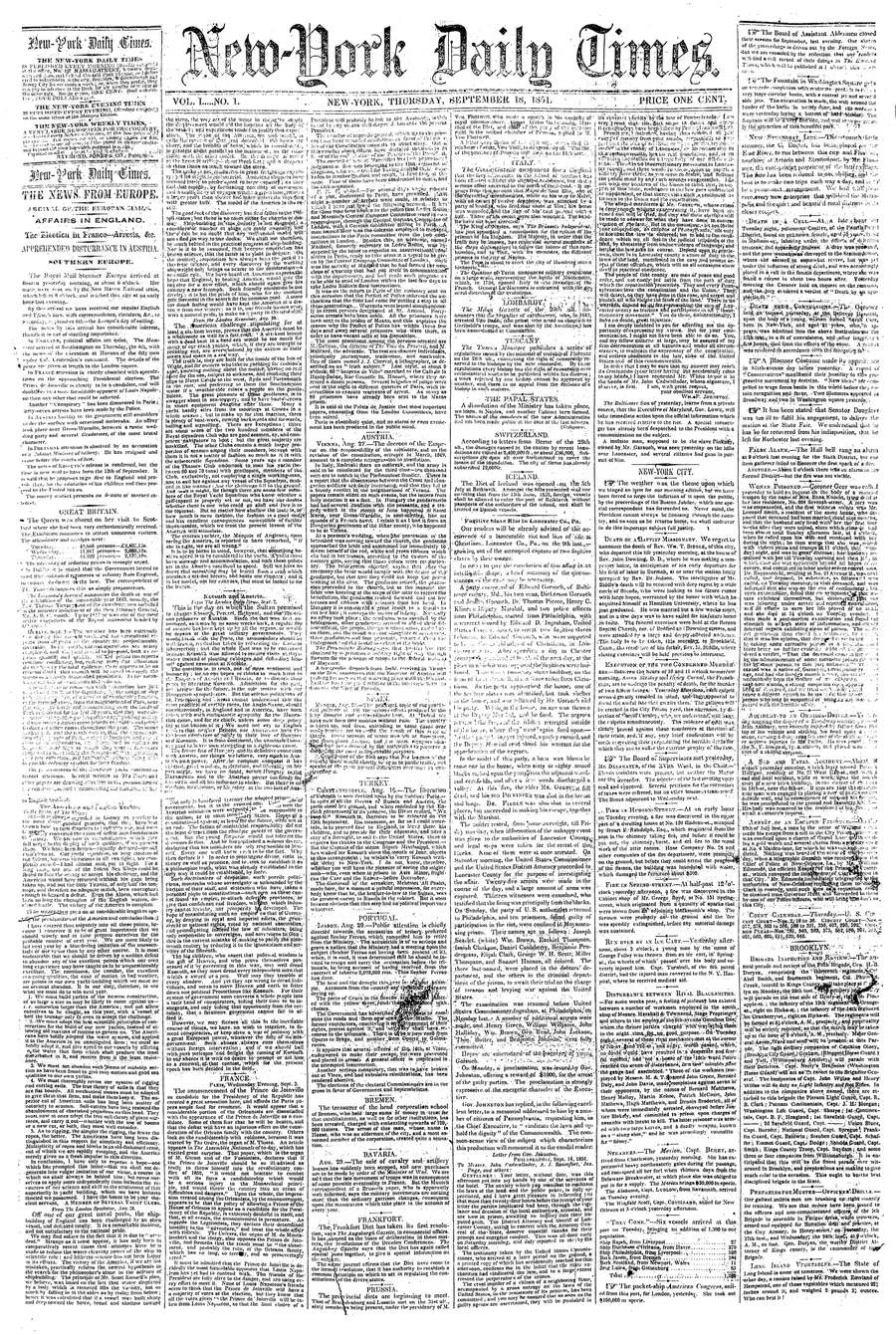
The front page of the first issue of the New-York Daily Times, 18 September 1851
Image creditThe New York Times · Public domainResized and cropped for display.

The first issue of The New York Times is published

New York in 1851 had plenty of newspapers, many of them cheap ‘penny papers’ that sold on crime, scandal and fierce political opinion. Henry Jarvis Raymond, a journalist and politician, and George Jones, a former banker, believed there was room for something calmer: a paper that reported the news soberly for serious readers.

The first issue of their New-York Daily Times appeared on 18 September 1851, with Raymond as editor and Jones as publisher. It had four pages and cost one cent. The paper shortened its name to The New-York Times in 1857, and after it was bought by Adolph Ochs in 1896 it grew into one of the best-known newspapers in the world, carrying on its front page the motto ‘All the News That’s Fit to Print’.

Read the full storyHistory & Timeline →Source: Library of Congress: New-York Daily Times (New-York, N.Y.) 1851-1857 ↗
✦
LIVES REMEMBERED

Remembered Today

Louis VII of France
Image creditNatalis de Wailly · Public domainResized and cropped for display.

Louis VII of France

King of France from 1137, a leader of the Second Crusade and first husband of Eleanor of Aquitaine, succeeded by his son Philip Augustus.

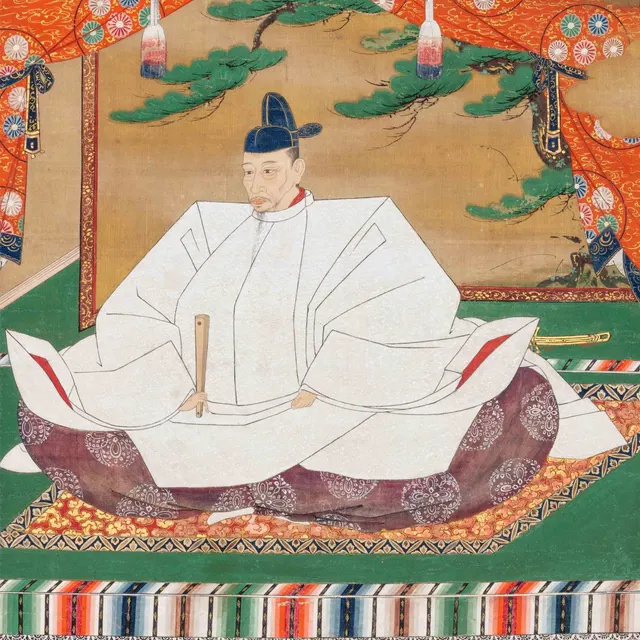
Toyotomi Hideyoshi
Image creditKanō Mitsunobu · Public domainResized and cropped for display.

Toyotomi Hideyoshi

Japanese warlord of humble birth who completed the reunification of Japan begun by Oda Nobunaga and twice invaded Korea.

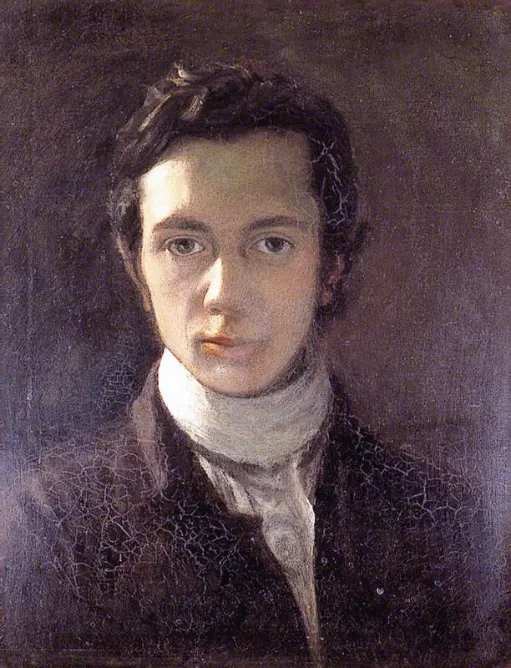
William Hazlitt
Image creditWilliam Hazlitt (self-portrait) · Public domainResized and cropped for display.

William Hazlitt

English essayist and critic, author of Table-Talk and The Spirit of the Age, admired for his vigorous, plain-spoken prose.

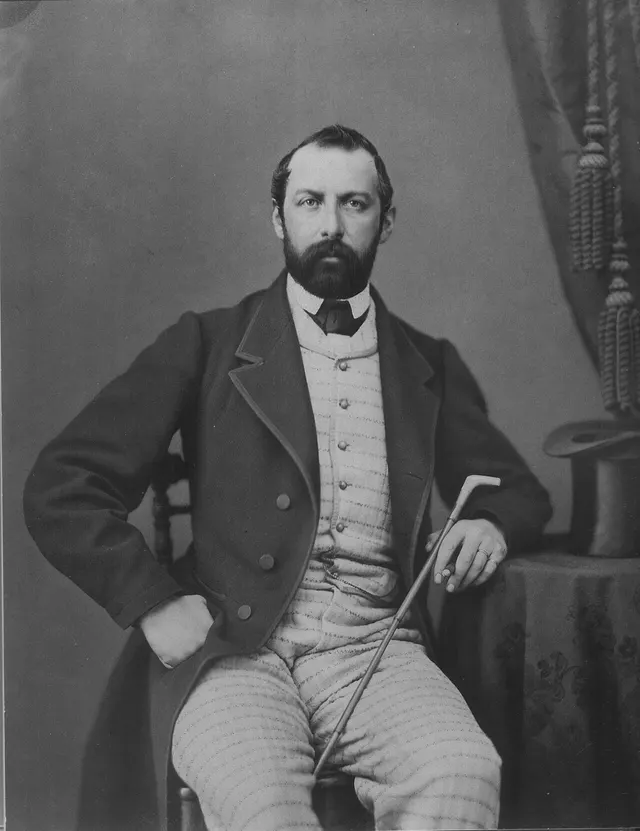
Charles XV of Sweden
Image creditMathias Hansen · Public domainResized and cropped for display.

Charles XV of Sweden

King of Sweden and Norway from 1859, in whose reign Sweden replaced its old four-estate assembly with a two-chamber parliament.

Seán O'Casey
Image creditCeltBrowne · CC BY-SA 4.0Resized and cropped for display.

Seán O’Casey

Irish playwright whose Dublin plays for the Abbey Theatre include Juno and the Paycock and The Plough and the Stars.

☉
AROUND THE WORLD

Observances & Anniversaries

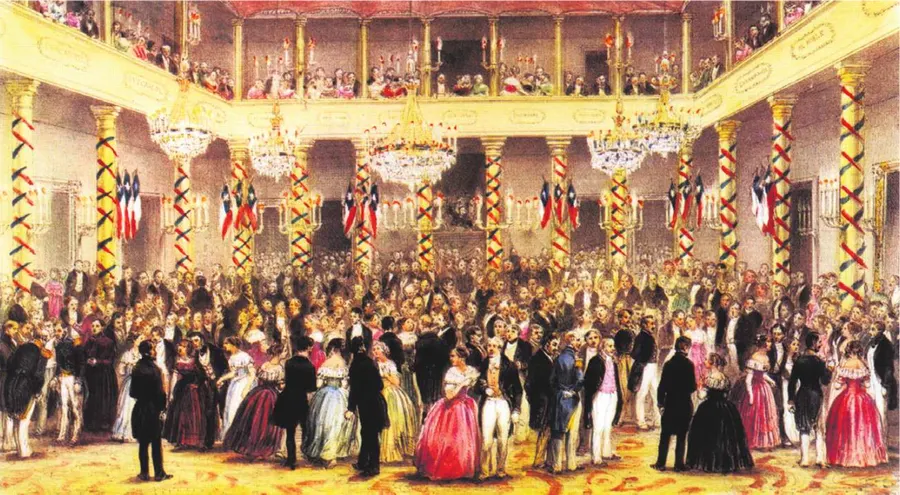
A ball at Chile's government house on an 18 September in the 19th century, from a lithograph after Claudio Gay
A ball at Chile’s government house on an 18 September in the 19th century, from a lithograph after Claudio Gay
Image creditClaudio Gay · Public domainResized and cropped for display.

Fiestas Patrias: Chile’s national day

Chile celebrates its national holidays, the Fiestas Patrias, on 18 and 19 September. The first day, known simply as the Dieciocho, ‘the Eighteenth’, marks the forming of the first national junta in Santiago on 18 September 1810, the first step on the road to independence from Spain. The second honours the ‘glories of the army’ and is the day of a great military parade in Santiago.

Both days are public holidays, and for many Chileans the festivities last a week. People gather in fondas and ramadas, temporary fairgrounds with food, drink and music, to eat empanadas and grilled meat, fly kites and dance the cueca, the national dance.

Source: Gobierno de Chile: ¿Por qué es feriado el 18 y 19 de septiembre en Chile? ↗
HISTORY & TIMELINE

Finished the highlights?

Follow 18 September chronologically, from the Middle Ages to the modern day, with 16 verified events and the sources behind them.

This day through time →