
HISTORY & TIMELINE
18 September

A journey through
18 September in history

The story of 18 September runs from the assassination of the Roman emperor Domitian in AD 96 to the opening match of the 2015 Rugby World Cup. In between come the Treaty of Belgrade, the cornerstone of the United States Capitol, Chile’s first national junta, the Fugitive Slave Act, the first issue of The New York Times, the Panic of 1873, Booker T. Washington’s Atlanta address, the Mukden Incident, the birth of the United States Air Force, the death of Dag Hammarskjöld, the admission of the two German states to the United Nations, Voyager 1’s portrait of the Earth and Moon, the first solo balloon flight across the Atlantic and Scotland’s independence referendum.

I
EARLIEST RECORDS

Ancient & Early History

The earliest worthwhile records and events connected with this date.

96
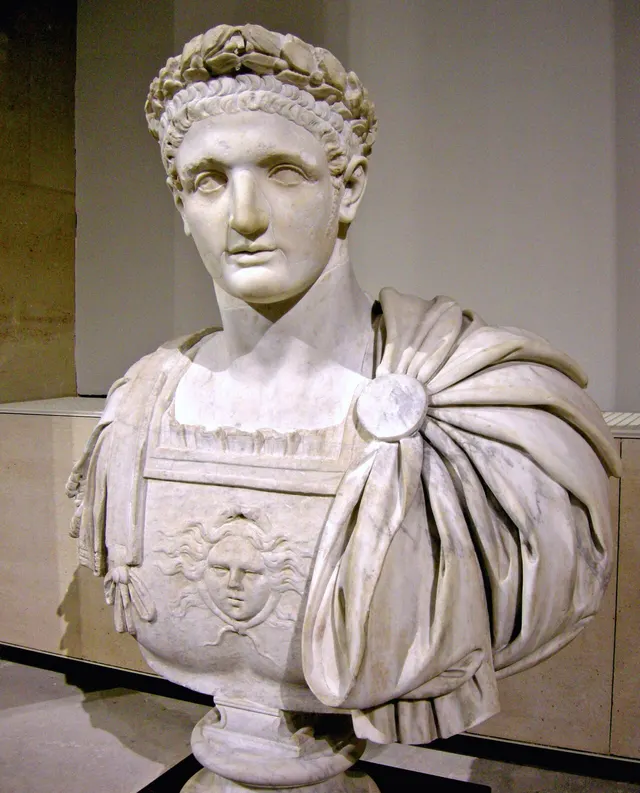
A Roman portrait bust of the emperor DomitianA Roman portrait bust of the emperor DomitianImage: Unknown author · CC BY 2.5
politics · Europe

The emperor Domitian is assassinated in Rome

Domitian, the younger son of Vespasian, had ruled the Roman Empire since 81. He was an energetic administrator and builder, but he grew ever more suspicious, and in his last years senators and members of his own court were executed or exiled. On 18 September 96 he was stabbed to death in his palace in a plot hatched by court officials. The Senate proclaimed the elderly senator Nerva emperor the same day and ordered Domitian’s name to be struck from public monuments. His death ended the Flavian dynasty; Nerva is counted as the first of the ‘five good emperors’.

Source: Britannica: Domitian ↗
III
A CHANGING WORLD

Early Modern Era

Exploration, political change, scientific development and expanding global connections.

1739
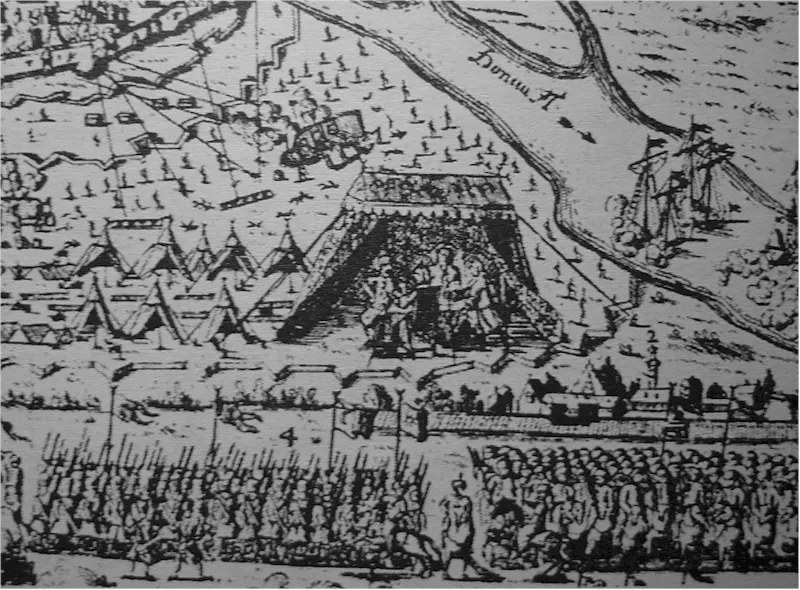
An engraving depicting the signing of the Treaty of Belgrade in 1739An engraving depicting the signing of the Treaty of Belgrade in 1739Image: Unknown author · Public domain
world · Europe

Austria hands Belgrade back to the Ottomans

By the Treaty of Passarowitz in 1718 Habsburg Austria had taken Belgrade and northern Serbia from the Ottoman Empire. In 1737 Austria joined Russia in a new war against the Ottomans, but its armies were badly beaten. By the Treaty of Belgrade, signed on 18 September 1739 with French mediation, Austria gave up Belgrade, northern Serbia and Little Wallachia. The frontier it set between the two empires, along the rivers Sava and Danube, lasted with little change for more than a century.

Source: Britannica: Treaty of Belgrade ↗
1793
George Washington laying the cornerstone of the Capitol in 1793, as painted by Allyn Cox in a mural in the CapitolGeorge Washington laying the cornerstone of the Capitol in 1793, as painted by Allyn Cox in a mural in the CapitolImage: U.S. Government · Public domain
world · Americas

George Washington lays the cornerstone of the United States Capitol

In 1790 the United States Congress decided to build a new capital city on the Potomac River. The French-born engineer Pierre L’Enfant chose a hill at its heart for the building where Congress would meet, and a competition for its design was won by William Thornton, a doctor and amateur architect born in the British West Indies. President George Washington praised the plan for its grandeur, simplicity and convenience. On 18 September 1793 Washington crossed the Potomac with a company of artillery and joined members of the Masonic lodges of Virginia, Maryland and the new federal city. They marched in procession, with music and flags, to the building site, where Washington, wearing a Masonic apron, set the cornerstone at the south-east corner of the foundations. The day ended with a barbecue. Congress moved into the unfinished building in 1800. Despite several searches, the stone itself has never been identified for certain.

Source: Architect of the Capitol: Capitol Cornerstone Ceremony, 1793 ↗
IV
THE NINETEENTH CENTURY

The 1800s

Industry, empire, invention, reform and a century of enormous transformation.

1810
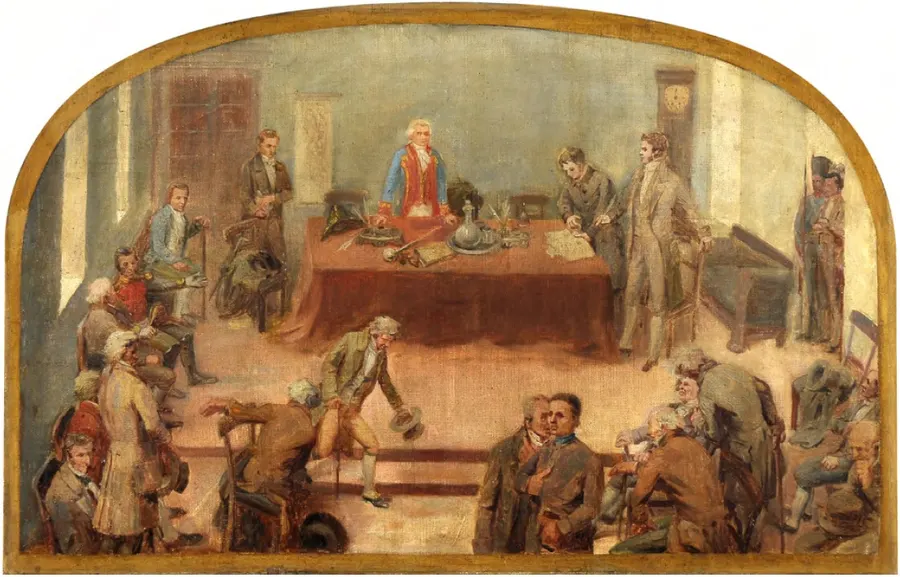
The first Government Junta of Chile, 18 September 1810, in a painting by Nicolás Guzmán BustamanteThe first Government Junta of Chile, 18 September 1810, in a painting by Nicolás Guzmán BustamanteImage: Nicolás Guzmán Bustamante · Public domain
politics · Americas

Chile forms its first national junta

In 1808 Napoleon invaded Spain, took King Ferdinand VII prisoner and put his own brother on the throne. Across Spanish America, colonies that owed loyalty to the king were left asking who now had the right to govern them. In Chile an unpopular governor, Francisco Antonio García Carrasco, was forced out in July 1810 and replaced by an elderly local nobleman, Mateo de Toro y Zambrano, the Count of la Conquista. On the morning of 18 September 1810 several hundred leading citizens of Santiago met in an open town meeting, a cabildo abierto. They agreed to set up a governing junta of their own, with Toro y Zambrano as its president, to rule in the captive king’s name until he was restored. Its members swore loyalty to Ferdinand, but for the first time Chileans were governing themselves, and the step led on to a national congress, to war and to the declaration of independence in 1818. Chile keeps 18 September as its national day.

Source: Memoria Chilena, Biblioteca Nacional de Chile: Primera Junta de Gobierno (1810) ↗
1850
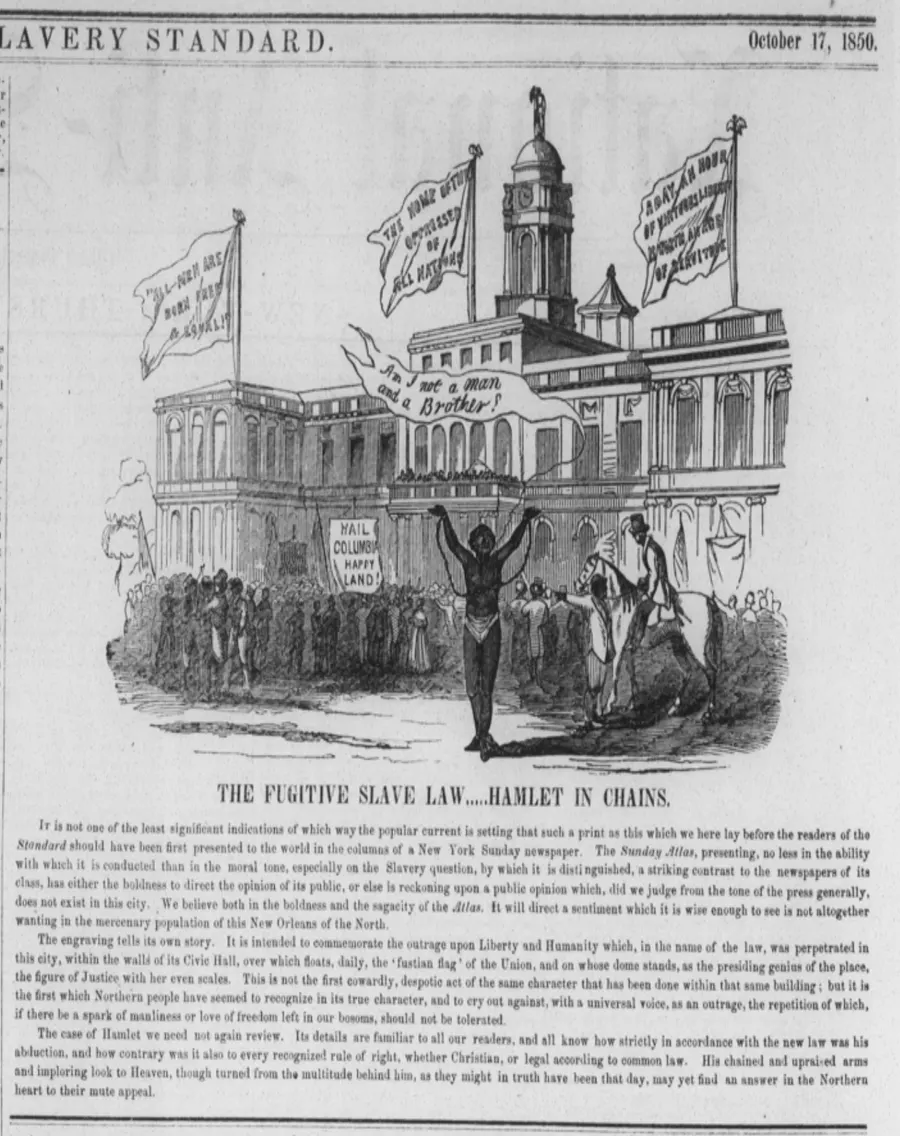
A newspaper print of October 1850 showing James Hamlet, the first person returned to slavery under the new law, in front of New York's City HallA newspaper print of October 1850 showing James Hamlet, the first person returned to slavery under the new law, in front of New York’s City HallImage: Unknown author · Public domain
world · Americas

The Fugitive Slave Act becomes law in the United States

In 1850 the United States Congress passed a set of laws, known as the Compromise of 1850, to calm the quarrel between the free states of the North and the slave states of the South. One of them, signed by President Millard Fillmore on 18 September 1850, was a harsh new Fugitive Slave Act. It required officials and ordinary citizens in free states to help capture people who had escaped from slavery, denied the accused a jury trial or the right to speak in their own defence, and punished anyone who helped them. The law outraged much of the North and strengthened the movement against slavery.

Source: Library of Congress: Fugitive slave bill ... Approved, September 18, 1850. Millard Fillmore ↗
1851
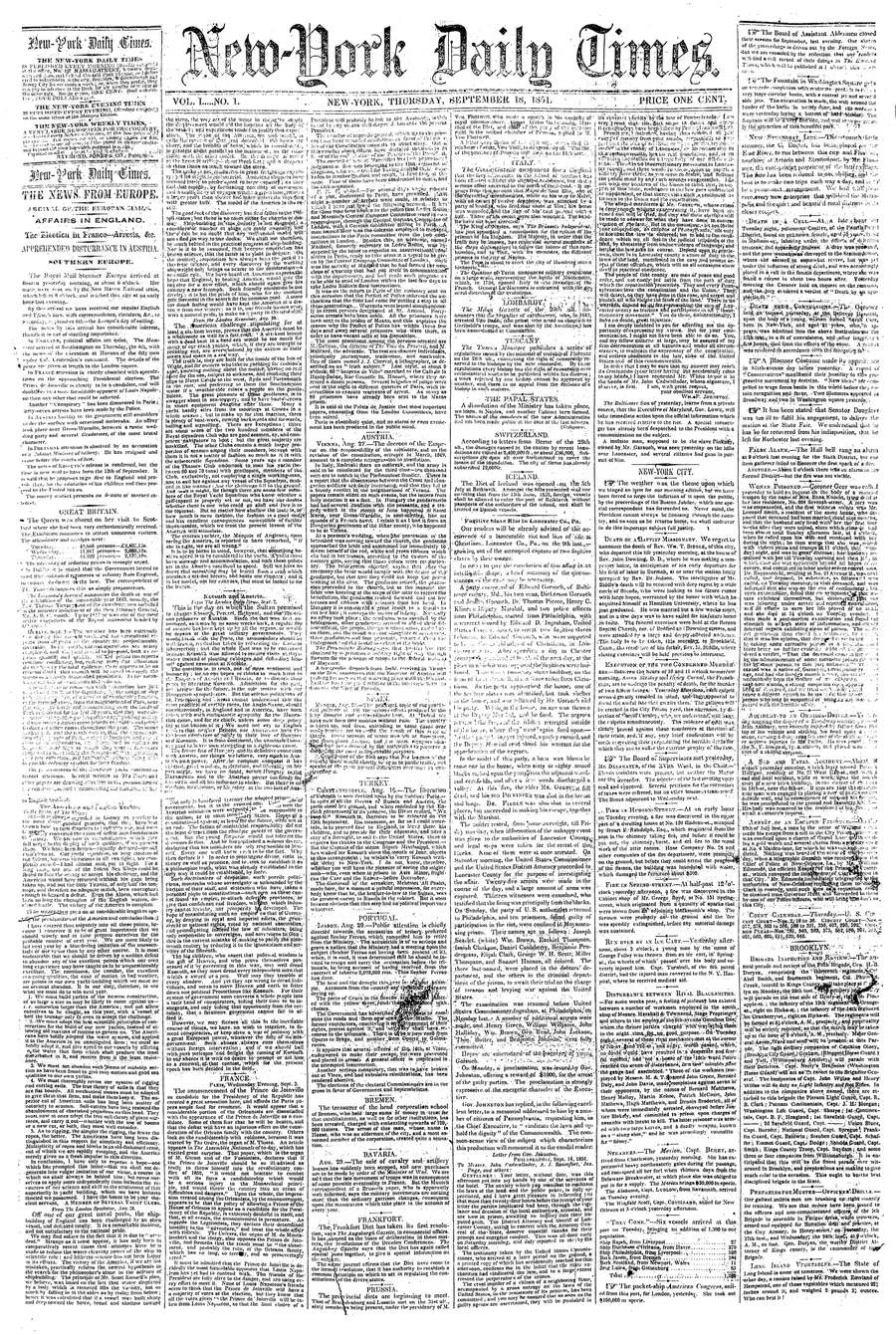
The front page of the first issue of the New-York Daily Times, 18 September 1851The front page of the first issue of the New-York Daily Times, 18 September 1851Image: The New York Times · Public domain
culture · Americas

The first issue of The New York Times is published

New York in 1851 had plenty of newspapers, many of them cheap ‘penny papers’ that sold on crime, scandal and fierce political opinion. Henry Jarvis Raymond, a journalist and politician, and George Jones, a former banker, believed there was room for something calmer: a paper that reported the news soberly for serious readers. The first issue of their New-York Daily Times appeared on 18 September 1851, with Raymond as editor and Jones as publisher. It had four pages and cost one cent. The paper shortened its name to The New-York Times in 1857, and after it was bought by Adolph Ochs in 1896 it grew into one of the best-known newspapers in the world, carrying on its front page the motto ‘All the News That’s Fit to Print’.

Source: Library of Congress: New-York Daily Times (New-York, N.Y.) 1851-1857 ↗
1873
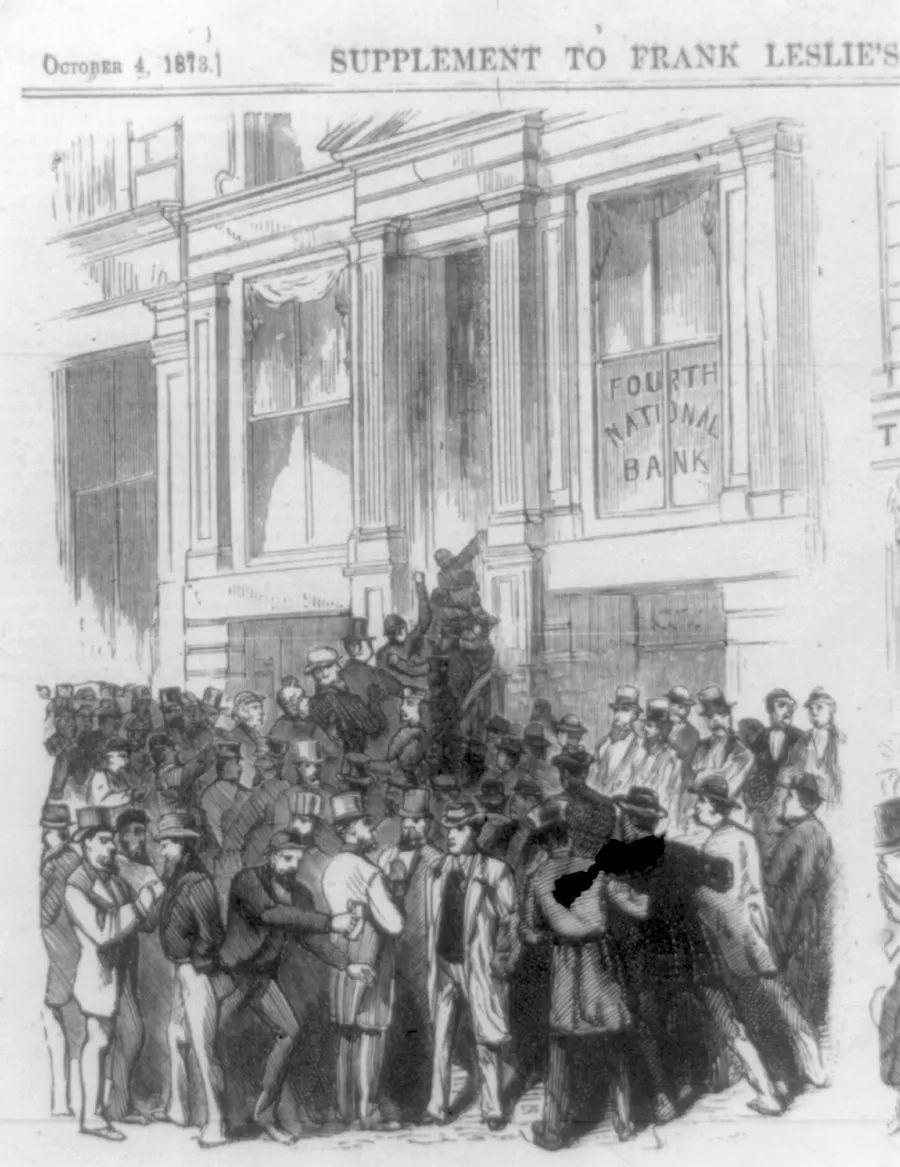
A run on the Fourth National Bank in Nassau Street, New York, from Frank Leslie's Illustrated Newspaper of 4 October 1873A run on the Fourth National Bank in Nassau Street, New York, from Frank Leslie’s Illustrated Newspaper of 4 October 1873Image: Unknown author · Public domain
world · Americas

The failure of Jay Cooke’s bank sets off the Panic of 1873

Jay Cooke was America’s most famous banker, the man who had sold the bonds that paid for the Union’s armies in the Civil War. After the war his firm staked its fortune on building the Northern Pacific Railway, but it could not sell enough of the railway’s bonds. On 18 September 1873 Jay Cooke & Company closed its doors. Panic swept Wall Street, banks and brokers failed, and on 20 September the New York Stock Exchange shut for ten days, the first closure in its history. The depression that followed lasted for the rest of the decade.

Source: Library of Congress: The Panic of 1873 ↗
1895
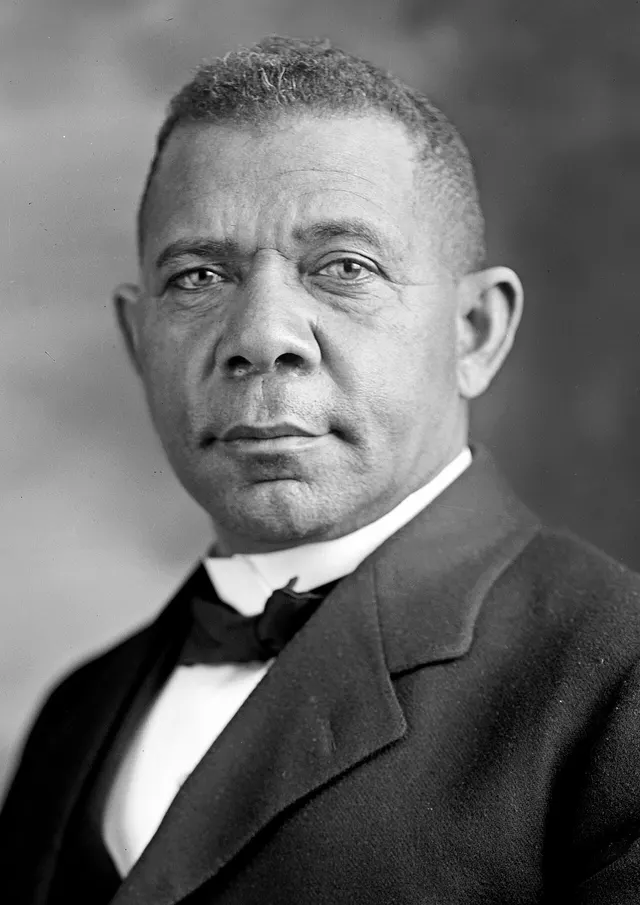
Booker T. Washington, principal of the Tuskegee InstituteBooker T. Washington, principal of the Tuskegee InstituteImage: Harris & Ewing · Public domain
world · Americas

Booker T. Washington gives his Atlanta address

Booker T. Washington, born into slavery, was the head of the Tuskegee Institute in Alabama, which trained Black teachers and skilled workers. On 18 September 1895 he spoke at the opening of the Cotton States and International Exposition in Atlanta, before a large audience of both Black and white Southerners. He urged Black Americans to ‘cast down your bucket where you are’ and build their future through work, education and business, rather than press at once for political and social equality. The speech made him the best-known Black leader in the country. Critics, among them W. E. B. Du Bois, later called it the ‘Atlanta Compromise’.

Source: New Georgia Encyclopedia: Atlanta Compromise Speech ↗
V
THE TWENTIETH CENTURY

The 1900s

War and peace, technological leaps, social change, politics, sport and popular culture.

1931
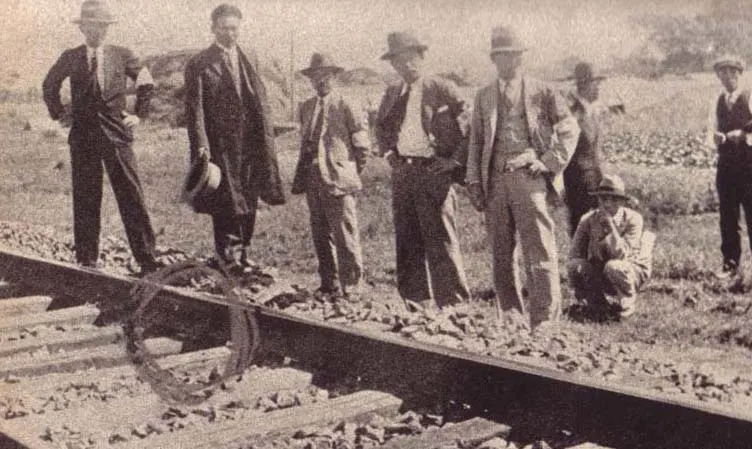
Japanese investigators inspect the site of the explosion on the South Manchuria Railway near Mukden in September 1931Japanese investigators inspect the site of the explosion on the South Manchuria Railway near Mukden in September 1931Image: Unknown author · Public domain
world · Asia

An explosion on a railway near Mukden opens Japan’s seizure of Manchuria

After its war with Russia in 1904-05 Japan controlled the South Manchuria Railway, which ran through north-eastern China, and kept an army there, the Kwantung Army, to guard it. By 1931 some of its officers, alarmed by the growing strength of Chinese nationalism and impatient with their own government in Tokyo, had decided to take the whole of Manchuria by force. On the night of 18 September 1931 a small charge exploded beside the railway track near Mukden, today’s Shenyang. It did so little damage that a train passed over the spot soon afterwards, but the Japanese army blamed Chinese soldiers, attacked the nearby barracks and occupied the city by morning. Within months it held all of Manchuria and set up a puppet state there. A League of Nations commission found against Japan, which left the League in 1933. The incident is widely seen as a step on the road to the Second World War in Asia.

Source: Britannica: Mukden Incident ↗
1947
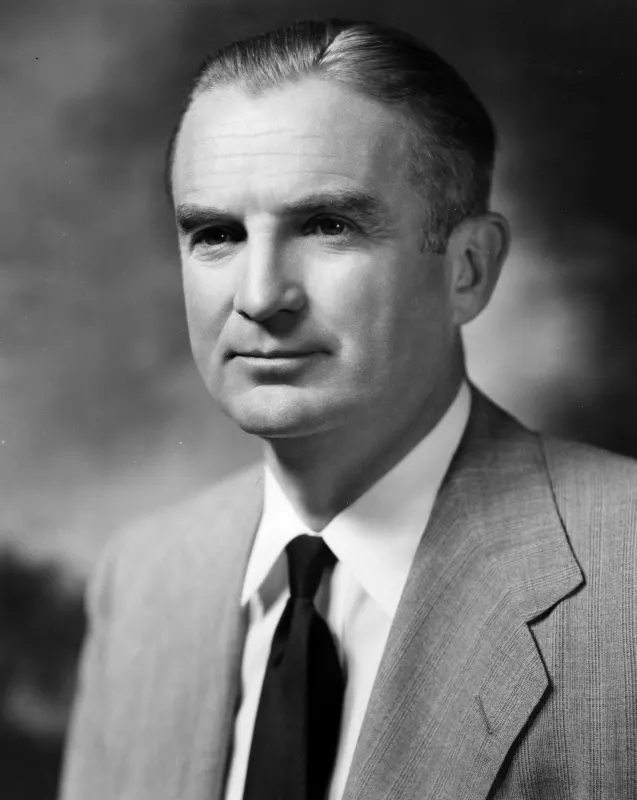
W. Stuart Symington, the first Secretary of the Air Force, in an official portraitW. Stuart Symington, the first Secretary of the Air Force, in an official portraitImage: U.S. Air Force · Public domain
world · Americas

The United States Air Force becomes a separate service

Through the Second World War America’s air power belonged to the army, as the United States Army Air Forces. The National Security Act, signed by President Harry Truman in July 1947, reorganised the country’s defences and created a Department of the Air Force equal to those of the army and the navy. On 18 September 1947 Stuart Symington was sworn in as the first Secretary of the Air Force, and the United States Air Force came into being as an independent service, with General Carl Spaatz as its first chief of staff. It keeps 18 September as its birthday.

Source: National Museum of the United States Air Force: USAF Established ↗
1961
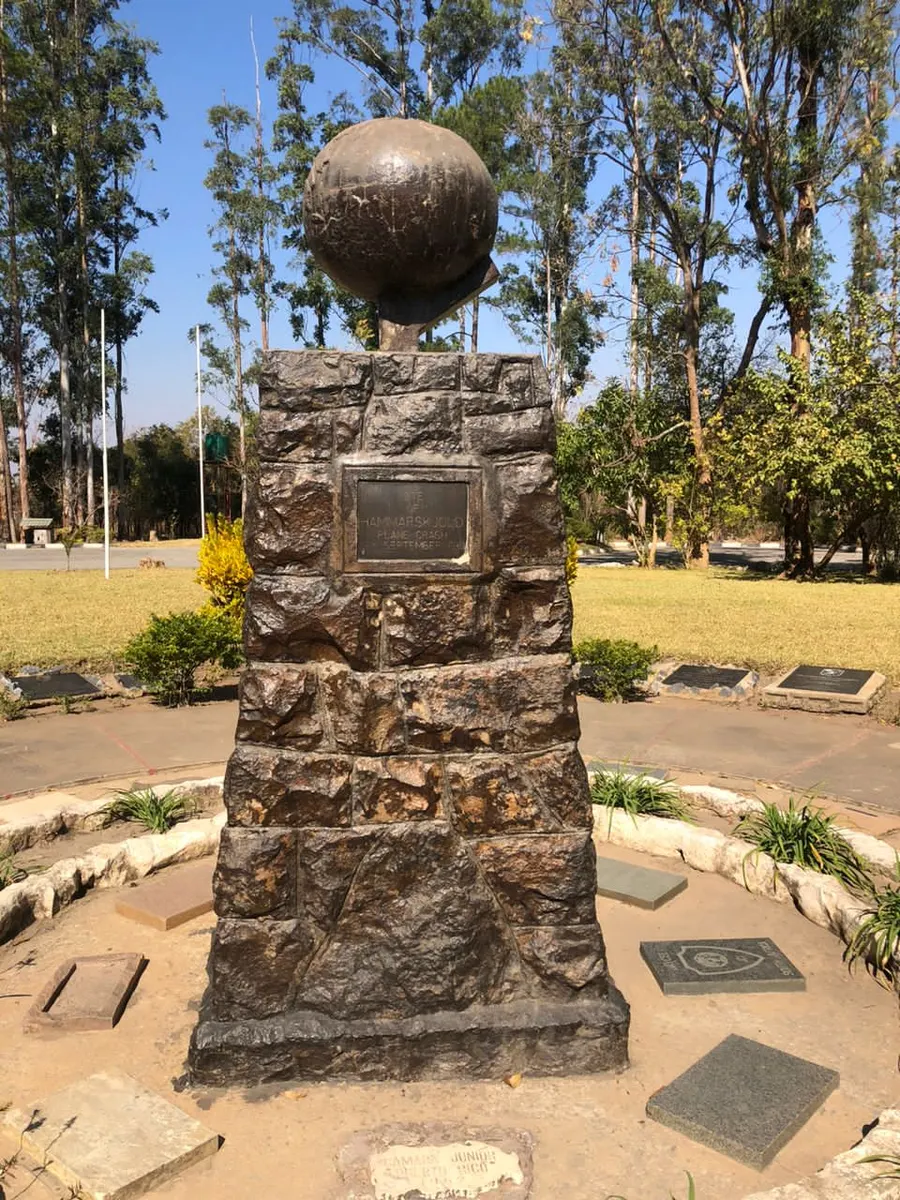
The memorial at the site near Ndola, Zambia, where Dag Hammarskjöld's aircraft crashed in 1961The memorial at the site near Ndola, Zambia, where Dag Hammarskjöld’s aircraft crashed in 1961Image: Jr the one · CC BY-SA 4.0
world · Africa

Dag Hammarskjöld is killed in an air crash near Ndola

Dag Hammarskjöld, a Swedish economist and diplomat, had been Secretary-General of the United Nations since 1953 and had made the office a far more active force in world affairs. In 1960 the newly independent Congo fell into crisis when its mineral-rich province of Katanga broke away, and the UN sent a large peacekeeping force. In September 1961 fighting broke out between UN troops and Katanga’s forces. Hammarskjöld set out to meet the Katangan leader, Moïse Tshombe, to arrange a ceasefire. Shortly after midnight on the night of 17-18 September 1961 his chartered DC-6 crashed in the bush as it approached the airport at Ndola in Northern Rhodesia, now Zambia. All sixteen people on board died; the one man found alive, the security officer Harold Julien, died of his injuries a few days later. An early inquiry pointed to pilot error, but the cause has never been settled, and later UN investigations have judged it plausible that the aircraft was attacked or threatened from outside. Hammarskjöld was awarded the Nobel Peace Prize after his death.

Source: United Nations: 63 years later, mystery still surrounds death of Dag Hammarskjöld ↗
1973
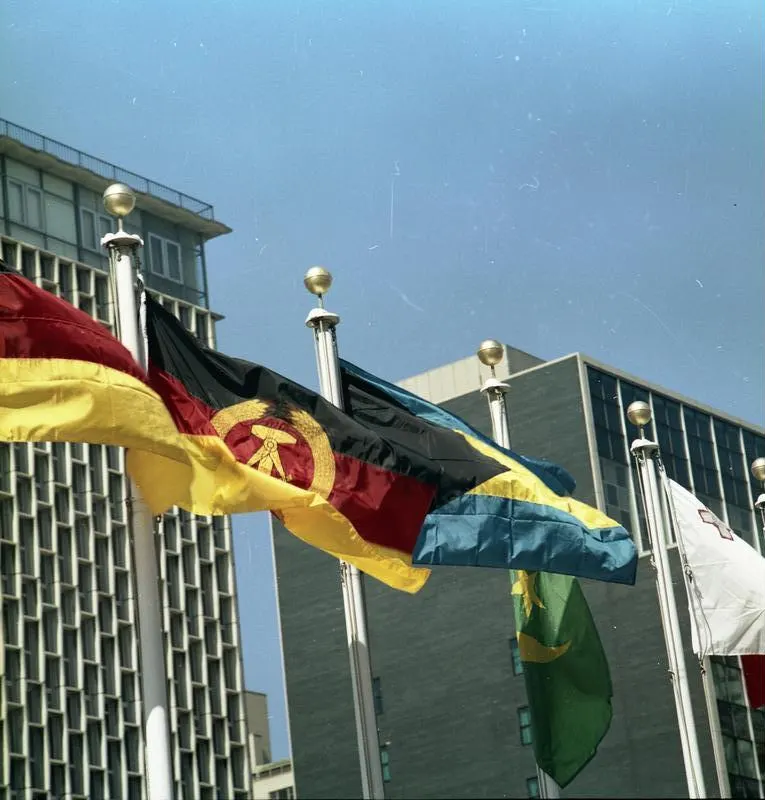
The flags of East and West Germany flying side by side outside the United Nations headquarters in New York in September 1973The flags of East and West Germany flying side by side outside the United Nations headquarters in New York in September 1973Image: Hans-Joachim Spremberg · CC BY-SA 3.0 de
world · Europe

East and West Germany join the United Nations

For more than twenty years after 1949 the two German states, the Federal Republic in the west and the German Democratic Republic in the east, refused to recognise each other, and the Cold War kept both out of the United Nations. Under Chancellor Willy Brandt’s policy of opening to the East they signed a Basic Treaty in 1972 accepting each other’s existence. On 18 September 1973 the General Assembly admitted them together, as the 133rd and 134th members. When Germany was reunified on 3 October 1990, the two seats became one.

Source: United Nations: Member States, Germany ↗
1977
The crescent Earth and Moon, photographed together by Voyager 1 on 18 September 1977; the Moon, at the top, has been brightened so that both can be seenThe crescent Earth and Moon, photographed together by Voyager 1 on 18 September 1977; the Moon, at the top, has been brightened so that both can be seenImage: NASA · Public domain
world · Global

Voyager 1 takes the first picture of the Earth and Moon together

Voyager 1 was launched from Cape Canaveral on 5 September 1977 on a journey to Jupiter and Saturn. Its cameras were built to study distant planets, but in the first days of the flight the mission team turned them back towards home to test them. On 18 September 1977, from 11.66 million kilometres away, Voyager 1 recorded the Earth and the Moon as two crescents in a single frame, the first picture of its kind taken by a spacecraft. The probe was then directly above Mount Everest, and eastern Asia, the western Pacific and part of the Arctic can be made out on the Earth. Because the Moon is much darker than the Earth, it was brightened by computer so that both would show in prints. Voyager 1 went on to leave the Solar System’s bubble altogether, and is now the most distant object ever made by people.

Source: NASA: Voyager 1 takes the first image of the Earth-Moon system in a single frame ↗
1984
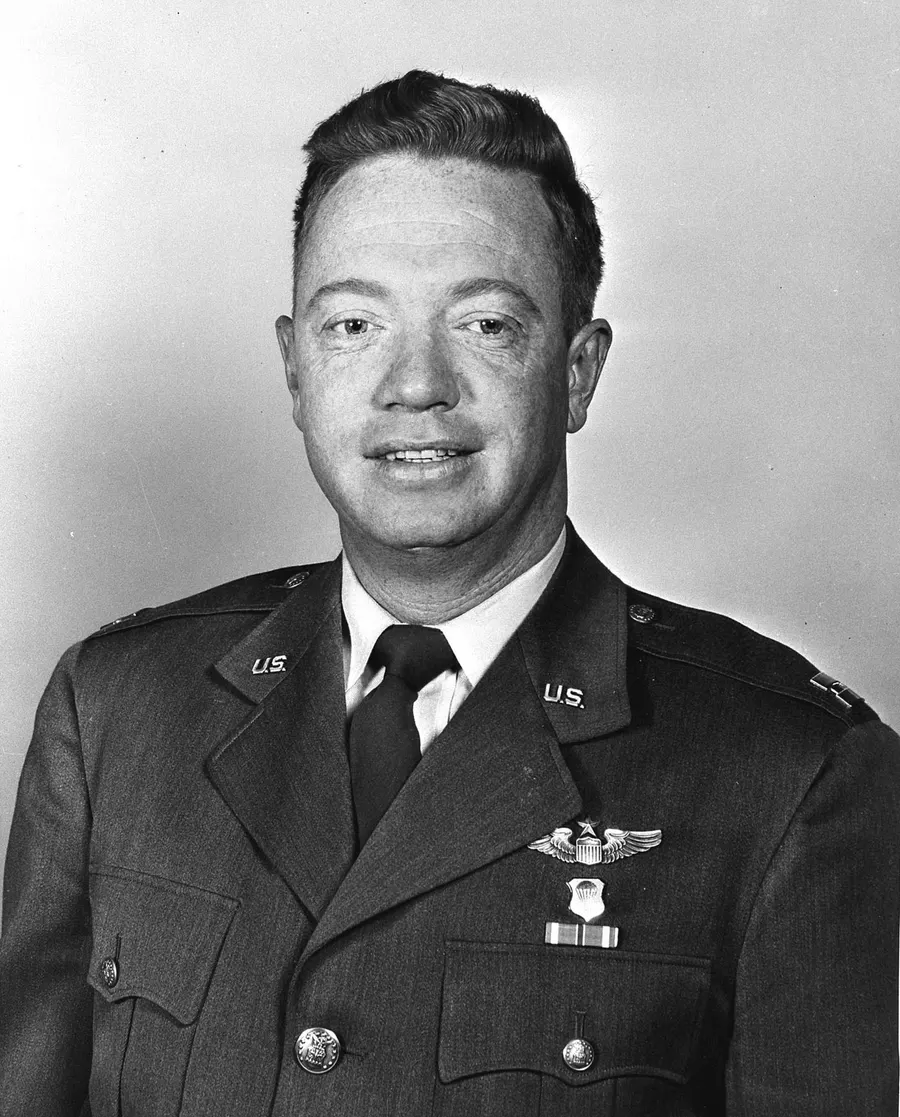
Joseph Kittinger in United States Air Force uniform, in a portrait taken years before his Atlantic flightJoseph Kittinger in United States Air Force uniform, in a portrait taken years before his Atlantic flightImage: U.S. Air Force · Public domain
world · Global

Joe Kittinger completes the first solo balloon flight across the Atlantic

Joseph Kittinger was a retired United States Air Force colonel, famous for a parachute jump from the edge of space in 1960. In September 1984, aged 56, he took off alone from Caribou in Maine on 14 September in a helium balloon named Rosie O’Grady’s Balloon of Peace. After about 86 hours in the air and some 5,700 kilometres he came down on 18 September 1984 in the wooded hills near Montenotte in north-western Italy. It was the first time anyone had crossed the Atlantic alone by balloon.

Source: National Aviation Hall of Fame: Joseph ‘Joe’ William Kittinger, Jr. ↗
VI
2000 TO TODAY

Modern Day

The events of recent decades that have already become part of the historical record.

2014
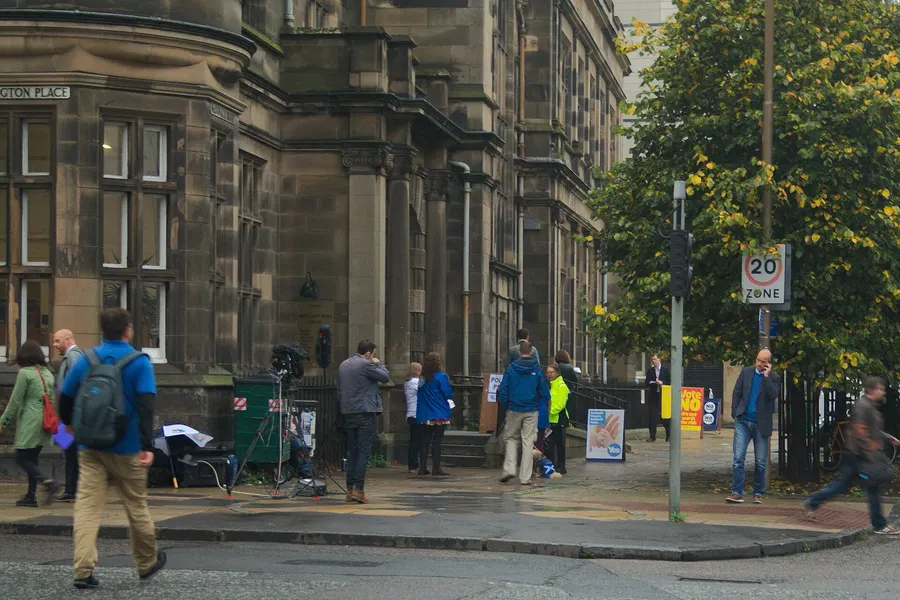
The polling station at Macdonald Road Library in Edinburgh on the morning of the referendum, 18 September 2014The polling station at Macdonald Road Library in Edinburgh on the morning of the referendum, 18 September 2014Image: Brian McNeil · CC BY 3.0
politics · Europe

Scotland votes to stay in the United Kingdom

Scotland and England have shared a parliament since the union of 1707, and Scotland has had its own devolved parliament in Edinburgh since 1999. In 2011 the Scottish National Party, which wants independence, won a majority there, and the following year the British and Scottish governments agreed that a referendum should settle the matter. Voters were asked a single question: ‘Should Scotland be an independent country?’ The vote was held on 18 September 2014 after a long and passionate campaign, and for the first time 16- and 17-year-olds could take part. Turnout was 84.6 per cent, the highest in any Scottish election or referendum since everyone gained the vote. No won by 2,001,926 votes to 1,617,989, or 55.3 per cent to 44.7. Glasgow and Dundee were among four council areas that voted Yes. The first minister, Alex Salmond, announced his resignation the next day, and further powers were later passed to the Scottish Parliament.

Source: Electoral Commission: Report on the Scottish independence referendum ↗
2015
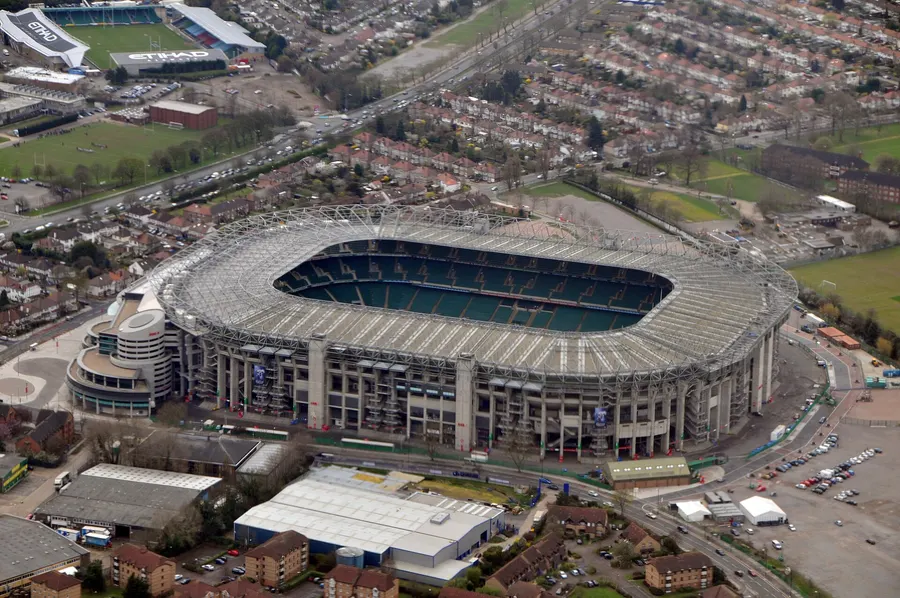
An aerial view of Twickenham Stadium in south-west London, the home of English rugby unionAn aerial view of Twickenham Stadium in south-west London, the home of English rugby unionImage: Tijani59 · CC BY-SA 2.0
sport · Europe

England beat Fiji as the Rugby World Cup opens at Twickenham

The eighth Rugby World Cup was hosted by England, with some matches in Cardiff. It opened at Twickenham on the evening of 18 September 2015, when England met Fiji after the opening ceremony. England won 35-11. They were awarded an early penalty try, the full-back Mike Brown scored twice, and Billy Vunipola forced his way over in the last move of the match to earn a bonus point; Nemani Nadolo scored Fiji’s try. It was as good as the tournament got for the hosts. Defeats by Wales and Australia made England the first sole host nation to go out at the pool stage. New Zealand beat Australia in the final on 31 October and became the first team to retain the trophy.

Source: World Rugby: The road to Rugby World Cup 2015 ↗
RESEARCH

Sources & Further Reading

Selected authoritative references supporting the events on this page.

Britannica: Domitian↗World History Encyclopedia: Domitian↗Britannica: Treaty of Belgrade↗Britannica: Russo-Turkish wars↗Architect of the Capitol: Capitol Cornerstone Ceremony, 1793↗George Washington’s Mount Vernon: Freemasonry↗Memoria Chilena, Biblioteca Nacional de Chile: Primera Junta de Gobierno (1810)↗Biblioteca del Congreso Nacional de Chile: Período 1810-1811↗Library of Congress: Fugitive slave bill ... Approved, September 18, 1850. Millard Fillmore↗US National Park Service: The Fugitive Slave Laws and Boston↗Library of Congress: New-York Daily Times (New-York, N.Y.) 1851-1857↗New York Public Library Archives: New York Times Company Records, George Jones and Henry J. Raymond papers↗Library of Congress: The Panic of 1873↗PBS American Experience: The Panic of 1873↗New Georgia Encyclopedia: Atlanta Compromise Speech↗Library of Congress: Address of Booker T. Washington ... delivered at the opening of the Cotton States and International Exposition, September 18, 1895↗Britannica: Mukden Incident↗US Office of the Historian: The Mukden Incident of 1931 and the Stimson Doctrine↗National Museum of the United States Air Force: USAF Established↗Britannica: The United States Air Force↗United Nations: 63 years later, mystery still surrounds death of Dag Hammarskjöld↗Dag Hammarskjöld Foundation: Dag Hammarskjöld’s life and legacy↗United Nations: Member States, Germany↗German Federal Foreign Office: Germany in the United Nations↗NASA: Voyager 1 takes the first image of the Earth-Moon system in a single frame↗NASA Jet Propulsion Laboratory: Crescent Earth and Moon (PIA00013)↗National Aviation Hall of Fame: Joseph ‘Joe’ William Kittinger, Jr.↗Smithsonian National Air and Space Museum: Joseph Kittinger, Jr.: A part of something altogether glorious↗Electoral Commission: Report on the Scottish independence referendum↗House of Commons Library: Scottish Independence Referendum 2014↗World Rugby: The road to Rugby World Cup 2015↗ESPN: England v Fiji, Rugby World Cup 2015, 18 September 2015↗
WHY THESE MOMENTS?

Significance before volume

This page is not the longest possible list of events. It is a chronological journey through 18 September, where each entry is chosen for historical significance, human interest and reliability.

Facts are checked against authoritative museums, archives, universities and reference works. Where sources disagree, the page says so.

EXPLORED THE DEEPER STORY?

Return to the highlights of 18 September

Discover the lighter side of the date with famous birthdays, culture, firsts and lives remembered.

Explore This Day →