HISTORY & TIMELINE
19 September

A journey through
19 September in history

From the Black Prince’s victory at Poitiers in 1356 to the funeral of Queen Elizabeth II in 2022, 19 September has carried battles, breakthroughs and turning points. This timeline follows the date across almost seven centuries.

JUMP THROUGH TIME
II
THE MIDDLE AGES

Medieval History

Kingdoms, conflict, faith, power and the changing medieval world.

1356
The capture of King John II at Poitiers, in a manuscript illumination by Jean Froissart.The capture of King John II at Poitiers, in a manuscript illumination by Jean Froissart.Image: Jean Froissart · Public domain
world · Europe

The Black Prince wins at Poitiers

The Battle of Poitiers, fought on 19 September 1356, was the second great battle of the Hundred Years’ War after Crécy, and again the English won. Edward the Black Prince, son of Edward III, had fewer than 7,000 men, but he chose a strong defensive position, made use of the longbow and faced a French leadership that still relied on heavy cavalry. King John II of France was captured along with many knights, and their ransoms swelled the English treasury. John was escorted to Bordeaux and then to England, and waited four years for release from the Tower of London. Under the 1360 Treaty of Brétigny France ceded extensive territory and agreed to ransom the king for three million gold crowns, while Edward III renounced his claim to the French throne.

Source: World History Encyclopedia: Battle of Poitiers, 1356 ↗
IV
THE NINETEENTH CENTURY

The 1800s

Industry, empire, invention, reform and a century of enormous transformation.

1893
politics · Oceania

New Zealand’s women win the vote

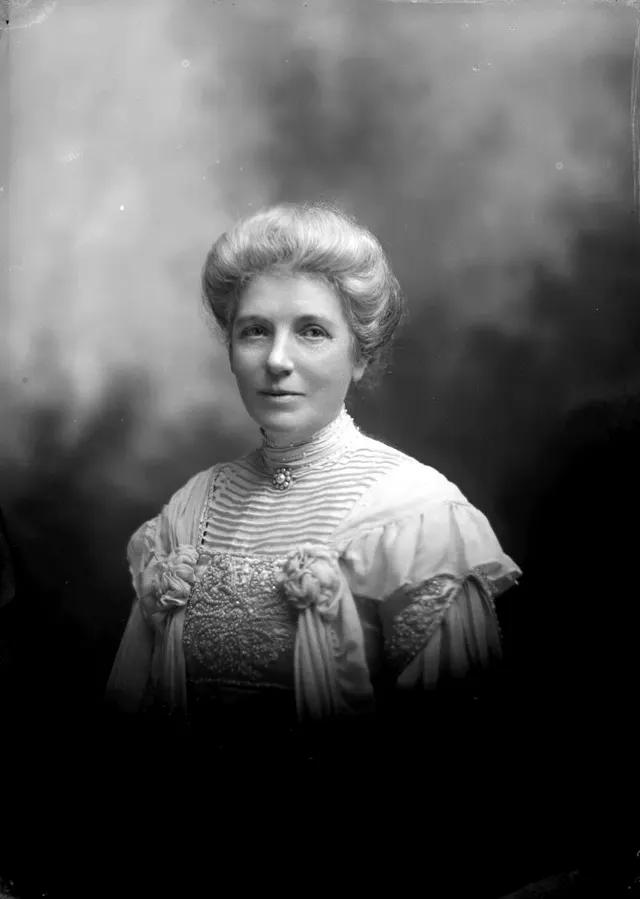
On 19 September 1893 the governor, Lord Glasgow, signed a new Electoral Act, making New Zealand the first self-governing country in the world in which all women could vote in parliamentary elections. Kate Sheppard led the campaign, and the last of three huge petitions carried nearly 32,000 signatures, almost a quarter of the country’s adult women. Registration closed only six weeks before the 28 November election, yet 109,461 women, about 80% of those eligible, enrolled. On polling day 90,290 of them voted, roughly two out of every three adult women.

Source: NZ History: Women win the right to vote ↗
V
THE TWENTIETH CENTURY

The 1900s

War and peace, technological leaps, social change, politics, sport and popular culture.

1944
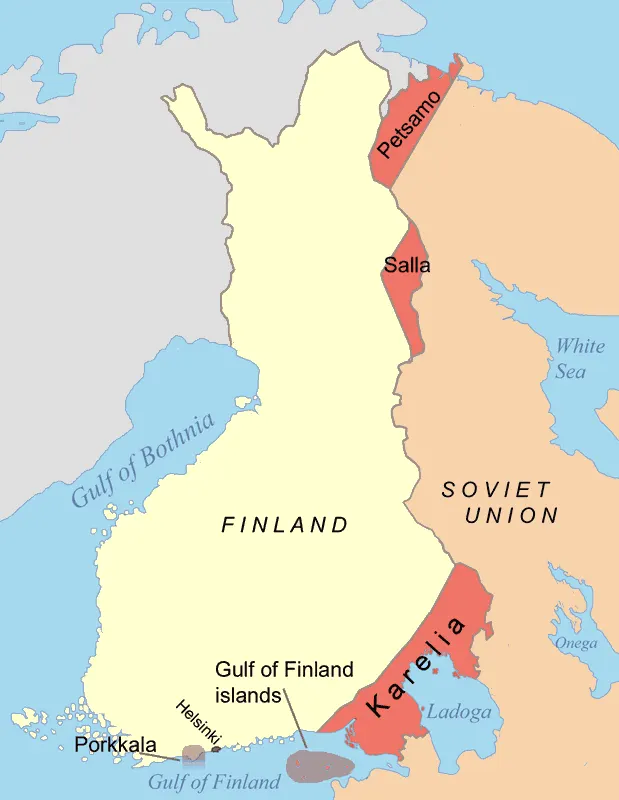
Map of the Finnish territory ceded to the Soviet Union in 1944.Map of the Finnish territory ceded to the Soviet Union in 1944.Image: Jniemenmaa · CC BY-SA 3.0
world · Europe

Finland and the Soviet Union sign the Moscow Armistice

An armistice signed on 19 September 1944 effectively ended the Continuation War between Finland and the Soviet Union. After the Red Army’s breakthrough on the Karelian Isthmus in June, President Ryti had resigned and Marshal Mannerheim opened negotiations. Finland had to recognise the 1940 Treaty of Moscow, cede Petsamo, lease an area at Porkkala and expel German troops, who refused to leave; the resulting clashes became the Lapland War. The formal peace treaty followed in Paris on 10 February 1947.

Source: Encyclopaedia Britannica: Moscow Armistice ↗
1946
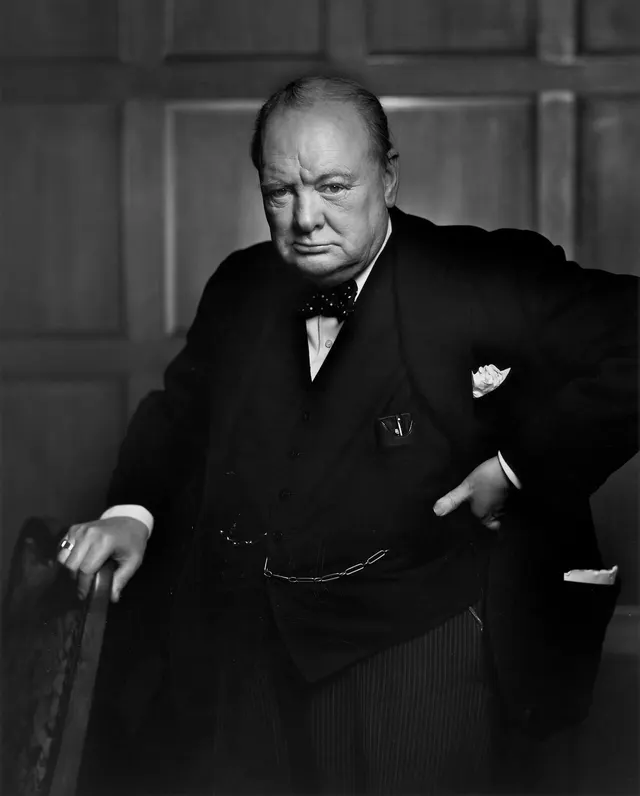
Winston Churchill, photographed by Yousuf Karsh in 1941.Winston Churchill, photographed by Yousuf Karsh in 1941.Image: Yousuf Karsh · Public domain
politics · Europe

Churchill calls for a ‘kind of United States of Europe’

On 19 September 1946, in a speech at the University of Zurich titled ‘The Tragedy of Europe’, Winston Churchill urged that Europe be re-created with a structure in which it could live in peace, safety and freedom: ‘a kind of United States of Europe’. He named a partnership between France and Germany as the first step, and called for a Council of Europe. The speech caused a sensation and helped set the direction of postwar European integration.

Source: Council of Europe: Winston Churchill and the Council of Europe ↗
1955
Juan Perón, president of Argentina.Juan Perón, president of Argentina.Image: Unknown authorUnknown author · Public domain
politics · Americas

Perón is overthrown in Argentina

Juan Perón was overthrown on 19 September 1955 in an army-navy revolt led by General Eduardo Lonardi, and fled to Paraguay. Britannica ties the rebellion to discontent over inflation, corruption and oppression, and to Perón’s efforts to eliminate the political influence of the Church, which had alienated the officer corps. He settled in Madrid and returned to Argentina in 1973, when he was elected president again.

Source: Encyclopaedia Britannica: Juan Perón ↗
1981
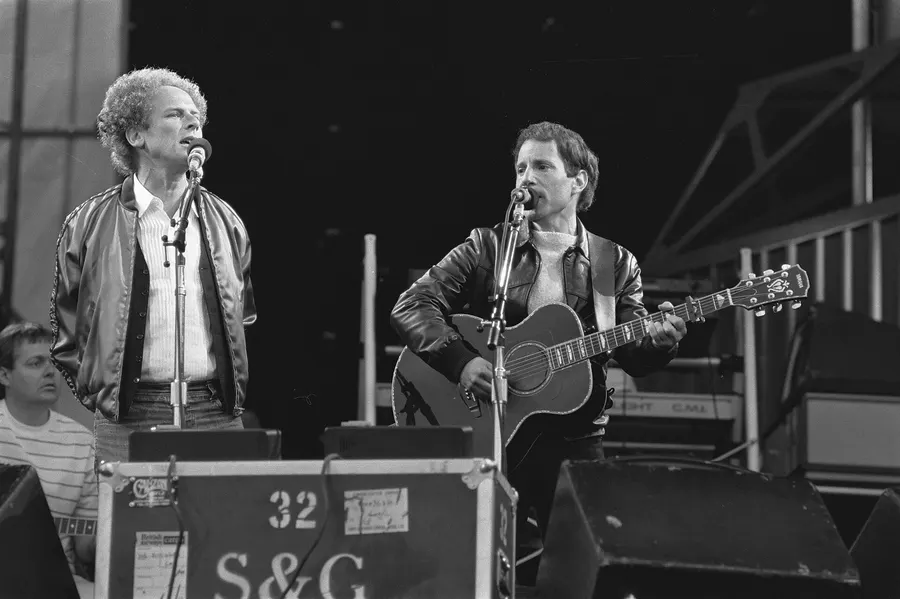
Simon and Garfunkel in concert at the Feijenoord Stadion, Rotterdam.Simon and Garfunkel in concert at the Feijenoord Stadion, Rotterdam.Image: Rob Bogaerts / Anefo · CC0
culture · Americas

Simon and Garfunkel reunite in Central Park

On 19 September 1981 Simon and Garfunkel appeared together at a free open-air concert on the Great Lawn of New York’s Central Park, in front of an estimated half a million people. The Great Lawn was being brought back to life in those years as part of the park’s restoration, and the reunion gave the project one of the biggest audiences any park concert has drawn.

Source: NYC Parks: History of concerts in parks ↗
1983
Brimstone Hill Fortress, Saint Kitts.Brimstone Hill Fortress, Saint Kitts.Image: Ukexpat · CC BY-SA 3.0
politics · Americas

Saint Kitts and Nevis becomes independent

The Federation of Saint Kitts and Nevis became independent from Britain on 19 September 1983, following a constitutional conference in London the year before. It remains a member of the Commonwealth, with the British monarch as head of state. Its constitution, adopted on 23 June 1983, gives Nevis wide autonomy and lets it secede if two thirds of its voters agree. A referendum in 1998 on Nevis independence fell short of that threshold.

Source: Government of Saint Kitts and Nevis: The Constitution ↗
1985
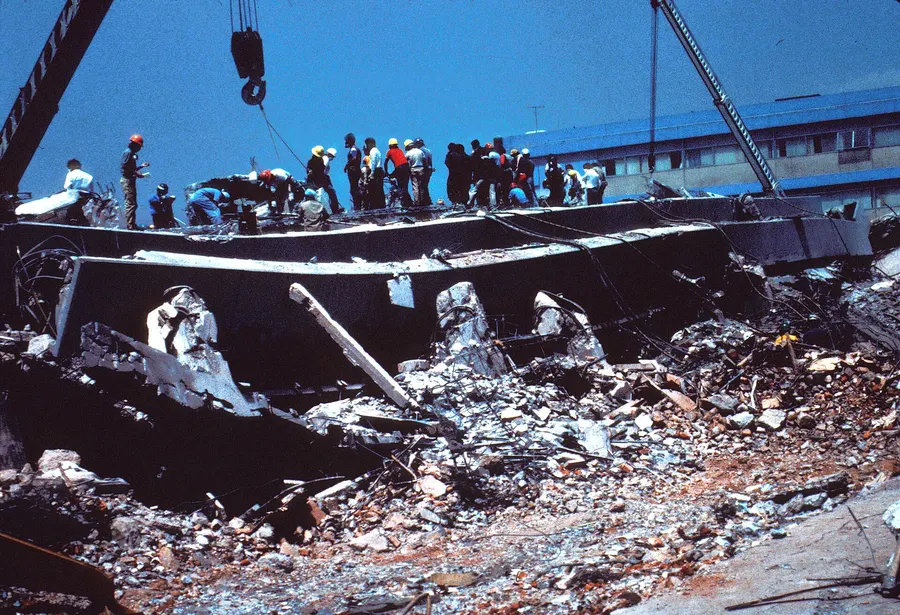
The collapsed General Hospital in Mexico City after the 1985 earthquake.The collapsed General Hospital in Mexico City after the 1985 earthquake.Image: United States Geological Survey · Public domain
world · Americas

An earthquake devastates Mexico City

At 7:18 am on 19 September 1985 a magnitude-8.0 earthquake with its epicentre in the state of Michoacán, about 320 km away, struck Mexico City. At least 9,500 people were killed, 30,000 injured and 100,000 left homeless; 412 buildings collapsed and more than 3,000 others were badly damaged. The city suffered so badly because it stands on the dry bed of Lake Texcoco, where loose sediments amplified the shaking. Buildings of five to fifteen storeys were the worst hit.

Source: Encyclopaedia Britannica: Mexico City earthquake of 1985 ↗
1991
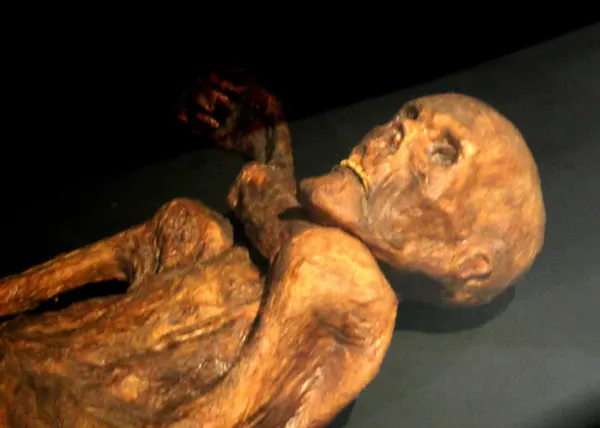
Ötzi the Iceman, the 5,300-year-old mummy found in the AlpsÖtzi the Iceman.Image: 120 · CC BY-SA 3.0
science · Europe

Hikers find Ötzi the Iceman

On 19 September 1991 two German hikers, Erika and Helmut Simon, came across a body emerging from the ice at 3,210 metres near the Tisenjoch pass on the Italian-Austrian border. A survey on 2 October showed it lay 92.56 metres inside Italy, in South Tyrol, and the body was recovered on 23 September. It proved to be a man who had lived about 5,300 years ago. Ötzi and his belongings have been on show at the South Tyrol Museum of Archaeology in Bolzano since 1998, where the mummy is kept at -6 °C and 99% humidity.

Source: South Tyrol Museum of Archaeology: The discovery ↗
VI
2000 TO TODAY

Modern Day

The events of recent decades that have already become part of the historical record.

2006
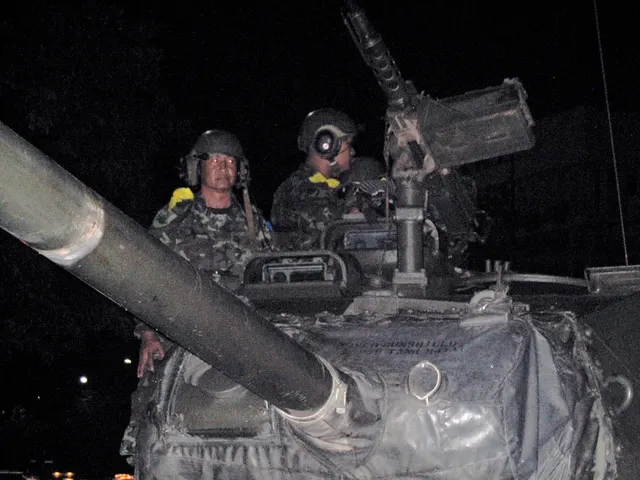
Soldiers on a tank in Bangkok during the coup, September 2006.Soldiers on a tank in Bangkok during the coup, September 2006.Image: goshen42 · CC BY-SA 2.0
politics · Asia

The Thai army seizes power

On 19 September 2006 General Sonthi Boonyaratglin led a bloodless coup against the government of Thaksin Shinawatra, who was in New York for the UN General Assembly. Widespread accusations of corruption and nationwide protests had weakened Thaksin, and key military figures were unhappy with his handling of the insurgency in the south. The 1997 constitution was abrogated, an interim government under Surayud Chulanont was appointed, and a new constitution was approved by referendum in August 2007.

Source: Encyclopaedia Britannica: History of Thailand ↗
2022
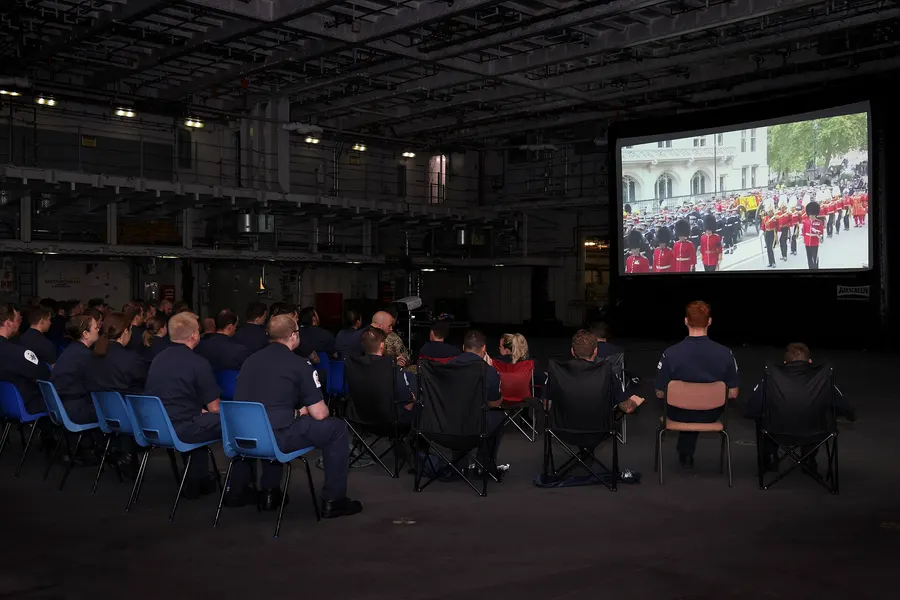
Sailors aboard HMS Queen Elizabeth watch the Queen's funeral on a big screen, 19 September 2022.Sailors aboard HMS Queen Elizabeth watch the Queen’s funeral on a big screen, 19 September 2022.Image: UKinUSA from Washington, D.C., USA · CC BY-SA 2.0
world · Europe

The state funeral of Queen Elizabeth II

The state funeral of Queen Elizabeth II took place at Westminster Abbey on Monday 19 September 2022 at 11 am, after the Abbey’s tenor bell tolled once a minute for 96 minutes, one for each year of her life. Her coffin was borne from the Palace of Westminster on the Royal Navy’s State Gun Carriage. A committal service followed at St George’s Chapel, Windsor, at 4 pm, and she was buried that evening in the King George VI Memorial Chapel beside the Duke of Edinburgh.

Source: The Royal Family: The state funeral for Her Majesty The Queen ↗
WHY THESE MOMENTS?

Significance before volume

This page is not the longest possible list of events. It is a chronological journey through 19 September, where each entry is chosen for historical significance, human interest and reliability.

Facts are checked against authoritative museums, archives, universities and reference works. Where sources disagree, the page says so.

EXPLORED THE DEEPER STORY?

Return to the highlights of 19 September

Discover the lighter side of the date with famous birthdays, culture, firsts and lives remembered.

Explore This Day →