Image credit
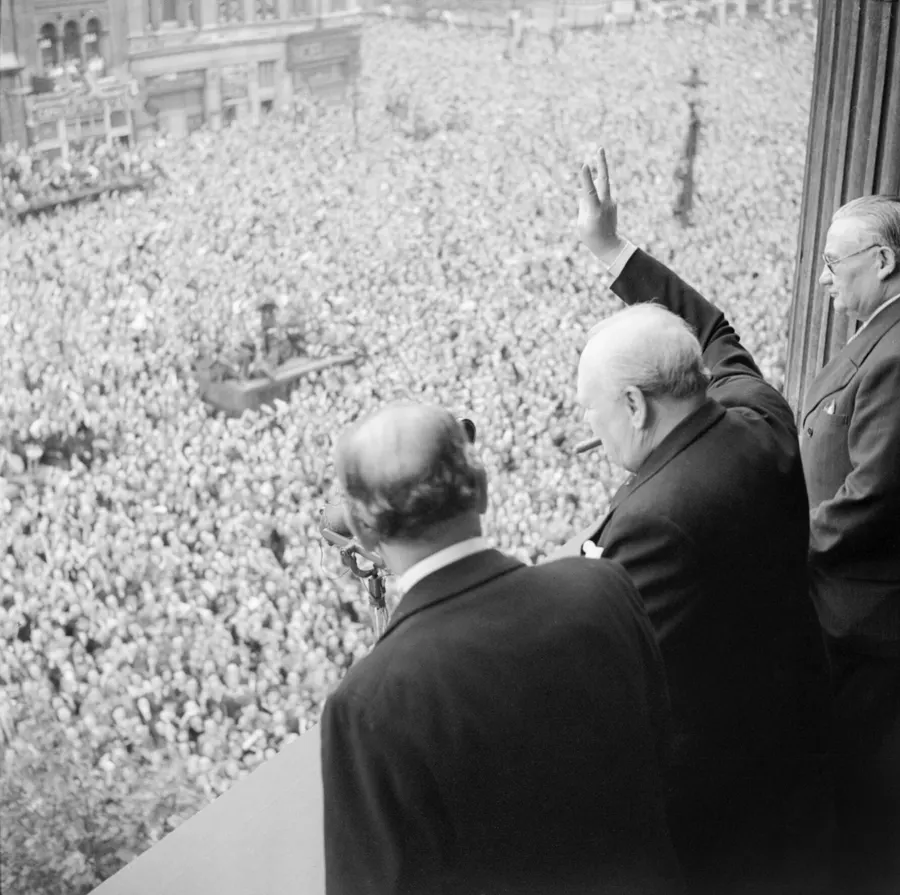
Major W. G. Horton, War Office official photographer · Public domainResized and cropped for display.Victory in Europe: the war against Germany ends
Germany’s unconditional surrender, signed at Reims in the early hours of 7 May 1945, came into force at one minute past eleven on the night of 8 May. In Britain the government declared 8 May a public holiday, and at three in the afternoon Winston Churchill told the nation by radio that the war in Europe was over.
Huge crowds filled Whitehall and gathered outside Buckingham Palace, where the King and the royal family came out on the balcony, and towns across Britain and the Allied countries held street parties and services of thanksgiving. For many the day was bittersweet: families mourned those who had not come home, and the war against Japan went on for three more months. The Soviet Union, where the surrender took effect after midnight Moscow time, marked victory on 9 May.
Read the full storyHistory & Timeline →Source: Imperial War Museums: What you need to know about VE Day ↗