Explore 8 December

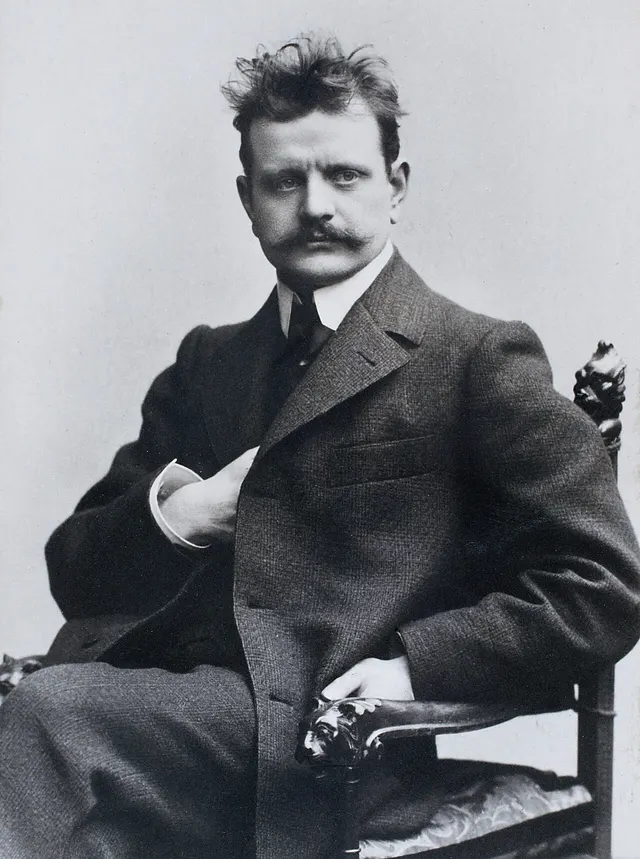
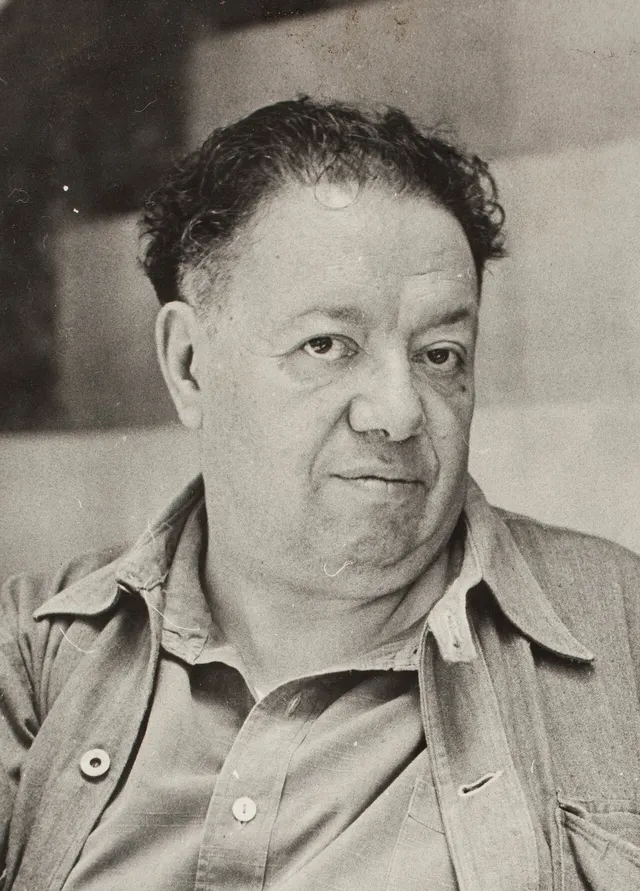
Explore 8 December: Roosevelt calls on Congress to declare war on Japan, Reagan and Gorbachev scrap a whole class of nuclear missiles, three leaders in a Belarusian forest end the Soviet Union and South Asia’s nations form SAARC. Meet Mary, Queen of Scots, Jean Sibelius and Diego Rivera, born on this date.

This day through time →9 verified events across 2 eras

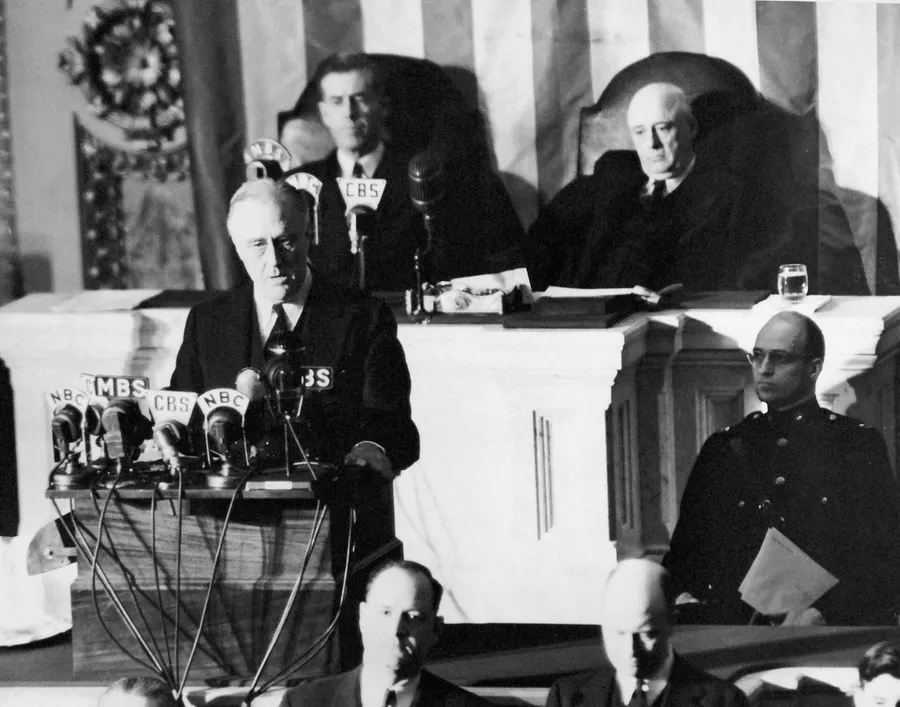
Franklin D. Roosevelt addresses Congress on 8 December 1941, with Vice President Henry Wallace and Speaker Sam Rayburn behind him.
Image creditUnited States Government. · Public domainResized and cropped for display.

‘A date which will live in infamy’

At 12.30 pm on 8 December 1941, the day after the attack on Pearl Harbor, President Franklin D. Roosevelt spoke to a joint session of Congress and, by radio, to the nation. ‘Yesterday, December 7, 1941, a date which will live in infamy,’ he began, ‘the United States of America was suddenly and deliberately attacked.’

Congress declared war on Japan straight afterwards. The Senate was unanimous and only one member of the House, the pacifist Jeannette Rankin, voted against. Roosevelt signed the declaration that afternoon, and the United States was at war.

Read the full storyHistory & Timeline →Source: US National Archives: Joint address to Congress leading to a declaration of war against Japan (1941) ↗
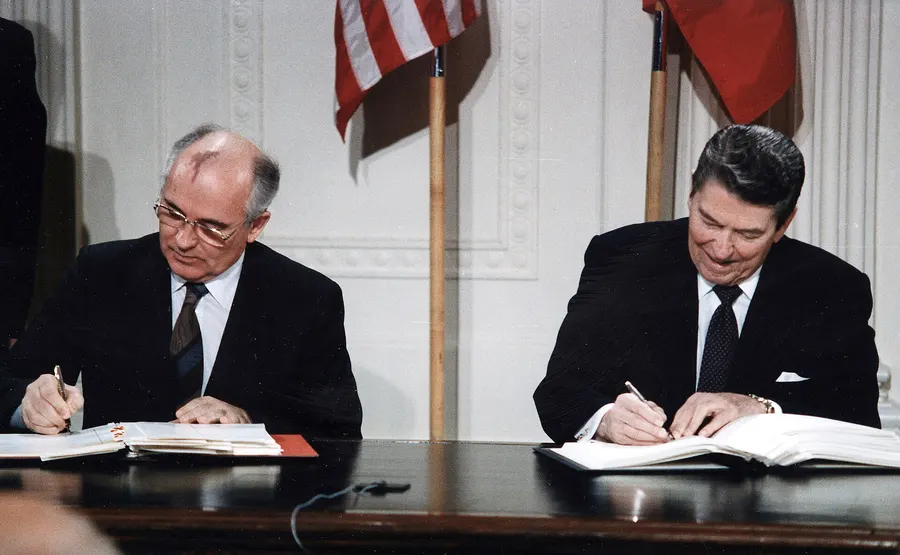
Mikhail Gorbachev and Ronald Reagan sign the INF Treaty in the East Room of the White House, 8 December 1987.
Image creditWhite House Photographic Office · Public domainResized and cropped for display.

Reagan and Gorbachev sign the INF Treaty

In the East Room of the White House on 8 December 1987, President Ronald Reagan and the Soviet leader Mikhail Gorbachev signed the Intermediate-Range Nuclear Forces Treaty. For the first time the two superpowers agreed to destroy an entire class of nuclear weapons: all their land-based missiles with ranges between 500 and 5,500 km.

Within three years about 2,600 missiles had been destroyed, about two-thirds of them Soviet, under the eyes of inspectors from the other side. The United States withdrew from the treaty in 2019, accusing Russia of breaking it.

Read the full storyHistory & Timeline →Source: US Department of State: Intermediate-Range Nuclear Forces Treaty ↗
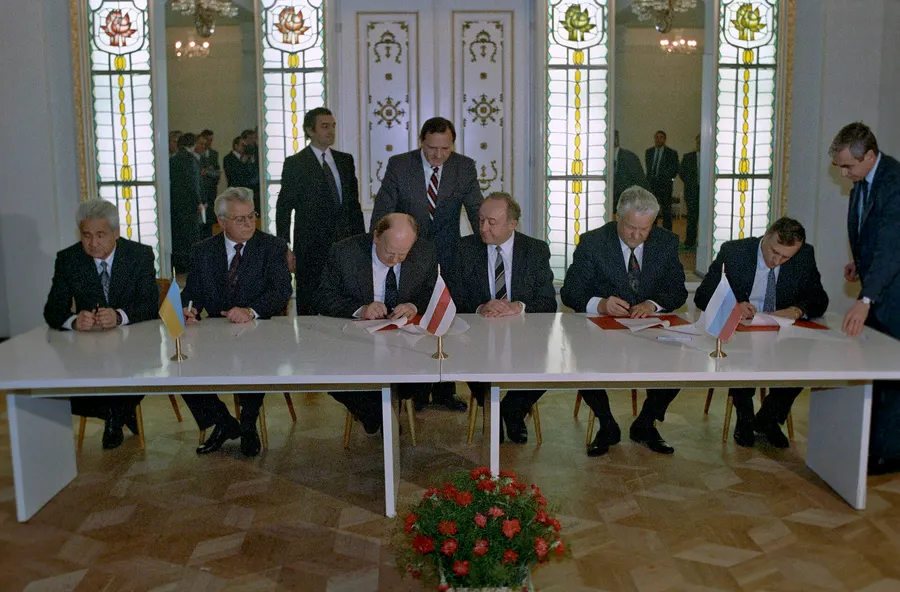
Leonid Kravchuk, Stanislav Shushkevich and Boris Yeltsin with their delegations sign the agreement ending the USSR, 8 December 1991.
Image creditU. Ivanov / Ю. Иванов · CC BY-SA 3.0Resized and cropped for display.

Three leaders end the Soviet Union

On 8 December 1991, at a government hunting lodge in the Belovezha forest in Belarus, the leaders of Russia, Ukraine and Belarus, Boris Yeltsin, Leonid Kravchuk and Stanislav Shushkevich, signed an agreement declaring that the Soviet Union had ceased to exist as a subject of international law and a geopolitical reality.

In its place they founded the Commonwealth of Independent States. Yeltsin telephoned President George H. W. Bush before the Soviet president, Mikhail Gorbachev, had been told. Gorbachev resigned on 25 December, and the Soviet flag came down over the Kremlin that night.

Read the full storyHistory & Timeline →Source: Wilson Center: Three men in a forest, Shushkevich remembers the meeting that ended the Soviet Union ↗
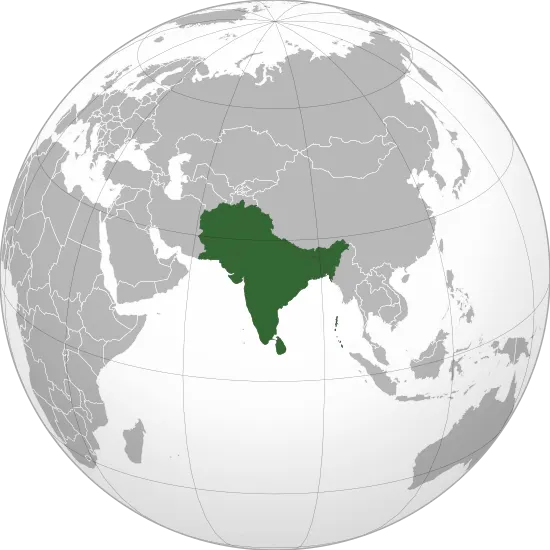
South Asia, the region of the South Asian Association for Regional Cooperation.
Image credituser:Serg!o · CC BY-SA 3.0Resized and cropped for display.

South Asia’s nations form SAARC

On 8 December 1985 the leaders of Bangladesh, Bhutan, India, the Maldives, Nepal, Pakistan and Sri Lanka signed the charter of the South Asian Association for Regional Cooperation in Dhaka, creating the region’s first organisation for working together on trade, agriculture, health and culture.

Its secretariat opened in Kathmandu in 1987, and Afghanistan joined as the eighth member in 2007. The member states mark 8 December each year as SAARC Charter Day.

Read the full storyHistory & Timeline →Source: Encyclopaedia Britannica: South Asian Association for Regional Cooperation ↗
♙
PEOPLE

Born Today

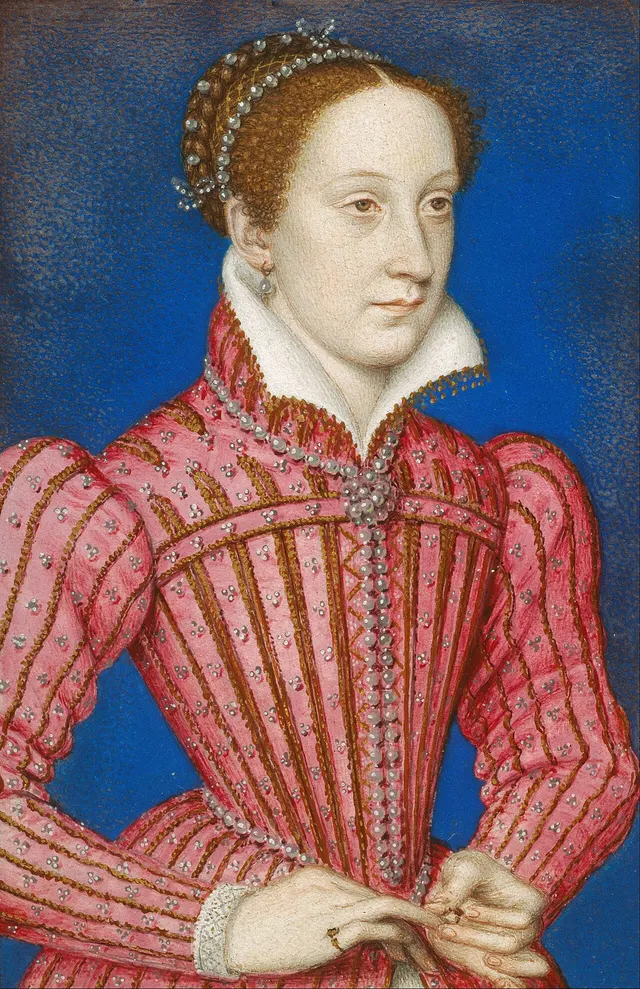
Mary, Queen of Scots
Image creditFrançois Clouet · Public domainResized and cropped for display.

Mary, Queen of Scots

Queen of Scotland from the age of six days, later executed in England on the orders of Elizabeth I.

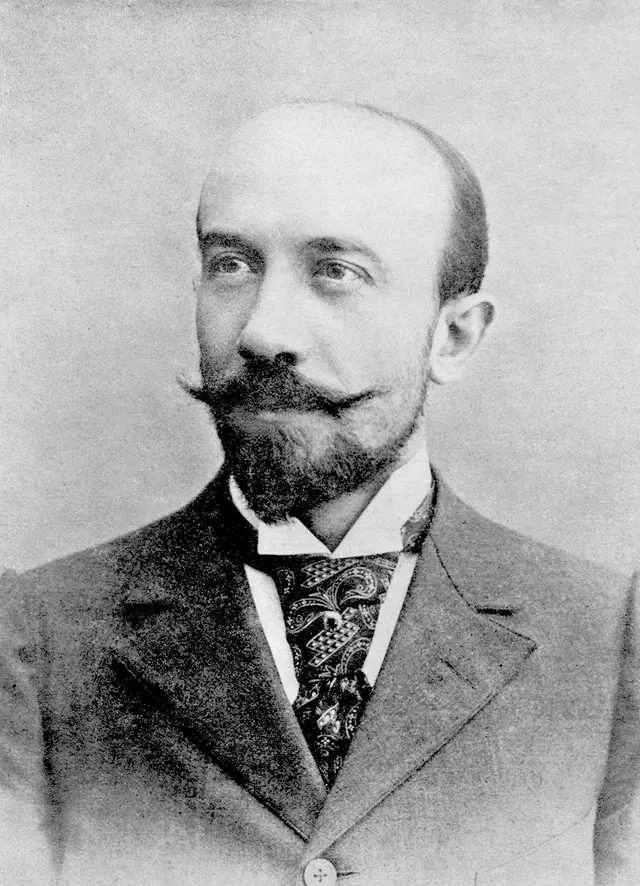
Georges Méliès
Image creditGeorges Méliès · Public domainResized and cropped for display.

Georges Méliès

French stage magician and film pioneer who made A Trip to the Moon.

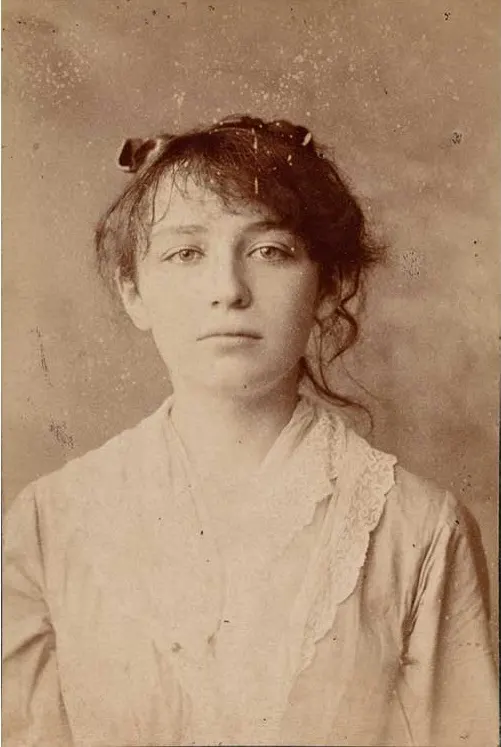
Camille Claudel
Image creditCésar · Public domainResized and cropped for display.

Camille Claudel

French sculptor of The Waltz and The Age of Maturity.

Sinéad O'Connor
Image creditBryan Ledgard · CC BY 2.0Resized and cropped for display.

Sinéad O’Connor

Irish singer-songwriter known for Nothing Compares 2 U.

◉
IDEAS THAT CHANGED THINGS

Firsts, Science & Discoveries

The United States 'Atoms for Peace' postage stamp of 1955.
The United States ‘Atoms for Peace’ postage stamp of 1955.
Image creditBureau of Engraving and Printing · Public domainResized and cropped for display.

Eisenhower’s ‘Atoms for Peace’

Speaking to the United Nations General Assembly in New York on 8 December 1953, as the nuclear arms race gathered pace, President Dwight D. Eisenhower proposed that nuclear powers should share materials and knowledge for peaceful uses of the atom, in medicine, agriculture and electricity.

He suggested an international agency to oversee it. The idea led in 1957 to the International Atomic Energy Agency, which still promotes peaceful nuclear science and inspects nuclear programmes around the world.

Read the full storyHistory & Timeline →Source: Eisenhower Presidential Library: Atoms for Peace ↗
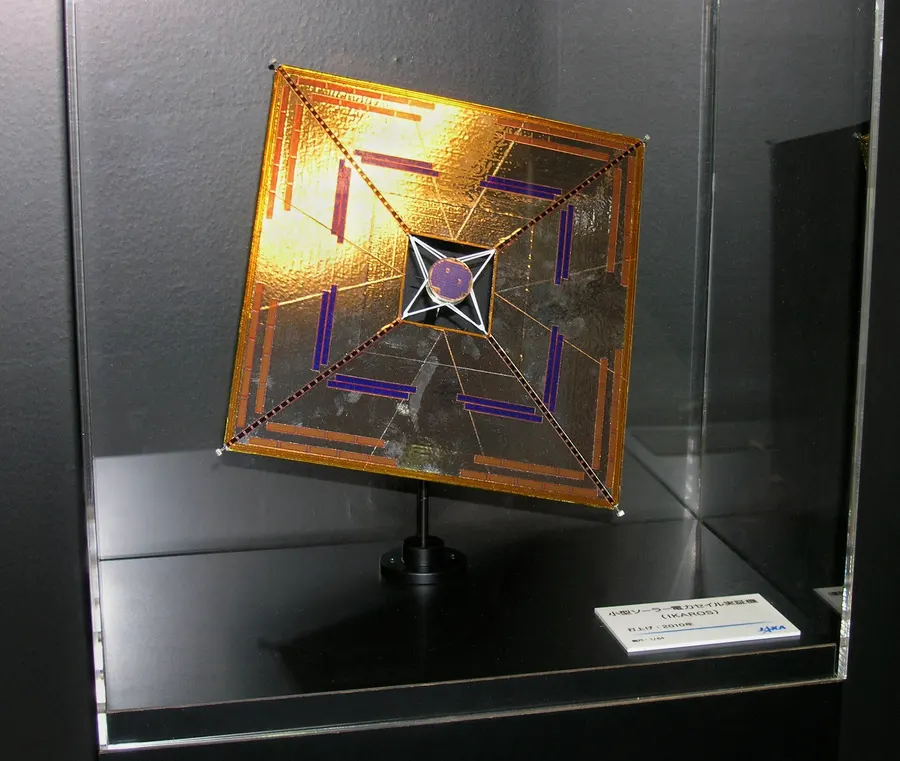
A model of IKAROS at the International Astronautical Congress in Prague, 2010.
Image creditPavel Hrdlička (Czech Wikipedia user Packa) · CC BY-SA 3.0Resized and cropped for display.

A Japanese solar sail flies past Venus

IKAROS, launched by Japan’s space agency JAXA in May 2010, was the first spacecraft to be pushed through interplanetary space by sunlight alone, falling on a square sail 20 metres across and thinner than a human hair.

On 8 December 2010 it sailed past Venus at a distance of about 80,000 km, close enough for the planet to bend its path, having proved that the gentle pressure of sunlight could steer and speed up a spacecraft.

Read the full storyHistory & Timeline →Source: ISAS/JAXA: IKAROS small solar power sail demonstrator ↗
✦
LIVES REMEMBERED

Remembered Today

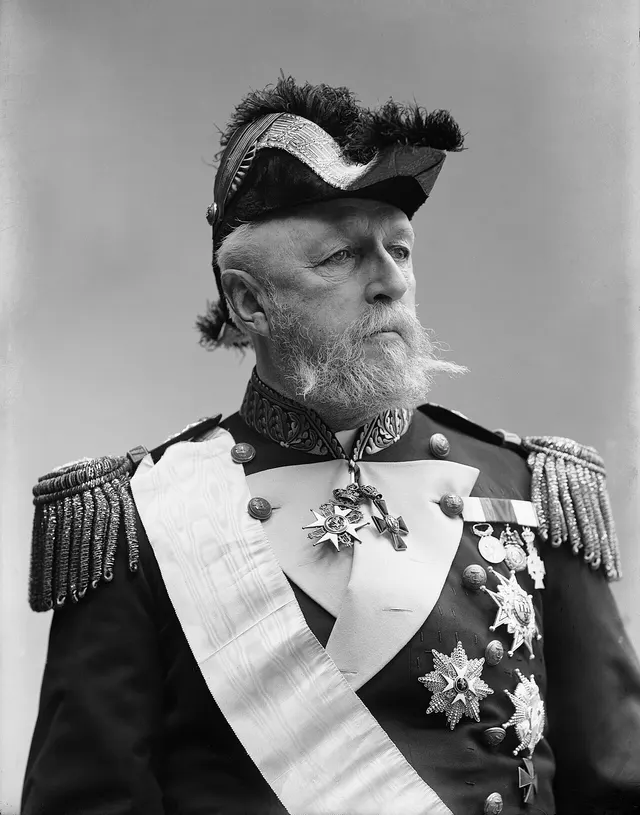
Oscar II
Image creditLars Larsson · Public domainResized and cropped for display.

Oscar II

King of Sweden, and of Norway until 1905.

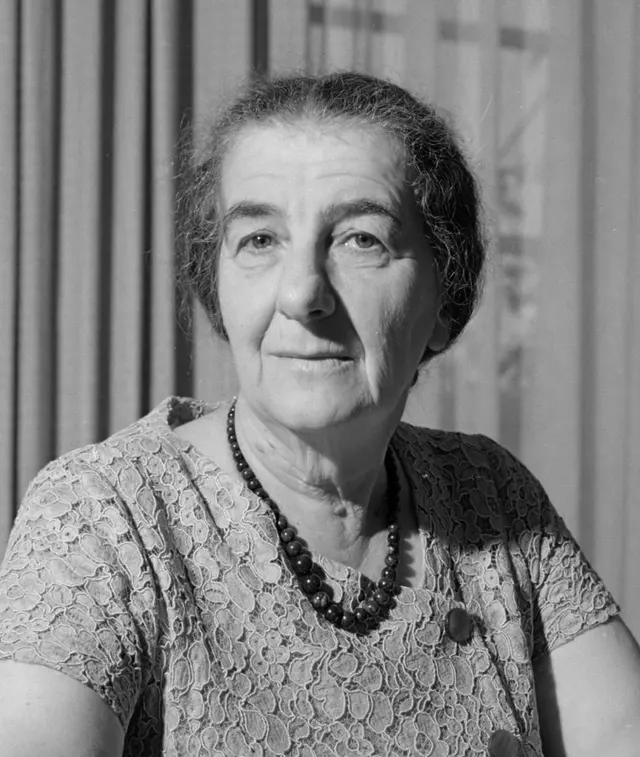
Golda Meir
Image creditWillem van de Poll · CC BY-SA 4.0Resized and cropped for display.

Golda Meir

Prime minister of Israel from 1969 to 1974, one of the first women to lead a government.

☉
AROUND THE WORLD

Observances & Anniversaries

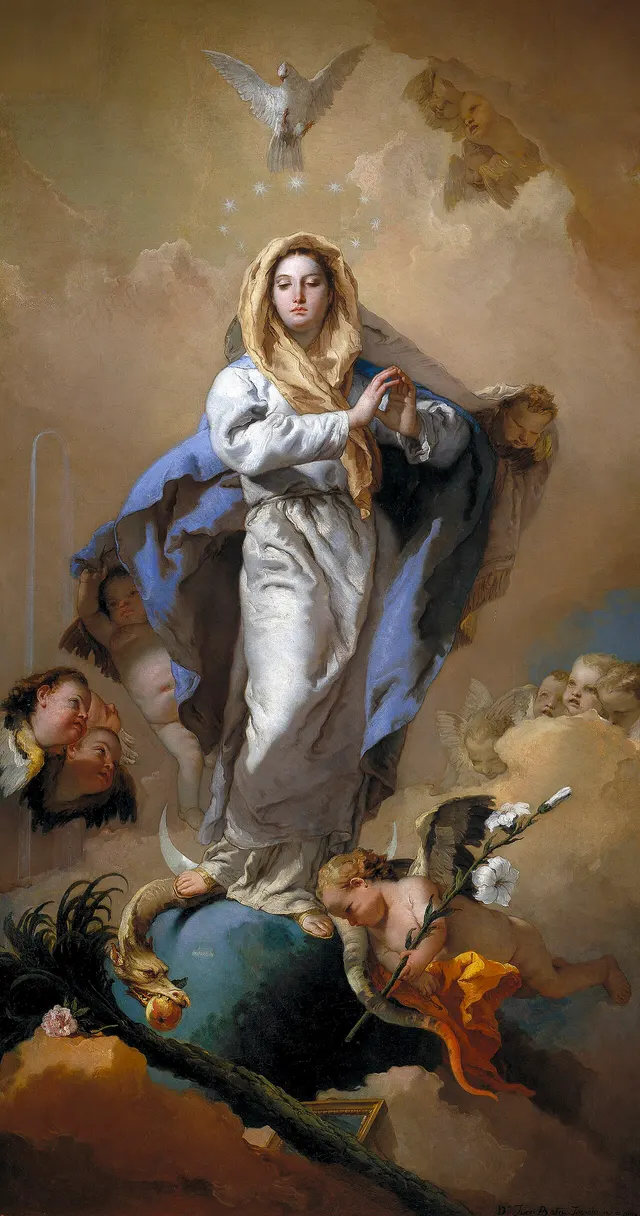
The Immaculate Conception, painted by Giovanni Battista Tiepolo.
Image creditGiovanni Battista Tiepolo · Public domainResized and cropped for display.

Feast of the Immaculate Conception

The Catholic Church keeps 8 December as the feast of the Immaculate Conception, the belief that the Virgin Mary was free from original sin from the moment she was conceived. Pope Pius IX defined it as dogma on this day in 1854 in the bull Ineffabilis Deus. It is a public holiday in Italy, Spain, Portugal and several countries of Latin America.

Source: Encyclopaedia Britannica: Ineffabilis Deus ↗
HISTORY & TIMELINE

Finished the highlights?

Follow 8 December chronologically, from the Middle Ages to the modern day, with 9 verified events and the sources behind them.

This day through time →