Explore 14 December

Explore 14 December: five Norwegians plant a flag at the South Pole, George Washington dies at Mount Vernon, Max Planck puts a number on the quantum and the Bosnian war is signed away in Paris. Meet Tycho Brahe, Nostradamus and George VI, born on this date.

This day through time →11 verified events across 5 eras

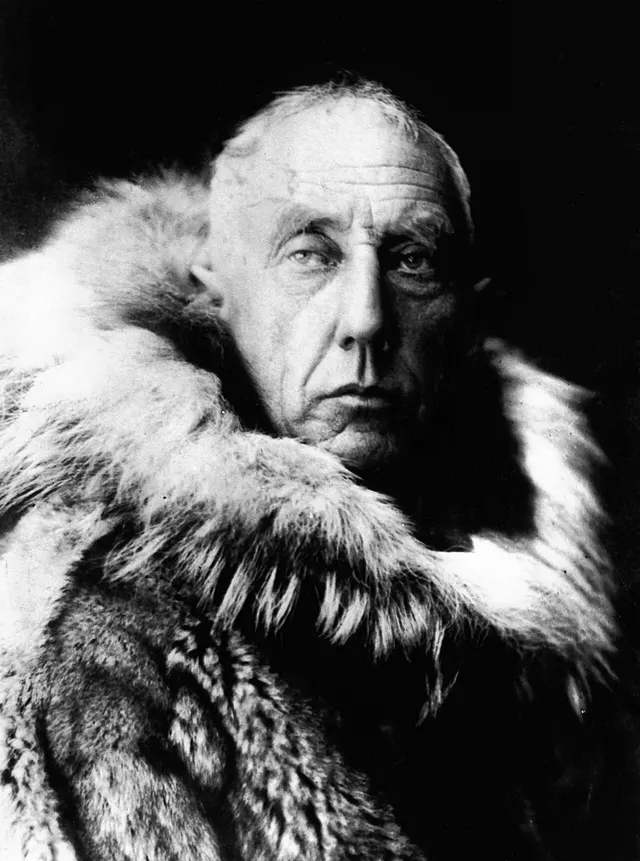
Roald Amundsen in polar furs.
Image creditAnonymousUnknown author · Public domainResized and cropped for display.

Amundsen reaches the South Pole

On 14 December 1911 Roald Amundsen and four companions — Olav Bjaaland, Helmer Hanssen, Sverre Hassel and Oscar Wisting — became the first people to stand at the South Pole. They had left the Bay of Whales on 19 October with four sledges and fifty-two dogs, and had been favoured by good weather.

They pitched a tent they called Polheim, left a letter for the king of Norway, and started back on 17 December, reaching base on 25 January 1912. Robert Falcon Scott’s party arrived at the Pole thirty-four days after Amundsen, found the tent, and died on the way home.

Read the full storyHistory & Timeline →Source: Encyclopaedia Britannica: Roald Amundsen ↗
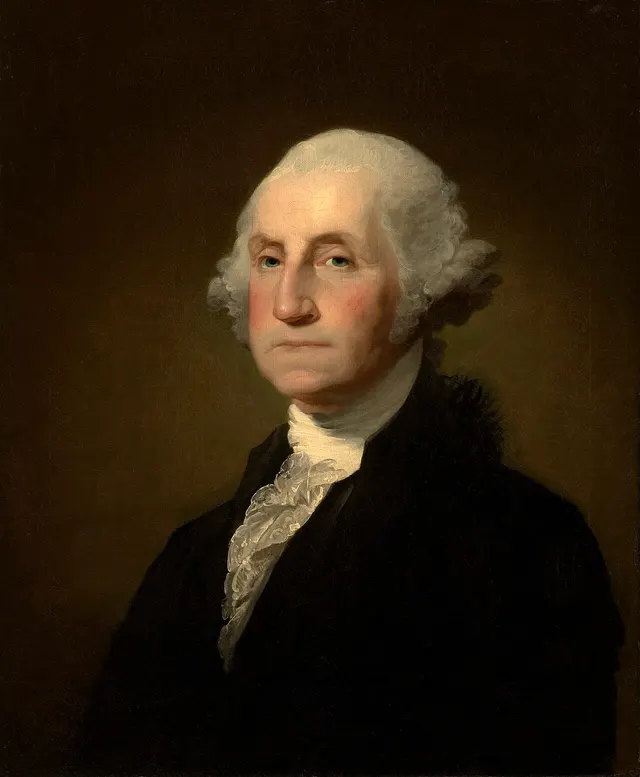
George Washington, painted by Gilbert Stuart.
Image creditGilbert Stuart · Public domainResized and cropped for display.

George Washington dies at Mount Vernon

George Washington died between ten and eleven o’clock on the night of 14 December 1799, at Mount Vernon, less than three years after leaving the presidency. He had spent the previous day riding round the estate in sleet and snow and woke in the small hours struggling to breathe; the diagnosis now generally accepted is acute bacterial epiglottitis.

His doctors bled him repeatedly, induced vomiting and applied blistering compounds — the standard treatment of the day, and almost certainly a hastening of the end. He was buried at Mount Vernon on 18 December, having asked in his will that his enslaved workers be freed on his wife’s death.

Read the full storyHistory & Timeline →Source: George Washington’s Mount Vernon: the death of George Washington ↗
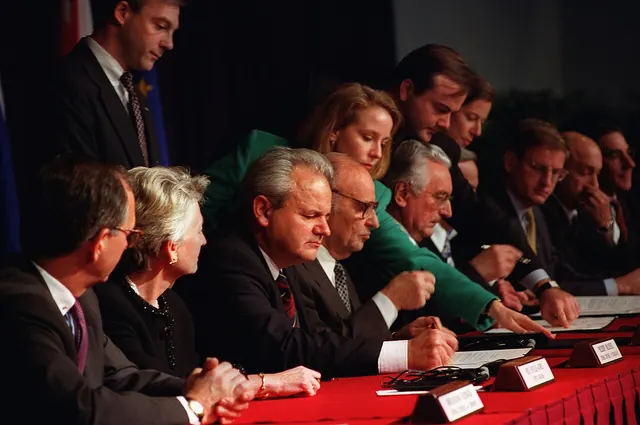
The signing ceremony for the Dayton peace agreement.
Image creditU.S. Air Force/Staff Sgt. Brian Schlumbohm · Public domainResized and cropped for display.

The Dayton Agreement is signed in Paris

The presidents of Bosnia and Herzegovina, Croatia and Serbia signed the General Framework Agreement for Peace in Paris on 14 December 1995, ending three and a half years of war in Bosnia — the bloodiest conflict in Europe since 1945. The terms had been hammered out the previous month at an air force base near Dayton, Ohio, under the American negotiator Richard Holbrooke.

The country stayed whole but was split into two entities, a Croat-Bosniak federation on 51 per cent of the territory and a Serb republic on the rest, with a 60,000-strong international force to hold the line. The settlement stopped the fighting; the constitutional machinery it created is still in place, and still argued over.

Read the full storyHistory & Timeline →Source: Encyclopaedia Britannica: Dayton Accords ↗
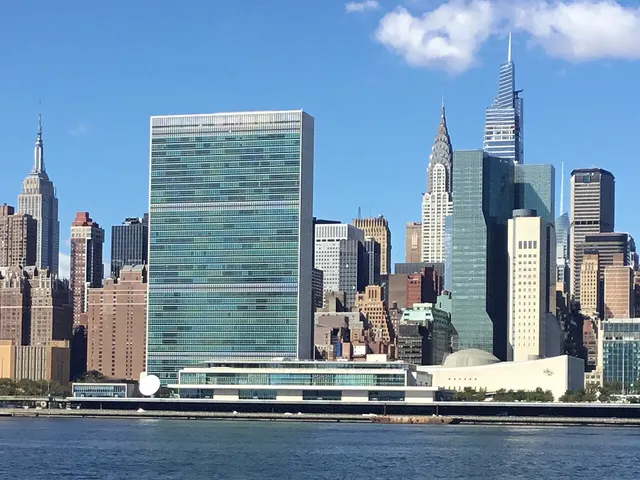
United Nations headquarters in New York.
Image creditKidfly182 · CC BY-SA 4.0Resized and cropped for display.

Sixteen countries join the United Nations at once

On 14 December 1955 the United Nations admitted sixteen new members in a single day: Albania, Jordan, Ireland, Portugal, Hungary, Italy, Austria, Romania, Bulgaria, Finland, Ceylon, Nepal, Libya, Cambodia, Laos and Spain. Membership jumped from sixty to seventy-six.

It was a package deal. For most of a decade the Cold War veto had kept applicants out in both directions, with the Soviet Union blocking Western-aligned states and the West blocking Soviet-aligned ones. Pairing four communist states with twelve others was the only way through, and it opened the way for the wave of newly independent African and Asian members that followed.

Read the full storyHistory & Timeline →Source: United Nations: growth in United Nations membership ↗
♙
PEOPLE

Born Today

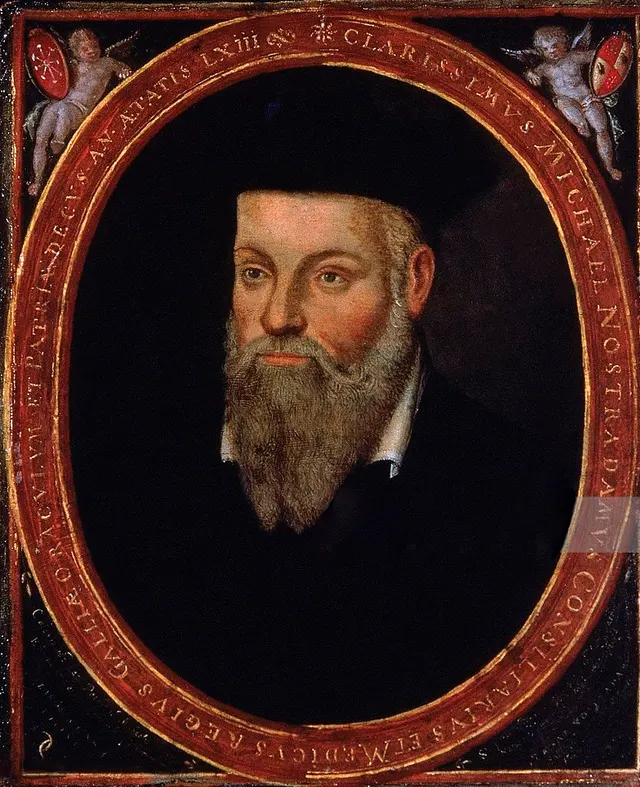
Nostradamus
Image creditCésar de Notre-Dame · Public domainResized and cropped for display.

Nostradamus

French physician and astrologer whose cryptic quatrains have been read as prophecy for four and a half centuries.

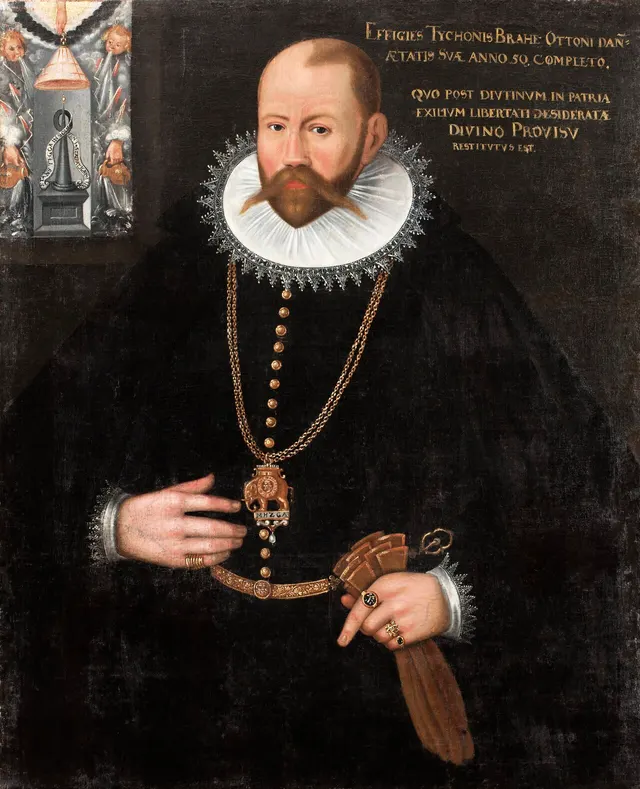
Tycho Brahe
Image creditUnknown authorUnknown author · Public domainResized and cropped for display.

Tycho Brahe

Danish astronomer whose naked-eye observations, the most accurate ever made, gave Kepler the data for his laws.

George VI
Image creditMatson Photo Service · Public domainResized and cropped for display.

George VI

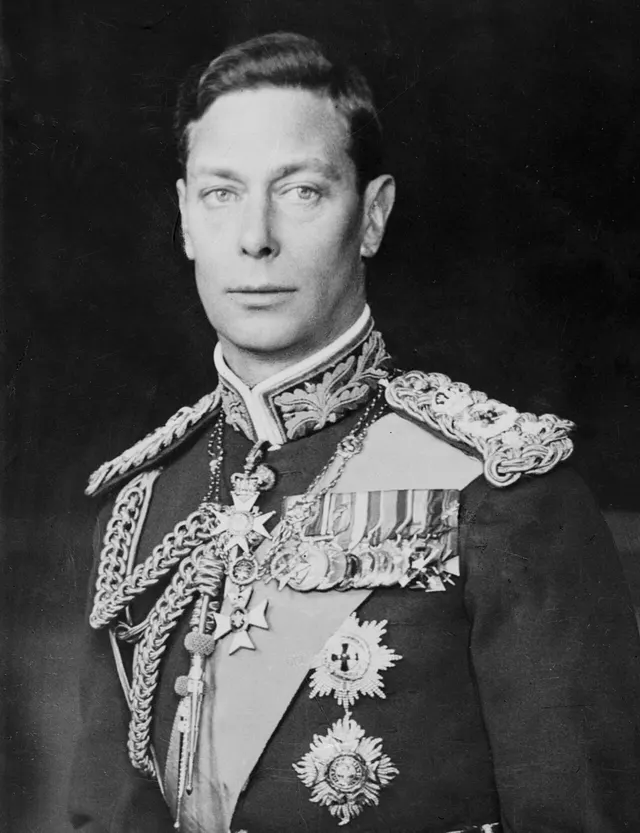
King of the United Kingdom from his brother’s abdication in 1936 until his death in 1952.

Paul Éluard
Image creditStudio Harcourt · Public domainResized and cropped for display.

Paul Éluard

French surrealist poet whose wartime poem Liberté was dropped over occupied France by the RAF.

Jane Birkin
Image creditUnknown authorUnknown author · Public domainResized and cropped for display.

Jane Birkin

English actress and singer who made her life in France, and after whom the Hermès Birkin bag is named.

Patty Duke
Image creditGrace Lyons-management · Public domainResized and cropped for display.

Patty Duke

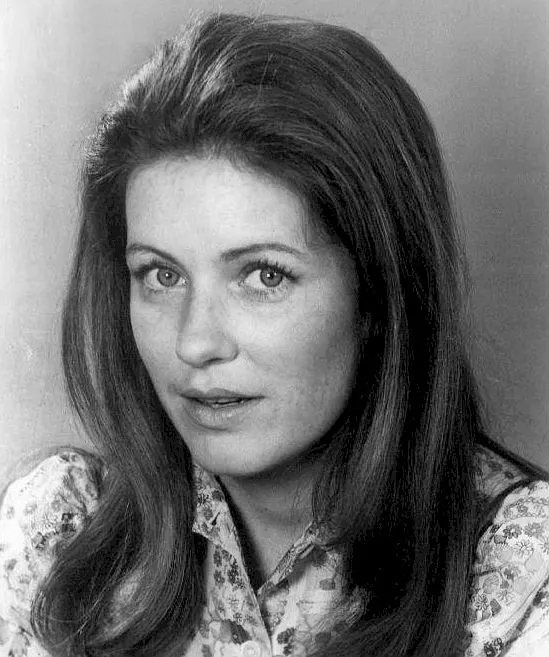
American actress who won an Oscar at sixteen for playing Helen Keller, and later campaigned on mental health.

Michael Owen
Image creditDavid Seow · CC BY-SA 4.0Resized and cropped for display.

Michael Owen

English footballer, European Footballer of the Year in 2001, remembered for his goal against Argentina at eighteen.

◉
IDEAS THAT CHANGED THINGS

Firsts, Science & Discoveries

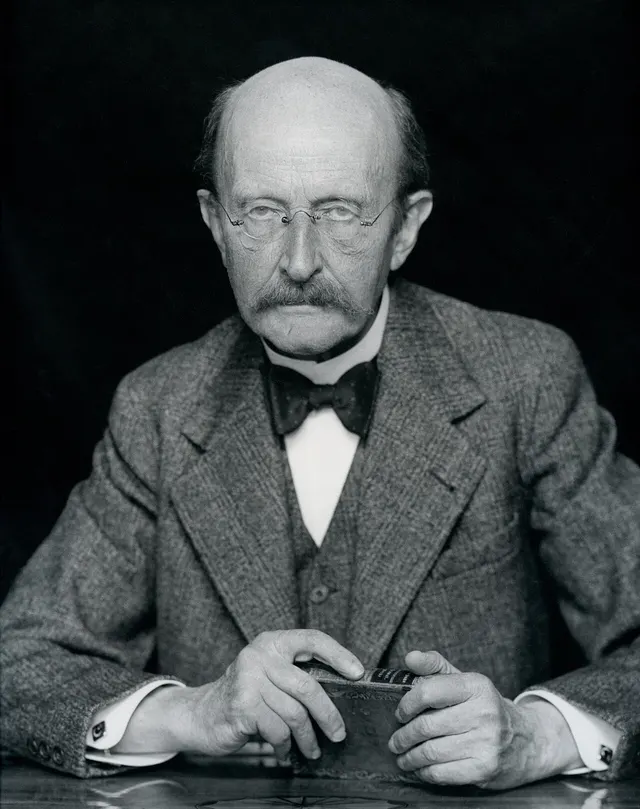
Max Planck.
Max Planck.
Image creditHugo Erfurth · Public domainResized and cropped for display.

Planck reads the paper that starts quantum theory

On 14 December 1900, at a meeting of the German Physical Society in Berlin, Max Planck presented the derivation of his law for the radiation given off by a hot body. To make the mathematics come out, he had to assume that energy was emitted not in a continuous stream but in discrete packets, proportional to frequency by a new constant he called h.

Planck thought of it as a formal trick and spent years trying to do without it. It was Einstein in 1905 who took the quantum seriously as physics. The date is usually given as the birthday of quantum theory.

Read the full storyHistory & Timeline →Source: Encyclopaedia Britannica: Max Planck ↗
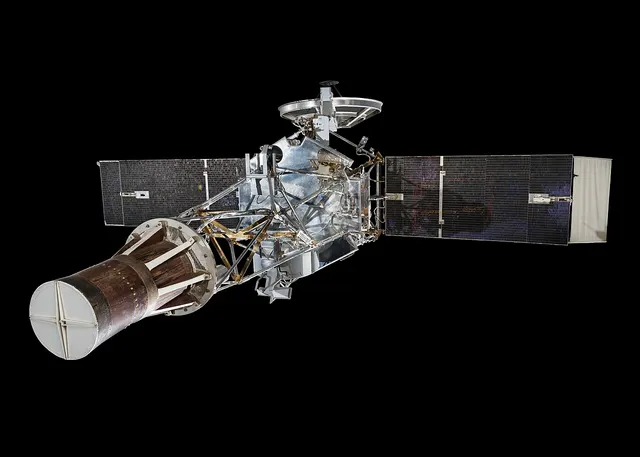
A Mariner 2 spacecraft in the Smithsonian's National Air and Space Museum.
A Mariner 2 spacecraft in the Smithsonian’s National Air and Space Museum.
Image creditEric Long/Smithsonian · CC0Resized and cropped for display.

Mariner 2 reaches Venus

Mariner 2 passed within about 35,000 kilometres of Venus on 14 December 1962, the first spacecraft to reach another planet and send data home. In a forty-two-minute scan its microwave and infrared radiometers found surface temperatures of well over 200°C on both the day and night sides, and a cloud deck some 56 to 80 kilometres up.

The hope that Venus might be a warm, wet twin of the Earth died that afternoon. On the way there Mariner 2 had also confirmed the existence of the solar wind.

Read the full storyHistory & Timeline →Source: NASA: 60 years ago, Mariner 2 first to explore Venus ↗
✦
LIVES REMEMBERED

Remembered Today

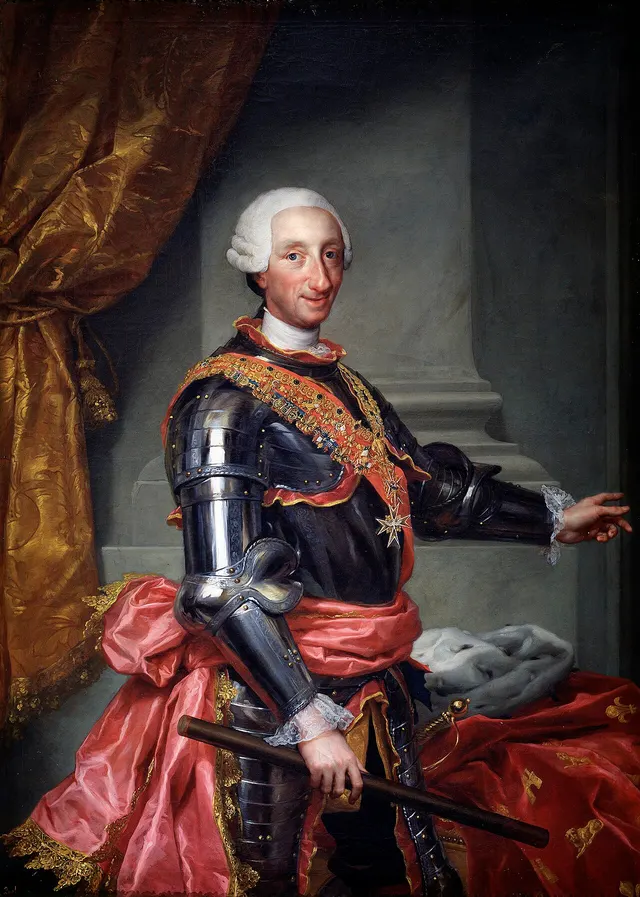
Charles III of Spain
Image creditAnton Raphael Mengs · Public domainResized and cropped for display.

Charles III of Spain

Bourbon king of Spain and reforming ruler, earlier king of Naples and Sicily.

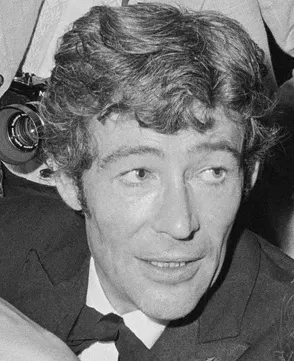
Peter O'Toole
Image creditunknown · Public domainResized and cropped for display.

Peter O’Toole

British-Irish actor, star of Lawrence of Arabia and nominated for eight Oscars without winning one.

HISTORY & TIMELINE

Finished the highlights?

Follow 14 December chronologically, from the Middle Ages to the modern day, with 11 verified events and the sources behind them.

This day through time →