HISTORY & TIMELINE
14 December

A journey through
14 December in history

From an earthquake that cracked the dome of Hagia Sophia in 557 to a peace treaty signed in Paris in 1995, 14 December is a day of endings and of firsts. This timeline follows the date across fifteen centuries.

I
EARLIEST RECORDS

Ancient & Early History

The earliest worthwhile records and events connected with this date.

557
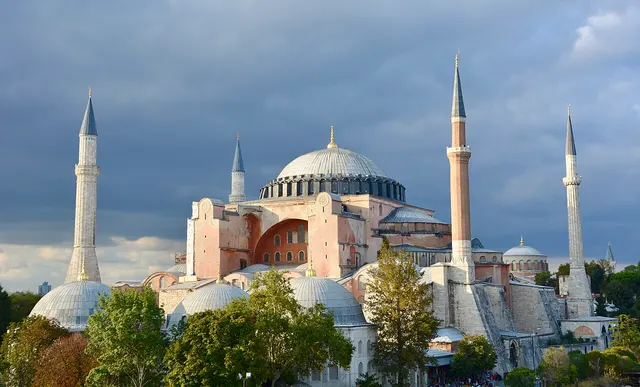
Hagia Sophia in Istanbul today.Hagia Sophia in Istanbul today.Image: Adli Wahid · CC BY-SA 3.0
world · Asia

An earthquake cracks Hagia Sophia

An earthquake estimated at around magnitude 7 struck Constantinople on 14 December 557, and was still being commemorated in the calendar of the Great Church centuries later. It damaged the church of Hagia Sophia, finished by Justinian only twenty years earlier; part of the great dome came down the following May. Justinian had it rebuilt higher and steeper by Isidore the Younger, and the church was rededicated in 562 — the dome that stands today.

Source: Cambridge University Press: Ritual and Earthquakes in Constantinople — introduction ↗
II
THE MIDDLE AGES

Medieval History

Kingdoms, conflict, faith, power and the changing medieval world.

1287
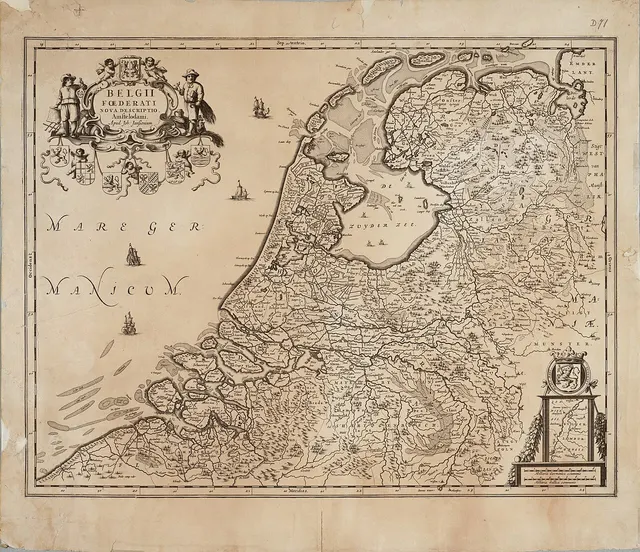
A seventeenth-century map of the Netherlands showing the Zuiderzee.A seventeenth-century map of the Netherlands showing the Zuiderzee.Image: Jan Janssonius · Public domain
world · Europe

St Lucia’s flood drowns the Low Countries

A North Sea storm on 14 December 1287 broke through the sea defences of the northern Netherlands and drowned the land behind them. Tens of thousands of people died, and the lake behind the dunes was opened to the sea to become the Zuiderzee. One small place gained by it: the village of Amsterdam now had a direct salt-water route to the north, and grew into a port. The Zuiderzee was finally closed off again by the Afsluitdijk in 1932.

Source: Encyclopaedia Britannica: St. Lucia flood ↗
III
A CHANGING WORLD

Early Modern Era

Exploration, political change, scientific development and expanding global connections.

1542
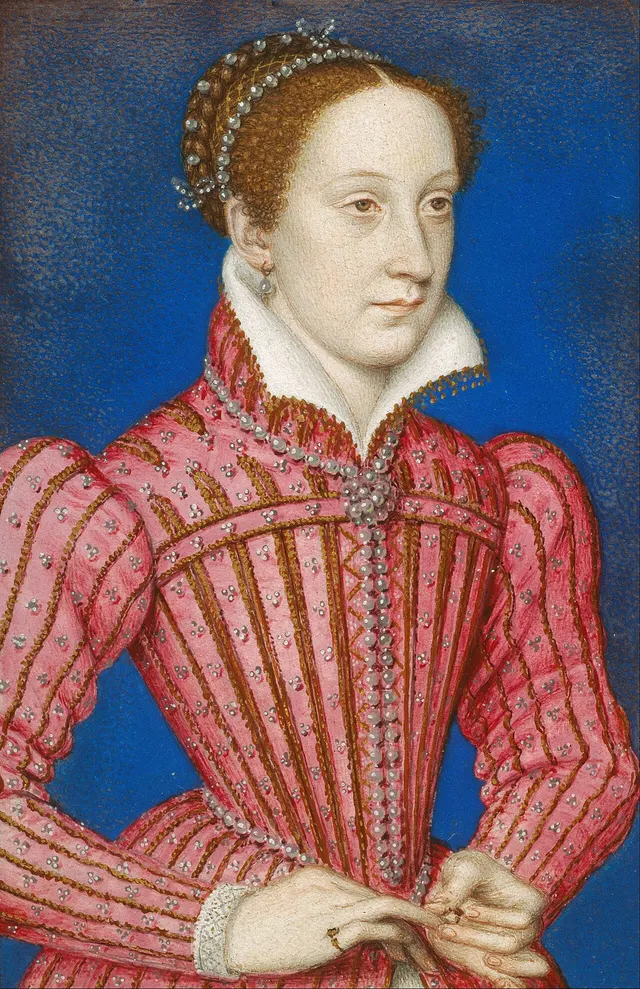
Mary, Queen of Scots, in a portrait by François Clouet.Mary, Queen of Scots, in a portrait by François Clouet.Image: François Clouet · Public domain
politics · Europe

A six-day-old baby becomes Queen of Scots

James V of Scotland died on 14 December 1542 at Falkland Palace, broken by the rout of his army at Solway Moss three weeks earlier. His only surviving legitimate child was a girl born six days before at Linlithgow: Mary, who became Queen of Scots in her cradle. She was crowned at nine months, sent to France at five, and ruled in person for only six years before abdication, flight and nineteen years of English captivity ending on the block at Fotheringhay in 1587.

Source: The Royal Family: Mary, Queen of Scots (r. 1542-1567) ↗
1799
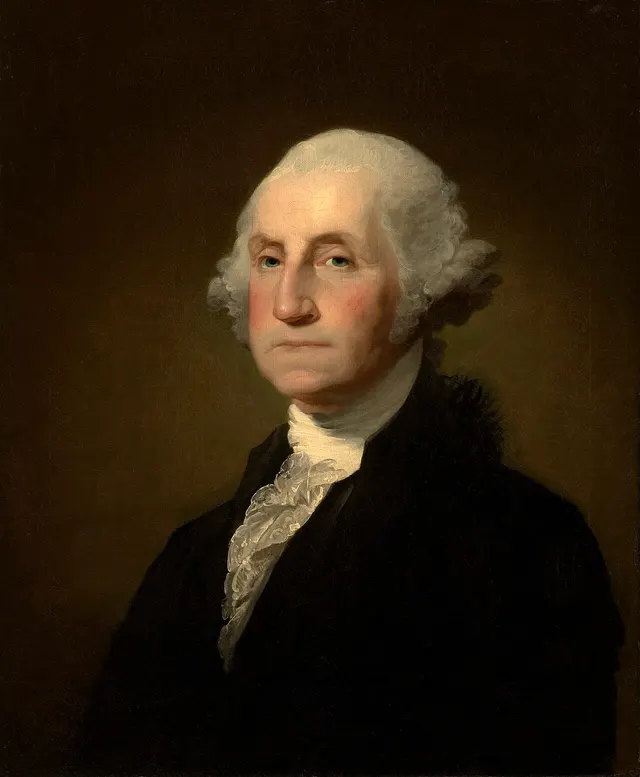
George Washington, painted by Gilbert Stuart.George Washington, painted by Gilbert Stuart.Image: Gilbert Stuart · Public domain
politics · Americas

George Washington dies at Mount Vernon

George Washington died between ten and eleven o’clock on the night of 14 December 1799, at Mount Vernon, less than three years after leaving the presidency. He had spent the previous day riding round the estate in sleet and snow and woke in the small hours struggling to breathe; the diagnosis now generally accepted is acute bacterial epiglottitis. His doctors bled him repeatedly, induced vomiting and applied blistering compounds — the standard treatment of the day, and almost certainly a hastening of the end. He was buried at Mount Vernon on 18 December, having asked in his will that his enslaved workers be freed on his wife’s death.

Source: George Washington’s Mount Vernon: the death of George Washington ↗
IV
THE NINETEENTH CENTURY

The 1800s

Industry, empire, invention, reform and a century of enormous transformation.

1819
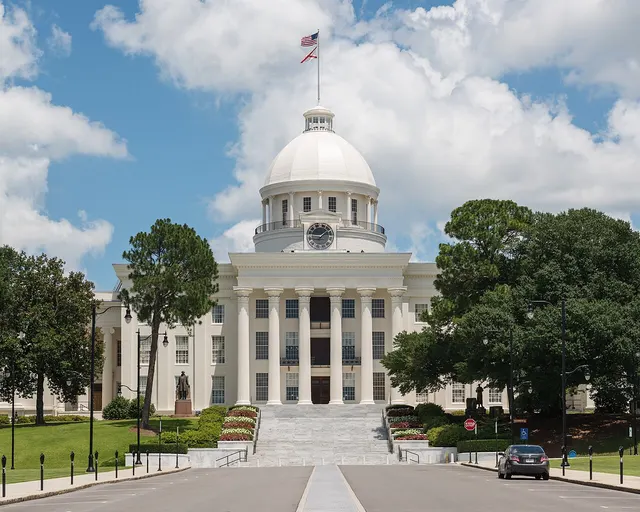
The Alabama State Capitol in Montgomery.The Alabama State Capitol in Montgomery.Image: DXR · CC BY-SA 4.0
politics · Americas

Alabama joins the Union

President James Monroe signed the congressional resolution accepting Alabama’s new constitution on 14 December 1819, admitting it as the twenty-second state. The territory had been carved out of Mississippi in 1817 and a convention at Huntsville had written the constitution that summer. Alabama came in as a slave state, paired against Maine under the arrangement that became the Missouri Compromise. The anniversary is still kept as Alabama Day.

Source: Alabama Department of Archives and History: Alabama Day is December 14th ↗
V
THE TWENTIETH CENTURY

The 1900s

War and peace, technological leaps, social change, politics, sport and popular culture.

1900
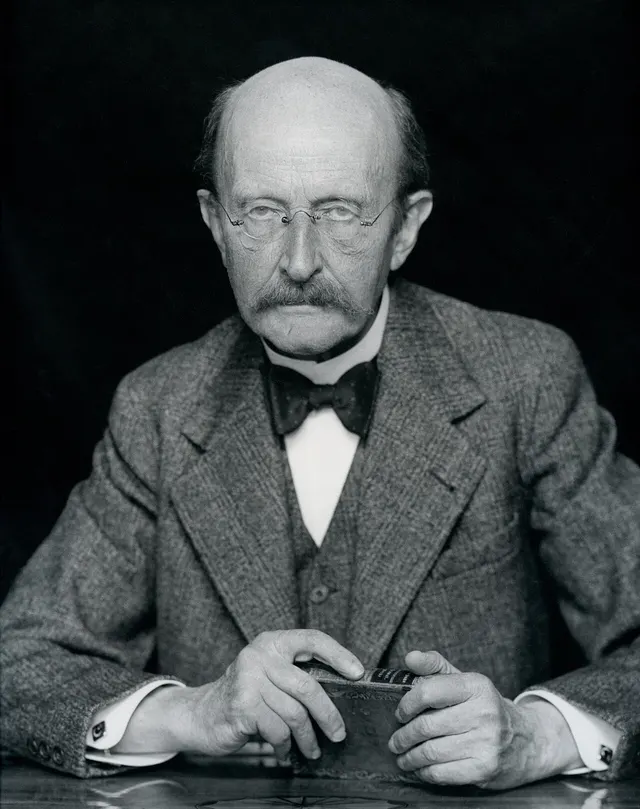
Max Planck.Max Planck.Image: Hugo Erfurth · Public domain
science · Europe

Planck reads the paper that starts quantum theory

On 14 December 1900, at a meeting of the German Physical Society in Berlin, Max Planck presented the derivation of his law for the radiation given off by a hot body. To make the mathematics come out, he had to assume that energy was emitted not in a continuous stream but in discrete packets, proportional to frequency by a new constant he called h. Planck thought of it as a formal trick and spent years trying to do without it. It was Einstein in 1905 who took the quantum seriously as physics. The date is usually given as the birthday of quantum theory.

Source: Encyclopaedia Britannica: Max Planck ↗
1911
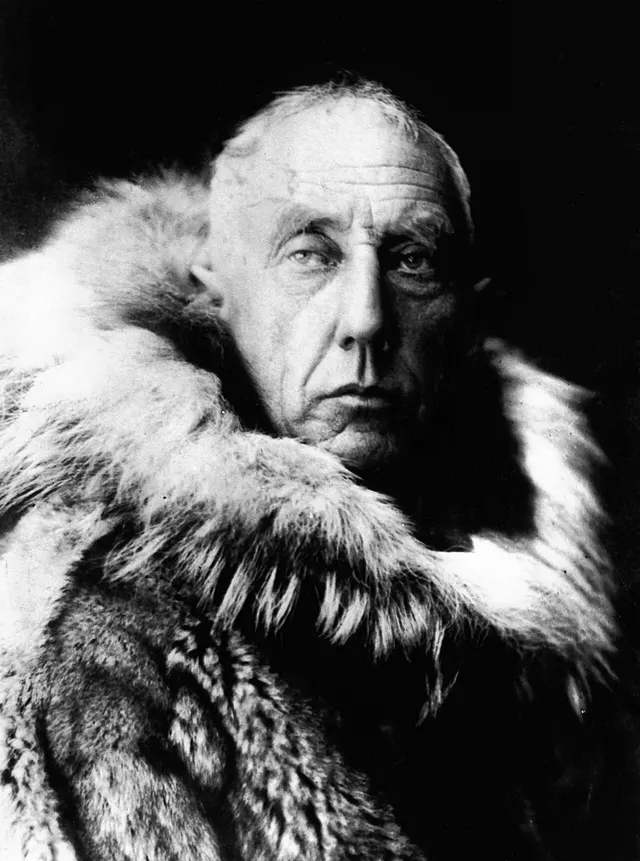
Roald Amundsen in polar furs.Roald Amundsen in polar furs.Image: AnonymousUnknown author · Public domain
world · Global

Amundsen reaches the South Pole

On 14 December 1911 Roald Amundsen and four companions — Olav Bjaaland, Helmer Hanssen, Sverre Hassel and Oscar Wisting — became the first people to stand at the South Pole. They had left the Bay of Whales on 19 October with four sledges and fifty-two dogs, and had been favoured by good weather. They pitched a tent they called Polheim, left a letter for the king of Norway, and started back on 17 December, reaching base on 25 January 1912. Robert Falcon Scott’s party arrived at the Pole thirty-four days after Amundsen, found the tent, and died on the way home.

Source: Encyclopaedia Britannica: Roald Amundsen ↗
1939
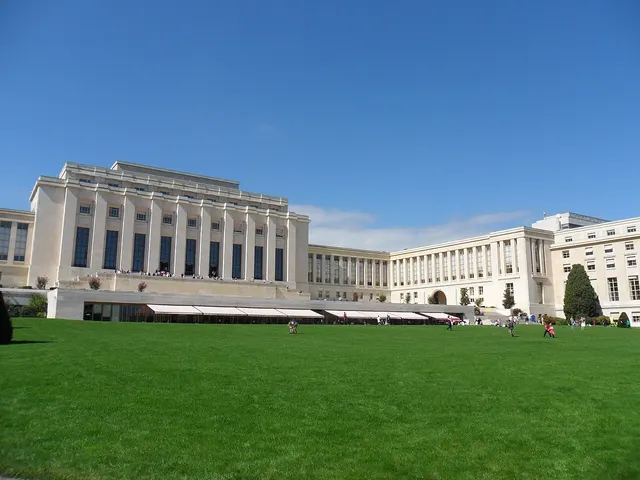
The Palais des Nations in Geneva, home of the League of Nations.The Palais des Nations in Geneva, home of the League of Nations.Image: Credits to Mourad Ben Abdallah / Wikimedia Commons · CC BY-SA 3.0
politics · Global

The Soviet Union is thrown out of the League of Nations

The Council of the League of Nations resolved on 14 December 1939 that the Soviet Union had placed itself outside the League, two weeks after it attacked Finland. It was the only member ever expelled. The League organised what help for Finland it could, which was not much; the Winter War ended in March 1940 with Finland ceding territory but keeping its independence. The League itself never met in full assembly again.

Source: Encyclopaedia Britannica: League of Nations — members of the League of Nations ↗
1955
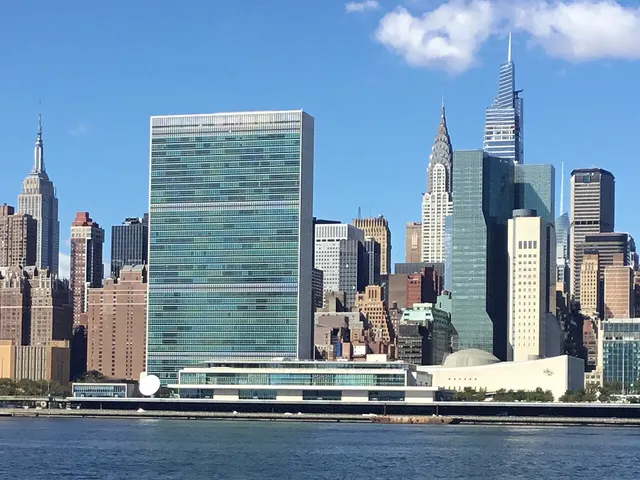
United Nations headquarters in New York.United Nations headquarters in New York.Image: Kidfly182 · CC BY-SA 4.0
politics · Global

Sixteen countries join the United Nations at once

On 14 December 1955 the United Nations admitted sixteen new members in a single day: Albania, Jordan, Ireland, Portugal, Hungary, Italy, Austria, Romania, Bulgaria, Finland, Ceylon, Nepal, Libya, Cambodia, Laos and Spain. Membership jumped from sixty to seventy-six. It was a package deal. For most of a decade the Cold War veto had kept applicants out in both directions, with the Soviet Union blocking Western-aligned states and the West blocking Soviet-aligned ones. Pairing four communist states with twelve others was the only way through, and it opened the way for the wave of newly independent African and Asian members that followed.

Source: United Nations: growth in United Nations membership ↗
1962
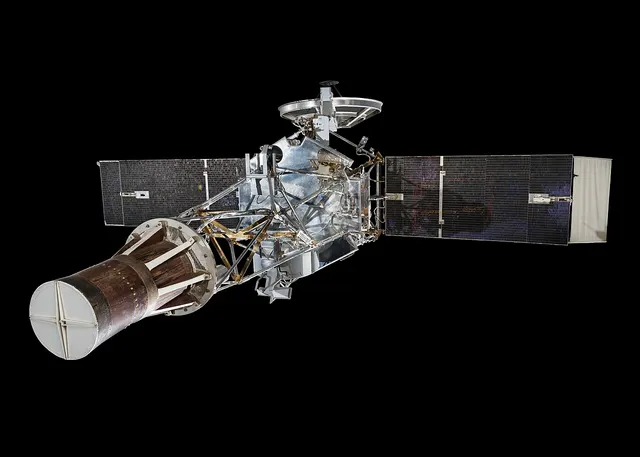
A Mariner 2 spacecraft in the Smithsonian's National Air and Space Museum.A Mariner 2 spacecraft in the Smithsonian’s National Air and Space Museum.Image: Eric Long/Smithsonian · CC0
science · Americas

Mariner 2 reaches Venus

Mariner 2 passed within about 35,000 kilometres of Venus on 14 December 1962, the first spacecraft to reach another planet and send data home. In a forty-two-minute scan its microwave and infrared radiometers found surface temperatures of well over 200°C on both the day and night sides, and a cloud deck some 56 to 80 kilometres up. The hope that Venus might be a warm, wet twin of the Earth died that afternoon. On the way there Mariner 2 had also confirmed the existence of the solar wind.

Source: NASA: 60 years ago, Mariner 2 first to explore Venus ↗
1995
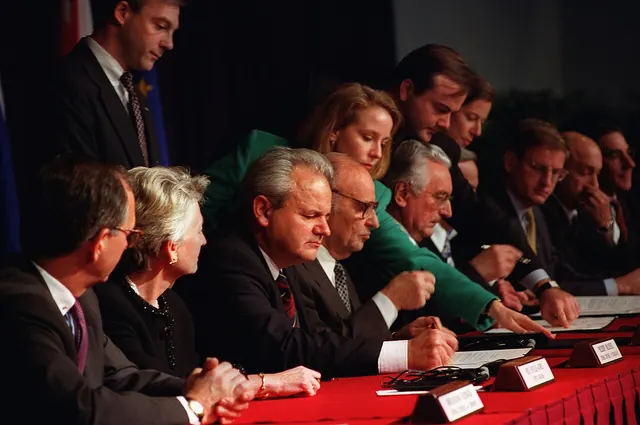
The signing ceremony for the Dayton peace agreement.The signing ceremony for the Dayton peace agreement.Image: U.S. Air Force/Staff Sgt. Brian Schlumbohm · Public domain
politics · Europe

The Dayton Agreement is signed in Paris

The presidents of Bosnia and Herzegovina, Croatia and Serbia signed the General Framework Agreement for Peace in Paris on 14 December 1995, ending three and a half years of war in Bosnia — the bloodiest conflict in Europe since 1945. The terms had been hammered out the previous month at an air force base near Dayton, Ohio, under the American negotiator Richard Holbrooke. The country stayed whole but was split into two entities, a Croat-Bosniak federation on 51 per cent of the territory and a Serb republic on the rest, with a 60,000-strong international force to hold the line. The settlement stopped the fighting; the constitutional machinery it created is still in place, and still argued over.

Source: Encyclopaedia Britannica: Dayton Accords ↗
WHY THESE MOMENTS?

Significance before volume

This page is not the longest possible list of events. It is a chronological journey through 14 December, where each entry is chosen for historical significance, human interest and reliability.

Facts are checked against authoritative museums, archives, universities and reference works. Where sources disagree, the page says so.

EXPLORED THE DEEPER STORY?

Return to the highlights of 14 December

Discover the lighter side of the date with famous birthdays, culture, firsts and lives remembered.

Explore This Day →