HISTORY & TIMELINE
13 December

A journey through
13 December in history

From the opening of the Council of Trent in 1545 to the capture of a fallen dictator in 2003, 13 December has been a day of hard turns. This timeline follows the date across five centuries.

III
A CHANGING WORLD

Early Modern Era

Exploration, political change, scientific development and expanding global connections.

1545
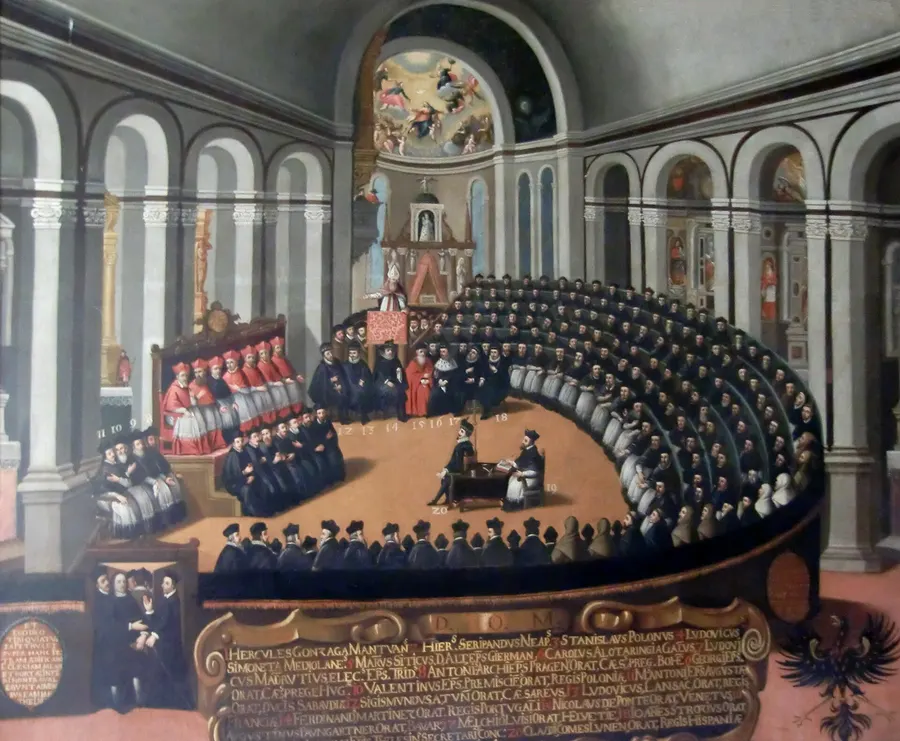
A painted view of the Council of Trent in session.A painted view of the Council of Trent in session.Image: Laurom · CC BY-SA 3.0
politics · Europe

The Council of Trent opens

The Council of Trent was opened on 13 December 1545 by Cardinal Giovanni del Monte, legate of Pope Paul III, who had spent nine years overcoming the objections of emperors, kings and bishops to calling it. Meeting in three long stretches down to 1563, it was the Catholic Church’s answer to the Reformation: it fixed doctrine on scripture, sin and the sacraments against Protestant teaching, and passed sweeping reforms of clerical discipline, training and residence that shaped Catholicism for four hundred years.

Source: Encyclopaedia Britannica: Council of Trent ↗
1577
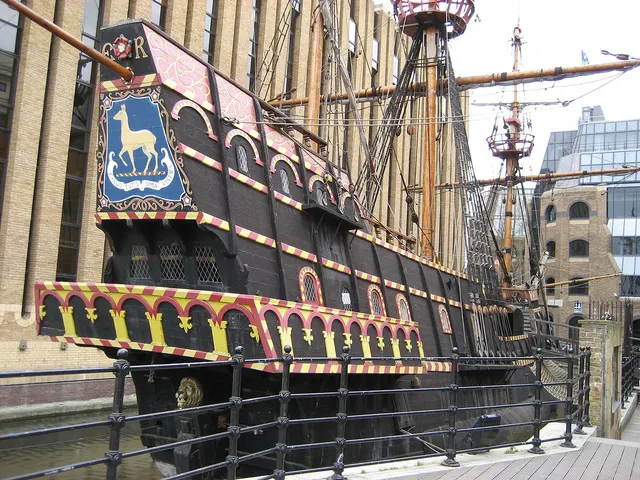
A full-size replica of the Golden Hind, the ship Drake sailed as the Pelican.A full-size replica of the Golden Hind, the ship Drake sailed as the Pelican.Image: Jose L. Marin · CC BY 2.5
culture · Europe

Drake sails from Plymouth

Francis Drake left Plymouth on 13 December 1577 with five ships — the Pelican, Elizabeth, Marigold, Swan and Christopher — and 164 men. The stated purpose was trade; the real one was raiding Spanish shipping and ports in the Pacific, with the quiet backing of Elizabeth I. Two of the smaller ships were broken up off South America, the Marigold was lost in a storm and the Elizabeth turned for home. Drake renamed the Pelican the Golden Hind in mid-voyage, after the crest of his patron Christopher Hatton, and brought her back to Plymouth in September 1580 — the second circumnavigation of the world, and the first whose commander survived it.

Source: Royal Museums Greenwich: what did Sir Francis Drake discover? ↗
1642
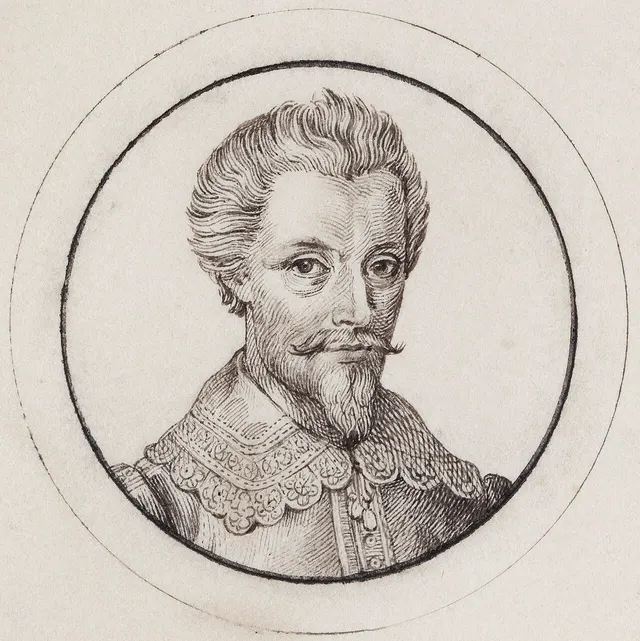
Abel Tasman, in a portrait engraving.Abel Tasman, in a portrait engraving.Image: Unknown authorUnknown author · Public domain
world · Oceania

Abel Tasman sights New Zealand

Towards noon on 13 December 1642 the Dutch navigator Abel Tasman, sailing for the Dutch East India Company, saw what his journal called a large land, uplifted high — probably the Southern Alps — off the west coast of the South Island. He was the first European on record to see New Zealand. He worked north and anchored in what is now Golden Bay. On 19 December Māori in canoes attacked a boat from the Zeehaen and killed four of its crew; Tasman sailed away without setting foot ashore and named the place Murderers’ Bay. No European returned for 127 years, until James Cook in 1769.

Source: Te Ara, the Encyclopedia of New Zealand: Abel Tasman ↗
IV
THE NINETEENTH CENTURY

The 1800s

Industry, empire, invention, reform and a century of enormous transformation.

1862
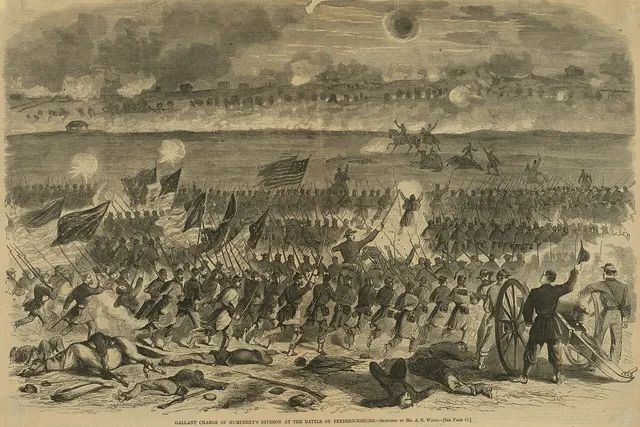
A sketch of the fighting at Fredericksburg by the war artist Alfred Waud.A sketch of the fighting at Fredericksburg by the war artist Alfred Waud.Image: Waud, Alfred R. (Alfred Rudolph), 1828-1891, artist · Public domain
world · Americas

Slaughter at Marye’s Heights

On 13 December 1862 Ambrose Burnside sent the Army of the Potomac across open ground at Fredericksburg, Virginia, against Confederate infantry standing three deep in a sunken road below Marye’s Heights. Wave after wave was cut down; not one reached the wall. The Union lost nearly 13,000 men that day, about two-thirds of them in front of the heights, against some 4,500 Confederate casualties. Watching, Robert E. Lee is said to have remarked that it was well war was so terrible, or men would grow too fond of it.

Source: National Park Service: Battle of Fredericksburg — Marye’s Heights ↗
V
THE TWENTIETH CENTURY

The 1900s

War and peace, technological leaps, social change, politics, sport and popular culture.

1937
Nanjing today, with the Ming-era pagoda below the modern skyline.Nanjing today, with the Ming-era pagoda below the modern skyline.Image: xiquinhosilva · CC BY 2.0
world · Asia

The fall of Nanjing

Japanese troops entered Nanjing, then the capital of the Chinese republic, on 13 December 1937. What followed over about six weeks was one of the worst atrocities of the war in Asia: the mass killing of prisoners and civilians and the widespread rape of women. Estimates of the dead range from 100,000 to more than 300,000, and the figure is still disputed between Chinese and Japanese historians. A small group of foreign residents set up a safety zone in the city that sheltered tens of thousands of people. Their diaries and films, together with Japanese soldiers’ own accounts, became the core of the evidence used at the Tokyo war crimes trials after 1945.

Source: Encyclopaedia Britannica: Nanjing Massacre ↗
1939
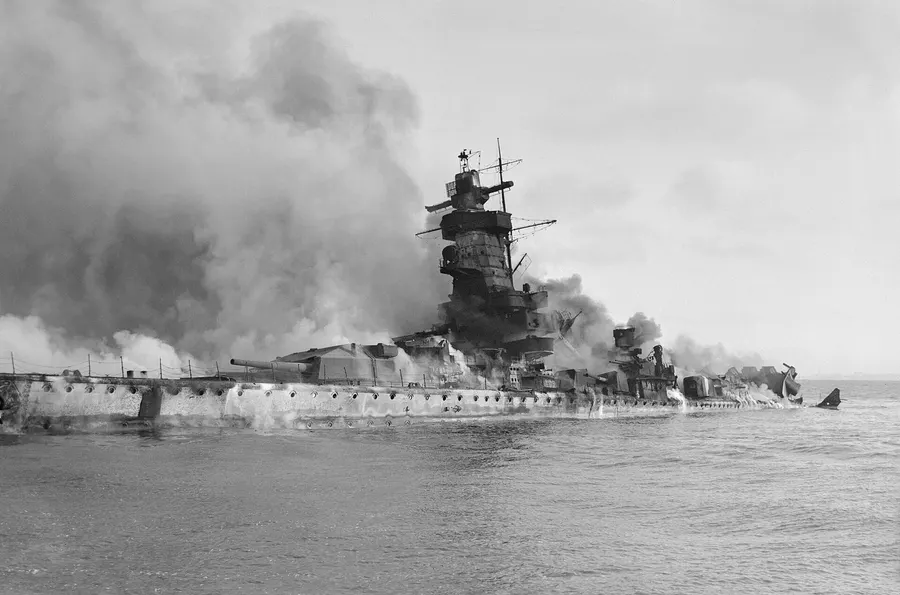
The Admiral Graf Spee burning off Montevideo after being scuttled on 17 December 1939.The Admiral Graf Spee burning off Montevideo after being scuttled on 17 December 1939.Image: Royal Navy official photographer · Public domain
world · Americas

The Battle of the River Plate

The first naval battle of the Second World War was fought on 13 December 1939 off the mouth of the River Plate. Three British and New Zealand cruisers — Exeter, Ajax and Achilles — found the German pocket battleship Admiral Graf Spee, which had been sinking merchant ships in the South Atlantic. The Graf Spee’s eleven-inch guns wrecked the Exeter and killed sixty-one of her crew, but she took damage herself and put into neutral Montevideo. Four days later, believing a British battle fleet was waiting, Captain Hans Langsdorff scuttled her outside the harbour; he shot himself in Buenos Aires three days after that.

Source: Imperial War Museums: what you need to know about the Battle of the River Plate ↗
1974
Valletta, the capital of Malta, from across the Grand Harbour.Valletta, the capital of Malta, from across the Grand Harbour.Image: Mandyy88 · CC BY-SA 4.0
politics · Europe

Malta becomes a republic

Malta amended its 1964 constitution on 13 December 1974 and became a republic within the Commonwealth, ten years after independence. The Queen ceased to be head of state and a president took her place, elected by the House of Representatives. The date is kept as Jum ir-Repubblika, Republic Day, one of five national days in the Maltese calendar. The last British forces left the island in 1979.

Source: Encyclopaedia Britannica: Malta — government and society ↗
1981
politics · Europe

Martial law comes to Poland

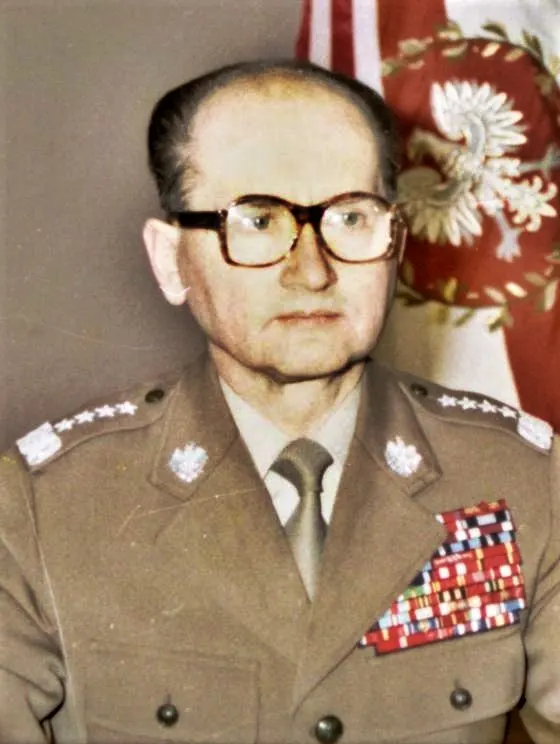
Before dawn on 13 December 1981 General Wojciech Jaruzelski went on Polish television to announce that a Military Council of National Salvation had imposed martial law. Telephones were cut, borders closed, a curfew set, and interior ministry officers spent the night arresting trade unionists and anyone thought capable of organising resistance, including Lech Wałęsa. Solidarity, a legal union with nearly ten million members sixteen months earlier, was driven underground. On 16 December riot police shot dead six miners at the Wujek colliery in Katowice. Martial law was lifted in 1983, but free elections did not come until 1989.

Source: Institute of National Remembrance, Poland: Martial Law in Poland 1981-1983 ↗
VI
2000 TO TODAY

Modern Day

The events of recent decades that have already become part of the historical record.

2003
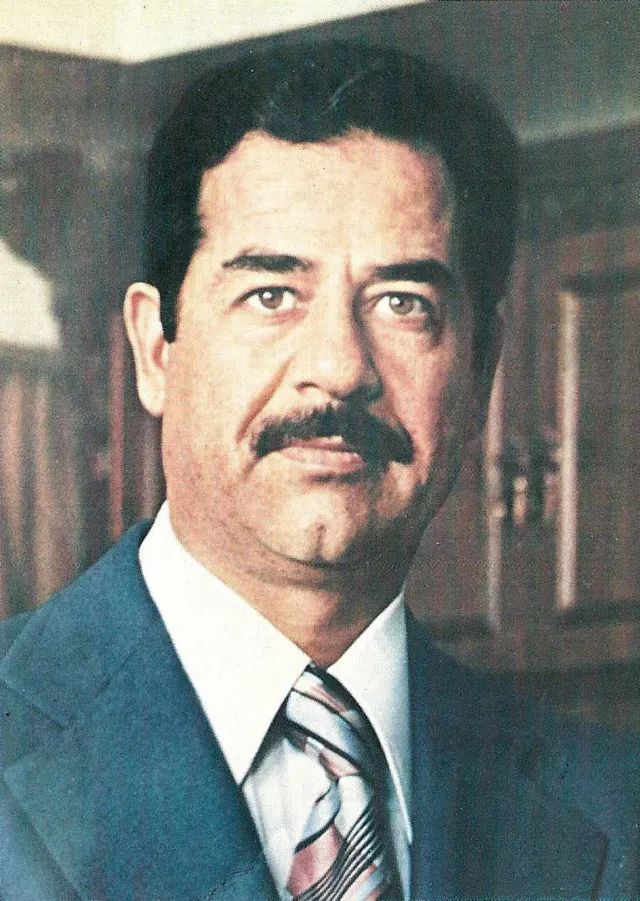
Saddam Hussein, president of Iraq from 1979 to 2003.Saddam Hussein, president of Iraq from 1979 to 2003.Image: INA (Iraqi News Agency) · Public domain
world · Asia

Saddam Hussein is captured

American troops found Saddam Hussein on 13 December 2003, hiding in a concealed pit at a farm near ad-Dawr, south of Tikrit. The operation, code-named Red Dawn, followed the capture that morning of a member of his circle who gave up the location. He had been on the run since Baghdad fell in April. He was handed to the Iraqi interim government in 2004, convicted of crimes against humanity over the killing of 148 men and boys at Dujail, and hanged on 30 December 2006.

Source: United States Army: Operation Red Dawn nets Saddam Hussein ↗
WHY THESE MOMENTS?

Significance before volume

This page is not the longest possible list of events. It is a chronological journey through 13 December, where each entry is chosen for historical significance, human interest and reliability.

Facts are checked against authoritative museums, archives, universities and reference works. Where sources disagree, the page says so.

EXPLORED THE DEEPER STORY?

Return to the highlights of 13 December

Discover the lighter side of the date with famous birthdays, culture, firsts and lives remembered.

Explore This Day →