Explore 3 November

Explore 3 November: Panama breaks away from Colombia, Austria-Hungary signs the armistice that ends its war, and Japan proclaims its post-war constitution. Plus Laika in orbit and the first Godzilla film.

This day through time →11 verified events across 2 eras

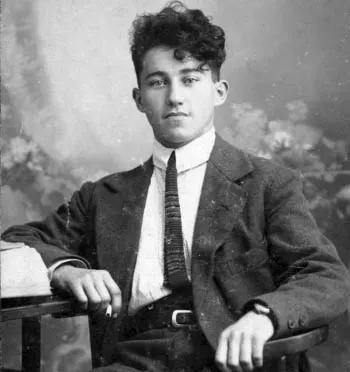
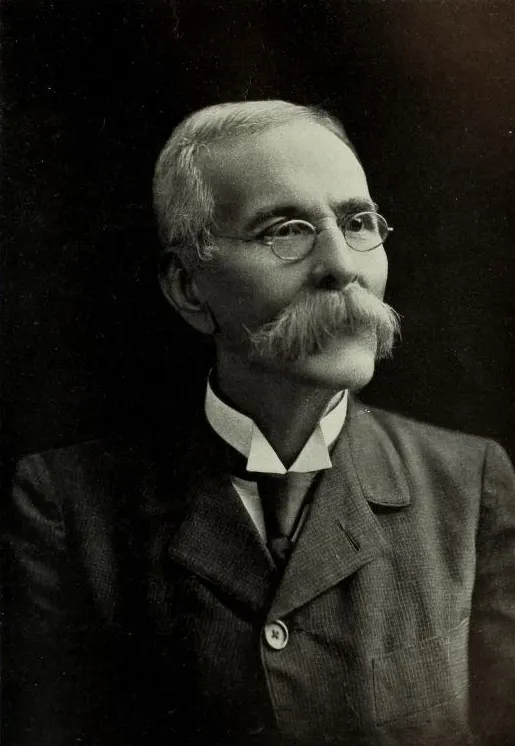
Manuel Amador Guerrero, who led the independence movement and became Panama's first president.
Manuel Amador Guerrero, who led the independence movement and became Panama’s first president.
Image creditScherer · Public domainResized and cropped for display.

Panama breaks away from Colombia

On 3 November 1903 Panamanians rose against Colombian rule, declared the isthmus an independent republic and set up a provisional government. Colombian troops could not reach them overland through the jungle of the Darién, and American warships stood off Panama City and Colón.

The revolt followed the Colombian Senate’s rejection of a treaty that would have let the United States build a canal across the isthmus. Washington recognised Panama within days, and a treaty signed on 18 November gave the United States the right to build the Panama Canal.

Read the full storyHistory & Timeline →Source: US Department of State, Office of the Historian: Panama ↗
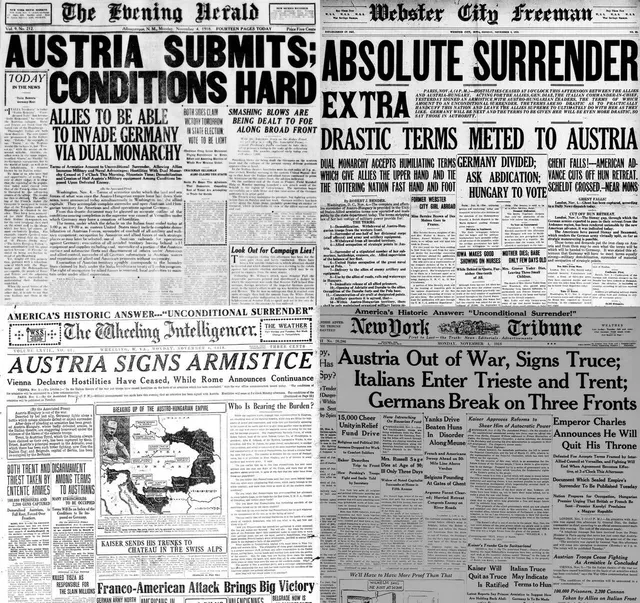
American newspapers of 4 November 1918 report the surrender of Austria-Hungary.
Image creditThe Evening Herald. Nov 4 1918 Tribune. Nov 4 1918 Webster City Freeman. Nov 4 1918 The Wheeling Intelligencer. Nov 4 1918 · Public domainResized and cropped for display.

Austria-Hungary signs the Armistice of Villa Giusti

On 3 November 1918, at the Villa Giusti near Padua, representatives of Austria-Hungary signed an armistice with Italy and the Allies, to take effect the next day. It followed the Italian victory at Vittorio Veneto, where the Habsburg army had fallen apart.

Austria-Hungary had to leave all the territory it had occupied since 1914 and withdraw from South Tyrol, Trieste, Istria and Dalmatia. Hundreds of thousands of its soldiers were taken prisoner, and the centuries-old empire broke up into new states.

Read the full storyHistory & Timeline →Source: Encyclopaedia Britannica: Armistice of Villa Giusti ↗
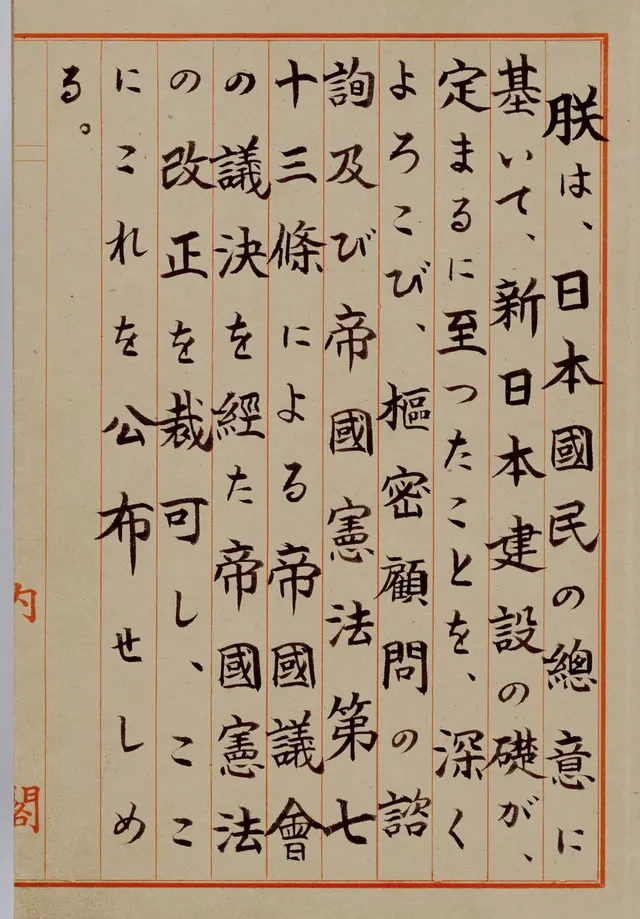
The original document of the Constitution of Japan, 1946.
Image creditJapanese government · Public domainResized and cropped for display.

Japan proclaims its post-war constitution

The Constitution of Japan was promulgated on 3 November 1946, after four months of debate in the Imperial Diet and approval by the Privy Council. The date was chosen with care: 3 November was the birthday of the Emperor Meiji.

The constitution made the emperor a symbol of the state rather than its sovereign, placed power in the people, and renounced war. It came into force six months later, on 3 May 1947, and has never been amended.

Read the full storyHistory & Timeline →Source: National Diet Library: Birth of the Constitution of Japan, the Constitution of Japan, 3 November 1946 ↗
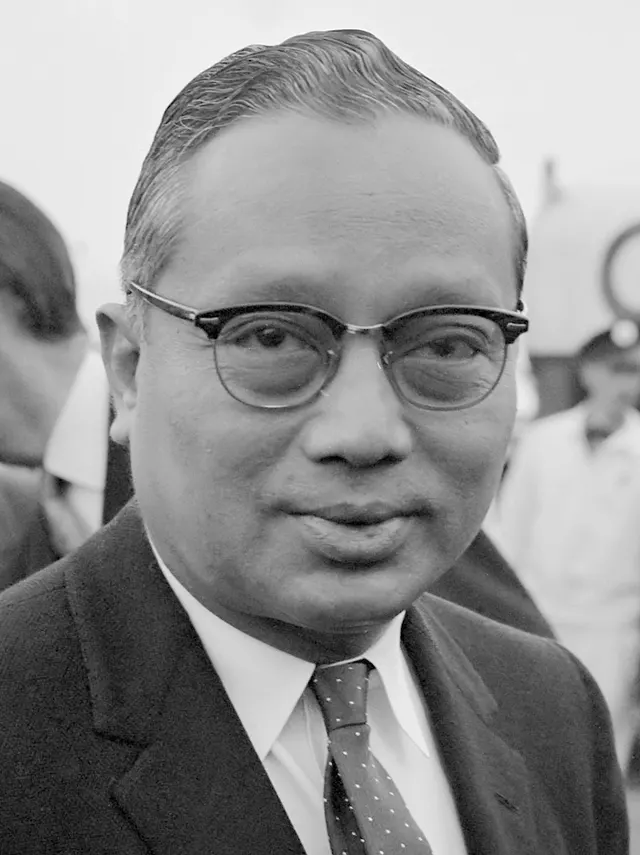
U Thant at a press conference at Schiphol airport, 1963.
Image creditJack de Nijs for Anefo / Anefo · CC BY-SA 3.0 nlResized and cropped for display.

U Thant leads the United Nations

On 3 November 1961 the UN General Assembly, on the recommendation of the Security Council, unanimously appointed U Thant of Burma as acting Secretary-General, to complete the term of Dag Hammarskjöld, who had been killed in an air crash in Africa that September.

The former teacher was the first Secretary-General from Asia. He was confirmed in the post in 1962 and served until 1971, through the Cuban Missile Crisis and the Vietnam War.

Read the full storyHistory & Timeline →Source: United Nations Secretary-General: U Thant ↗
♙
PEOPLE

Born Today

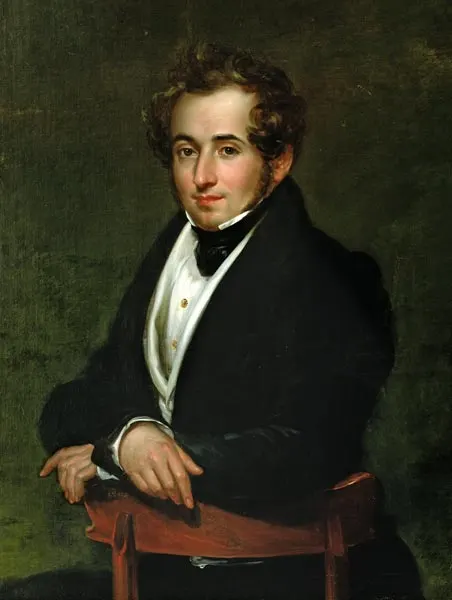
Vincenzo Bellini
Image creditPietro Luchini · Public domainResized and cropped for display.

Vincenzo Bellini

Italian opera composer of Norma and La sonnambula.

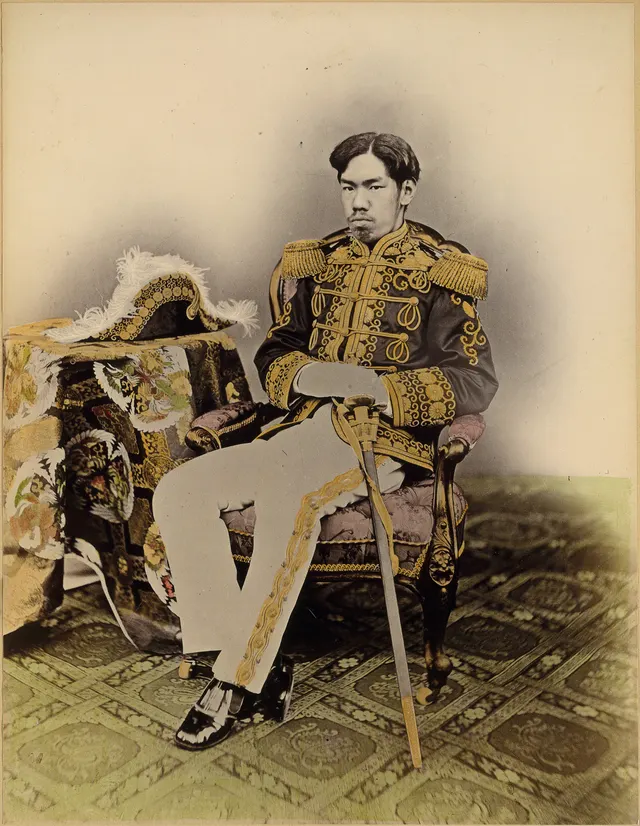
Emperor Meiji
Image creditUchida Kuichi · Public domainResized and cropped for display.

Emperor Meiji

Emperor of Japan from 1867 to 1912, whose reign saw Japan transformed into a modern industrial power.

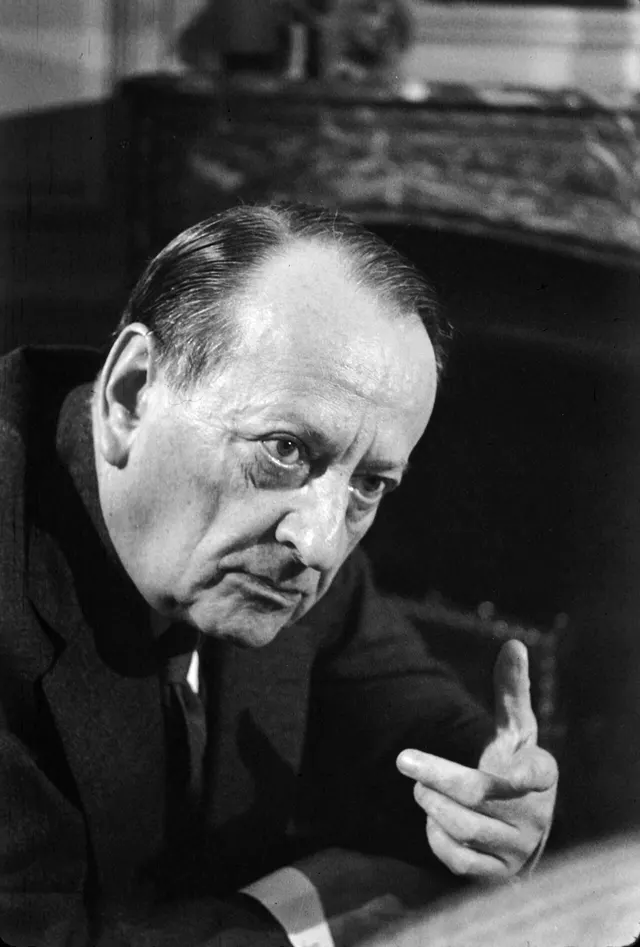
André Malraux
Image creditRoger Pic · Public domainResized and cropped for display.

André Malraux

French novelist of Man’s Fate and France’s first minister of cultural affairs.

Gerd Müller
Image creditUnknown authorUnknown author · Public domainResized and cropped for display.

Gerd Müller

German striker who won the 1974 World Cup, one of the most prolific goalscorers in the history of the game.

◉
IDEAS THAT CHANGED THINGS

Firsts, Science & Discoveries

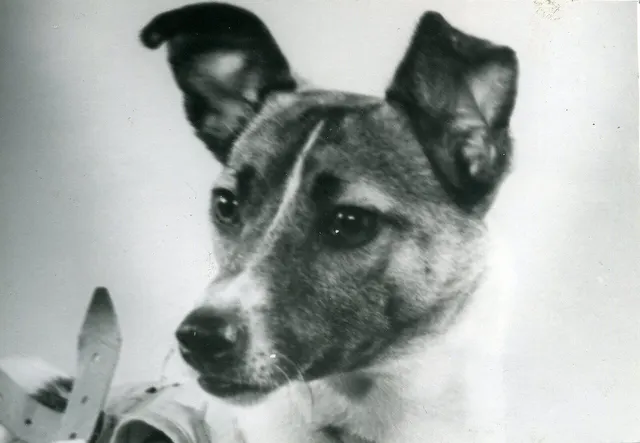
Laika before her flight, from the collection of the Museum of Cosmonautics in Moscow.
Image creditМузей космонавтики / Главархив Москвы · CC BY 4.0Resized and cropped for display.

Laika becomes the first animal in orbit

On 3 November 1957, less than a month after Sputnik 1, the Soviet Union launched Sputnik 2. In a sealed cabin inside it was Laika, a small part-Samoyed terrier found as a stray on the streets of Moscow, the first animal to orbit the Earth.

There was no way of bringing her back. For decades Soviet accounts suggested she lived for several days, but in 1999 Russian sources confirmed that she had died within hours, on the fourth orbit, when the cabin overheated. The satellite burned up on re-entering the atmosphere in April 1958.

Read the full storyHistory & Timeline →Source: NASA: 60 years ago, the first animal in orbit ↗
♫
MUSIC • FILM • BOOKS • CULTURE

Culture Stories

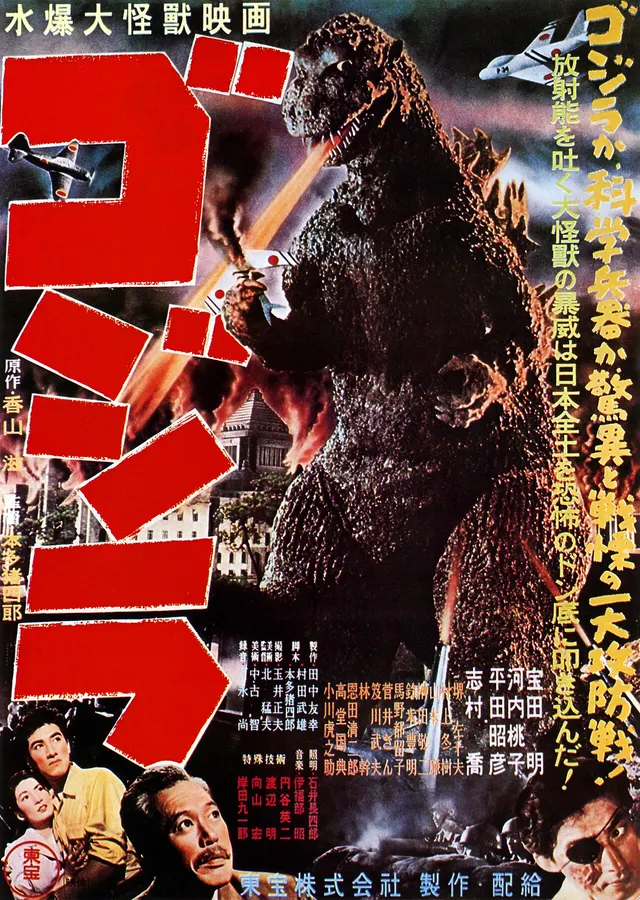
The Japanese poster for Godzilla, 1954.
Image creditToho Company Ltd. (東宝株式会社) · Public domainResized and cropped for display.

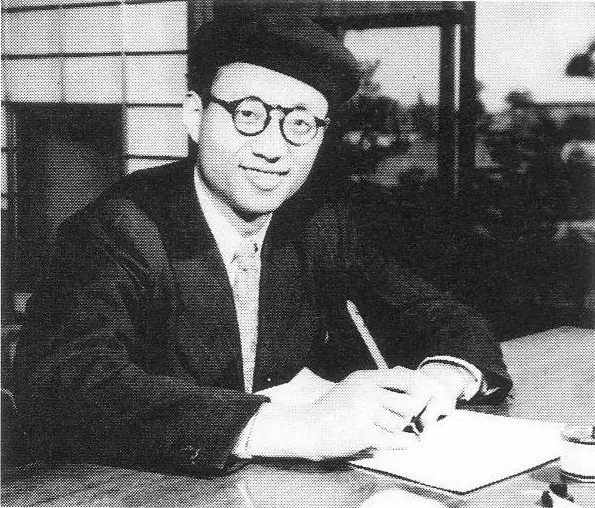
Godzilla opens in Japanese cinemas

Gojira, known in the West as Godzilla, opened in Japanese cinemas on 3 November 1954. It was directed by Ishirō Honda, with special effects by Eiji Tsuburaya, for the Toho studio.

The film was made months after a Japanese tuna boat, the Daigo Fukuryū Maru, was showered with fallout from an American hydrogen-bomb test at Bikini Atoll, and its monster, woken by nuclear testing, carried the fears of a nation that had lived through Hiroshima and Nagasaki. It has been followed by more than thirty sequels.

Read the full storyHistory & Timeline →Source: The Criterion Collection: Reign of Destruction, an essay on Godzilla (1954) ↗
✦
LIVES REMEMBERED

Remembered Today

Constantius II
Image creditMary Harrsch · CC BY-SA 2.0Resized and cropped for display.

Constantius II

Roman emperor, a son of Constantine the Great. His death is recorded under the Julian calendar.

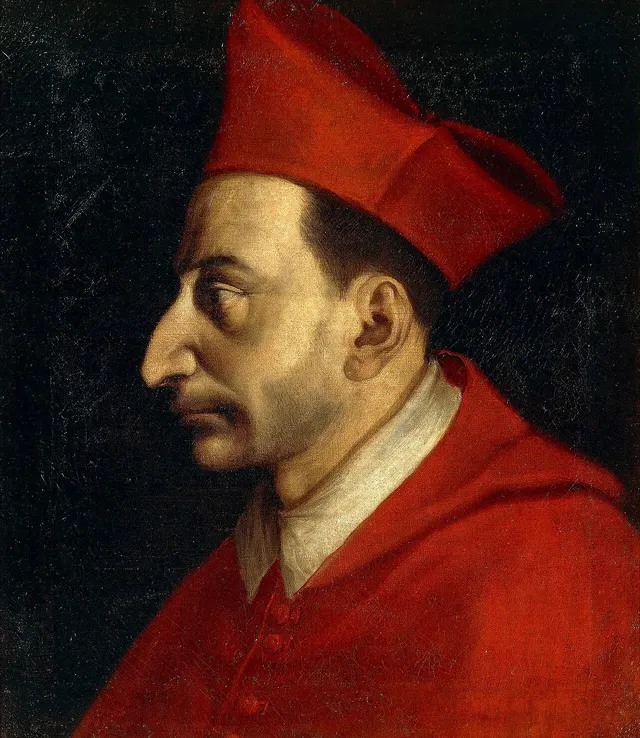
Charles Borromeo
Image creditGiovanni Ambrogio Figino · Public domainResized and cropped for display.

Charles Borromeo

Archbishop of Milan and a leader of the Catholic Counter-Reformation, later made a saint.

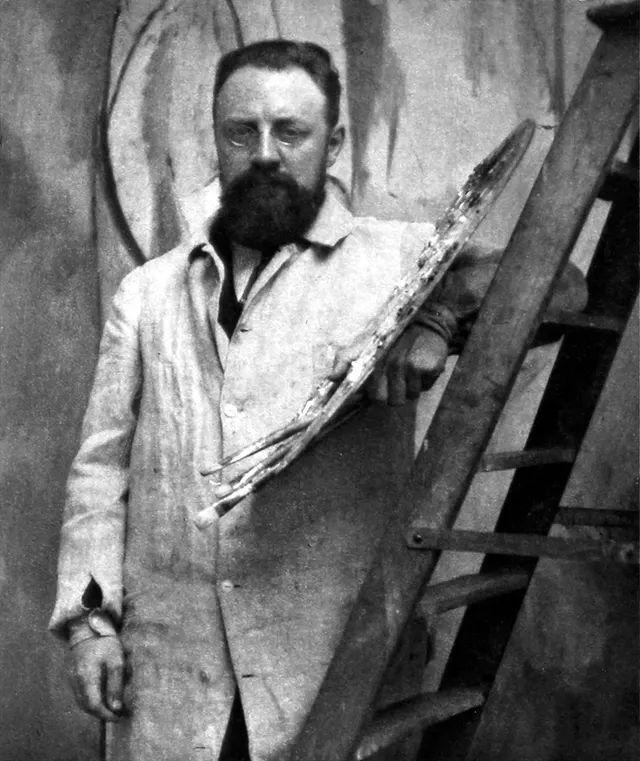
Henri Matisse
Image creditAlvin Langdon Coburn · Public domainResized and cropped for display.

Henri Matisse

French painter, a master of colour and, late in life, of paper cut-outs.

☉
AROUND THE WORLD

Observances & Anniversaries

Dancers in the streets of Nagoya's Osu district during the city's Culture Day celebrations.
Dancers in the streets of Nagoya’s Osu district during the city’s Culture Day celebrations.
Image creditShubert Ciencia · CC BY 2.0Resized and cropped for display.

Culture Day

Japan keeps 3 November as Culture Day, Bunka no Hi, a national holiday for the promotion of culture, freedom and peace. It falls on the birthday of the Emperor Meiji and on the anniversary of the promulgation of the post-war constitution in 1946.

The Order of Culture is presented at the Imperial Palace on the day, and schools, museums and towns across the country hold festivals and exhibitions.

Source: National Diet Library: Birth of the Constitution of Japan, discussions on the day for promulgation ↗
HISTORY & TIMELINE

Finished the highlights?

Follow 3 November chronologically, from the Middle Ages to the modern day, with 11 verified events and the sources behind them.

This day through time →