Explore 8 January

Explore 8 January: Black South Africans meet in Bloemfontein and found what becomes the African National Congress, Woodrow Wilson sets out his Fourteen Points for peace, Charles de Gaulle becomes president of France’s Fifth Republic and Ibn Saud is proclaimed king in Mecca. Meet Elvis Presley, Stephen Hawking and David Bowie, born on 8 January.

This day through time →8 verified events across 2 eras

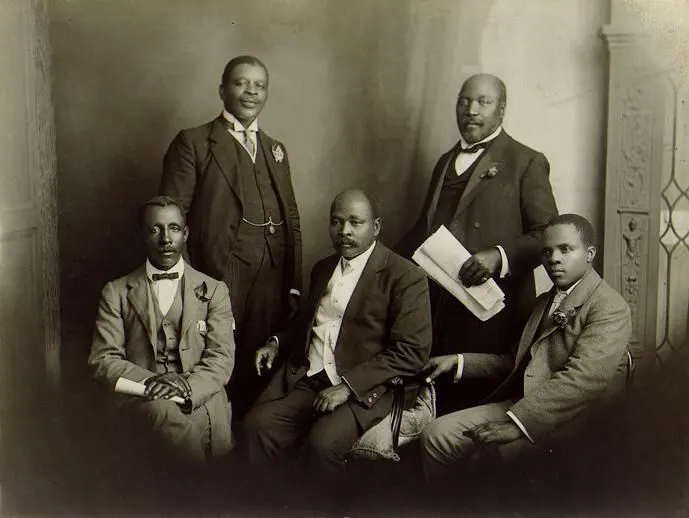
A South African Native National Congress delegation to London in 1914, including John Dube (centre) and Sol Plaatje (right).
Image creditUnknown photographer · Public domainResized and cropped for display.

The African National Congress is founded

The Union of South Africa, formed in 1910, gave the vote almost only to white men and was preparing laws to take land from Black South Africans. On 8 January 1912 chiefs, clergy, teachers, lawyers and journalists from across the country gathered in Bloemfontein and founded the South African Native National Congress to defend their rights.

Its first president was John Dube, a teacher and minister; the lawyer Pixley ka Isaka Seme had called the meeting. Renamed the African National Congress in 1923, it led the long struggle against apartheid and, under Nelson Mandela, won South Africa’s first democratic election in 1994.

Read the full storyHistory & Timeline →Source: South African History Online: the formation of the SANNC/ANC ↗
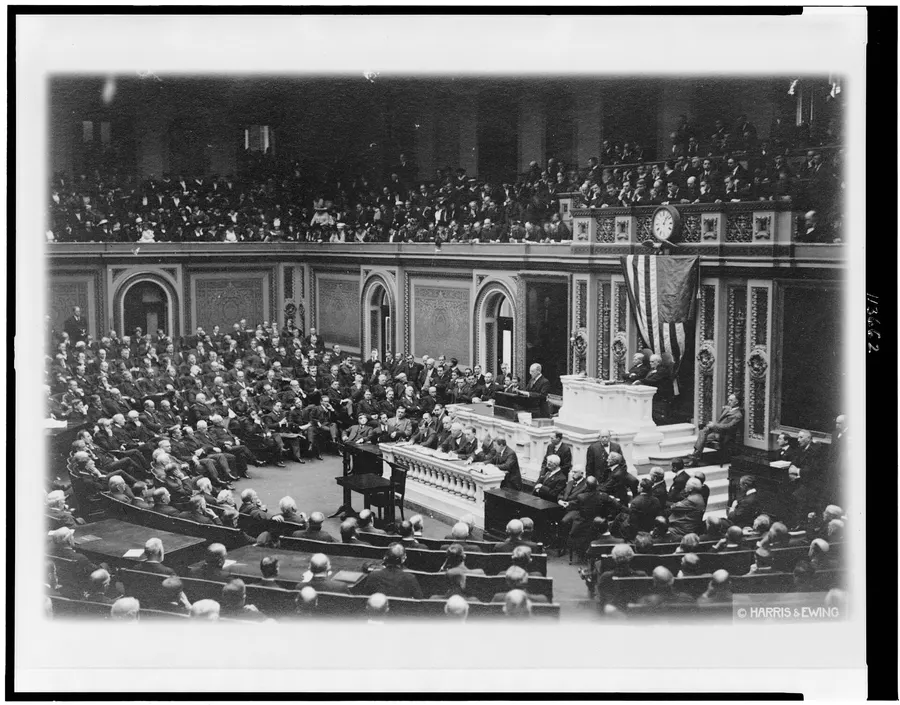
President Woodrow Wilson addressing a joint session of Congress in 1917.
Image creditMiscellaneous Items in High Demand, PPOC, Library of Congress · Public domainResized and cropped for display.

Wilson sets out his Fourteen Points

The First World War was in its fourth winter, and Russia’s new Bolshevik government was publishing the Allies’ secret treaties. On 8 January 1918 President Woodrow Wilson told Congress what the United States was fighting for, in fourteen points.

He called for open diplomacy, freedom of the seas, free trade, fewer arms, a fair settlement of colonial claims, borders drawn along lines of nationality and a general association of nations to guarantee peace. The points became the basis of the armistice that November, and the last of them led to the League of Nations.

Read the full storyHistory & Timeline →Source: National Archives: President Woodrow Wilson’s 14 Points (1918) ↗

De Gaulle becomes president of the Fifth Republic

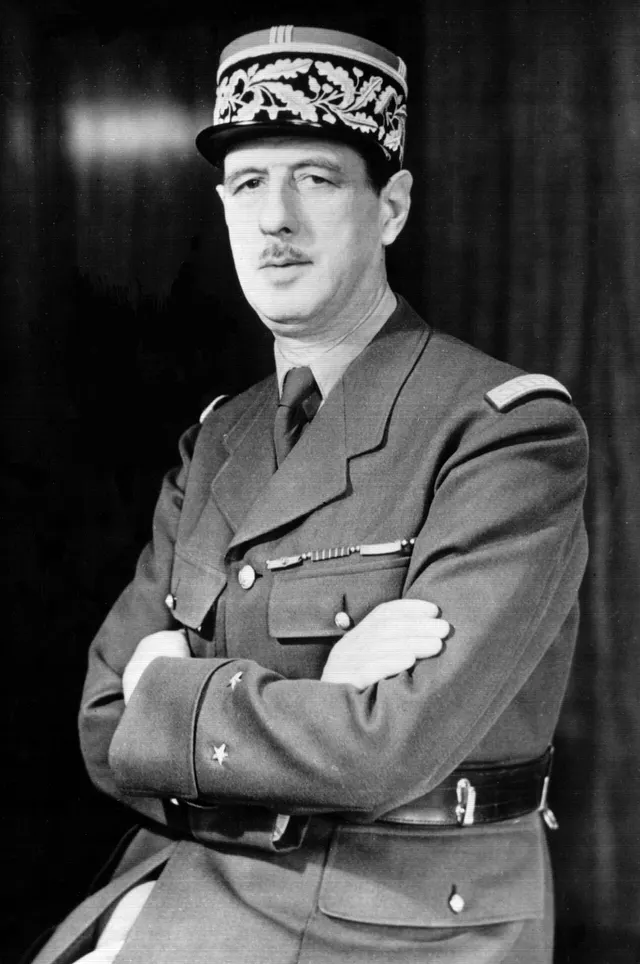
In May 1958 the war in Algeria brought France to the edge of a military coup, and parliament turned to Charles de Gaulle, the leader of the Free French in the Second World War. He demanded a new constitution with a strong president, and the French approved it in a referendum that September.

Elected in December, de Gaulle took office on 8 January 1959 as the first president of the Fifth Republic. He ended the Algerian war with independence for Algeria in 1962, pursued a foreign policy independent of the United States and stayed in office until 1969. His constitution still governs France.

Read the full storyHistory & Timeline →Source: Élysée (French presidency): the inauguration of Charles de Gaulle ↗
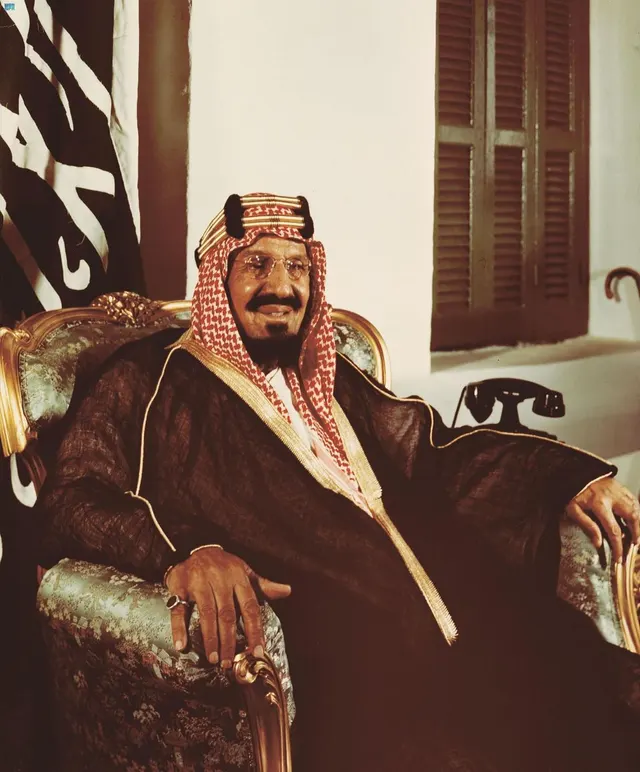
King Abdulaziz ibn Saud, founder of Saudi Arabia, in an official portrait.
Image creditSaudi Press Agency · Public domainResized and cropped for display.

Ibn Saud is proclaimed King of the Hejaz

Abdulaziz ibn Saud had begun in 1902 by recapturing Riyadh, his family’s old capital, with a few dozen men. Over the next two decades he conquered most of central Arabia, and in 1924-25 his forces took the holy cities of Mecca and Medina and the port of Jeddah from the Hashemite rulers of the Hejaz.

On 8 January 1926 he was proclaimed King of the Hejaz at the Great Mosque in Mecca, ruling it alongside his home region of Najd. In 1932 he joined the two into a single state, the Kingdom of Saudi Arabia. Oil was found there six years later.

Read the full storyHistory & Timeline →Source: Encyclopaedia Britannica: Ibn Saud ↗
♙
PEOPLE

Born Today

Stephen Hawking
Image creditNASA · Public domainResized and cropped for display.

Stephen Hawking

British physicist of black holes and author of A Brief History of Time.

David Bowie
Image creditAdam Bielawski · CC BY-SA 3.0Resized and cropped for display.

David Bowie

English singer and songwriter of Space Oddity, Ziggy Stardust and Heroes.

◉
IDEAS THAT CHANGED THINGS

Firsts, Science & Discoveries

A Hollerith census tabulator, the kind of machine used to count the 1900 US census.
Image creditErik Pitti from San Diego, CA, USA · CC BY 2.0Resized and cropped for display.

Hollerith patents the punched-card machine

The 1880 US census had taken most of a decade to count by hand. Herman Hollerith, a young engineer who had worked at the Census Office, devised a faster way: each person’s answers were punched as holes in a card, and a machine read the holes electrically and moved the dials of counters.

His system was patented on 8 January 1889 and chosen to tabulate the 1890 census, which it did in a fraction of the time. The company Hollerith founded to sell his machines later became part of IBM, and punched cards carried the world’s data for most of the next century.

Read the full storyHistory & Timeline →Source: United States Census Bureau: the Hollerith machine ↗
Valeri Polyakov looks out of a window of the Mir space station as the space shuttle Discovery approaches, February 1995.
Image creditNASA · Public domainResized and cropped for display.

A doctor sets off for 437 days in space

On 8 January 1994 the Russian physician and cosmonaut Valeri Polyakov was launched on Soyuz TM-18 to the Mir space station. He had come to study what a very long stay in weightlessness would do to the human body and mind, with a journey to Mars in view.

He stayed aboard for more than fourteen months, landing on 22 March 1995 after 437 days in space. It is still the longest single spaceflight ever made, longer than the time a crew would need to reach Mars.

Read the full storyHistory & Timeline →Source: Encyclopaedia Britannica: Valery Polyakov ↗
✦
LIVES REMEMBERED

Remembered Today

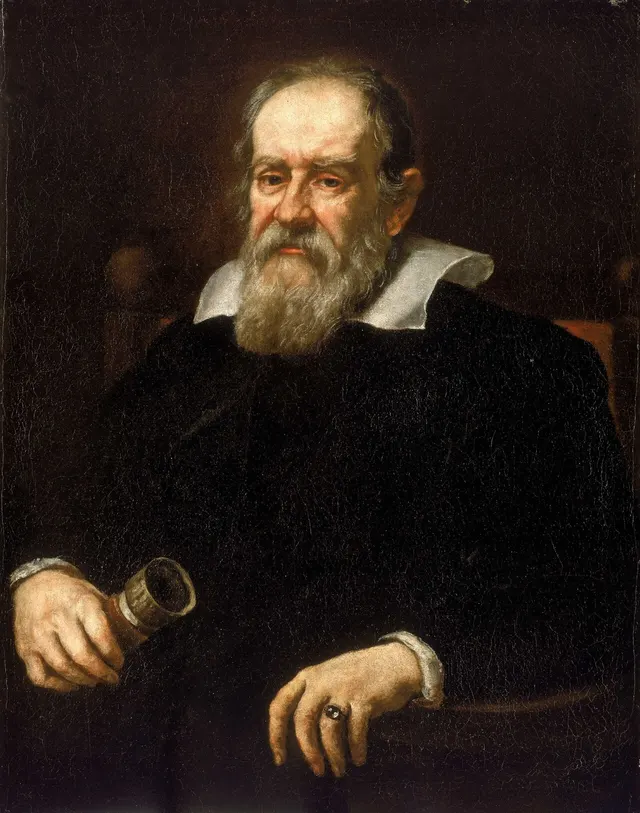
Galileo Galilei
Image creditJustus Sustermans · Public domainResized and cropped for display.

Galileo Galilei

Italian astronomer and physicist, condemned by the Inquisition for teaching that the Earth moves round the Sun.

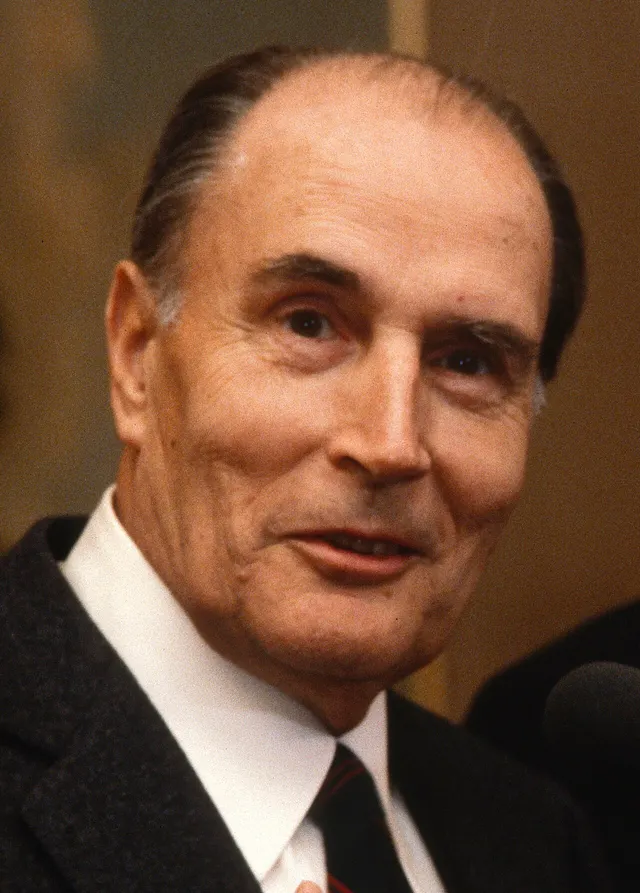
François Mitterrand
Image creditComet Photo AG (Zürich) · CC BY-SA 4.0Resized and cropped for display.

François Mitterrand

President of France from 1981 to 1995, the longest-serving president of the Fifth Republic.

HISTORY & TIMELINE

Finished the highlights?

Follow 8 January chronologically, from the Middle Ages to the modern day, with 8 verified events and the sources behind them.

This day through time →