Explore 2 January

Explore 2 January: the last Muslim kingdom in Spain surrenders at Granada, Russia gives up Port Arthur to Japan, a Roman priest becomes the first pope to take a new name and Georgia signs up to the American Constitution. Meet Thérèse of Lisieux, Isaac Asimov and Folke Bernadotte, born on 2 January.

This day through time →11 verified events across 6 eras

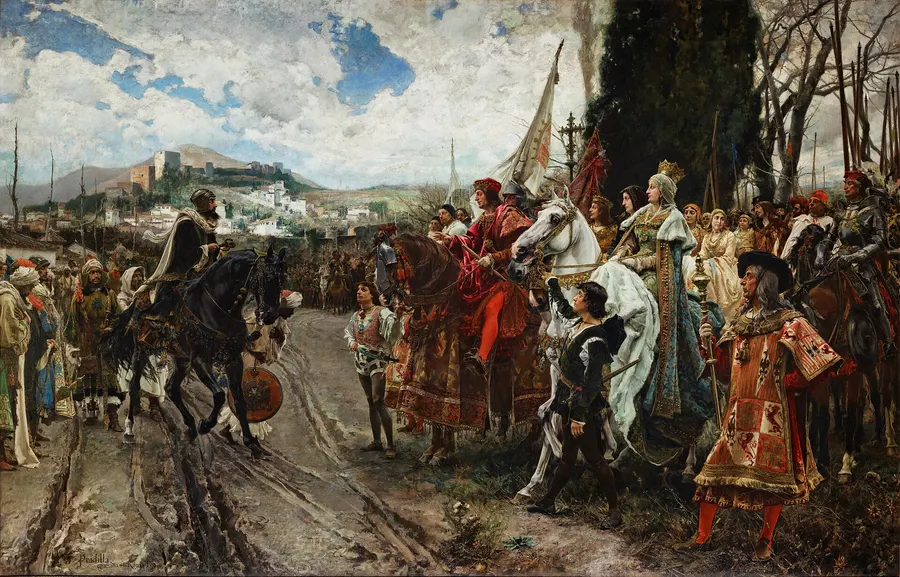
The Surrender of Granada, painted by Francisco Pradilla in 1882: Muhammad XII hands over the city to Ferdinand and Isabella.
Image creditFrancisco Pradilla y Ortiz · Public domainResized and cropped for display.

Granada surrenders and Muslim rule in Spain ends

For more than two centuries the Nasrid kingdom of Granada, with its palace-fortress of the Alhambra, was the last Muslim state in the Iberian Peninsula. From 1482 Ferdinand of Aragon and Isabella of Castile waged a ten-year war against it, town by town, until only the city itself was left.

After a long siege from the camp the Catholic Monarchs built at Santa Fe, the last king, Muhammad XII, known to the Spanish as Boabdil, handed over Granada on 2 January 1492. It brought nearly eight centuries of Muslim rule in Spain to an end. Within months the Jews of Spain were ordered to convert or leave, and the promises of religious freedom made to Granada’s Muslims were broken within a decade.

Read the full storyHistory & Timeline →Source: Encyclopaedia Britannica: Muhammad XII (Boabdil) ↗
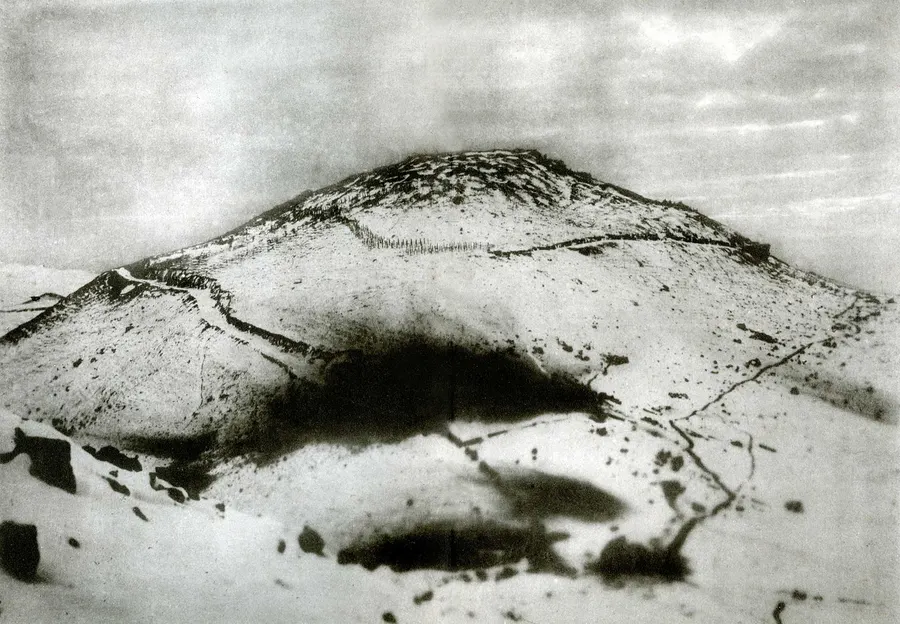
203 Metre Hill above Port Arthur, the height whose capture let the Japanese guns reach the harbour; photographed in 1909.
Image creditImperial Japanese Navy General Staff · Public domainResized and cropped for display.

Russia surrenders Port Arthur to Japan

Port Arthur, at the tip of China’s Liaodong Peninsula, was Russia’s naval base on the Pacific. Japan attacked it in February 1904, opening the Russo-Japanese War, and from the summer General Nogi Maresuke’s army laid siege to it, losing tens of thousands of men in assaults on the hills around the town.

Once Japanese guns on 203 Metre Hill could fire down on the harbour, the Russian fleet was destroyed at anchor. On 2 January 1905 the commander, General Anatoly Stessel, surrendered, though his garrison still had food and ammunition. The fall of the base, followed by defeats at Mukden and Tsushima, pushed Russia to accept peace talks later that year.

Read the full storyHistory & Timeline →Source: Encyclopaedia Britannica: Battle of Port Arthur ↗
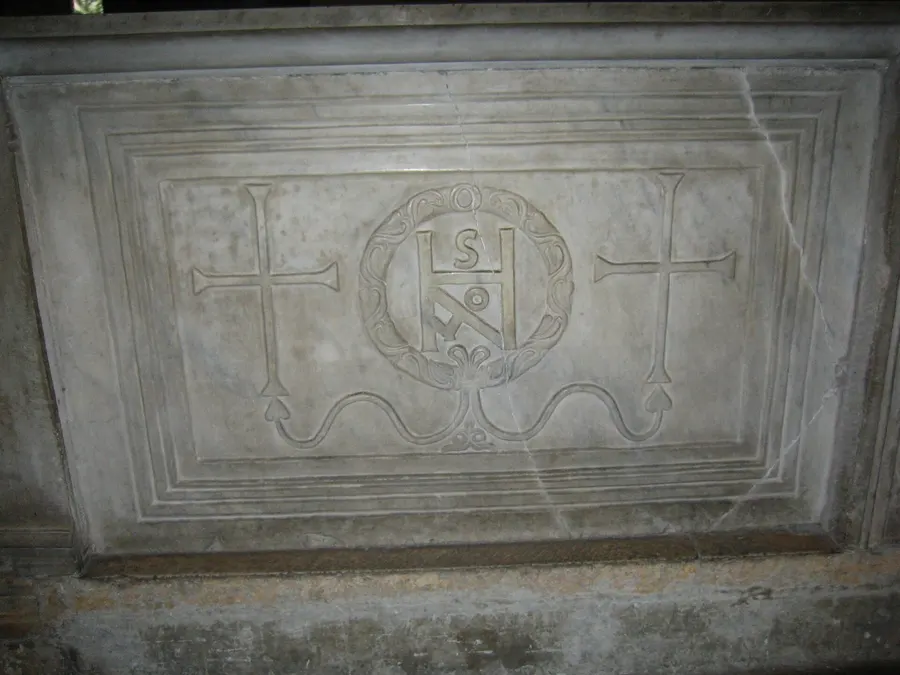
The marble choir screens of the Basilica of San Clemente in Rome, where the future Pope John II served as a priest.
Image creditMatthias Holländer at German Wikipedia · Public domainResized and cropped for display.

The first pope to take a new name

Mercurius was a Roman priest of the church of San Clemente. When he was elected Bishop of Rome on 2 January 533, he decided that a man named after the pagan god Mercury should not lead the Church, and he took the name of an earlier pope, John.

He was the first pope known to change his name. The custom did not take hold at once, but by the end of the first millennium it had become the rule, and almost every pope since has chosen a new name on election. Memorials of ‘John, called Mercurius’ survive at San Clemente.

Read the full storyHistory & Timeline →Source: Catholic Encyclopedia (New Advent): Pope John II ↗
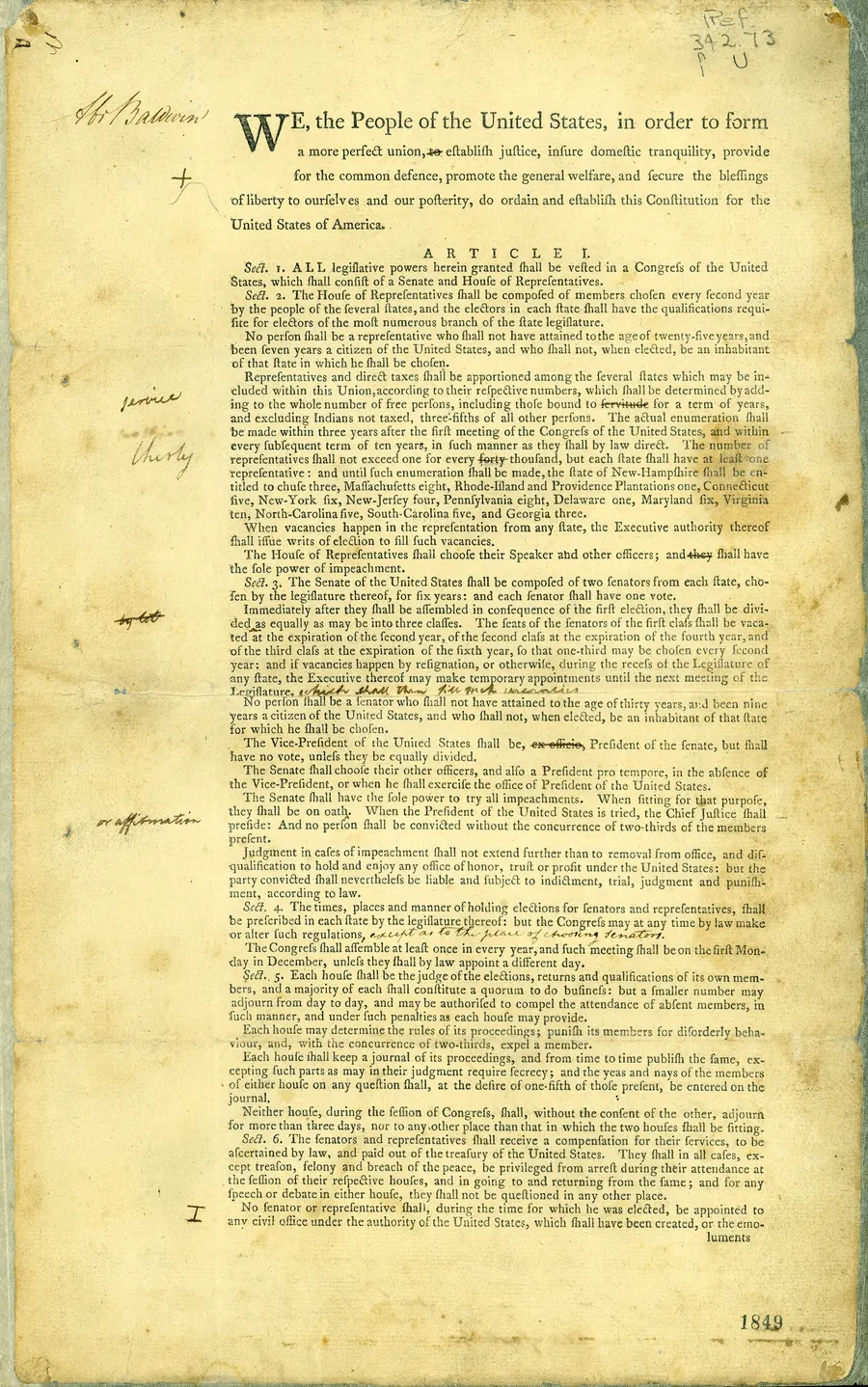
Abraham Baldwin's printed draft of the US Constitution, with his marginal notes, held by the Georgia Historical Society.
Abraham Baldwin’s printed draft of the US Constitution, with his marginal notes, held by the Georgia Historical Society.
Image creditBrendanghs · CC BY-SA 4.0Resized and cropped for display.

Georgia ratifies the US Constitution

The Constitution drafted in Philadelphia in 1787 needed the approval of nine of the thirteen states. Meeting in Augusta, a Georgia convention ratified it on 2 January 1788, making Georgia the fourth state to do so, after Delaware, Pennsylvania and New Jersey.

Georgia was then a thinly settled frontier state. Its leaders hoped a stronger national government would help them in their conflict with the Muscogee (Creek) nation, which still claimed much of the state’s land. Two Georgians, Abraham Baldwin and William Few, had signed the Constitution in Philadelphia.

Read the full storyHistory & Timeline →Source: New Georgia Encyclopedia: Georgia Constitution ↗
♙
PEOPLE

Born Today

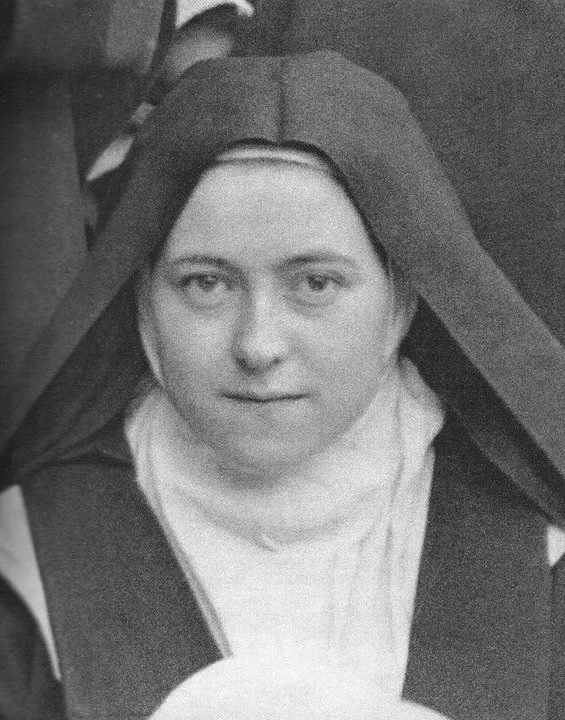
Thérèse of Lisieux
Image creditCéline Martin · Public domainResized and cropped for display.

Thérèse of Lisieux

French Carmelite nun whose memoir, The Story of a Soul, made her one of the best-loved Catholic saints.

Folke Bernadotte
Image creditUnknown · Public domainResized and cropped for display.

Folke Bernadotte

Swedish diplomat who rescued thousands from Nazi camps in 1945; killed as UN mediator in Palestine in 1948.

Cuba Gooding Jr.
Image creditBandit1155 · CC BY-SA 4.0Resized and cropped for display.

Cuba Gooding Jr.

American actor who won an Oscar for Jerry Maguire.

◉
IDEAS THAT CHANGED THINGS

Firsts, Science & Discoveries

A 1959 Soviet stamp dated 2.1.1959, showing the path of the 'Soviet cosmic rocket' towards the Moon.
A 1959 Soviet stamp dated 2.1.1959, showing the path of the ‘Soviet cosmic rocket’ towards the Moon.
Image creditPost of USSR · Public domainResized and cropped for display.

Luna 1 escapes the pull of the Earth

On 2 January 1959 the Soviet Union launched Luna 1 towards the Moon. The rocket’s upper stage burned longer than planned, and the probe missed the Moon by about 6,000 kilometres, passing it two days later.

Even so it made history: it was the first spacecraft to reach escape velocity and leave the Earth’s gravity behind, and it went into orbit around the Sun, where it still is. On the way it found that the Moon has no strong magnetic field and measured the solar wind.

Read the full storyHistory & Timeline →Source: NASA Space Science Data Coordinated Archive: Luna 1 ↗
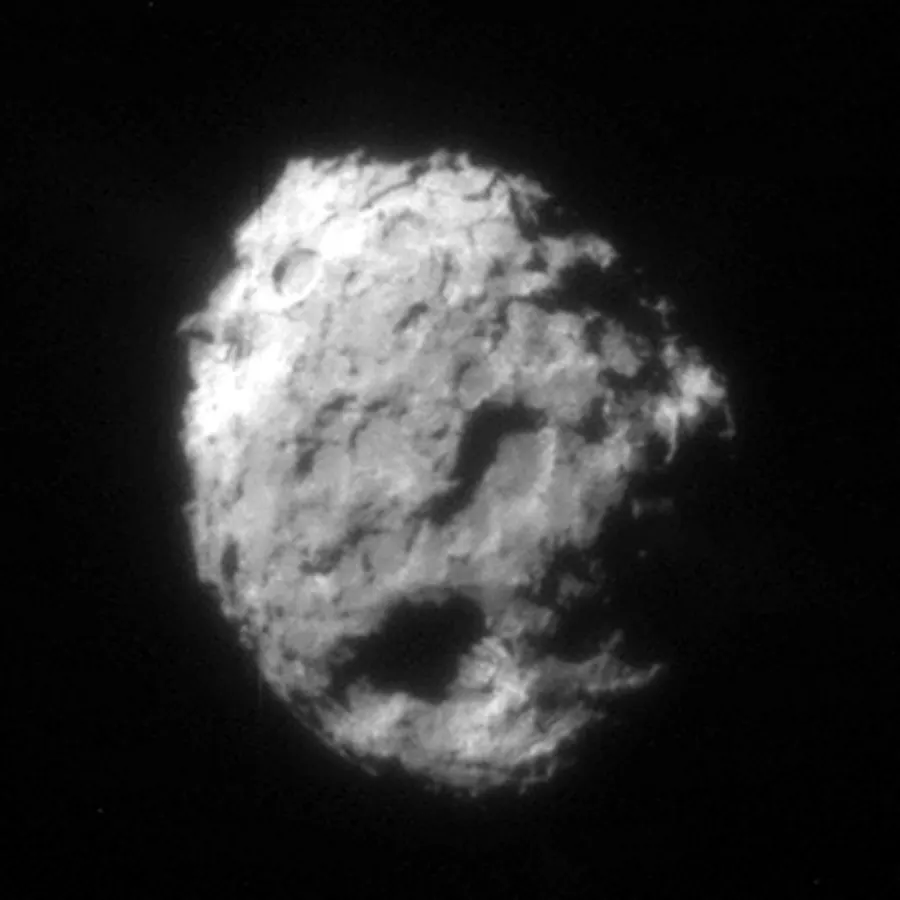
The nucleus of comet Wild 2, about five kilometres across, photographed by Stardust on 2 January 2004.
Image creditNASA · Public domainResized and cropped for display.

Stardust catches the dust of a comet

On 2 January 2004 NASA’s Stardust spacecraft flew about 240 kilometres from the nucleus of comet Wild 2, far beyond the orbit of Mars. It held out a collector like a tennis racket filled with aerogel, a very light glassy foam, to catch grains of dust streaming off the comet.

It also took the sharpest pictures of a comet’s nucleus yet. Two years later its capsule parachuted into the Utah desert, bringing back the first material ever collected from a comet, grains that turned out to include minerals formed near the young Sun.

Read the full storyHistory & Timeline →Source: NASA APPEL: tenth anniversary of Stardust’s encounter with comet Wild 2 ↗
♫
MUSIC • FILM • BOOKS • CULTURE

Culture Stories

A page of the overture to The Flying Dutchman in Wagner's own hand, about 1843.
A page of the overture to The Flying Dutchman in Wagner’s own hand, about 1843.
Image creditRichard Wagner · Public domainResized and cropped for display.

Wagner’s Flying Dutchman opens in Dresden

Richard Wagner’s opera Der fliegende Holländer, The Flying Dutchman, was first performed at the court opera in Dresden on 2 January 1843, with Wagner himself conducting. It tells the legend of a sea captain cursed to sail for ever unless he finds a woman who will be faithful to him until death.

The storm-tossed music owed something to Wagner’s own rough voyage across the North Sea in 1839. The opening was only a modest success, but it is the earliest of his operas still regularly staged, and it pointed the way to the music dramas that followed.

Read the full storyHistory & Timeline →Source: Metropolitan Opera: Der fliegende Holländer, the opera’s plot and creation ↗
✦
LIVES REMEMBERED

Remembered Today

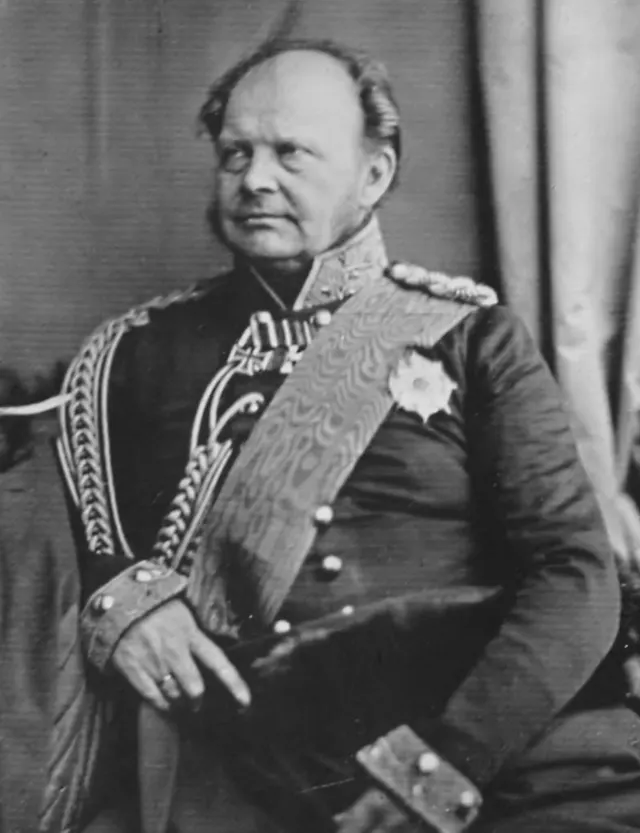
Frederick William IV
Image creditHermann Biow · Public domainResized and cropped for display.

Frederick William IV

King of Prussia who turned down the imperial crown offered by the Frankfurt Parliament in 1849.

Edward Burnett Tylor
Image creditUnknown · CC BY-SA 3.0Resized and cropped for display.

Edward Burnett Tylor

English scholar, a founder of anthropology, who defined culture for the new science.

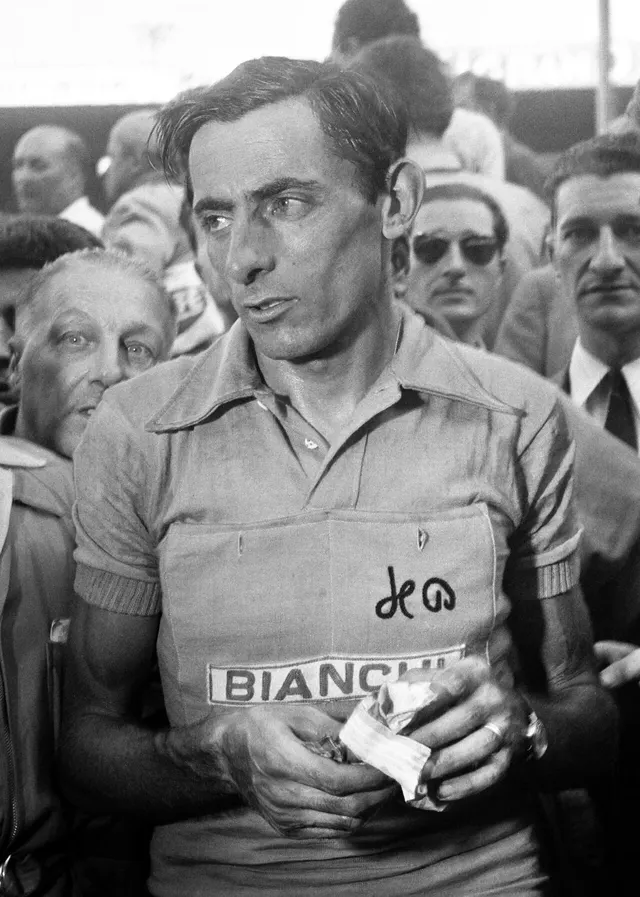
Fausto Coppi
Image creditJ.D. Noske (Anefo) · CC BY-SA 3.0 nlResized and cropped for display.

Fausto Coppi

Italian cyclist who won the Giro d’Italia five times and the Tour de France twice.

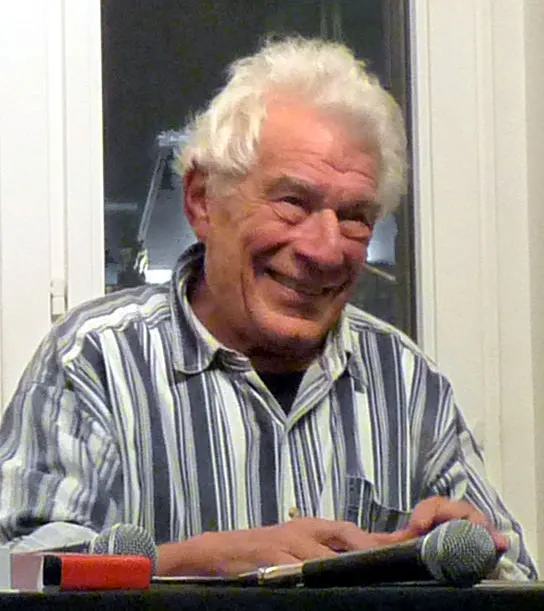
John Berger
Image creditJi-Elle · CC BY-SA 3.0Resized and cropped for display.

John Berger

English art critic and novelist, author of Ways of Seeing and the Booker-winning G.

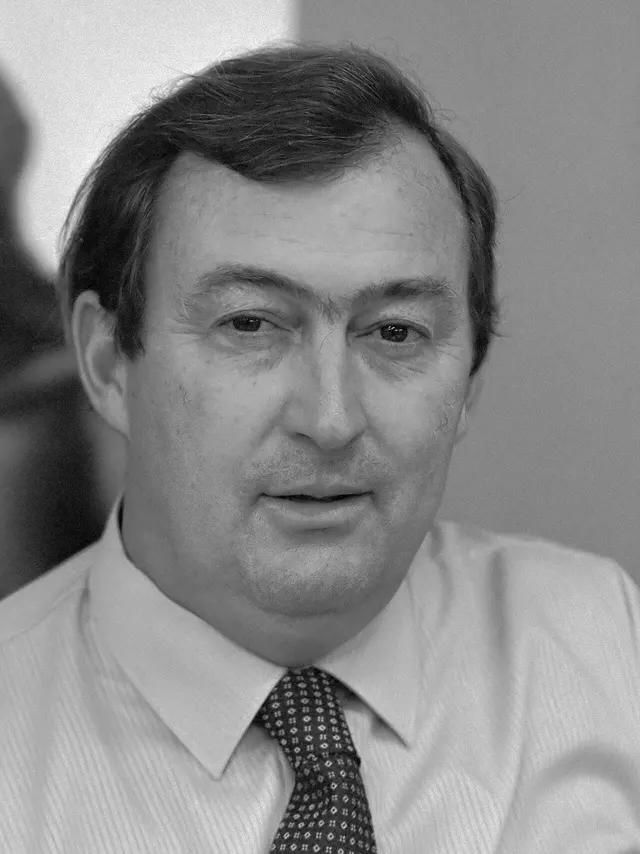
Richard Leakey
Image creditRob Bogaerts / Anefo · CC BY 4.0Resized and cropped for display.

Richard Leakey

Kenyan fossil hunter and conservationist who led the fight against elephant poaching.

☉
AROUND THE WORLD

Observances & Anniversaries

Saint Basil, painted by Jacobello di Bonomo in the 14th century; Museo Correr, Venice.
Image creditDidier Descouens · Public domainResized and cropped for display.

Feast of Saint Basil the Great

In the Catholic Church and the Church of England, 2 January is the feast of Basil the Great, the fourth-century bishop of Caesarea in Cappadocia, now in Turkey. He wrote the rules that still guide Eastern Orthodox monks, built a great complex for the poor and sick, and helped shape the Christian teaching on the Trinity. In the Orthodox Church he is honoured on 1 January, when Greeks cut the vasilopita, Saint Basil’s cake, with a coin hidden inside.

Source: Encyclopaedia Britannica: Saint Basil the Great ↗
HISTORY & TIMELINE

Finished the highlights?

Follow 2 January chronologically, from the Middle Ages to the modern day, with 11 verified events and the sources behind them.

This day through time →