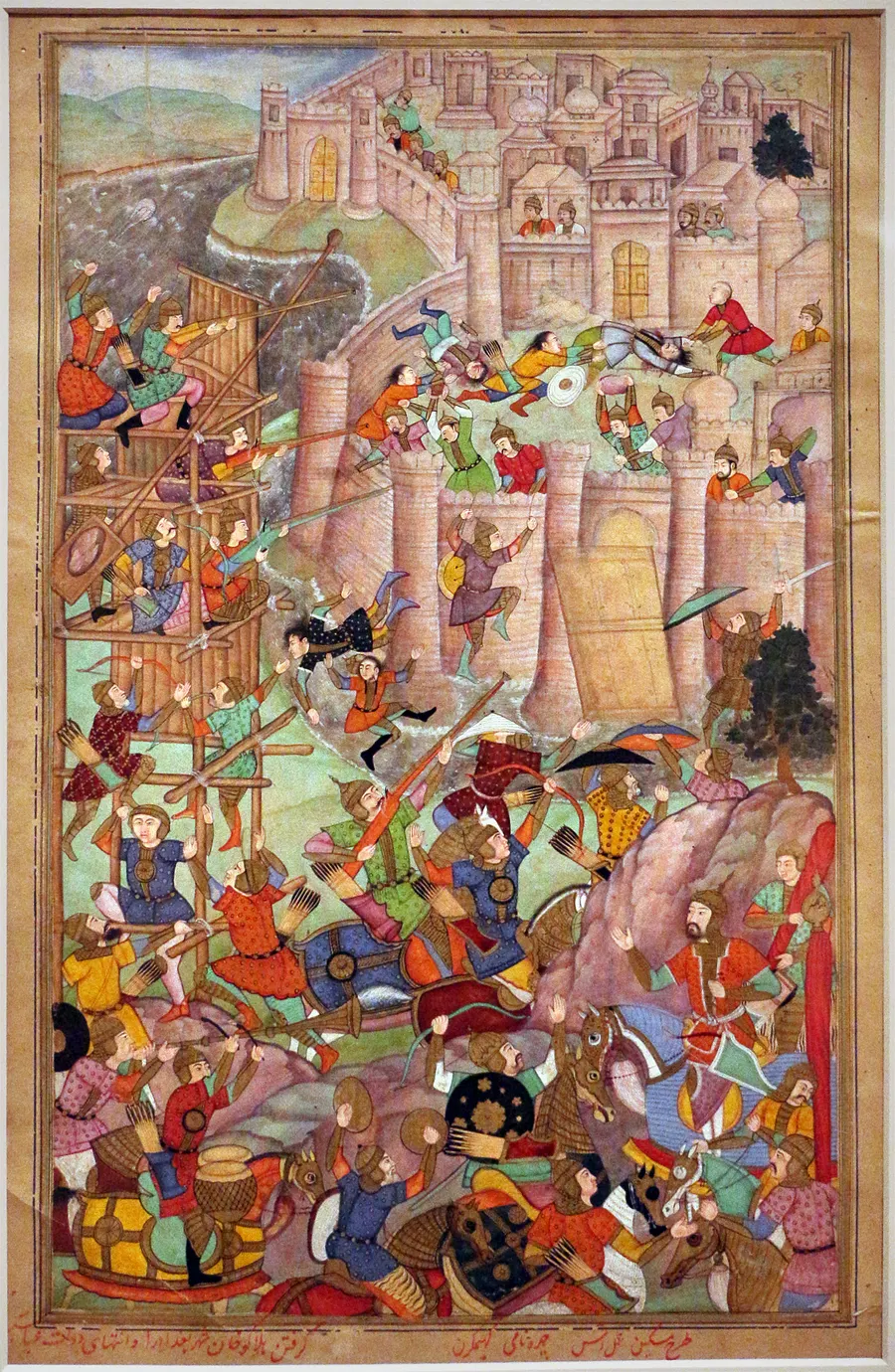
The Mongols take Baghdad and end the Abbasid caliphate
For five centuries Baghdad had been the seat of the Abbasid caliphs, the heads of the Sunni Muslim world, and one of the great cities of learning. By the 1250s the caliphs’ real power was small, but their prestige was immense. The Mongol ruler Möngke sent his brother Hülegü west to bring the Islamic lands to heel.
Hülegü’s army surrounded Baghdad in January 1258, and after its walls were breached the caliph al-Mustasim surrendered. The city fell on 10 February 1258. The Mongols sacked it, killing a great part of its population, and the caliph was put to death soon afterwards. For the first time in its history, Islam was left without a caliph in Baghdad.
Read the full storyHistory & Timeline →Source: Encyclopaedia Britannica: Iraq, the later Abbasids (1152-1258) ↗