
HISTORY & TIMELINE
10 February

A journey through
10 February in history

The tenth day of February has seen a tavern brawl in Oxford turn into three days of riot, and a computer beat the world chess champion for the first time. This timeline follows 10 February from the thirteenth century to the twentieth.

JUMP THROUGH TIME
II
THE MIDDLE AGES

Medieval History

Kingdoms, conflict, faith, power and the changing medieval world.

1258
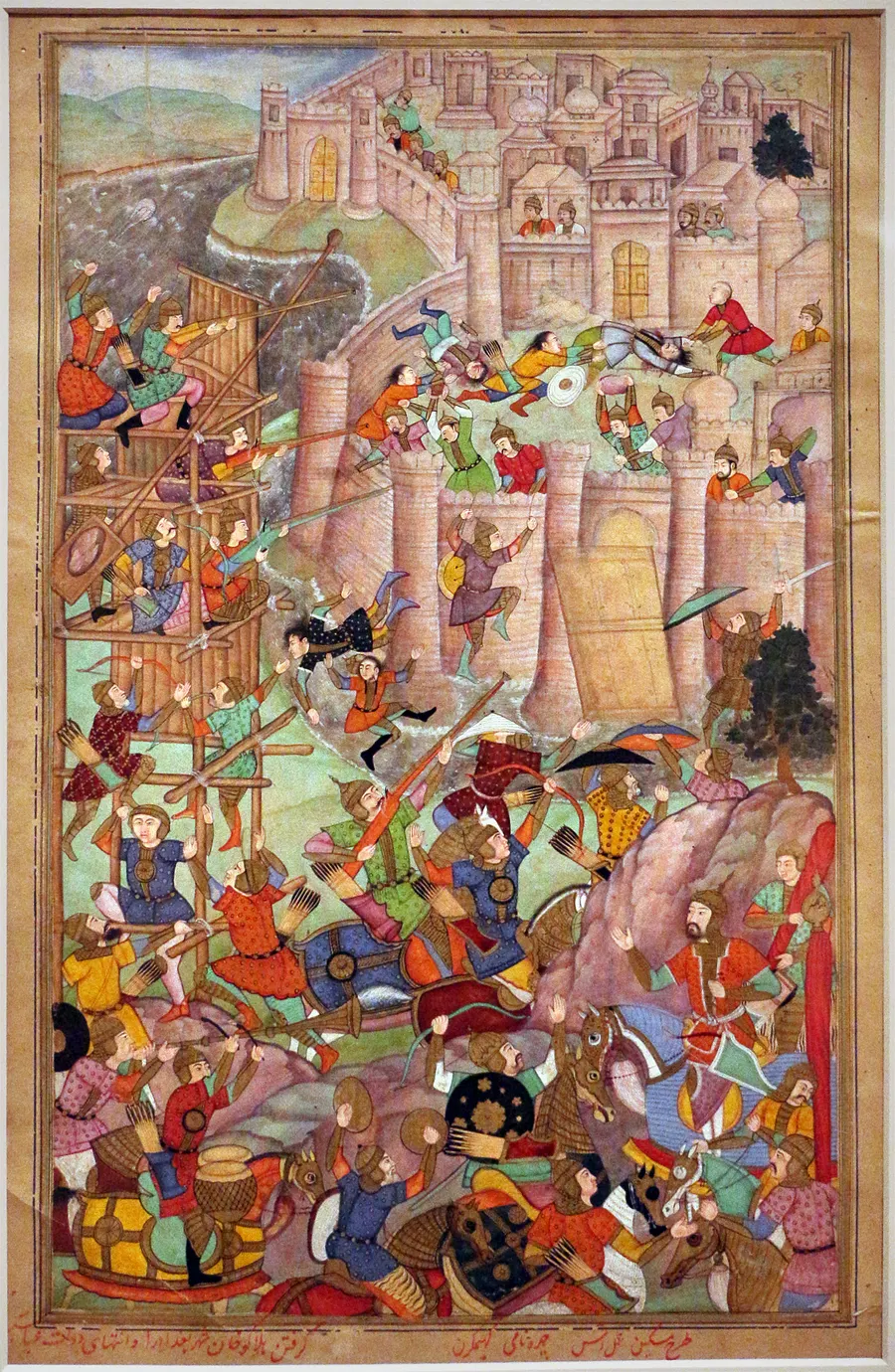
The taking of Baghdad by Hülegü, from a Mughal copy of Rashid al-Din's history made in northern India in 1596 (Cincinnati Art Museum).The taking of Baghdad by Hülegü, from a Mughal copy of Rashid al-Din’s history made in northern India in 1596 (Cincinnati Art Museum).Image: Sailko · CC BY 3.0
world · Asia

The Mongols take Baghdad and end the Abbasid caliphate

For five centuries Baghdad had been the seat of the Abbasid caliphs, the heads of the Sunni Muslim world, and one of the great cities of learning. By the 1250s the caliphs’ real power was small, but their prestige was immense. The Mongol ruler Möngke sent his brother Hülegü west to bring the Islamic lands to heel. Hülegü’s army surrounded Baghdad in January 1258, and after its walls were breached the caliph al-Mustasim surrendered. The city fell on 10 February 1258. The Mongols sacked it, killing a great part of its population, and the caliph was put to death soon afterwards. For the first time in its history, Islam was left without a caliph in Baghdad.

Source: Encyclopaedia Britannica: Iraq, the later Abbasids (1152-1258) ↗
1355
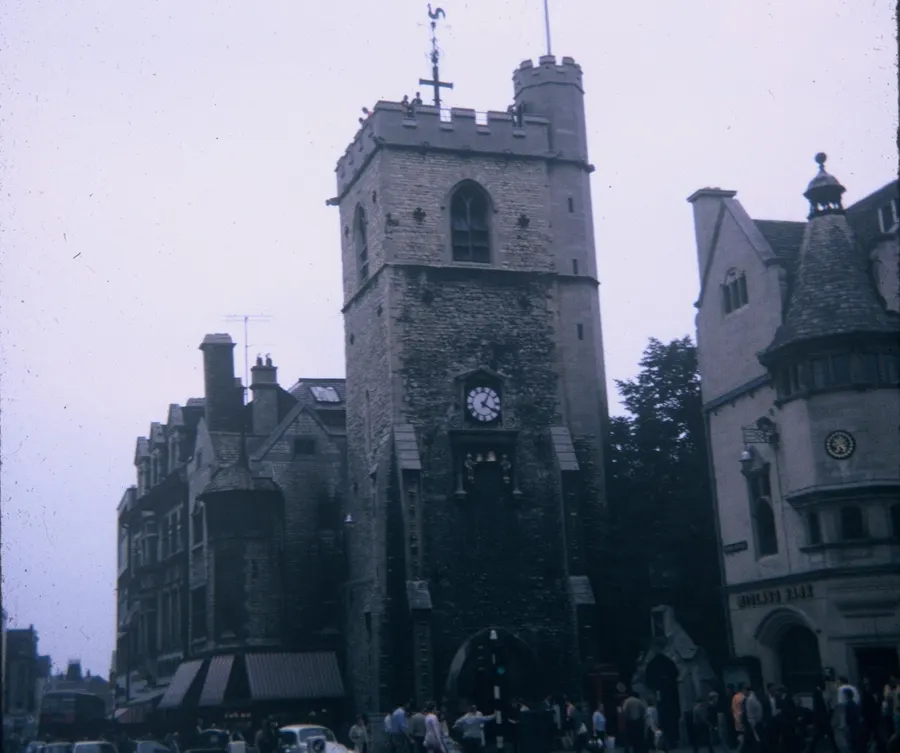
Carfax Tower in Oxford, photographed in 1968. The Swindlestock tavern, where the riot began, stood at the Carfax crossroads.Carfax Tower in Oxford, photographed in 1968. The Swindlestock tavern, where the riot began, stood at the Carfax crossroads.Image: David Hillas · CC BY-SA 2.0
world · Europe

A tavern brawl sets off the St Scholastica’s Day riot in Oxford

On 10 February 1355, St Scholastica’s day, students drinking at the Swindlestock tavern at Carfax in Oxford complained about the wine, threw it in the landlord’s face and beat him. Townspeople rang the bells to rally, and three days of fighting followed; country people poured in to help the town, halls were sacked and scholars were killed. The town won the fight but lost the peace: the king gave the university new powers over the town, and for centuries afterwards the mayor and council had to attend a penitential service every St Scholastica’s day.

Source: British History Online, Victoria County History of Oxfordshire: medieval Oxford ↗
III
A CHANGING WORLD

Early Modern Era

Exploration, political change, scientific development and expanding global connections.

1763
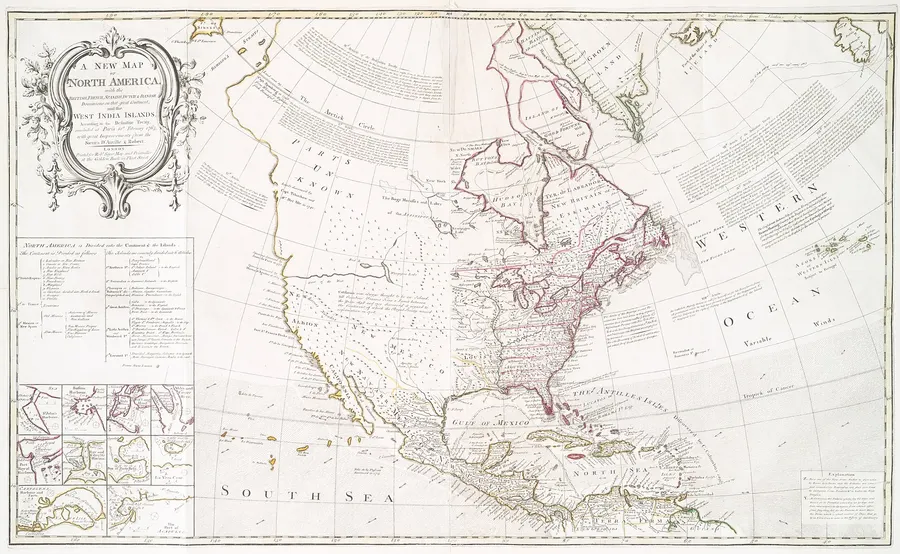
A new map of North America published in London in 1763, showing the colonies of the European powers 'according to the definitive treaty concluded at Paris'.A new map of North America published in London in 1763, showing the colonies of the European powers ‘according to the definitive treaty concluded at Paris’.Image: Sayer, Robert, 1725-1794 -- Cartographer ;Anville, Jean Baptiste Bourguignon d', 1697-1782 -- CartographerRobert de Vaugondy, Didier, 1723-1786 -- Cartographer · Public domain
politics · Global

The Treaty of Paris hands Canada to Britain

The Seven Years’ War, known in America as the French and Indian War, was fought across North America, Europe, the Caribbean, West Africa and India. By 1762 Britain had taken Quebec, Montreal, Havana and Manila, and all sides were exhausted. On 10 February 1763 Britain, France and Spain signed the peace in Paris. France gave up Canada and all its lands east of the Mississippi to Britain, and passed Louisiana to Spain, which in turn ceded Florida to Britain in return for Havana and Manila. Britain became the leading colonial power, but the cost of the war, and of defending its new lands, led it to tax its American colonies, which set them on the road to revolution.

Source: US Department of State, Office of the Historian: Treaty of Paris, 1763 ↗
IV
THE NINETEENTH CENTURY

The 1800s

Industry, empire, invention, reform and a century of enormous transformation.

1840
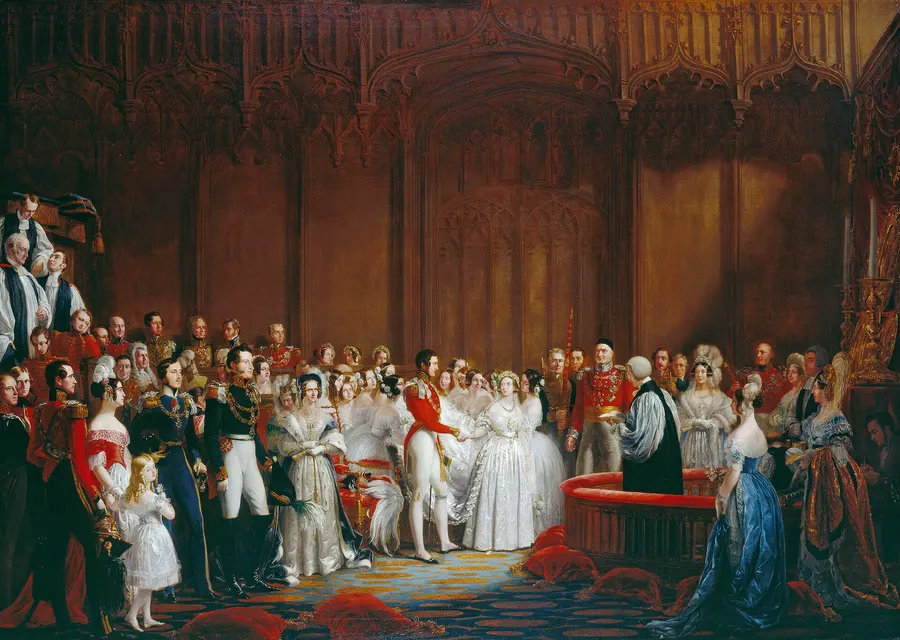
The Marriage of Queen Victoria, 10 February 1840, painted by Sir George Hayter (Royal Collection).The Marriage of Queen Victoria, 10 February 1840, painted by Sir George Hayter (Royal Collection).Image: George Hayter · Public domain
politics · Europe

Queen Victoria marries Prince Albert

Victoria became queen in 1837 at the age of 18. Her German cousin Albert of Saxe-Coburg and Gotha visited in October 1839, and within days she, as the monarch, proposed to him. They were married on 10 February 1840 in the Chapel Royal at St James’s Palace. Victoria wore a white satin dress rather than robes of state, a choice copied by brides ever since, and drove through London in an open carriage so that crowds could see her. The couple had nine children, whose marriages linked the royal families of Europe, and Albert became her closest adviser until his death in 1861.

Source: Royal Collection Trust: the marriage of Queen Victoria, 10 February 1840 ↗
V
THE TWENTIETH CENTURY

The 1900s

War and peace, technological leaps, social change, politics, sport and popular culture.

1962
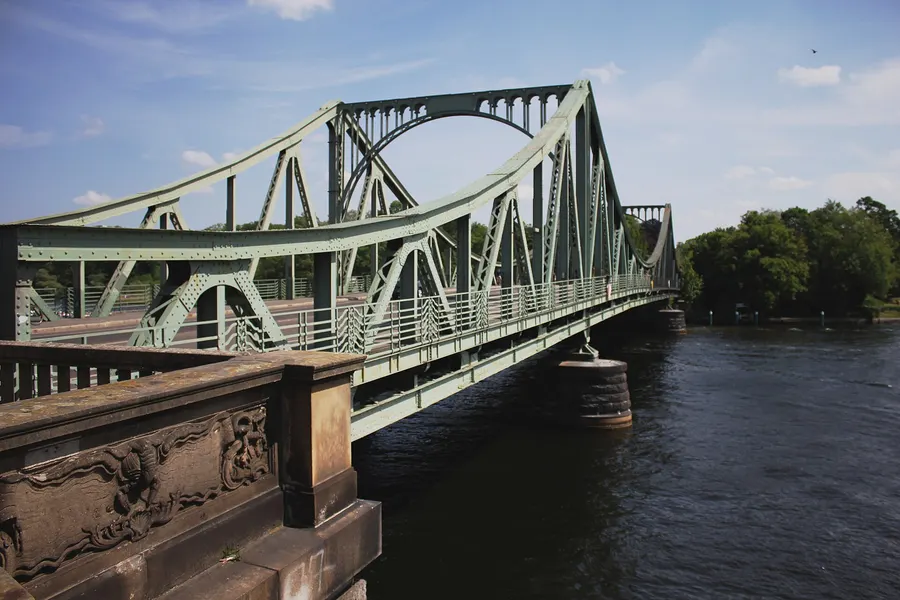
The Glienicke Bridge between Potsdam and Berlin, where the exchange took place, seen from the Potsdam bank in 2018.The Glienicke Bridge between Potsdam and Berlin, where the exchange took place, seen from the Potsdam bank in 2018.Image: Loewenflausch · CC BY-SA 4.0
politics · Europe

The superpowers swap spies on a Berlin bridge

In May 1960 the Soviet Union shot down an American U-2 spy plane and captured its pilot, Francis Gary Powers, who was sentenced to ten years. In New York the FBI already held Rudolf Abel, a Soviet spy convicted in 1957. The New York lawyer James Donovan, who had defended Abel, negotiated a trade in East Berlin. On the morning of 10 February 1962 Abel and Powers walked across the Glienicke Bridge between West Berlin and Potsdam in opposite directions, while an American student, Frederic Pryor, was released at Checkpoint Charlie. The crossing, later called the ‘bridge of spies’, was used for several more exchanges during the Cold War.

Source: Central Intelligence Agency: May Day over Moscow, the Francis Gary Powers story ↗
1996
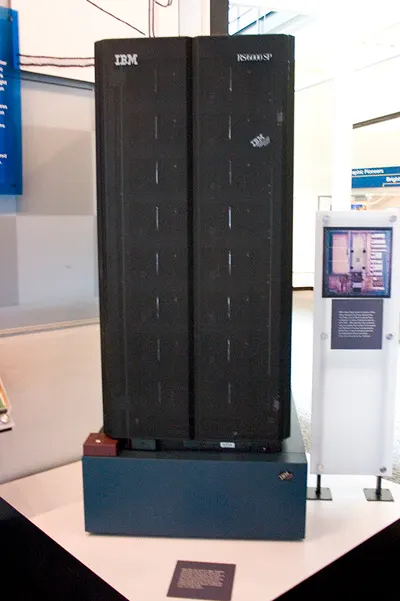
An IBM computer of the Deep Blue type, on show at the Computer History Museum in California.An IBM computer of the Deep Blue type, on show at the Computer History Museum in California.Image: James the photographer · CC BY 2.0
science · Americas

A computer beats the world chess champion for the first time

Since the early days of computing, programmers had dreamed of building a machine to beat the best human chess players. IBM’s Deep Blue, built on a supercomputer with hundreds of special chess chips, could examine about a hundred million positions a second. In Philadelphia on 10 February 1996, in the first game of a six-game match, Deep Blue beat the world champion, Garry Kasparov, the first time a computer had won a game against a reigning champion under normal tournament conditions. Kasparov recovered to win the match 4-2, but an upgraded Deep Blue beat him in a rematch in May 1997.

Source: Computer History Museum: Deep Blue defeats Kasparov ↗
WHY THESE MOMENTS?

Significance before volume

This page is not the longest possible list of events. It is a chronological journey through 10 February, where each entry is chosen for historical significance, human interest and reliability.

Facts are checked against authoritative museums, archives, universities and reference works. Where sources disagree, the page says so.

EXPLORED THE DEEPER STORY?

Return to the highlights of 10 February

Discover the lighter side of the date with famous birthdays, culture, firsts and lives remembered.

Explore This Day →
← PREVIOUS DAY9 February
HISTORY & TIMELINE10 February
NEXT DAY →11 February