
HISTORY & TIMELINE
11 February

A journey through
11 February in history

The eleventh day of February has seen a king of Spain give up his throne, a teenage girl report a vision at Lourdes and scientists announce that they had heard two black holes collide. This timeline follows 11 February from the nineteenth century to the twenty-first.

JUMP THROUGH TIME
IV
THE NINETEENTH CENTURY

The 1800s

Industry, empire, invention, reform and a century of enormous transformation.

1858
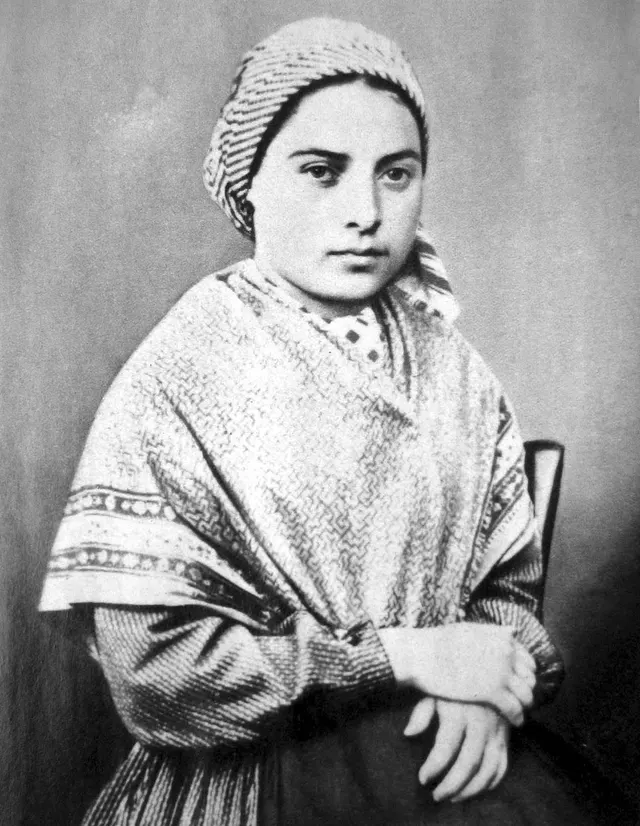
Bernadette Soubirous, photographed around 1858-1860.Bernadette Soubirous, photographed around 1858-1860.Image: abbé P. Bernadou · Public domain
culture · Europe

Bernadette Soubirous reports a vision at Lourdes

On 11 February 1858 Bernadette Soubirous, the 14-year-old daughter of a poor family in Lourdes in the French Pyrenees, went to gather firewood by the river and said she saw a young lady dressed in white in the grotto of Massabielle. It was the first of eighteen visions she reported that year. The Church approved devotion to Our Lady of Lourdes in 1862, and the grotto became one of the most visited pilgrimage sites in the world.

Source: Sanctuary of Our Lady of Lourdes: the apparitions ↗
1873
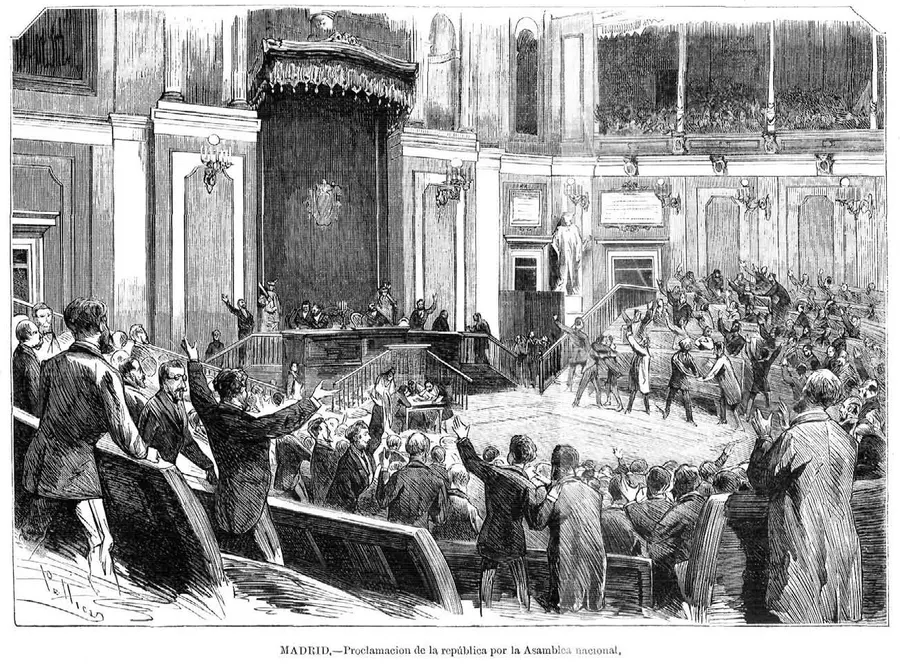
The National Assembly in Madrid proclaims the republic, an engraving after Josep Lluís Pellicer in La Ilustración Española y Americana, 1873.The National Assembly in Madrid proclaims the republic, an engraving after Josep Lluís Pellicer in La Ilustración Española y Americana, 1873.Image: Josep Lluis Pellicer / Bernardo Rico · Public domain
politics · Europe

King Amadeo gives up the Spanish throne and Spain becomes a republic

After the revolution of 1868 drove out Queen Isabella II, the Spanish parliament offered the crown to an Italian prince, Amadeo of Savoy. Opposed by republicans, Carlists and much of the old nobility, he could form no stable government, and on 11 February 1873 he abdicated. The same day the two houses of parliament, sitting together, proclaimed Spain’s First Republic. It lasted less than two years before the Bourbon monarchy was restored.

Source: Encyclopaedia Britannica: Amadeus, king of Spain ↗
1889
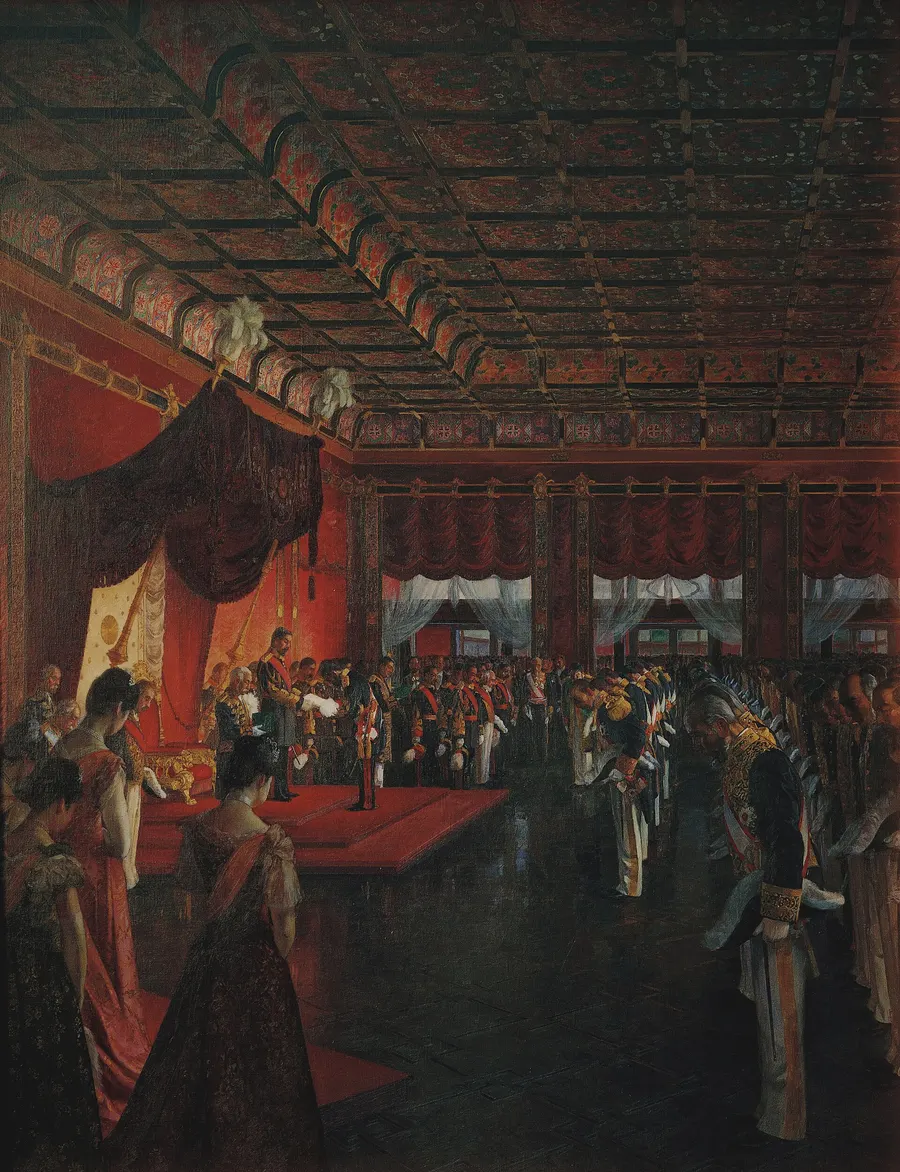
Ceremony for the Promulgation of the Constitution, a painting by Wada Eisaku.Ceremony for the Promulgation of the Constitution, a painting by Wada Eisaku.Image: Eisaku Wada · Public domain
politics · Asia

Japan’s emperor grants the country its first constitution

After the Meiji Restoration of 1868, Japan’s new leaders set out to build a modern state that the Western powers would treat as an equal. The statesman Itō Hirobumi toured Europe to study constitutions and was most impressed by Prussia’s, which kept strong powers in the hands of the monarch. On 11 February 1889 Emperor Meiji promulgated the Constitution of the Empire of Japan, presented as a gift from the emperor to his people. It created a two-chamber parliament, the Diet, with an elected lower house, but the cabinet answered to the emperor and the armed forces kept wide independence. It remained in force until 1947.

Source: National Diet Library, Modern Japan in archives: toward the enactment of the constitution ↗
V
THE TWENTIETH CENTURY

The 1900s

War and peace, technological leaps, social change, politics, sport and popular culture.

1929
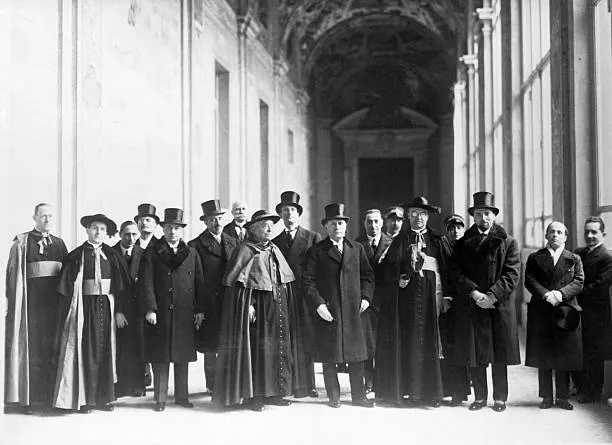
Cardinal Pietro Gasparri and Benito Mussolini (centre) with Vatican and Italian officials at the Lateran Palace before the signing, February 1929.Cardinal Pietro Gasparri and Benito Mussolini (centre) with Vatican and Italian officials at the Lateran Palace before the signing, February 1929.Image: Unknown author. · Public domain
politics · Europe

Italy and the pope sign the Lateran Treaty

When Italian troops took Rome in 1870, the popes lost the last of the Papal States. Refusing to accept the new kingdom, they called themselves prisoners in the Vatican, and for almost sixty years the ‘Roman Question’ divided Catholics and the Italian state. On 11 February 1929 Cardinal Gasparri for Pope Pius XI and Mussolini for the Kingdom of Italy signed a set of agreements at the Lateran Palace. The pope recognised Italy with Rome as its capital; Italy recognised the pope’s sovereignty over Vatican City, a state of 44 hectares, the smallest in the world. A concordat settled the Church’s place in Italian life, and the treaty still underpins the Vatican’s independence today.

Source: Vatican City State: origins and characteristics ↗
1945
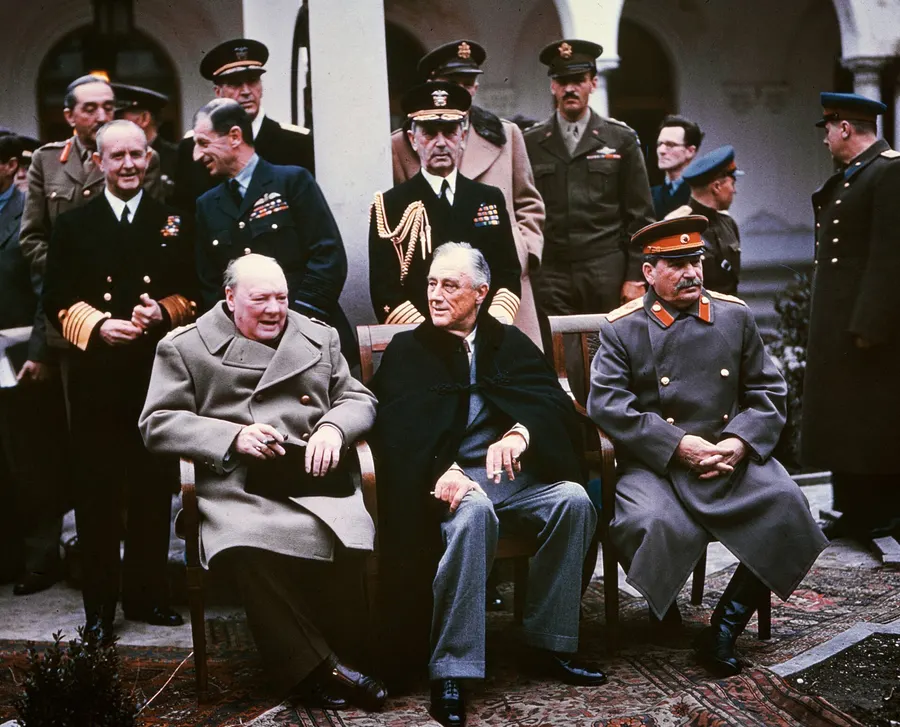
Churchill, Roosevelt and Stalin with their advisers at the Yalta Conference, February 1945.Churchill, Roosevelt and Stalin with their advisers at the Yalta Conference, February 1945.Image: Photograph from the Army Signal Corps Collection in the U.S. National Archives. · Public domain
world · Europe

The Yalta Conference ends with agreements on Europe and the United Nations

For a week in February 1945 Roosevelt, Churchill and Stalin met at Yalta in Crimea to plan the defeat and occupation of Germany. On 11 February, the last day, they issued their declarations: Germany would be divided into zones, with France given one; Poland would have a new government including Communists; and a conference would be called to found the United Nations. In a secret agreement the Soviet Union promised to enter the war against Japan.

Source: US Department of State, Office of the Historian: the Yalta Conference, 1945 ↗
1963
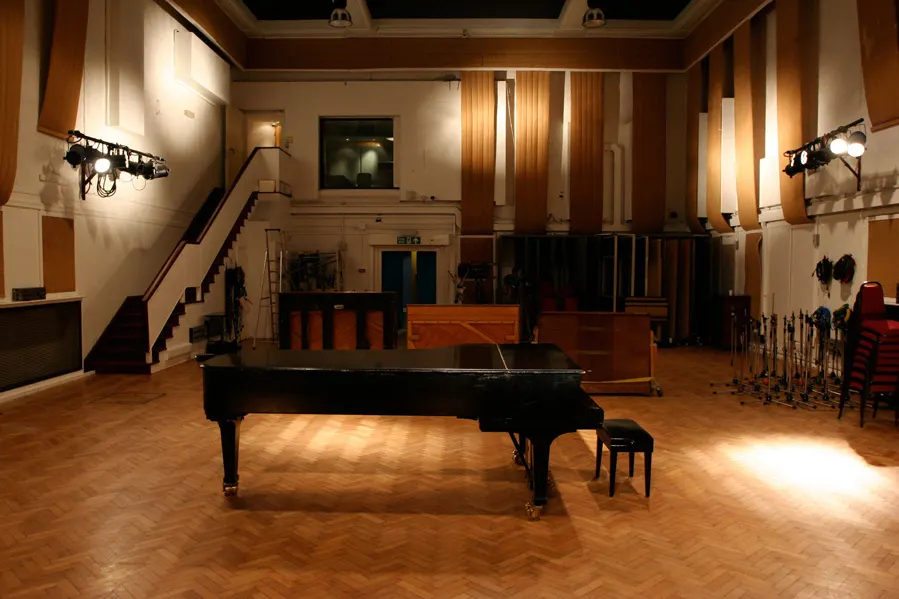
A grand piano and other pianos in Studio Two at Abbey Road Studios, London, where the album was recorded, photographed in 2008.A grand piano and other pianos in Studio Two at Abbey Road Studios, London, where the album was recorded, photographed in 2008.Image: Tomswain Tom Swain www.tomswain.co.uk · CC BY-SA 3.0
culture · Europe

The Beatles record an album in a single day

In early 1963 the Beatles’ single Please Please Me was climbing the British charts, and their producer, George Martin, wanted an album out quickly. The band had little studio time and a heavy touring schedule. On 11 February 1963, in Studio Two at EMI’s studios on Abbey Road in London, they recorded ten songs in one long day, largely the songs they played on stage, ending with a raw version of Twist and Shout. With four tracks from their first two singles, the album Please Please Me was released in March and spent thirty weeks at the top of the British album chart.

Source: The Beatles (official site): recording Please Please Me in a day ↗
1975
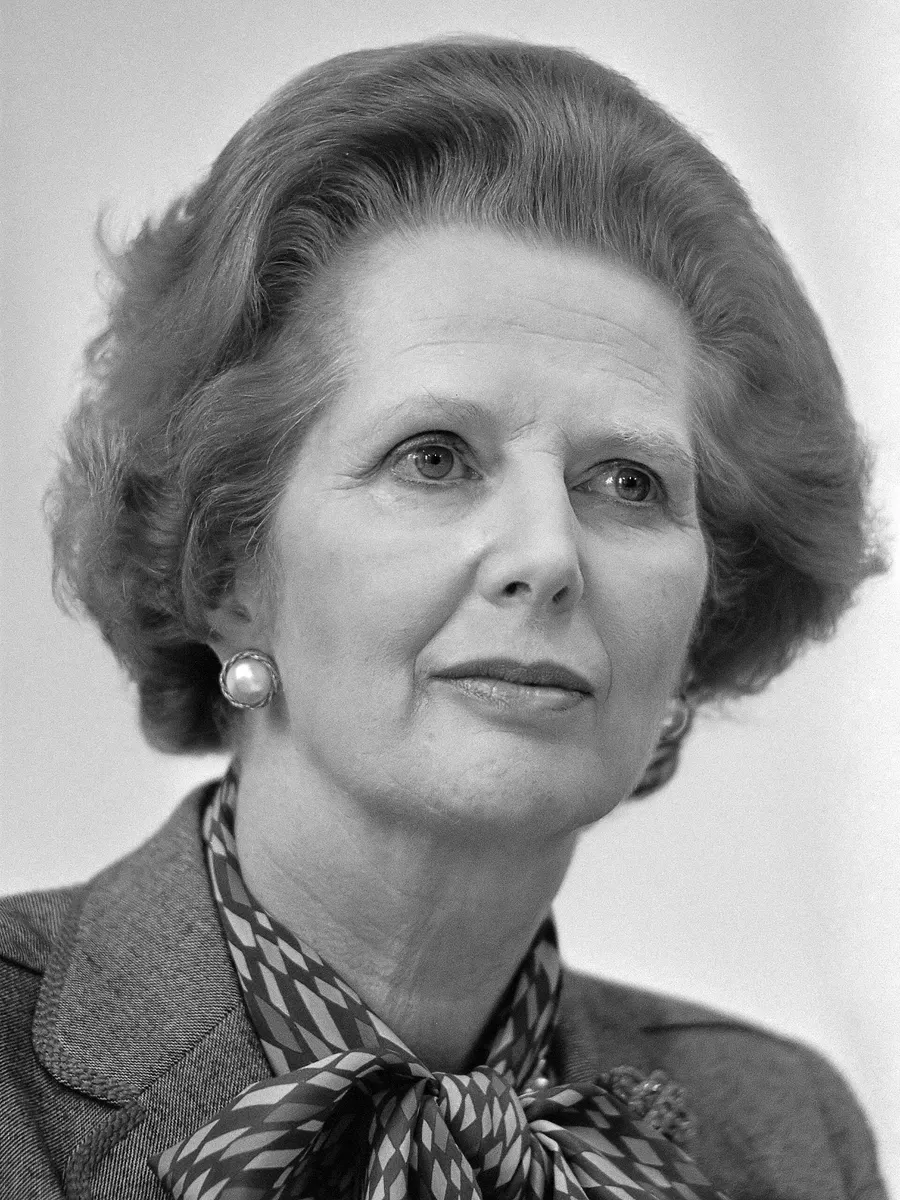
Margaret Thatcher as prime minister, photographed in September 1983.Margaret Thatcher as prime minister, photographed in September 1983.Image: Rob Bogaerts · CC0
politics · Europe

Margaret Thatcher becomes leader of the Conservative Party

After Edward Heath lost two general elections in 1974, Margaret Thatcher, his former education secretary, was the only senior Conservative willing to stand against him. She beat him in the first ballot, and on 11 February 1975 won the second outright. She became the first woman to lead a major British party and, in 1979, the country’s first woman prime minister.

Source: Margaret Thatcher Foundation: press conference after winning the Conservative leadership ↗
1979
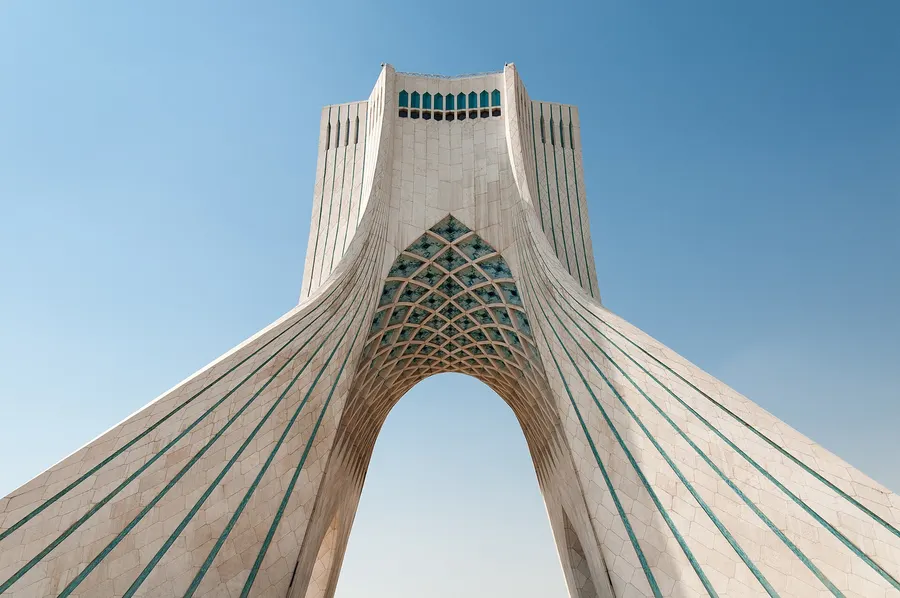
The Azadi (Freedom) Tower in Tehran, built in 1971 as the Shahyad monument to the monarchy and renamed after the revolution.The Azadi (Freedom) Tower in Tehran, built in 1971 as the Shahyad monument to the monarchy and renamed after the revolution.Image: Laurens R. Krol · CC BY 4.0
politics · Asia

Iran’s army stands aside and the shah’s last government falls

Through 1978 millions of Iranians marched against Mohammad Reza Shah, uniting religious conservatives, liberals and the left. The shah left the country in January 1979, leaving behind a government under Shapour Bakhtiar, and on 1 February the exiled cleric Ayatollah Ruhollah Khomeini returned to Tehran to a vast welcome. Khomeini named his own prime minister, and fighting broke out between rival units in the capital. On 11 February 1979 (22 Bahman 1357 in the Iranian calendar) the armed forces declared themselves neutral, and Bakhtiar’s government collapsed. The day is marked in Iran as the victory of the revolution, and within two months a referendum had made the country an Islamic republic.

Source: Encyclopaedia Britannica: Iranian Revolution (1978-79) ↗
1990
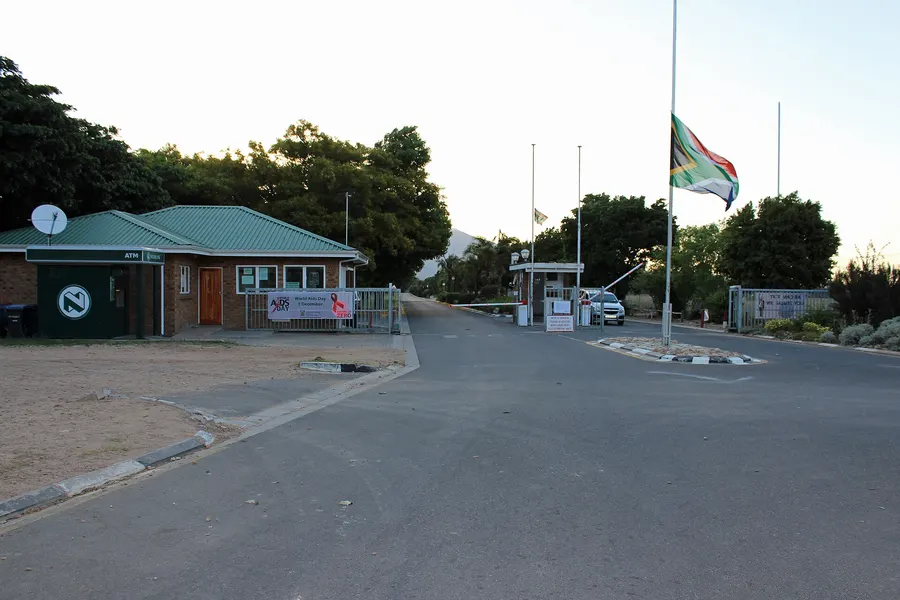
The entrance to Drakenstein Correctional Centre near Paarl, formerly Victor Verster Prison, with the South African flag at half-mast after Mandela's death in December 2013.The entrance to Drakenstein Correctional Centre near Paarl, formerly Victor Verster Prison, with the South African flag at half-mast after Mandela’s death in December 2013.Image: HelenOnline · CC BY-SA 3.0
politics · Africa

Nelson Mandela walks free after 27 years

Nelson Mandela, a leader of the African National Congress, was sentenced to life imprisonment in 1964 for his part in the armed struggle against apartheid. He spent eighteen years on Robben Island and later years at Pollsmoor and at Victor Verster Prison near Paarl, while campaigns for his release spread around the world. President F. W. de Klerk lifted the ban on the ANC in early February 1990, and on 11 February Mandela walked out of the gates of Victor Verster hand in hand with his wife, Winnie. That evening he spoke to a vast crowd from the balcony of Cape Town’s City Hall on the Grand Parade. Four years later, in South Africa’s first democratic election, he became the country’s president.

Source: Nelson Mandela Foundation: Mandela walks free, 35 years remembered ↗
1990
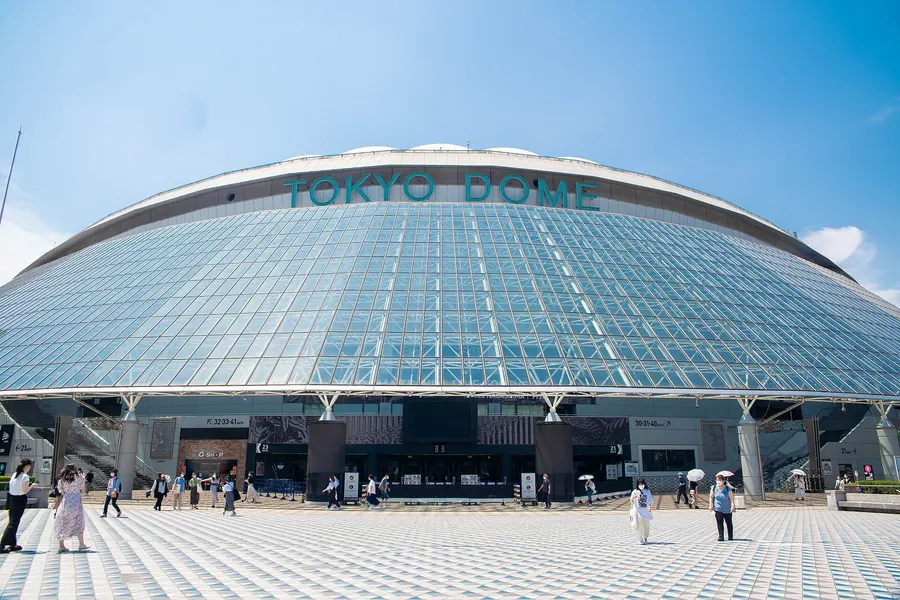
The Tokyo Dome, where the fight took place, photographed in 2022.The Tokyo Dome, where the fight took place, photographed in 2022.Image: Dick Thomas Johnson from Tokyo, Japan · CC BY 2.0
sport · Asia

Buster Douglas knocks out Mike Tyson in Tokyo

Mike Tyson was the undisputed heavyweight champion of the world, unbeaten in 37 professional fights. His challenger, James ‘Buster’ Douglas, was a 42-1 outsider. At the Tokyo Dome on 11 February 1990 Douglas, fighting weeks after his mother’s death, outboxed the champion with his jab. Tyson knocked him down in the eighth round, but Douglas got up and in the tenth sent Tyson to the canvas with an uppercut and a flurry of punches. Tyson was counted out, in what is still called the greatest upset in boxing history.

Source: ESPN: the day James ‘Buster’ Douglas shook the world ↗
VI
2000 TO TODAY

Modern Day

The events of recent decades that have already become part of the historical record.

2011
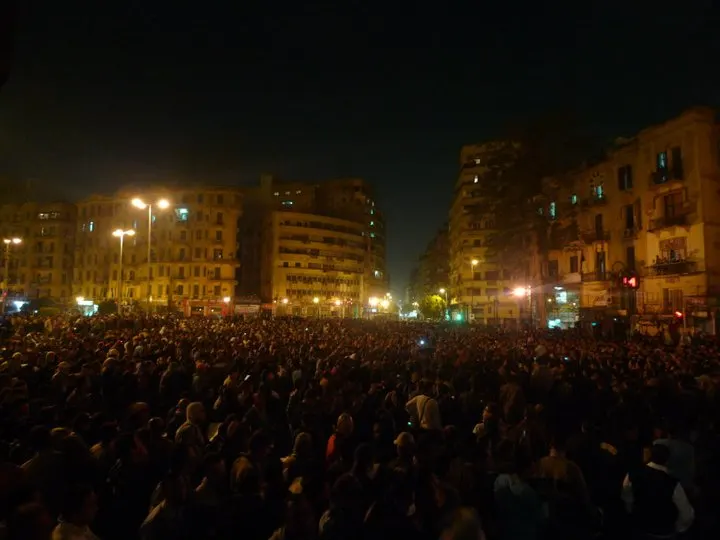
Crowds in Tahrir Square, Cairo, on the night of 25 January 2011, the first day of the protests.Crowds in Tahrir Square, Cairo, on the night of 25 January 2011, the first day of the protests.Image: Al Jazeera English · CC BY-SA 2.0
politics · Africa

Hosni Mubarak steps down after eighteen days of protest in Egypt

Inspired by the uprising in Tunisia, Egyptians filled Cairo’s Tahrir Square and the streets of other cities from 25 January 2011, demanding the end of Hosni Mubarak’s thirty years in power. On the evening of 11 February his vice-president, Omar Suleiman, announced on television that Mubarak had resigned and handed power to the Supreme Council of the Armed Forces. Crowds celebrated through the night, although the military kept its hold on power.

Source: Encyclopaedia Britannica: Egypt Uprising of 2011 ↗
2016
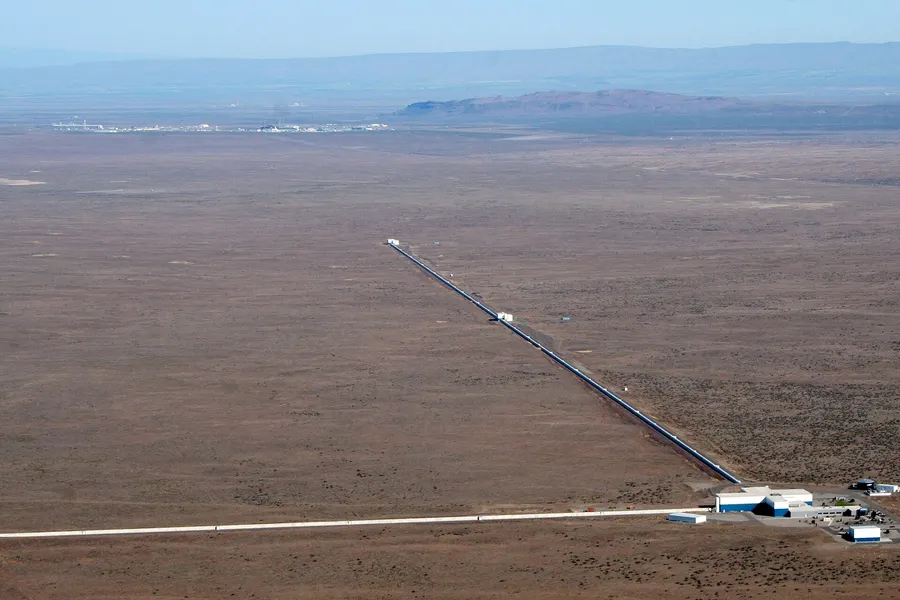
An aerial view of the LIGO Hanford Observatory in Washington State; each of its two arms is 4 kilometres long.An aerial view of the LIGO Hanford Observatory in Washington State; each of its two arms is 4 kilometres long.Image: LIGO Laboratory · Public domain
science · Global

Scientists announce they have detected gravitational waves

In 1916 Albert Einstein predicted that violent events in space, such as colliding black holes, should send ripples through space-time itself. The ripples were thought to be far too faint ever to measure directly. On 11 February 2016, at a press conference in Washington, scientists of the LIGO and Virgo collaborations announced that both LIGO detectors, in Washington State and Louisiana, had recorded such waves on 14 September 2015. The signal came from two black holes that merged about 1.3 billion years ago. The discovery opened a new way of observing the universe and won three of the project’s leaders the Nobel Prize in Physics in 2017.

Source: US National Science Foundation: gravitational waves detected 100 years after Einstein’s prediction ↗
RESEARCH

Sources & Further Reading

Selected authoritative references supporting the events on this page.

Sanctuary of Our Lady of Lourdes: the apparitions↗Encyclopaedia Britannica: Saint Bernadette of Lourdes↗Encyclopaedia Britannica: Amadeus, king of Spain↗Real Academia de la Historia, Historia Hispánica: Amadeo I de Saboya↗National Diet Library, Modern Japan in archives: toward the enactment of the constitution↗Encyclopaedia Britannica: Meiji Constitution↗Vatican City State: origins and characteristics↗Encyclopaedia Britannica: Lateran Treaty↗US Department of State, Office of the Historian: the Yalta Conference, 1945↗Encyclopaedia Britannica: Yalta Conference↗The Beatles (official site): recording Please Please Me in a day↗Abbey Road Studios: the Beatles’ Please Please Me turns 60↗Margaret Thatcher Foundation: press conference after winning the Conservative leadership↗GOV.UK: history of Baroness Thatcher↗Encyclopaedia Britannica: Iranian Revolution (1978-79)↗Encyclopaedia Iranica: class system in the Pahlavi period↗Nelson Mandela Foundation: Mandela walks free, 35 years remembered↗South African History Online: Nelson Mandela released from prison, 11 February 1990↗ESPN: the day James ‘Buster’ Douglas shook the world↗The Ring: Douglas exposed Tyson as mortal after all↗Encyclopaedia Britannica: Egypt Uprising of 2011↗United Nations: Secretary-General’s statement after President Mubarak’s resignation↗US National Science Foundation: gravitational waves detected 100 years after Einstein’s prediction↗The Nobel Prize: popular science background, Physics 2017↗
WHY THESE MOMENTS?

Significance before volume

This page is not the longest possible list of events. It is a chronological journey through 11 February, where each entry is chosen for historical significance, human interest and reliability.

Facts are checked against authoritative museums, archives, universities and reference works. Where sources disagree, the page says so.

EXPLORED THE DEEPER STORY?

Return to the highlights of 11 February

Discover the lighter side of the date with famous birthdays, culture, firsts and lives remembered.

Explore This Day →