1066William of Normandy lands at Pevensey
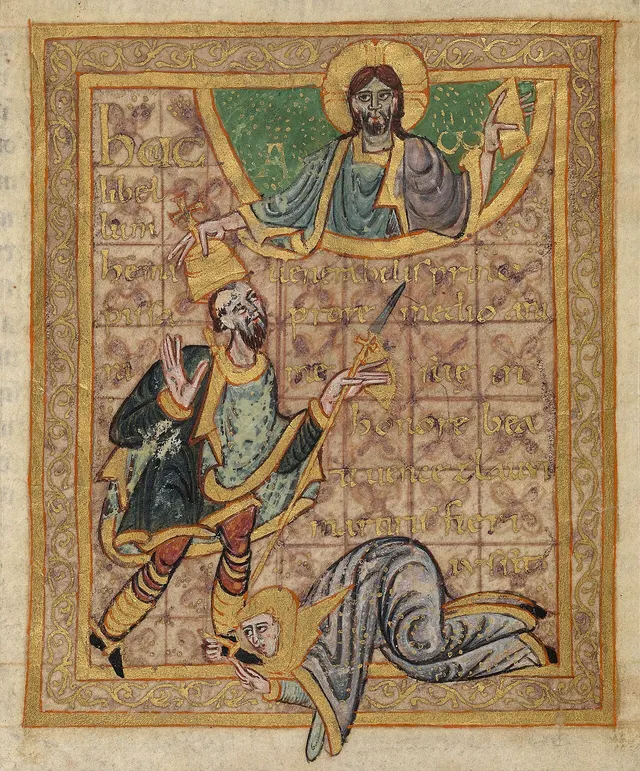
Before dawn on 28 September 1066 a Norman fleet of about 700 ships sailed into Pevensey Bay on the Sussex coast and William, Duke of Normandy, landed his army unopposed. It was three days after King Harold had defeated a Norwegian invasion at Stamford Bridge in Yorkshire, far to the north.
Within a few days William had moved east and raised fortifications at Hastings. Harold marched south to meet him, and on 14 October the two armies fought the Battle of Hastings, which left Harold dead and opened the way to the Norman Conquest of England.
Read the full storyHistory & Timeline →Source: English Heritage: History of Pevensey Castle ↗
1542Cabrillo sails into San Diego Bay
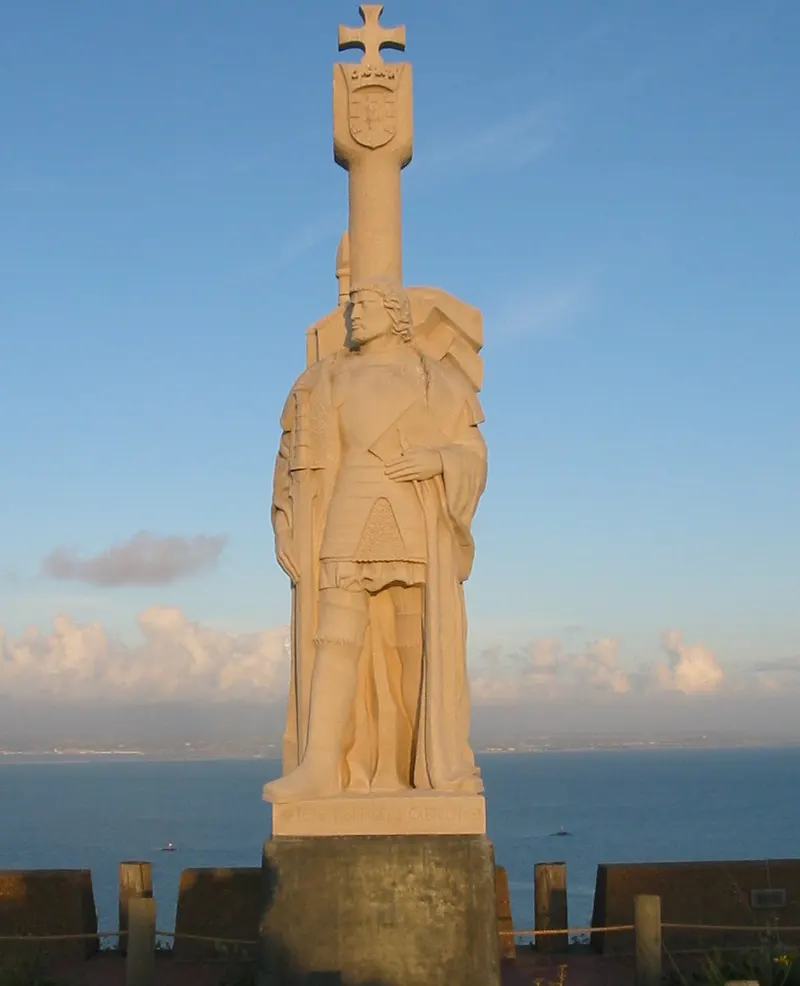
On 28 September 1542, 103 days after leaving the port of Navidad in Mexico, ships commanded by Juan Rodríguez Cabrillo entered the bay now called San Diego. They were the first European ships known to have reached the west coast of what is now the United States.
Cabrillo probably went ashore at Ballast Point and claimed the land for Spain, meeting the Kumeyaay people who lived there. Because they arrived close to the feast of St Michael he named the bay San Miguel; it kept that name for sixty years, until Sebastián Vizcaíno renamed it San Diego.
Read the full storyHistory & Timeline →Source: National Park Service: California, Cabrillo National Monument ↗
1958France votes for the Fifth Republic
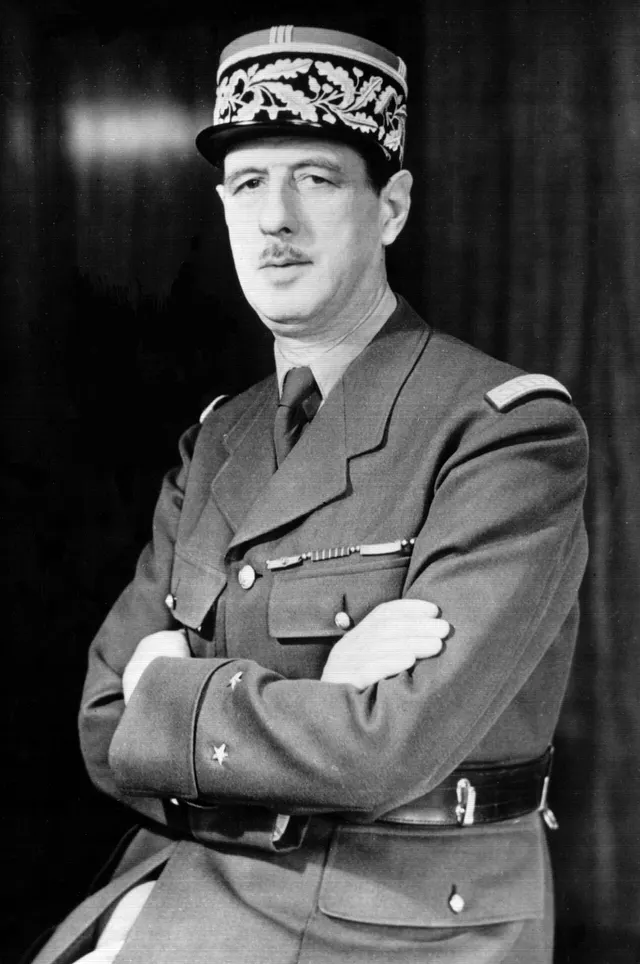
On 28 September 1958 voters in France and its overseas territories approved the new constitution drawn up after Charles de Gaulle’s return to power. It was carried by 79.25% of the votes, and the Constitution of the Fifth Republic was proclaimed on 4 October 1958.
The new constitution strengthened the executive, giving the president powers to act without a minister’s countersignature, to call referendums and to dissolve the National Assembly. Only Guinea voted no, and it became independent at once, the first of France’s African territories to do so.
Read the full storyHistory & Timeline →Source: Conseil constitutionnel: 18 May - 28 September 1958, the birth of the Constitution of the Fifth Republic ↗
1961Syria breaks away from the United Arab Republic
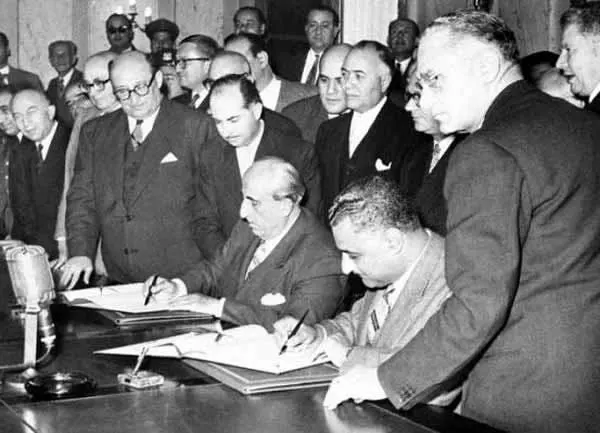
On 28 September 1961 Syrian army officers staged a coup in Damascus and took Syria out of the United Arab Republic, the union with Egypt proclaimed on 1 February 1958. The secession met no resistance.
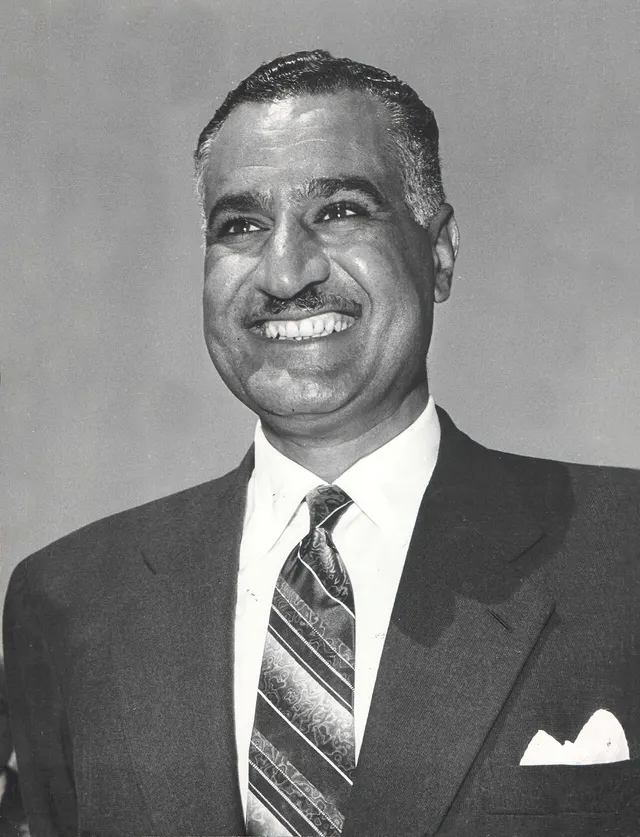
Many Syrians had come to feel sidelined in a state run from Cairo, and decrees in July 1961 that limited landholdings and nationalised banks and businesses deepened the anger. Egypt kept the name United Arab Republic until 1971, the year after President Nasser’s death.
Read the full storyHistory & Timeline →Source: Encyclopaedia Britannica: United Arab Republic ↗
1995Israel and the PLO sign the Oslo II agreement
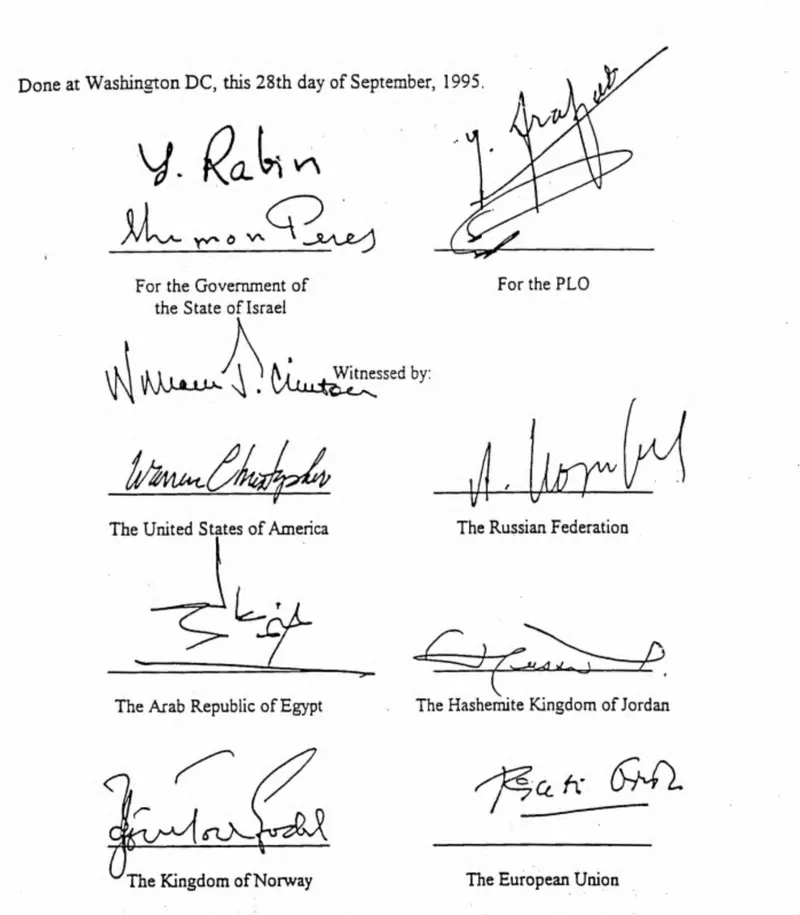
On 28 September 1995 Israel and the Palestine Liberation Organization signed the Interim Agreement on the West Bank and the Gaza Strip, known as Oslo II, in Washington. Yitzhak Rabin, Shimon Peres and Yasser Arafat signed it, witnessed by the United States, Russia, Egypt, Jordan, Norway and the European Union.
It divided the West Bank into Areas A, B and C with different mixes of Palestinian and Israeli control, provided for elections to a Palestinian council and for Israeli forces to withdraw from the main Palestinian towns, and promised talks on the hardest questions, including Jerusalem, refugees and borders, by May 1996. Rabin was assassinated five weeks later.
Read the full storyHistory & Timeline →Source: UN Peacemaker: Israeli-Palestinian Interim Agreement on the West Bank and the Gaza Strip (Oslo II) ↗
1958Guinea votes for independence
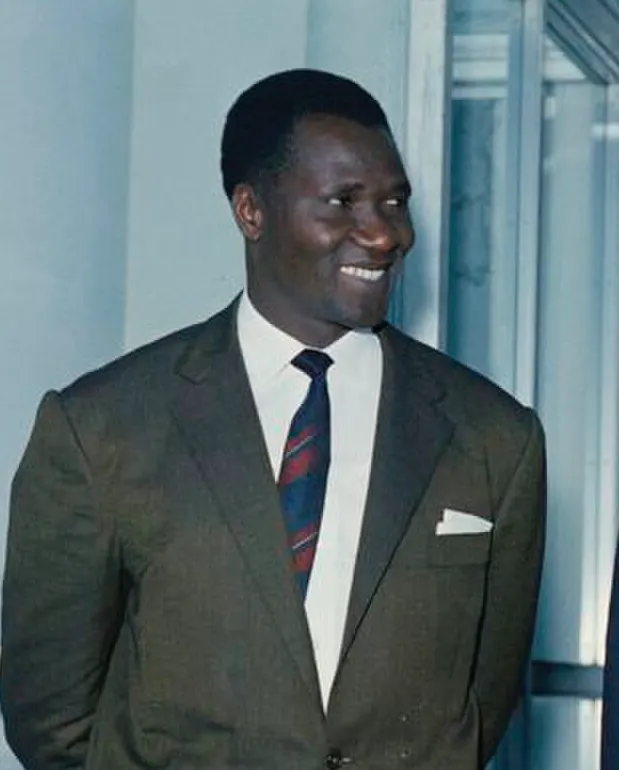
In the referendum of 28 September 1958, France’s African territories were asked whether to join the new French Community set up under the constitution of the Fifth Republic. Guinea, under the influence of the trade union leader Sékou Touré, was the only one to vote no, and it did so overwhelmingly.
Guinea became independent on 2 October 1958, the first French-speaking country in Africa to do so, with Touré as its first president. France’s response was harsh: it withdrew its officials and professionals and removed what equipment it could carry away.
Read the full storyHistory & Timeline →Source: Encyclopaedia Britannica: History of Guinea ↗