HISTORY & TIMELINE
28 September

A journey through
28 September in history

From the murder of Duke Wenceslas in 935 to the first privately built rocket to reach orbit in 2008, 28 September has seen invasions, unions made and broken, and journeys round the world. This timeline follows the date across more than a thousand years.

II
THE MIDDLE AGES

Medieval History

Kingdoms, conflict, faith, power and the changing medieval world.

1066
Pevensey Castle from the air. Its outer walls are those of the Roman fort near which William's army came ashore.Pevensey Castle from the air. Its outer walls are those of the Roman fort near which William’s army came ashore.Image: Pevensey_Castle_aerial_view.jpg: Lieven Smits derivative work: Hchc2009 (talk) · CC BY-SA 3.0
world · Europe

William of Normandy lands at Pevensey

Before dawn on 28 September 1066 a Norman fleet of about 700 ships sailed into Pevensey Bay on the Sussex coast and William, Duke of Normandy, landed his army unopposed. It was three days after King Harold had defeated a Norwegian invasion at Stamford Bridge in Yorkshire, far to the north. Within a few days William had moved east and raised fortifications at Hastings. Harold marched south to meet him, and on 14 October the two armies fought the Battle of Hastings, which left Harold dead and opened the way to the Norman Conquest of England.

Source: English Heritage: History of Pevensey Castle ↗
III
A CHANGING WORLD

Early Modern Era

Exploration, political change, scientific development and expanding global connections.

1542
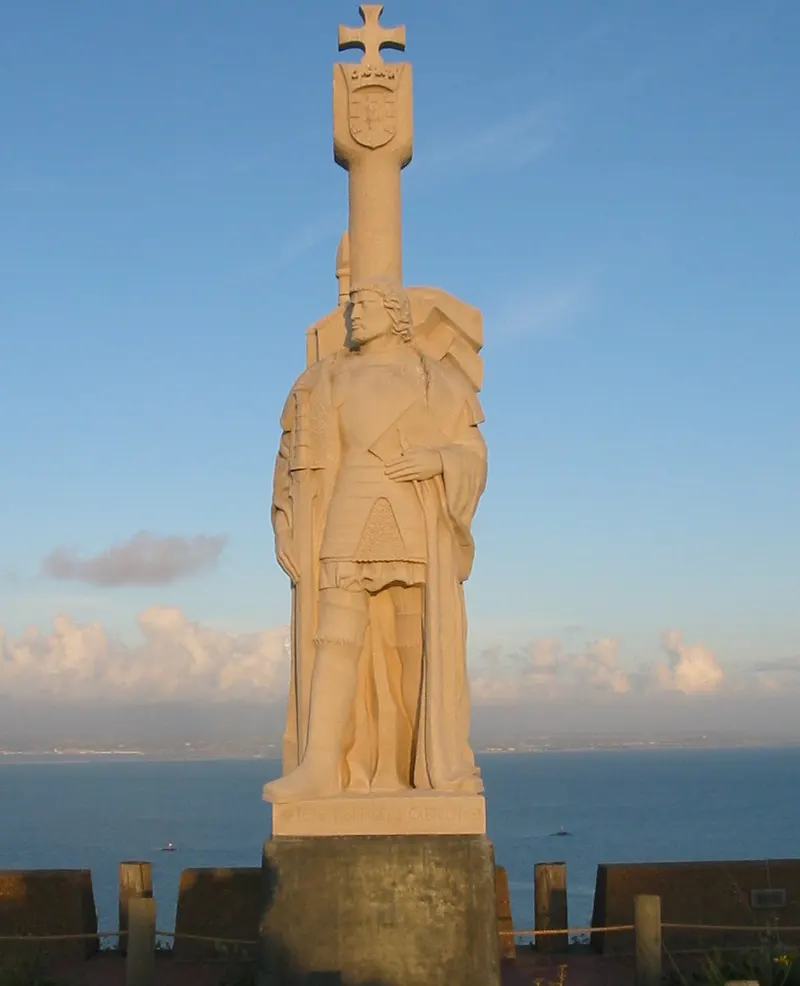
The statue of Juan Rodríguez Cabrillo at Cabrillo National Monument, San Diego.The statue of Juan Rodríguez Cabrillo at Cabrillo National Monument, San Diego.Image: The original uploader was Loki30 at German Wikipedia.(Original text: Wolfgang Artmüller) · CC BY-SA 3.0
world · Americas

Cabrillo sails into San Diego Bay

On 28 September 1542, 103 days after leaving the port of Navidad in Mexico, ships commanded by Juan Rodríguez Cabrillo entered the bay now called San Diego. They were the first European ships known to have reached the west coast of what is now the United States. Cabrillo probably went ashore at Ballast Point and claimed the land for Spain, meeting the Kumeyaay people who lived there. Because they arrived close to the feast of St Michael he named the bay San Miguel; it kept that name for sixty years, until Sebastián Vizcaíno renamed it San Diego.

Source: National Park Service: California, Cabrillo National Monument ↗
1781
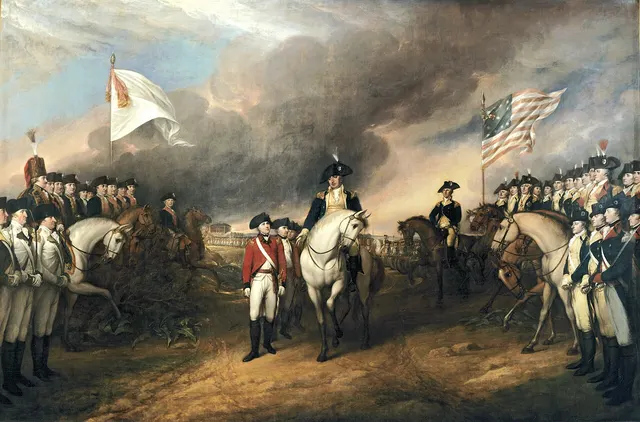
The Surrender of Lord Cornwallis at Yorktown, painted by John Trumbull.The Surrender of Lord Cornwallis at Yorktown, painted by John Trumbull.Image: John Trumbull · Public domain
world · Americas

The siege of Yorktown begins

After a long march south from New York, the combined American and French armies under George Washington and the comte de Rochambeau arrived outside Yorktown, Virginia, on 28 September 1781 and began to lay siege to Lord Cornwallis’s British army. With a French fleet blocking escape by sea, Cornwallis surrendered on 19 October, which effectively ended the War of American Independence.

Source: Encyclopaedia Britannica: Siege of Yorktown ↗
IV
THE NINETEENTH CENTURY

The 1800s

Industry, empire, invention, reform and a century of enormous transformation.

1864
Karl Marx, who wrote the International's Inaugural Address, photographed by John Mayall.Karl Marx, who wrote the International’s Inaugural Address, photographed by John Mayall.Image: John Jabez Edwin Mayall · Public domain
politics · Europe

The First International is founded in London

The International Working Men’s Association, later called the First International, was founded at a public meeting in St Martin’s Hall, London, on 28 September 1864. The meeting was called by English trade union leaders and French workers’ representatives, with Germans, Poles and Italians also present. Karl Marx attended as a representative of German workers; he was not its founder, but he soon became its leading spirit and wrote its Inaugural Address.

Source: Encyclopaedia Britannica: Karl Marx, role in the First International ↗
V
THE TWENTIETH CENTURY

The 1900s

War and peace, technological leaps, social change, politics, sport and popular culture.

1924
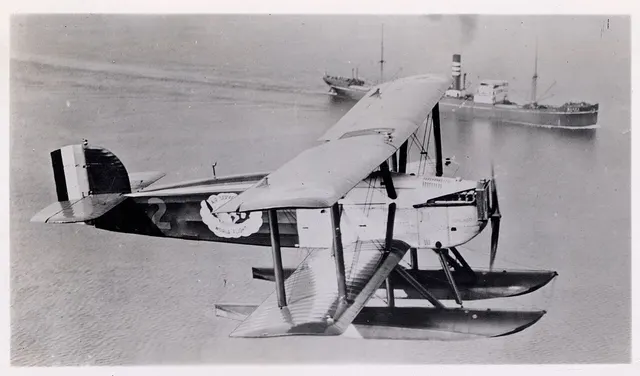
A Douglas World Cruiser, the type flown on the 1924 circumnavigation.A Douglas World Cruiser, the type flown on the 1924 circumnavigation.Image: Unknown · Public domain
science · Americas

The first flight around the world ends

On 28 September 1924 two aircraft of the United States Army Air Service landed at Seattle to complete the first flight around the world. Four Douglas World Cruisers, named Seattle, Chicago, Boston and New Orleans, had set out from the same field on 6 April with eight crew. Only Chicago and New Orleans finished. Seattle crashed into an Alaskan mountainside in fog, and Boston came down in the north Atlantic and was wrecked while being lifted aboard a navy ship; all the crews survived. The journey took 175 days, 371 hours in the air and about 27,550 miles.

Source: Smithsonian National Air and Space Museum: The story of the first flight around the world ↗
1939
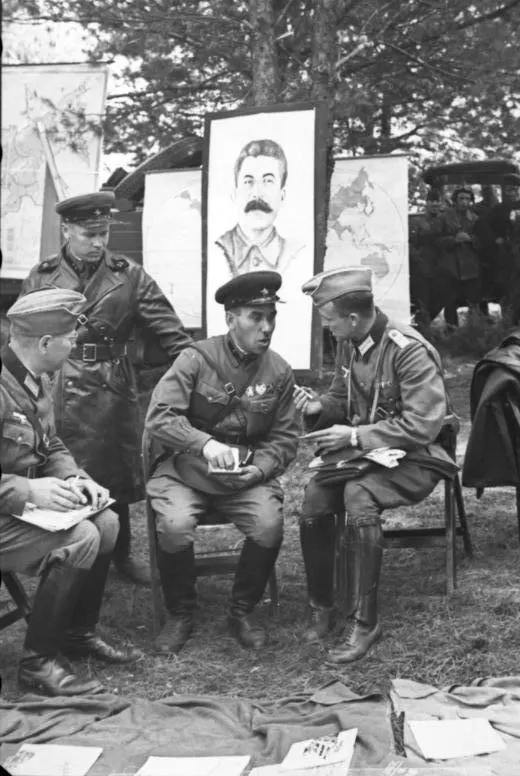
German and Soviet officers at Brest on 22 September 1939, six days before the treaty (German Federal Archives).German and Soviet officers at Brest on 22 September 1939, six days before the treaty (German Federal Archives).Image: Unknown authorUnknown author · CC BY-SA 3.0 de
world · Europe

Germany and the Soviet Union divide Poland

On 28 September 1939, four weeks after the invasion of Poland, Germany and the Soviet Union signed the German-Soviet Boundary and Friendship Treaty in Moscow, fixing the line between their zones in the conquered country. A secret protocol moved most of Lithuania into the Soviet sphere of influence in exchange for more Polish territory for Germany.

Source: Yale Law School, Avalon Project: German-Soviet Boundary and Friendship Treaty ↗
1950
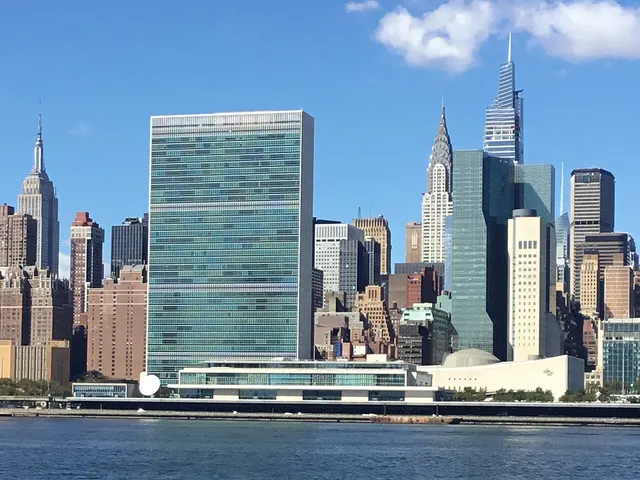
The United Nations headquarters in New York.The United Nations headquarters in New York.Image: Kidfly182 · CC BY-SA 4.0
politics · Asia

Indonesia joins the United Nations

Indonesia was admitted to the United Nations on 28 September 1950 as its sixtieth member, nine months after the Netherlands formally transferred sovereignty at the end of the Indonesian revolution. Indonesia briefly left the UN in 1965 in protest at Malaysia’s election to the Security Council, and returned the following year.

Source: United Nations: Indonesia, member state ↗
1958
politics · Europe

France votes for the Fifth Republic

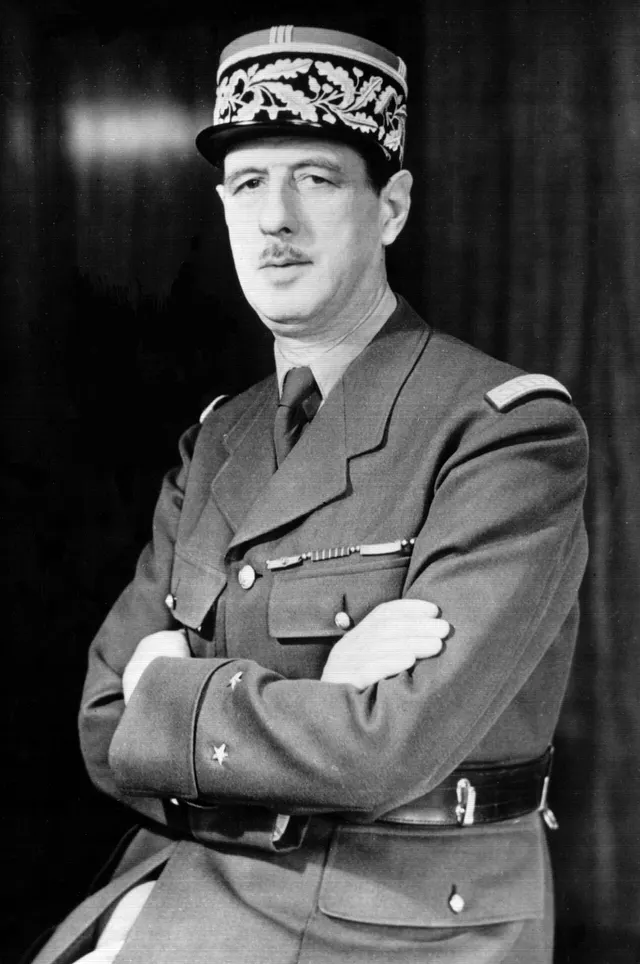
On 28 September 1958 voters in France and its overseas territories approved the new constitution drawn up after Charles de Gaulle’s return to power. It was carried by 79.25% of the votes, and the Constitution of the Fifth Republic was proclaimed on 4 October 1958. The new constitution strengthened the executive, giving the president powers to act without a minister’s countersignature, to call referendums and to dissolve the National Assembly. Only Guinea voted no, and it became independent at once, the first of France’s African territories to do so.

Source: Conseil constitutionnel: 18 May - 28 September 1958, the birth of the Constitution of the Fifth Republic ↗
1958
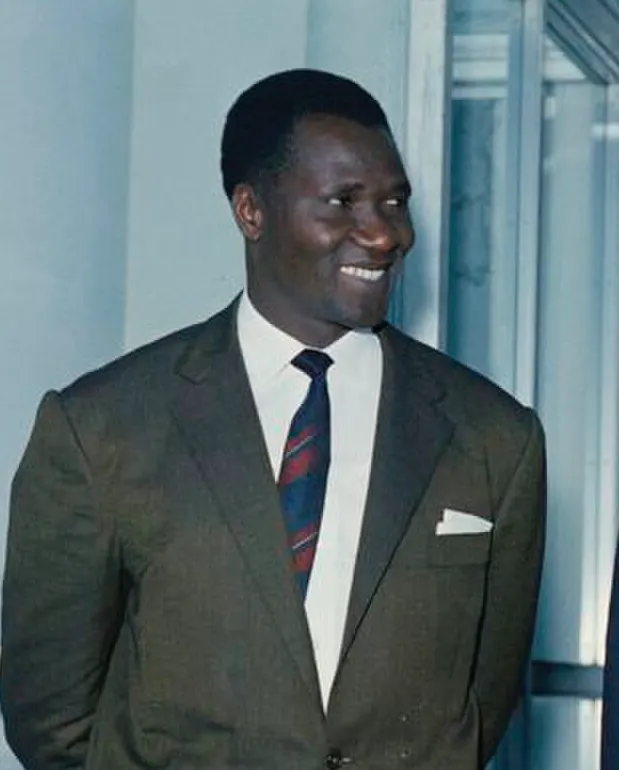
Sékou Touré, Guinea's first president, at the White House in 1962.Sékou Touré, Guinea’s first president, at the White House in 1962.Image: Robert Knudsen. White House Photographs. John F. Kennedy Presidential Library and Museum, Boston · Public domain
politics · Africa

Guinea votes for independence

In the referendum of 28 September 1958, France’s African territories were asked whether to join the new French Community set up under the constitution of the Fifth Republic. Guinea, under the influence of the trade union leader Sékou Touré, was the only one to vote no, and it did so overwhelmingly. Guinea became independent on 2 October 1958, the first French-speaking country in Africa to do so, with Touré as its first president. France’s response was harsh: it withdrew its officials and professionals and removed what equipment it could carry away.

Source: Encyclopaedia Britannica: History of Guinea ↗
1961
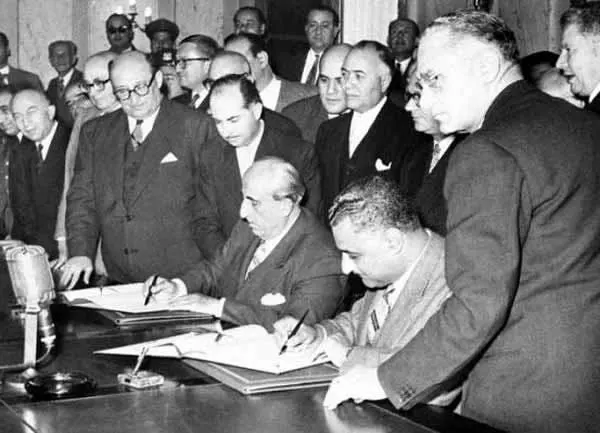
Gamal Abdel Nasser and Shukri al-Quwatli sign the union of Egypt and Syria, February 1958.Gamal Abdel Nasser and Shukri al-Quwatli sign the union of Egypt and Syria, February 1958.Image: Unknown authorUnknown author · Public domain
politics · Asia

Syria breaks away from the United Arab Republic

On 28 September 1961 Syrian army officers staged a coup in Damascus and took Syria out of the United Arab Republic, the union with Egypt proclaimed on 1 February 1958. The secession met no resistance. Many Syrians had come to feel sidelined in a state run from Cairo, and decrees in July 1961 that limited landholdings and nationalised banks and businesses deepened the anger. Egypt kept the name United Arab Republic until 1971, the year after President Nasser’s death.

Source: Encyclopaedia Britannica: United Arab Republic ↗
1994
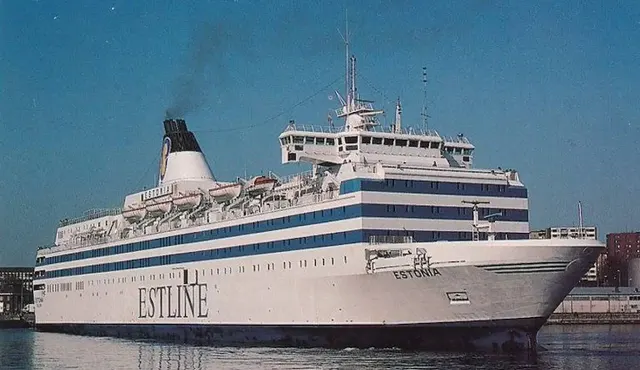
The ferry Estonia in the colours of the Estline company.The ferry Estonia in the colours of the Estline company.Image: Blahaaaaaaaa69420 · CC BY-SA 3.0
world · Europe

The ferry Estonia sinks in the Baltic

In the early hours of 28 September 1994 the passenger ferry Estonia sank in the Baltic Sea on a voyage from Tallinn to Stockholm. Of the 989 people on board, 852 died, making it one of the worst peacetime shipping disasters in Europe. The official international inquiry found that the locks on the bow visor had failed, letting water flood the car deck.

Source: Swedish Accident Investigation Authority: The MV Estonia accident 1994 ↗
1995
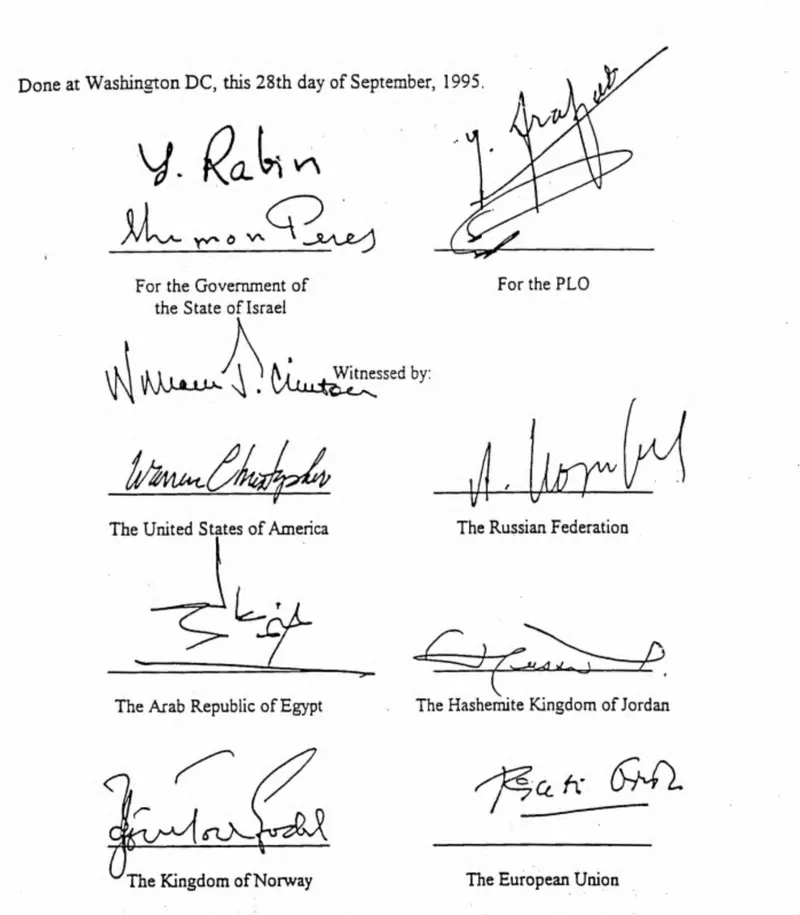
The signature page of the Oslo II agreement, signed in Washington on 28 September 1995.The signature page of the Oslo II agreement, signed in Washington on 28 September 1995.Image: Government of Israel and Palestine Liberation Organization · Public domain
politics · Asia

Israel and the PLO sign the Oslo II agreement

On 28 September 1995 Israel and the Palestine Liberation Organization signed the Interim Agreement on the West Bank and the Gaza Strip, known as Oslo II, in Washington. Yitzhak Rabin, Shimon Peres and Yasser Arafat signed it, witnessed by the United States, Russia, Egypt, Jordan, Norway and the European Union. It divided the West Bank into Areas A, B and C with different mixes of Palestinian and Israeli control, provided for elections to a Palestinian council and for Israeli forces to withdraw from the main Palestinian towns, and promised talks on the hardest questions, including Jerusalem, refugees and borders, by May 1996. Rabin was assassinated five weeks later.

Source: UN Peacemaker: Israeli-Palestinian Interim Agreement on the West Bank and the Gaza Strip (Oslo II) ↗
VI
2000 TO TODAY

Modern Day

The events of recent decades that have already become part of the historical record.

2008
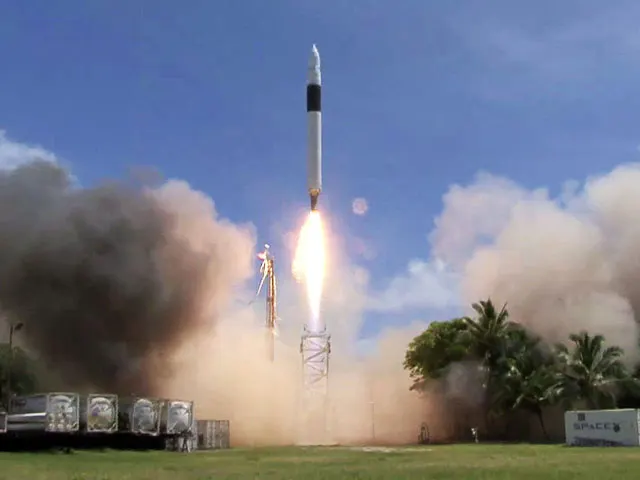
A Falcon 1 lifting off from Omelek Island in the Kwajalein Atoll, 2008.A Falcon 1 lifting off from Omelek Island in the Kwajalein Atoll, 2008.Image: SpaceX · CC BY-SA 3.0
science · Oceania

The first privately built rocket reaches orbit

On 28 September 2008, by the clocks in the United States (29 September on the island itself), a Falcon 1 rocket lifted off from Omelek Island in the Kwajalein Atoll in the Pacific and reached Earth orbit. It was the first privately built liquid-fuelled rocket to do so. SpaceX, founded six years earlier, had failed three times: the first attempt in 2006 caught fire 25 seconds after lift-off because of a corroded nut. The success kept the company alive and led on to the Falcon 9 rockets that now carry astronauts and satellites.

Source: Encyclopaedia Britannica: Falcon 1 ↗
RESEARCH

Sources & Further Reading

Selected authoritative references supporting the events on this page.

English Heritage: History of Pevensey Castle↗The Royal Family: William I ‘The Conqueror’↗National Park Service: California, Cabrillo National Monument↗San Diego History Center: Juan Rodríguez Cabrillo↗Encyclopaedia Britannica: Siege of Yorktown↗American Battlefield Trust: Yorktown↗Encyclopaedia Britannica: Karl Marx, role in the First International↗Marxists Internet Archive: Inaugural Address of the International Working Men’s Association↗Smithsonian National Air and Space Museum: The story of the first flight around the world↗Smithsonian National Air and Space Museum: Douglas World Cruiser Chicago↗Yale Law School, Avalon Project: German-Soviet Boundary and Friendship Treaty↗US Holocaust Memorial Museum: German-Soviet Pact↗United Nations: Indonesia, member state↗United Nations: Growth in United Nations membership↗Conseil constitutionnel: 18 May - 28 September 1958, the birth of the Constitution of the Fifth Republic↗Élysée: The Constitution of the Fifth Republic↗Encyclopaedia Britannica: History of Guinea↗Encyclopaedia Britannica: Guinea, independence↗Encyclopaedia Britannica: United Arab Republic↗Encyclopaedia Britannica: Syria, union with Egypt, 1958-61↗Swedish Accident Investigation Authority: The MV Estonia accident 1994↗Encyclopaedia Britannica: Sinking of the Estonia↗UN Peacemaker: Israeli-Palestinian Interim Agreement on the West Bank and the Gaza Strip (Oslo II)↗US Office of the Historian: The Oslo Accords and the Arab-Israeli peace process↗Encyclopaedia Britannica: Falcon 1↗US Federal Aviation Administration: Commercial space transportation, 2008 year in review↗
WHY THESE MOMENTS?

Significance before volume

This page is not the longest possible list of events. It is a chronological journey through 28 September, where each entry is chosen for historical significance, human interest and reliability.

Facts are checked against authoritative museums, archives, universities and reference works. Where sources disagree, the page says so.

EXPLORED THE DEEPER STORY?

Return to the highlights of 28 September

Discover the lighter side of the date with famous birthdays, culture, firsts and lives remembered.

Explore This Day →