Explore 27 January

Explore 27 January: Soviet soldiers reach Auschwitz, the siege of Leningrad ends after 872 days, the great powers agree to keep weapons of mass destruction out of space and the Paris Peace Accords are signed to end America’s war in Vietnam. Meet Mozart, Lewis Carroll and Mikhail Baryshnikov, born on 27 January.

This day through time →8 verified events across 3 eras

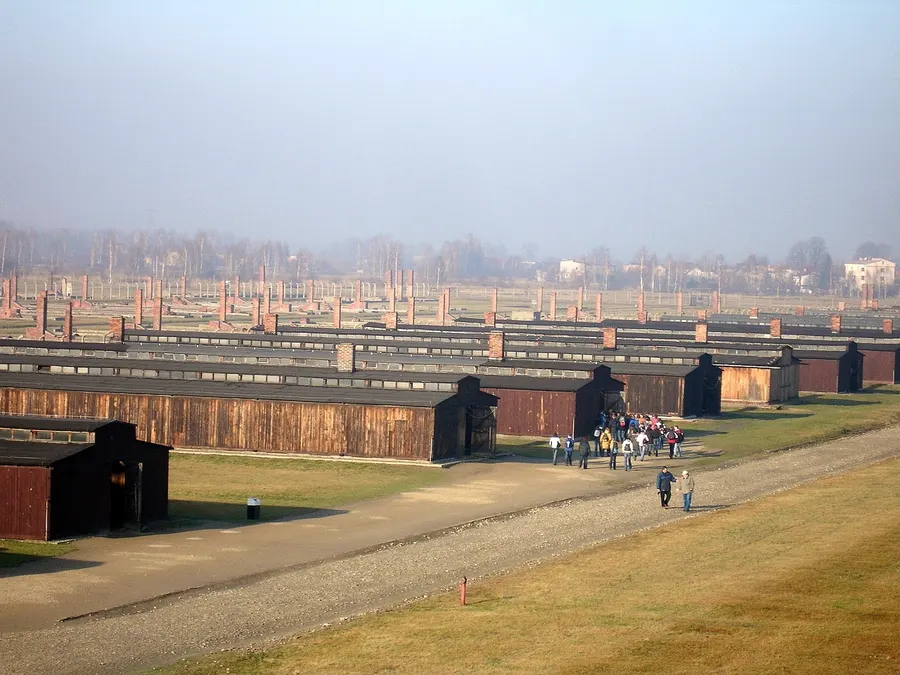
The barracks of Auschwitz II-Birkenau, now part of the Auschwitz-Birkenau State Museum.
Image creditSilar · CC BY-SA 3.0Resized and cropped for display.

Soviet soldiers reach Auschwitz

Auschwitz, in German-occupied Poland, was the largest of the Nazi camps. About 1.3 million people were deported there between 1940 and 1945, and about 1.1 million of them were murdered, around a million of them Jews. As the Red Army approached in January 1945, the SS drove tens of thousands of prisoners west on death marches and tried to destroy the evidence.

On 27 January 1945 soldiers of the Soviet 60th Army reached the Monowitz camp in the morning and the main camp and Birkenau in the afternoon. They found about 7,000 prisoners left behind, most of them sick and starving. The date is now kept around the world as International Holocaust Remembrance Day.

Read the full storyHistory & Timeline →Source: Auschwitz-Birkenau State Museum: the day of liberation ↗
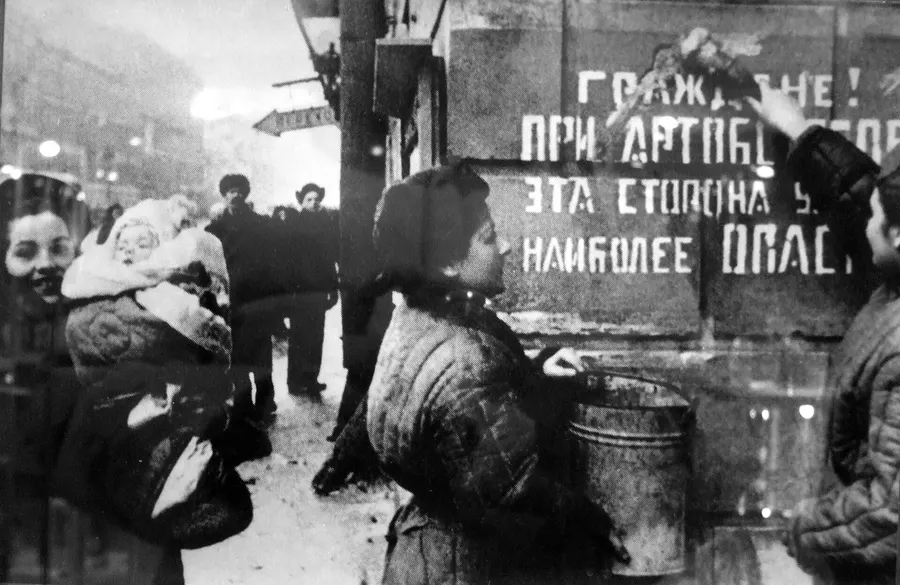
Leningraders in 1944 beside a wartime sign warning that this side of the street is the most dangerous during shelling.
Image creditphoto of photo by Lvova · Public domainResized and cropped for display.

The siege of Leningrad ends after 872 days

German and Finnish forces cut Leningrad off from the rest of the Soviet Union in September 1941. Hitler meant to starve the city rather than storm it, and in the first winter hundreds of thousands of people died of hunger and cold. A narrow land corridor was opened in January 1943, but the city stayed within range of German guns.

In January 1944 the Red Army launched a great offensive from Leningrad and the Volkhov front and drove the Germans back. On 27 January the siege was declared over after 872 days, and the city celebrated with an artillery salute. Estimates of the civilians who died run from about 800,000 to more than a million.

Read the full storyHistory & Timeline →Source: Encyclopaedia Britannica: Siege of Leningrad ↗
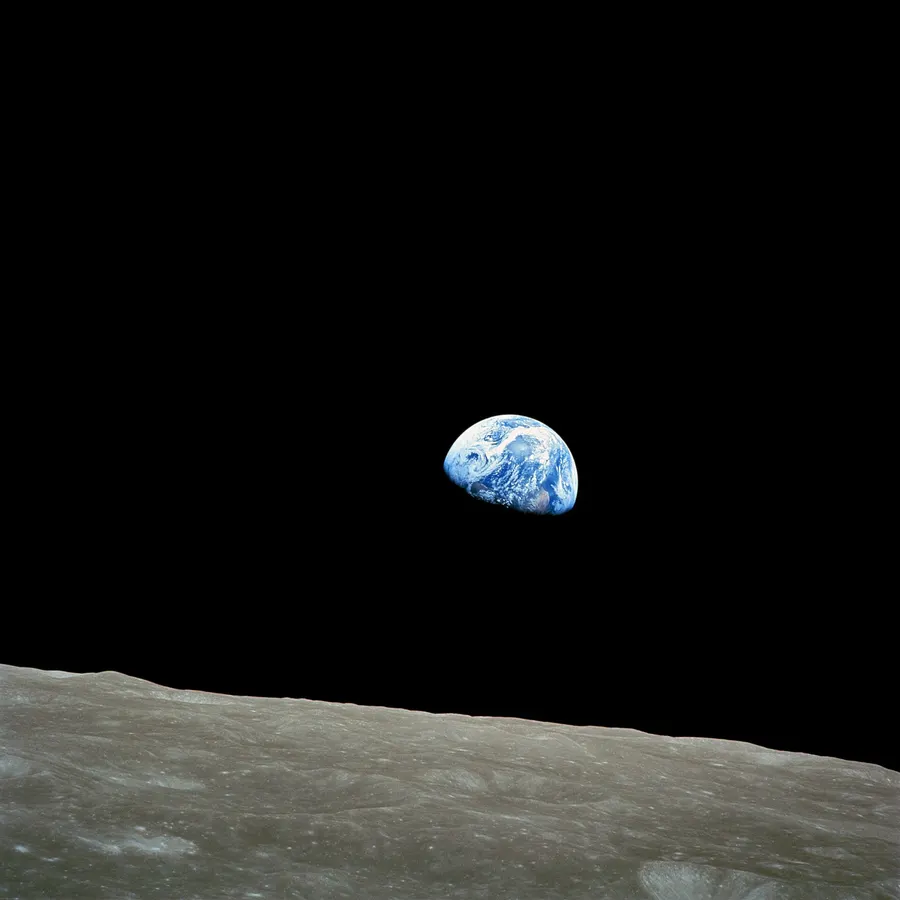
Earthrise, photographed from lunar orbit by the Apollo 8 astronaut Bill Anders in December 1968.
Image creditNASA/Bill Anders · Public domainResized and cropped for display.

The great powers sign the Outer Space Treaty

Ten years after Sputnik, the United States and the Soviet Union were racing to the Moon, and there were fears that orbit could become a new battlefield for nuclear weapons. The United Nations negotiated a set of rules for space, which the General Assembly endorsed in December 1966.

The treaty was signed at simultaneous ceremonies in Washington, London and Moscow on 27 January 1967. It bans nuclear weapons and other weapons of mass destruction from orbit, the Moon and other celestial bodies, forbids any nation from claiming them, and declares space free for all countries to explore. It came into force that October and is still the foundation of space law.

Read the full storyHistory & Timeline →Source: United Nations Office for Outer Space Affairs: the Outer Space Treaty ↗
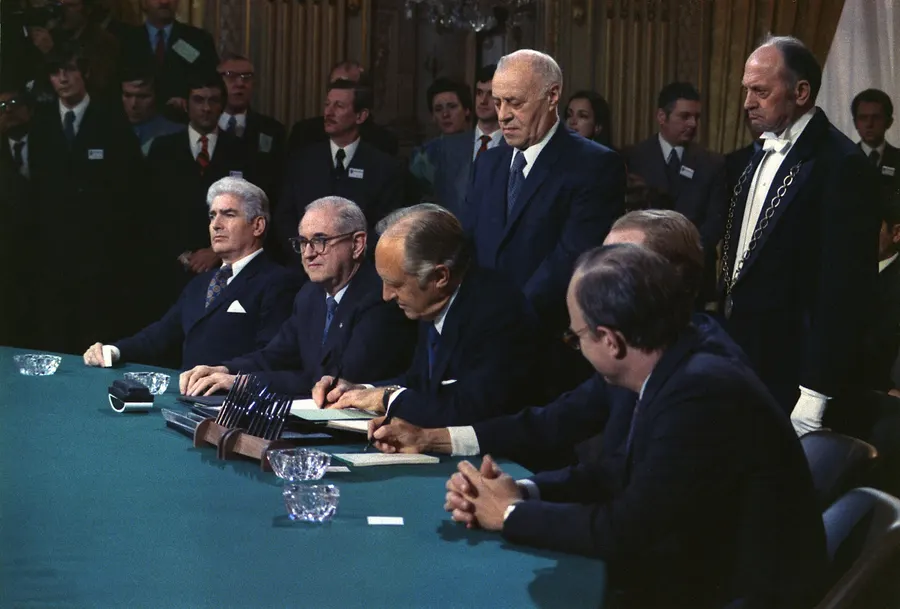
US Secretary of State William Rogers signs the Paris Peace Accords at the Hotel Majestic, Paris, 27 January 1973.
Image creditRobert LeRoy Knudsen · Public domainResized and cropped for display.

The Paris Peace Accords are signed

Peace talks over Vietnam had dragged on in Paris since 1968 while the fighting went on. In January 1973, after the heavy American bombing of North Vietnam at Christmas, Henry Kissinger and North Vietnam’s Le Duc Tho settled the terms.

On 27 January 1973 the United States, South Vietnam, North Vietnam and the Viet Cong’s Provisional Revolutionary Government signed the agreement. It called for a ceasefire, the withdrawal of American troops within 60 days and the release of prisoners of war. The last American combat troops left in March, but the war between the Vietnamese went on until North Vietnamese forces took Saigon in April 1975.

Read the full storyHistory & Timeline →Source: Encyclopaedia Britannica: Paris Peace Accords ↗
♙
PEOPLE

Born Today

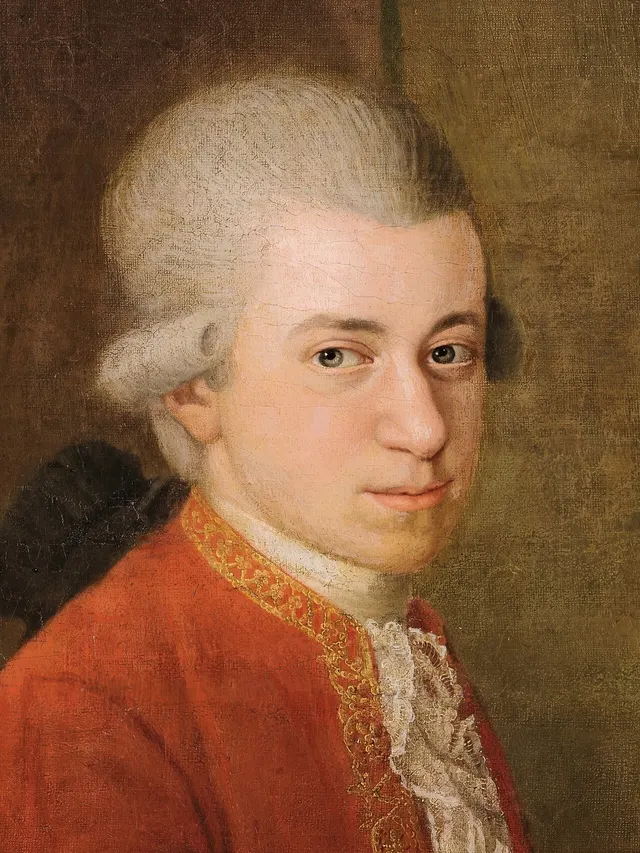
Wolfgang Amadeus Mozart
Image creditJohann Nepomuk della Croce · Public domainResized and cropped for display.

Wolfgang Amadeus Mozart

Austrian composer of The Marriage of Figaro, The Magic Flute and more than 600 other works.

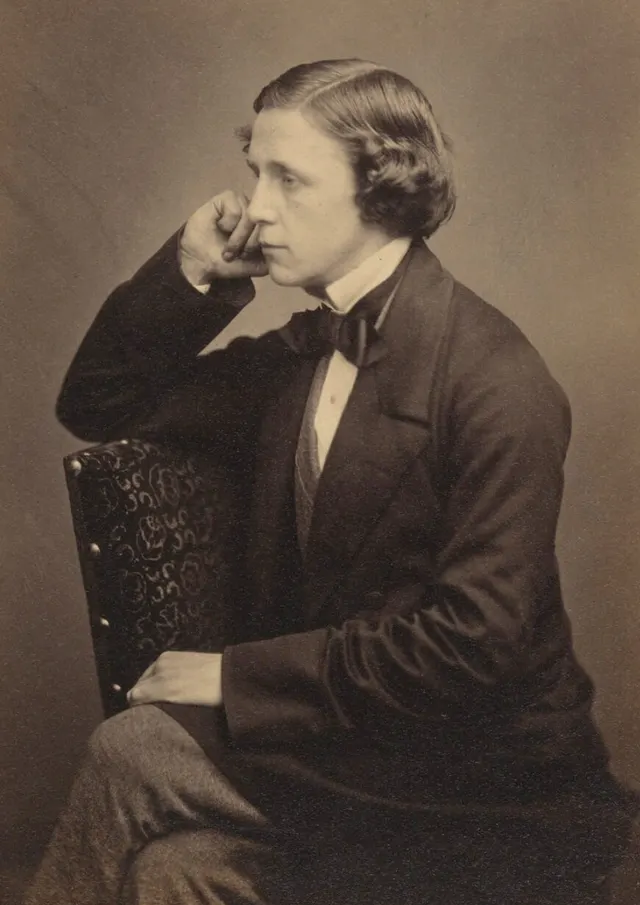
Lewis Carroll
Image creditLewis Carroll · Public domainResized and cropped for display.

Lewis Carroll

English writer and mathematician, author of Alice’s Adventures in Wonderland.

Mikhail Baryshnikov
Image creditSaeima · CC BY-SA 2.0Resized and cropped for display.

Mikhail Baryshnikov

Latvian-born ballet dancer who defected from the Soviet Union in 1974 and became a star in the West.

◉
IDEAS THAT CHANGED THINGS

Firsts, Science & Discoveries

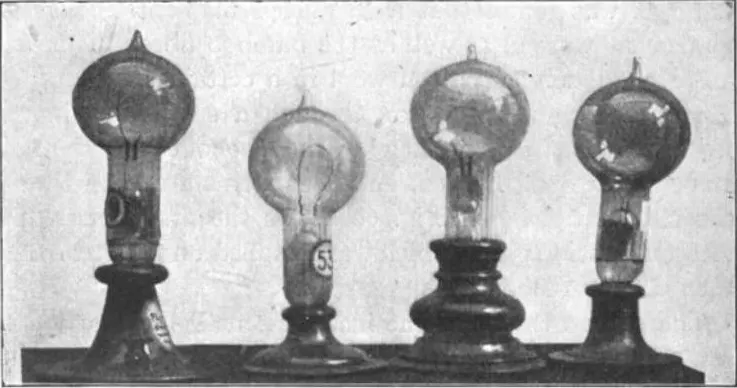
Early Edison lamps with horseshoe-shaped carbonised paper filaments, from a 1904 photograph by William J. Hammer.
Image creditWilliam J. Hammer · Public domainResized and cropped for display.

Thomas Edison is granted his patent for the electric lamp

Inventors had been making electric lamps for decades, but none burned long enough or cheaply enough for the home. At his laboratory at Menlo Park, New Jersey, Thomas Edison and his team tested thousands of materials, and in October 1879 a filament of carbonised cotton thread sealed in a glass bulb glowed for many hours.

On 27 January 1880 the US Patent Office granted him patent number 223,898 for an improvement in electric lamps, a thin carbon filament in a bulb emptied of air. Edison did not invent the electric light, but his practical lamp, and the power stations he went on to build, brought electric lighting into ordinary life.

Read the full storyHistory & Timeline →Source: US National Archives: Thomas Edison’s patent application for the light bulb ↗
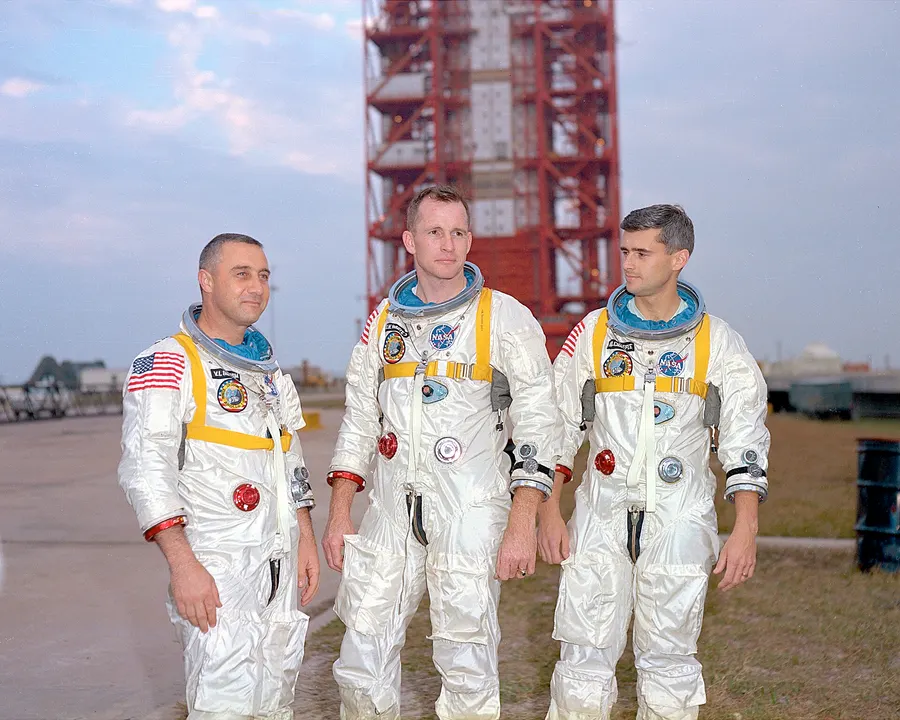
Gus Grissom, Ed White and Roger Chaffee in front of Launch Complex 34 on 17 January 1967, ten days before the fire.
Image creditNASA/photographer unknown · Public domainResized and cropped for display.

Three astronauts are lost in the Apollo 1 fire

Apollo 1 was to be the first crewed flight of the spacecraft built to take Americans to the Moon, with launch planned for February 1967. On 27 January the crew, Gus Grissom, Ed White and Roger Chaffee, were strapped into the capsule at Cape Kennedy for a rehearsal of the countdown.

That evening a fire broke out in the cabin, which was filled with pure oxygen, and spread in seconds. The hatch could not be opened quickly, and all three men died. The investigation found faulty wiring and many other failings, and NASA redesigned the spacecraft before any astronaut flew in it. Apollo astronauts landed on the Moon two and a half years later.

Read the full storyHistory & Timeline →Source: NASA: 55 years ago, the Apollo 1 fire and its aftermath ↗
♫
MUSIC • FILM • BOOKS • CULTURE

Culture Stories

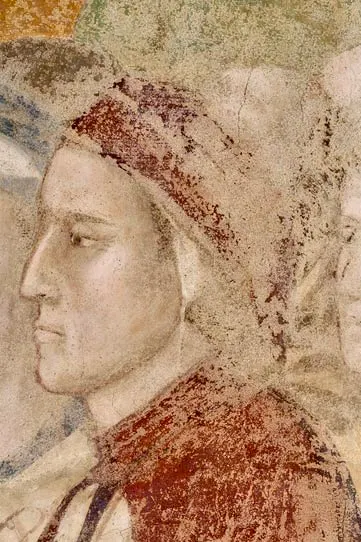
The oldest known portrait of Dante, a detail of a fourteenth-century fresco of Paradise in the chapel of the Bargello, Florence.
Image creditWolfgang Sauber · CC BY-SA 3.0Resized and cropped for display.

Dante is sentenced to exile from Florence

Dante Alighieri was a poet and a politician in Florence, which was split between two factions, the Black and the White Guelphs. He had served as one of the city’s priors for the Whites. In 1301 the Blacks seized power with the backing of the pope while Dante was away on an embassy to Rome.

On 27 January 1302 the new government condemned him in his absence on a charge of corruption in office, fining him 5,000 florins and banishing him from Tuscany for two years. When he did not appear, he was sentenced in March to be burned alive if he ever returned. He never saw Florence again, and he wrote the Divine Comedy in exile.

Read the full storyHistory & Timeline →Source: Encyclopaedia Britannica: Dante Alighieri, public career ↗
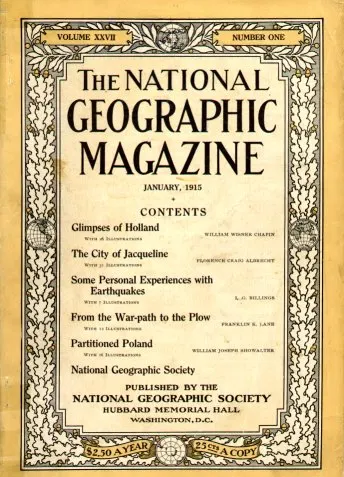
The cover of the National Geographic Magazine for January 1915.
Image creditNational Geographic Magazine · Public domainResized and cropped for display.

The National Geographic Society is founded

On 13 January 1888, 33 explorers, scientists and teachers met at the Cosmos Club in Washington and agreed to form a society ‘for the increase and diffusion of geographical knowledge’. Two weeks later, on 27 January, its certificate of incorporation was signed, with the lawyer and financier Gardiner Greene Hubbard as its first president.

The society’s journal, first published that October, became National Geographic magazine, famous for its yellow border, its maps and its photographs. The society has paid for thousands of expeditions and research projects, from Robert Peary’s Arctic journeys to Jane Goodall’s work with chimpanzees.

Read the full storyHistory & Timeline →Source: National Geographic Society (education): National Geographic Society founded ↗
✦
LIVES REMEMBERED

Remembered Today

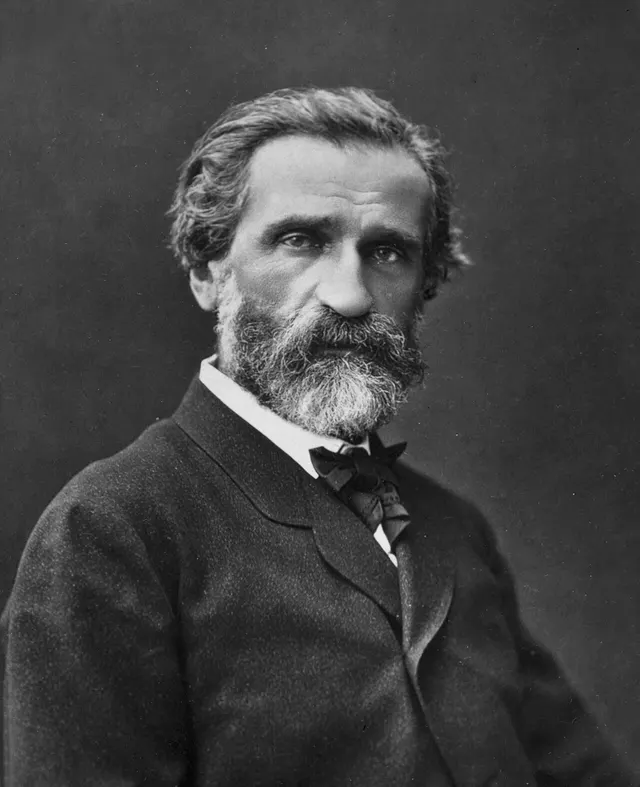
Giuseppe Verdi
Image creditFerdinand Mulnier · Public domainResized and cropped for display.

Giuseppe Verdi

Italian composer of the operas Rigoletto, La traviata and Aida.

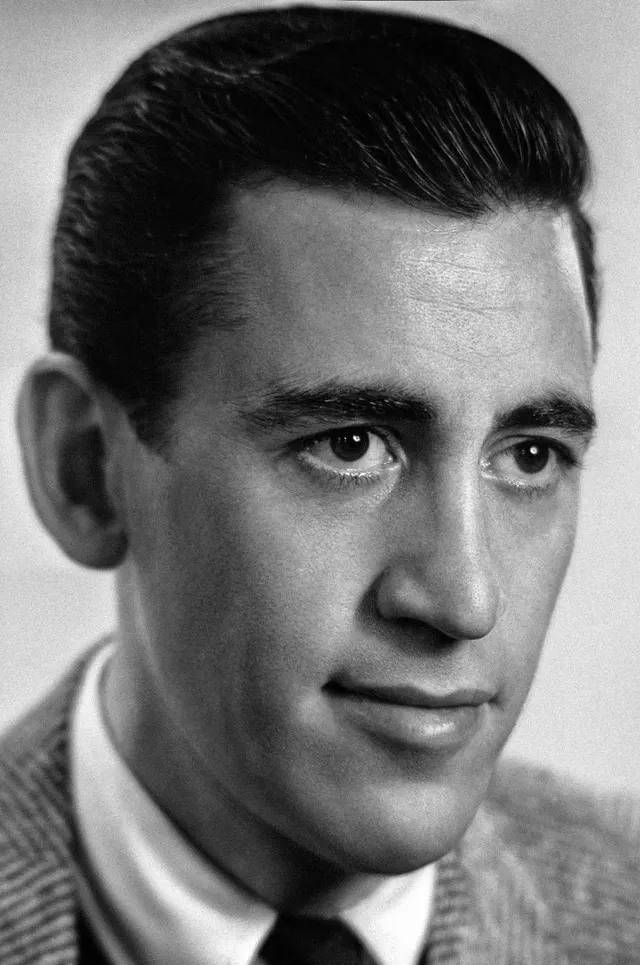
J. D. Salinger
Image creditLotte Jacobi · Public domainResized and cropped for display.

J. D. Salinger

American author of The Catcher in the Rye, who lived his last decades in seclusion.

☉
AROUND THE WORLD

Observances & Anniversaries

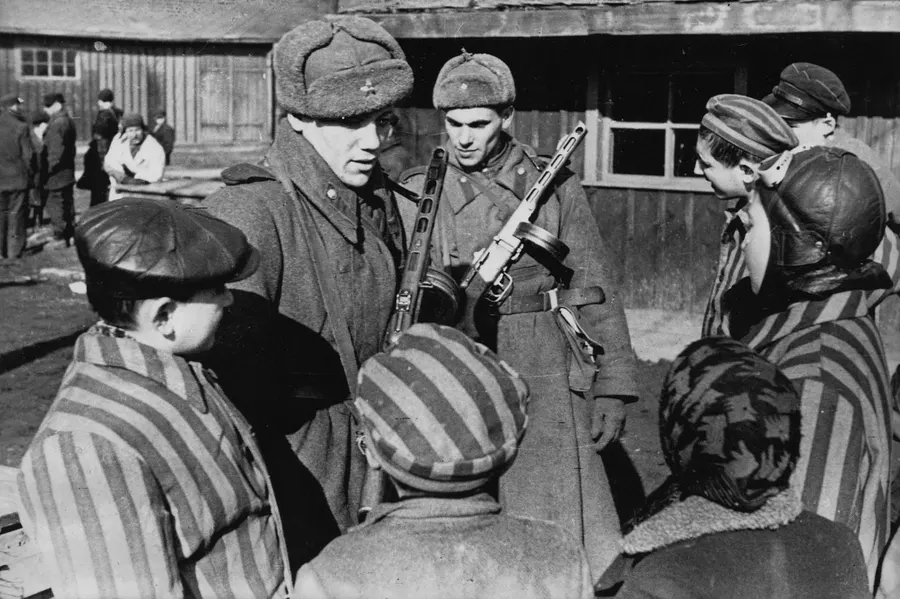
Soviet soldiers with children just freed from Auschwitz, January 1945.
Image creditUnknown authorUnknown author · Public domainResized and cropped for display.

International Holocaust Remembrance Day

In 2005 the United Nations General Assembly chose the anniversary of the liberation of Auschwitz as the day to remember the six million Jews and the millions of other victims murdered by the Nazis and their collaborators. Governments, schools and communities hold ceremonies, survivors share their testimony, and candles are lit in memory.

Source: United Nations: International Day of Commemoration in Memory of the Victims of the Holocaust ↗
HISTORY & TIMELINE

Finished the highlights?

Follow 27 January chronologically, from the Middle Ages to the modern day, with 8 verified events and the sources behind them.

This day through time →