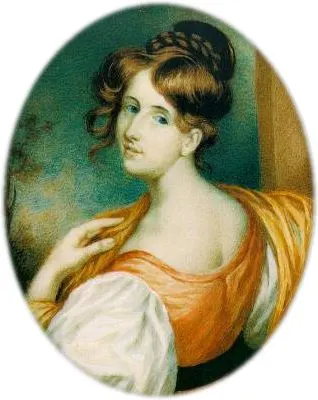
Explore 12 November

Explore 12 November: Austria becomes a republic, Ellis Island closes its doors, the web is formally proposed at CERN and a spacecraft lands on a comet for the first time. Meet Sun Yat-sen, Auguste Rodin and Grace Kelly, born on this date.

This day through time →9 verified events across 2 eras

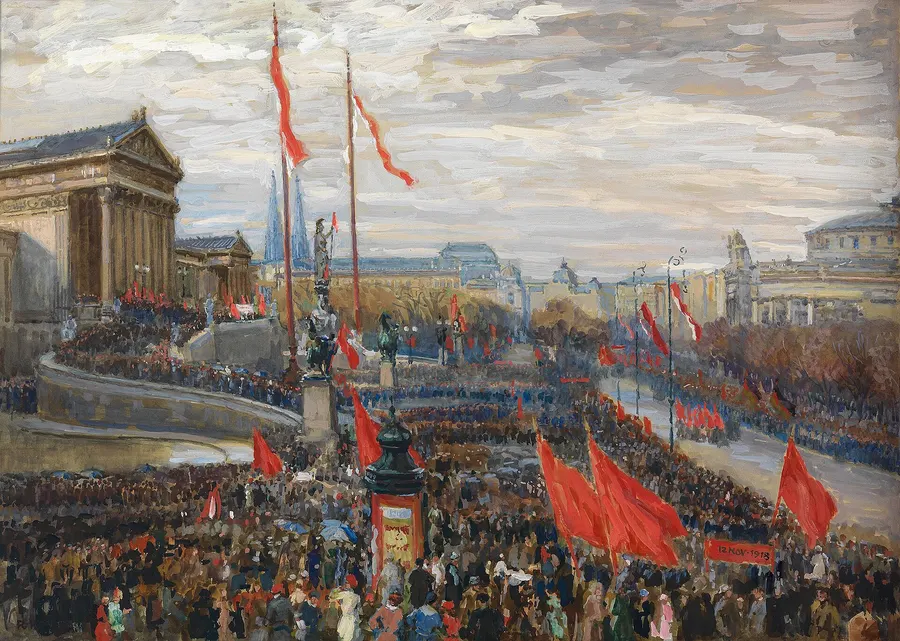
The proclamation of the republic in front of the Parliament in Vienna, 12 November 1918, painted by Rudolf Konopa.
Image creditRudolf Konopa (* 2. Februar 1864; † 6. Oktober 1936) · Public domainResized and cropped for display.

Austria becomes a republic

The day after Emperor Charles I gave up his part in government, the provisional National Assembly of German-speaking Austria met in Vienna on 12 November 1918 and resolved unanimously that ‘German-Austria is a democratic republic’. It also declared the new state part of the German republic, a union the Allies later forbade.

From the ramp of the Parliament building the republic was proclaimed to a vast crowd. The occasion was marred when communist Red Guards tried to storm the building and shots were fired. What remained of the Habsburg lands became the small Republic of Austria.

Read the full storyHistory & Timeline →Source: Der Erste Weltkrieg (Schloss Schönbrunn Kultur- und Betriebsges.m.b.H.): 12 November 1918 ↗
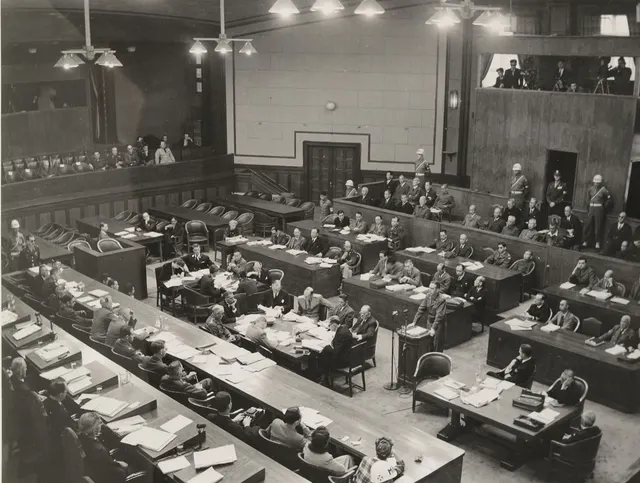
The courtroom of the International Military Tribunal for the Far East in Tokyo.
Image creditThe Occupation administration · Public domainResized and cropped for display.

The Tokyo war crimes tribunal passes sentence

From May 1946 the International Military Tribunal for the Far East, with judges from eleven nations, tried Japan’s wartime leaders in Tokyo, hearing 419 witnesses and receiving more than 4,000 pieces of evidence. Its judgment was read out in November 1948.

On 12 November 1948 the sentences on the 25 remaining defendants were announced: seven, among them the wartime prime minister Tōjō Hideki, were sentenced to death, sixteen to life imprisonment and two to shorter terms. The seven were hanged on 23 December 1948. The Indian judge Radhabinod Pal dissented from the whole judgment.

Read the full storyHistory & Timeline →Source: The National WWII Museum: Tokyo war crimes trial ↗
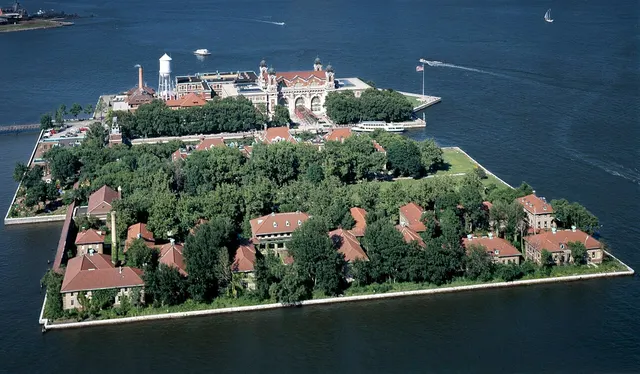
Ellis Island in New York Harbor from the air, photographed by Carol M. Highsmith.
Image creditCarol M. Highsmith · CC BY-SA 4.0Resized and cropped for display.

Ellis Island closes

Between 1892 and 1954 about twelve million immigrants passed through the federal immigration station on Ellis Island in New York Harbor on their way into the United States. After immigration was restricted in the 1920s, far fewer came, and the island was used mainly to hold detained migrants.

On 12 November 1954 the station closed. Its last detainee, a Norwegian merchant seaman named Arne Peterssen, was released. The main building reopened as a museum of immigration in 1990.

Read the full storyHistory & Timeline →Source: US National Park Service: Ellis Island chronology ↗
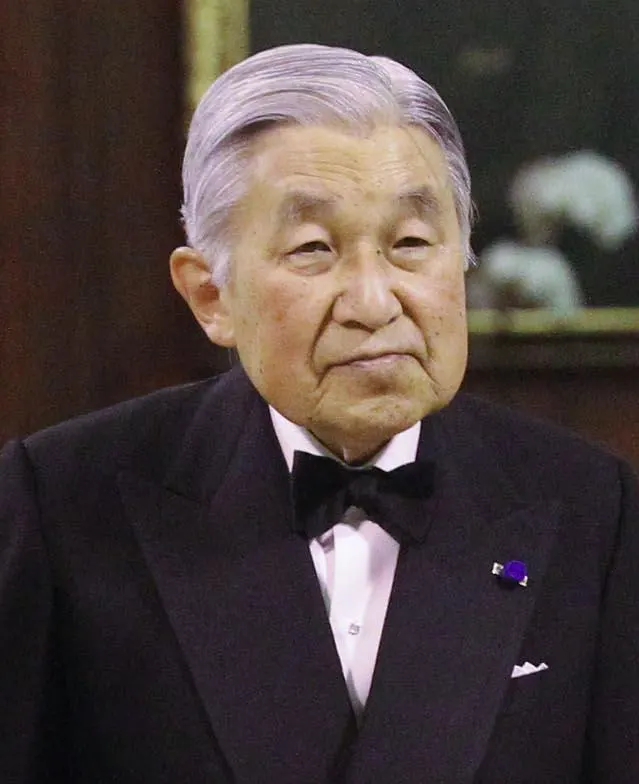
Emperor Akihito, photographed in later life.
Image creditMalacañang Photo Bureau · Public domainResized and cropped for display.

Akihito proclaims his enthronement

Akihito became emperor of Japan on the death of his father, Hirohito, in January 1989. On 12 November 1990, in the Matsu-no-Ma hall of the Imperial Palace in Tokyo, he proclaimed his accession from the Takamikura throne in the ceremony called Sokuirei-Seiden-no-Gi, the first enthronement held under Japan’s post-war constitution.

Some 474 representatives from 158 countries, the European Community and the United Nations attended. Akihito reigned until 2019, when he became the first Japanese emperor in two centuries to abdicate.

Read the full storyHistory & Timeline →Source: Imperial Household Agency: Accession to the throne and major state ceremonies ↗
♙
PEOPLE

Born Today

Lord Rayleigh
Image creditUnknown authorUnknown author · Public domainResized and cropped for display.

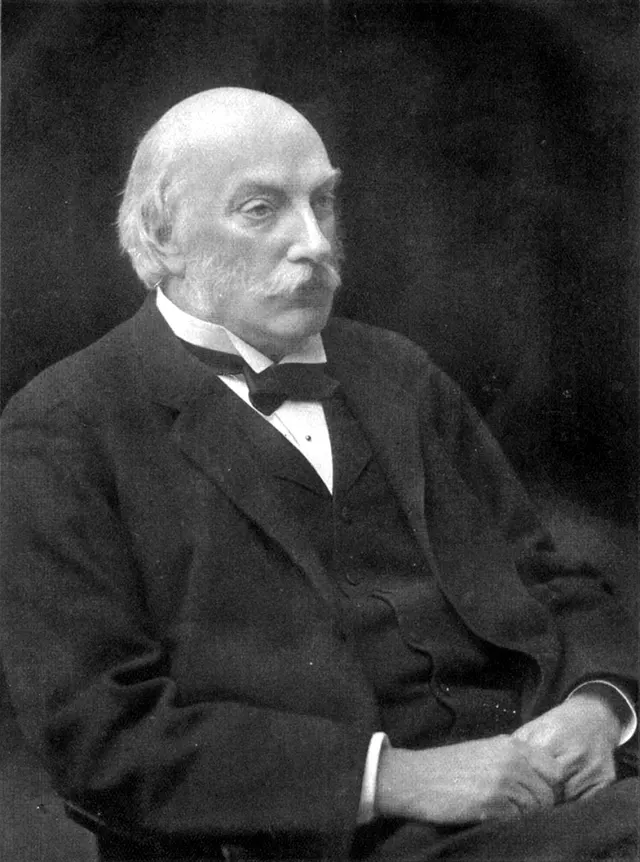
Lord Rayleigh

English physicist who explained why the sky is blue and shared in the discovery of argon, winning the 1904 Nobel Prize in Physics.

Sun Yat-sen
Image credit上海波尔照相馆 · Public domainResized and cropped for display.

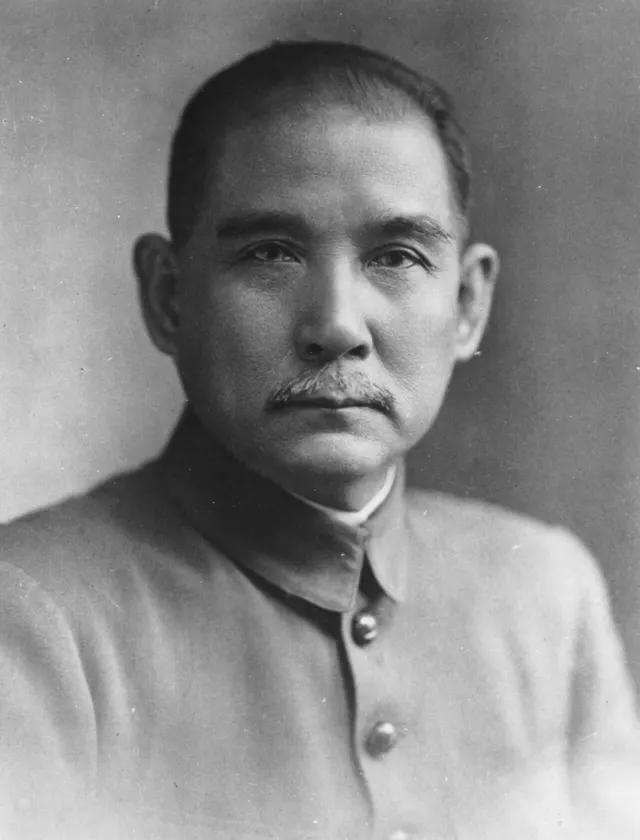
Sun Yat-sen

Chinese revolutionary, the first provisional president of the Republic of China, honoured as the father of the nation.

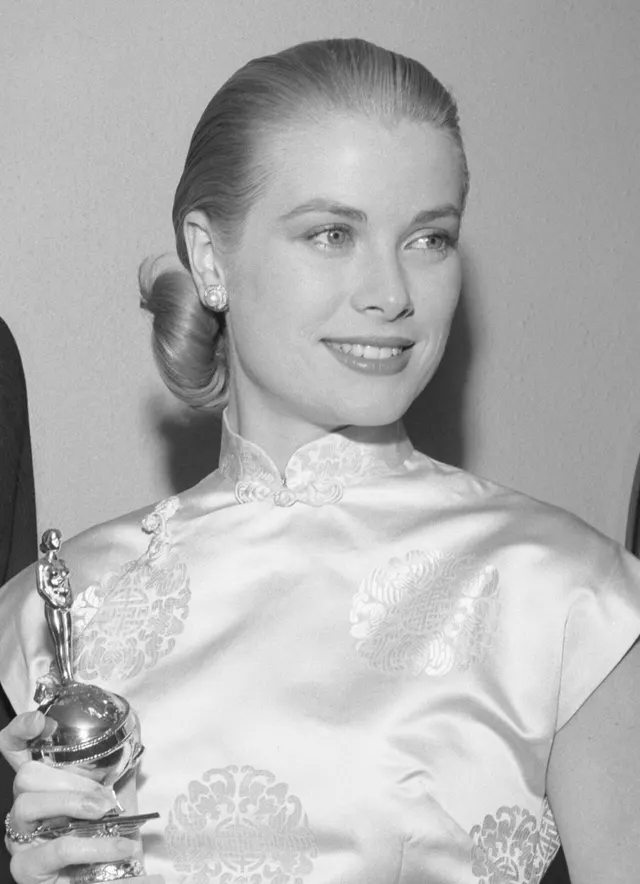
Grace Kelly
Image creditLos Angeles Times · CC BY 4.0Resized and cropped for display.

Grace Kelly

American film star who won an Oscar for The Country Girl and became Princess of Monaco.

Neil Young
Image creditBillyshiverstick · CC0Resized and cropped for display.

Neil Young

Canadian singer-songwriter, known for Heart of Gold and his work with Crazy Horse.

Nadia Comăneci
Image creditNuță Lucian · CC BY-SA 4.0Resized and cropped for display.

Nadia Comăneci

Romanian gymnast who scored the first perfect 10 in Olympic gymnastics, at Montreal in 1976.

◉
IDEAS THAT CHANGED THINGS

Firsts, Science & Discoveries

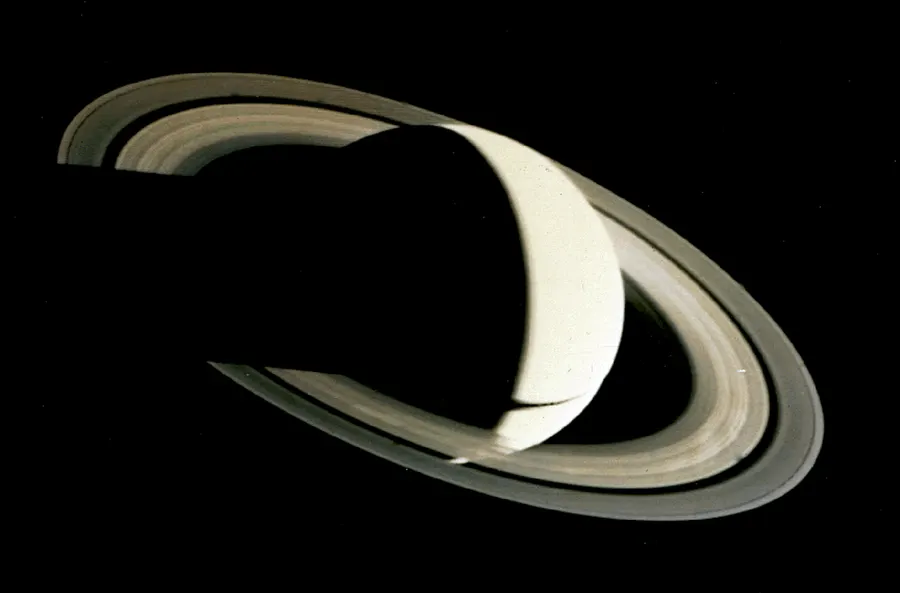
Saturn as a crescent, photographed by Voyager 1 after its closest approach.
Image creditNASA · Public domainResized and cropped for display.

Voyager 1 flies past Saturn

On 12 November 1980 NASA’s Voyager 1 made its closest approach to Saturn, passing about 126,000 kilometres above the cloud tops. Hours earlier it had flown within about 6,500 kilometres of Saturn’s largest moon, Titan.

Voyager found Titan wrapped in a thick orange haze over an atmosphere mostly of nitrogen, denser than Earth’s. Its pictures of Saturn’s rings showed them divided into hundreds of narrow ringlets. The encounter then flung the spacecraft out of the plane of the planets, on the path that took it into interstellar space.

Read the full storyHistory & Timeline →Source: NASA: 40 years ago, Voyager 1 explores Saturn ↗
Tim Berners-Lee, speaking at a Web Summit conference.
Image creditSummit · CC BY 4.0Resized and cropped for display.

The World Wide Web is formally proposed

At CERN, the European particle physics laboratory near Geneva, Tim Berners-Lee had first suggested a system for sharing information by hypertext in March 1989. On 12 November 1990 he and his Belgian colleague Robert Cailliau submitted a formal management proposal, ‘WorldWideWeb: Proposal for a HyperText Project’.

It described a ‘web’ of linked hypertext documents that could be read with ‘browsers’. Working on a NeXT computer, Berners-Lee had the first web server and browser running at CERN by the end of 1990.

Read the full storyHistory & Timeline →Source: W3C: WorldWideWeb, proposal for a HyperText project (12 November 1990) ↗
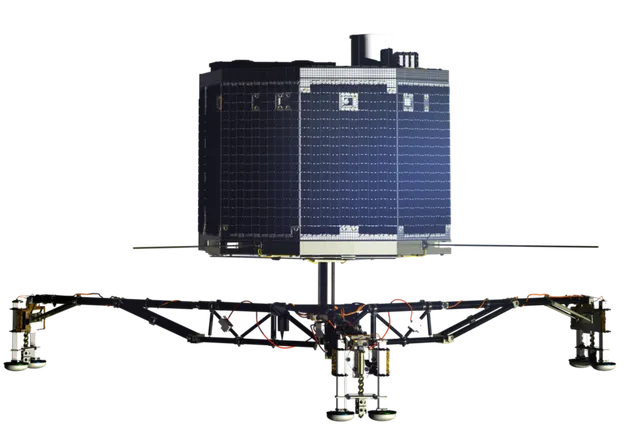
An illustration of the Philae lander.
Image creditESA/ATG medialab · CC BY-SA 2.0Resized and cropped for display.

Philae lands on a comet

On 12 November 2014, after a ten-year journey on board the European Space Agency’s Rosetta spacecraft, the small lander Philae separated and spent seven hours descending to comet 67P/Churyumov-Gerasimenko, more than 500 million kilometres from Earth. It was the first time a spacecraft had landed on a comet.

Its harpoons failed to fire, and Philae bounced twice before coming to rest in shadow at a site later named Abydos. It still sent back data from the surface for about 60 hours before its batteries ran down.

Read the full storyHistory & Timeline →Source: European Space Agency: Philae’s extraordinary comet landing relived ↗
✦
LIVES REMEMBERED

Remembered Today

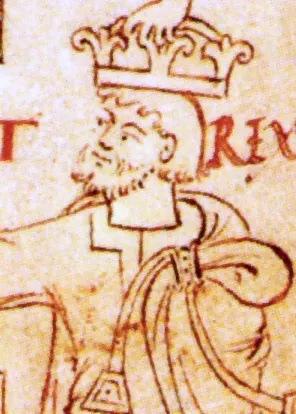
Cnut the Great
Image creditSee Description (unknown) · Public domainResized and cropped for display.

Cnut the Great

King of England, Denmark and Norway, ruler of a North Sea empire. His death is recorded under the Julian calendar.

William Holden
Image creditStudio Publicity · Public domainResized and cropped for display.

William Holden

American film actor, an Oscar winner for Stalag 17.

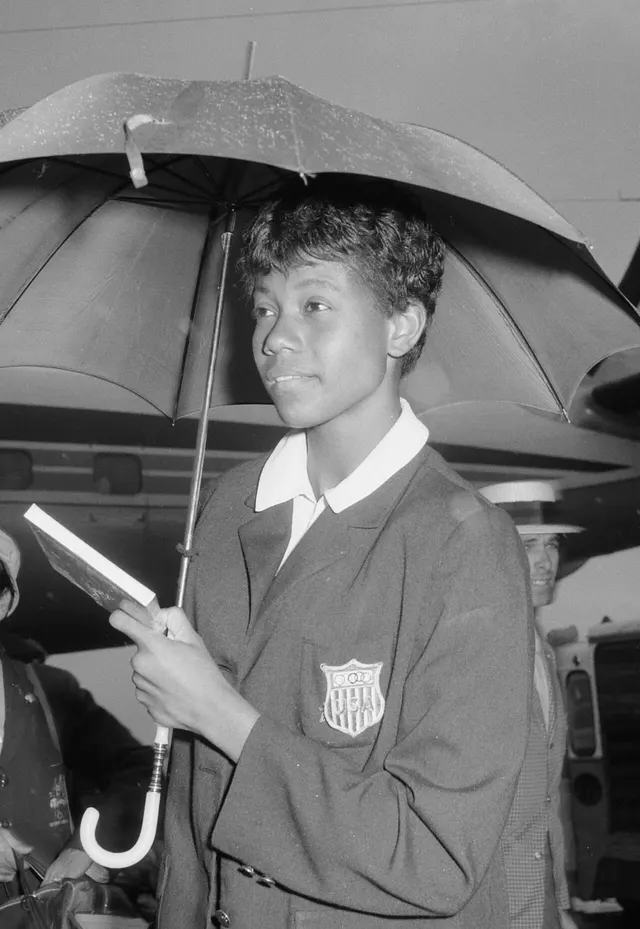
Wilma Rudolph
Image creditLindeboom, Henk / Anefo · CC BY-SA 3.0 nlResized and cropped for display.

Wilma Rudolph

American sprinter who overcame childhood polio to win three gold medals at the 1960 Olympics.

Stan Lee
Image creditGage Skidmore · CC BY-SA 3.0Resized and cropped for display.

Stan Lee

American comic-book writer and editor who co-created Spider-Man, the X-Men and many other Marvel heroes.

HISTORY & TIMELINE

Finished the highlights?

Follow 12 November chronologically, from the Middle Ages to the modern day, with 9 verified events and the sources behind them.

This day through time →