
HISTORY & TIMELINE
12 November

A journey through
12 November in history

From the proclamation of the Austrian republic in 1918 to Philae’s landing on a comet in 2014, 12 November has seen empires end, emperors enthroned and new worlds explored. This timeline follows the date across the last century.

JUMP THROUGH TIME
V
THE TWENTIETH CENTURY

The 1900s

War and peace, technological leaps, social change, politics, sport and popular culture.

1918
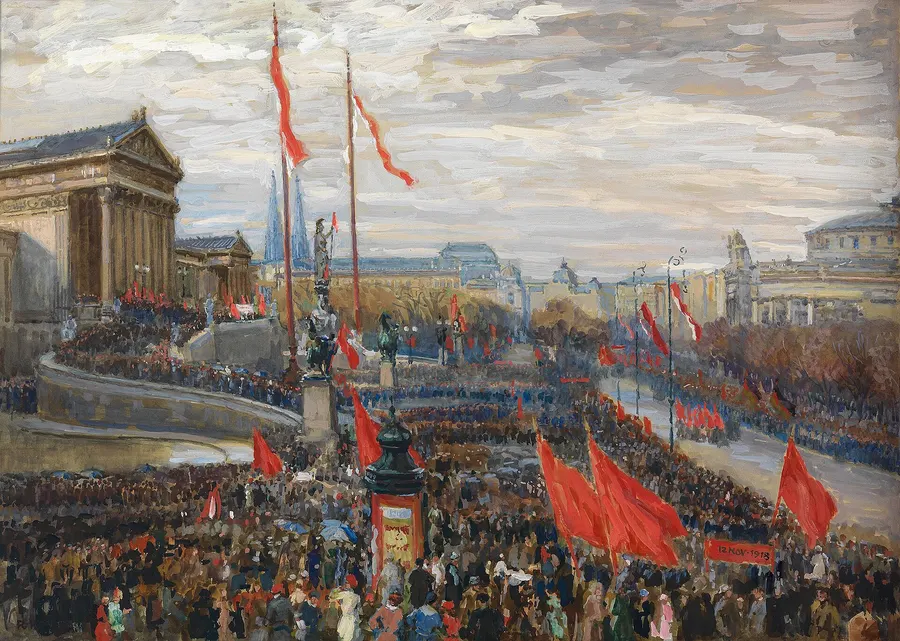
The proclamation of the republic in front of the Parliament in Vienna, 12 November 1918, painted by Rudolf Konopa.The proclamation of the republic in front of the Parliament in Vienna, 12 November 1918, painted by Rudolf Konopa.Image: Rudolf Konopa (* 2. Februar 1864; † 6. Oktober 1936) · Public domain
politics · Europe

Austria becomes a republic

The day after Emperor Charles I gave up his part in government, the provisional National Assembly of German-speaking Austria met in Vienna on 12 November 1918 and resolved unanimously that ‘German-Austria is a democratic republic’. It also declared the new state part of the German republic, a union the Allies later forbade. From the ramp of the Parliament building the republic was proclaimed to a vast crowd. The occasion was marred when communist Red Guards tried to storm the building and shots were fired. What remained of the Habsburg lands became the small Republic of Austria.

Source: Der Erste Weltkrieg (Schloss Schönbrunn Kultur- und Betriebsges.m.b.H.): 12 November 1918 ↗
1944
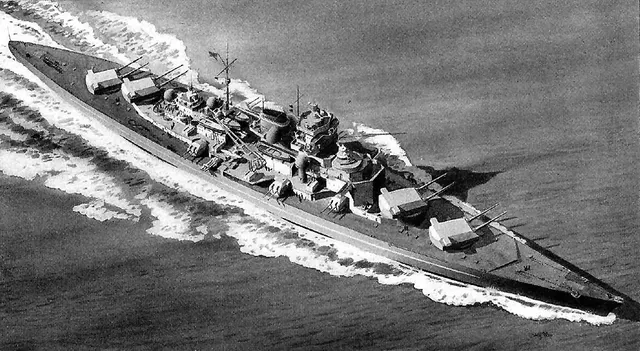
The Tirpitz at sea before her sinking.The Tirpitz at sea before her sinking.Image: File:Tirpitz-2.jpg: here derivative work: Georgfotoart · Public domain
world · Europe

The battleship Tirpitz is sunk

The German battleship Tirpitz, sister ship of the Bismarck, spent most of the Second World War in Norwegian fjords, where the threat it posed tied down much of the British fleet. On 12 November 1944 Lancaster bombers of Nos. 9 and 617 Squadrons, RAF, attacked it near Tromsø with 12,000-pound ‘Tallboy’ bombs. Hit at least twice, the ship was torn by an internal explosion and capsized. About 1,000 of the men aboard were killed.

Source: Royal Air Force Museum: Target the Tirpitz ↗
1948
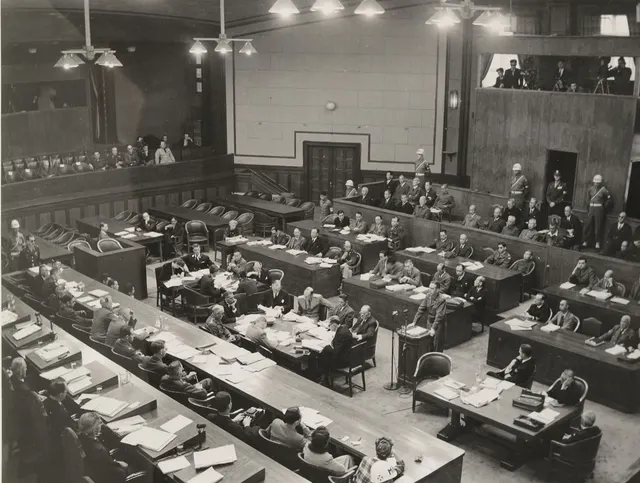
The courtroom of the International Military Tribunal for the Far East in Tokyo.The courtroom of the International Military Tribunal for the Far East in Tokyo.Image: The Occupation administration · Public domain
politics · Asia

The Tokyo war crimes tribunal passes sentence

From May 1946 the International Military Tribunal for the Far East, with judges from eleven nations, tried Japan’s wartime leaders in Tokyo, hearing 419 witnesses and receiving more than 4,000 pieces of evidence. Its judgment was read out in November 1948. On 12 November 1948 the sentences on the 25 remaining defendants were announced: seven, among them the wartime prime minister Tōjō Hideki, were sentenced to death, sixteen to life imprisonment and two to shorter terms. The seven were hanged on 23 December 1948. The Indian judge Radhabinod Pal dissented from the whole judgment.

Source: The National WWII Museum: Tokyo war crimes trial ↗
1954
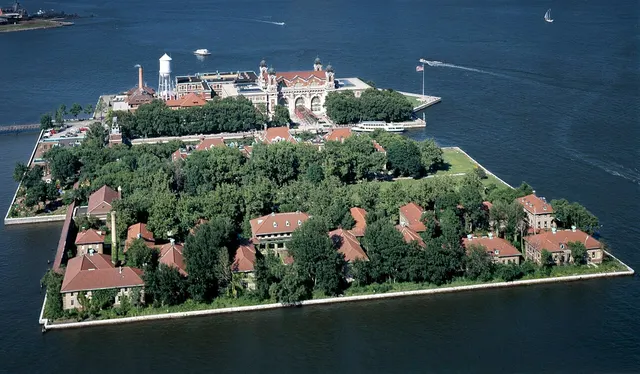
Ellis Island in New York Harbor from the air, photographed by Carol M. Highsmith.Ellis Island in New York Harbor from the air, photographed by Carol M. Highsmith.Image: Carol M. Highsmith · CC BY-SA 4.0
world · Americas

Ellis Island closes

Between 1892 and 1954 about twelve million immigrants passed through the federal immigration station on Ellis Island in New York Harbor on their way into the United States. After immigration was restricted in the 1920s, far fewer came, and the island was used mainly to hold detained migrants. On 12 November 1954 the station closed. Its last detainee, a Norwegian merchant seaman named Arne Peterssen, was released. The main building reopened as a museum of immigration in 1990.

Source: US National Park Service: Ellis Island chronology ↗
1956
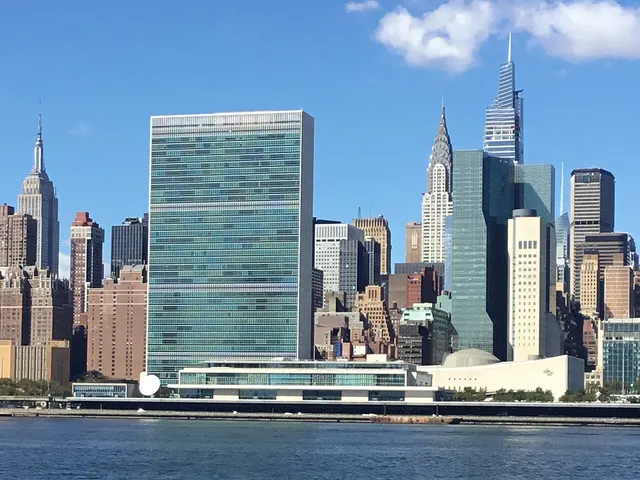
The United Nations headquarters on the East River, New York.The United Nations headquarters on the East River, New York.Image: Kidfly182 · CC BY-SA 4.0
politics · Africa

Sudan, Morocco and Tunisia join the United Nations

On 12 November 1956, at the same plenary meeting of the General Assembly, the United Nations admitted Sudan, Morocco and Tunisia as members. All three had become independent earlier that year, Sudan from joint British and Egyptian rule and Morocco and Tunisia from France. Their admission was an early sign of how decolonisation would transform the membership of the UN over the next decade.

Source: United Nations: Growth in United Nations membership ↗
1980
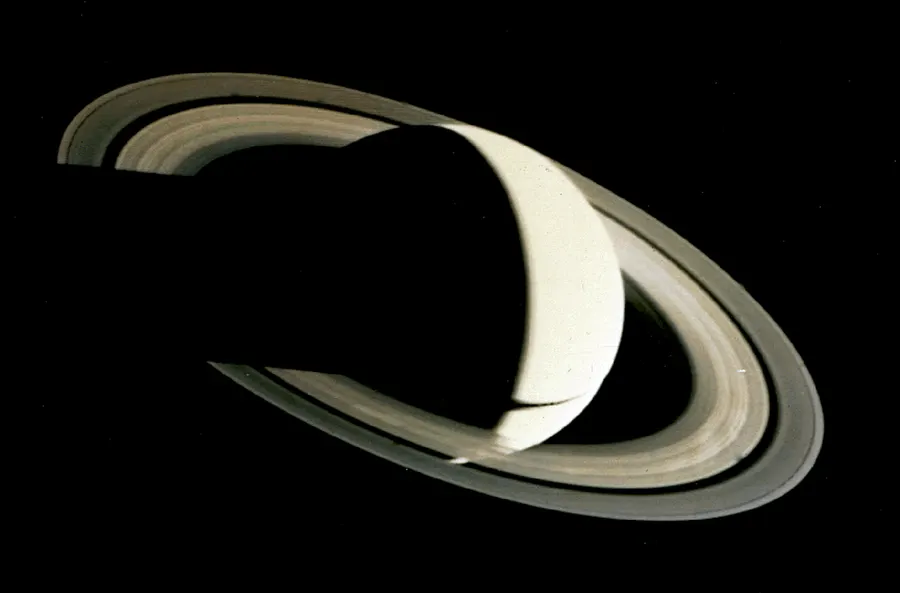
Saturn as a crescent, photographed by Voyager 1 after its closest approach.Saturn as a crescent, photographed by Voyager 1 after its closest approach.Image: NASA · Public domain
science · Americas

Voyager 1 flies past Saturn

On 12 November 1980 NASA’s Voyager 1 made its closest approach to Saturn, passing about 126,000 kilometres above the cloud tops. Hours earlier it had flown within about 6,500 kilometres of Saturn’s largest moon, Titan. Voyager found Titan wrapped in a thick orange haze over an atmosphere mostly of nitrogen, denser than Earth’s. Its pictures of Saturn’s rings showed them divided into hundreds of narrow ringlets. The encounter then flung the spacecraft out of the plane of the planets, on the path that took it into interstellar space.

Source: NASA: 40 years ago, Voyager 1 explores Saturn ↗
1990
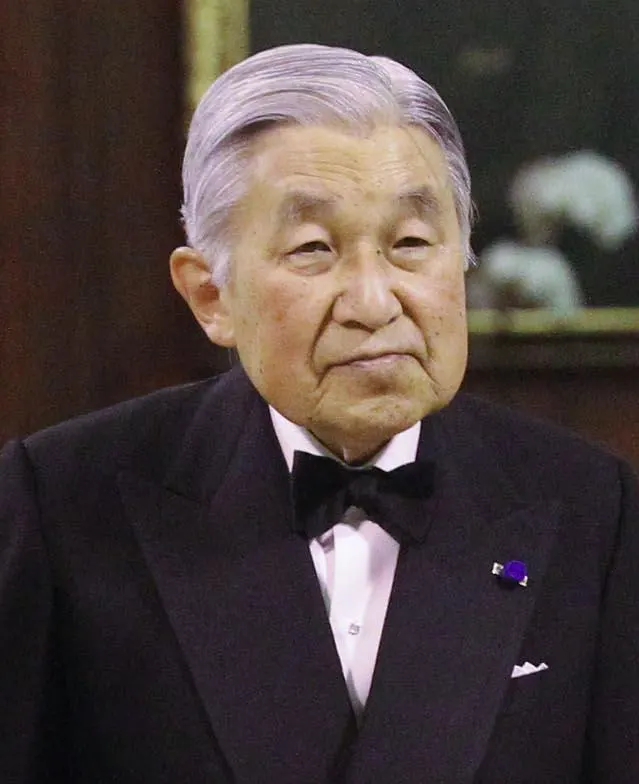
Emperor Akihito, photographed in later life.Emperor Akihito, photographed in later life.Image: Malacañang Photo Bureau · Public domain

politics · Asia

Akihito proclaims his enthronement

Akihito became emperor of Japan on the death of his father, Hirohito, in January 1989. On 12 November 1990, in the Matsu-no-Ma hall of the Imperial Palace in Tokyo, he proclaimed his accession from the Takamikura throne in the ceremony called Sokuirei-Seiden-no-Gi, the first enthronement held under Japan’s post-war constitution. Some 474 representatives from 158 countries, the European Community and the United Nations attended. Akihito reigned until 2019, when he became the first Japanese emperor in two centuries to abdicate.

Source: Imperial Household Agency: Accession to the throne and major state ceremonies ↗
1990
Tim Berners-Lee, speaking at a Web Summit conference.Tim Berners-Lee, speaking at a Web Summit conference.Image: Summit · CC BY 4.0
science · Europe

The World Wide Web is formally proposed

At CERN, the European particle physics laboratory near Geneva, Tim Berners-Lee had first suggested a system for sharing information by hypertext in March 1989. On 12 November 1990 he and his Belgian colleague Robert Cailliau submitted a formal management proposal, ‘WorldWideWeb: Proposal for a HyperText Project’. It described a ‘web’ of linked hypertext documents that could be read with ‘browsers’. Working on a NeXT computer, Berners-Lee had the first web server and browser running at CERN by the end of 1990.

Source: W3C: WorldWideWeb, proposal for a HyperText project (12 November 1990) ↗
VI
2000 TO TODAY

Modern Day

The events of recent decades that have already become part of the historical record.

2014
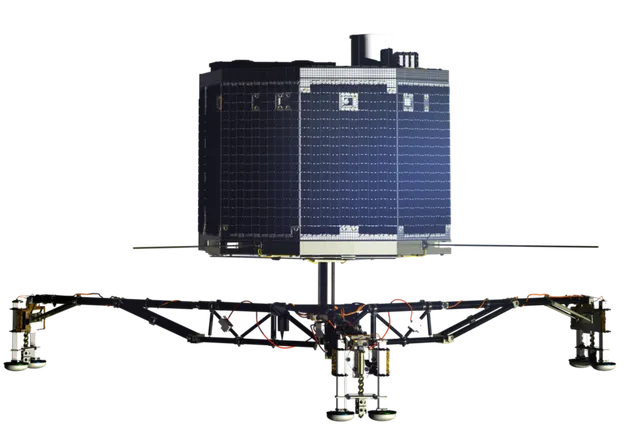
An illustration of the Philae lander.An illustration of the Philae lander.Image: ESA/ATG medialab · CC BY-SA 2.0
science · Europe

Philae lands on a comet

On 12 November 2014, after a ten-year journey on board the European Space Agency’s Rosetta spacecraft, the small lander Philae separated and spent seven hours descending to comet 67P/Churyumov-Gerasimenko, more than 500 million kilometres from Earth. It was the first time a spacecraft had landed on a comet. Its harpoons failed to fire, and Philae bounced twice before coming to rest in shadow at a site later named Abydos. It still sent back data from the surface for about 60 hours before its batteries ran down.

Source: European Space Agency: Philae’s extraordinary comet landing relived ↗
WHY THESE MOMENTS?

Significance before volume

This page is not the longest possible list of events. It is a chronological journey through 12 November, where each entry is chosen for historical significance, human interest and reliability.

Facts are checked against authoritative museums, archives, universities and reference works. Where sources disagree, the page says so.

EXPLORED THE DEEPER STORY?

Return to the highlights of 12 November

Discover the lighter side of the date with famous birthdays, culture, firsts and lives remembered.

Explore This Day →