
HISTORY & TIMELINE
13 November

A journey through
13 November in history

From the St Brice’s Day massacre of 1002 to the attacks on Paris in 2015, 13 November has seen violence and disaster, but also votes, verdicts and discoveries that changed lives. This timeline follows the date across a thousand years.

JUMP THROUGH TIME
II
THE MIDDLE AGES

Medieval History

Kingdoms, conflict, faith, power and the changing medieval world.

1002
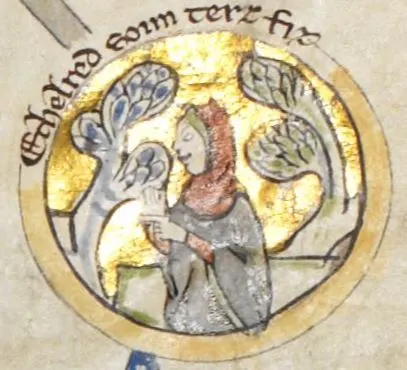
King Æthelred II, from a genealogical chronicle of the English kings.King Æthelred II, from a genealogical chronicle of the English kings.Image: AnonymousUnknown author · Public domain
world · Europe

The St Brice’s Day massacre

Claiming to fear a plot against his life, King Æthelred II of England ordered that all Danes living among the English be killed on St Brice’s Day, 13 November 1002 (Julian calendar). How many died is not known. In Oxford, Danes who took refuge in St Frideswide’s church were burned inside it, and in 2008 the remains of at least 35 young men, thought to be victims, were found at St John’s College. The Danish king Sweyn Forkbeard raided England in revenge in the following years and in 1013 seized the throne.

Source: St John’s College, Oxford: Remembering the St Brice’s Day massacre ↗
V
THE TWENTIETH CENTURY

The 1900s

War and peace, technological leaps, social change, politics, sport and popular culture.

1918
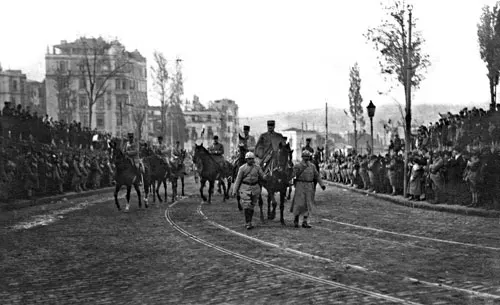
The French general Franchet d'Espèrey rides through Beyoğlu, Constantinople, on 8 February 1919.The French general Franchet d’Espèrey rides through Beyoğlu, Constantinople, on 8 February 1919.Image: NA · Public domain
world · Europe

Allied warships arrive at Constantinople

Two weeks after the Ottoman Empire signed the Armistice of Mudros, an Allied fleet steamed through the Dardanelles and anchored off Constantinople on 13 November 1918. It was the start of an occupation of the Ottoman capital by British, French and Italian forces that lasted until 1923. The occupation brought home to many Turks the scale of their defeat, and fed the nationalist movement led by Mustafa Kemal that went on to found the Republic of Turkey.

Source: Imperial War Museums: The occupation of Constantinople, 13 November 1918 to 23 September 1923 ↗
1940
Leopold Stokowski, who conducted the music for Fantasia.Leopold Stokowski, who conducted the music for Fantasia.Image: Unknown authorUnknown author · Public domain
culture · Americas

Fantasia opens on Broadway

Walt Disney’s Fantasia had its premiere at the Broadway Theatre in New York on 13 November 1940. The film set animation to eight pieces of classical music, from Bach’s Toccata and Fugue in D minor and Dukas’s The Sorcerer’s Apprentice, with Mickey Mouse, to Stravinsky’s The Rite of Spring, played by the Philadelphia Orchestra under Leopold Stokowski. It was shown in Fantasound, an early stereo system developed at the Disney studio that needed specially equipped cinemas. Fantasia lost money at first but came to be regarded as one of the great experiments of animated film.

Source: Library of Congress: Fantasia, 1940 (Molto Animato! Music and animation) ↗
1956
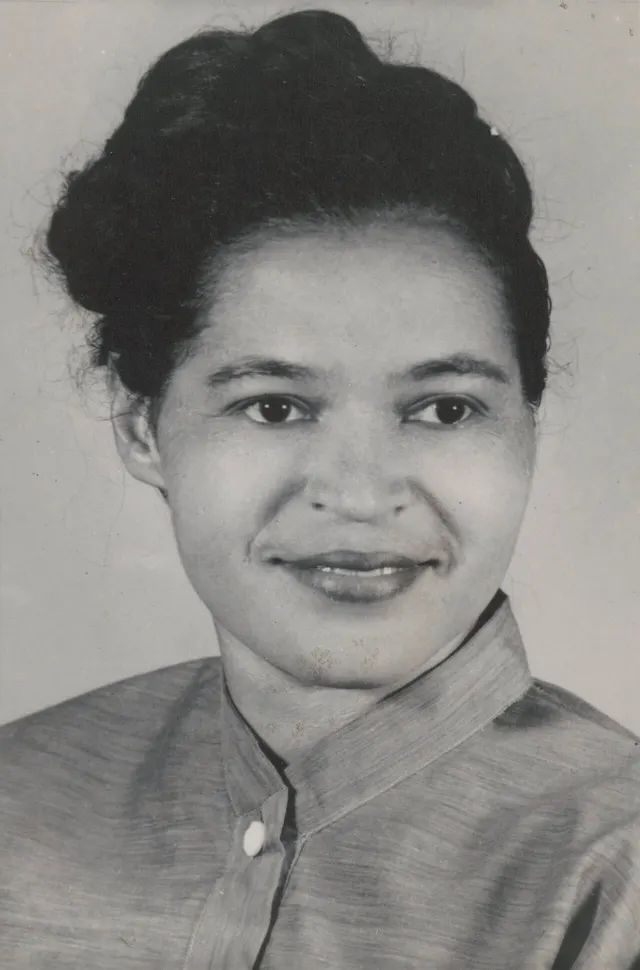
Rosa Parks, photographed in November 1956.Rosa Parks, photographed in November 1956.Image: Unknown authorUnknown author · Public domain
politics · Americas

The Supreme Court ends bus segregation in Montgomery

Rosa Parks’s arrest in December 1955 began a boycott of the buses of Montgomery, Alabama, by the city’s Black residents. In February 1956 the lawyer Fred Gray filed Browder v. Gayle on behalf of four Black women who had been mistreated on the buses, challenging the state and city laws that segregated them, and in June a federal court ruled those laws unconstitutional. On 13 November 1956 the US Supreme Court affirmed that ruling. Martin Luther King Jr. heard the news in a Montgomery courtroom where he was on trial over the boycott’s car pools. The court’s order reached Montgomery on 20 December, and the next day, after more than a year, the boycott ended and integrated buses ran.

Source: Martin Luther King, Jr. Research and Education Institute, Stanford University: Browder v. Gayle, 352 U.S. 903 ↗
1985
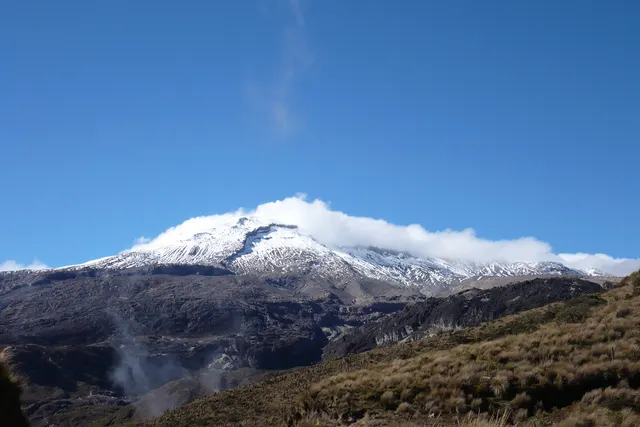
The snow-capped Nevado del Ruiz in Colombia.The snow-capped Nevado del Ruiz in Colombia.Image: Edgar from Ibagué, Colombia · CC BY-SA 2.0
world · Americas

The eruption of Nevado del Ruiz buries Armero

On the evening of 13 November 1985 the Nevado del Ruiz volcano in Colombia erupted. The eruption itself was modest, but hot rock and ash melted part of the ice cap on its summit, and torrents of water swept down the valleys, picking up soil and debris to form lahars, fast-moving flows of volcanic mud. About two and a half hours later the lahars reached the town of Armero, 74 kilometres away, and buried it. More than 23,000 people died. Scientists had warned of the danger, but no evacuation was ordered in time. The disaster changed how volcanic hazards are monitored and communicated around the world.

Source: US Geological Survey: Lessons learned from the Armero, Colombia tragedy ↗
1994
How each part of Sweden voted in the 1994 referendum on joining the European Union.How each part of Sweden voted in the 1994 referendum on joining the European Union.Image: Paasikivi · CC BY-SA 4.0
politics · Europe

Sweden votes to join the European Union

On 13 November 1994 Swedish voters were asked whether their country should join the European Union. Turnout was high, at 83 per cent, and 52.3 per cent voted yes against 46.8 per cent no. The referendum was advisory, but the parties had agreed in advance to respect its result. The Riksdag voted for membership on 15 December, and Sweden joined the EU on 1 January 1995, together with Finland and Austria.

Source: Government Offices of Sweden: Sweden’s path to EU membership ↗
1995
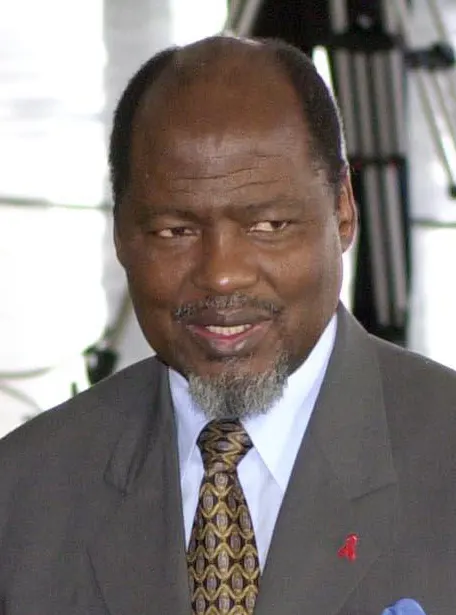
Joaquim Chissano, president of Mozambique from 1986 to 2005.Joaquim Chissano, president of Mozambique from 1986 to 2005.Image: Roberto Barroso/ABr · CC BY 3.0 br
politics · Africa

Mozambique joins the Commonwealth

On 13 November 1995 Mozambique, a former Portuguese colony, became the 54th member of the Commonwealth, the association that grew out of the British Empire. It was the first country admitted that had never been part of the empire. Mozambique’s neighbours, all former British territories, had supported its liberation struggle and its recovery from civil war, and it joined to strengthen those ties. Rwanda, Gabon and Togo later followed, also with no historical link to Britain.

Source: Commonwealth Secretariat: Mozambique ↗
VI
2000 TO TODAY

Modern Day

The events of recent decades that have already become part of the historical record.

2009
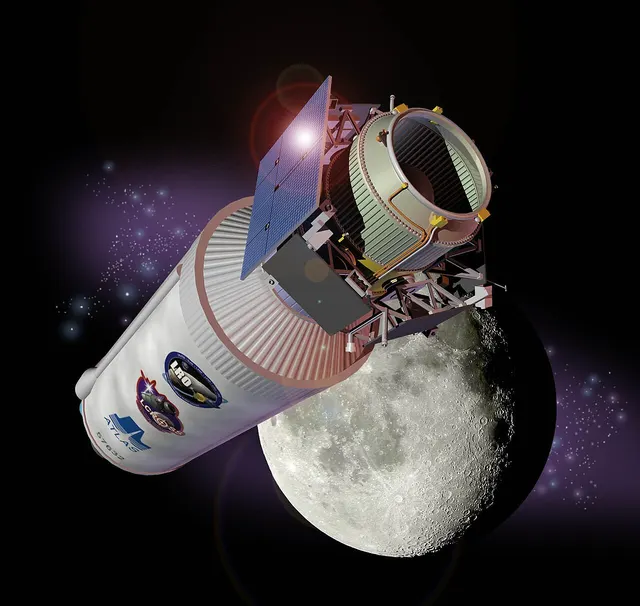
An artist's impression of the LCROSS spacecraft and its Centaur rocket stage approaching the Moon.An artist’s impression of the LCROSS spacecraft and its Centaur rocket stage approaching the Moon.Image: NASA · Public domain
science · Americas

NASA announces water on the Moon

On 9 October 2009 NASA deliberately crashed the spent Centaur upper stage of a rocket into Cabeus, a permanently shadowed crater near the Moon’s south pole. The LCROSS spacecraft following it flew through the plume of debris thrown up, measuring it with its instruments before it too struck the Moon. On 13 November 2009 NASA announced that the data showed a significant amount of water in the plume, confirming that water ice lies in the cold, dark craters of the lunar poles, a possible resource for future explorers.

Source: NASA Science: Moon water and ices (LCROSS results, 13 November 2009) ↗
2015
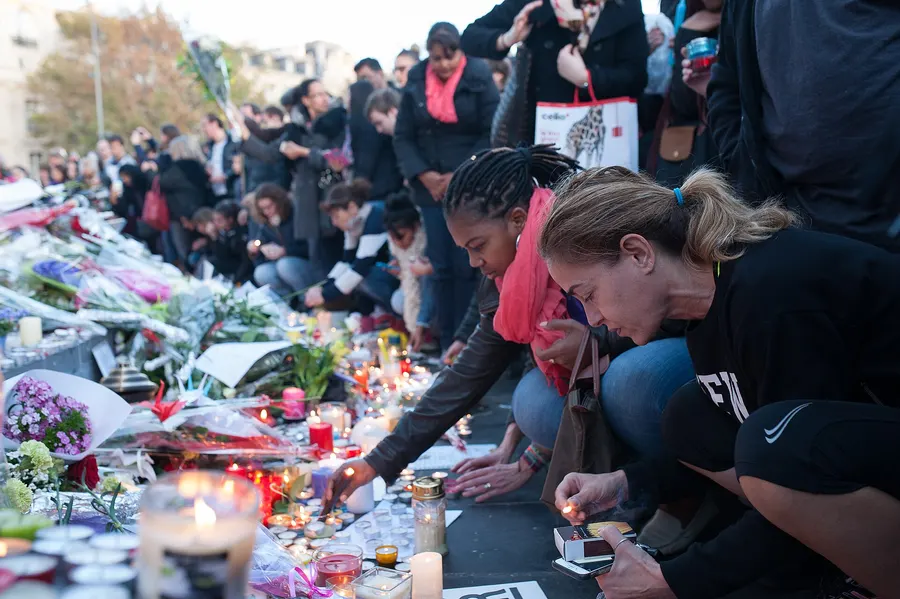
Flowers and candles for the victims at the Place de la République, Paris, 15 November 2015.Flowers and candles for the victims at the Place de la République, Paris, 15 November 2015.Image: Didier Vandon · CC BY-SA 2.0
world · Europe

Terrorist attacks in Paris

On the evening of 13 November 2015, gunmen and suicide bombers of the Islamic State group attacked the Stade de France, cafés and restaurants in the 10th and 11th arrondissements of Paris, and the Bataclan concert hall. At least 130 people were killed and more than 350 injured, in the deadliest attacks in France since the Second World War. In the days that followed, Parisians gathered at the Place de la République to leave flowers and candles for the victims.

Source: Encyclopaedia Britannica: Paris attacks of 2015 ↗
WHY THESE MOMENTS?

Significance before volume

This page is not the longest possible list of events. It is a chronological journey through 13 November, where each entry is chosen for historical significance, human interest and reliability.

Facts are checked against authoritative museums, archives, universities and reference works. Where sources disagree, the page says so.

EXPLORED THE DEEPER STORY?

Return to the highlights of 13 November

Discover the lighter side of the date with famous birthdays, culture, firsts and lives remembered.

Explore This Day →