
HISTORY & TIMELINE
9 September

A journey through
9 September in history

The story of 9 September runs from the day in 337 when Constantine the Great’s three sons took the title of emperor to the moment in 2015 when Elizabeth II became Britain’s longest-reigning monarch. In between come the Battle of Flodden, the crowning of the infant Mary, Queen of Scots, the first night of Molière’s L’Avare, the Continental Congress’s choice of the name United States, California’s statehood, the Berne Convention, Edward Barnard’s discovery of Amalthea, the surrender of Japan’s armies in China at Nanjing, the moth in the Harvard Mark II, the founding of North Korea, Arthur Ashe’s win at the first US Open, the link that made Mammoth Cave the world’s longest, Tajikistan’s independence and the opening of the Dubai Metro.

I
EARLIEST RECORDS

Ancient & Early History

The earliest worthwhile records and events connected with this date.

337
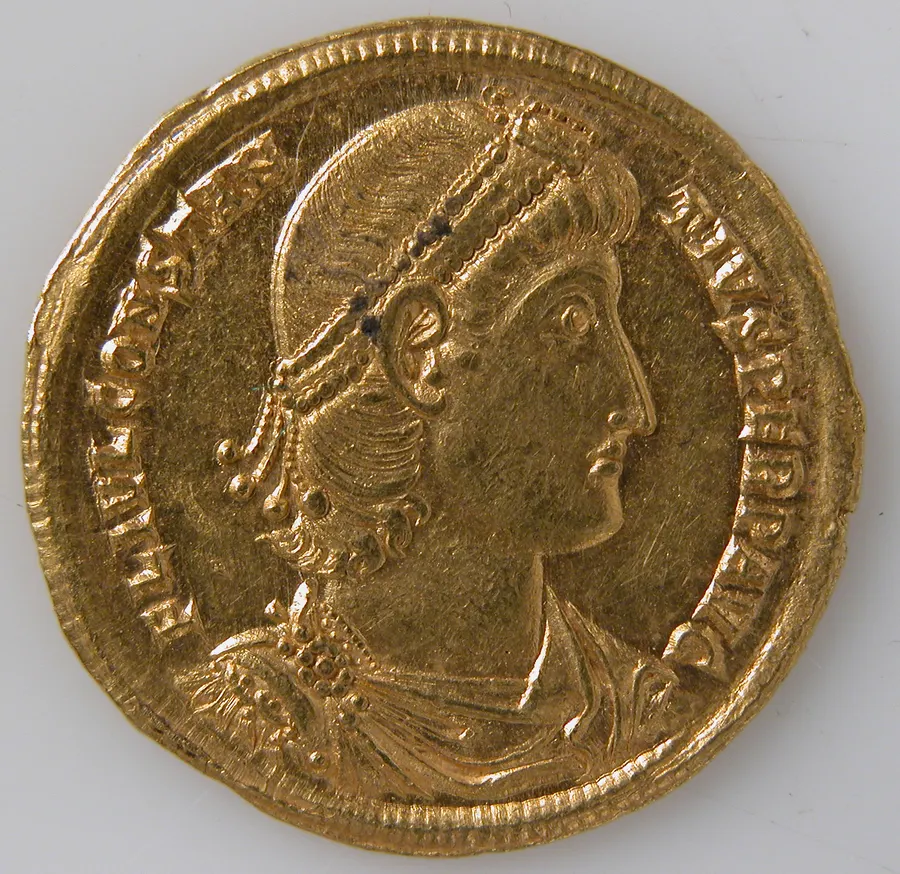
A gold solidus of Constantius II, emperor from 337 to 361, in the Metropolitan Museum of ArtA gold solidus of Constantius II, emperor from 337 to 361, in the Metropolitan Museum of ArtImage: Unknown · CC0
politics · Europe

Constantine the Great’s three sons become joint emperors

Constantine the Great died near Nicomedia on 22 May 337 without naming a single heir. After a summer in which several of his male relatives were killed by the army, his three surviving sons, Constantine II, Constantius II and Constans, each took the title of Augustus on 9 September 337 and divided the Roman Empire between them: Constantine II took Britain, Gaul and Spain, Constans Italy, Africa and the Balkans, and Constantius II the East. The brothers soon fell out, and by 353 Constantius ruled alone.

Source: Britannica: Constantius II ↗
III
A CHANGING WORLD

Early Modern Era

Exploration, political change, scientific development and expanding global connections.

1513
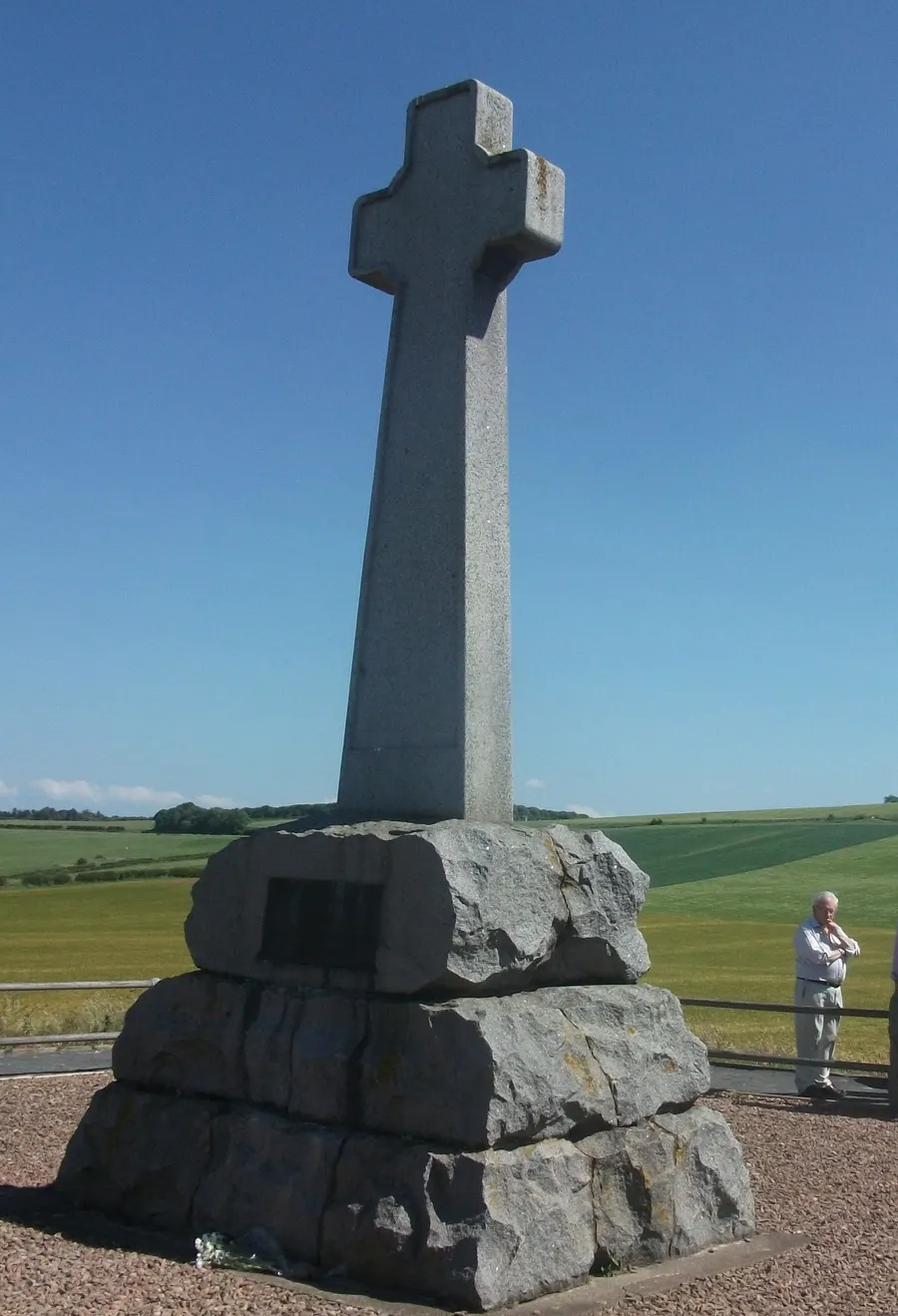
The granite cross on Piper's Hill at Branxton, Northumberland, raised in 1910 to the dead of both nations at FloddenThe granite cross on Piper’s Hill at Branxton, Northumberland, raised in 1910 to the dead of both nations at FloddenImage: Paul Barlow · CC BY-SA 3.0
world · Europe

James IV of Scotland falls at the Battle of Flodden

In the summer of 1513 Henry VIII of England took an army to France to fight Louis XII. Scotland and France were bound by the ‘Auld Alliance’, and James IV of Scotland, though married to Henry’s sister Margaret, answered Louis’s call for help. In August he crossed the border with one of the largest armies Scotland had ever raised, well supplied with artillery, and took several English castles along the River Tweed. Henry’s lieutenant in the north, the elderly Earl of Surrey, marched to meet him. The armies met near the village of Branxton in Northumberland on 9 September 1513, a date in the Julian calendar then in use (19 September in today’s reckoning). The Scots came down from the high ground with long pikes in the French style, but on wet, broken ground their formations fell apart, and the English, armed with short-hafted bills, cut into them. By evening James lay dead with perhaps 10,000 of his men, among them many of his nobles and churchmen. It was the last time a British monarch was killed in battle, and Scotland passed to his son James V, a child of seventeen months.

Source: Britannica: Battle of Flodden ↗
1543
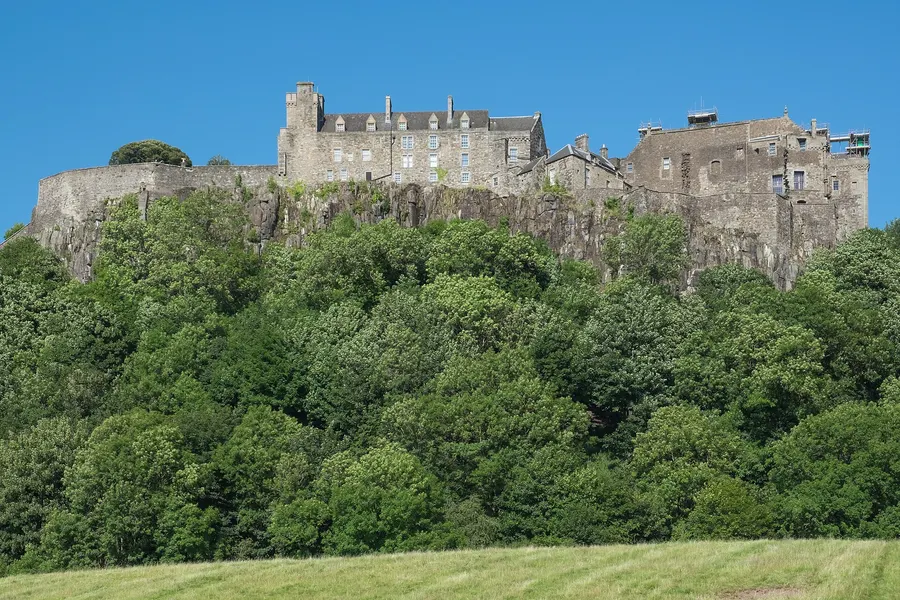
Stirling Castle on its volcanic rock, where the infant Mary was crowned in 1543Stirling Castle on its volcanic rock, where the infant Mary was crowned in 1543Image: DeFacto · CC BY-SA 4.0
politics · Europe

The infant Mary, Queen of Scots is crowned at Stirling

Mary Stewart became queen of Scotland at six days old, when her father James V died in December 1542. Henry VIII of England wanted her to marry his son Edward, but the Scots lords grew wary of English power. On 9 September 1543 (Julian calendar), at nine months old, Mary was crowned in the Chapel Royal of Stirling Castle by Cardinal David Beaton, the leader of the pro-French party. Months later Scotland rejected the English marriage treaty, and Henry answered with the years of raids known as the ‘Rough Wooing’.

Source: Stirling Castle (Historic Environment Scotland): Mary Queen of Scots ↗
1668
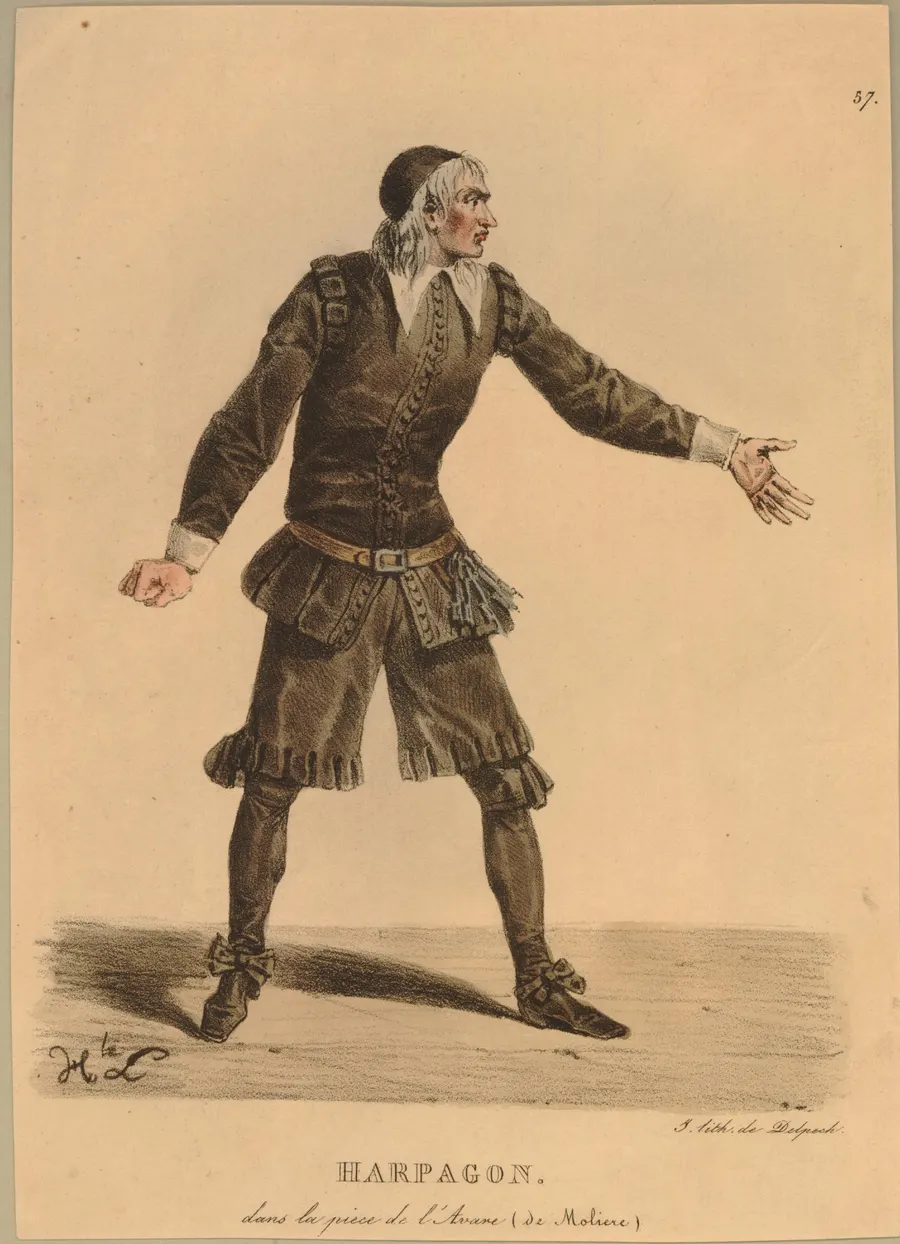
A hand-coloured print of an actor in costume as Harpagon in Molière's L'Avare, in the British MuseumA hand-coloured print of an actor in costume as Harpagon in Molière’s L’Avare, in the British MuseumImage: Hippolyte Lecomte (printed by Delpech) · Public domain
culture · Europe

Molière’s comedy L’Avare is first performed in Paris

On 9 September 1668 Molière’s company staged his new comedy L’Avare (The Miser) at the Théâtre du Palais-Royal in Paris, with Molière himself as Harpagon, an old skinflint who hoards his money and would marry the young woman his own son loves. Borrowing its plot from the Roman playwright Plautus, it was written in prose rather than verse, which puzzled its first audiences, and it had only a modest run. It later became one of the most performed plays in the history of the Comédie-Française.

Source: Bibliothèque nationale de France, Essentiels: L’Avare ↗
1776
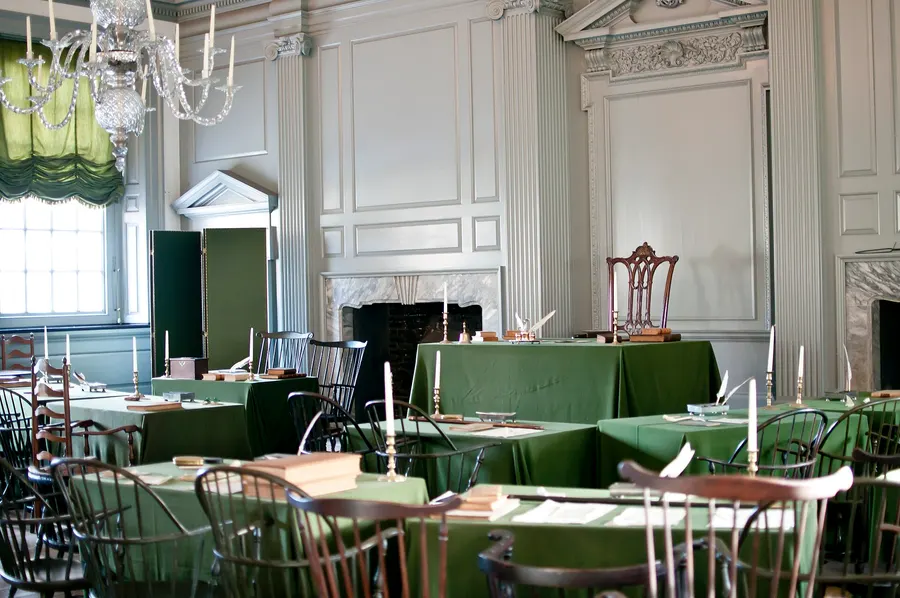
The Assembly Room of Independence Hall in Philadelphia, where the Continental Congress metThe Assembly Room of Independence Hall in Philadelphia, where the Continental Congress metImage: NPS Photo · Public domain
politics · Americas

Congress adopts the name ‘United States’

Two months after declaring independence, the Continental Congress in Philadelphia resolved on 9 September 1776 that in all its commissions and other documents, where the words ‘United Colonies’ had been used, the style should in future be ‘the United States’. The phrase had already appeared in the Declaration of Independence, and with this resolution it became the official name of the new nation.

Source: Library of Congress, In Custodia Legis: Nameday of a nation ↗
IV
THE NINETEENTH CENTURY

The 1800s

Industry, empire, invention, reform and a century of enormous transformation.

1850
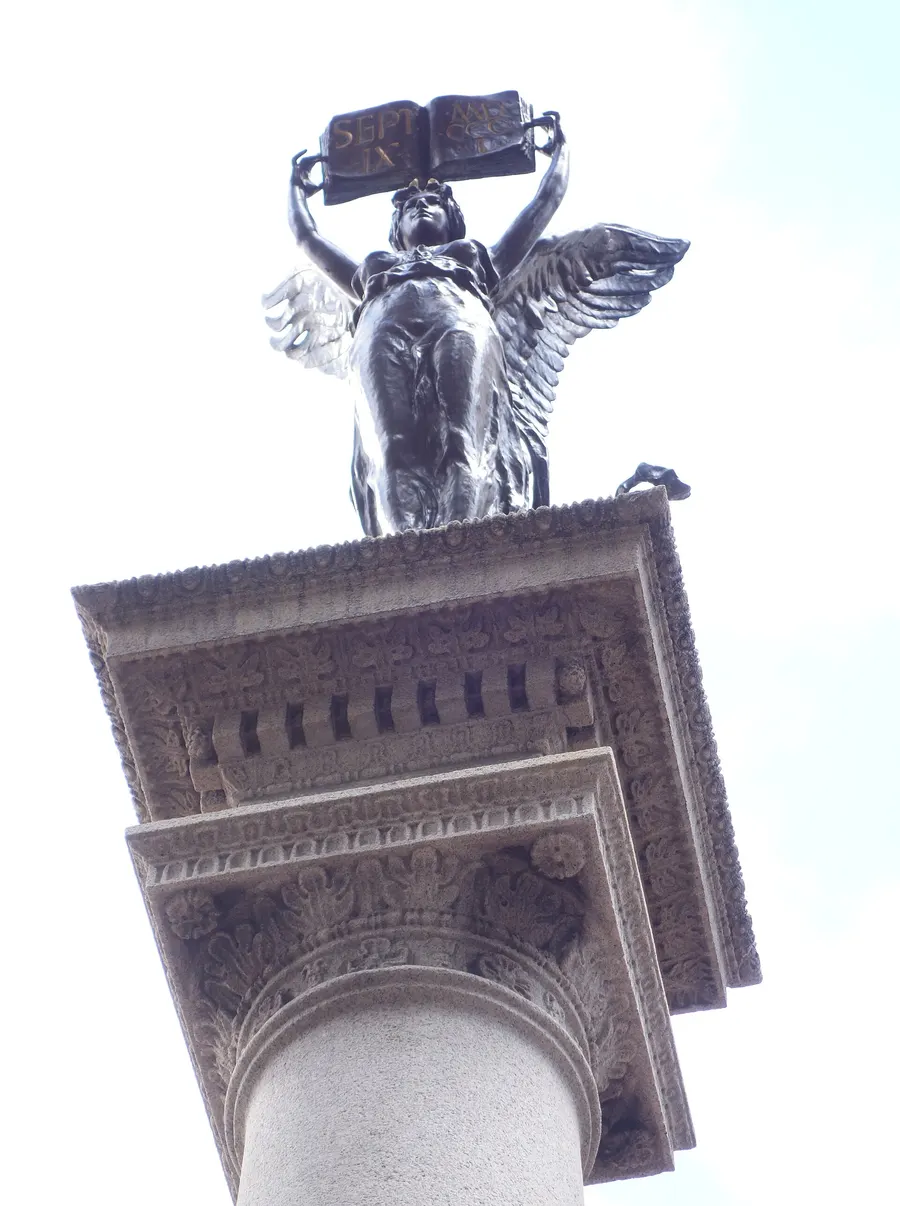
The Admission Day Monument by Douglas Tilden on Market Street, San Francisco, which commemorates California's entry into the UnionThe Admission Day Monument by Douglas Tilden on Market Street, San Francisco, which commemorates California’s entry into the UnionImage: Daderot · Public domain
politics · Americas

California becomes the 31st state of the United States

Mexico gave up California to the United States in 1848, at the end of the Mexican-American War, just as gold was found in the foothills of the Sierra Nevada. Within two years tens of thousands of fortune-seekers had poured in from the eastern states and around the world, and the territory badly needed a proper government. Rather than wait for Congress, Californians held a convention at Monterey in 1849, wrote a constitution that banned slavery and asked to join the Union as a state. Their request set off one of the fiercest debates in the history of Congress, because a free California would upset the balance between slave and free states in the Senate. The answer was the Compromise of 1850, a package of laws that admitted California while giving ground to the South elsewhere. President Millard Fillmore signed the act on 9 September 1850, making California the 31st state. Without a telegraph link, the news took more than five weeks to arrive by steamer in San Francisco, where it was celebrated in the streets. The state still marks 9 September as Admission Day.

Source: California State Parks: California Admission Day, September 9, 1850 ↗
1886
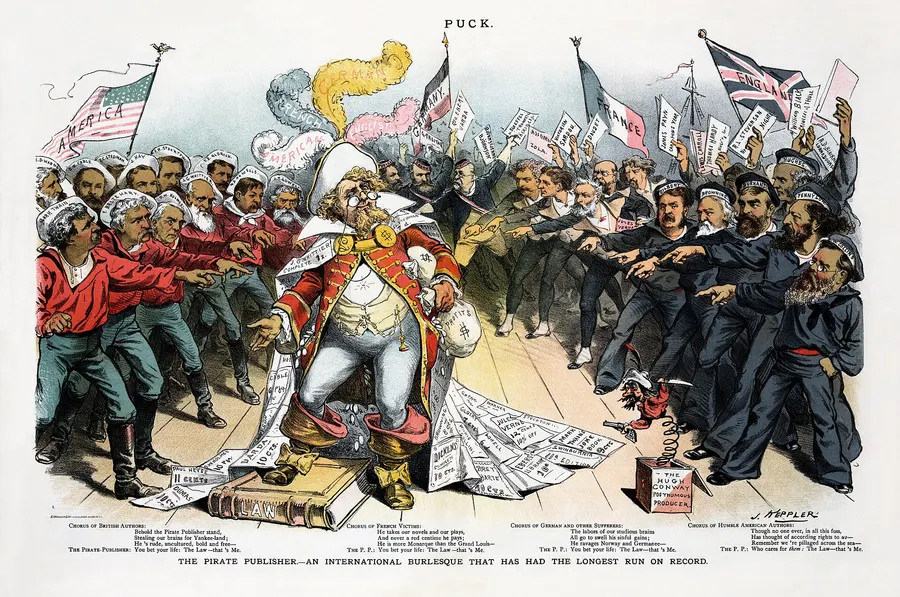
The Pirate Publisher, a cartoon by Joseph Keppler in Puck magazine, 1886, showing a publisher pocketing the work of British and American authorsThe Pirate Publisher, a cartoon by Joseph Keppler in Puck magazine, 1886, showing a publisher pocketing the work of British and American authorsImage: Joseph Ferdinand Keppler (restoration: Adam Cuerden) · Public domain
culture · Europe

Ten nations sign the Berne Convention to protect writers and artists

In the 19th century a book protected by copyright in one country could be reprinted freely in another. Charles Dickens complained bitterly that American publishers sold cheap editions of his novels without paying him a penny, and French and German writers suffered the same in their neighbours’ markets. In 1878 the novelist Victor Hugo presided over a congress in Paris that founded an international association of writers and artists, and it pressed governments for a common agreement. Diplomatic conferences followed in the Swiss capital, and on 9 September 1886 representatives of Belgium, France, Germany, Great Britain, Haiti, Italy, Liberia, Spain, Switzerland and Tunisia signed the Berne Convention for the Protection of Literary and Artistic Works. Each country agreed to protect the works of authors from the others as it protected its own. The convention has been revised many times, most recently in 1971, and is now administered by the World Intellectual Property Organization. The United States joined only in 1989; today almost every country in the world is a member.

Source: WIPO: Berne Convention for the Protection of Literary and Artistic Works ↗
1892
Four views of Jupiter's small inner moon Amalthea taken by NASA's Galileo spacecraftFour views of Jupiter’s small inner moon Amalthea taken by NASA’s Galileo spacecraftImage: NASA · Public domain
world · Global

Edward Barnard discovers Amalthea, a fifth moon of Jupiter

In 1610 Galileo turned his new telescope on Jupiter and found four moons circling it. For almost three centuries no one found any more. Edward Emerson Barnard, a self-taught astronomer who had begun as a boy in a photographer’s studio in Nashville, was famous for the sharpness of his eyesight, and in 1888 he joined the new Lick Observatory on Mount Hamilton in California, home of the largest refracting telescope in the world, with a lens 36 inches across. On the night of 9 September 1892, looking close beside the glare of Jupiter, Barnard saw a faint point of light that moved with the planet. It was a fifth moon, much closer to Jupiter than the other four. It was later named Amalthea, after the nymph who in Greek myth nursed the infant Zeus. It was the last moon of any planet to be discovered by eye at the telescope; every later one was found on photographs or by spacecraft. Close-up pictures taken by Voyager and Galileo show a dark red, potato-shaped body about 250 kilometres long.

Source: NASA Science: Amalthea ↗
V
THE TWENTIETH CENTURY

The 1900s

War and peace, technological leaps, social change, politics, sport and popular culture.

1945
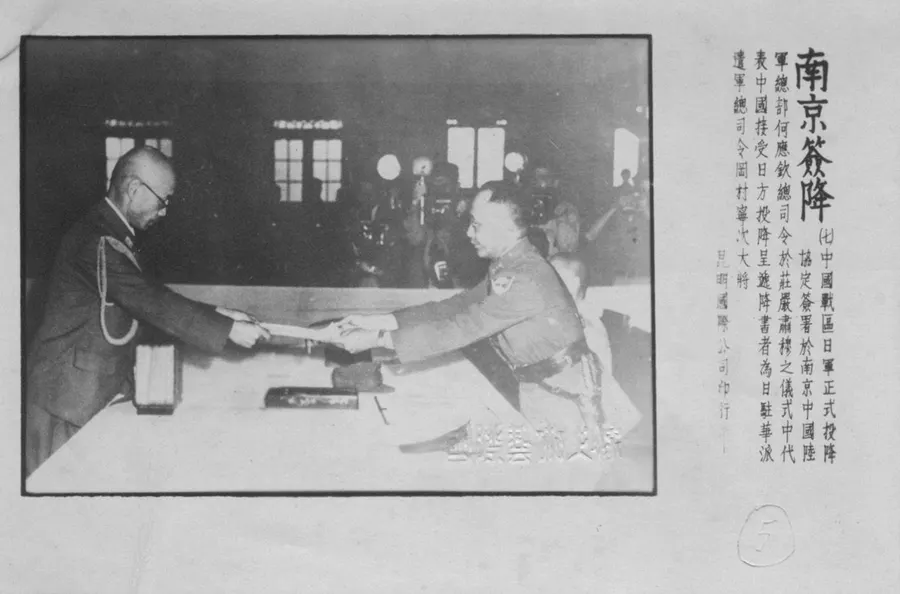
Kobayashi Asasaburo, Japan's chief of staff in China, presents the instrument of surrender to General He Yingqin at Nanjing on 9 September 1945Kobayashi Asasaburo, Japan’s chief of staff in China, presents the instrument of surrender to General He Yingqin at Nanjing on 9 September 1945Image: Unknown · Public domain
world · Asia

Japan’s armies in China surrender at Nanjing

A week after Japan’s formal surrender to the Allies in Tokyo Bay, a separate ceremony was held at the Central Military Academy in Nanjing on 9 September 1945. General Okamura Yasuji, commander of the Japanese forces in China, signed the instrument of surrender, which was handed to General He Yingqin, representing Chiang Kai-shek. More than a million Japanese troops in China laid down their arms, ending a war that had begun in 1937 and cost millions of Chinese lives.

Source: US Army Center of Military History: China Offensive ↗
1947
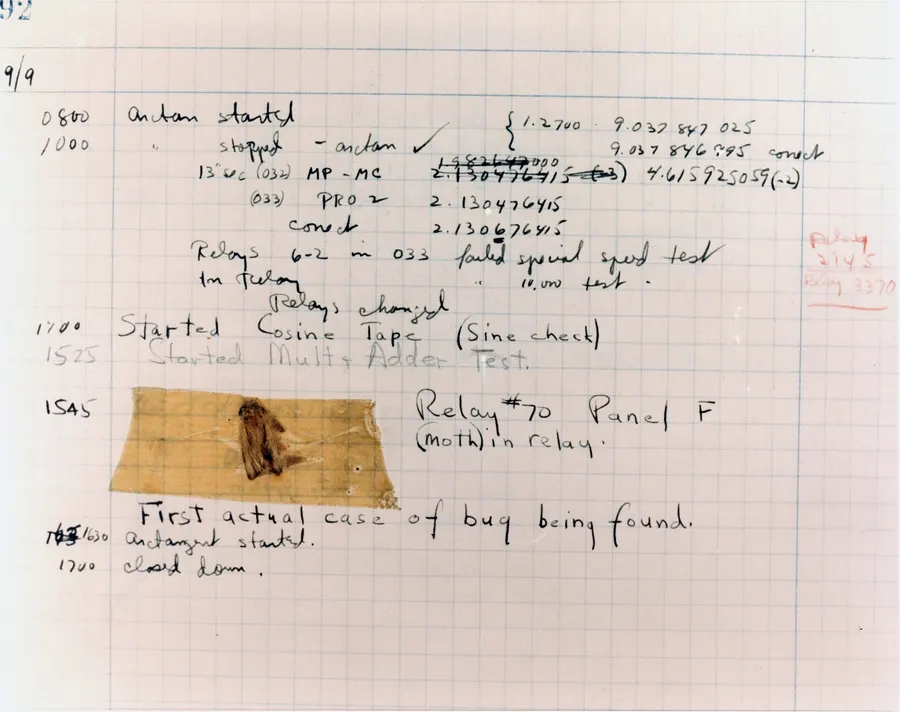
The page of the Mark II logbook for 9 September 1947 with the moth taped beside the entry 'First actual case of bug being found'The page of the Mark II logbook for 9 September 1947 with the moth taped beside the entry ‘First actual case of bug being found’Image: Naval Surface Warfare Center, Dahlgren · Public domain
science · Americas

A moth is found in the Harvard Mark II computer

On 9 September 1947 the team running the Mark II, an electromechanical computer built at Harvard University for the US Navy, traced a fault to a moth trapped in Relay 70, Panel F. They taped it into the machine’s logbook with the note ‘First actual case of bug being found’. Engineers had called faults ‘bugs’ for decades, but the story, told often by the computing pioneer Grace Hopper, who worked on the machine, made the moth famous. The logbook page is now in the Smithsonian’s National Museum of American History.

Source: Smithsonian National Museum of American History: Log book with computer bug ↗
1948
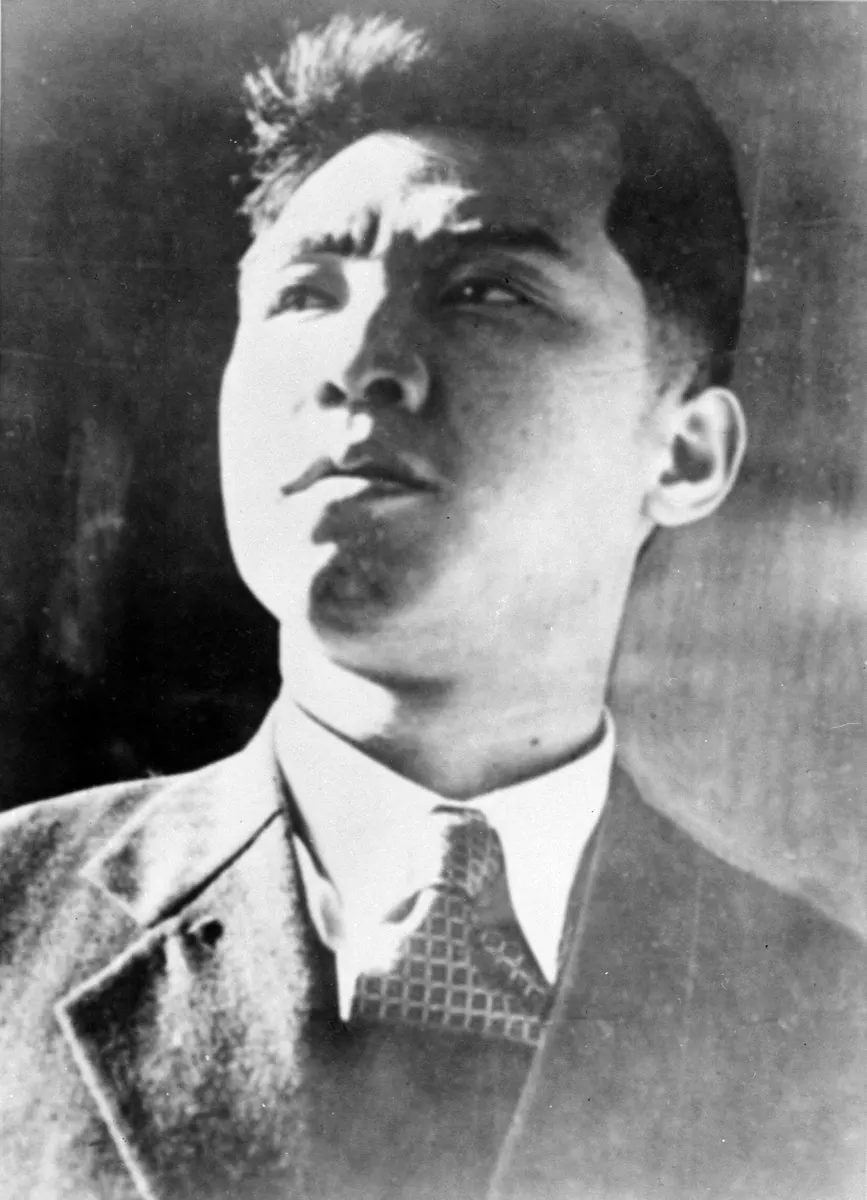
An official portrait photograph of Kim Il Sung, North Korea's first premier, issued by the North Korean government and dated 1 October 1948An official portrait photograph of Kim Il Sung, North Korea’s first premier, issued by the North Korean government and dated 1 October 1948Image: Government of North Korea · Public domain
politics · Asia

The Democratic People’s Republic of Korea is proclaimed

When Japan surrendered in 1945, ending 35 years of colonial rule in Korea, Soviet troops took the surrender north of the 38th parallel and American troops south of it. The line was meant to be temporary, but as the Cold War deepened the two powers could not agree on a single Korean government. In the South, elections supervised by the United Nations led to the proclamation of the Republic of Korea in Seoul on 15 August 1948. In the North, elections were held for a Supreme People’s Assembly, which met in Pyongyang and on 8 September adopted a constitution. On 9 September 1948 the Democratic People’s Republic of Korea was proclaimed, with Kim Il Sung, a former anti-Japanese guerrilla backed by the Soviet Union, as its premier. Each of the two states claimed to be the lawful government of the whole peninsula. In June 1950 the North invaded the South, beginning the Korean War, and the country remains divided. North Korea keeps 9 September as its national day.

Source: Britannica: History of North Korea ↗
1968
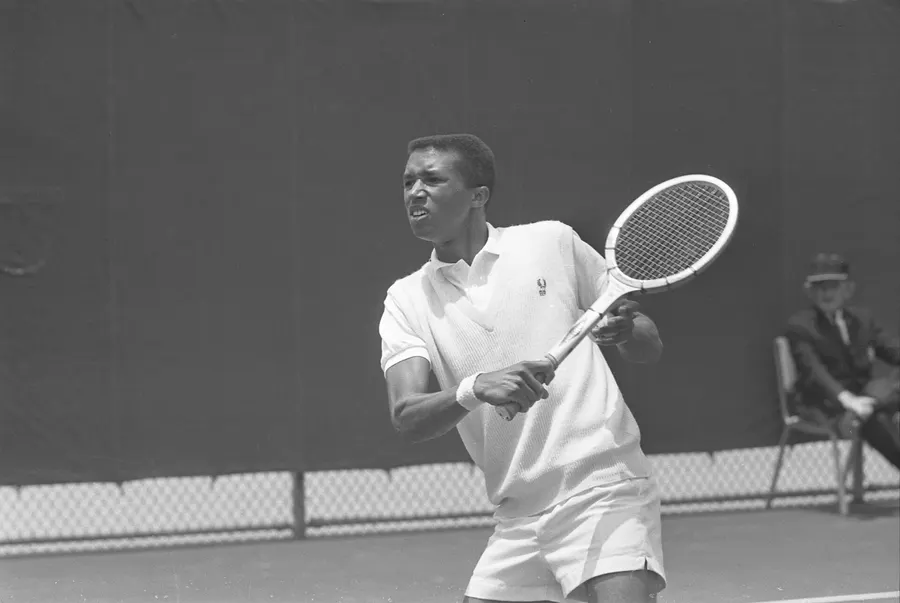
Arthur Ashe playing in the Southern California Sectional tournament in Los Angeles in 1966Arthur Ashe playing in the Southern California Sectional tournament in Los Angeles in 1966Image: Los Angeles Daily News (UCLA Library) · CC BY 4.0
sport · Americas

Arthur Ashe wins the first US Open

Until 1968 the great tennis championships were open only to amateurs, and the best players had to choose between them and a living on the professional tour. That year the sport finally went ‘open’, and the United States championships at Forest Hills in New York were played for the first time as the US Open, with prize money. Arthur Ashe, a 25-year-old from Richmond, Virginia, who had learned the game on segregated courts and starred at UCLA, was serving as a lieutenant in the US Army and was still an amateur. In the final on 9 September 1968 he met the Dutch professional Tom Okker. Ashe served 26 aces and won a long, tense match 14-12, 5-7, 6-3, 3-6, 6-3. Because he was an amateur he could not take the $14,000 winner’s prize, which went to Okker, while Ashe received his daily allowance as a member of the Davis Cup team. He was the first Black man to win the US singles title, and he went on to win the Australian Open and Wimbledon and to campaign against apartheid and for public health.

Source: International Tennis Hall of Fame: Arthur Ashe ↗
1972
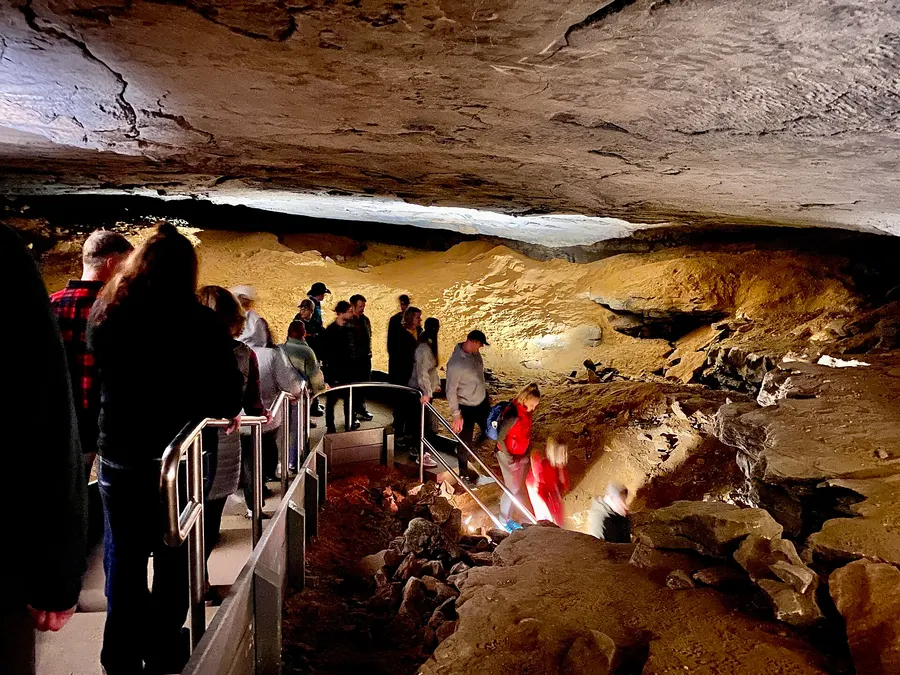
A passage in Mammoth Cave, Mammoth Cave National Park, KentuckyA passage in Mammoth Cave, Mammoth Cave National Park, KentuckyImage: w_lemay · CC BY-SA 2.0
science · Americas

Cavers link Flint Ridge to Mammoth Cave, creating the world’s longest cave

Beneath Kentucky’s Mammoth Cave National Park lay two great cave systems on neighbouring ridges, Flint Ridge and Mammoth Cave, which explorers had long suspected were joined. On 9 September 1972 six members of the Cave Research Foundation, after twelve hours underground from the Flint Ridge side, crawled and waded through a passage that came out in Mammoth Cave. The connection made a single system of about 144 miles, the longest known cave in the world, a title it still holds with more than 420 miles now mapped.

Source: National Park Service: 50th anniversary of the Mammoth Cave and Flint Ridge connection ↗
1991
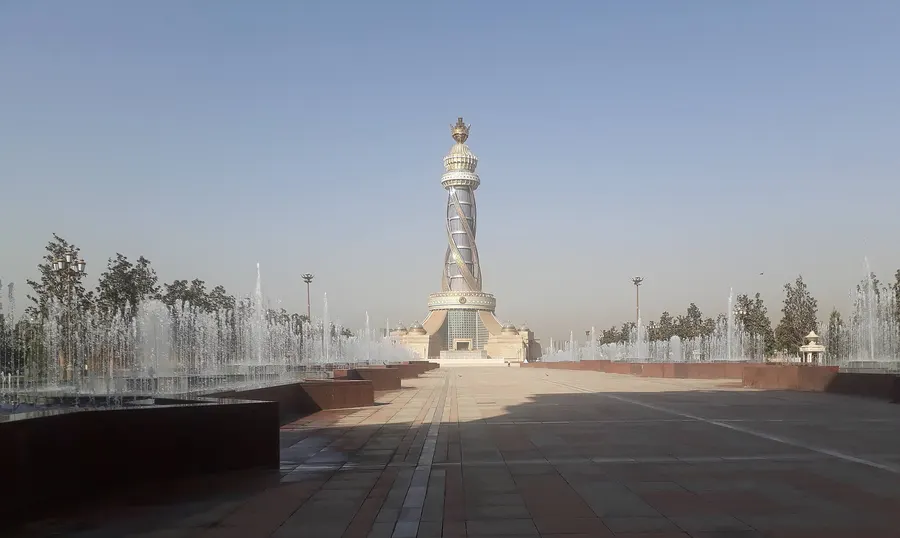
The Stele of Independence in Dushanbe, the capital of TajikistanThe Stele of Independence in Dushanbe, the capital of TajikistanImage: Shukhrat Sadiev · CC BY-SA 4.0

politics · Asia

Tajikistan declares its independence from the Soviet Union

Tajikistan, a mountainous land on the borders of Afghanistan and China whose people speak a language close to Persian, had been a republic of the Soviet Union since 1929. It was the poorest of the Soviet republics, and in the late 1980s, as Mikhail Gorbachev loosened Moscow’s grip, Tajiks began to call for more say over their own affairs and for their language to be given official status. In August 1991 hardliners in Moscow tried and failed to overthrow Gorbachev, and one republic after another broke away. On 9 September 1991 Tajikistan’s Supreme Soviet voted to proclaim the country an independent state. Independence was quickly followed by a bitter civil war between the old communist leadership and an alliance of Islamic and democratic groups, which lasted until a peace agreement in 1997. Tajikistan celebrates 9 September as its Independence Day.

Source: Britannica: Tajikistan, independence ↗
VI
2000 TO TODAY

Modern Day

The events of recent decades that have already become part of the historical record.

2009
A Dubai Metro train at a station on the Red LineA Dubai Metro train at a station on the Red LineImage: Shahroozporia · CC BY-SA 3.0
world · Middle East

The Dubai Metro opens at 9:09:09 on 9/9/09

Dubai chose its date and time carefully: at 9:09:09 in the evening of 9 September 2009, the ruler of Dubai, Sheikh Mohammed bin Rashid Al Maktoum, inaugurated the Red Line of the Dubai Metro, the first urban railway in the Arabian Peninsula. Its trains run without drivers, mostly on viaducts above the city’s main roads. A second line followed in 2011, and the network has since carried more than two billion passengers.

Source: Roads and Transport Authority, Dubai: Dubai Metro accomplishes a decade of happy journeys ↗
2015
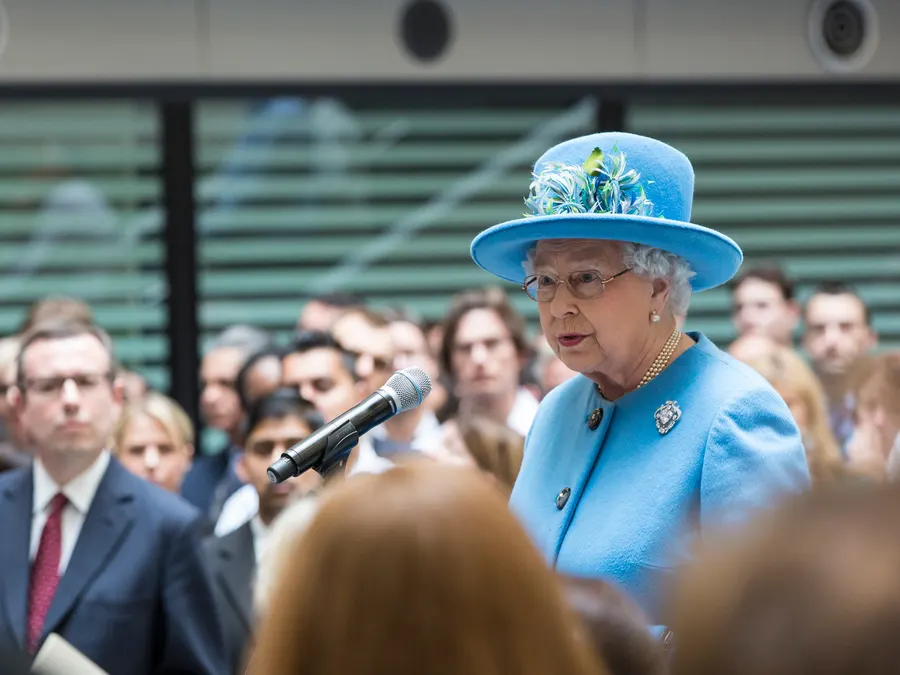
Queen Elizabeth II giving a speech at the Home Office headquarters in London in 2015Queen Elizabeth II giving a speech at the Home Office headquarters in London in 2015Image: UK Home Office · CC BY 2.0
politics · Europe

Elizabeth II becomes Britain’s longest-reigning monarch

On 9 September 2015 Queen Elizabeth II passed the reign of her great-great-grandmother Queen Victoria, 63 years and 216 days, to become the longest-reigning monarch in British history. She marked the day by opening the new Borders Railway in Scotland, saying it was not a record to which she had ever aspired. She reigned for more than seven more years, until her death in September 2022 after 70 years on the throne.

Source: GOV.UK: Celebrating Her Majesty the Queen’s record-breaking reign ↗
RESEARCH

Sources & Further Reading

Selected authoritative references supporting the events on this page.

Britannica: Constantius II↗World History Encyclopedia: Constantius II↗Britannica: Battle of Flodden↗Historic England: Battle of Flodden 1513, registered battlefield↗Stirling Castle (Historic Environment Scotland): Mary Queen of Scots↗National Museums Scotland: Life and deathline of Mary, Queen of Scots↗Bibliothèque nationale de France, Essentiels: L’Avare↗Comédie-Française: Molière, L’Avare↗Library of Congress, In Custodia Legis: Nameday of a nation↗Founders Online (US National Archives): John Adams’s papers, Monday 9 September 1776↗California State Parks: California Admission Day, September 9, 1850↗United States Senate: States in the Senate, California↗WIPO: Berne Convention for the Protection of Literary and Artistic Works↗WIPO: Centenary of the Berne Convention (1986)↗NASA Science: Amalthea↗Britannica: Amalthea↗US Army Center of Military History: China Offensive↗Taiwan Today: How free China defeated Japan↗Smithsonian National Museum of American History: Log book with computer bug↗Naval History and Heritage Command: The first ‘computer bug’↗Britannica: History of North Korea↗Library of Congress: North Korea, a country study↗International Tennis Hall of Fame: Arthur Ashe↗ATP Tour: Arthur Ashe’s historic 1968 US Open win↗National Park Service: 50th anniversary of the Mammoth Cave and Flint Ridge connection↗National Park Service: Exploring the world’s longest known cave↗Britannica: Tajikistan, independence↗US Department of State: Background note, Tajikistan↗Roads and Transport Authority, Dubai: Dubai Metro accomplishes a decade of happy journeys↗Dubai Media Office: Dubai Metro marks 15 years of transforming urban mass transit↗GOV.UK: Celebrating Her Majesty the Queen’s record-breaking reign↗Britannica: Elizabeth II↗
WHY THESE MOMENTS?

Significance before volume

This page is not the longest possible list of events. It is a chronological journey through 9 September, where each entry is chosen for historical significance, human interest and reliability.

Facts are checked against authoritative museums, archives, universities and reference works. Where sources disagree, the page says so.

EXPLORED THE DEEPER STORY?

Return to the highlights of 9 September

Discover the lighter side of the date with famous birthdays, culture, firsts and lives remembered.

Explore This Day →