
HISTORY & TIMELINE
8 September

A journey through
8 September in history

The story of 8 September runs from Dmitry Donskoy’s victory at Kulikovo in 1380 to the launch of NASA’s OSIRIS-REx asteroid mission in 2016. In between come the unveiling of Michelangelo’s David, the lifting of the Great Siege of Malta, the founding of St Augustine, the first Football League matches, the Galveston hurricane, Germany’s entry into the League of Nations, the start of the siege of Leningrad, the first V-2 to fall on London, the American landing in Korea, the San Francisco peace treaty, the Manila Pact, the first episode of Star Trek, the opening of the Kennedy Center, Gerald Ford’s pardon of Richard Nixon and North Macedonia’s independence referendum.

II
THE MIDDLE AGES

Medieval History

Kingdoms, conflict, faith, power and the changing medieval world.

1380
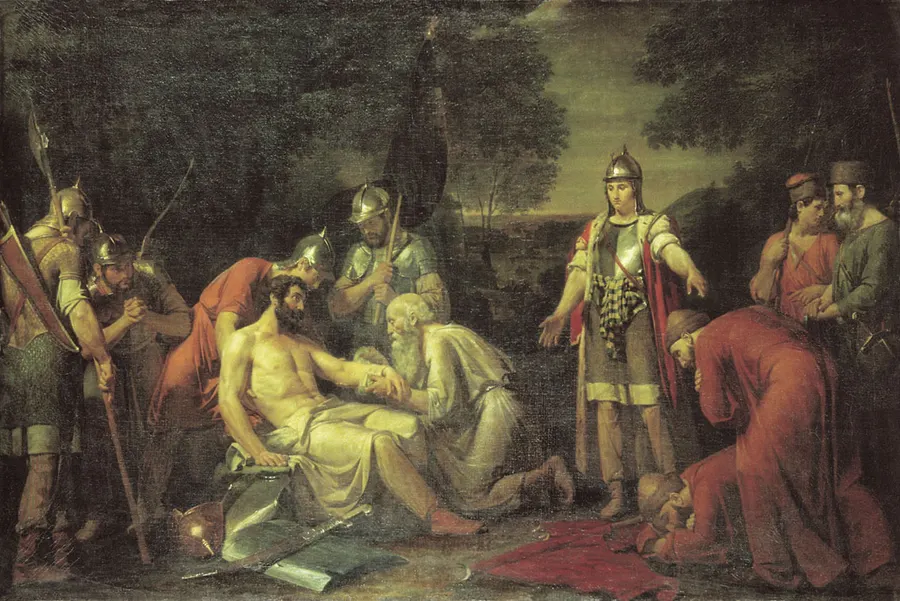
The wounded Dmitry Donskoy is found on the Field of Kulikovo, an 1824 painting by Vasily Sazonov in the State Russian MuseumThe wounded Dmitry Donskoy is found on the Field of Kulikovo, an 1824 painting by Vasily Sazonov in the State Russian MuseumImage: Vasily Sazonov · Public domain
world · Europe

Dmitry of Moscow defeats Mamai’s army at Kulikovo

For more than a century the Russian principalities had paid tribute to the Mongol Golden Horde. When the Horde split into rival factions, Grand Prince Dmitry Ivanovich of Moscow stopped paying, and the Horde’s leader Mamai marched north to punish him. On 8 September 1380, by the Julian calendar then used in Russia, the two armies met on Kulikovo field near the upper Don. After hours of fighting a hidden reserve of Russian cavalry broke Mamai’s army. Dmitry was hailed as ‘Donskoy’, of the Don. Moscow was sacked by the Horde two years later, but the battle became a symbol of Russia’s eventual freedom from Mongol rule.

Source: Britannica: Battle of Kulikovo ↗
III
A CHANGING WORLD

Early Modern Era

Exploration, political change, scientific development and expanding global connections.

1504
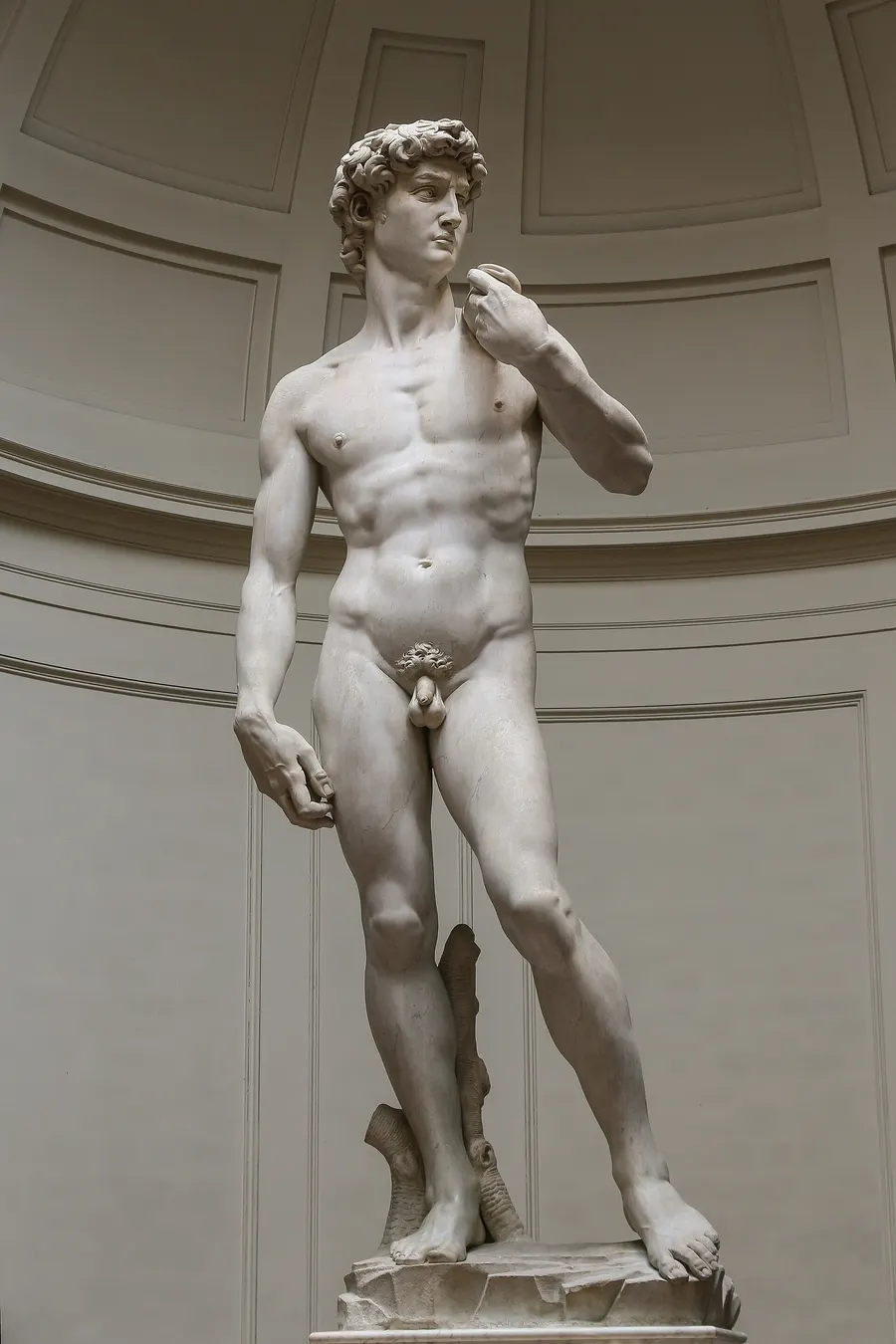
Michelangelo's David, carved between 1501 and 1504, in the Galleria dell'Accademia in FlorenceMichelangelo’s David, carved between 1501 and 1504, in the Galleria dell’Accademia in FlorenceImage: Jörg Bittner Unna · CC BY 3.0
culture · Europe

Michelangelo’s David is unveiled in Florence

In 1501 the board of works of Florence Cathedral offered the 26-year-old Michelangelo a tall block of marble that had lain in its yard for decades, partly carved and abandoned by earlier sculptors. Working on it for more than two years, he turned it into David, the young shepherd who killed the giant Goliath, shown not in triumph but in the tense moment before the fight, sling over his shoulder. The finished statue, more than five metres tall, was too fine to be lifted onto the cathedral roof as first planned. A committee of artists, among them Leonardo da Vinci and Sandro Botticelli, debated where to put it, and it was placed at the entrance to the Palazzo Vecchio, the seat of the city’s government, as a symbol of the Florentine Republic standing up to stronger foes. It was unveiled to the city on 8 September 1504. In 1873 it was moved indoors to the Galleria dell’Accademia to protect it from the weather, and a copy now stands in its place.

Source: Galleria dell’Accademia di Firenze: David, Michelangelo ↗
1565
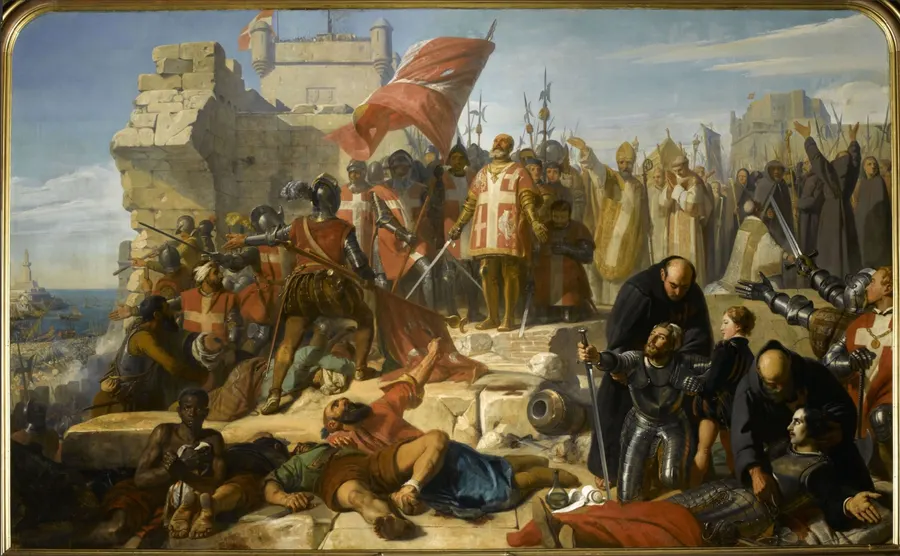
The Lifting of the Siege of Malta, a 19th-century painting by Charles-Philippe LarivièreThe Lifting of the Siege of Malta, a 19th-century painting by Charles-Philippe LarivièreImage: Charles-Philippe Larivière · CC BY-SA 3.0
world · Europe

The Ottoman army abandons the Great Siege of Malta

In 1530 the Knights of St John, a military religious order driven out of Rhodes by the Ottomans, were given the island of Malta. From there their galleys raided Ottoman shipping across the Mediterranean. In May 1565 Sultan Suleiman the Magnificent sent a huge fleet and an army of perhaps 30,000 men to destroy them. Against them the Grand Master, Jean Parisot de Valette, had a few hundred knights and several thousand Maltese and other soldiers. The small fort of St Elmo held out for a month before it fell. Through the hot summer the Ottomans then battered and stormed the fortified towns around the Grand Harbour, Birgu and Senglea, but the defenders beat back every assault. Early in September a relief force from Spanish Sicily landed in the north of the island, and on 8 September the Ottoman commanders gave up the siege and began to withdraw. The knights built a new fortified capital, named Valletta after their Grand Master, and Malta still marks the day as Victory Day.

Source: Heritage Malta: Victory Day celebrations at Fort St Angelo ↗
1565
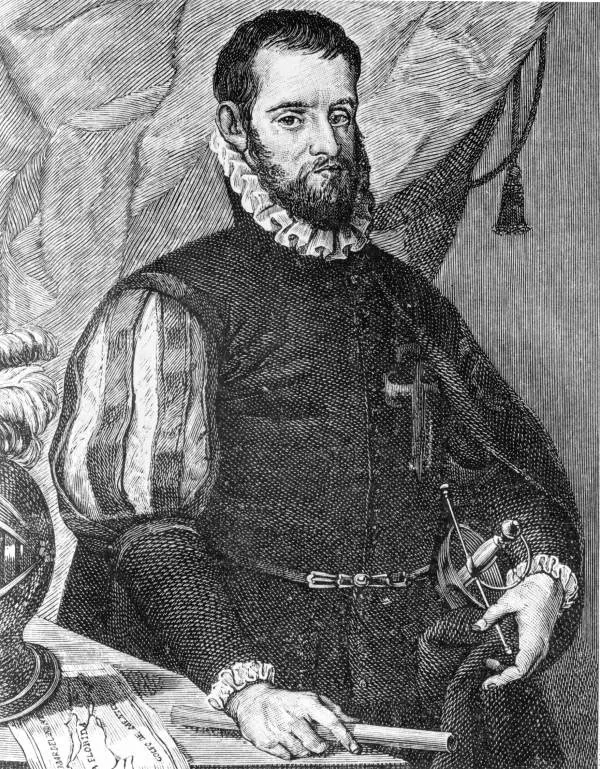
Pedro Menéndez de Avilés, founder of St Augustine, in an engraved portraitPedro Menéndez de Avilés, founder of St Augustine, in an engraved portraitImage: José Camarón y Boronat (1730-1803) · Public domain
world · Americas

Spanish settlers found St Augustine in Florida

Spain claimed Florida, but in 1564 French Protestants built Fort Caroline near the mouth of the St Johns River, close to the route of Spain’s treasure fleets. King Philip II sent the experienced admiral Pedro Menéndez de Avilés to drive them out and to settle the coast. Menéndez sighted land on 28 August 1565, the feast of St Augustine, and named the harbour he found after the saint. On 8 September 1565 Menéndez came ashore with about 600 soldiers, sailors and settlers, including families, and formally took possession of the land for Spain, near a village of the Timucua people. Within weeks his men had captured Fort Caroline. St Augustine survived attacks by pirates and the English, and in the 1670s the Spanish began the stone fortress of the Castillo de San Marcos to protect it. It is the oldest continuously occupied settlement of European origin in the United States, founded 42 years before Jamestown.

Source: City of St. Augustine: Our history ↗
IV
THE NINETEENTH CENTURY

The 1800s

Industry, empire, invention, reform and a century of enormous transformation.

1888
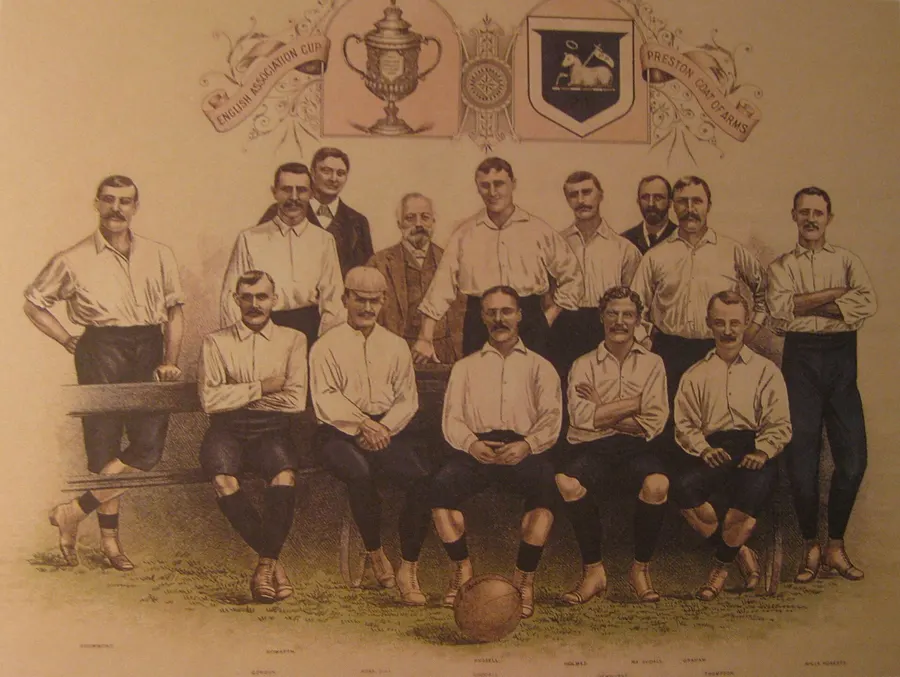
Preston North End, the first Football League champions, photographed in the 1888-89 seasonPreston North End, the first Football League champions, photographed in the 1888-89 seasonImage: Unknown author · Public domain
sport · Europe

The first Football League matches are played

By the 1880s football in the north of England and the Midlands had become a professional game, but clubs relied on friendlies and cup ties that were often cancelled or one-sided. In March 1888 William McGregor, a director of Aston Villa, wrote to the leading clubs proposing that they play each other home and away every season in a fixed programme. Twelve agreed: Accrington, Aston Villa, Blackburn Rovers, Bolton Wanderers, Burnley, Derby County, Everton, Notts County, Preston North End, Stoke, West Bromwich Albion and Wolverhampton Wanderers. The first league matches were played on Saturday 8 September 1888. Preston beat Burnley 5-2, Derby won 6-3 at Bolton, and Everton beat Accrington 2-1 in front of a large crowd at Anfield, then their home ground. Preston went through the whole league season unbeaten and won the FA Cup as well, earning the name ‘the Invincibles’. The Football League was the first national football league in the world, and the model for leagues everywhere.

Source: Everton FC Heritage Society: Everton’s first league match ↗
V
THE TWENTIETH CENTURY

The 1900s

War and peace, technological leaps, social change, politics, sport and popular culture.

1900
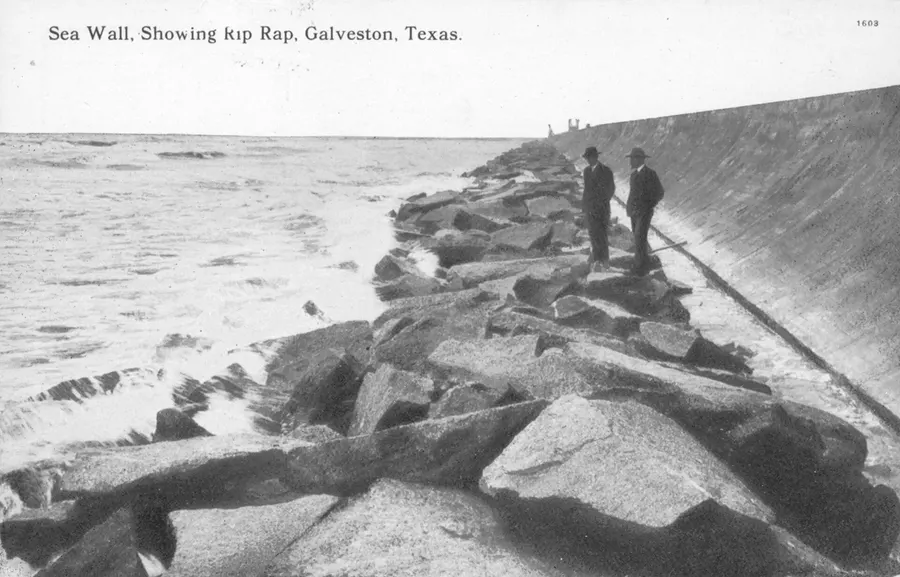
The new Galveston sea wall, built after the 1900 hurricane, on an early 20th-century postcardThe new Galveston sea wall, built after the 1900 hurricane, on an early 20th-century postcardImage: Curt Teich & Company · Public domain
world · Americas

A hurricane devastates Galveston, Texas

Galveston, a thriving port on a low sandy island off the Texas coast, had no sea wall and no reliable warning when a powerful hurricane crossed the Gulf of Mexico. On the evening of 8 September 1900 it came ashore with winds of more than 130 miles an hour, and a storm surge of over 15 feet swept across the whole island. More than 3,600 buildings were destroyed. Estimates of the dead range from about 6,000 to 12,000, making it the deadliest natural disaster in United States history. Galveston rebuilt behind a new concrete sea wall and raised the level of the entire city.

Source: NOAA NESDIS: The Great Galveston Hurricane ↗
1926
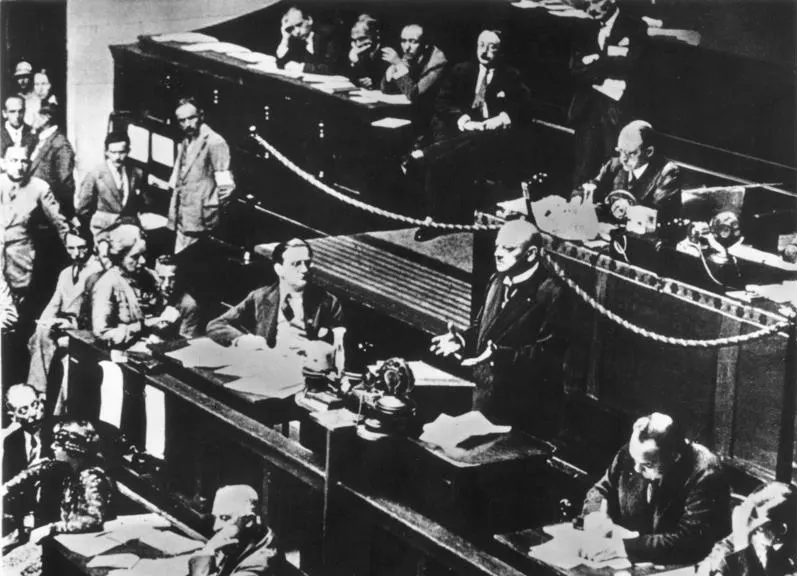
Gustav Stresemann at the rostrum of the League of Nations Assembly in Geneva, September 1926Gustav Stresemann at the rostrum of the League of Nations Assembly in Geneva, September 1926Image: Unknown author · CC BY-SA 3.0 de
politics · Europe

Germany is admitted to the League of Nations

Defeated Germany had been left out of the League of Nations when it was founded in 1920. Its foreign minister, Gustav Stresemann, worked to bring the country back among the great powers, and the Locarno treaties of 1925, which guaranteed Germany’s western borders, made its entry to the League a condition. On 8 September 1926 the League Assembly in Geneva voted unanimously to admit Germany, with a permanent seat on the League Council. Stresemann and the French foreign minister Aristide Briand shared that year’s Nobel Peace Prize. Under Hitler, Germany left the League in 1933.

Source: Nobel Prize: The Nobel Peace Prize 1926, presentation speech ↗
1941
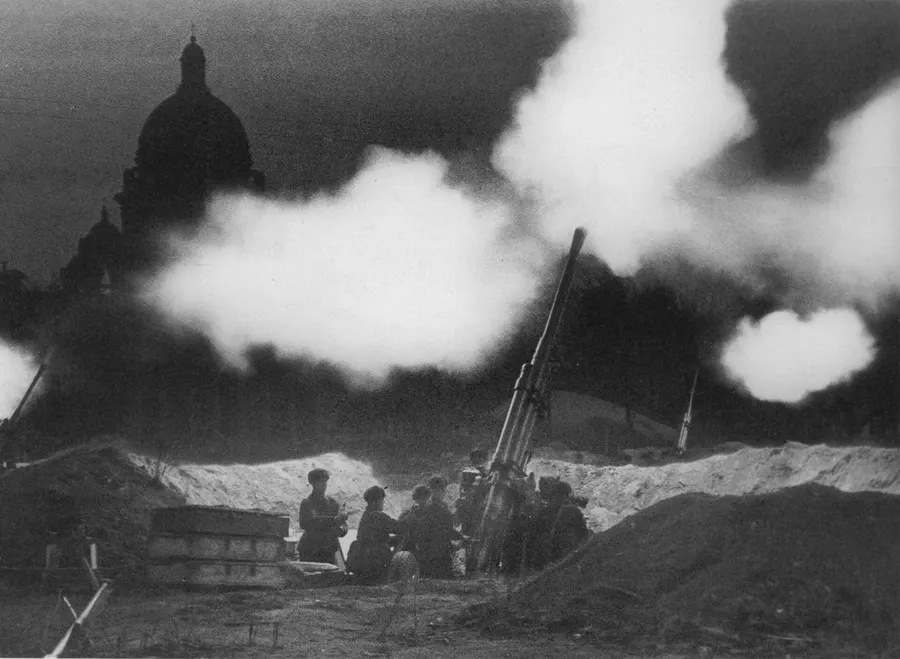
Anti-aircraft guns fire near St Isaac's Cathedral during the defence of Leningrad in 1941Anti-aircraft guns fire near St Isaac’s Cathedral during the defence of Leningrad in 1941Image: Boris Kudoyarov · Public domain
world · Europe

German forces cut Leningrad off and the siege begins

When Germany invaded the Soviet Union in June 1941, one of its three great army groups drove north-east through the Baltic states towards Leningrad, the former imperial capital and the Soviet Union’s second city. From the north, Finland’s army advanced around Lake Ladoga. Hitler did not plan to storm the city; he meant to surround it and starve it into surrender. On 8 September 1941 German troops captured Shlisselburg, the old fortress town where the river Neva leaves Lake Ladoga, and cut the last land route into the city. About three million people were trapped. Through the winter that followed, rations fell to a few slices of bread a day, and people froze and starved in their homes. Supplies came in by boat across the lake and, once it froze, by lorry over the ice along the ‘Road of Life’. The siege was not fully lifted until 27 January 1944, nearly 900 days later. Estimates of the civilian dead range from about 650,000 to more than a million, most of them from hunger.

Source: Britannica: Siege of Leningrad ↗
1944
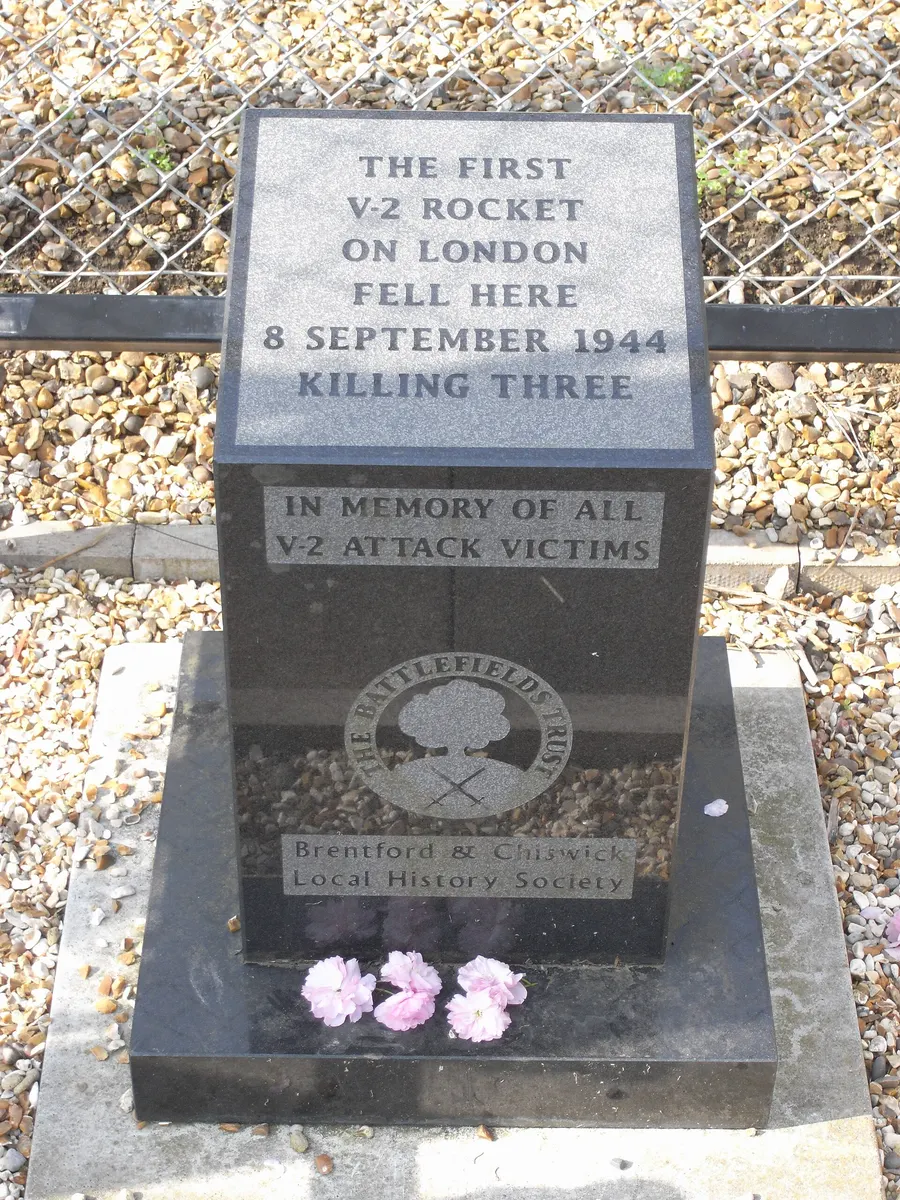
The memorial in Staveley Road, Chiswick, on the site where the first V-2 rocket to hit London fellThe memorial in Staveley Road, Chiswick, on the site where the first V-2 rocket to hit London fellImage: Patche99z · Public domain
world · Europe

The first V-2 rocket falls on London

At 6.43 in the evening on 8 September 1944 a German V-2 rocket fell on Staveley Road in Chiswick, west London, killing three people. Launched from occupied Holland, the V-2 climbed to the edge of space and came down faster than sound, so there was no warning and no defence. More than a thousand V-2s fell on Britain before their launch sites were overrun in March 1945, killing about 2,700 people. The technology behind them later helped launch the space age.

Source: Imperial War Museums: 80 years on, the V weapon attacks on Britain ↗
1945
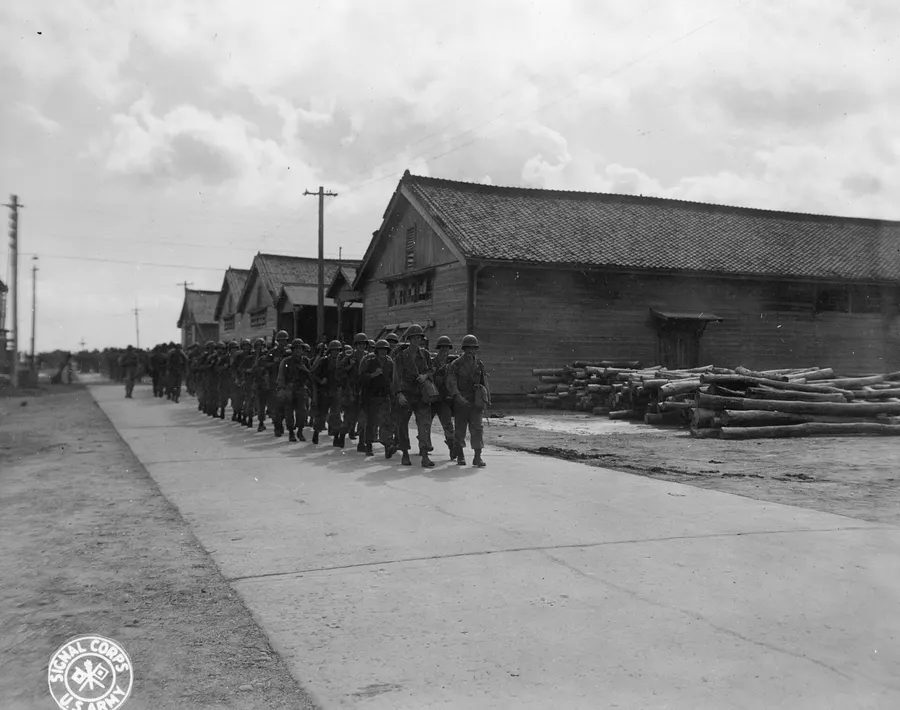
American troops of the 7th Infantry Division march from the docks at Inchon after landing in September 1945American troops of the 7th Infantry Division march from the docks at Inchon after landing in September 1945Image: Signal Corps Archive from United States · Public domain
world · Asia

American troops land in Korea to take the Japanese surrender

Korea had been ruled by Japan since 1910. As the Second World War ended, the United States and the Soviet Union agreed that Soviet forces would accept the Japanese surrender north of the 38th parallel and American forces south of it. The US Army’s XXIV Corps, under Lieutenant General John R. Hodge, sailed from Okinawa and landed at Inchon on 8 September 1945. The next day Hodge accepted the Japanese surrender in Seoul. The line meant as a temporary convenience became the border between two Korean states.

Source: US Army Center of Military History: Policy and Direction, the First Year, chapter 1 ↗
1951
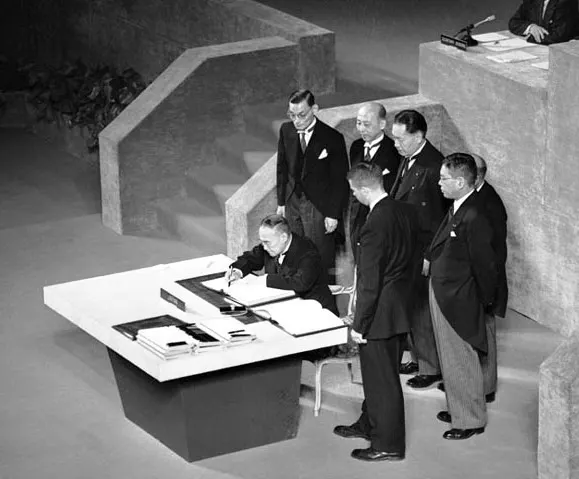
Prime Minister Shigeru Yoshida and members of the Japanese delegation sign the Treaty of San Francisco on 8 September 1951Prime Minister Shigeru Yoshida and members of the Japanese delegation sign the Treaty of San Francisco on 8 September 1951Image: Unknown author · Public domain
world · Asia

Japan and 48 nations sign the peace treaty at San Francisco

After Japan’s surrender in 1945 the country was occupied by the Allies under General Douglas MacArthur, who oversaw a new democratic constitution and sweeping reforms. By 1950, with the Cold War deepening and war raging in Korea, the United States wanted Japan as a sovereign ally rather than an occupied enemy, and the diplomat John Foster Dulles negotiated a peace treaty that asked for no heavy reparations. Delegates from more than 50 countries met at the War Memorial Opera House in San Francisco, and on 8 September 1951 Japan and 48 nations signed. The Soviet Union, Poland and Czechoslovakia attended but refused, and neither Chinese government was invited. Japan gave up its claims to Korea, Taiwan, the Kuril Islands, southern Sakhalin and its former Pacific mandates. The same day Japan and the United States signed a security treaty that let American forces stay. When the peace treaty came into force on 28 April 1952, the occupation ended.

Source: US Office of the Historian: Occupation and reconstruction of Japan, 1945-52 ↗
1954
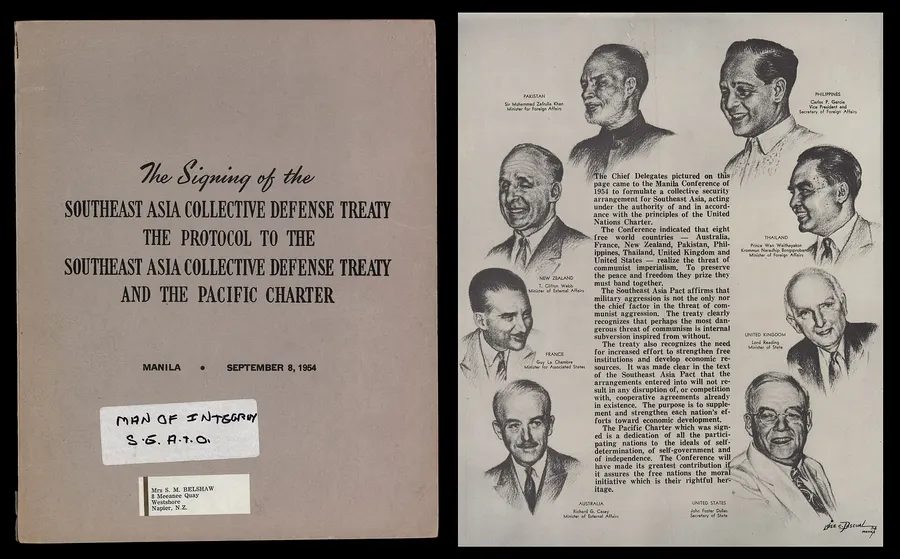
A commemorative booklet for the signing of the Southeast Asia Collective Defense Treaty at Manila on 8 September 1954, with portraits of the delegatesA commemorative booklet for the signing of the Southeast Asia Collective Defense Treaty at Manila on 8 September 1954, with portraits of the delegatesImage: Archives New Zealand from New Zealand · CC BY-SA 2.0
politics · Asia

Eight nations sign the Manila Pact, creating SEATO

After France’s defeat in Indochina in 1954, the United States sought an alliance to stop communism spreading further in South-East Asia. On 8 September 1954, at a conference in Manila, Australia, France, New Zealand, Pakistan, the Philippines, Thailand, the United Kingdom and the United States signed the Southeast Asia Collective Defence Treaty. It created the Southeast Asia Treaty Organization, with its headquarters in Bangkok. Only two of its members were in South-East Asia, it had no standing forces, and it was dissolved in 1977.

Source: Britannica: Southeast Asia Treaty Organization ↗
1966
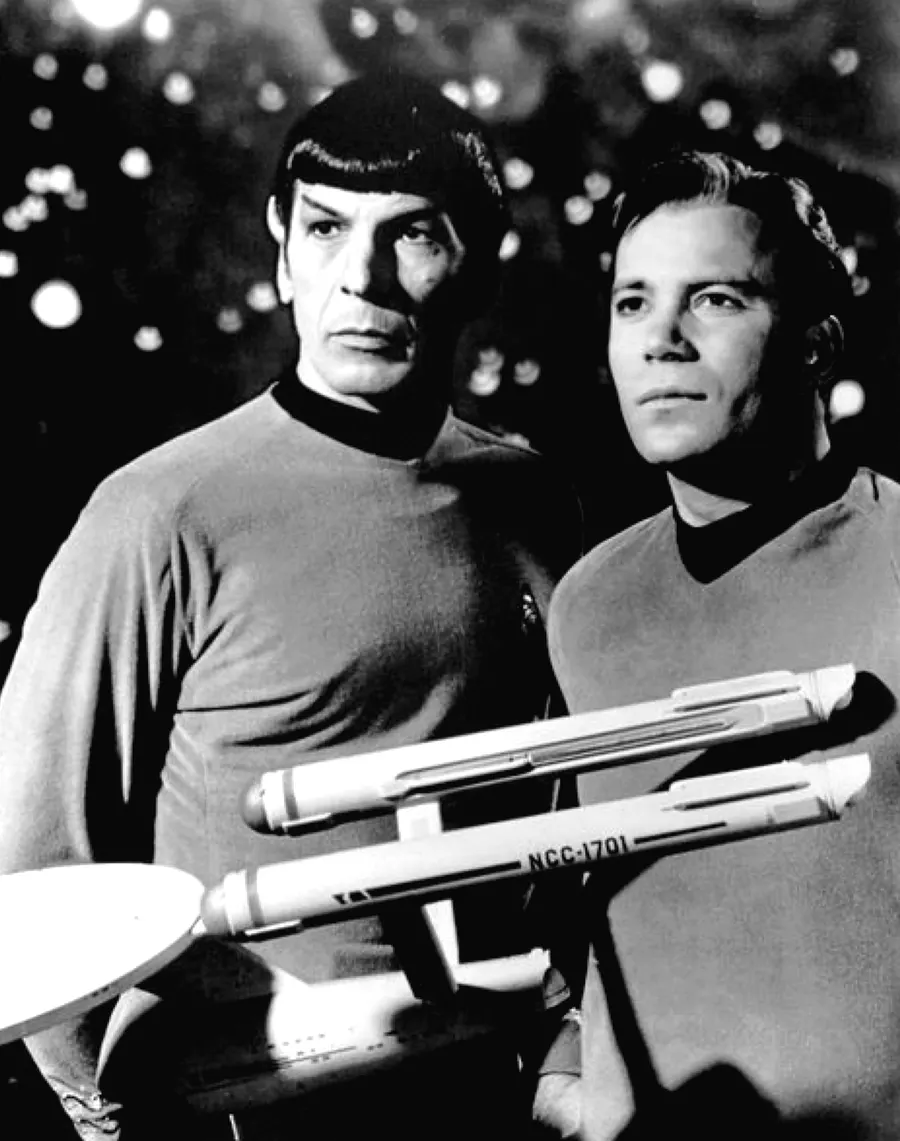
Leonard Nimoy as Mr Spock and William Shatner as Captain Kirk in an NBC publicity photograph for Star Trek, 1968Leonard Nimoy as Mr Spock and William Shatner as Captain Kirk in an NBC publicity photograph for Star Trek, 1968Image: NBC Television · Public domain
culture · Americas

Star Trek is first broadcast

Gene Roddenberry pitched Star Trek as a western among the stars, following the crew of the starship Enterprise on a five-year mission to explore space. After two pilot episodes the American network NBC took it on, and on 8 September 1966 it broadcast the first episode, ‘The Man Trap’, with William Shatner as Captain Kirk and Leonard Nimoy as Mr Spock. Ratings were modest and the series was cancelled after three seasons, but repeats won it a devoted following that led to films and many new series. 8 September is now celebrated by fans as Star Trek Day.

Source: StarTrek.com: Star Trek, it all began today in 1966 ↗
1971
Members of the Kennedy family in the presidential box at the gala opening of the Kennedy Center on 8 September 1971Members of the Kennedy family in the presidential box at the gala opening of the Kennedy Center on 8 September 1971Image: Warren K. Leffler · Public domain
culture · Americas

The Kennedy Center opens in Washington with Bernstein’s MASS

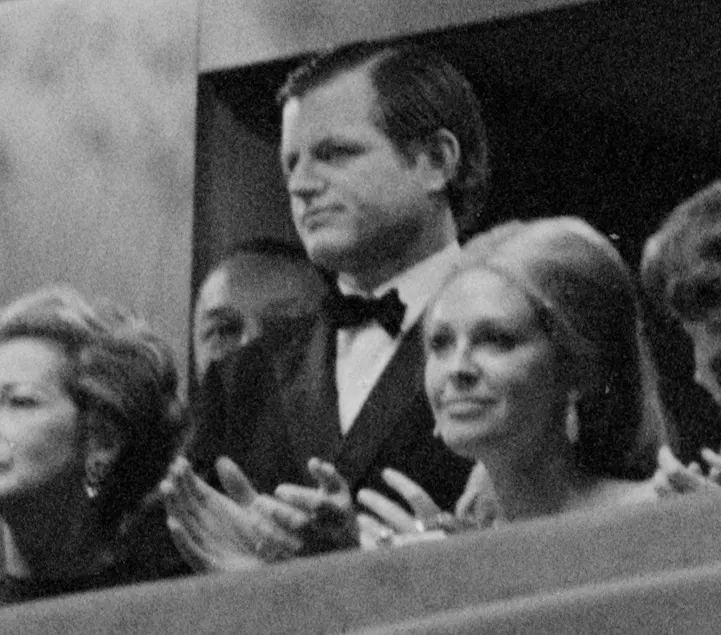
In 1958 Congress approved a national cultural centre for Washington, D.C., and after President John F. Kennedy’s assassination in 1963 it was made his memorial. The John F. Kennedy Center for the Performing Arts, a long white marble building by the Potomac designed by Edward Durell Stone, opened on 8 September 1971 with the premiere of Leonard Bernstein’s MASS, a theatre piece for singers, players and dancers commissioned by Jacqueline Kennedy Onassis. It is home to the National Symphony Orchestra and Washington National Opera.

Source: The Kennedy Center: History ↗
1974
President Gerald Ford announces his decision to pardon former President Richard Nixon on 8 September 1974President Gerald Ford announces his decision to pardon former President Richard Nixon on 8 September 1974Image: David Hume Kennerly · Public domain
politics · Americas

President Ford pardons Richard Nixon

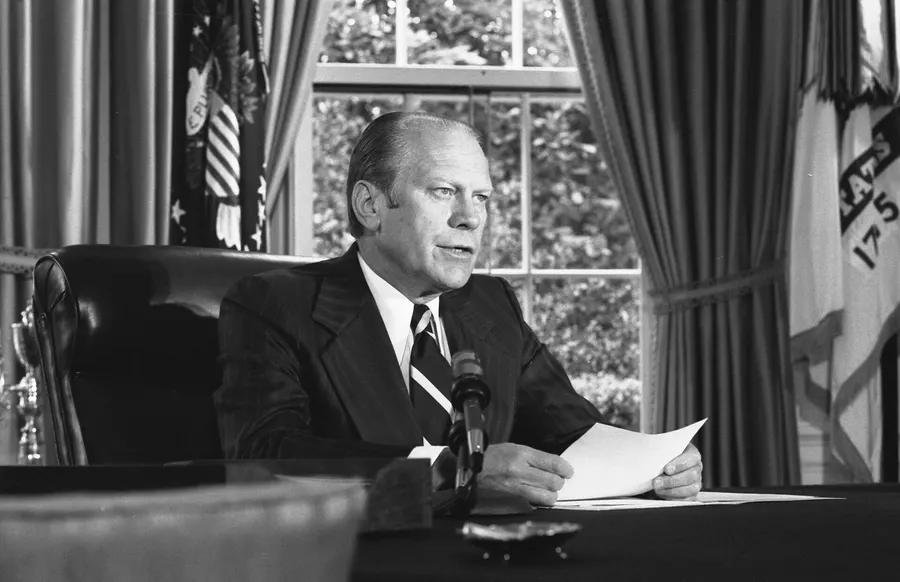
A month after Richard Nixon resigned over the Watergate scandal, his successor Gerald Ford announced on the morning of Sunday 8 September 1974 that he had granted Nixon ‘a full, free, and absolute pardon’ for any federal crimes he might have committed as president. Ford said a trial would keep the country’s wounds open for years. Many Americans were outraged, Ford’s press secretary resigned in protest, and the pardon is widely thought to have contributed to Ford’s defeat in the 1976 election.

Source: Gerald R. Ford Presidential Library: Presidential Proclamation 4311 ↗
1991
The Assembly of the Republic of Macedonia's declaration on the results of the independence referendum of 8 September 1991The Assembly of the Republic of Macedonia’s declaration on the results of the independence referendum of 8 September 1991Image: Unknown · CC BY-SA 3.0
politics · Europe

Macedonia votes for independence from Yugoslavia

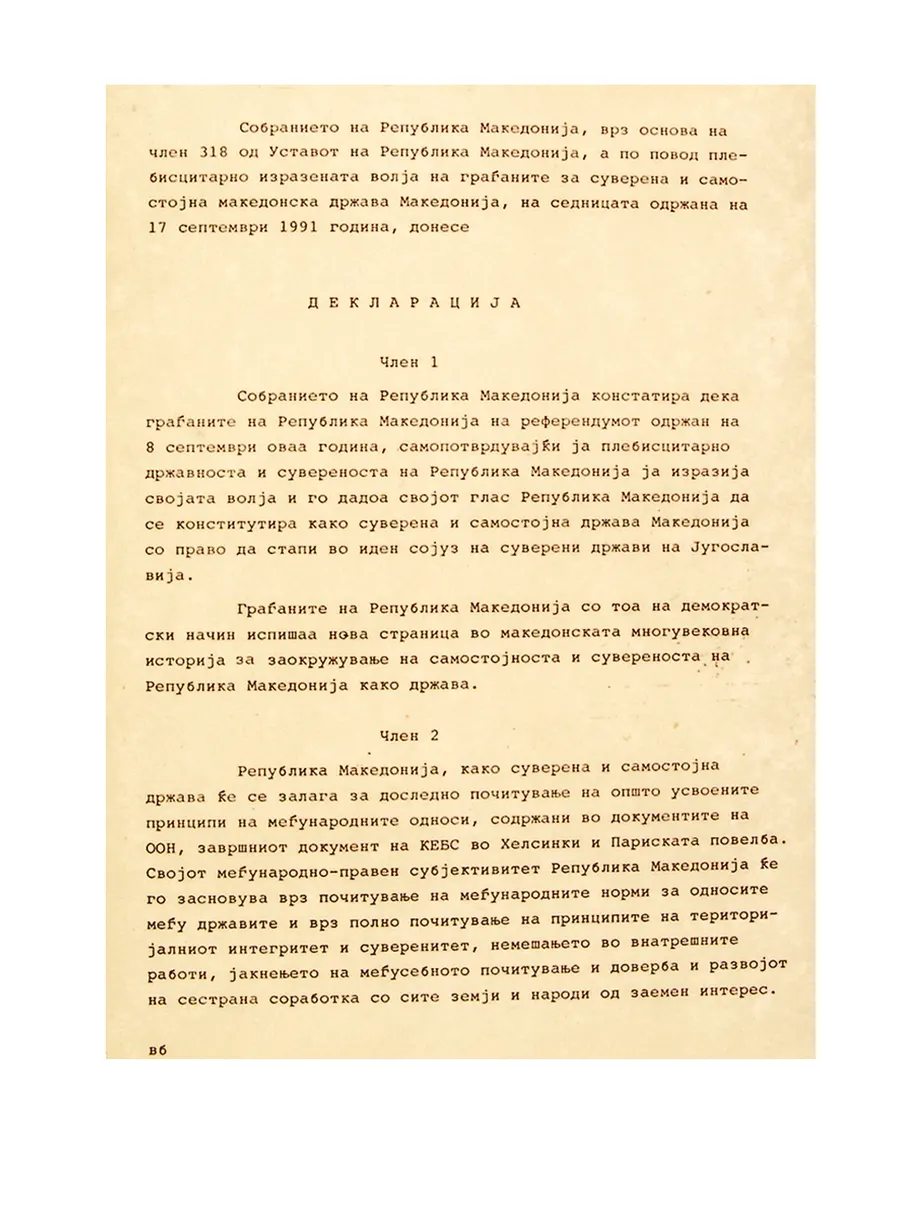
As Yugoslavia broke apart in 1991, the Socialist Republic of Macedonia held a referendum on 8 September asking voters whether they wanted a sovereign and independent state. Of those who voted, 95 per cent said yes. Unlike several other Yugoslav republics, Macedonia left without war. It joined the United Nations in 1993 under a provisional name because of a dispute with Greece, and in 2019 became the Republic of North Macedonia. 8 September is its Independence Day.

Source: Britannica: North Macedonia, independence ↗
VI
2000 TO TODAY

Modern Day

The events of recent decades that have already become part of the historical record.

2016
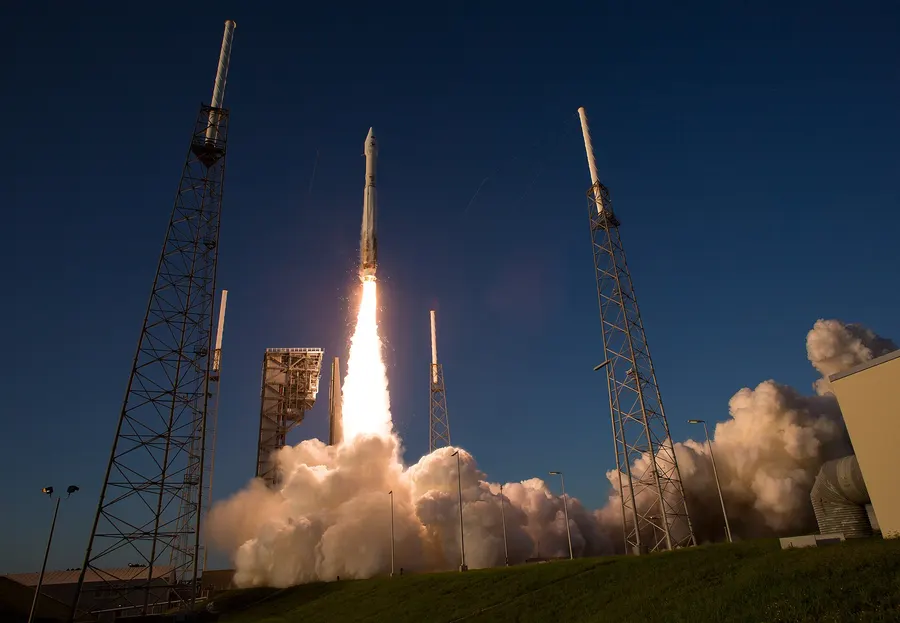
An Atlas V rocket lifts off from Cape Canaveral carrying NASA's OSIRIS-REx spacecraft on 8 September 2016An Atlas V rocket lifts off from Cape Canaveral carrying NASA’s OSIRIS-REx spacecraft on 8 September 2016Image: Joel Kowsky · Public domain
world · Global

NASA launches OSIRIS-REx to bring back a piece of an asteroid

Asteroids are leftovers from the birth of the solar system, and some carbon-rich ones may preserve the kind of material that brought water and the building blocks of life to the early Earth. NASA chose Bennu, a dark asteroid about 500 metres across whose orbit comes close to Earth’s, and built a spacecraft to fly there, study it and bring a sample home: the Origins, Spectral Interpretation, Resource Identification, Security-Regolith Explorer, or OSIRIS-REx. It lifted off on an Atlas V rocket from Cape Canaveral at 7.05 in the evening on 8 September 2016. OSIRIS-REx reached Bennu in December 2018 and mapped it for nearly two years. In October 2020 it briefly touched the surface and a puff of gas blew rocks and dust into its collector. Its capsule parachuted into the Utah desert in September 2023 with about 121 grams of material, the largest sample ever brought back from an asteroid. The spacecraft has flown on, renamed OSIRIS-APEX, to visit the asteroid Apophis in 2029.

Source: NASA Science: OSIRIS-REx mission ↗
RESEARCH

Sources & Further Reading

Selected authoritative references supporting the events on this page.

Britannica: Battle of Kulikovo↗Presidential Library of Russia: Anniversary of the Battle of Kulikovo↗Galleria dell’Accademia di Firenze: David, Michelangelo↗Accademia.org: Michelangelo’s David↗Heritage Malta: Victory Day celebrations at Fort St Angelo↗Britannica: Siege of Malta↗Britannica: Jean Parisot de la Valette↗City of St. Augustine: Our history↗US National Park Service: Pedro Menéndez↗Everton FC Heritage Society: Everton’s first league match↗Britannica: English Football League↗Wikipedia: 1888-89 Football League↗NOAA NESDIS: The Great Galveston Hurricane↗NOAA 200th: The Great Galveston Hurricane of 1900↗Nobel Prize: The Nobel Peace Prize 1926, presentation speech↗Britannica: Gustav Stresemann↗Britannica: Siege of Leningrad↗The National WWII Museum: History through the viewfinder, the siege of Leningrad↗Britannica: Shlisselburg↗Imperial War Museums: 80 years on, the V weapon attacks on Britain↗Imperial War Museums, War Memorials Register: Chiswick V2↗US Army Center of Military History: Policy and Direction, the First Year, chapter 1↗Wikipedia: United States Army Military Government in Korea↗US Office of the Historian: Occupation and reconstruction of Japan, 1945-52↗Britannica: Treaty of Peace with Japan↗Britannica: Southeast Asia Treaty Organization↗Avalon Project, Yale Law School: Southeast Asia Collective Defense Treaty↗StarTrek.com: Star Trek, it all began today in 1966↗Smithsonian National Air and Space Museum: Celebrating ‘The Man Trap’↗The Kennedy Center: History↗Leonard Bernstein Office: MASS, a theatre piece for singers, players and dancers↗Gerald R. Ford Presidential Library: Presidential Proclamation 4311↗Britannica: Watergate scandal, pardon and aftermath↗Britannica: North Macedonia, independence↗Government of North Macedonia: Independence Day address↗NASA Science: OSIRIS-REx mission↗NASA: OSIRIS-REx asteroid mission launch↗
WHY THESE MOMENTS?

Significance before volume

This page is not the longest possible list of events. It is a chronological journey through 8 September, where each entry is chosen for historical significance, human interest and reliability.

Facts are checked against authoritative museums, archives, universities and reference works. Where sources disagree, the page says so.

EXPLORED THE DEEPER STORY?

Return to the highlights of 8 September

Discover the lighter side of the date with famous birthdays, culture, firsts and lives remembered.

Explore This Day →