
HISTORY & TIMELINE
30 September

A journey through
30 September in history

From Parliament’s acceptance of Henry IV in 1399 to the Ethernet standard of 1980, 30 September has seen crowns change hands, nations born and new technologies launched. This timeline follows the date across six centuries.

JUMP THROUGH TIME
II
THE MIDDLE AGES

Medieval History

Kingdoms, conflict, faith, power and the changing medieval world.

1399
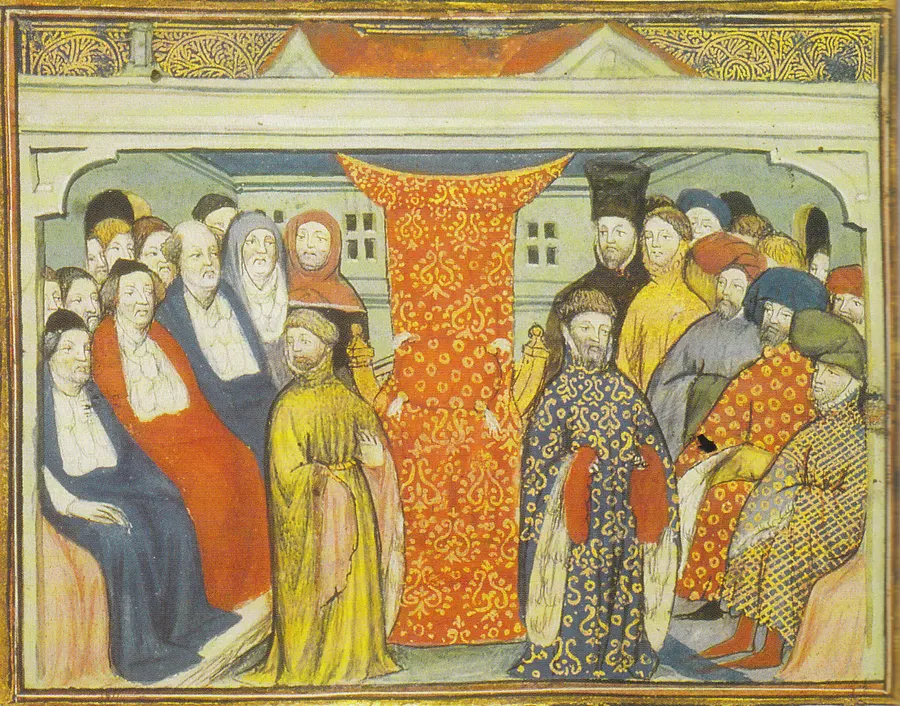
Henry of Bolingbroke, flanked by the lords spiritual and temporal, claims the throne in 1399, in a contemporary manuscript illustration.Henry of Bolingbroke, flanked by the lords spiritual and temporal, claims the throne in 1399, in a contemporary manuscript illustration.Image: J.S. History of Parliament, House of Commons 1386-1421 · Public domain
politics · Europe

Parliament accepts Henry IV as King of England

On 29 September 1399, after a series of meetings in the Tower of London, King Richard II was persuaded to give up his crown. The next day, 30 September, his abdication was read before the assembled Parliament at Westminster, which approved it together with a list of charges for his deposition. Richard’s cousin, Henry Bolingbroke, then claimed the throne and was accepted as King Henry IV, the first king of the House of Lancaster. Richard died in captivity at Pontefract Castle early in 1400.

Source: Encyclopaedia Britannica: Richard II, tyranny and fall ↗
III
A CHANGING WORLD

Early Modern Era

Exploration, political change, scientific development and expanding global connections.

1791
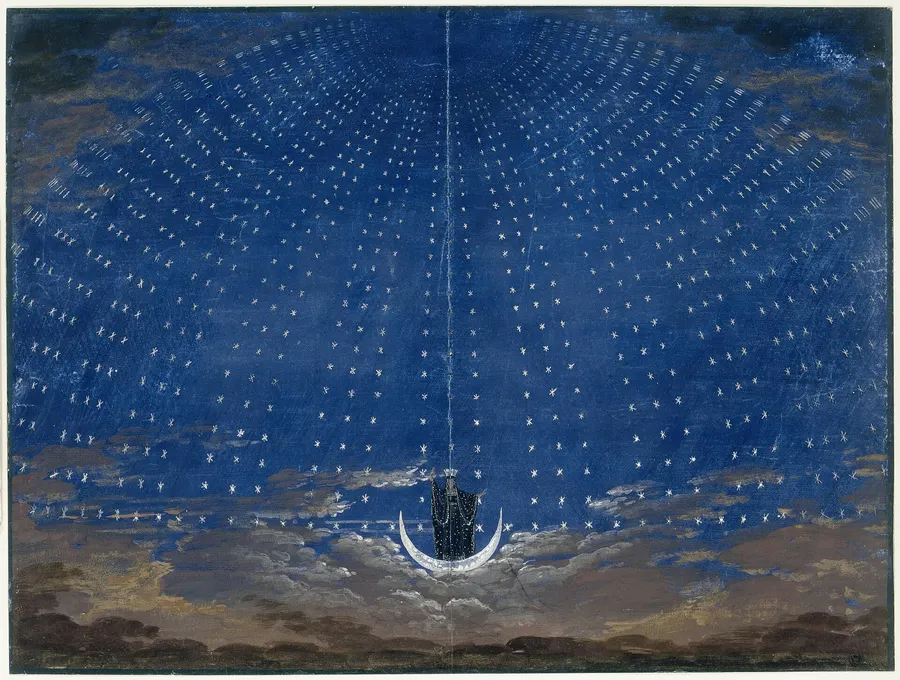
Karl Friedrich Schinkel's design for the Queen of the Night's entrance, made for a Berlin production around 1815.Karl Friedrich Schinkel’s design for the Queen of the Night’s entrance, made for a Berlin production around 1815.Image: Karl Friedrich Schinkel · Public domain
culture · Europe

The Magic Flute has its first performance

Mozart’s opera The Magic Flute (Die Zauberflöte) was first performed on 30 September 1791 at the Theater auf der Wieden, just outside Vienna, with Mozart conducting. The German libretto was by Emanuel Schikaneder, the actor and manager who ran the theatre, and he sang the part of the bird-catcher Papageno himself. The opera, a fairy tale with spoken dialogue, was a hit with Viennese audiences. Mozart lived to see its success, but died just over two months later, on 5 December 1791.

Source: Encyclopaedia Britannica: The Magic Flute ↗
IV
THE NINETEENTH CENTURY

The 1800s

Industry, empire, invention, reform and a century of enormous transformation.

1846
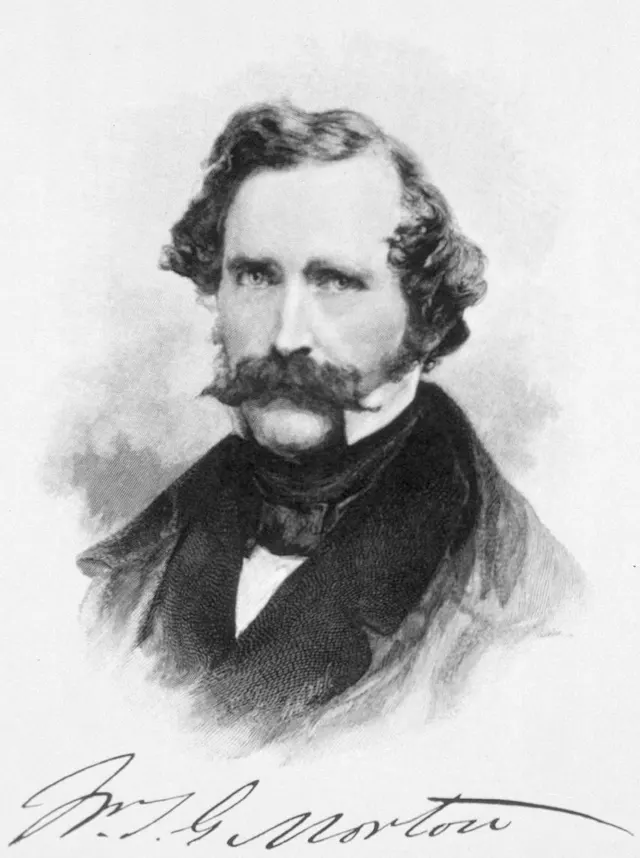
William T. G. Morton, the Boston dentist who first used ether to take out a tooth painlessly.William T. G. Morton, the Boston dentist who first used ether to take out a tooth painlessly.Image: Unknown authorUnknown author · Public domain

science · Americas

A tooth is pulled painlessly under ether

On the evening of 30 September 1846 the Boston dentist William Morton gave sulphuric ether, inhaled from a handkerchief, to a patient named Eben Frost who had come in with toothache. Frost fell unconscious almost at once, a firmly rooted tooth was taken out, and when he woke he knew nothing of it. About two weeks later, on 16 October 1846, Morton gave the first public demonstration of ether anaesthesia at Massachusetts General Hospital, during an operation to remove a tumour. News of the success spread quickly and transformed surgery.

Source: Harvard, Countway Library: The operation on Eben Frost ↗
V
THE TWENTIETH CENTURY

The 1900s

War and peace, technological leaps, social change, politics, sport and popular culture.

1935
Hoover Dam and Lake Mead from the air, 2017.Hoover Dam and Lake Mead from the air, 2017.Image: Mariordo (Mario Roberto Durán Ortiz) · CC BY-SA 4.0
world · Americas

Roosevelt dedicates the Hoover Dam

President Franklin D. Roosevelt dedicated the great dam on the Colorado River, then officially called Boulder Dam, on 30 September 1935, speaking from its crest to a crowd of about 20,000, with millions more listening on the radio. Congratulating the workers who had built it, he told them ‘Well done’.

Source: US Bureau of Reclamation: Hoover Dam chronology ↗
1938
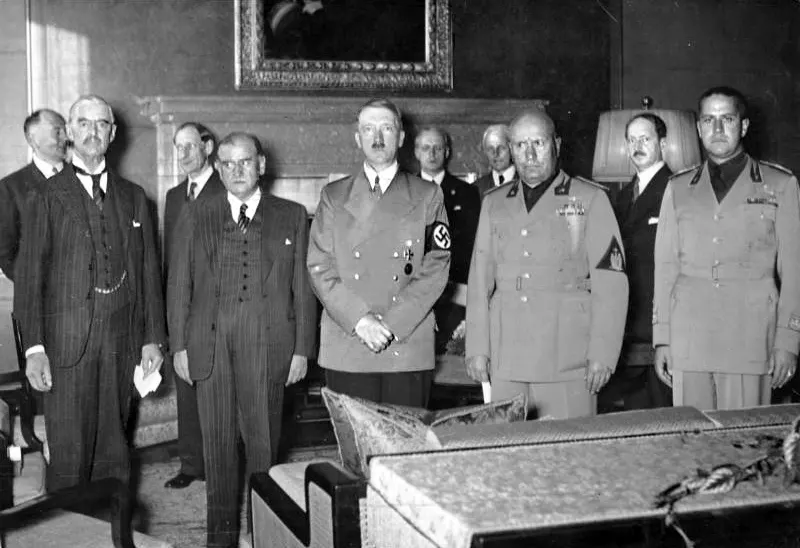
Chamberlain, Daladier, Hitler, Mussolini and Ciano in Munich, 29 September 1938 (German Federal Archives).Chamberlain, Daladier, Hitler, Mussolini and Ciano in Munich, 29 September 1938 (German Federal Archives).Image: Unknown authorUnknown author · CC BY-SA 3.0 de
world · Europe

The Munich Agreement is signed

In the early hours of 30 September 1938 the leaders of Britain, France, Germany and Italy, Neville Chamberlain, Édouard Daladier, Adolf Hitler and Benito Mussolini, signed the Munich Agreement. Their conference had begun the previous afternoon; Czechoslovakia was not represented. The agreement allowed Germany to annex the Sudetenland, the German-speaking border regions of Czechoslovakia. Before leaving, Chamberlain and Hitler also signed a short declaration of their wish to settle differences peacefully. Chamberlain returned home promising ‘peace for our time’, but in March 1939 Germany occupied the rest of the Czech lands.

Source: Encyclopaedia Britannica: Munich Agreement ↗
1947
Muhammad Ali Jinnah, the founder of Pakistan, in 1945.Muhammad Ali Jinnah, the founder of Pakistan, in 1945.Image: Unknown authorUnknown author · Public domain
politics · Asia

Pakistan joins the United Nations

Seven weeks after it came into being on the partition of British India, Pakistan was admitted to the United Nations on 30 September 1947, together with Yemen, by a vote of the General Assembly. Its founder and first governor-general, Muhammad Ali Jinnah, died a year later, in September 1948.

Source: UN Digital Library: Admission of Yemen and Pakistan to membership in the United Nations ↗
1949
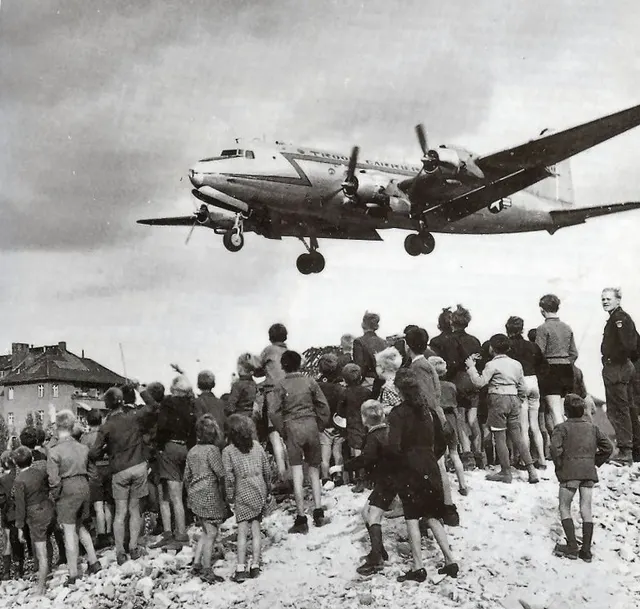
Berlin children watch an American supply plane come in to land, 1948.Berlin children watch an American supply plane come in to land, 1948.Image: Henry Ries / USAF · Public domain
politics · Europe

The last Berlin Airlift flight

The Berlin Airlift ended on 30 September 1949, when a US C-54 made the last flight of Operation Vittles from Rhein-Main air base to Berlin. The Soviet blockade of West Berlin had been lifted in May, but the airlift carried on for another four months to build up stocks. In all, American and British aircraft had delivered more than 2.3 million tons of food, fuel and supplies.

Source: US Office of the Historian: The Berlin Airlift, 1948-1949 ↗
1954
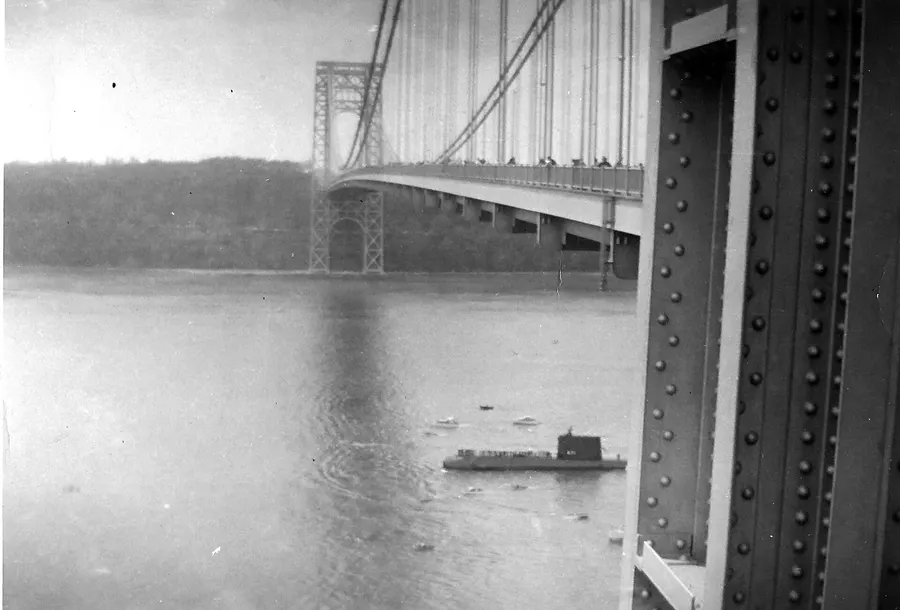
USS Nautilus passes under the George Washington Bridge in New York harbour, May 1956.USS Nautilus passes under the George Washington Bridge in New York harbour, May 1956.Image: ArnoldReinhold · CC BY-SA 3.0
science · Americas

The first nuclear-powered submarine is commissioned

USS Nautilus, the world’s first nuclear-powered submarine, was commissioned into the US Navy at Groton, Connecticut, on 30 September 1954, under Commander Eugene P. Wilkinson. Its reactor had been developed by a team led by Captain Hyman G. Rickover. On 17 January 1955 Nautilus signalled the historic message ‘Underway on nuclear power’. In 1958 she became the first vessel to cross the North Pole, travelling submerged beneath the Arctic ice.

Source: Naval History and Heritage Command: Nautilus (SSN-571) ↗
1966
politics · Africa

Botswana becomes independent

On 30 September 1966 the British protectorate of Bechuanaland became the independent Republic of Botswana. Seretse Khama, who had founded the Botswana Democratic Party in 1962 and become prime minister in 1965, became the first president, with Quett Masire as vice-president. Khama led the country until his death in 1980, promoting a multiracial democracy, free universal education and a stronger, more varied economy. Botswana marks 30 September each year as Botswana Day.

Source: Encyclopaedia Britannica: Sir Seretse Khama ↗
1980
Early 10BASE5 'thick' Ethernet transceivers and cable.Early 10BASE5 ‘thick’ Ethernet transceivers and cable.Image: Robert.Harker at English Wikipedia · CC BY-SA 2.5
science · Americas

The Ethernet ‘Blue Book’ is published

Digital Equipment Corporation, Intel and Xerox jointly published version 1.0 of the Ethernet specification, dated 30 September 1980 and known from its cover as the ‘Blue Book’. Based on the local network invented at Xerox’s Palo Alto Research Center, it became the basis of the IEEE 802.3 standard adopted in 1983, and Ethernet went on to connect most of the world’s wired computer networks.

Source: IEEE (Engineering and Technology History Wiki): Milestones, Ethernet Local Area Network 1973-1985 ↗
WHY THESE MOMENTS?

Significance before volume

This page is not the longest possible list of events. It is a chronological journey through 30 September, where each entry is chosen for historical significance, human interest and reliability.

Facts are checked against authoritative museums, archives, universities and reference works. Where sources disagree, the page says so.

EXPLORED THE DEEPER STORY?

Return to the highlights of 30 September

Discover the lighter side of the date with famous birthdays, culture, firsts and lives remembered.

Explore This Day →
← PREVIOUS DAY29 September
HISTORY & TIMELINE30 September
NEXT DAY →1 October