HISTORY & TIMELINE
1 October

A journey through
1 October in history

From the founding of Yosemite National Park in 1890 to a change of chancellor in Bonn in 1982, 1 October has seen new nations, new machines and new beginnings. This timeline follows the date across the last two centuries.

JUMP THROUGH TIME
IV
THE NINETEENTH CENTURY

The 1800s

Industry, empire, invention, reform and a century of enormous transformation.

1890
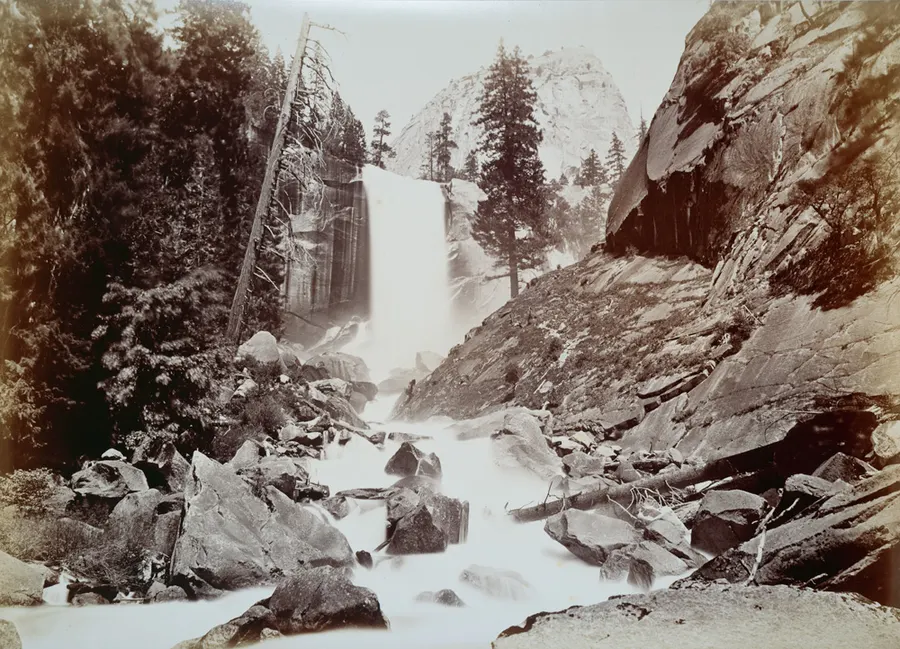
Vernal Fall, Yosemite, photographed by Carleton Watkins in the 1860s.Vernal Fall, Yosemite, photographed by Carleton Watkins in the 1860s.Image: Carleton Watkins · Public domain
world · Americas

Yosemite National Park is created

On 1 October 1890 President Benjamin Harrison signed the act of Congress that set aside the forests and mountains around Yosemite Valley in California as a reserved park, now Yosemite National Park. John Muir’s articles describing the Sierra Nevada helped win public support for it. Yosemite Valley itself and the Mariposa Grove of giant sequoias, already granted to California in 1864, stayed under state control until 1906.

Source: Sierra Club: Legislation about the Yosemite (John Muir, The Yosemite, appendix A) ↗
1891
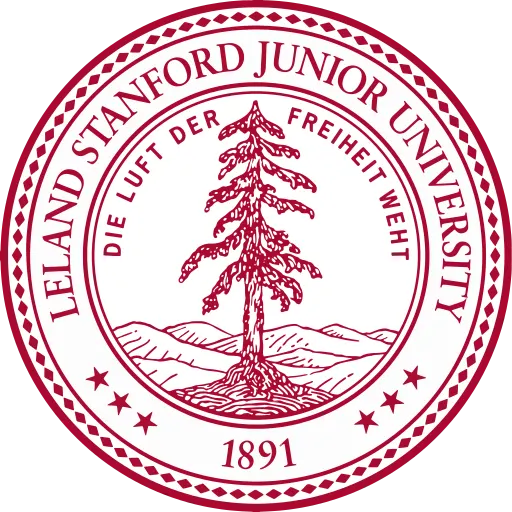
The seal of Leland Stanford Junior University, bearing the year it opened.The seal of Leland Stanford Junior University, bearing the year it opened.Image: Arthur Bridgeman Clark · Public domain
world · Americas

Stanford University opens its doors

Leland Stanford Junior University, founded by Leland and Jane Stanford in memory of their only son, opened in Palo Alto, California, on 1 October 1891. In its first year it enrolled 555 students, 130 of them women, under its first president, David Starr Jordan. Unusually for a private university of its day, it was co-educational and non-denominational from the start.

Source: Stanford University: Stanford history ↗
V
THE TWENTIETH CENTURY

The 1900s

War and peace, technological leaps, social change, politics, sport and popular culture.

1918
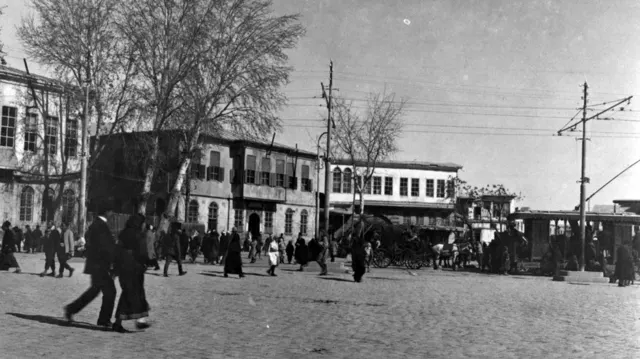
A square in Damascus in 1918.A square in Damascus in 1918.Image: Unknown photographer · Public domain
world · Asia

The Australian Light Horse enters Damascus

Early on 1 October 1918 troops of the Australian Light Horse rode into Damascus, abandoned by its Ottoman garrison; a patrol of the 4th Light Horse Regiment was probably the first Allied unit to enter. Men of the 10th Light Horse received the city’s surrender and then rode on after the retreating Turkish and German forces, capturing about 750 of them. Arab forces allied with the British entered the city the same day.

Source: Australian War Memorial: Seeing is believing (more on the taking of Damascus) ↗
1946
world · Europe

Sentences at the Nuremberg trial

On 1 October 1946 the International Military Tribunal at Nuremberg finished reading its judgment on the leading Nazis and pronounced sentence. Twelve defendants, including Hermann Göring, Joachim von Ribbentrop and, in his absence, Martin Bormann, were sentenced to death, three to life imprisonment and four to prison terms of 10 to 20 years; three were acquitted. The executions were carried out on 16 October, though Göring killed himself a few hours before.

Source: US Holocaust Memorial Museum: Nuremberg trial verdicts ↗
1949
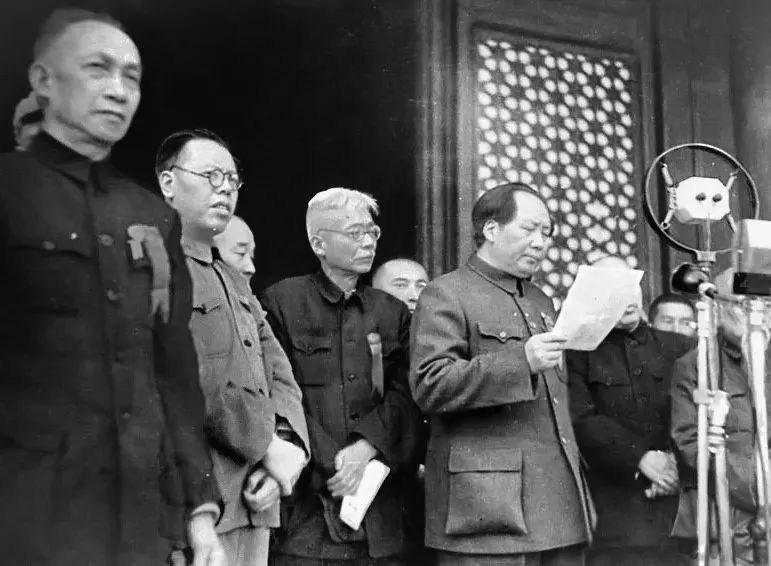
Mao Zedong proclaims the People's Republic of China from the Tiananmen Gate, 1 October 1949.Mao Zedong proclaims the People’s Republic of China from the Tiananmen Gate, 1 October 1949.Image: Orihara1 · Public domain
politics · Asia

Mao proclaims the People’s Republic of China

At 3 pm on 1 October 1949, after the Communist victory in China’s civil war, Mao Zedong stood on the Tiananmen Gate in Beijing and proclaimed the founding of the Central People’s Government of the People’s Republic of China, before a crowd of some 300,000 people. The new national flag was raised in the square below. Chiang Kai-shek’s Nationalist government retreated to Taiwan. In December 1949 the new government formally adopted 1 October as China’s National Day, which is still marked with a week-long holiday.

Source: Ministry of Foreign Affairs of the People’s Republic of China: Colour footage of the founding ceremony ↗
1958
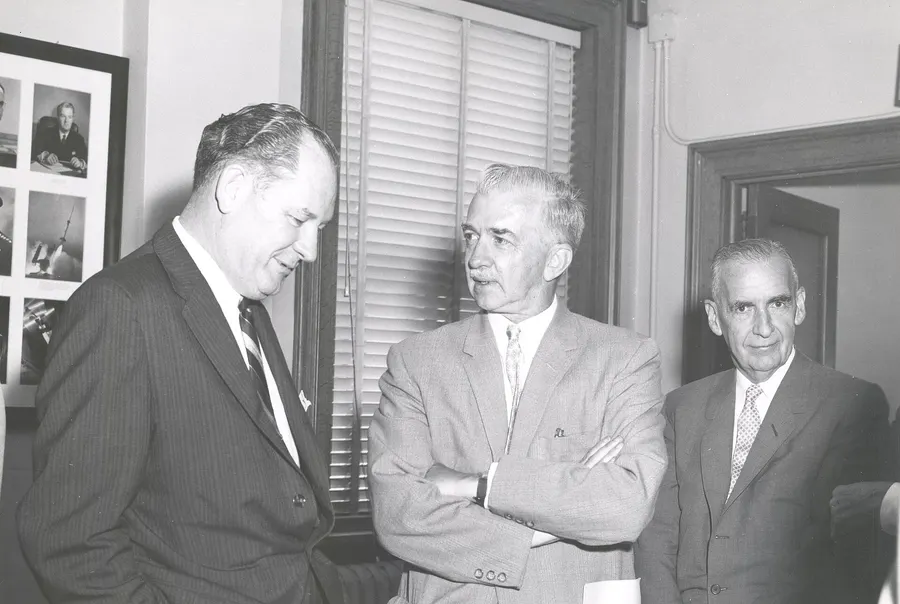
The final meeting of NACA, NASA's forerunner, on 21 August 1958.The final meeting of NACA, NASA’s forerunner, on 21 August 1958.Image: NASA · Public domain
science · Americas

NASA begins operations

The National Aeronautics and Space Administration opened for business on 1 October 1958, three months after President Eisenhower signed the act creating it in response to the Soviet Sputnik launches. It absorbed the National Advisory Committee for Aeronautics, founded in 1915, with its three research laboratories, about 8,000 staff and a budget of $100 million a year.

Source: NASA: 65 years ago, NASA begins operations ↗
1960
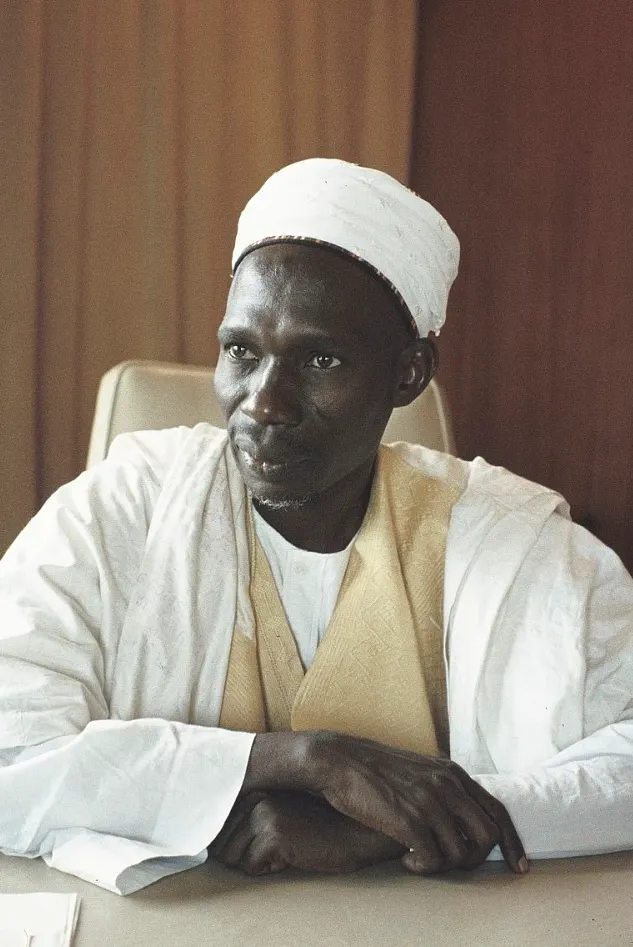
Sir Abubakar Tafawa Balewa, Nigeria's first prime minister, in 1959.Sir Abubakar Tafawa Balewa, Nigeria’s first prime minister, in 1959.Image: Eliot Elisofon · Public domain
politics · Africa

Nigeria becomes independent

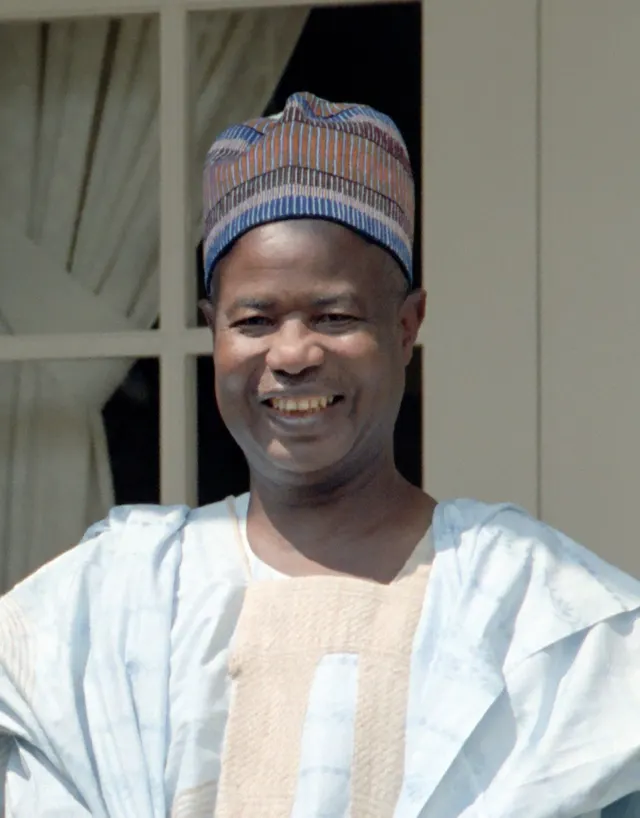
On 1 October 1960 Nigeria, Africa’s most populous country, became independent from Britain. Sir Abubakar Tafawa Balewa, leader of the Northern People’s Congress in the House of Representatives and prime minister since 1957, stayed on as the first prime minister of the independent federation. Nnamdi Azikiwe became governor-general, and in 1963 Nigeria became a republic within the Commonwealth, with Azikiwe as its first president. The country marks 1 October every year as Independence Day.

Source: Encyclopaedia Britannica: Sir Abubakar Tafawa Balewa ↗
1961
politics · Africa

The Federal Republic of Cameroon is formed

On 1 October 1961 the southern part of the British-administered Cameroons joined the Republic of Cameroon, the former French territory that had become independent on 1 January 1960, to form the Federal Republic of Cameroon under President Ahmadou Ahidjo. In a UN-supervised plebiscite that February the south had voted to join Cameroon, while the northern part chose to join Nigeria.

Source: Encyclopaedia Britannica: History of Cameroon ↗
1964
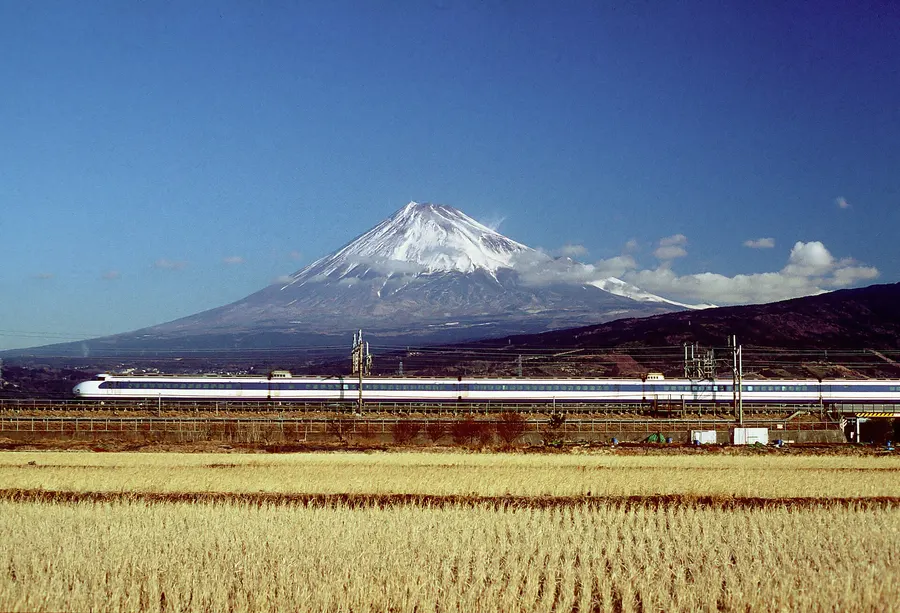
An original 0 Series bullet train passes Mount Fuji in 1999.An original 0 Series bullet train passes Mount Fuji in 1999.Image: Shellparakeet · CC0
science · Asia

The first bullet train line opens

On 1 October 1964 the Tōkaidō Shinkansen began carrying passengers between Tokyo and Shin-Osaka, the world’s first high-speed railway. Its trains were the first to run at 200 km/h in regular service, cutting the journey between Japan’s two largest cities to four hours. The line opened just before the Tokyo Olympic Games. Since that first day no passenger has been killed by a derailment or collision on Japan’s full Shinkansen network.

Source: Nippon.com: The Shinkansen turns 50 ↗
1969
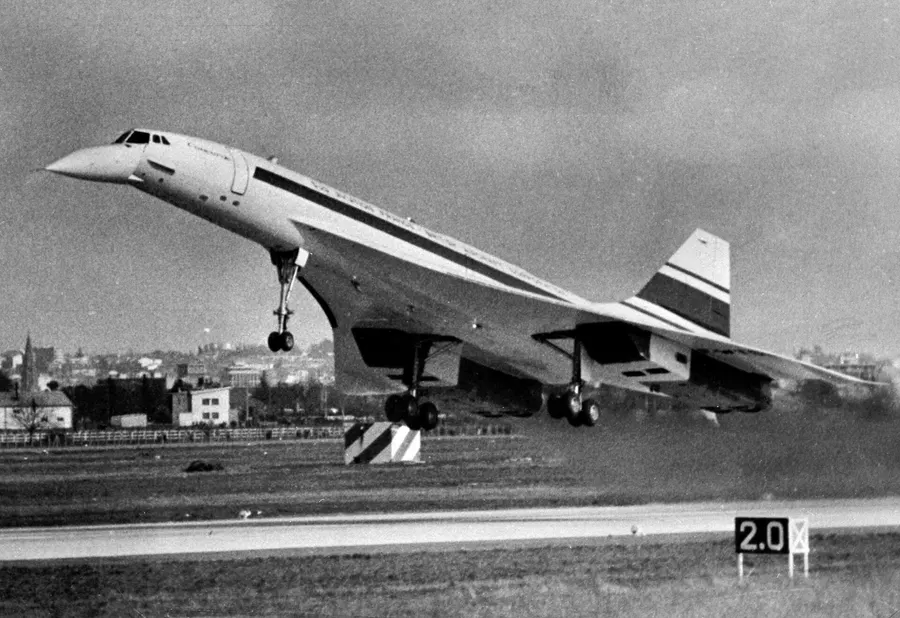
The prototype Concorde 001 on its first flight, at Toulouse on 2 March 1969.The prototype Concorde 001 on its first flight, at Toulouse on 2 March 1969.Image: André Cros · CC BY-SA 4.0
science · Europe

Concorde breaks the sound barrier

On 1 October 1969 the Anglo-French prototype Concorde 001, flying from Toulouse, went faster than sound for the first time. Cruising at 36,000 feet, it reached Mach 1.05 and held supersonic speed for about nine minutes. The aircraft had first flown on 2 March 1969 with the test pilot André Turcat at the controls, and reached twice the speed of sound in November 1970. Concorde entered passenger service in 1976.

Source: Aerospace Bristol: 1 October 1969, Concorde 001 breaks through the sound barrier ↗
1971
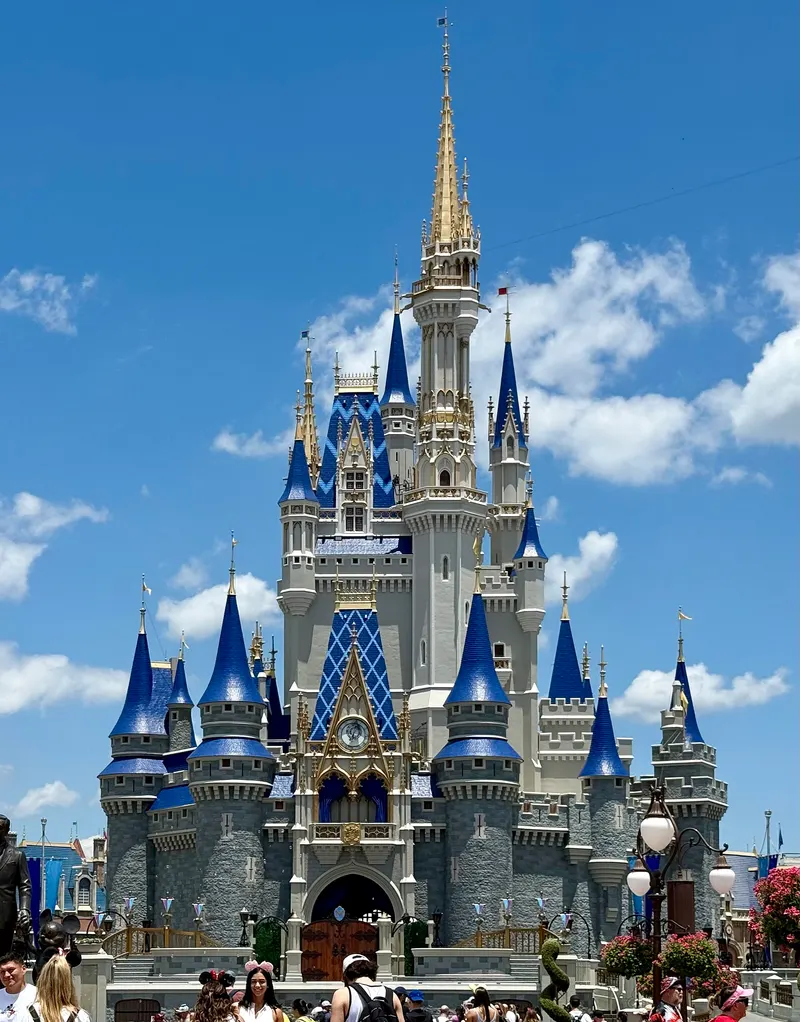
Cinderella Castle at the Magic Kingdom, Walt Disney World.Cinderella Castle at the Magic Kingdom, Walt Disney World.Image: TheWanderingTraders · CC BY-SA 4.0
culture · Americas

Walt Disney World opens in Florida

Walt Disney World opened its gates near Orlando, Florida, on 1 October 1971, with the Magic Kingdom park, two hotels, lakes, golf courses and a campground. Disney chose a quiet opening day to iron out problems and held the formal dedication three weeks later, on 25 October. The resort has since grown into one of the most visited holiday destinations in the world.

Source: D23 (The Walt Disney Company archives): Walt Disney World Resort opens ↗
1978
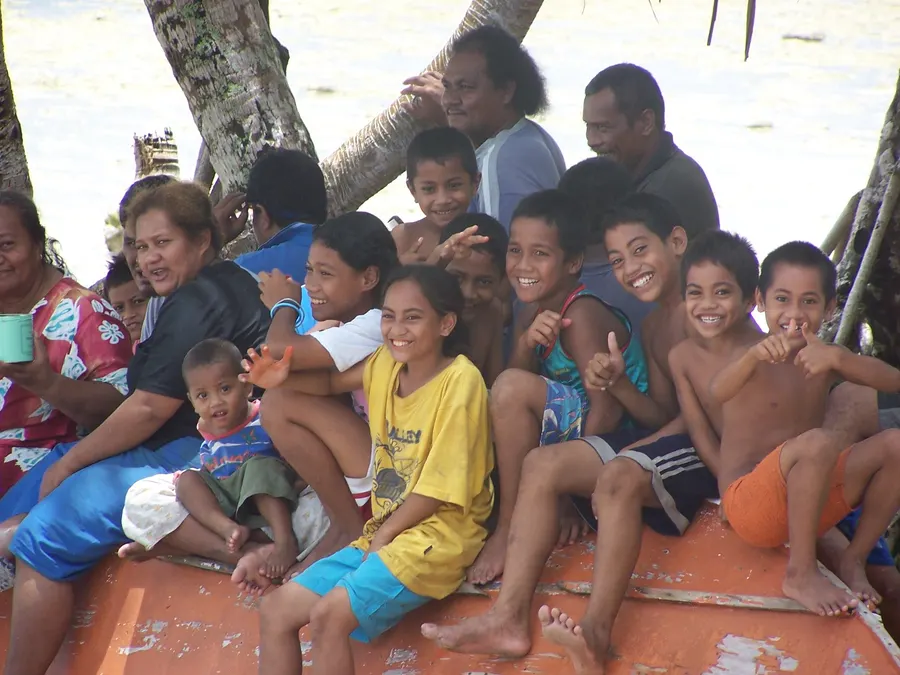
Islanders on Niutao, one of Tuvalu's nine islands, wait for the inter-island ferry, 2006.Islanders on Niutao, one of Tuvalu’s nine islands, wait for the inter-island ferry, 2006.Image: Cesqld · Public domain
politics · Oceania

Tuvalu becomes independent

On 1 October 1978 the Pacific islands of Tuvalu, formerly the Ellice Islands, became independent from Britain under a new national flag. The date was the third anniversary of their separation from the Gilbert Islands, with which they had formed the British colony of the Gilbert and Ellice Islands. The Polynesian Ellice Islanders had voted in a 1974 referendum to separate from the Micronesian Gilbertese, and the Gilberts themselves became independent as Kiribati in 1979.

Source: Encyclopaedia Britannica: History of Tuvalu ↗
1982
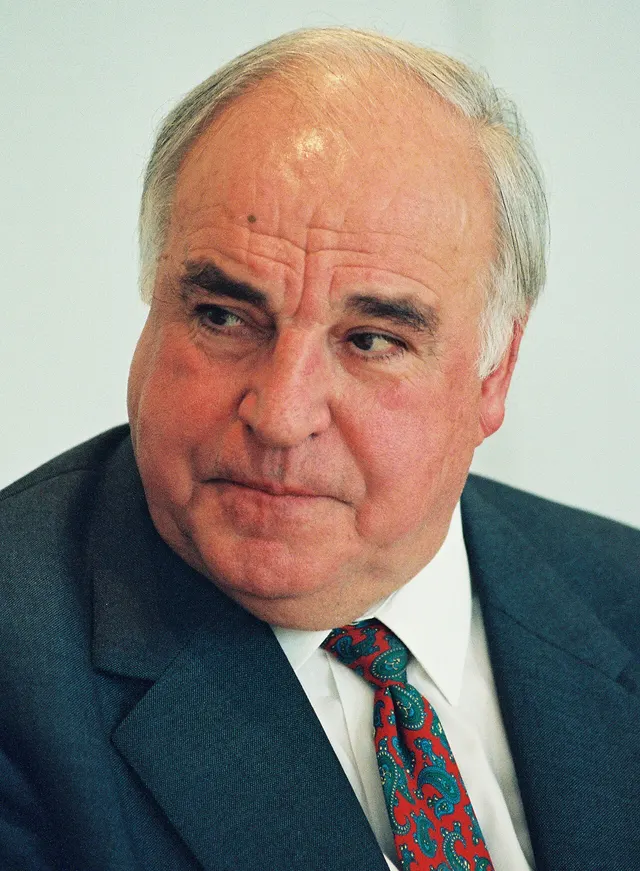
Helmut Kohl, chancellor from 1982 to 1998.Helmut Kohl, chancellor from 1982 to 1998.Image: Christian Lambiotte · CC BY 4.0
politics · Europe

Helmut Kohl becomes chancellor of West Germany

On 1 October 1982 the Bundestag voted Chancellor Helmut Schmidt out of office and elected the Christian Democrat leader Helmut Kohl in his place, after Schmidt’s Free Democrat coalition partners switched sides. It is the only time a West German or German chancellor has been removed by a ‘constructive vote of no confidence’. Kohl served for sixteen years and oversaw German reunification in 1990.

Source: Konrad Adenauer Foundation: The Bundestag elects Helmut Kohl as Helmut Schmidt’s successor ↗
RESEARCH

Sources & Further Reading

Selected authoritative references supporting the events on this page.

Sierra Club: Legislation about the Yosemite (John Muir, The Yosemite, appendix A)↗National Park Service: John Muir, Yosemite National Park↗Stanford University: Stanford history↗Stanford University: Our history↗Australian War Memorial: Seeing is believing (more on the taking of Damascus)↗Anzac Portal (Australian Department of Veterans’ Affairs): Sinai and Palestine campaign↗US Holocaust Memorial Museum: Nuremberg trial verdicts↗Memorium Nuremberg Trials (Museums of the City of Nuremberg): Verdicts of the IMT↗Ministry of Foreign Affairs of the People’s Republic of China: Colour footage of the founding ceremony↗US Office of the Historian: The Chinese Revolution of 1949↗NASA: 65 years ago, NASA begins operations↗NASA: 60 years ago, NASA opens for business↗Encyclopaedia Britannica: Sir Abubakar Tafawa Balewa↗Encyclopaedia Britannica: Nigeria, independent Nigeria↗Encyclopaedia Britannica: History of Cameroon↗Presidency of the Republic of Cameroon: Country information↗Nippon.com: The Shinkansen turns 50↗Encyclopaedia Britannica: Shinkansen↗Aerospace Bristol: 1 October 1969, Concorde 001 breaks through the sound barrier↗Musée de l’Air et de l’Espace: Concorde prototype 001 F-WTSS↗D23 (The Walt Disney Company archives): Walt Disney World Resort opens↗Encyclopaedia Britannica: Walt Disney World Resort↗Encyclopaedia Britannica: History of Tuvalu↗US Office of the Historian: Tuvalu↗Konrad Adenauer Foundation: The Bundestag elects Helmut Kohl as Helmut Schmidt’s successor↗The Federal Chancellor: Helmut Kohl’s era (1982-98)↗
WHY THESE MOMENTS?

Significance before volume

This page is not the longest possible list of events. It is a chronological journey through 1 October, where each entry is chosen for historical significance, human interest and reliability.

Facts are checked against authoritative museums, archives, universities and reference works. Where sources disagree, the page says so.

EXPLORED THE DEEPER STORY?

Return to the highlights of 1 October

Discover the lighter side of the date with famous birthdays, culture, firsts and lives remembered.

Explore This Day →