
HISTORY & TIMELINE
15 September

A journey through
15 September in history

The story of 15 September runs from the murder of St Ludmila of Bohemia in 921 to the Cassini spacecraft’s final plunge into Saturn in 2017. In between come the Battle of Signal Hill, the British landing at Kip’s Bay, the independence of Central America, the opening of the Liverpool and Manchester Railway, Darwin’s arrival at the Galápagos, the Battle of Pyongyang, the first tanks in battle, the Nuremberg Laws, Battle of Britain Day, the Inchon landing, Khrushchev’s arrival in America, the Birmingham church bombing, the first Greenpeace voyage, the first issue of USA Today, the opening of the Sydney Olympics and the collapse of Lehman Brothers.

II
THE MIDDLE AGES

Medieval History

Kingdoms, conflict, faith, power and the changing medieval world.

921
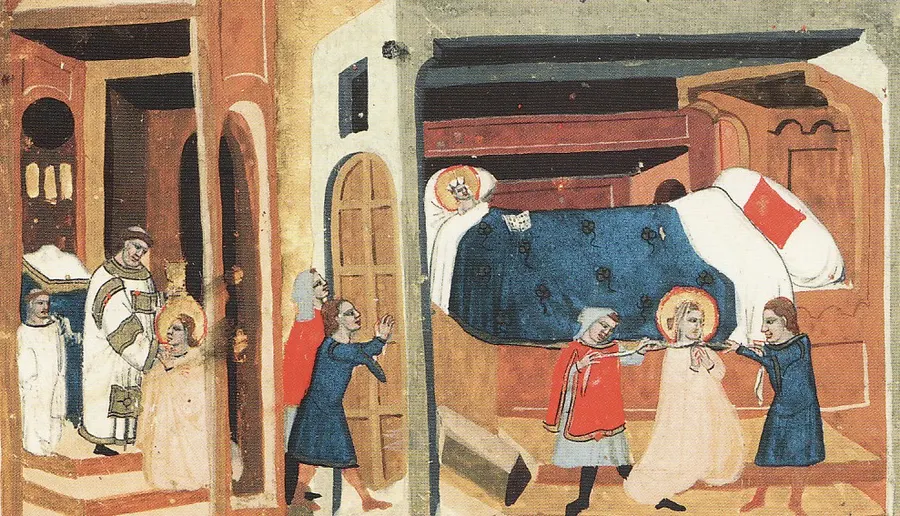
The murder of St Ludmila, with the young Wenceslas looking on, in a 14th-century illuminated copy of the Chronicle of DalimilThe murder of St Ludmila, with the young Wenceslas looking on, in a 14th-century illuminated copy of the Chronicle of DalimilImage: Unknown author · Public domain
culture · Europe

Ludmila of Bohemia is murdered at Tetín

Ludmila was the wife of Bořivoj, the first Christian duke of Bohemia, and she brought up her grandson Wenceslas, the future ‘Good King Wenceslas’, in the new faith. After the death of her son the duke, she quarrelled over the boy and over the government with her daughter-in-law Drahomíra, who ruled as regent. According to the early legends, men sent by Drahomíra strangled Ludmila at her castle of Tetín, south-west of Prague, on 15 September 921. She was soon honoured as a martyr, and she became the first Czech saint and a patron of Bohemia.

Source: Britannica: Saint Ludmila ↗
III
A CHANGING WORLD

Early Modern Era

Exploration, political change, scientific development and expanding global connections.

1762
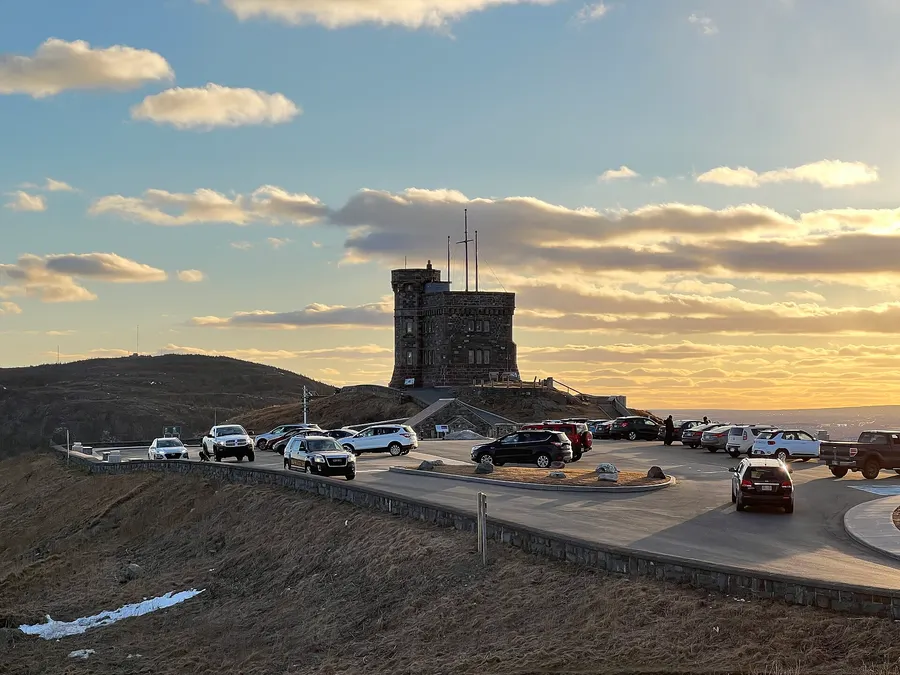
Signal Hill National Historic Site at St John's, Newfoundland and LabradorSignal Hill National Historic Site at St John’s, Newfoundland and LabradorImage: Hunter Bloor · CC BY-SA 4.0
world · Americas

The British retake Signal Hill above St John’s

In June 1762, near the end of the Seven Years’ War, a French squadron seized St John’s in Newfoundland, hoping to hold it as a bargaining counter in the peace talks. A British force under Lieutenant-Colonel William Amherst landed at Torbay and marched overland. At dawn on 15 September 1762, in thick fog, his light infantry climbed Signal Hill, the height that commands the harbour, and surprised the French on top. The French garrison in the town below surrendered within days. It was the last battle of the war in North America.

Source: Parks Canada: Battle of Signal Hill National Historic Event ↗
1776
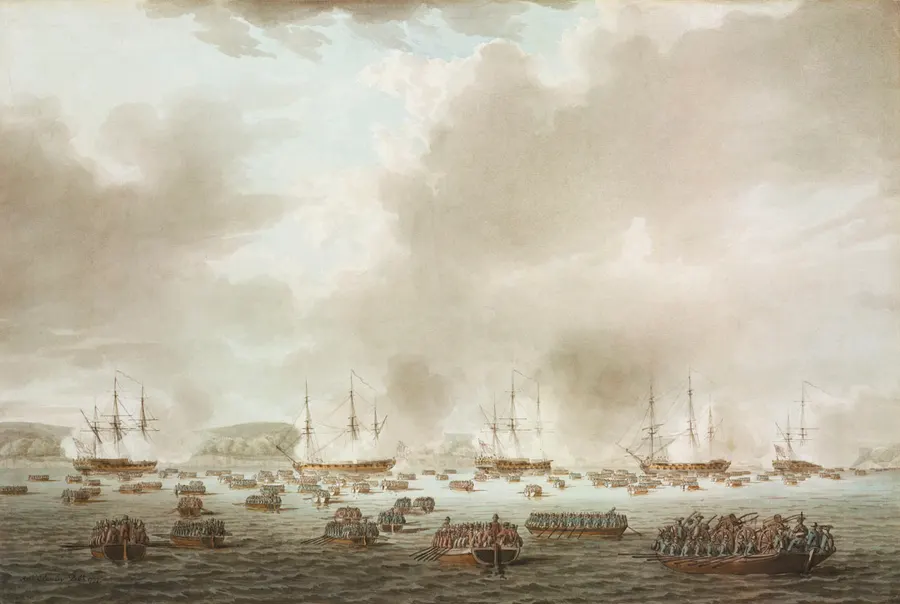
The British landing at Kip's Bay, New York Island, 15 September 1776: a drawing in the collection of the National Maritime Museum, GreenwichThe British landing at Kip’s Bay, New York Island, 15 September 1776: a drawing in the collection of the National Maritime Museum, GreenwichImage: Robert Cleveley · Public domain
world · Americas

British troops land at Kip’s Bay and take New York

After defeating George Washington’s army on Long Island in August 1776, the British commander General William Howe prepared to cross to Manhattan. On 15 September 1776 five warships anchored close inshore at Kip’s Bay, on the island’s east side, and bombarded the shallow trenches held by Connecticut militia, who fled. About 4,000 British and Hessian soldiers then landed from flatboats almost unopposed. Washington rode up and tried in vain to rally his men. The Americans withdrew to Harlem Heights, and the British occupied New York City, which they held until the end of the war in 1783.

Source: George Washington’s Mount Vernon: Battle of Kip’s Bay ↗
IV
THE NINETEENTH CENTURY

The 1800s

Industry, empire, invention, reform and a century of enormous transformation.

1821
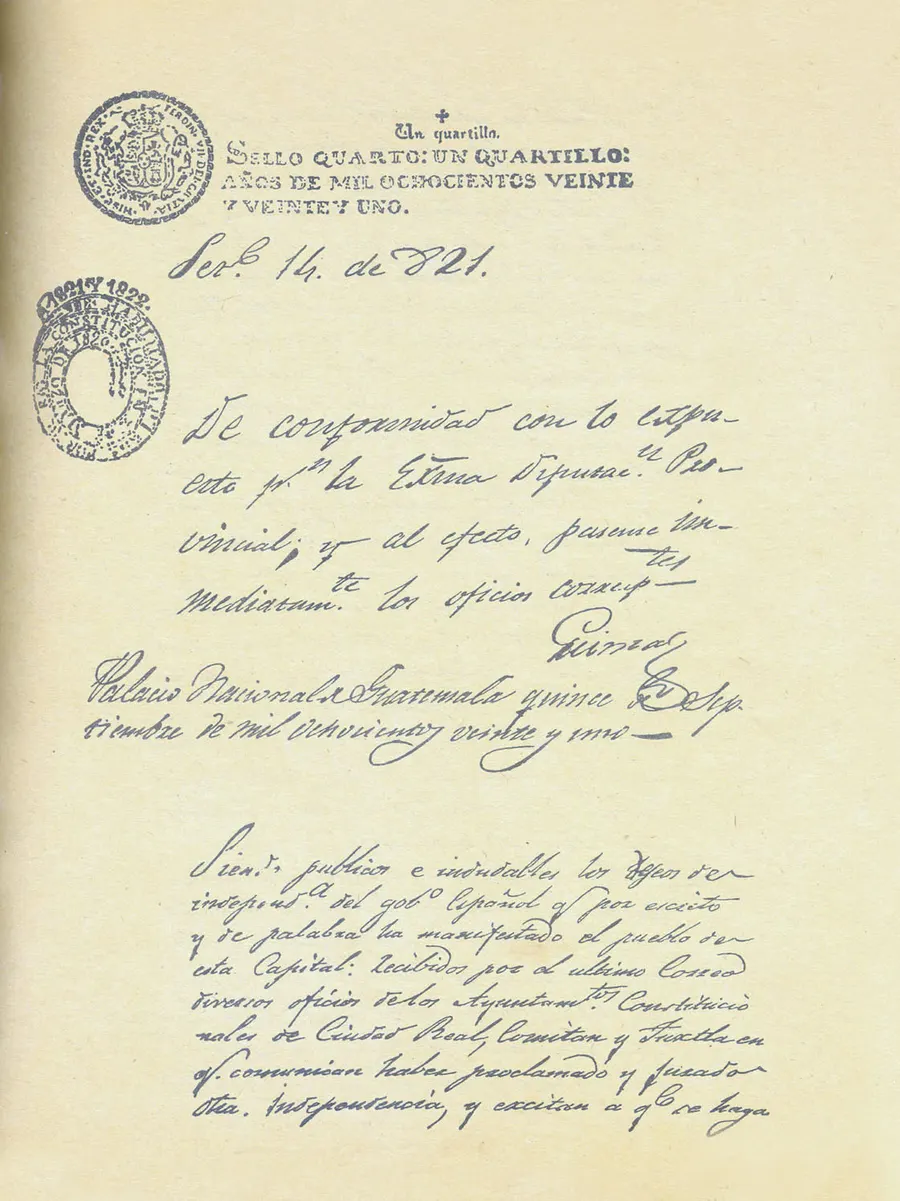
The first page of the Act of Independence of Central America, signed in Guatemala City on 15 September 1821The first page of the Act of Independence of Central America, signed in Guatemala City on 15 September 1821Image: José Cecilio del Valle · Public domain
world · Americas

Central America declares its independence from Spain

For almost three centuries the lands from Chiapas to Costa Rica were ruled by Spain as the Captaincy General of Guatemala. By 1821 Spain’s American empire was collapsing. Mexico, to the north, had just broken away under Agustín de Iturbide, and in the towns of Central America the leading families argued over whether to follow. On 15 September 1821 the captain general, Gabino Gaínza, called a meeting of officials, churchmen and leading citizens in Guatemala City while a crowd waited outside. The meeting voted for independence, and the act, written by the Honduran-born scholar José Cecilio del Valle, was signed that day. There was no war: the news travelled south by horse, and each province accepted it in turn over the following weeks. After a brief union with Mexico, the provinces formed their own federation in 1823, which later broke up into Guatemala, El Salvador, Honduras, Nicaragua and Costa Rica. All five still celebrate 15 September as their independence day.

Source: Library of Congress, In Custodia Legis: Acta de Independencia de Centro América ↗
1830
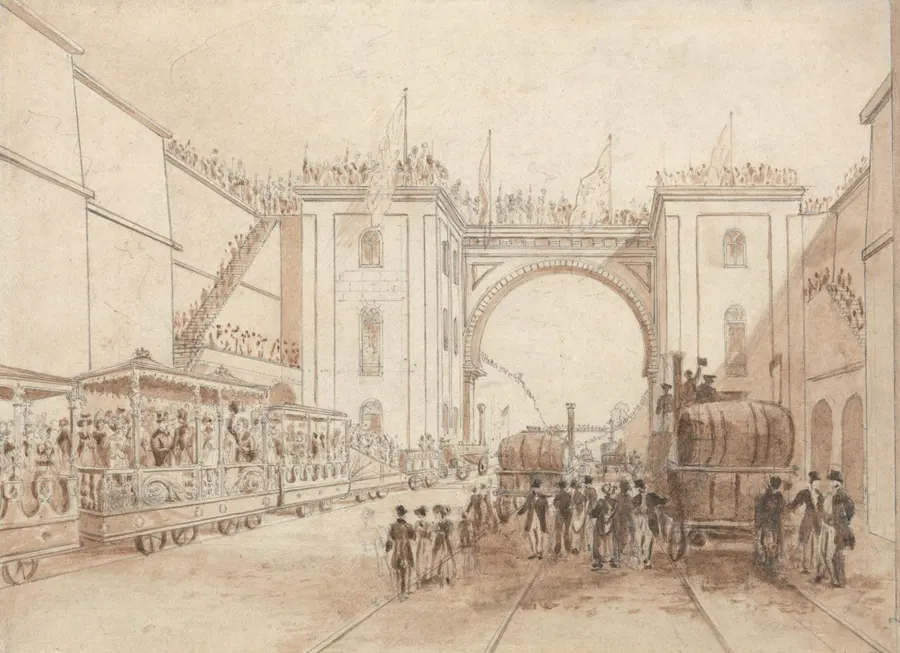
The Duke of Wellington's train at the Moorish Arch at Edge Hill, Liverpool, on the opening day of the railway, in a print by Isaac ShawThe Duke of Wellington’s train at the Moorish Arch at Edge Hill, Liverpool, on the opening day of the railway, in a print by Isaac ShawImage: Isaac Shaw · CC0
world · Europe

The Liverpool and Manchester Railway opens

Manchester’s cotton mills depended on the port of Liverpool, but goods moved between the two towns slowly and expensively by canal and road. In the 1820s a group of merchants commissioned George Stephenson to build a railway between them, 31 miles long, across the bog of Chat Moss and over the Sankey valley on a great viaduct. In 1829 trials at Rainhill settled that it would be worked by steam locomotives, and Stephenson’s Rocket won. The line opened on 15 September 1830, when eight trains carried the prime minister, the Duke of Wellington, and hundreds of guests out of Liverpool before huge crowds. When the trains stopped for water at Parkside, William Huskisson, a Liverpool MP, stepped down onto the track and was struck by Rocket; he died later that day at Eccles, one of the first people killed by a passenger train. The railway itself was an immediate success. It was the first to link two cities with steam trains running to a timetable for both passengers and goods, and it set the pattern for railways around the world.

Source: Science and Industry Museum: The making of the Liverpool and Manchester Railway ↗
1835
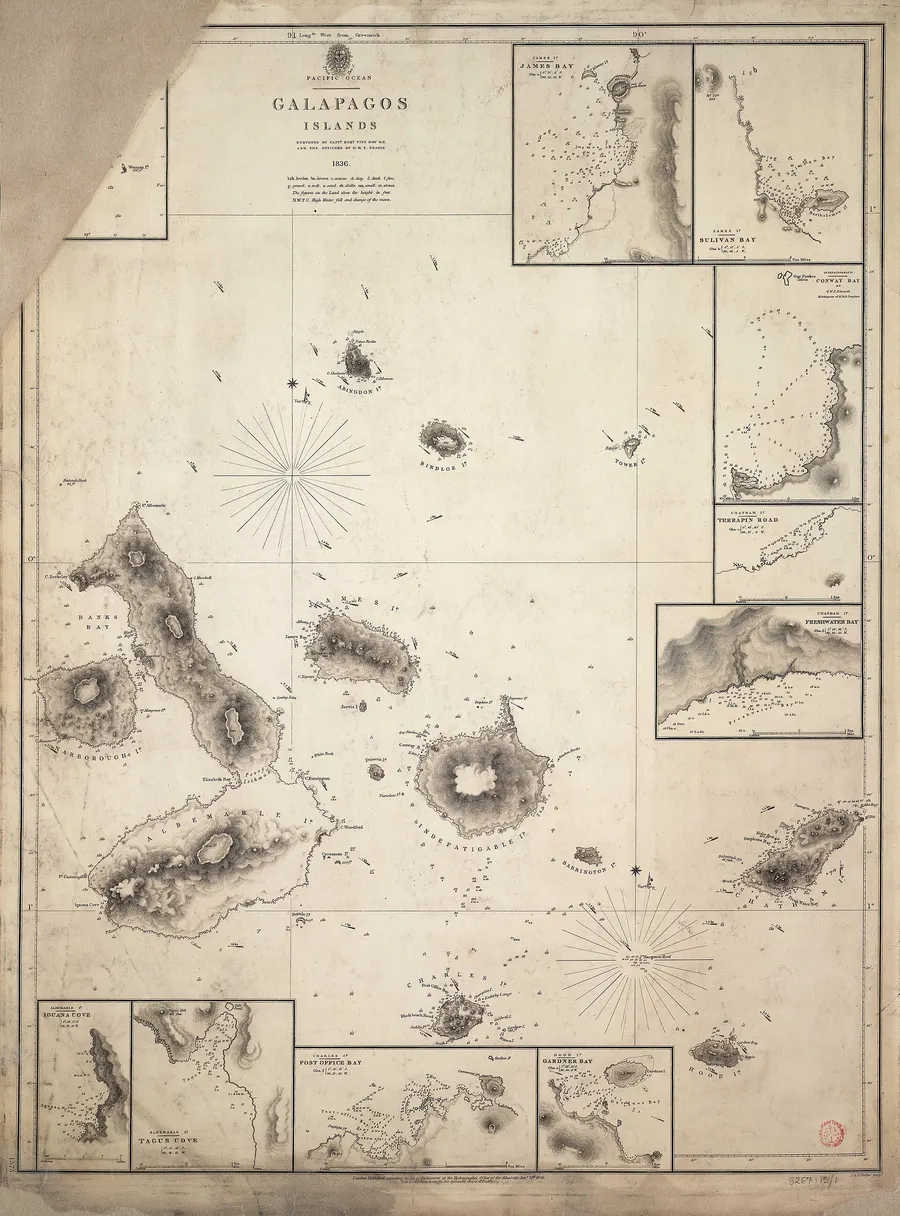
The Admiralty chart of the Galápagos Islands, published in 1841 from the survey made by Captain Robert FitzRoy and the officers of HMS BeagleThe Admiralty chart of the Galápagos Islands, published in 1841 from the survey made by Captain Robert FitzRoy and the officers of HMS BeagleImage: United Kingdom Hydrographic Office · Public domain
science · Americas

HMS Beagle brings Charles Darwin to the Galápagos

HMS Beagle had left England at the end of 1831 to survey the coasts of South America, with the young Charles Darwin aboard as naturalist. After almost four years, most of them spent around Patagonia, Tierra del Fuego and Chile, Captain Robert FitzRoy sailed from Peru for the Galápagos, a group of volcanic islands on the equator about 1,000 kilometres out in the Pacific. The Beagle reached the islands on 15 September 1835, and Darwin first went ashore the next day on Chatham Island, now San Cristóbal. In five weeks he landed on four islands, collecting plants, birds and reptiles and marvelling at the giant tortoises and the black lava. He was told that the tortoises differed from island to island, and he noticed the same of the mockingbirds. Back in England, those island differences helped to convince him that species were not fixed, a line of thought that led, 24 years later, to On the Origin of Species.

Source: Darwin Online: Darwin’s field notes on the Galapagos, ‘A little world within itself’ ↗
1894
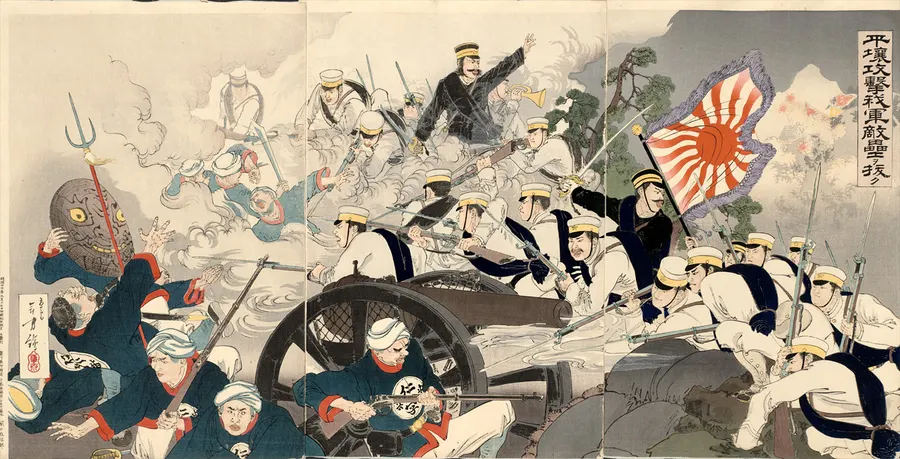
'Attacking Pyongyang, Our Troops Conquer the Enemy Fortress', a Japanese woodblock print by Mizuno Toshikata, September 1894‘Attacking Pyongyang, Our Troops Conquer the Enemy Fortress’, a Japanese woodblock print by Mizuno Toshikata, September 1894Image: Toshikata Mizuno · Public domain
world · Asia

Japan defeats the Chinese army at Pyongyang

In the summer of 1894 Japan and Qing China went to war over which of them would dominate Korea. The Chinese army in the peninsula, about 13,000 strong, gathered behind the walls of Pyongyang. Before dawn on 15 September 1894 Japanese columns that had converged on the city from several directions attacked together. The fighting was fierce, but by evening the Chinese commanders had offered to surrender, and their troops fled north in the night. It was the first major land battle of the war. With Korea lost to China, the Japanese army crossed the Yalu River into Manchuria the following month.

Source: Japan Center for Asian Historical Records, National Archives of Japan: 15 September 1894, Fall of Pyongyang ↗
V
THE TWENTIETH CENTURY

The 1900s

War and peace, technological leaps, social change, politics, sport and popular culture.

1916
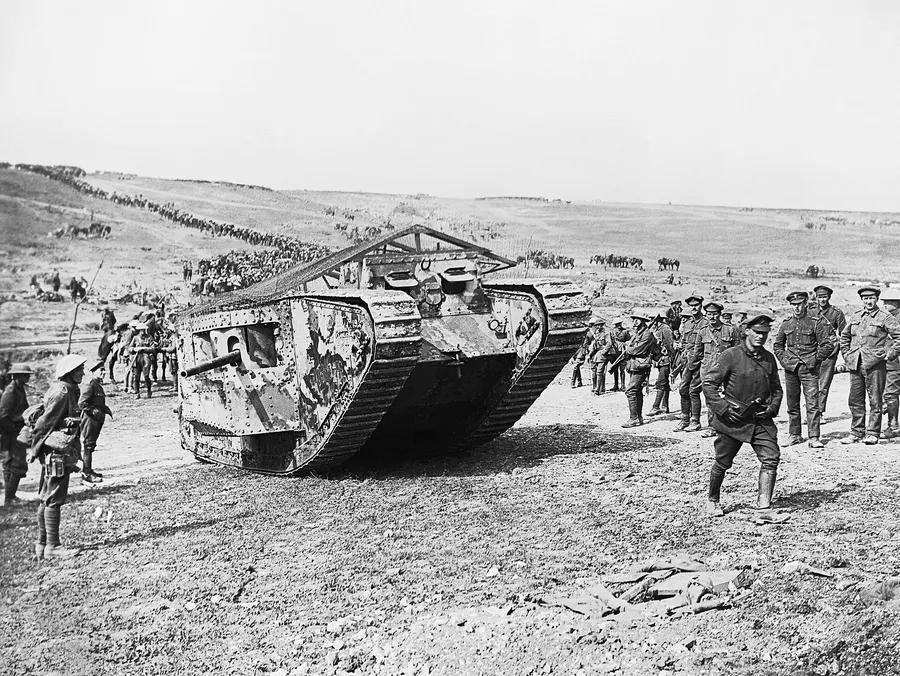
The Mark I tank C19, 'Clan Leslie', in Chimpanzee Valley on 15 September 1916, preparing for the advance on FlersThe Mark I tank C19, ‘Clan Leslie’, in Chimpanzee Valley on 15 September 1916, preparing for the advance on FlersImage: John Warwick Brooke · Public domain
world · Europe

Tanks go into battle for the first time

The tank was developed in secret in Britain as a way to cross barbed wire and trenches and crush the machine-gun posts that had made attacks on the Western Front so costly. At dawn on 15 September 1916, during the Battle of the Somme, the first of them went into action near the villages of Flers and Courcelette. Of 49 Mark I tanks available, only 32 reached the start line and far fewer got into the fight, as the rest broke down or stuck in shell holes. Even so they helped to capture both villages and alarmed the defenders, and the army ordered hundreds more.

Source: The Tank Museum: Tanks at Flers ↗
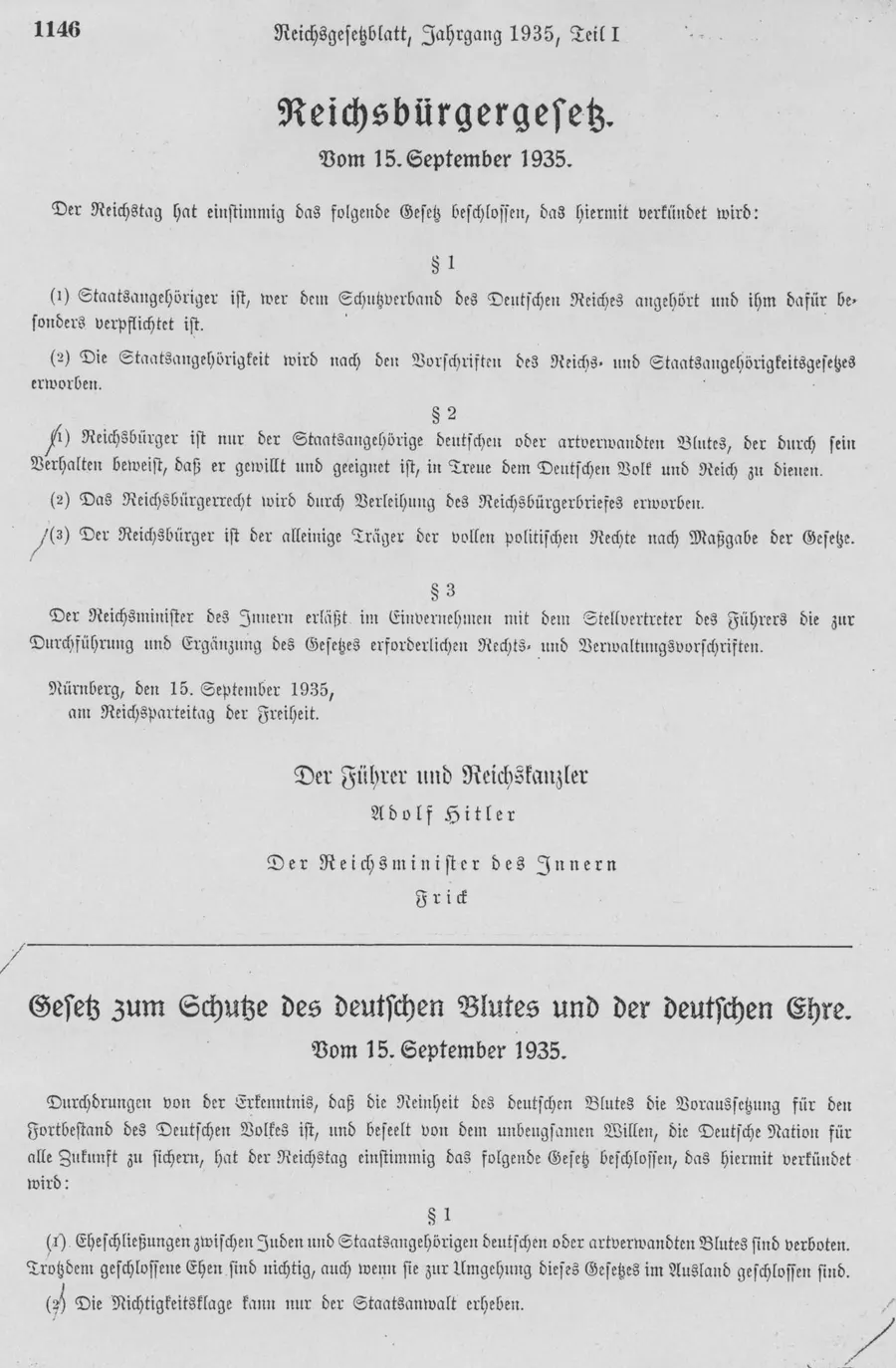
1935
The page of the Reich Law Gazette of September 1935 carrying the Reich Citizenship Law and the start of the Law for the Protection of German Blood and German HonourThe page of the Reich Law Gazette of September 1935 carrying the Reich Citizenship Law and the start of the Law for the Protection of German Blood and German HonourImage: Unknown author · Public domain
world · Europe

Nazi Germany announces the Nuremberg Laws

On 15 September 1935, at the Nazi Party’s annual rally in Nuremberg, the German parliament was summoned to pass three laws. The Reich Citizenship Law reduced Jews from citizens to mere subjects of the state. The Law for the Protection of German Blood and German Honour banned marriage and sexual relations between Jews and other Germans. A third law made the swastika flag the only national flag. Together with the regulations that followed, defining who counted as a Jew, the laws gave legal form to Nazi racial ideas and became the basis for the persecution that followed.

Source: United States Holocaust Memorial Museum: The Nuremberg Race Laws ↗
1940
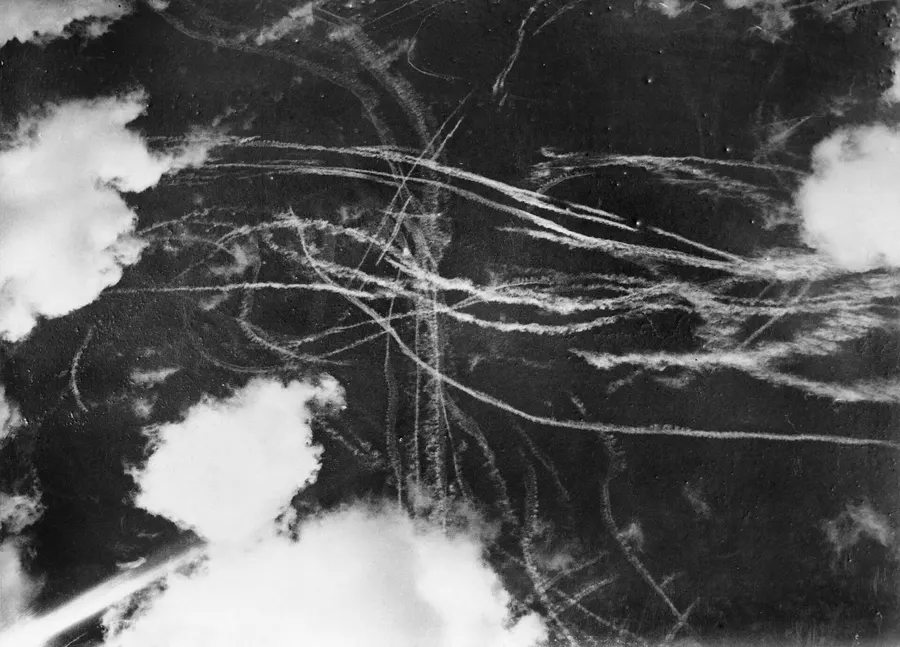
Condensation trails left in the sky by British and German aircraft after a dogfight during the Battle of Britain in 1940Condensation trails left in the sky by British and German aircraft after a dogfight during the Battle of Britain in 1940Image: Mr Puttnam, War Office official photographer · Public domain
world · Europe

The Royal Air Force wins the decisive day of the Battle of Britain

In the summer of 1940, with France defeated, Germany prepared to invade Britain. First the Luftwaffe had to destroy the Royal Air Force. Through August it attacked airfields and radar stations, and from 7 September it turned on London. The German commanders believed that Fighter Command was close to collapse and that one more great effort would finish it. On Sunday 15 September 1940 the Luftwaffe sent two large waves of bombers and fighters against London, one in the late morning and one in the afternoon. Warned by radar, the RAF met them with more squadrons than the German crews had been told still existed. Winston Churchill watched the battle unfold from the operations room at Uxbridge. About 60 German aircraft were shot down for the loss of fewer than 30 British fighters; at the time the RAF claimed 185. Two days later Hitler postponed the invasion indefinitely. The date has been kept ever since as Battle of Britain Day.

Source: Imperial War Museums: 8 important dates in the Battle of Britain ↗
1950
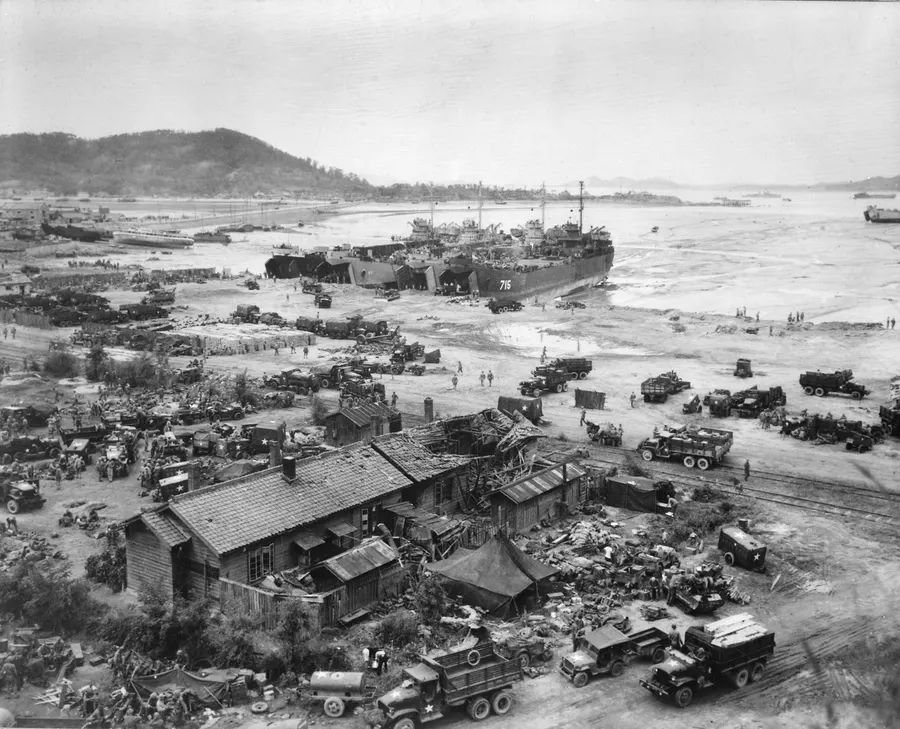
Landing ships unloading men and equipment on the beach at Inchon during the landings of September 1950Landing ships unloading men and equipment on the beach at Inchon during the landings of September 1950Image: US Navy · Public domain
world · Asia

United Nations forces land at Inchon

North Korea invaded the South in June 1950, and within weeks the South Korean army and the American troops sent to help it had been driven into a small pocket around the port of Pusan in the far south-east. The United Nations commander, General Douglas MacArthur, proposed to break the deadlock with a landing far behind the enemy lines at Inchon, the port of Seoul. Other commanders doubted it could be done: Inchon had some of the highest tides in the world, narrow channels, mudflats and sea walls instead of beaches. On 15 September 1950 US Marines took the island of Wolmi-do on the morning tide, and on the evening tide they climbed the sea walls of Inchon itself with scaling ladders. Resistance was light, and the landing force, the US X Corps, was ashore in strength within days. Seoul was retaken before the end of the month, and the North Korean army in the south, its supply lines cut, fell back in disorder. The war would turn again that winter, when China intervened.

Source: US Naval History and Heritage Command: Inchon Landing (Operation Chromite) ↗
1959
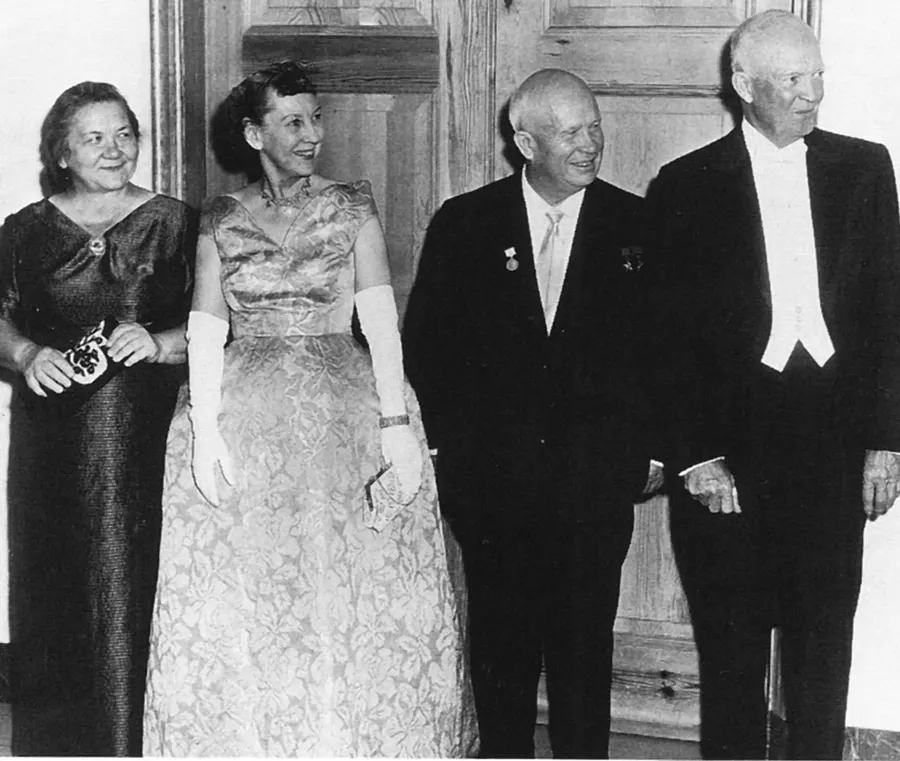
Nina Khrushcheva, Mamie Eisenhower, Nikita Khrushchev and President Dwight Eisenhower at a state dinner during the visit in September 1959Nina Khrushcheva, Mamie Eisenhower, Nikita Khrushchev and President Dwight Eisenhower at a state dinner during the visit in September 1959Image: National Archives and Records Administration · Public domain
politics · Americas

Nikita Khrushchev arrives on the first visit to America by a Soviet leader

At the height of the Cold War, President Dwight Eisenhower invited the Soviet leader Nikita Khrushchev to see the United States for himself. Khrushchev landed at Andrews Air Force Base, near Washington, on 15 September 1959 with his wife and family, and Eisenhower welcomed him in front of a large crowd. Over thirteen days he toured New York, Hollywood, San Francisco, an Iowa farm and Pittsburgh, sparring with his hosts and complaining when he was not allowed to visit Disneyland. The visit ended with talks at Camp David, which eased tension for a time over the future of Berlin.

Source: US Office of the Historian, Foreign Relations of the United States: Visit to the United States of Nikita S. Khrushchev ↗
1963
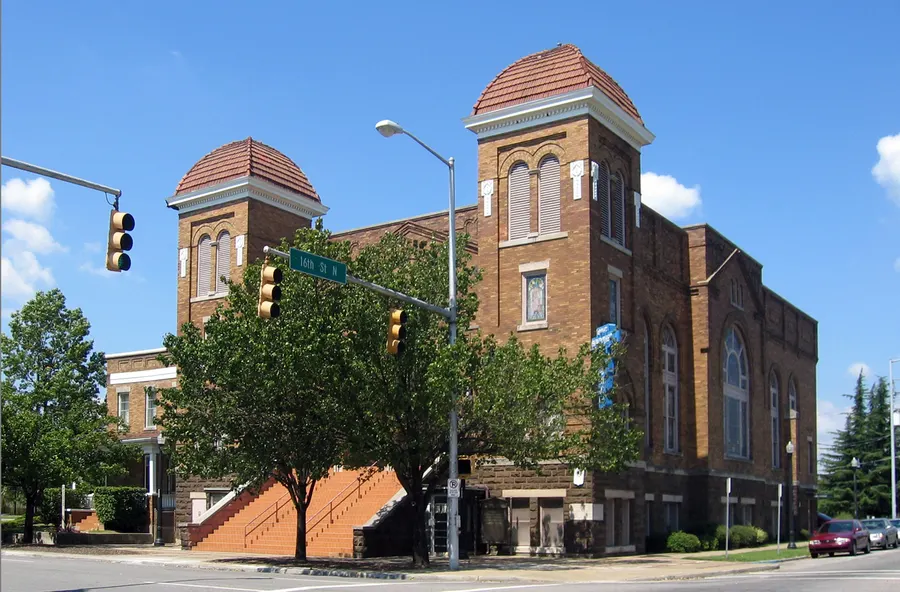
The Sixteenth Street Baptist Church in Birmingham, Alabama, as it stands todayThe Sixteenth Street Baptist Church in Birmingham, Alabama, as it stands todayImage: John Morse · CC BY 2.5
world · Americas

A bomb kills four girls at a church in Birmingham, Alabama

The Sixteenth Street Baptist Church was a meeting place for the civil rights campaign in Birmingham, Alabama, in 1963. On the morning of Sunday 15 September, as children gathered for Sunday school, a bomb planted by members of the Ku Klux Klan exploded beside the building. It killed four girls, Addie Mae Collins, Cynthia Wesley and Carole Robertson, all aged 14, and Denise McNair, aged 11, and injured many others. The murders shocked the country and strengthened support for the Civil Rights Act passed the next year. The first conviction came only in 1977, and two more followed in 2001 and 2002.

Source: US National Park Service: Sixteenth Street Baptist Church ↗
1971
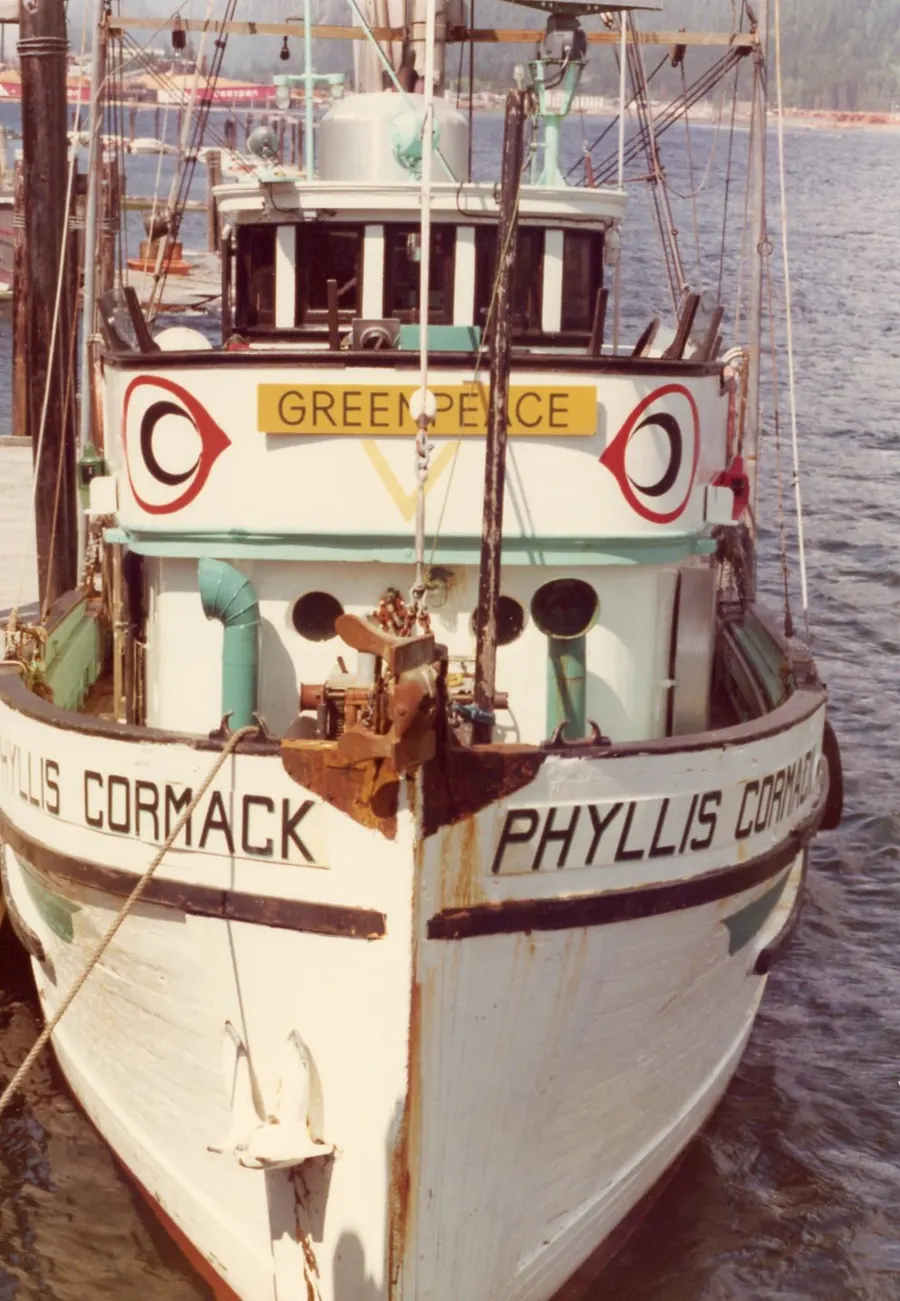
The Phyllis Cormack, the fishing boat used for the first Greenpeace voyage, docked at Tahsis, British Columbia, in 1975The Phyllis Cormack, the fishing boat used for the first Greenpeace voyage, docked at Tahsis, British Columbia, in 1975Image: MetcalfeBill · CC BY-SA 4.0
world · Americas

The first Greenpeace voyage sails from Vancouver

In 1971 the United States planned to explode a large nuclear weapon underground on Amchitka, an island in the Aleutian chain off Alaska. A small group in Vancouver calling itself the Don’t Make a Wave Committee chartered an old halibut boat, the Phyllis Cormack, renamed it Greenpeace for the trip and set out to sail into the test zone. The boat left Vancouver on 15 September 1971 with twelve men aboard. It was turned back by the US Coast Guard and bad weather and the test went ahead in November, but the publicity was enormous, further tests on the island were abandoned, and the committee took the name of its boat.

Source: City of Vancouver Archives: Photographs of the ‘Phyllis Cormack’ (Greenpeace) ↗
1982
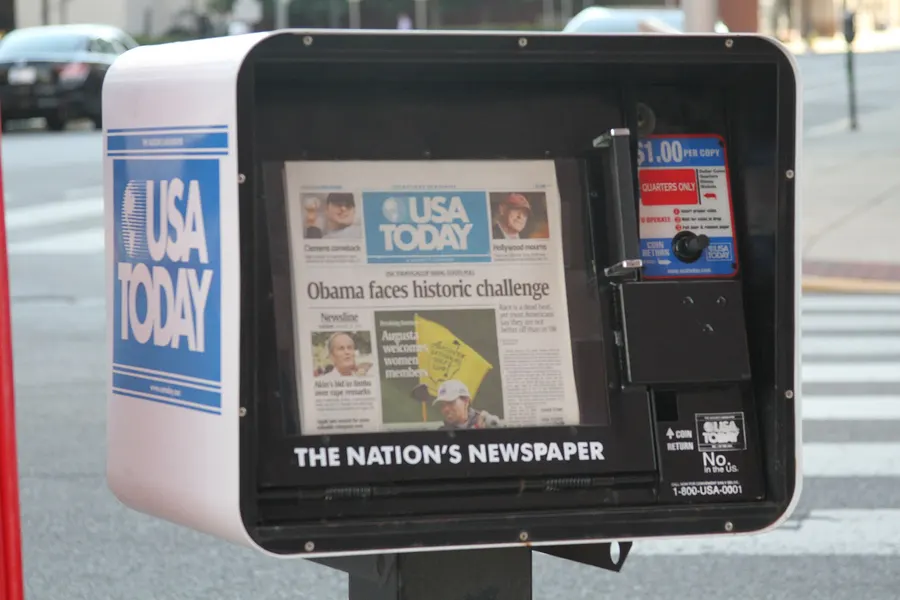
A USA Today newspaper vending machine in Fort Wayne, Indiana, photographed in 2012A USA Today newspaper vending machine in Fort Wayne, Indiana, photographed in 2012Image: Twzink · CC0
world · Americas

USA Today publishes its first issue

American newspapers had always been local: even the most famous belonged to a single city. Al Neuharth, the chairman of the Gannett newspaper chain, believed that travellers and a television generation would buy a national daily, printed at plants around the country from pages sent by satellite. Many in the business thought the plan would lose a fortune. The first issue of USA Today appeared on 15 September 1982, launched at a ceremony in Washington attended by President Ronald Reagan. It went on sale at first in only a few areas, beginning around Washington, and spread across the country over the following year. With its short stories, colour photographs, charts and a full-page colour weather map, it was mocked by rivals as ‘McPaper’, but it found millions of readers, and within a few years most American newspapers had borrowed its colour and its graphics.

Source: Library of Congress, Unfolding History: USA Today at 40 ↗
VI
2000 TO TODAY

Modern Day

The events of recent decades that have already become part of the historical record.

2000
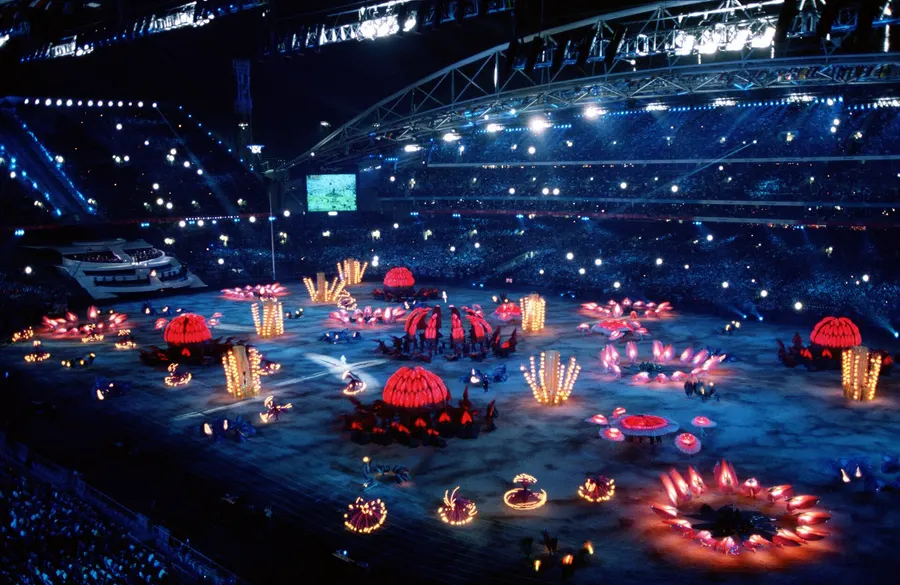
Performers on the floor of the Olympic Stadium in Sydney during the opening ceremony of the 2000 Olympic Games on 15 September 2000Performers on the floor of the Olympic Stadium in Sydney during the opening ceremony of the 2000 Olympic Games on 15 September 2000Image: TSGT Rick Sforza · Public domain
sport · Oceania

Cathy Freeman lights the flame as the Sydney Olympics open

Sydney won the right to stage the Olympic Games of 2000, the second held in Australia after Melbourne in 1956. A new stadium was built at Homebush Bay on reclaimed industrial land, and the organisers hoped the Games would also speak to the country’s long and painful relationship with its Aboriginal and Torres Strait Islander peoples. The Games opened on 15 September 2000 before a crowd of about 110,000. The ceremony told the story of Australia from its ancient cultures onwards, and the teams of North and South Korea marched in together behind one flag. The last runner in the torch relay was the sprinter Cathy Freeman, an Aboriginal Australian, who stood in a pool of water and lit a ring of fire that rose around her to become the cauldron. Ten days later, in the same stadium, she won the 400 metres.

Source: National Museum of Australia, Defining Moments: Cathy Freeman ↗
2008
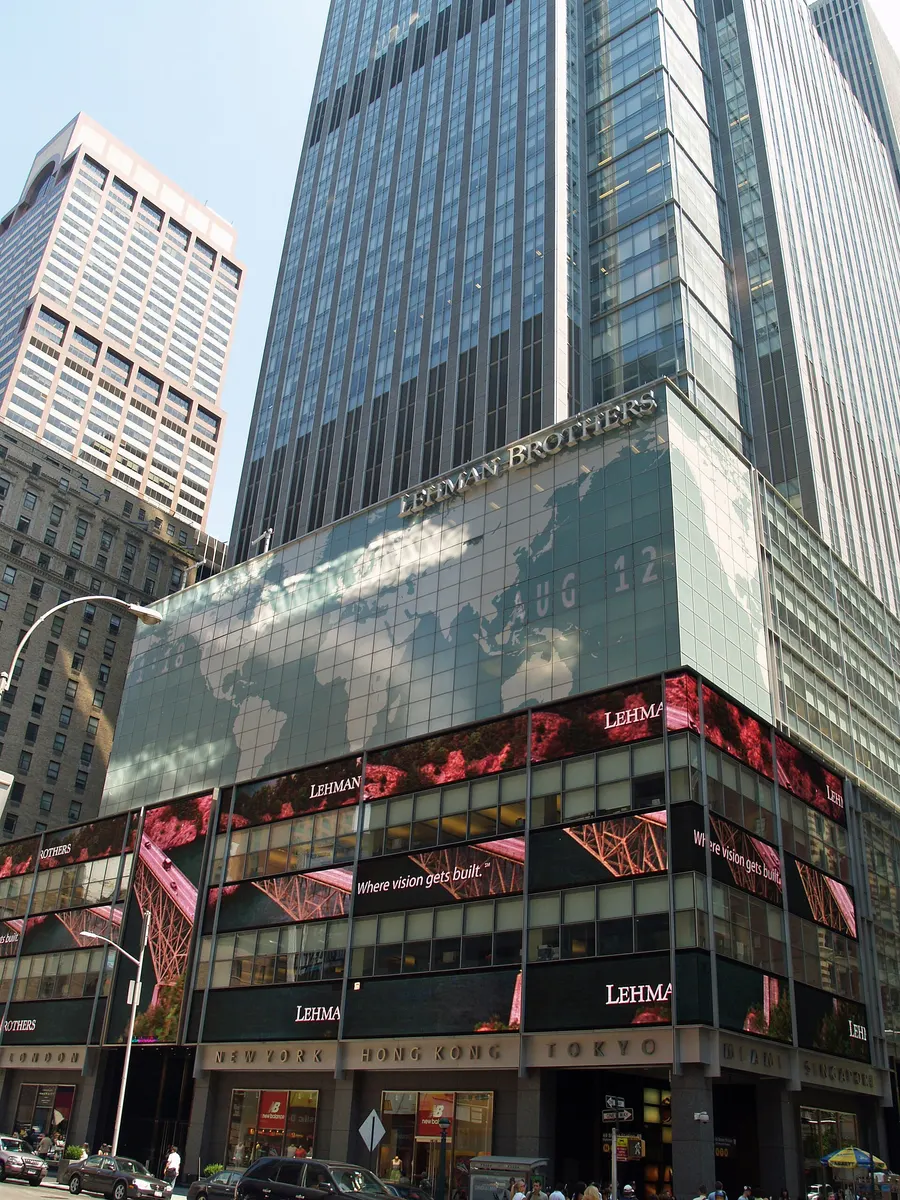
The Manhattan headquarters of Lehman Brothers before the firm's bankruptcy in 2008The Manhattan headquarters of Lehman Brothers before the firm’s bankruptcy in 2008Image: David Shankbone · CC BY-SA 3.0
world · Americas

Lehman Brothers files for bankruptcy

Lehman Brothers, founded by German immigrants in Alabama in the 1840s, had grown into the fourth-largest investment bank in the United States. By 2008 it held huge investments tied to American mortgages, whose value was collapsing. Over a weekend of emergency talks in New York no buyer could be found and the government declined to rescue it. In the early hours of Monday 15 September 2008 the firm filed for bankruptcy, the largest in American history. Panic spread through the world’s financial markets, lending froze, and governments spent vast sums to prop up their banks in the worst financial crisis since the 1930s.

Source: Federal Reserve History: Support for specific institutions ↗
2017
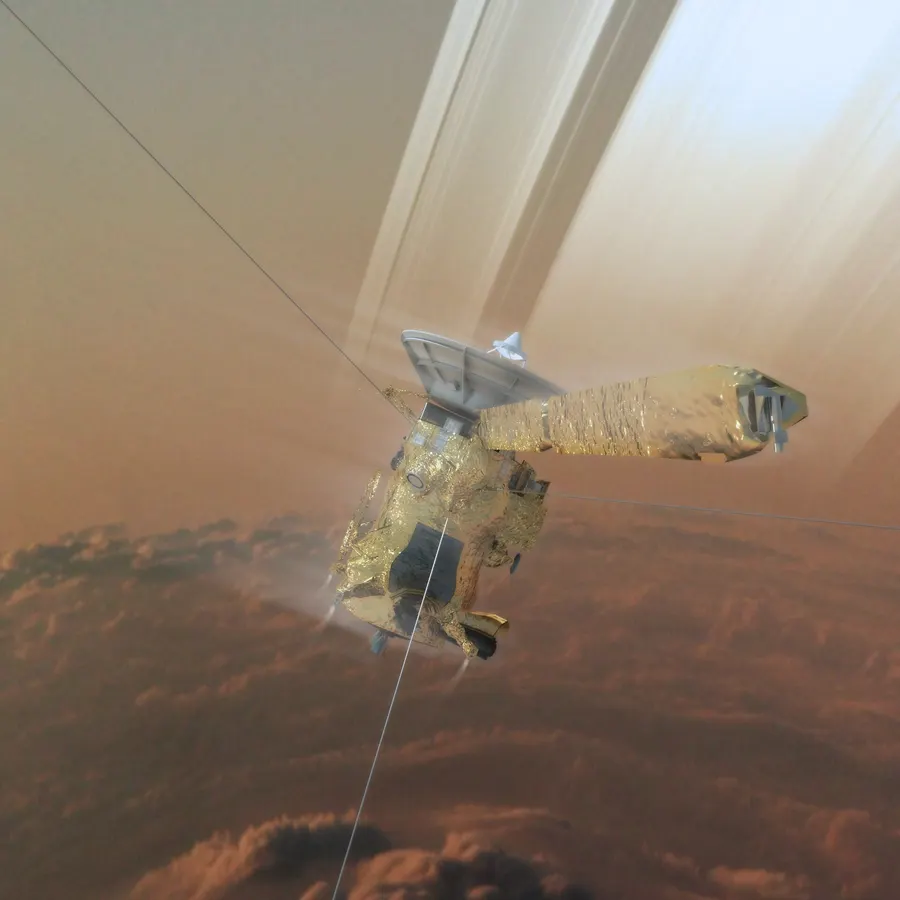
An artist's computer rendering of the Cassini spacecraft above Saturn during its Grand Finale, by Kevin GillAn artist’s computer rendering of the Cassini spacecraft above Saturn during its Grand Finale, by Kevin GillImage: Kevin Gill · CC BY 2.0
world · Global

The Cassini spacecraft ends its mission by plunging into Saturn

Cassini, a joint mission of NASA, the European Space Agency and the Italian space agency, was launched in 1997 and went into orbit around Saturn in 2004. Over thirteen years it studied the planet, its rings and its moons, landed the Huygens probe on Titan and found jets of water spraying from an ocean beneath the ice of Enceladus. With its fuel almost gone, controllers steered it into Saturn so that it could never crash into and contaminate one of those moons. On 15 September 2017 it dived into the atmosphere, sending back data until its signal was lost, and burned up like a meteor.

Source: NASA Jet Propulsion Laboratory: NASA’s Cassini spacecraft ends its historic exploration of Saturn ↗
RESEARCH

Sources & Further Reading

Selected authoritative references supporting the events on this page.

Britannica: Saint Ludmila↗Radio Prague International: Ludmila, the first Czech saint, martyred 1100 years ago↗Parks Canada: Battle of Signal Hill National Historic Event↗Heritage Newfoundland and Labrador (Memorial University): The Seven Years’ War, 1756-1763↗George Washington’s Mount Vernon: Battle of Kip’s Bay↗Library of Congress, George Washington Papers: Timeline, the American Revolution↗Library of Congress, In Custodia Legis: Acta de Independencia de Centro América↗US Office of the Historian: Central American Federation↗Science and Industry Museum: The making of the Liverpool and Manchester Railway↗Science Museum Group Collection: Huskisson Memorial tablet↗Darwin Online: Darwin’s field notes on the Galapagos, ‘A little world within itself’↗Britannica: Charles Darwin, the Beagle voyage↗Japan Center for Asian Historical Records, National Archives of Japan: 15 September 1894, Fall of Pyongyang↗MIT Visualizing Cultures: Throwing Off Asia II↗The Tank Museum: Tanks at Flers↗Imperial War Museums: How Britain invented the tank in the First World War↗United States Holocaust Memorial Museum: The Nuremberg Race Laws↗Britannica: Nürnberg Laws↗Imperial War Museums: 8 important dates in the Battle of Britain↗Royal Air Force, Air and Space Power Review: Battle of Britain Day, 15th September 1940↗US Naval History and Heritage Command: Inchon Landing (Operation Chromite)↗Britannica: Inchon landing↗US Office of the Historian, Foreign Relations of the United States: Visit to the United States of Nikita S. Khrushchev↗PBS American Experience: Khrushchev’s trip itinerary↗US National Park Service: Sixteenth Street Baptist Church↗US National Archives, Rediscovering Black History: The Sixteenth Street Baptist Church↗City of Vancouver Archives: Photographs of the ‘Phyllis Cormack’ (Greenpeace)↗Greenpeace International: Founders↗Library of Congress, Unfolding History: USA Today at 40↗Britannica: USA Today↗National Museum of Australia, Defining Moments: Cathy Freeman↗Olympics.com: Cathy Freeman at Sydney 2000, moments of magic↗Federal Reserve History: Support for specific institutions↗Harvard Business School, Baker Library: Lehman Brothers, bankruptcy↗NASA Jet Propulsion Laboratory: NASA’s Cassini spacecraft ends its historic exploration of Saturn↗European Space Agency: Cassini concludes pioneering mission at Saturn↗
WHY THESE MOMENTS?

Significance before volume

This page is not the longest possible list of events. It is a chronological journey through 15 September, where each entry is chosen for historical significance, human interest and reliability.

Facts are checked against authoritative museums, archives, universities and reference works. Where sources disagree, the page says so.

EXPLORED THE DEEPER STORY?

Return to the highlights of 15 September

Discover the lighter side of the date with famous birthdays, culture, firsts and lives remembered.

Explore This Day →