HISTORY & TIMELINE
12 September

A journey through
12 September in history

The story of 12 September runs from the Battle of Muret in 1213 to the opening of Hong Kong Disneyland in 2005. In between come the relief of Vienna, Henry Hudson’s voyage up the river that bears his name, the Swiss federal constitution, Arbroath’s 36-0 Scottish Cup win, the last stand at Saragarhi, the premiere of Mahler’s Eighth Symphony, the discovery of Lascaux, Kennedy’s Moon speech at Rice University, Gemini 11’s record climb, the fall of Haile Selassie, Pietro Mennea’s 200 metres world record, the Two Plus Four Treaty, and in 1992 both Mae Jemison’s flight into space and the capture of the Shining Path leader Abimael Guzmán.

II
THE MIDDLE AGES

Medieval History

Kingdoms, conflict, faith, power and the changing medieval world.

1213
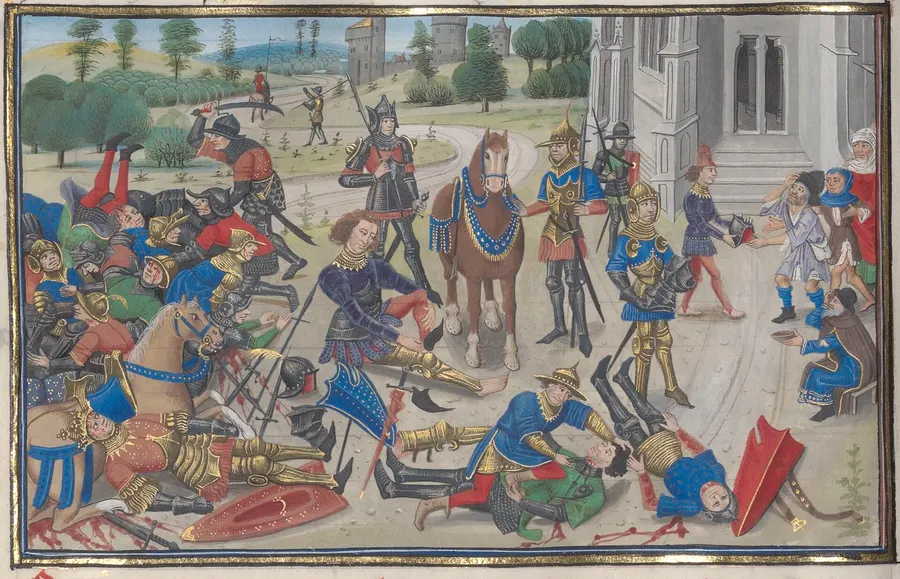
The Battle of Muret in a 15th-century illuminated manuscript of the Chroniques abrégées by David Aubert, Bibliothèque de l'Arsenal, ParisThe Battle of Muret in a 15th-century illuminated manuscript of the Chroniques abrégées by David Aubert, Bibliothèque de l’Arsenal, ParisImage: Loyset Liédet · Public domain
world · Europe

Simon de Montfort defeats Peter II of Aragon at Muret

The Albigensian Crusade, launched by the Pope against the Cathar heretics of southern France, had become a war for control of Languedoc. Count Raymond VI of Toulouse turned for help to his brother-in-law, King Peter II of Aragon, who also had lands and vassals north of the Pyrenees. On 12 September 1213 their larger army met the crusaders of Simon de Montfort outside the town of Muret, south of Toulouse. Montfort’s knights charged out of the town, Peter was killed in the fighting and the southern army broke. The defeat ended Aragon’s ambitions in southern France and opened the way for the French crown.

Source: Britannica: Battle of Muret ↗
III
A CHANGING WORLD

Early Modern Era

Exploration, political change, scientific development and expanding global connections.

1609
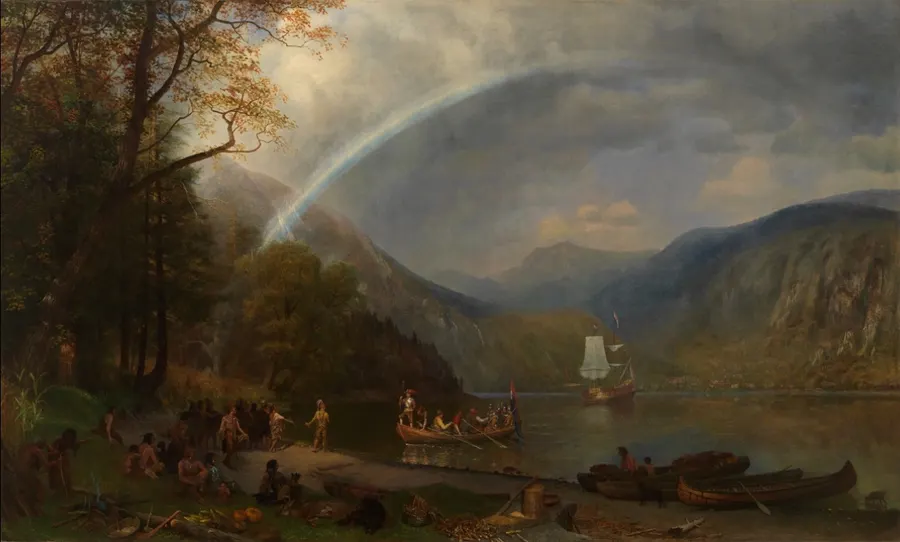
The Discovery of the Hudson River, a painting by Albert Bierstadt showing the Half Moon at anchor on the riverThe Discovery of the Hudson River, a painting by Albert Bierstadt showing the Half Moon at anchor on the riverImage: Albert Bierstadt · Public domain
world · Americas

Henry Hudson’s Half Moon sails into the river that will bear his name

The English navigator Henry Hudson sailed from Amsterdam in April 1609 in the Half Moon, a small ship of the Dutch East India Company, to look for a northern route to Asia. Blocked by ice, he turned west to North America. According to the ship’s journal, on 12 September 1609 the Half Moon entered the great river that flows past today’s Manhattan, and Hudson spent the following days sailing upstream, trading with the Lenape and Mahican peoples, until near present-day Albany the water became too shallow. The river was no route to Asia, but his reports led the Dutch to found the colony of New Netherland.

Source: New-York Historical Society: Henry Hudson, voyager, explorer, lost at sea ↗
1683
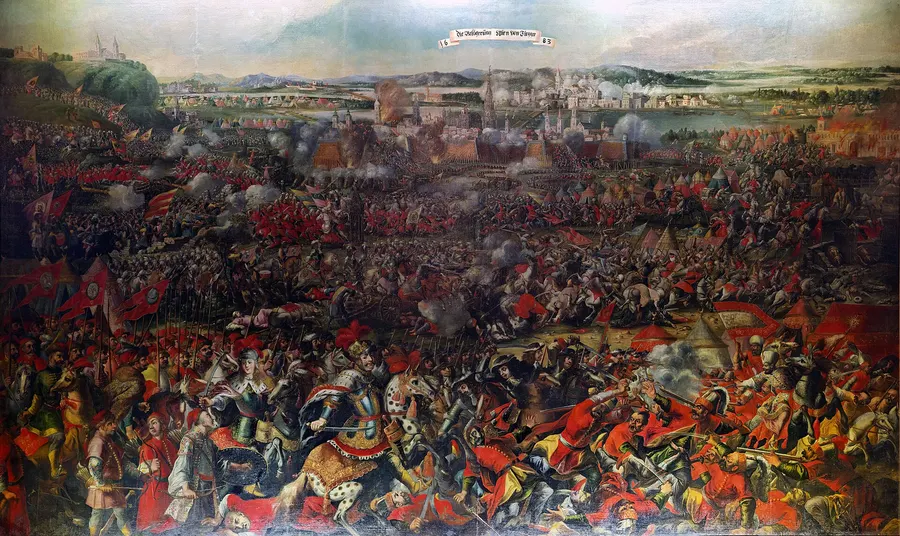
The relief of Vienna in 1683, a painting by an anonymous artist of the time showing the battle before the city wallsThe relief of Vienna in 1683, a painting by an anonymous artist of the time showing the battle before the city wallsImage: Anonymer, zeitgenössischer Maler · Public domain
world · Europe

Jan Sobieski’s relief army breaks the Ottoman siege of Vienna

In the summer of 1683 the Ottoman grand vizier Kara Mustafa led a huge army up the Danube and, in mid-July, laid siege to Vienna, the seat of the Habsburg emperor Leopold I. The emperor left the city, and its garrison and citizens held out behind the walls for two months while Ottoman engineers dug mines beneath the bastions. By early September the defenders were exhausted and short of food, and the walls had been breached in places. Help came from a coalition that Leopold and the Pope had worked to build. Imperial, Bavarian, Saxon and other German troops joined a Polish army under King Jan III Sobieski, who took overall command; the whole force is put at some 70,000 to 80,000 men. On 12 September 1683 they came down from the wooded heights of the Kahlenberg, north-west of the city. Late in the afternoon a great charge of cavalry, led by the Polish hussars, broke the Ottoman camp, and Kara Mustafa fled. The defeat began a long Ottoman retreat from central Europe, and the sultan had the grand vizier executed that December.

Source: Britannica: Battle of Kahlenberg ↗
IV
THE NINETEENTH CENTURY

The 1800s

Industry, empire, invention, reform and a century of enormous transformation.

1848
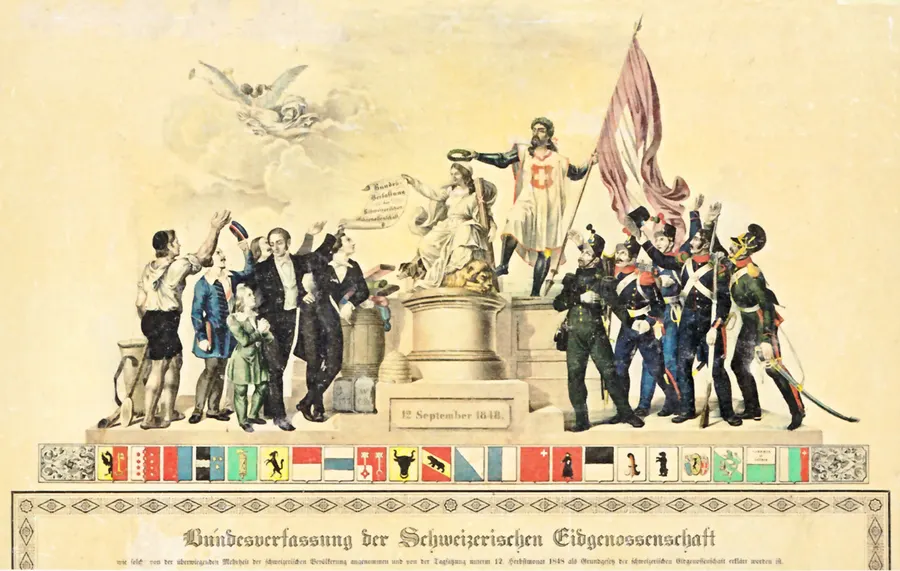
A commemorative print marking the entry into force of the Swiss federal constitution on 12 September 1848A commemorative print marking the entry into force of the Swiss federal constitution on 12 September 1848Image: Unknown author · Public domain
politics · Europe

Switzerland becomes a federal state

Until 1848 Switzerland was a loose alliance of sovereign cantons. After a short civil war in November 1847, in which the liberal cantons defeated the Catholic conservative Sonderbund, a new federal constitution was drawn up. The cantons voted on it in the summer of 1848, and on 12 September 1848 the Diet declared it adopted. It created a federal government with a two-chamber parliament and a seven-member Federal Council, gave men the vote, and joined the cantons into one market with one currency. Much revised, it remains the basis of the Swiss state.

Source: The Federal Assembly of Switzerland: Switzerland’s first Federal Constitution ↗
1885
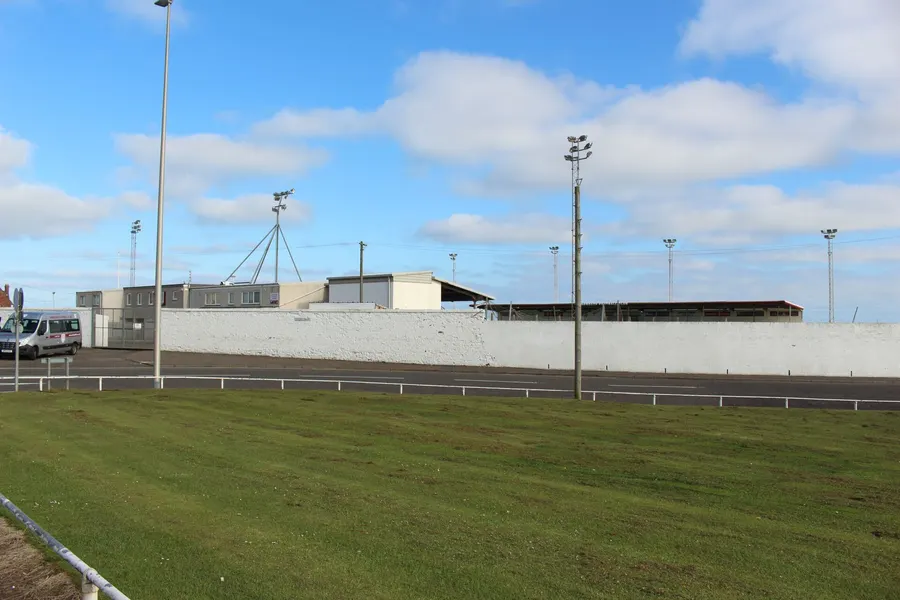
Gayfield Park, the home ground of Arbroath Football ClubGayfield Park, the home ground of Arbroath Football ClubImage: Graham Robson · CC BY-SA 2.0
sport · Europe

Arbroath beat Bon Accord 36-0 in the Scottish Cup

On 12 September 1885, in the first round of the Scottish Cup, Arbroath played Bon Accord, a club from Aberdeen, at their home ground in Arbroath. The home side won 36-0, with John Petrie scoring 13 goals, and the referee is said to have disallowed several more. It remains the biggest winning margin in a senior football match. On the same afternoon Dundee Harp beat Aberdeen Rovers 35-0 a few miles away.

Source: Arbroath FC: Arbroath 36 - 0 Bon Accord, Saturday 12th September 1885 ↗
1897
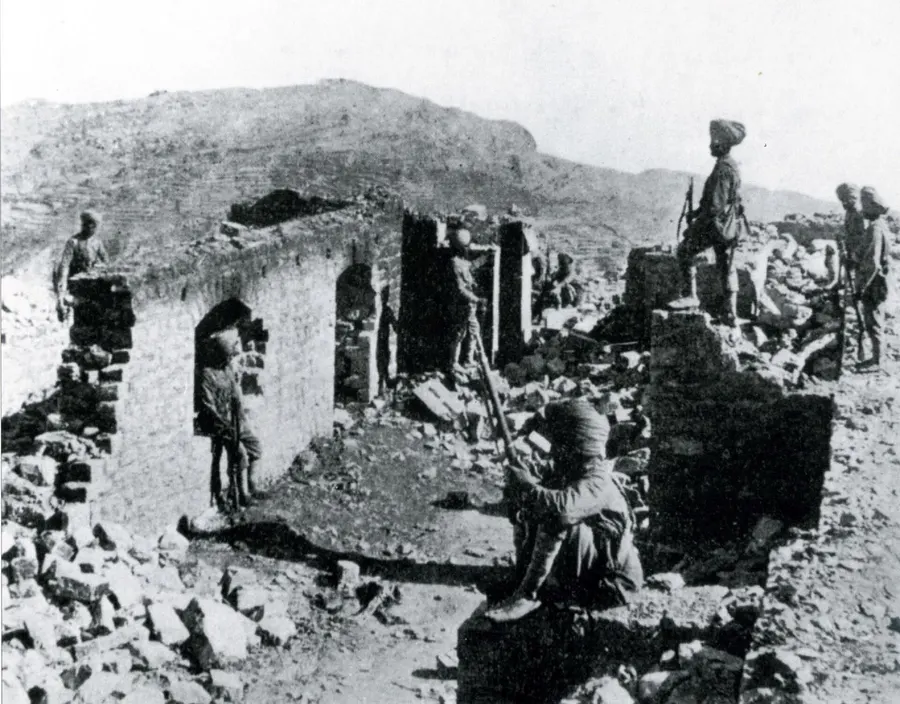
The ruins of the Saragarhi post, showing the main entrance, with Fort Lockhart in the distanceThe ruins of the Saragarhi post, showing the main entrance, with Fort Lockhart in the distanceImage: Unknown author · Public domain
world · Asia

Twenty-one Sikh soldiers hold the post at Saragarhi

In 1897 risings broke out among the Pashtun tribes on the North-West Frontier of British India, in what is now Pakistan. On the Samana Ridge the British held two old forts, Lockhart and Gulistan, which could not see each other. Between them stood Saragarhi, a small signalling post that passed messages by heliograph and flag. It was held by 21 men of the 36th Sikhs, a regiment of the Indian Army, under Havildar Ishar Singh. On 12 September 1897 thousands of Orakzai and Afridi tribesmen, as many as 10,000 by some accounts, attacked the post. The defenders refused to surrender and fought for most of the day, signalling news of the battle to Fort Lockhart until the end. When the walls were breached they fought on with their bayonets, and all were killed. All 21 were awarded the Indian Order of Merit, then the highest gallantry award open to Indian soldiers. Saragarhi Day is still marked each year by the Sikh Regiment of the Indian Army and by the British Army.

Source: National Army Museum: 36th Sikhs on the ruins of Saragarhi, 1897 ↗
V
THE TWENTIETH CENTURY

The 1900s

War and peace, technological leaps, social change, politics, sport and popular culture.

1910
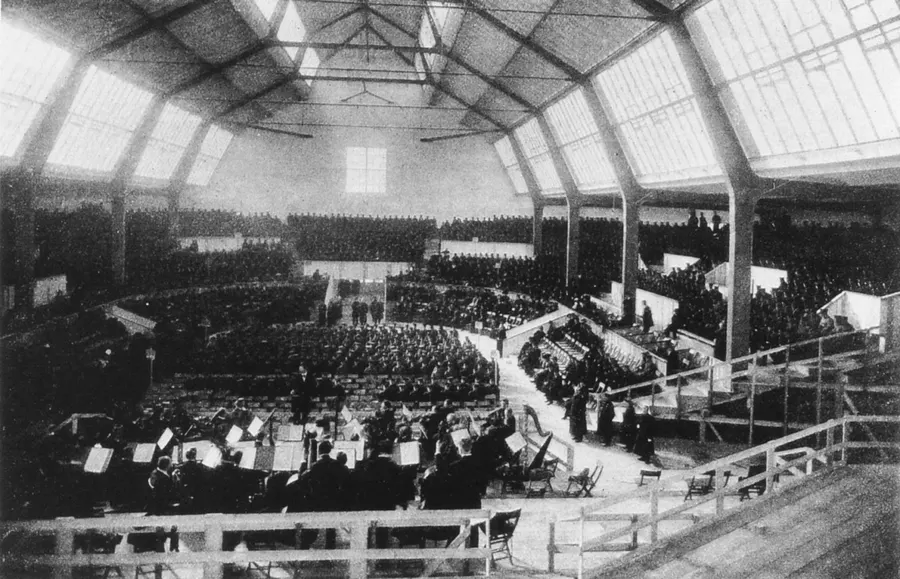
Orchestra and choirs in the Neue Musik-Festhalle, Munich, at the dress rehearsal for the premiere of Mahler's Eighth Symphony, September 1910Orchestra and choirs in the Neue Musik-Festhalle, Munich, at the dress rehearsal for the premiere of Mahler’s Eighth Symphony, September 1910Image: Jaeger & Goergen, München · Public domain
culture · Europe

Mahler’s Eighth Symphony is first performed in Munich

Gustav Mahler’s Eighth Symphony sets a medieval Latin hymn and the closing scene of Goethe’s Faust for a vast orchestra, eight solo singers, two adult choirs and a children’s choir. Its promoter billed it as the ‘Symphony of a Thousand’. Mahler conducted the first performance on 12 September 1910 in the new exhibition concert hall in Munich, before an audience that included Richard Strauss, Thomas Mann and Max Reinhardt. It was the greatest success of his life, greeted by a standing ovation lasting many minutes. It was also the last premiere he conducted; he died the following May.

Source: Mahler Foundation: Concert Munich 12-09-1910, Symphony No. 8 (premiere) ↗
1940
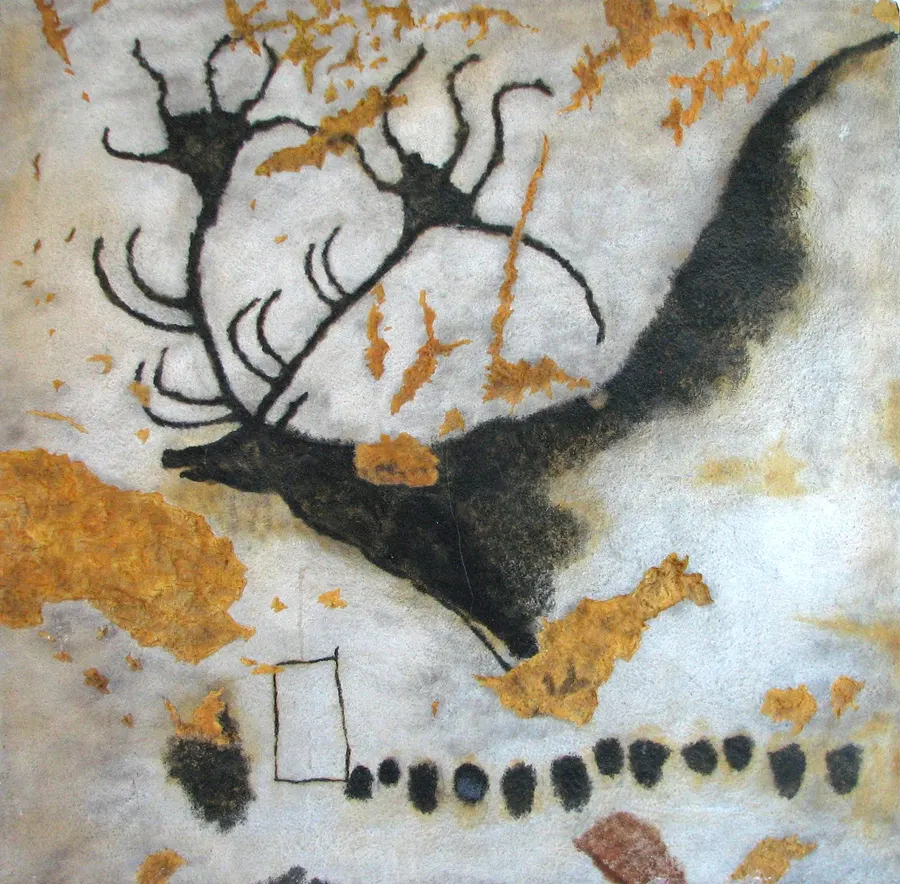
A painting of a giant deer, Megaloceros, on the wall of the Lascaux caveA painting of a giant deer, Megaloceros, on the wall of the Lascaux caveImage: HTO · Public domain
culture · Europe

Four teenagers find the painted cave of Lascaux

Above the small town of Montignac in the Dordogne, in south-west France, there was a hole in the hillside, thought to be an old foxes’ den. In September 1940, with France newly defeated and occupied, Marcel Ravidat, a 17-year-old apprentice mechanic, came across it and decided to explore. A few days later, on 12 September, he returned with three other boys, Jacques Marsal, Georges Agniel and Simon Coencas. They widened the opening and slid down into the dark. By the light of a lamp they saw walls covered with painted horses, bulls, deer and other animals. The boys told their teacher, and within days the prehistorian Henri Breuil came to see the cave. Its roughly 600 paintings and 1,500 engravings, made more than 17,000 years ago, are among the finest Stone Age art ever found. Lascaux opened to visitors in 1948, but their breath damaged the paintings and it was closed in 1963. Today visitors see exact replicas, and the cave is part of a World Heritage Site.

Source: French Ministry of Culture, Lascaux: The discovery ↗
1962
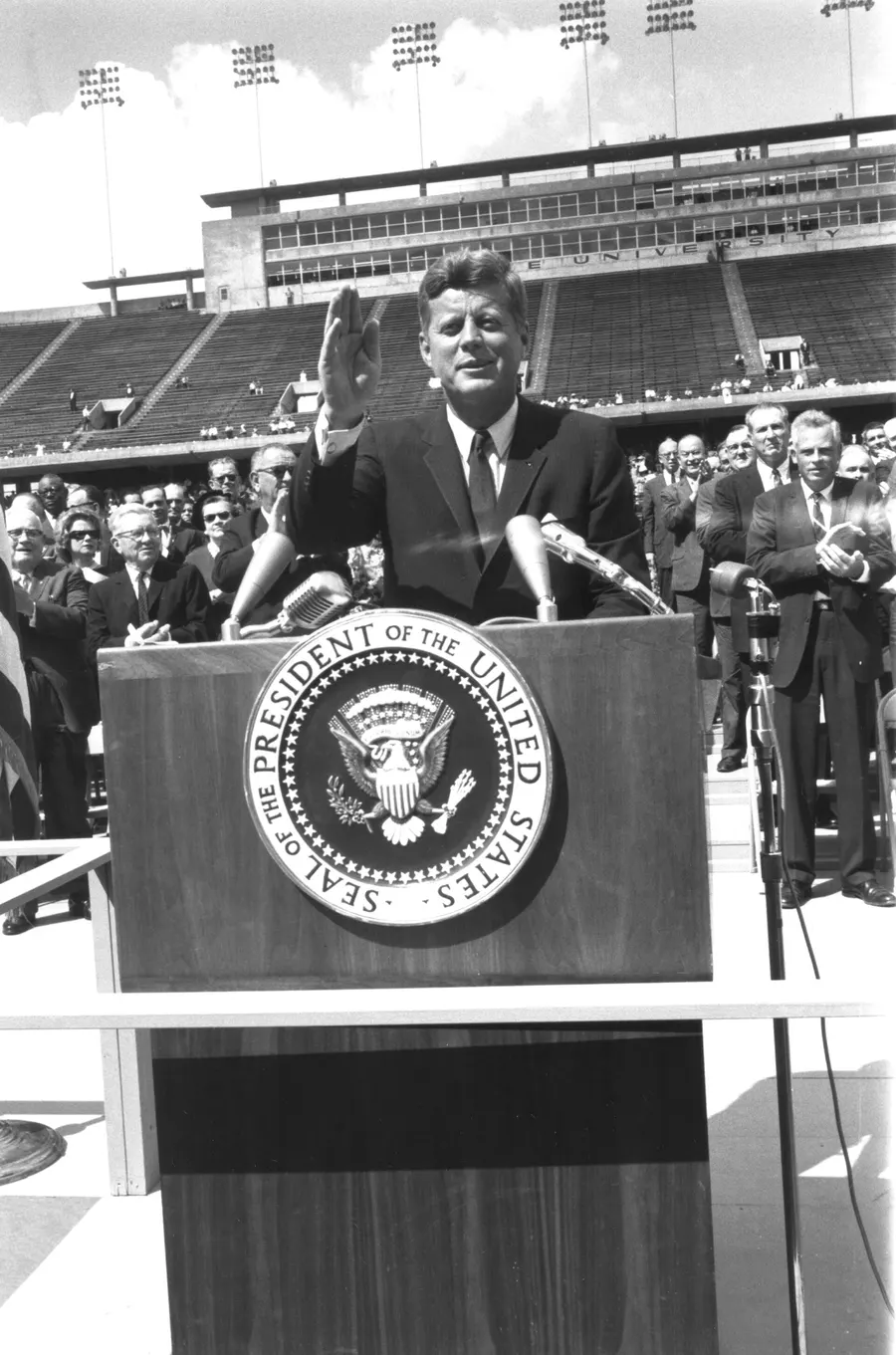
President John F. Kennedy speaks to a crowd of about 35,000 people in the football stadium at Rice University, Houston, on 12 September 1962President John F. Kennedy speaks to a crowd of about 35,000 people in the football stadium at Rice University, Houston, on 12 September 1962Image: NASA · Public domain
world · Americas

Kennedy tells America why it will go to the Moon

In May 1961, weeks after the Soviet Union had put the first man into orbit, President John F. Kennedy asked Congress to commit the United States to landing a man on the Moon and returning him safely before the end of the decade. The cost was enormous, and the space agency was building a new centre for human spaceflight in Houston, Texas, to manage the effort. On 12 September 1962, after touring the space facilities, Kennedy spoke to a crowd of about 35,000 in the stadium at Rice University. He set the Moon programme in the long story of human discovery and said: ‘We choose to go to the Moon in this decade and do the other things, not because they are easy, but because they are hard.’ The speech became one of the best known of his presidency. Kennedy did not live to see the landing, but in July 1969 Apollo 11 met his goal.

Source: John F. Kennedy Presidential Library: Address at Rice University on the Nation’s Space Effort ↗
1966
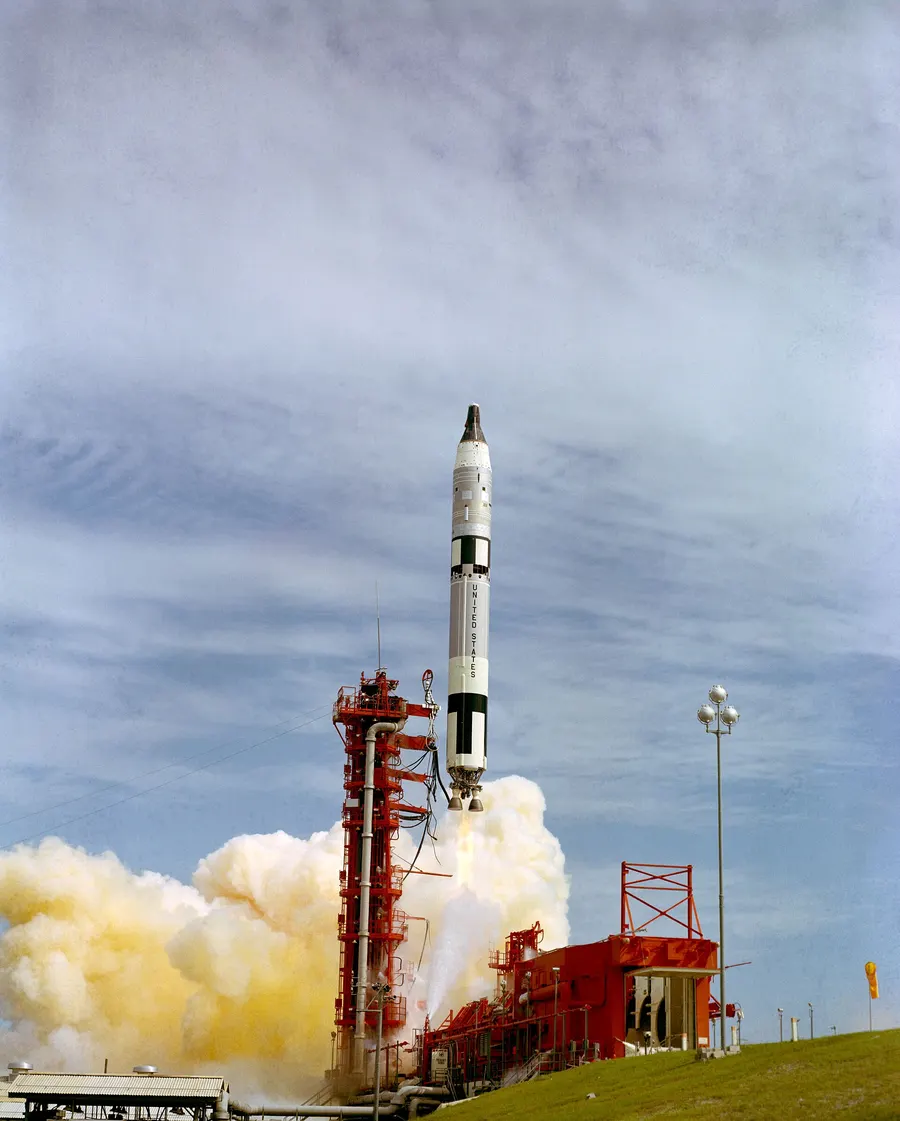
The Gemini 11 spacecraft lifts off on its Titan II rocket from Cape Kennedy on 12 September 1966The Gemini 11 spacecraft lifts off on its Titan II rocket from Cape Kennedy on 12 September 1966Image: NASA · Public domain
world · Americas

Gemini 11 lifts off and climbs to a record height

On 12 September 1966 the astronauts Pete Conrad and Richard Gordon were launched from Cape Kennedy in Gemini 11. Within their first orbit they caught up with and docked with an unmanned Agena target rocket, a manoeuvre the Apollo missions would need on the way back from the Moon. Two days later they fired the Agena’s engine and rose to about 1,370 kilometres (853 miles) above the Earth, taking photographs of the curved planet below. It remained the highest crewed flight in Earth orbit for 58 years.

Source: NASA: Gemini XI ↗
1974
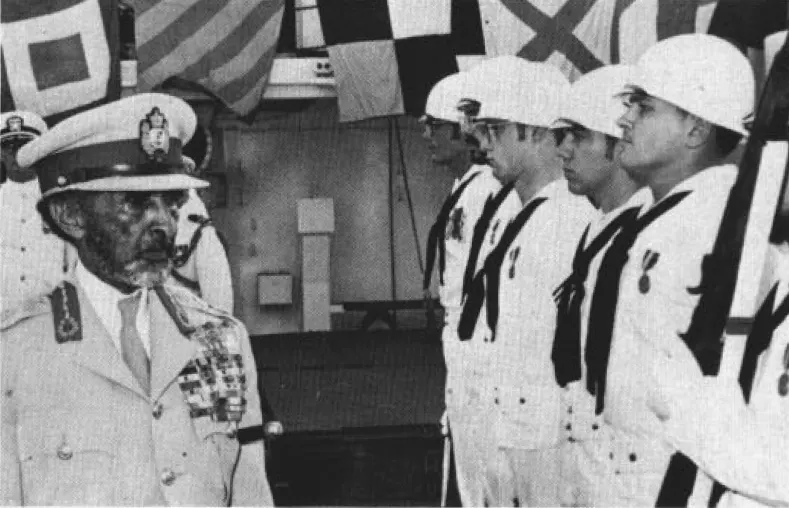
Emperor Haile Selassie I aboard the US Navy ship USS La Salle in 1973, the year before he was deposedEmperor Haile Selassie I aboard the US Navy ship USS La Salle in 1973, the year before he was deposedImage: U.S. Navy · Public domain
politics · Africa

Ethiopia’s army deposes Emperor Haile Selassie

Haile Selassie had ruled Ethiopia since 1930, as regent and then emperor. He led resistance to the Italian invasion of 1935, returned in triumph in 1941 and became a respected voice in Africa, but at home power stayed with the crown, the nobility and the church, and most Ethiopians remained poor peasants. In 1973 a famine in the province of Wollo killed many thousands of people while the government played it down, and early in 1974 rising prices set off strikes, student protests and mutinies in the army. A committee of junior officers and soldiers, which became known as the Derg, began arresting ministers and nobles over the summer. On 12 September 1974 it formally deposed the aged emperor and took power as the Provisional Military Administrative Council. The monarchy was abolished the following year, and Haile Selassie died in custody in August 1975. Major Mengistu Haile Mariam, one of the Derg’s leaders, soon emerged as the country’s ruler and governed with great brutality until 1991.

Source: Britannica: History of Ethiopia, the rise and reign of Haile Selassie I ↗
1979
sport · Americas

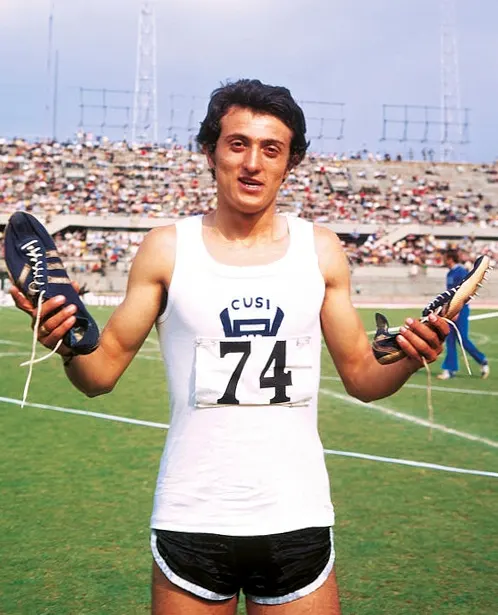
Pietro Mennea runs 200 metres in 19.72 seconds

Pietro Mennea grew up in Barletta in southern Italy and became one of Europe’s greatest sprinters, slight of build but fiercely hard-working. He won Olympic bronze in the 200 metres at Munich in 1972 and European titles, and in 1979 he travelled to Mexico City for the World University Games, held in the thin air 2,240 metres above sea level, where sprinters meet less resistance. On 12 September 1979, in the 200 metres final, he ran 19.72 seconds, with a following wind of 1.8 metres per second, just inside the legal limit. It took more than a tenth of a second off the world record set by Tommie Smith at the same altitude in 1968. Mennea’s record lasted almost 17 years, until 1996, and it is still the European record. The next year he won the Olympic 200 metres title in Moscow.

Source: World Athletics: Pietro Mennea passes away ↗
1990
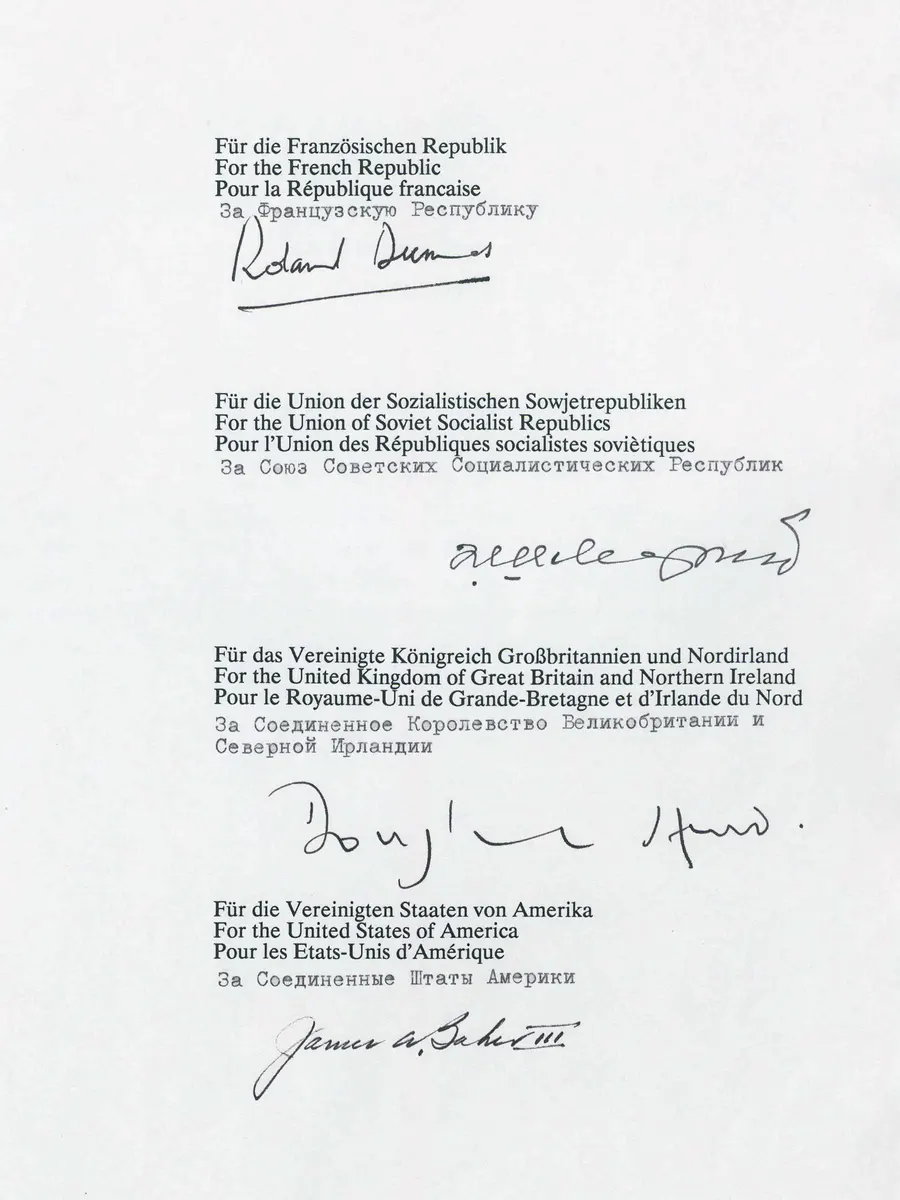
Signatures of the French, Soviet, British and American foreign ministers on the Treaty on the Final Settlement with Respect to Germany, Moscow, 12 September 1990Signatures of the French, Soviet, British and American foreign ministers on the Treaty on the Final Settlement with Respect to Germany, Moscow, 12 September 1990Image: Signatures of Roland Dumas, Eduard Shevardnadze, Douglas Hurd and James Baker · Public domain
world · Europe

The Two Plus Four Treaty clears the way for German unity

After the Second World War, Germany was divided and the four victorious powers, the United States, the Soviet Union, Britain and France, kept special rights over the country as a whole and over Berlin. When the Berlin Wall fell in November 1989 and East Germans voted for unity, those rights had to be settled before the two German states could become one. From May 1990 the foreign ministers of East and West Germany and the four powers met in a series of talks known as Two Plus Four. On 12 September 1990 the six ministers signed the Treaty on the Final Settlement with Respect to Germany at a hotel in Moscow. The united Germany accepted its existing borders, including the frontier with Poland, as final, renounced nuclear, biological and chemical weapons, and agreed to cut its armed forces to 370,000. Soviet troops would leave the former East Germany by 1994, and the country would be free to stay in NATO. The four powers suspended their rights from the day of unity, 3 October 1990, and the treaty came fully into force in March 1991, when Germany regained complete sovereignty.

Source: CVCE, University of Luxembourg: Signing of the ‘Two Plus Four’ Treaty (Moscow, 12 September 1990) ↗
1992
Mae Jemison floating weightless aboard Endeavour during the STS-47 mission in 1992Mae Jemison floating weightless aboard Endeavour during the STS-47 mission in 1992Image: NASA · Public domain
world · Americas

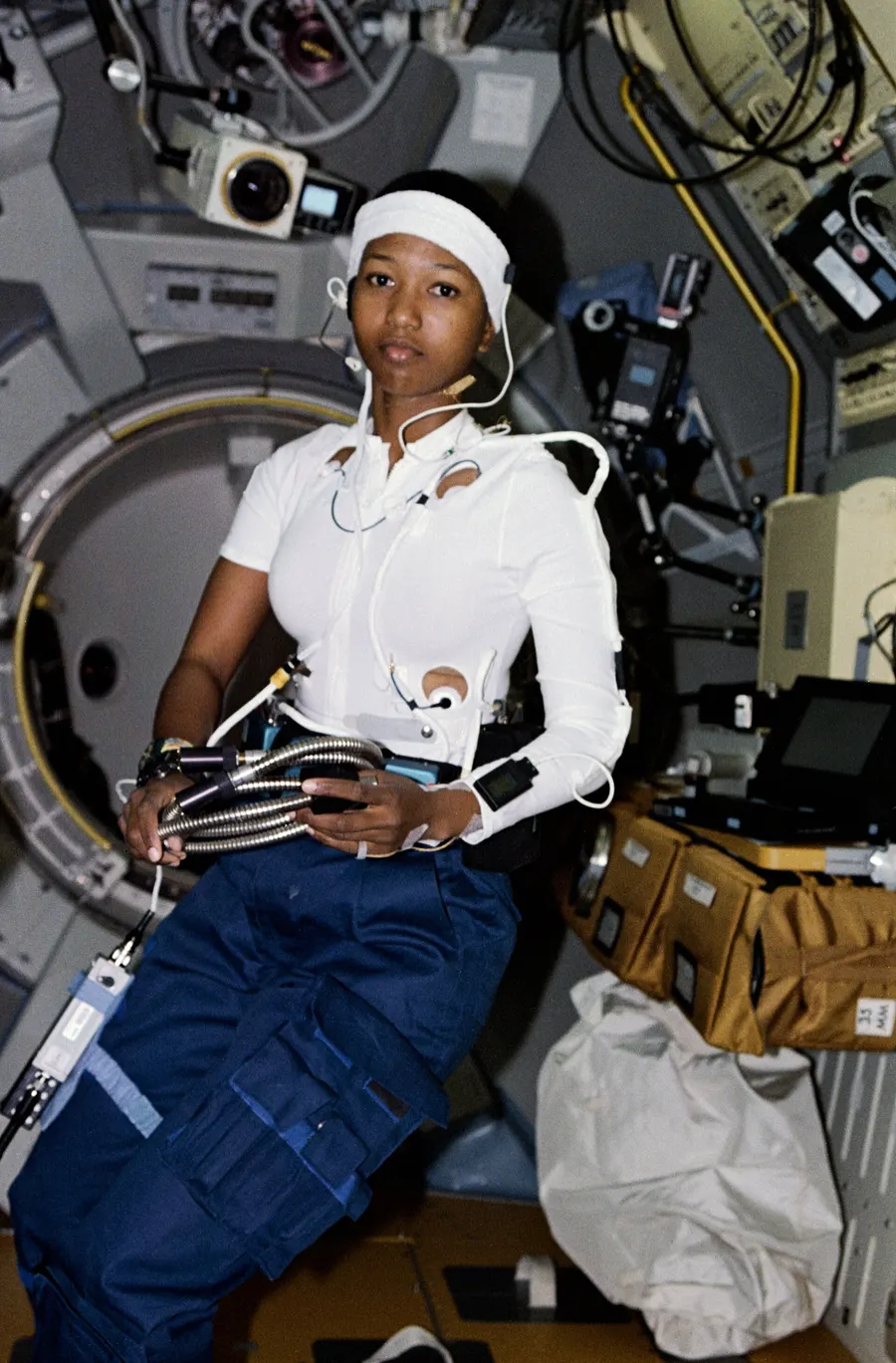
Mae Jemison becomes the first African American woman in space

On 12 September 1992 the space shuttle Endeavour lifted off from Florida on the 50th shuttle mission, carrying Spacelab-J, a laboratory of experiments run jointly with Japan. Its crew of seven included Mae Jemison, a doctor and engineer, who became the first African American woman to travel into space. Mamoru Mohri became the first Japanese astronaut to fly on the shuttle, and Mark Lee and Jan Davis were the first married couple to fly in space together. The mission lasted almost eight days.

Source: NASA Space Science Data Coordinated Archive: STS 47 ↗
1992
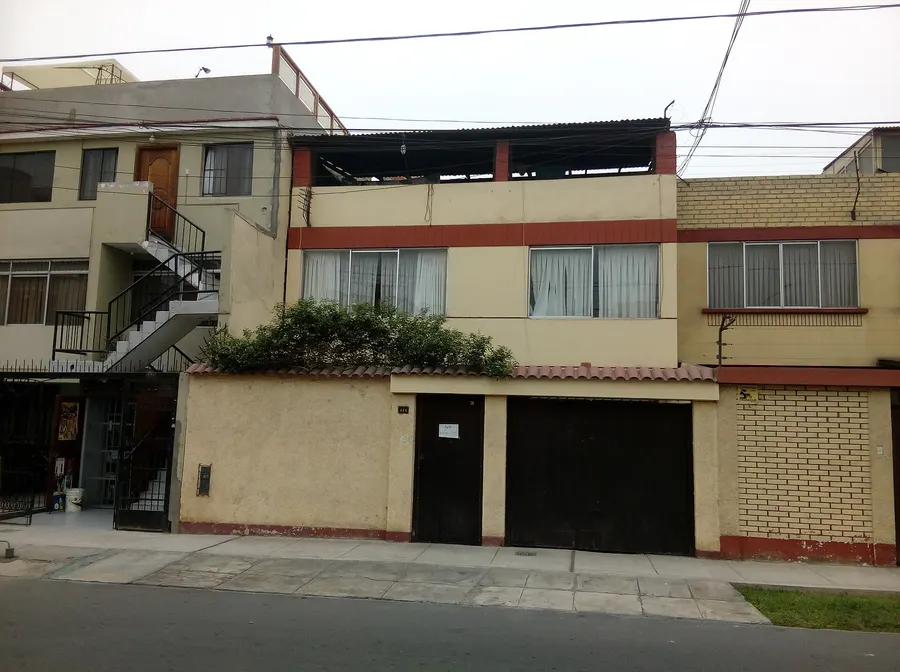
The house in the Surquillo district of Lima where Abimael Guzmán was captured in 1992The house in the Surquillo district of Lima where Abimael Guzmán was captured in 1992Image: Mayimbú · CC BY-SA 4.0
politics · Americas

Peruvian police capture the Shining Path leader Abimael Guzmán

From 1980 the Maoist group Shining Path waged a violent insurgency in Peru, and the conflict between the guerrillas and the state cost tens of thousands of lives. On the evening of 12 September 1992 officers of a special intelligence unit of the national police, who had spent months watching a house in the Surquillo district of Lima, raided it and arrested the movement’s founder, Abimael Guzmán, with other leaders. He was sentenced to life imprisonment, and the movement declined rapidly after his capture.

Source: Lugar de la Memoria (Peruvian Ministry of Culture): 32 years since the capture of Abimael Guzmán ↗
VI
2000 TO TODAY

Modern Day

The events of recent decades that have already become part of the historical record.

2005
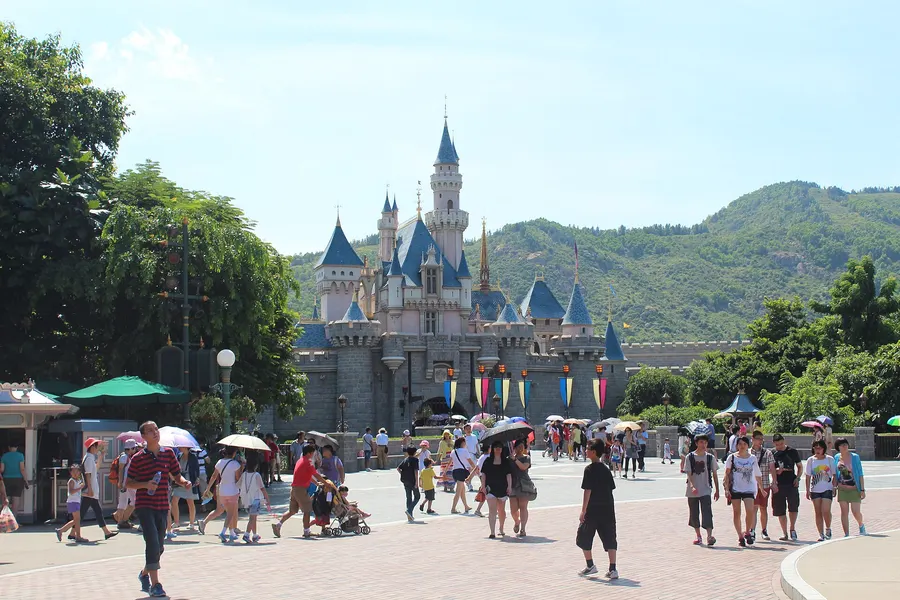
Sleeping Beauty Castle at Hong Kong DisneylandSleeping Beauty Castle at Hong Kong DisneylandImage: Deror_avi · CC BY-SA 3.0
culture · Asia

Hong Kong Disneyland opens

Hong Kong Disneyland, built on reclaimed land at Penny’s Bay on Lantau Island as a joint venture between the Hong Kong government and the Walt Disney Company, opened on 12 September 2005. It was Disney’s fifth resort and its second in Asia after Tokyo, and the government hoped it would draw families from mainland China and across the region. The Chief Executive, Donald Tsang, spoke at the opening ceremony.

Source: Hong Kong Government press release: Speech by the Chief Executive at the opening of Hong Kong Disneyland ↗
RESEARCH

Sources & Further Reading

Selected authoritative references supporting the events on this page.

Britannica: Battle of Muret↗Britannica: Peter II, king of Aragon↗New-York Historical Society: Henry Hudson, voyager, explorer, lost at sea↗New Netherland Institute: Hudson River↗Britannica: Battle of Kahlenberg↗Museum of King Jan III’s Palace at Wilanów: Letter of Jan III Sobieski to Maria Kazimiera, 13 September 1683↗The World of the Habsburgs: The Turk at the gates of Vienna↗The Federal Assembly of Switzerland: Switzerland’s first Federal Constitution↗swissinfo.ch: The Swiss constitution↗Arbroath FC: Arbroath 36 - 0 Bon Accord, Saturday 12th September 1885↗Guinness World Records: Most goals by a team in one match↗National Army Museum: 36th Sikhs on the ruins of Saragarhi, 1897↗GOV.UK, Ministry of Defence: Armed Forces commemorate the Battle of Saragarhi↗Mahler Foundation: Concert Munich 12-09-1910, Symphony No. 8 (premiere)↗Britannica: Symphony No. 8 in E-flat Major (Mahler)↗French Ministry of Culture, Lascaux: The discovery↗French Ministry of Culture, Lascaux: The four discoverers↗Lascaux International Centre for Cave Art: History of the Lascaux cave↗John F. Kennedy Presidential Library: Address at Rice University on the Nation’s Space Effort↗Rice University: John F. Kennedy speech↗NASA: Gemini XI↗NASA History: 55 years ago, Gemini XI achieves one-orbit rendezvous, record altitude↗Britannica: History of Ethiopia, the rise and reign of Haile Selassie I↗Britannica: Provisional Military Administrative Council↗World Athletics: Pietro Mennea passes away↗Olympics.com: Pietro Mennea↗CVCE, University of Luxembourg: Signing of the ‘Two Plus Four’ Treaty (Moscow, 12 September 1990)↗German History in Documents and Images: Germany regains full sovereignty (September 12, 1990)↗Britannica: Final Settlement with Respect to Germany↗NASA Space Science Data Coordinated Archive: STS 47↗NASA: Former astronaut Mae C. Jemison↗Lugar de la Memoria (Peruvian Ministry of Culture): 32 years since the capture of Abimael Guzmán↗Government of Peru, Joint Command of the Armed Forces: 12 September, capture of Abimael Guzmán↗Hong Kong Government press release: Speech by the Chief Executive at the opening of Hong Kong Disneyland↗Hong Kong Disneyland: Milestones↗
WHY THESE MOMENTS?

Significance before volume

This page is not the longest possible list of events. It is a chronological journey through 12 September, where each entry is chosen for historical significance, human interest and reliability.

Facts are checked against authoritative museums, archives, universities and reference works. Where sources disagree, the page says so.

EXPLORED THE DEEPER STORY?

Return to the highlights of 12 September

Discover the lighter side of the date with famous birthdays, culture, firsts and lives remembered.

Explore This Day →