
HISTORY & TIMELINE
8 October

A journey through
8 October in history

From a church council in Asia Minor in 451 to an earthquake in the Himalaya in 2005, 8 October has been a day of fire, war and upheaval. This timeline follows the date across fifteen centuries.

I
EARLIEST RECORDS

Ancient & Early History

The earliest worthwhile records and events connected with this date.

451
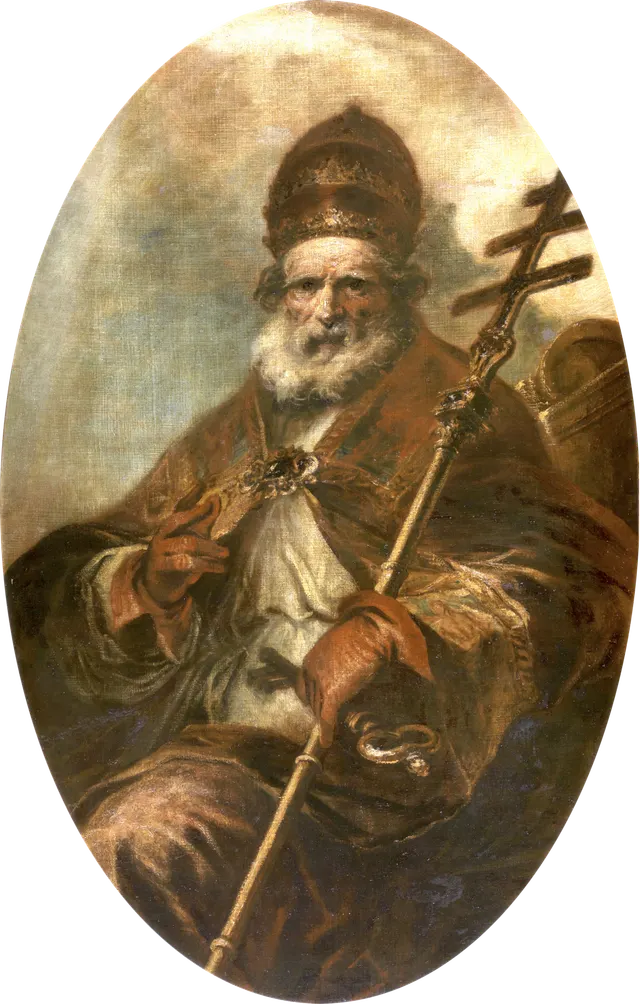
Pope Leo I, painted by Francisco Herrera the Younger. His Tome shaped the council's definition.Pope Leo I, painted by Francisco Herrera the Younger. His Tome shaped the council’s definition.Image: Francisco Herrera the Younger · Public domain
world · Asia

The Council of Chalcedon opens

The fourth ecumenical council of the Christian church opened on 8 October 451 at Chalcedon, a city of Bithynia in Asia Minor across the water from Constantinople, and sat until 1 November. About 520 bishops or their representatives attended, which made it the largest and the best documented of the early councils. Its main business was to settle how the divine and human natures of Christ were to be described, against the teaching of Eutyches; the definition it produced, drawing on Pope Leo’s Tome, is still the standard of most of the Christian churches, though it also caused a lasting split with those who rejected it.

Source: Encyclopaedia Britannica: Council of Chalcedon ↗
IV
THE NINETEENTH CENTURY

The 1800s

Industry, empire, invention, reform and a century of enormous transformation.

1856
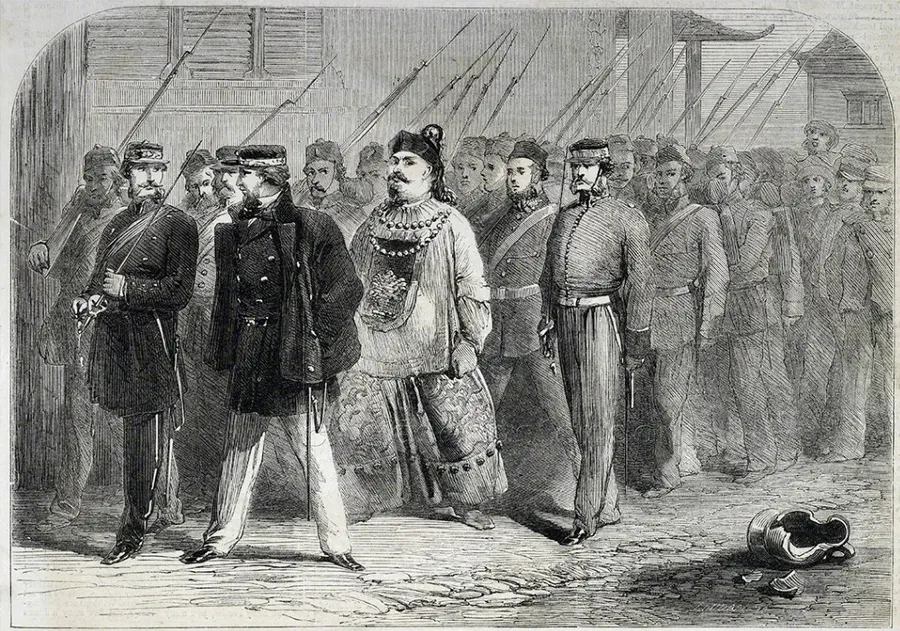
The capture of Commissioner Ye Mingchen by British forces in 1858, from The Illustrated Times.The capture of Commissioner Ye Mingchen by British forces in 1858, from The Illustrated Times.Image: Illustrated times. [1] · Public domain
world · Asia

A boarding party in Canton starts a war

On 8 October 1856 Chinese officials boarded the Arrow, a Chinese-owned ship registered in Hong Kong, at Canton. They arrested several of its crew on suspicion of piracy and smuggling, and were said to have hauled down the British flag. The men were released, but the insult was what mattered. Britain had been looking for a reason to force further trading concessions out of the Qing government. The consul Harry Parkes sent a fleet up the Pearl River to attack Canton, and France joined in, using the killing of a missionary as its own pretext. The Arrow War ran until 1860 and ended in further treaties imposed on China.

Source: Encyclopaedia Britannica: Arrow War ↗
1871
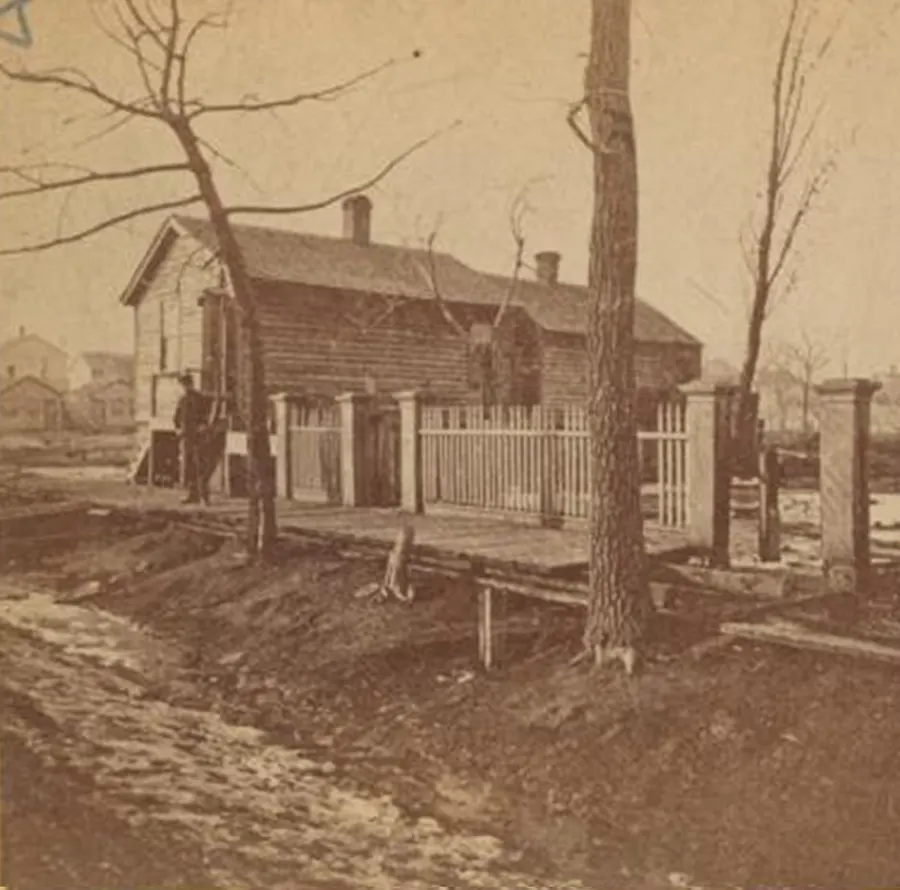
Catherine O'Leary's cottage on DeKoven Street, photographed in 1871. The fire began in the barn behind it.Catherine O’Leary’s cottage on DeKoven Street, photographed in 1871. The fire began in the barn behind it.Image: A.H. Abbott, Photographer · Public domain
world · Americas

The Great Chicago Fire

The fire started on the evening of 8 October 1871 on Chicago’s West Side, in the DeKoven Street barn of Patrick and Catherine O’Leary. What happened in the barn has never been established; the story about the cow was invented by a reporter. The city was tinder-dry after months without rain, and a big fire the night before had worn out the fire brigade and damaged its equipment. It burned until the morning of 10 October, when rain, the lake and some empty ground on the North Side finally stopped it. About 300 people died, 17,450 buildings were destroyed across almost 3.5 square miles, and roughly a third of the city’s people - close to 100,000 - had nowhere to live.

Source: Encyclopaedia Britannica: Chicago fire of 1871 ↗
1871
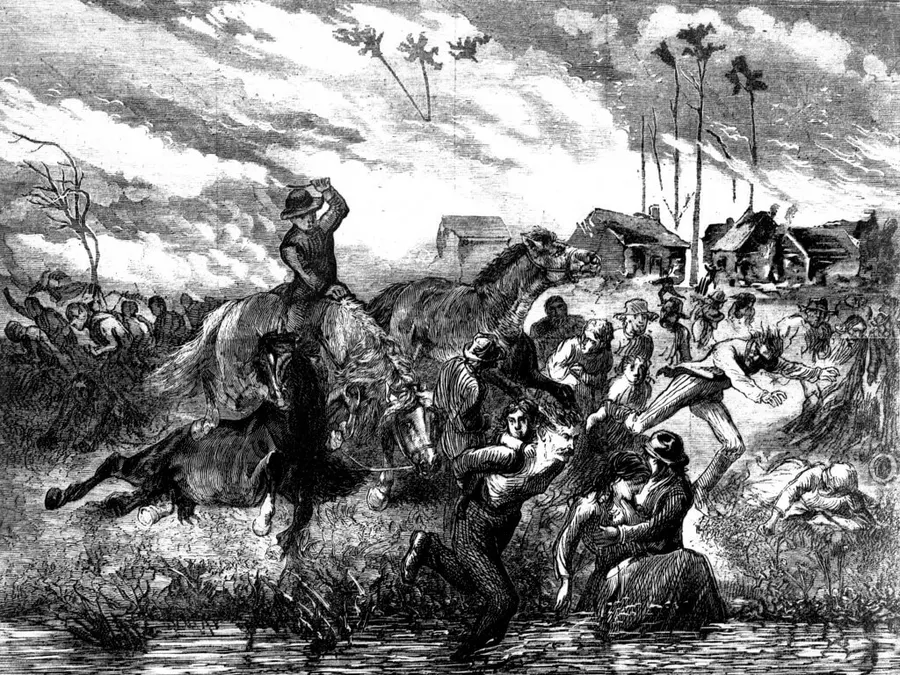
An illustration from Harper's Weekly in 1871, showing people taking refuge in the Peshtigo River.An illustration from Harper’s Weekly in 1871, showing people taking refuge in the Peshtigo River.Image: G. J. Tisdale · Public domain
world · Americas

The deadliest fire in American history, on the same night

While Chicago burned, a far deadlier fire was destroying the pine country of north-eastern Wisconsin. On 8 October 1871 a strong cold front drove existing fires - probably started by land clearing and railway work - into a firestorm that consumed about 1.5 million acres. The town of Peshtigo was wiped out; one building survived. Estimates of the dead run from 1,200 to 2,400, about 800 of them in Peshtigo itself, which makes it the deadliest wildfire on record anywhere. Because it happened the same night as the Chicago fire, hardly anyone has heard of it.

Source: US National Weather Service: The Peshtigo Fire ↗
V
THE TWENTIETH CENTURY

The 1900s

War and peace, technological leaps, social change, politics, sport and popular culture.

1912
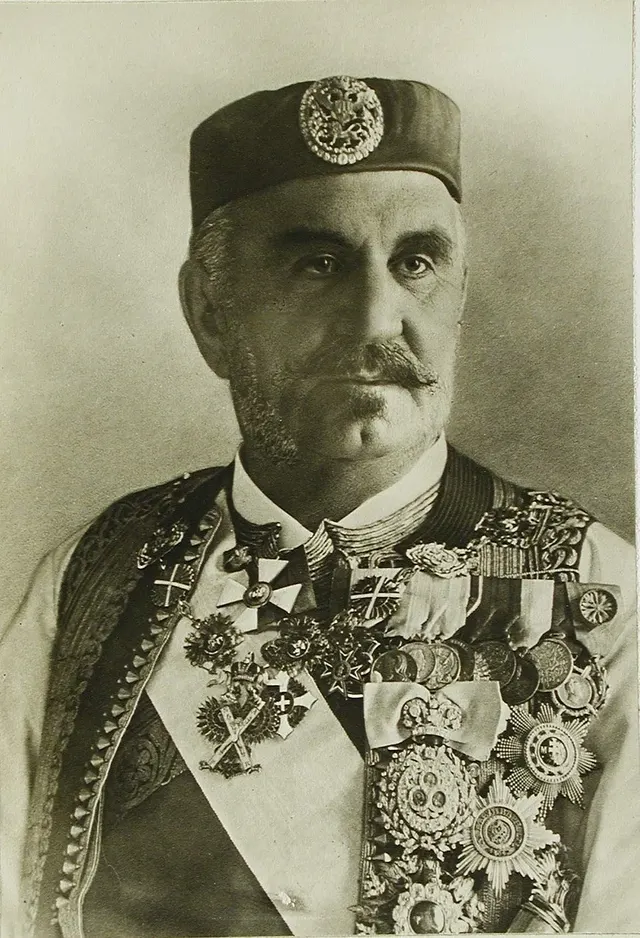
Nicholas I, prince and later king of Montenegro.Nicholas I, prince and later king of Montenegro.Image: Unknown authorUnknown author · Public domain
politics · Europe

Montenegro opens the First Balkan War

Montenegro declared war on the Ottoman Empire on 8 October 1912, opening the First Balkan War. Its partners in the Balkan League - Serbia, Bulgaria and Greece - followed ten days later. The league had been put together that spring, with Russian encouragement, to take Macedonia from a Turkey already at war with Italy. The allies won quickly. Bulgarian troops reached the outskirts of Constantinople, and the Serbs took Skopje after their victory at Kumanovo. The Ottoman Empire lost almost all its remaining European territory - and the allies then fell out over the spoils, which brought a second Balkan war the following year.

Source: Encyclopaedia Britannica: Balkan Wars ↗
1962
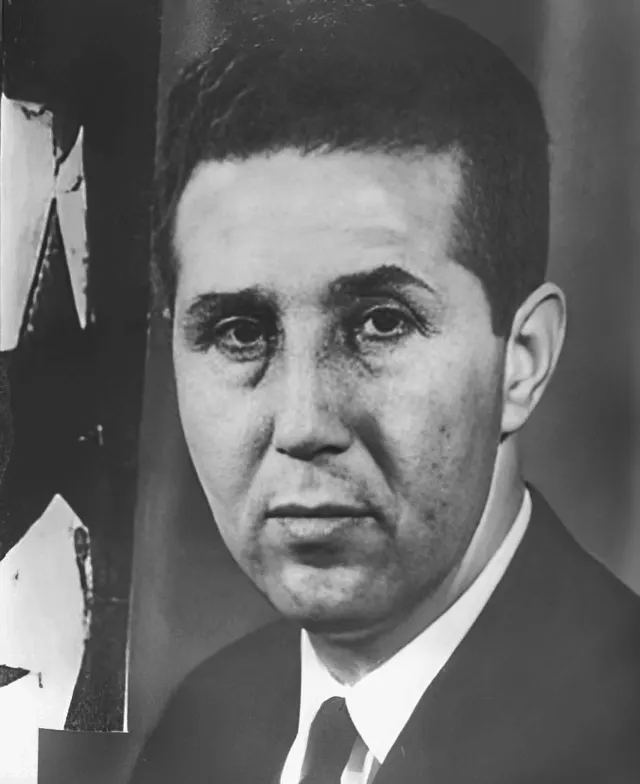
Ahmed Ben Bella, who led the Algerian delegation and became president the following year.Ahmed Ben Bella, who led the Algerian delegation and became president the following year.Image: République Algérienne · Public domain
politics · Africa

Algeria joins the United Nations

On 8 October 1962 the General Assembly admitted Algeria as the 109th member of the United Nations. No delegation asked for a vote, so the admission was carried by acclamation, and the Algerian delegation was led by the prime minister, Ahmed Ben Bella. Independence from France had come three months earlier, on 3 July, after a war of nearly eight years.

Source: United Nations Digital Library: Admission of the Democratic and Popular Republic of Algeria to membership in the United Nations ↗
1967
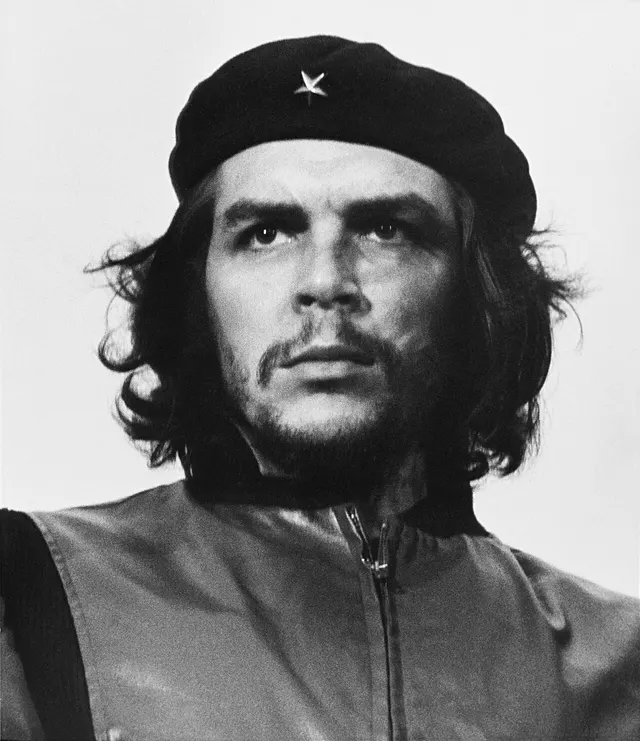
Alberto Korda's 1960 photograph of Che Guevara, taken in Havana seven years before Bolivia.Alberto Korda’s 1960 photograph of Che Guevara, taken in Havana seven years before Bolivia.Image: Alberto Korda, restored by Adam Cuerden · Public domain
politics · Americas

Che Guevara is taken in the Bolivian hills

Ernesto ‘Che’ Guevara had gone to Bolivia in 1966 to start a guerrilla campaign that he hoped would spread across the continent. It found almost no local support. On 8 October 1967 his small column was cornered in the Quebrada del Yuro by a Bolivian ranger battalion trained and advised by the United States, and he was captured alive. He was taken to the schoolhouse at La Higuera. Orders came from the Bolivian army headquarters the next day, and he was shot. Declassified American documents, released decades later, record a CIA officer present at his death.

Source: Encyclopaedia Britannica: Che Guevara, the Congo, Bolivia and death ↗
VI
2000 TO TODAY

Modern Day

The events of recent decades that have already become part of the historical record.

2005
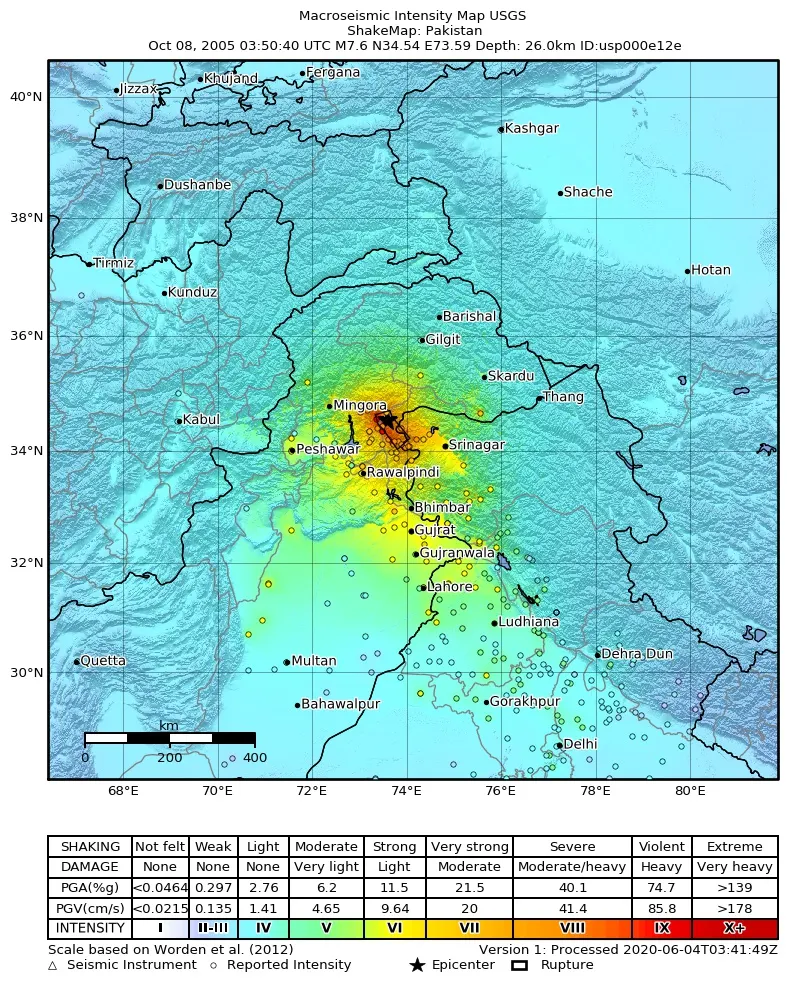
The United States Geological Survey's shake map of the 2005 Kashmir earthquake.The United States Geological Survey’s shake map of the 2005 Kashmir earthquake.Image: United States Geological Survey · Public domain
world · Asia

The Kashmir earthquake

At ten to nine on the morning of 8 October 2005 an earthquake of magnitude 7.6 struck the Himalaya of northern Pakistan and Kashmir, with its centre about 19 km north-east of Muzaffarabad. Estimates of the dead range from about 79,000 to the Pakistani government’s figure of 87,350. More than 32,000 buildings collapsed, there were deaths in India and Afghanistan as well, and roughly four million people were left without homes as winter approached in the mountains.

Source: Encyclopaedia Britannica: Kashmir earthquake of 2005 ↗
WHY THESE MOMENTS?

Significance before volume

This page is not the longest possible list of events. It is a chronological journey through 8 October, where each entry is chosen for historical significance, human interest and reliability.

Facts are checked against authoritative museums, archives, universities and reference works. Where sources disagree, the page says so.

EXPLORED THE DEEPER STORY?

Return to the highlights of 8 October

Discover the lighter side of the date with famous birthdays, culture, firsts and lives remembered.

Explore This Day →
← PREVIOUS DAY7 October
HISTORY & TIMELINE8 October
NEXT DAY →9 October