
HISTORY & TIMELINE
11 October

A journey through
11 October in history

From a medieval city shaken to pieces to a shuttle astronaut stepping into the vacuum, 11 October has been a day of ruptures and openings. This timeline follows the date across nine centuries.

JUMP THROUGH TIME
II
THE MIDDLE AGES

Medieval History

Kingdoms, conflict, faith, power and the changing medieval world.

1138
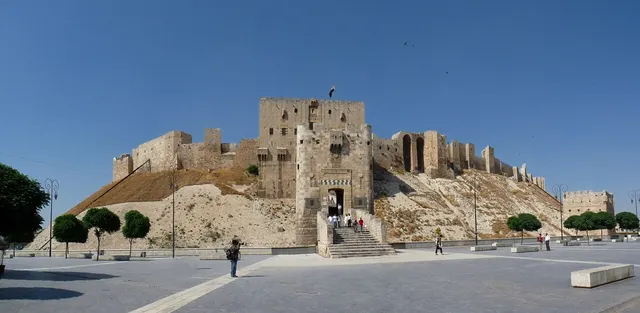
The citadel of Aleppo, photographed in 2010.The citadel of Aleppo, photographed in 2010.Image: Memorino · CC BY-SA 3.0
world · Asia

The earthquake that shook Aleppo

An earthquake struck Aleppo, in northern Syria, on 11 October 1138. The Crusader citadel at nearby Harim was levelled, a Muslim fort at al-Atarib was destroyed, and several smaller towns and garrisons were reduced to rubble. It is often listed among the deadliest earthquakes ever recorded, with a figure of 230,000 dead. Historians now think that number belongs to a different disaster altogether and was attached to Aleppo by mistake; the seismologist Nicholas Ambraseys argued in 2004 that the real toll was perhaps under a thousand. It is a useful reminder of how thin the ground can be under a famous statistic.

Source: Encyclopaedia Britannica: Aleppo earthquake of 1138 ↗
IV
THE NINETEENTH CENTURY

The 1800s

Industry, empire, invention, reform and a century of enormous transformation.

1852
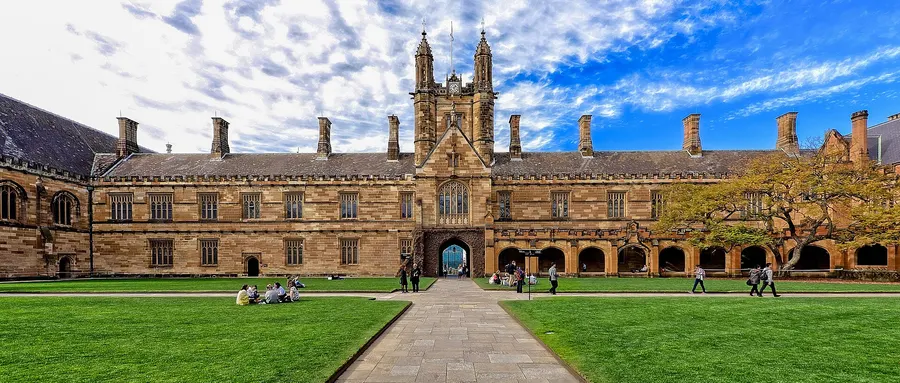
The Main Quadrangle of the University of Sydney.The Main Quadrangle of the University of Sydney.Image: Jason Tong · CC BY 2.0
culture · Oceania

Australia’s first university opens its doors

The University of Sydney was formally and publicly inaugurated on 11 October 1852, with twenty-four students matriculating at the ceremony; the first entrance examinations had been held a week earlier. It was Australia’s first university, and unusual for its time in admitting students on merit rather than on religious affiliation. Teaching began with three professors and a single faculty, Arts, in the building that is now Sydney Grammar School, with classes in Greek, Latin, mathematics and science.

Source: University of Sydney: Our history, Australia’s first university ↗
1899
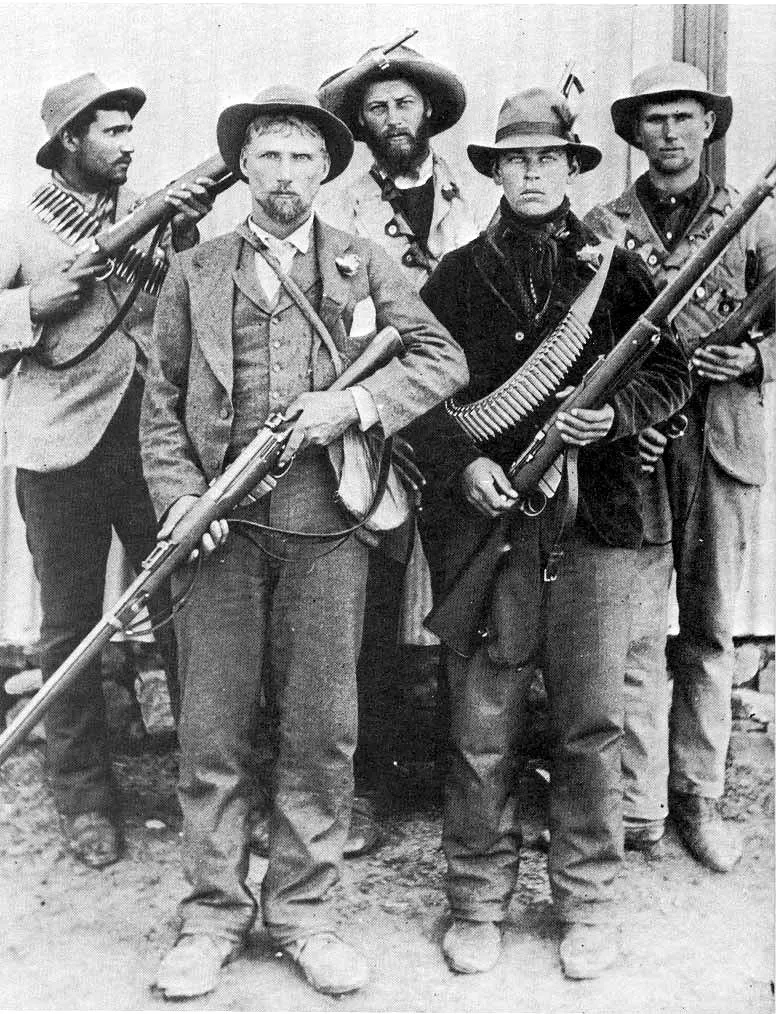
Boer guerrillas during the Second Boer War, photographed around 1900.Boer guerrillas during the Second Boer War, photographed around 1900.Image: Unknown authorUnknown author · Public domain
world · Africa

War comes to South Africa

The South African War began on 11 October 1899, between the British Empire and the two Boer republics, the South African Republic (Transvaal) and the Orange Free State. Two days earlier the Transvaal had sent an ultimatum demanding that British troops withdraw from its borders and that every reinforcement sent to South Africa since 1 June be removed. Britain let it expire. Britain eventually put nearly half a million men into the field against perhaps 88,000 Boers, and still needed two and a half years. The Boers turned to guerrilla warfare; the British answered with farm burning and camps in which thousands of Boer and African civilians died. The Treaty of Vereeniging ended the fighting on 31 May 1902.

Source: Encyclopaedia Britannica: South African War ↗
V
THE TWENTIETH CENTURY

The 1900s

War and peace, technological leaps, social change, politics, sport and popular culture.

1962
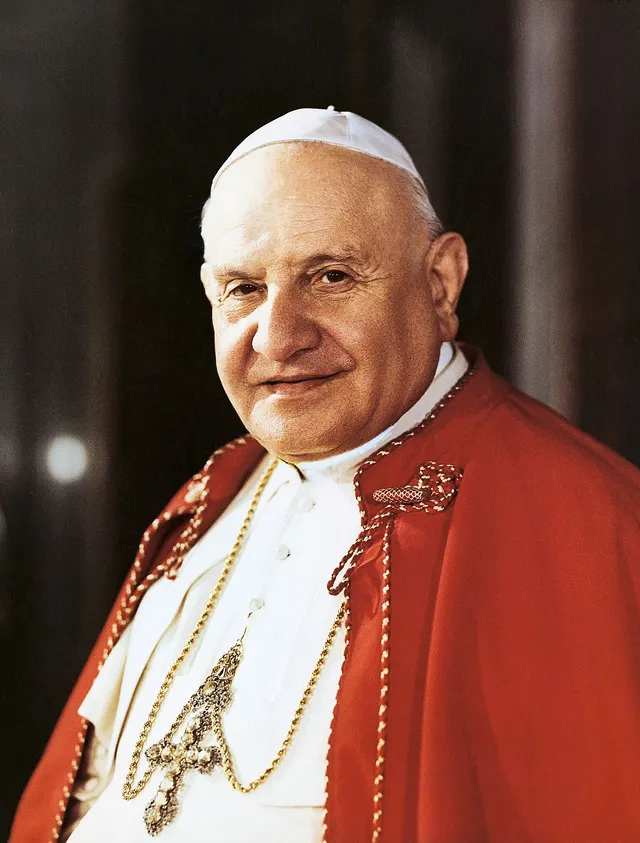
Pope John XXIII, who called the council and opened it.Pope John XXIII, who called the council and opened it.Image: De Agostini Editore · Public domain
culture · Europe

Two thousand bishops open Vatican II

The Second Vatican Council opened on 11 October 1962 with a solemn procession into St Peter’s Basilica, presided over by Pope John XXIII. More than two thousand bishops came from every part of the world, which made it the largest gathering of the Roman Catholic hierarchy in history. John XXIII had announced it in 1959 with a one-word aim: aggiornamento, bringing the church up to date. Over four sessions, ending in 1965 under Paul VI, the council produced sixteen documents that changed how Catholics worship - the vernacular Mass among them - and how the church deals with other Christians and other faiths.

Source: Encyclopaedia Britannica: Second Vatican Council ↗
1968
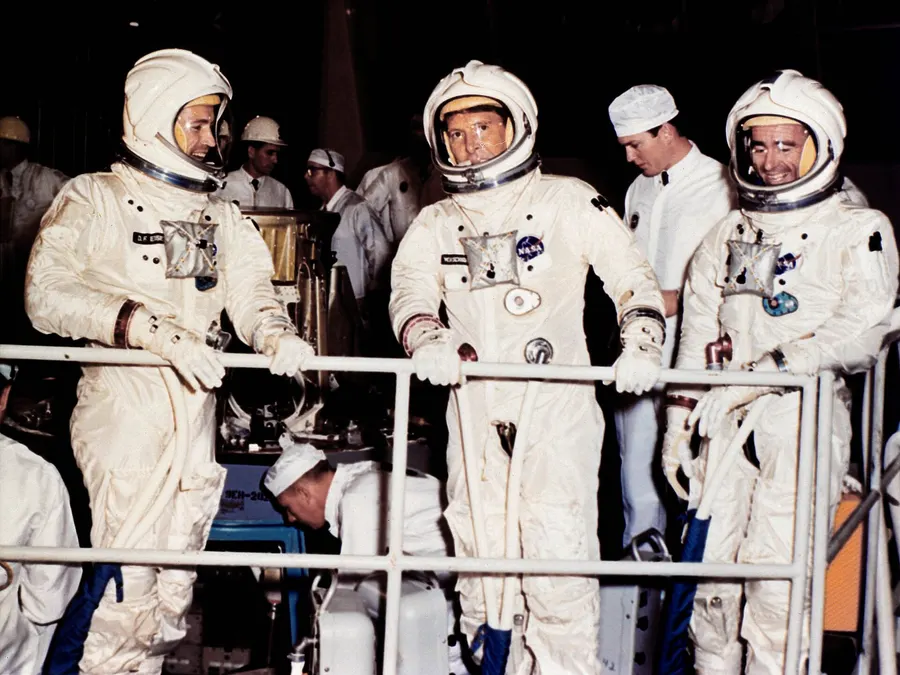
The Apollo 7 crew in training: Donn Eisele, Walter Schirra and Walter Cunningham.The Apollo 7 crew in training: Donn Eisele, Walter Schirra and Walter Cunningham.Image: NASA · Public domain

science · Americas

Apollo flies with a crew at last

Apollo 7 lifted off on a Saturn IB on 11 October 1968, carrying Walter Schirra, Donn Eisele and Walter Cunningham. It was the first crewed Apollo flight, twenty-one months after the launchpad fire that killed the crew of Apollo 1, and the first American spaceflight with three people aboard. The eleven-day mission was an engineering test: above all of the Service Propulsion System, the engine that would later have to put spacecraft into lunar orbit and then push them home again. It also produced the first live television broadcast by Americans from space. NASA called the flight ‘101% successful’, and two months later Apollo 8 went to the Moon.

Source: NASA: Apollo 7 ↗
1984
Kathryn Sullivan, the first American woman to walk in space.Kathryn Sullivan, the first American woman to walk in space.Image: The White House · Public domain
science · Americas

Kathryn Sullivan steps outside

On 11 October 1984 Kathryn Sullivan left the Space Shuttle Challenger and went to work in its payload bay, about 140 miles above the Earth and travelling at 17,500 miles an hour. She was the first American woman to walk in space, and the first woman to wear the 225-pound shuttle spacesuit. The three-and-a-half-hour walk, with the mission specialist David Leestma, tested a system meant to show that satellites could be refuelled in orbit. STS-41-G was also the first spaceflight to carry two women: Sally Ride was aboard on her second mission. By coincidence, Alexei Leonov, the first human being of any nationality to walk in space, died on 11 October in 2019.

Source: NASA: Kathryn Sullivan, the first American woman to walk in space ↗
1986
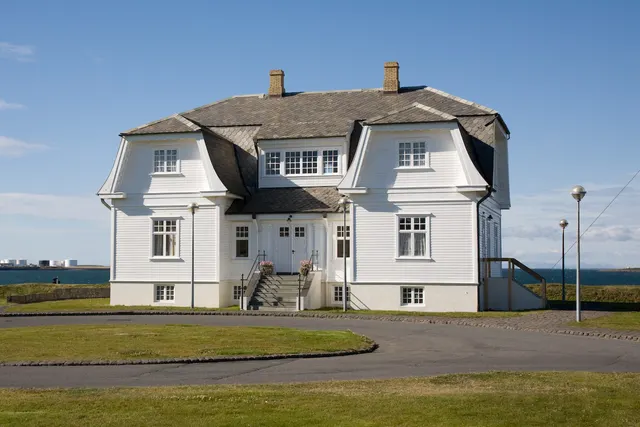
Höfði, the Reykjavík city guesthouse where the summit was held.Höfði, the Reykjavík city guesthouse where the summit was held.Image: Polarlys · CC BY 2.5
politics · Europe

Reagan and Gorbachev nearly abolish the bomb

Ronald Reagan and Mikhail Gorbachev met at Höfði house in Reykjavík on 11 and 12 October 1986. It was not meant to be a summit at all, but a working session to give the arms-control talks some momentum. It turned into something much larger: by the end the two men had agreed that nuclear weapons should be eliminated, and came close to a deal to scrap both countries’ stockpiles by the year 2000. It fell apart over the Strategic Defense Initiative, the space-based missile defence Reagan would not confine to the laboratory. They went home with nothing signed, and both sides called it a failure at the time. Gorbachev and many historians later called it the turning point of the Cold War.

Source: Encyclopaedia Britannica: Reykjavík summit of 1986 ↗
WHY THESE MOMENTS?

Significance before volume

This page is not the longest possible list of events. It is a chronological journey through 11 October, where each entry is chosen for historical significance, human interest and reliability.

Facts are checked against authoritative museums, archives, universities and reference works. Where sources disagree, the page says so.

EXPLORED THE DEEPER STORY?

Return to the highlights of 11 October

Discover the lighter side of the date with famous birthdays, culture, firsts and lives remembered.

Explore This Day →
← PREVIOUS DAY10 October
HISTORY & TIMELINE11 October
NEXT DAY →12 October