HISTORY & TIMELINE
10 October

A journey through
10 October in history

From a battle in the desert in 680 that still divides Islam to the quiet dissolution of a Caribbean country in 2010, 10 October has been a day of endings and independence. This timeline follows the date across thirteen centuries.

JUMP THROUGH TIME
II
THE MIDDLE AGES

Medieval History

Kingdoms, conflict, faith, power and the changing medieval world.

680
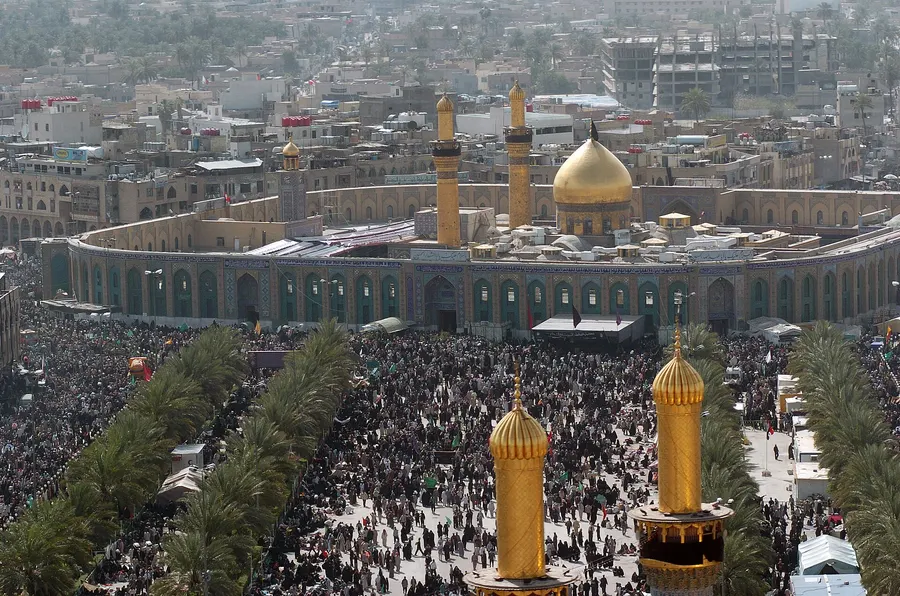
Pilgrims gathered around the Husayn Mosque in Karbala during Arba'een, photographed in 2005.Pilgrims gathered around the Husayn Mosque in Karbala during Arba’een, photographed in 2005.Image: SFC Larry E. Johns, USA · Public domain
culture · Asia

The Battle of Karbala

On 10 October 680, the tenth of Muharram in the year 61 of the Islamic calendar, al-Husayn ibn Ali, a grandson of the Prophet Muhammad, was killed with most of his family and followers on the plain of Karbala, west of the Euphrates. He had refused to recognise the Umayyad caliph Yazid I and, invited by the people of Kufa, had set out to lead a revolt; the promised help never came, and his party of about seventy-two faced an army of some four thousand. The defeat secured Umayyad power. For Shi’i Muslims the day became Ashura, an annual occasion of public mourning that is still central to their faith.

Source: Encyclopaedia Britannica: Battle of Karbala ↗
IV
THE NINETEENTH CENTURY

The 1800s

Industry, empire, invention, reform and a century of enormous transformation.

1846
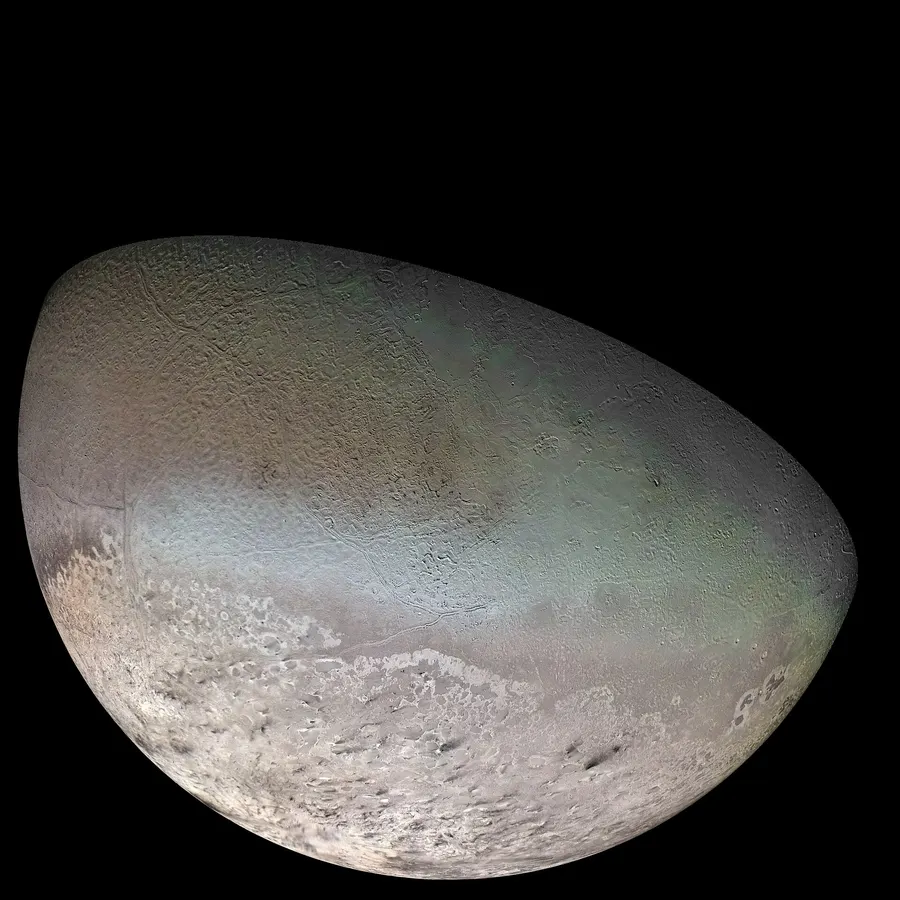
Triton, photographed by Voyager 2 in 1989 and assembled into a mosaic by the US Geological Survey.Triton, photographed by Voyager 2 in 1989 and assembled into a mosaic by the US Geological Survey.Image: NASA / Jet Propulsion Lab / U.S. Geological Survey · Public domain
science · Europe

Neptune turns out to have a moon

On 10 October 1846 the English astronomer William Lassell, a brewer who built his own telescopes, was looking at the newly discovered planet Neptune, trying to confirm what he thought was a ring around it. The ring turned out to be a distortion produced by his own instrument. The moon he saw instead was real. Neptune had been found only seventeen days earlier. Triton is the largest of Neptune’s moons and one of the strangest objects in the solar system: it is the only large moon that goes round its planet backwards, against the planet’s own rotation. Astronomers now think it was a Kuiper Belt object that strayed too close and was captured.

Source: NASA Science: Triton ↗
1868
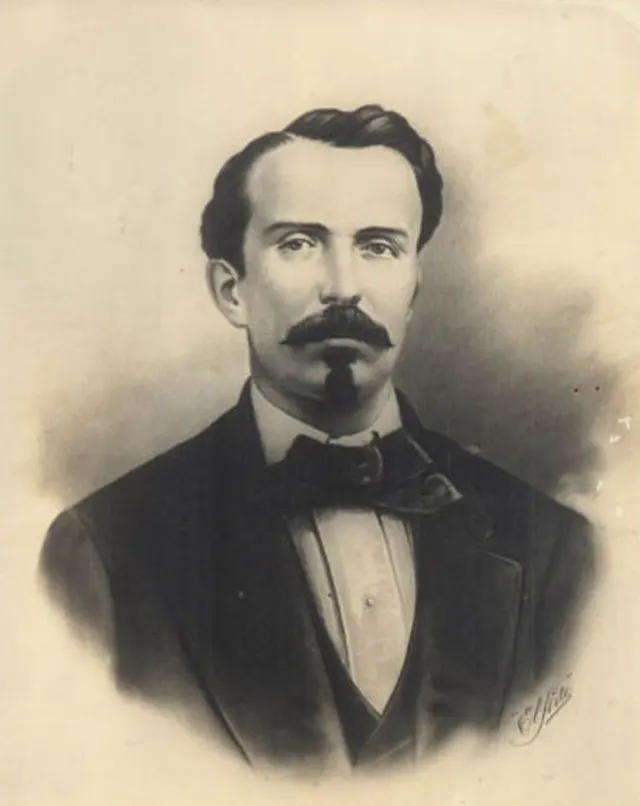
Carlos Manuel de Céspedes, who freed his own slaves and called for Cuban independence.Carlos Manuel de Céspedes, who freed his own slaves and called for Cuban independence.Image: Elfisie · Public domain
politics · Americas

Cuba’s ten-year war against Spain begins

On 10 October 1868 Carlos Manuel de Céspedes, a planter in eastern Cuba, issued the declaration known as the Grito de Yara - the Cry of Yara - proclaiming Cuban independence. He had about 147 poorly armed men. By the end of the month he had 12,000 volunteers and some striking successes. The Ten Years’ War that followed was driven by different hopes: landowners wanted economic and political independence from a corrupt and heavily taxing administration, while farmers and labourers wanted slavery abolished. It ended in an armistice in 1878 on promises of reform that were largely not kept, and Céspedes is remembered in Cuba as the father of the country.

Source: Encyclopaedia Britannica: Ten Years’ War ↗
V
THE TWENTIETH CENTURY

The 1900s

War and peace, technological leaps, social change, politics, sport and popular culture.

1903
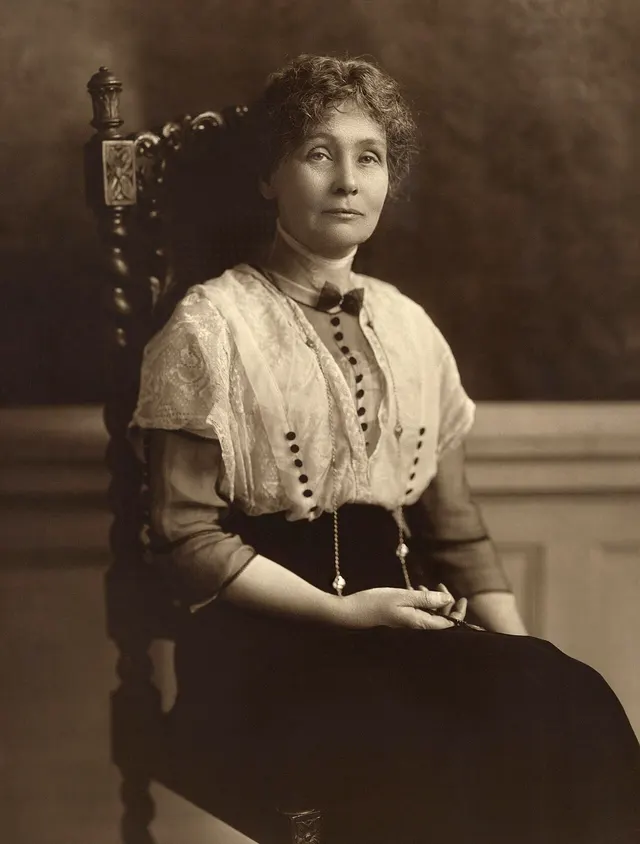
Emmeline Pankhurst, founder of the Women's Social and Political Union.Emmeline Pankhurst, founder of the Women’s Social and Political Union.Image: Adam Cuerden · Public domain
politics · Europe

‘Deeds not words’: the suffragettes organise

On 10 October 1903 Emmeline Pankhurst, her daughters Christabel, Sylvia and Adela and a group of other women met at the Pankhurst house in Manchester and founded the Women’s Social and Political Union. Its slogan was three words long - ‘Deeds Not Words’ - and it was meant as a rebuke to the patient constitutional campaigning that had got British women nowhere for decades. The WSPU became the militant wing of the suffrage movement, and its members were the ones the press christened suffragettes.

Source: The National Archives (UK): Emmeline Pankhurst ↗
1911
Beiyang Army troops under Yuan Shikai on their way to Hankou to fight the revolutionaries, from a postcard published in 1911.Beiyang Army troops under Yuan Shikai on their way to Hankou to fight the revolutionaries, from a postcard published in 1911.Image: Unknown authorUnknown author · Public domain
politics · Asia

A mutiny in Wuchang ends two thousand years of empire

On 10 October 1911 soldiers of the imperial garrison at Wuchang, one of the three cities that make up Wuhan, mutinied. It was hastily arranged and entirely local: a bomb had gone off by accident the day before, a list of conspirators had been found, and a number of junior officers had to choose between arrest and revolt. Within a day the rebels held the arsenal and the governor-general’s offices. The anger behind it had been building since May, when the court nationalised two railway lines and borrowed against them from a consortium of foreign banks, ruining local investors in Sichuan. City after city now declared against the Qing. On 12 February 1912 the boy emperor Puyi abdicated, ending both the dynasty and imperial rule in China. The date is still kept as Double Ten Day.

Source: Encyclopaedia Britannica: Chinese Revolution of 1911-12 ↗
1963
politics · Global

The first nuclear test ban takes effect

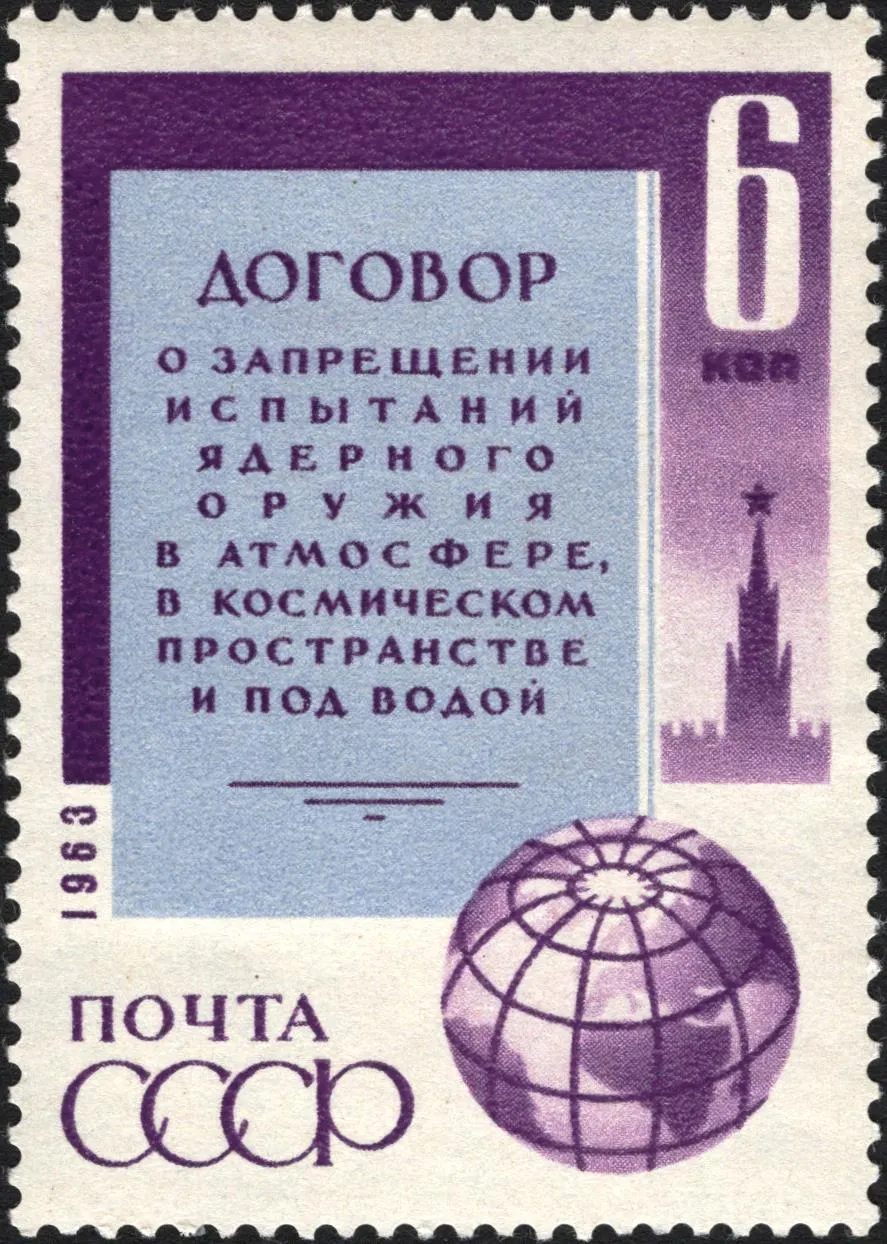
The Treaty Banning Nuclear Weapon Tests in the Atmosphere, in Outer Space and Under Water entered into force on 10 October 1963, when the United States, the Soviet Union and the United Kingdom deposited their instruments of ratification. It had been signed in Moscow on 5 August, a year after the Cuban missile crisis had shown how close the two sides could come. It did not stop testing - underground tests were still allowed - but it ended the atmospheric explosions that had been spreading fallout around the world.

Source: US National Archives: Test Ban Treaty (1963) ↗
1964
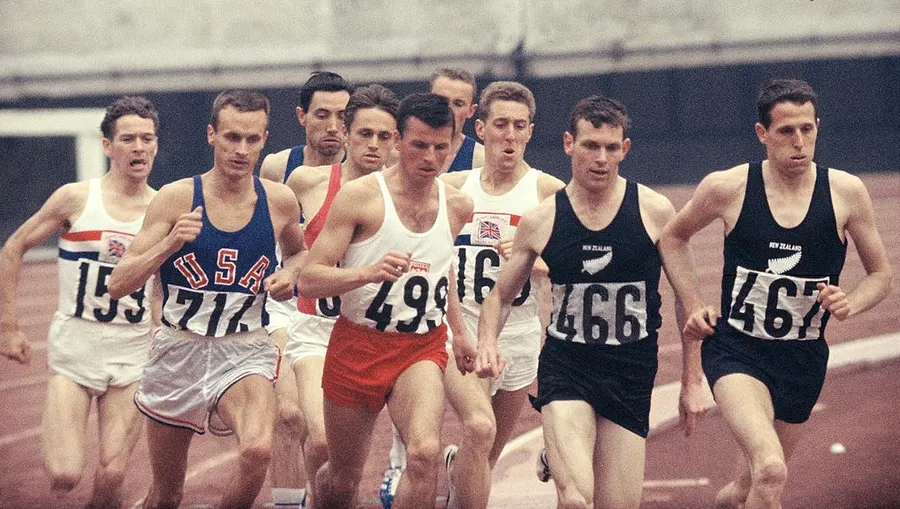
The men's 1500 metres final at the National Stadium during the Tokyo Games, 21 October 1964.The men’s 1500 metres final at the National Stadium during the Tokyo Games, 21 October 1964.Image: Unknown (Asahi Shinbun) · Public domain
sport · Asia

Tokyo opens the first Olympics carried live by satellite

The Games of the XVIII Olympiad opened in Tokyo on 10 October 1964, the first to be held in Asia and the first whose opening ceremony was relayed live around the world by satellite. Somewhere between 600 and 800 million people are thought to have watched. The Japanese government worked with NASA to use a communications satellite designed for telephone traffic, with new compression techniques that let it carry television pictures to North America and Europe in real time. These were also the first Games shown in colour. For Japan, nineteen years after the war, they were a deliberate demonstration that the country had rebuilt itself.

Source: International Olympic Committee: Technological innovations at the Olympic Games Tokyo 1964 ↗
1970
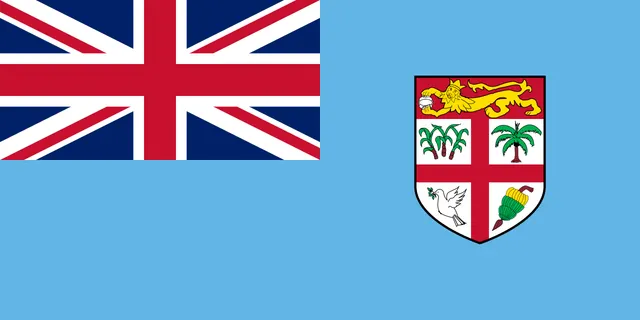
The flag of Fiji, adopted at independence in 1970.The flag of Fiji, adopted at independence in 1970.Image: Tessa Mackenzie · Public domain
politics · Oceania

Fiji chooses the anniversary of its own annexation

Fiji became independent of Britain on 10 October 1970 and stayed in the Commonwealth. The date was deliberate: it was exactly ninety-six years since the Deed of Cession of 10 October 1874, when Fiji had become a British crown colony. The cession itself had followed an offer from Cakobau and the Council of Chiefs, who in August 1874 gave Fiji ‘unreservedly to the Queen of Britain’. The 1970 constitution kept the protection of Fijian land rights that the Deed had promised, and gave the chiefs an effective veto over changes affecting Fijians.

Source: Encyclopaedia Britannica: History of Fiji ↗
VI
2000 TO TODAY

Modern Day

The events of recent decades that have already become part of the historical record.

2010
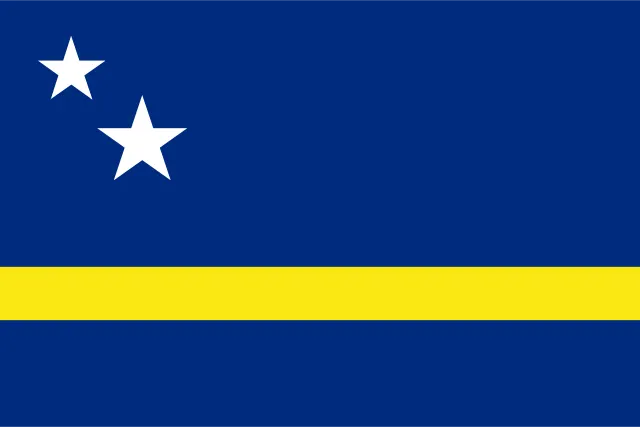
The flag of Curaçao, which became an autonomous country within the Kingdom of the Netherlands.The flag of Curaçao, which became an autonomous country within the Kingdom of the Netherlands.Image: Original: Unknown Vector: David Benbennick · Public domain
politics · Americas

A country quietly stops existing

The Netherlands Antilles were dissolved on 10 October 2010, after the Dutch government and the five remaining islands had agreed in 2006 to wind the country up. Curaçao and Sint Maarten became autonomous countries within the Kingdom of the Netherlands, the same standing Aruba had taken in 1986. Bonaire, Saba and Sint Eustatius became special municipalities of the Netherlands itself. None of the islands chose full independence.

Source: Encyclopaedia Britannica: Netherlands Antilles ↗
WHY THESE MOMENTS?

Significance before volume

This page is not the longest possible list of events. It is a chronological journey through 10 October, where each entry is chosen for historical significance, human interest and reliability.

Facts are checked against authoritative museums, archives, universities and reference works. Where sources disagree, the page says so.

EXPLORED THE DEEPER STORY?

Return to the highlights of 10 October

Discover the lighter side of the date with famous birthdays, culture, firsts and lives remembered.

Explore This Day →
← PREVIOUS DAY9 October
HISTORY & TIMELINE10 October
NEXT DAY →11 October