
HISTORY & TIMELINE
4 November

A journey through
4 November in history

From the opening night of the San Carlo opera house in 1737 to the election of Barack Obama in 2008, 4 November has seen discoveries, uprisings and floods. This timeline follows the date across almost three centuries.

III
A CHANGING WORLD

Early Modern Era

Exploration, political change, scientific development and expanding global connections.

1737
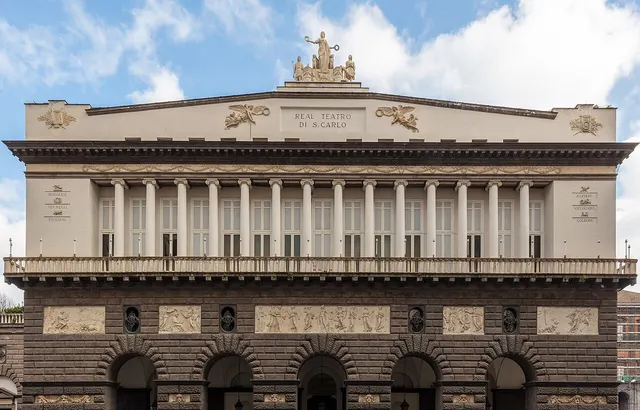
The Teatro di San Carlo in Naples today.The Teatro di San Carlo in Naples today.Image: Diego Delso · CC BY-SA 4.0
culture · Europe

The Teatro di San Carlo opens in Naples

The Teatro di San Carlo in Naples opened on the evening of 4 November 1737 with Achille in Sciro, an opera by Domenico Sarro to a libretto by Metastasio. It was built for Charles of Bourbon, the new king of Naples, and named after his patron saint. It became one of the largest and most important opera houses in Europe, where Rossini and Donizetti premiered many of their works, and it is one of the oldest in the world still in use.

Source: Teatro di San Carlo: the theatre and its history ↗
1780
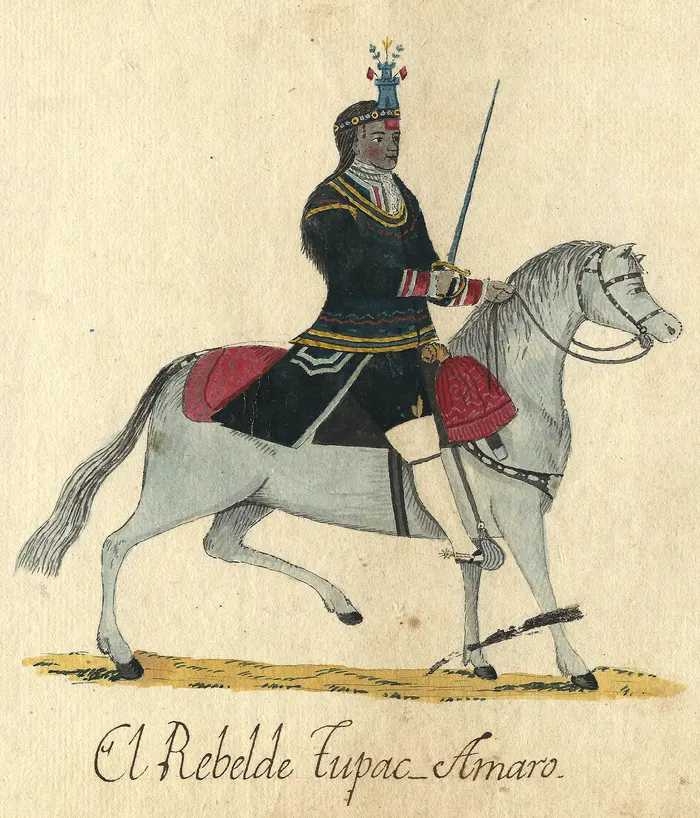
The oldest known portrait of Túpac Amaru II, a watercolour of about 1784 to 1806.The oldest known portrait of Túpac Amaru II, a watercolour of about 1784 to 1806.Image: AnonymousUnknown author · Public domain
politics · Americas

Túpac Amaru II rises against Spanish rule

On 4 November 1780, near Tinta south of Cusco, José Gabriel Condorcanqui, who took the name of the last Inca ruler, Túpac Amaru, seized the Spanish corregidor Antonio de Arriaga after a meal together, and later had him executed for cruelty. It began the largest Indigenous rebellion against Spain in Peru before independence. The uprising was crushed, and Túpac Amaru II was captured and executed in Cusco in May 1781.

Source: Encyclopaedia Britannica: Túpac Amaru II ↗
IV
THE NINETEENTH CENTURY

The 1800s

Industry, empire, invention, reform and a century of enormous transformation.

1869
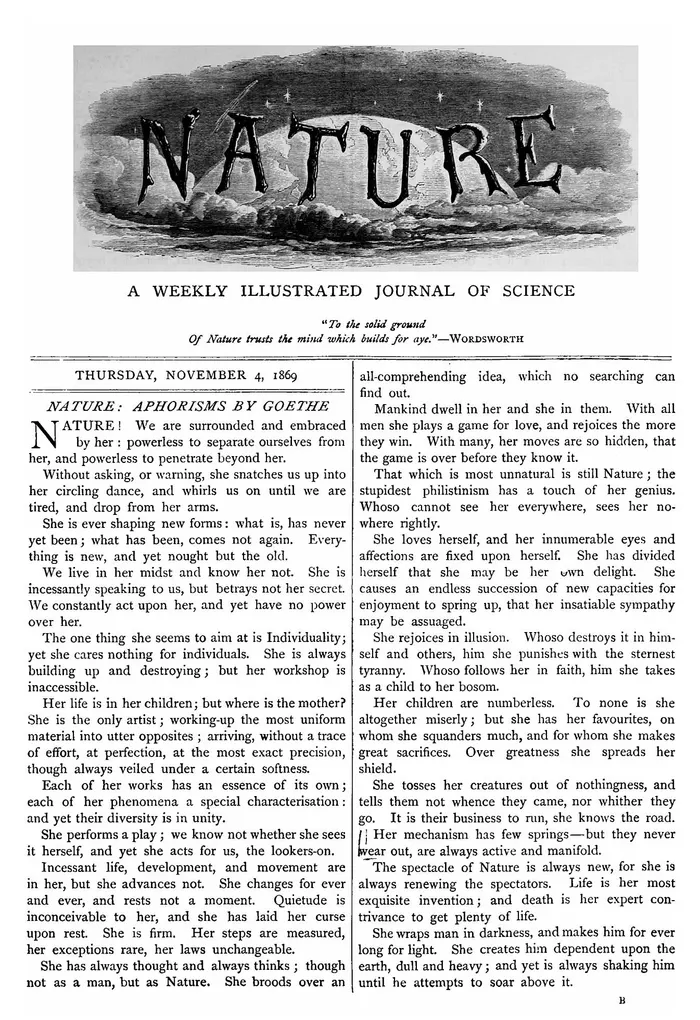
The cover of the first issue of Nature, 4 November 1869.The cover of the first issue of Nature, 4 November 1869.Image: Nature journal · Public domain
science · Europe

The first issue of Nature

The first issue of Nature, ‘a weekly illustrated journal of science’, was published in London on 4 November 1869 by Macmillan, with the astronomer Norman Lockyer as editor. Lockyer wanted scientists to write about their work for a general readership. The journal lost money for three decades and survived only because its publisher, Alexander Macmillan, stood by it. Lockyer edited it for fifty years. It went on to publish some of the most important discoveries of modern science, among them the structure of DNA in 1953.

Source: Nature: History of Nature ↗
V
THE TWENTIETH CENTURY

The 1900s

War and peace, technological leaps, social change, politics, sport and popular culture.

1921
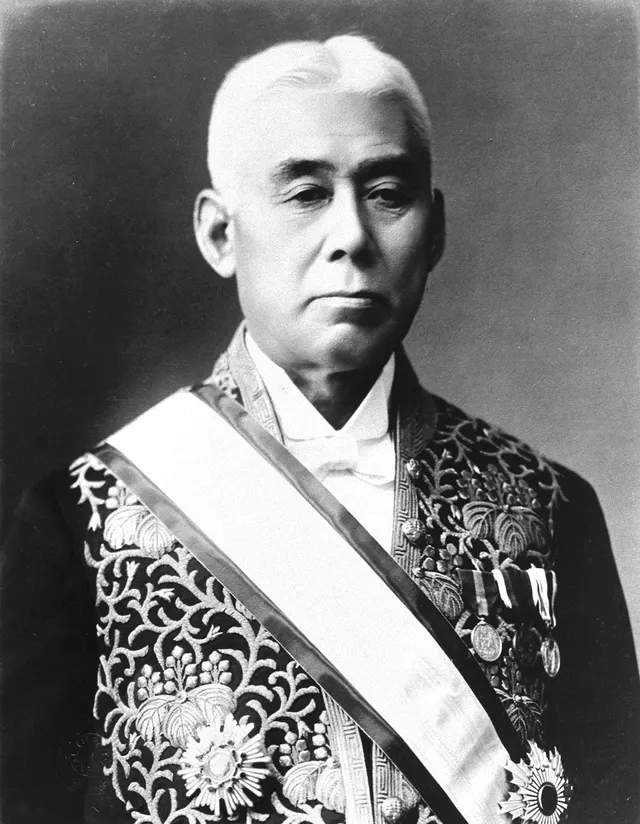
Hara Takashi, prime minister of Japan from 1918 to 1921.Hara Takashi, prime minister of Japan from 1918 to 1921.Image: Unknown authorUnknown author · Public domain
politics · Asia

Prime Minister Hara Takashi is assassinated

On the evening of 4 November 1921 Japan’s prime minister, Hara Takashi, was stabbed to death at Tokyo Station as he went to board a train for Kyoto. His killer, a railway switchman, was angry at the party politics of Hara’s Seiyūkai. Hara had been the first commoner to lead a Japanese government, and his was the first killing of a serving prime minister under Japan’s constitution.

Source: National Diet Library, Modern Japan in archives: Assassination of Prime Minister Hara ↗
1922
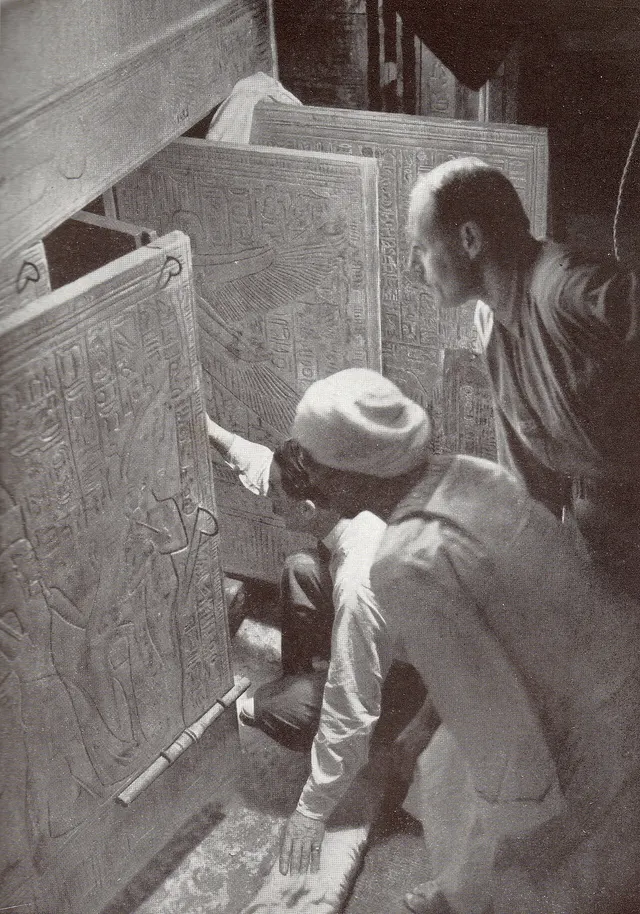
Howard Carter, kneeling, with an Egyptian workman and Arthur Callender at the doors of the burial shrines inside the tomb, January 1924.Howard Carter, kneeling, with an Egyptian workman and Arthur Callender at the doors of the burial shrines inside the tomb, January 1924.Image: Harry Burton · Public domain
science · Africa

The first step down to Tutankhamun’s tomb

At about ten o’clock on the morning of 4 November 1922, in the Valley of the Kings, Howard Carter’s largely Egyptian team uncovered a step cut into the bedrock beneath the remains of some workmen’s huts, just below the entrance to the tomb of Ramesses VI. Digging on, they found a sunken staircase of the kind used for royal tombs of the Eighteenth Dynasty. Carter covered it up again to wait for his patron, Lord Carnarvon, to arrive from England. On 26 November they reached a second sealed doorway and looked through into rooms crammed with treasures: the almost untouched tomb of the boy-king Tutankhamun.

Source: Griffith Institute, University of Oxford: Howard Carter’s excavation journals, 1922 ↗
1946
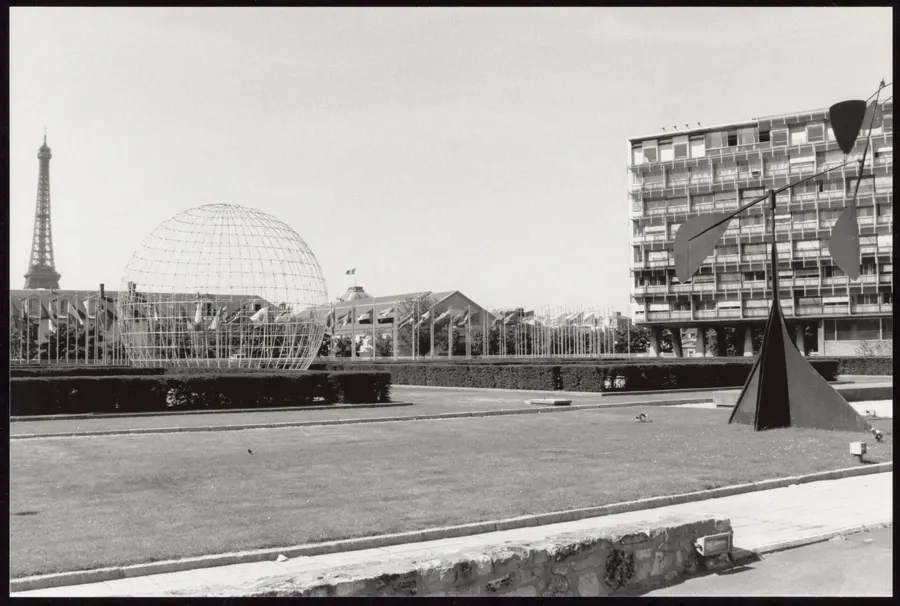
The entrance to UNESCO's headquarters in Paris, with the Eiffel Tower beyond.The entrance to UNESCO’s headquarters in Paris, with the Eiffel Tower beyond.Image: Michel Claude · CC BY-SA 3.0 igo
culture · Global

UNESCO comes into being

The constitution of the United Nations Educational, Scientific and Cultural Organization, signed in London in November 1945, came into force on 4 November 1946, when the twentieth country ratified it. The first twenty ranged from Australia, Brazil and China to Egypt, India, Saudi Arabia and the United States. UNESCO’s first General Conference met in Paris later that month.

Source: UNESCO: 75 years ago, UNESCO’s Constitution adopted ↗
1956
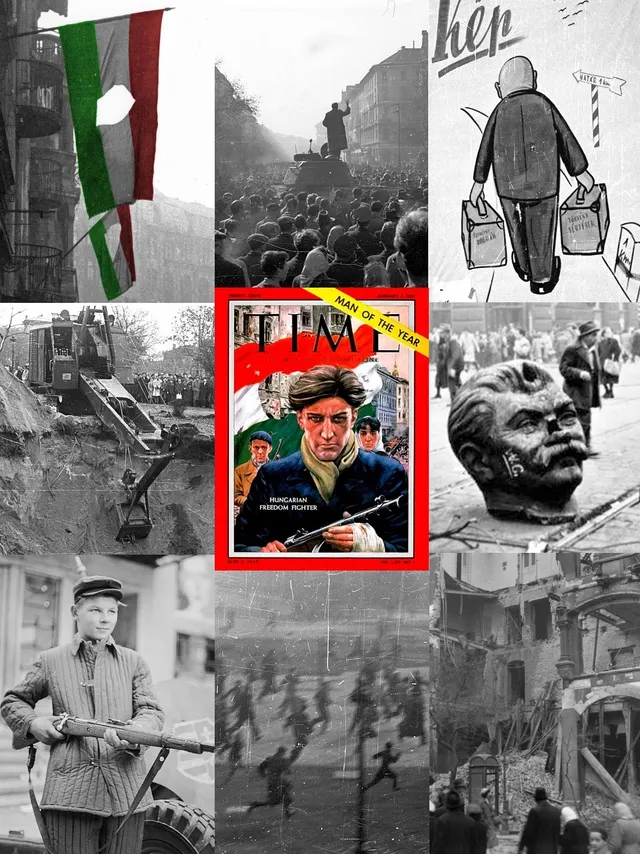
Scenes from the Hungarian revolution of 1956: the flag with the Communist emblem cut out, and a speaker on an abandoned Soviet tank.Scenes from the Hungarian revolution of 1956: the flag with the Communist emblem cut out, and a speaker on an abandoned Soviet tank.Image: Главцентроархив · CC0
world · Europe

Soviet forces crush the Hungarian uprising

At 4.15 in the morning of 4 November 1956 Soviet forces launched a massive attack on Hungary to put down the national uprising that had begun twelve days earlier. An hour later the prime minister, Imre Nagy, told the nation of the invasion in a radio broadcast of thirty-five seconds. By 8 November the Soviets had taken control of Budapest. About 200,000 Hungarians fled abroad. Nagy took refuge in the Yugoslav embassy, was seized when he left it, and was executed after a secret trial in 1958.

Source: National Security Archive, George Washington University: Hungarian Revolution, 1956 ↗
1966
Manuscripts from the National Library being washed after the flood, 1966.Manuscripts from the National Library being washed after the flood, 1966.Image: Dominique Roger / Adam Cuerden · CC BY-SA 3.0 igo
world · Europe

The Arno floods Florence

In the early hours of 4 November 1966, after weeks of heavy rain, the Arno burst its banks and flooded Florence, in places to more than five metres. Water, mud and fuel oil poured into the National Library, the Uffizi and the city’s churches; Cimabue’s great crucifix in Santa Croce lost most of its paint. Volunteers from Italy and abroad, called the ‘mud angels’, came to rescue books and works of art.

Source: Uffizi Galleries: the 1966 flood’s damage to the art heritage of Florence ↗
1979
Iranian students climb the gates of the US embassy in Tehran, 4 November 1979.Iranian students climb the gates of the US embassy in Tehran, 4 November 1979.Image: Unknown authorUnknown author · Public domain
politics · Asia

Students seize the US embassy in Tehran

On 4 November 1979 several hundred Iranian students stormed the United States embassy in Tehran and took more than fifty Americans hostage, from the chargé d’affaires to the most junior staff. They were protesting that the deposed Shah had been allowed into the United States for medical treatment. Ayatollah Khomeini’s revolutionary government backed them. The hostages were held for 444 days, through a failed American rescue mission, and were released on 20 January 1981, minutes after President Ronald Reagan took office.

Source: US Department of State, Office of the Historian: The Iranian hostage crisis ↗
1995
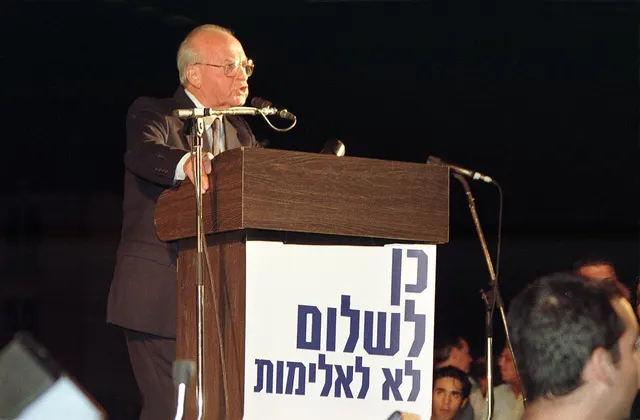
Yitzhak Rabin addresses the peace rally in Tel Aviv on the evening of 4 November 1995.Yitzhak Rabin addresses the peace rally in Tel Aviv on the evening of 4 November 1995.Image: Israel Press and Photo Agency (I.P.P.A.) photographer · CC BY 4.0
politics · Asia

Yitzhak Rabin is assassinated

On the evening of 4 November 1995 a crowd of tens of thousands gathered in a Tel Aviv square under the slogan ‘Yes to peace, no to violence’ to support the Oslo peace process. As the Israeli prime minister, Yitzhak Rabin, walked to his car after addressing them, he was shot twice by Yigal Amir, a Jewish extremist opposed to the Oslo Accords. He died in hospital that night. Rabin, a former army chief of staff, had shared the 1994 Nobel Peace Prize with Shimon Peres and Yasser Arafat. The square where he was killed is now Rabin Square.

Source: Encyclopaedia Britannica: Assassination of Yitzhak Rabin ↗
VI
2000 TO TODAY

Modern Day

The events of recent decades that have already become part of the historical record.

2008
The Electoral College map of the 2008 election.The Electoral College map of the 2008 election.Image: Gage · Public domain
politics · Americas

Barack Obama is elected president

On 4 November 2008 Barack Obama defeated John McCain to become the first African American elected president of the United States. He won almost 53 per cent of the popular vote and 365 electoral votes, on the highest turnout in four decades, and took office in January 2009.

Source: Barack Obama Presidential Library: President Barack Obama ↗
RESEARCH

Sources & Further Reading

Selected authoritative references supporting the events on this page.

WHY THESE MOMENTS?

Significance before volume

This page is not the longest possible list of events. It is a chronological journey through 4 November, where each entry is chosen for historical significance, human interest and reliability.

Facts are checked against authoritative museums, archives, universities and reference works. Where sources disagree, the page says so.

EXPLORED THE DEEPER STORY?

Return to the highlights of 4 November

Discover the lighter side of the date with famous birthdays, culture, firsts and lives remembered.

Explore This Day →
← PREVIOUS DAY3 November
HISTORY & TIMELINE4 November
NEXT DAY →5 November