
HISTORY & TIMELINE
20 November

A journey through
20 November in history

From the first night of Beethoven’s only opera in 1805 to the launch of the first piece of the International Space Station in 1998, 20 November has seen justice, revolution and new beginnings. This timeline follows the date across nearly two centuries.

JUMP THROUGH TIME
IV
THE NINETEENTH CENTURY

The 1800s

Industry, empire, invention, reform and a century of enormous transformation.

1805
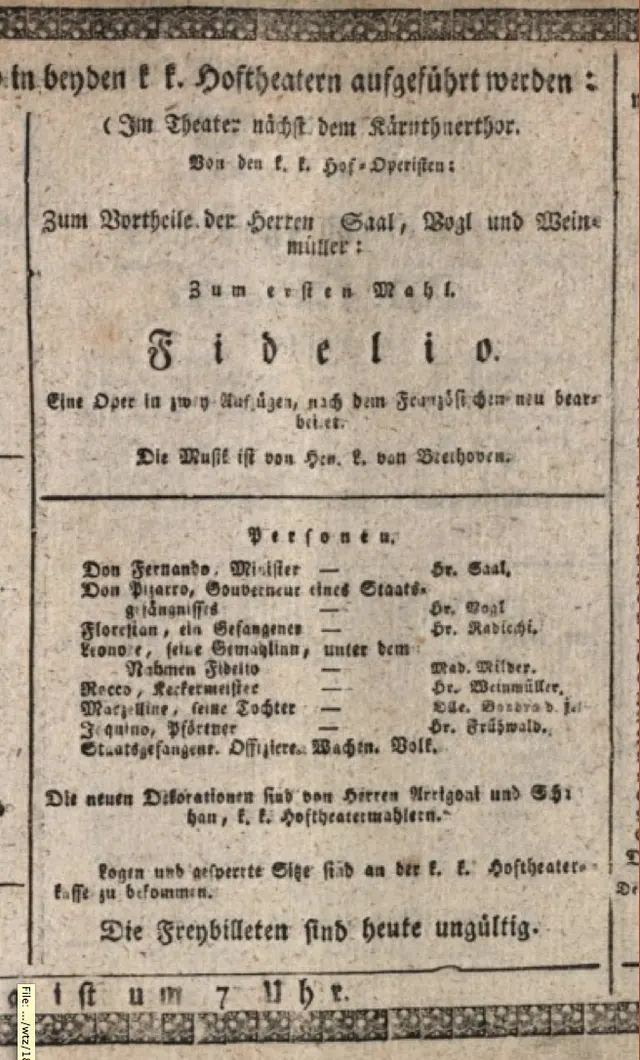
The playbill for the first performance of the final version of Fidelio, Vienna, 23 May 1814.The playbill for the first performance of the final version of Fidelio, Vienna, 23 May 1814.Image: Druckerei Wiener Hoftheater · Public domain
culture · Europe

Beethoven’s Fidelio has its first night

Beethoven’s only opera, the story of a wife who disguises herself as a man to free her husband from a political prison, was first performed at the Theater an der Wien in Vienna on 20 November 1805. Napoleon’s troops had occupied the city a week earlier, and the audience was largely French officers. The opera failed and was withdrawn after only a few performances. Beethoven revised it in 1806 and again in 1814, when the final version triumphed, and it has become one of the great operas about freedom.

Source: Beethoven-Haus Bonn: Fidelio, opera in two (originally three) acts, op. 72 ↗
1820
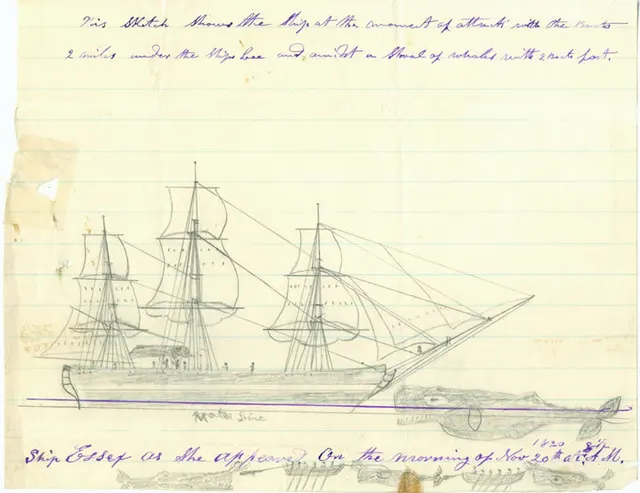
A hand-drawn sketch of the whaleship Essex.A hand-drawn sketch of the whaleship Essex.Image: Unknown · Public domain
world · Americas

A whale sinks the Essex

On 20 November 1820, in the middle of the Pacific Ocean, a huge sperm whale rammed the Nantucket whaleship Essex, turned, and struck again, smashing a hole in its bow. No whaling ship had ever been sunk by a whale before. The twenty crew escaped in three small whaleboats, more than a thousand miles from land. Three months later only a handful were rescued, and some had survived by eating the bodies of shipmates who had died. The story helped inspire Herman Melville’s Moby-Dick.

Source: Nantucket Historical Association: The whaleship Essex ↗
V
THE TWENTIETH CENTURY

The 1900s

War and peace, technological leaps, social change, politics, sport and popular culture.

1910
Francisco I. Madero, who called the Mexican people to rise on 20 November 1910.Francisco I. Madero, who called the Mexican people to rise on 20 November 1910.Image: Unknown authorUnknown author · Public domain
politics · Americas

The Mexican Revolution begins

Porfirio Díaz had ruled Mexico for more than thirty years when the reformer Francisco I. Madero challenged him in the election of 1910. Arrested on the eve of the vote, Madero escaped to San Antonio, Texas, and issued the Plan of San Luis Potosí, declaring himself provisional president under the slogan ‘effective suffrage, no re-election’. The plan named 20 November 1910 as the day for Mexicans to take up arms. Uprisings spread, Díaz resigned in May 1911 and Madero became president, but the revolution went on for a decade of fighting. Mexico marks 20 November every year as Revolution Day.

Source: Library of Congress: The rise of Francisco Madero, the Mexican Revolution and the United States ↗
1917
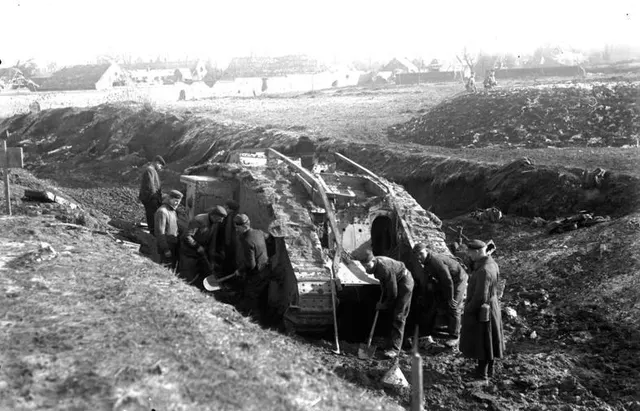
A wrecked British tank near Cambrai, November 1917.A wrecked British tank near Cambrai, November 1917.Image: Unknown authorUnknown author · CC BY-SA 3.0 de
world · Europe

Tanks attack in force at Cambrai

At dawn on 20 November 1917 the British Third Army attacked German lines near Cambrai in northern France with some 378 fighting tanks, the first large-scale use of massed tanks in battle, supported by a surprise artillery barrage. On the first day they advanced up to five miles and took about 7,500 prisoners, but more than half the tanks were soon out of action, and German counter-attacks later won back most of the ground.

Source: Imperial War Museums: How the Battle of Cambrai changed fighting tactics on the Western Front ↗
1945
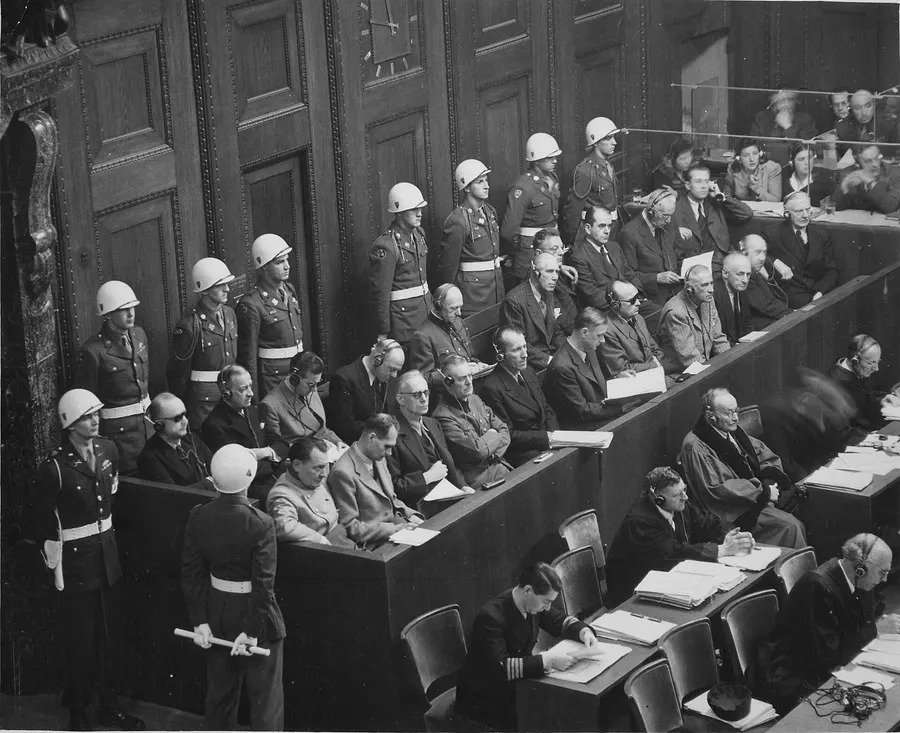
Looking down on the defendants' dock at the Nuremberg trials, 1945-46.Looking down on the defendants’ dock at the Nuremberg trials, 1945-46.Image: Ray D'Addario · Public domain
world · Europe

The Nuremberg trials open

Six and a half months after Germany’s surrender, the International Military Tribunal opened in the Palace of Justice in Nuremberg on 20 November 1945. The United States, Britain, the Soviet Union and France each supplied a judge and a team of prosecutors, under the presidency of the British judge Sir Geoffrey Lawrence. Leading Nazis, among them Hermann Göring and Rudolf Hess, were charged with conspiracy, crimes against peace, war crimes and crimes against humanity. It was the first time an international court had tried a nation’s leaders, and its principles shaped international criminal law for generations.

Source: United States Holocaust Memorial Museum: International Military Tribunal at Nuremberg ↗
1947
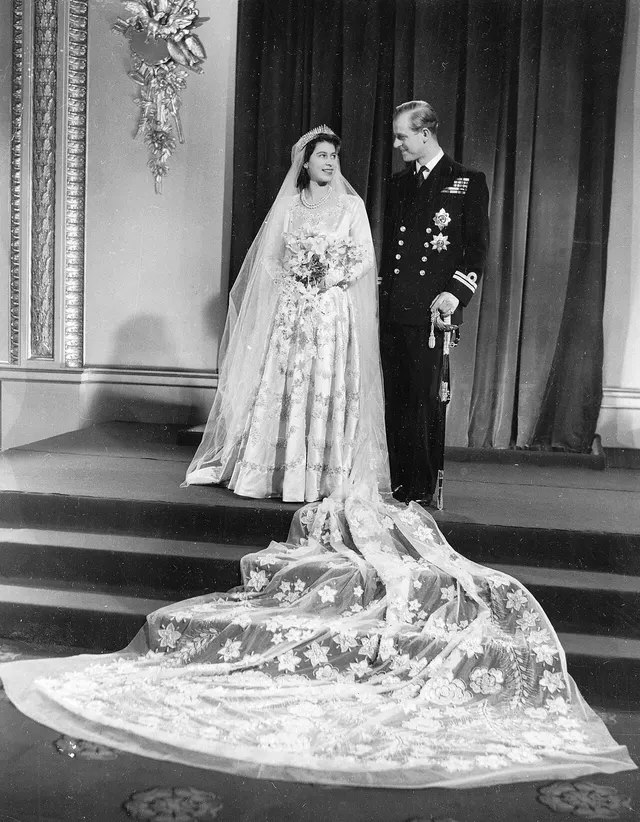
The official wedding photograph of Princess Elizabeth and the Duke of Edinburgh, 20 November 1947.The official wedding photograph of Princess Elizabeth and the Duke of Edinburgh, 20 November 1947.Image: Associated Press · Public domain
culture · Europe

Princess Elizabeth marries Philip

Princess Elizabeth, heir to the British throne, married Lieutenant Philip Mountbatten at Westminster Abbey at 10.30 in the morning of 20 November 1947. On the eve of the wedding he had been created Duke of Edinburgh. In a country still living with post-war rationing, the bride’s ivory silk dress by Norman Hartnell, embroidered with thousands of pearls, was a moment of colour, and the ceremony was broadcast on radio around the world. The marriage lasted 73 years, until Prince Philip’s death in 2021.

Source: The Royal Family: 70 facts about The Queen and The Duke of Edinburgh’s wedding ↗
1962
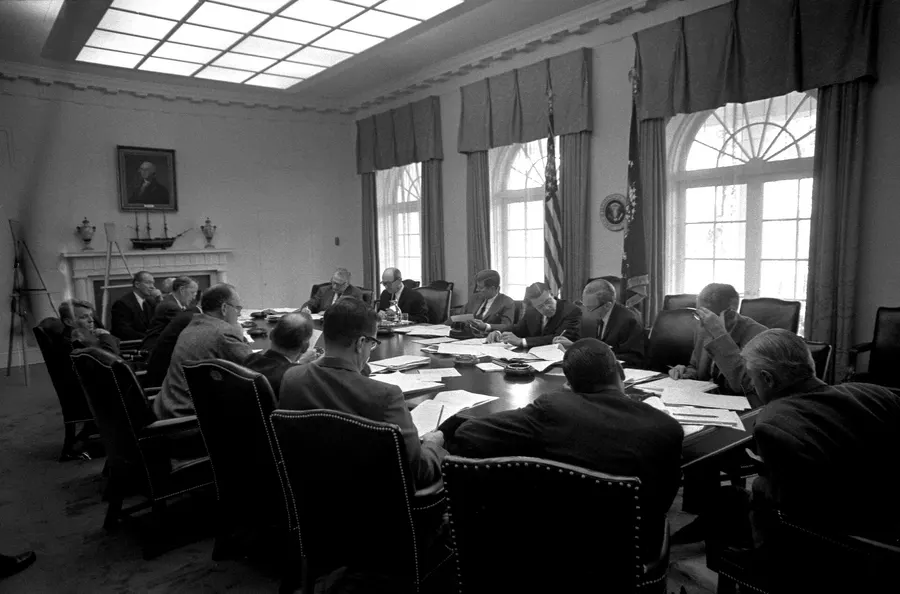
President Kennedy and his advisers during the crisis, 29 October 1962.President Kennedy and his advisers during the crisis, 29 October 1962.Image: Cecil Stoughton, White House · Public domain
politics · Americas

Kennedy lifts the Cuban blockade

The Soviet missiles had been withdrawn from Cuba, but Soviet IL-28 bombers remained. At a press conference on 20 November 1962 President John F. Kennedy announced that Nikita Khrushchev had agreed to remove the bombers within thirty days, and that he had ordered the naval quarantine of Cuba to be lifted. It was the final act of the Cuban Missile Crisis.

Source: John F. Kennedy Presidential Library: News conference 45, November 20, 1962 ↗
1979
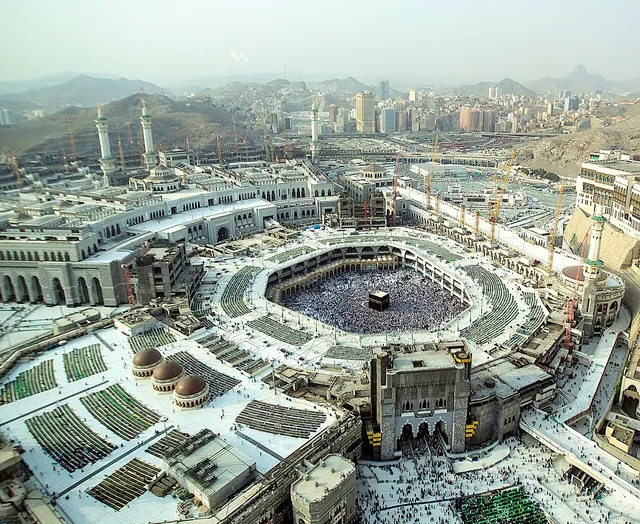
The Grand Mosque in Mecca, photographed in 2019.The Grand Mosque in Mecca, photographed in 2019.Image: Saudipics.com · CC BY-SA 4.0
world · Asia

Militants seize the Grand Mosque in Mecca

At dawn on 20 November 1979 several hundred armed militants led by Juhayman al-Utaybi seized the Grand Mosque in Mecca, Islam’s holiest site, trapping worshippers inside. They denounced the Saudi royal family and proclaimed a messiah. Saudi forces, with French help, retook the mosque after about two weeks of fighting in which many were killed.

Source: Encyclopaedia Britannica: Juhaymān al-ʿUtaybī ↗
1998
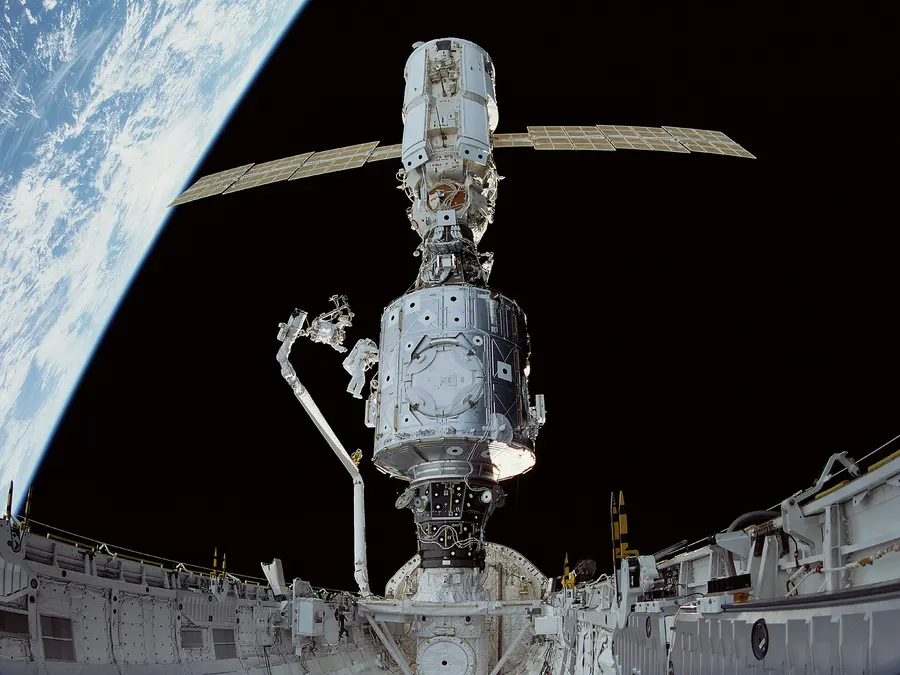
Astronauts at work on Zarya and the American Unity module in December 1998, days after they were joined.Astronauts at work on Zarya and the American Unity module in December 1998, days after they were joined.Image: NASA · Public domain
science · Global

The first piece of the International Space Station is launched

A Russian Proton rocket lifted off from the Baikonur cosmodrome in Kazakhstan on 20 November 1998 carrying Zarya, a module built in Moscow under contract to NASA. It was the first part of the International Space Station, the largest international building project ever attempted in space. About two weeks later the crew of the Space Shuttle Endeavour captured Zarya with the shuttle’s robotic arm and joined it to the American module Unity. The two had never been fitted together on Earth, but they matched perfectly. Crews have lived aboard the station continuously since November 2000.

Source: NASA: 20 years ago, space station construction begins ↗
WHY THESE MOMENTS?

Significance before volume

This page is not the longest possible list of events. It is a chronological journey through 20 November, where each entry is chosen for historical significance, human interest and reliability.

Facts are checked against authoritative museums, archives, universities and reference works. Where sources disagree, the page says so.

EXPLORED THE DEEPER STORY?

Return to the highlights of 20 November

Discover the lighter side of the date with famous birthdays, culture, firsts and lives remembered.

Explore This Day →