HISTORY & TIMELINE
2 November

A journey through
2 November in history

From the Balfour Declaration of 1917 to the first crew to live aboard the International Space Station in 2000, 2 November is a date of broadcasting firsts, coronations and turning points. This timeline follows it across the twentieth century and beyond.

JUMP THROUGH TIME
V
THE TWENTIETH CENTURY

The 1900s

War and peace, technological leaps, social change, politics, sport and popular culture.

1917
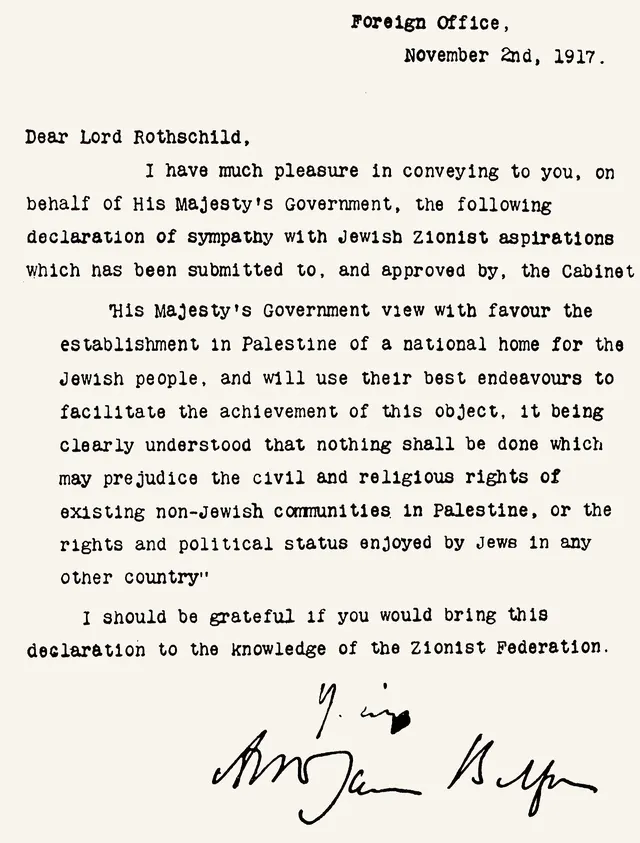
The Balfour Declaration: Arthur Balfour's letter to Lord Rothschild, 2 November 1917.The Balfour Declaration: Arthur Balfour’s letter to Lord Rothschild, 2 November 1917.Image: United Kingdom Government signed by Arthur Balfour · Public domain
politics · Asia

Britain issues the Balfour Declaration

On 2 November 1917 the British foreign secretary, Arthur Balfour, wrote to Lord Rothschild, a leader of the Jewish community in Britain, to pass on a statement approved by the Cabinet. It said that the government viewed with favour the establishment in Palestine of a national home for the Jewish people, and would work to bring it about. The letter added that nothing should be done to prejudice the civil and religious rights of the existing non-Jewish communities in Palestine. The declaration was written into the British mandate for Palestine approved by the League of Nations in 1922, and its promises remain at the heart of the Israeli-Palestinian conflict.

Source: Encyclopaedia Britannica: Balfour Declaration ↗
1920
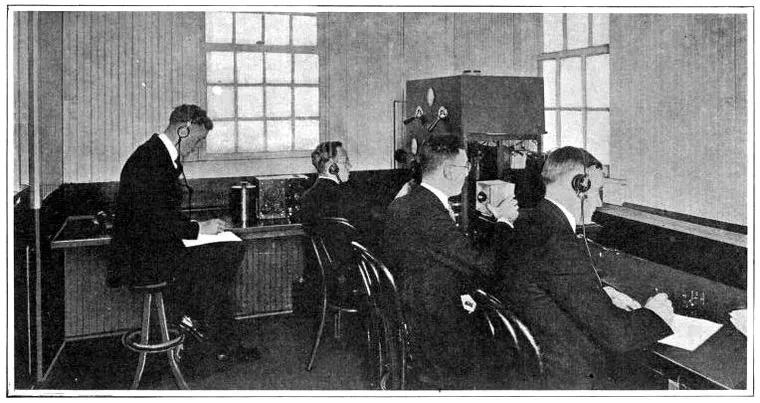
An early KDKA studio in East Pittsburgh, in a photograph of about 1921.An early KDKA studio in East Pittsburgh, in a photograph of about 1921.Image: Austin C. Lescarboura · Public domain
culture · Americas

KDKA broadcasts the election results

At 8 o’clock on the evening of 2 November 1920 the Westinghouse station KDKA in East Pittsburgh began broadcasting the returns of the presidential race between Warren Harding and James Cox. The news came in by telephone from a newspaper office and was read out from a shack on the roof of a Westinghouse factory, on 100 watts of power. It is counted as the start of commercial radio broadcasting. Listeners hundreds of miles away heard Harding’s victory before they could read it in the papers, and within a few years stations were springing up across the United States.

Source: Encyclopaedia Britannica: KDKA ↗
1930
politics · Africa

Haile Selassie is crowned Emperor of Ethiopia

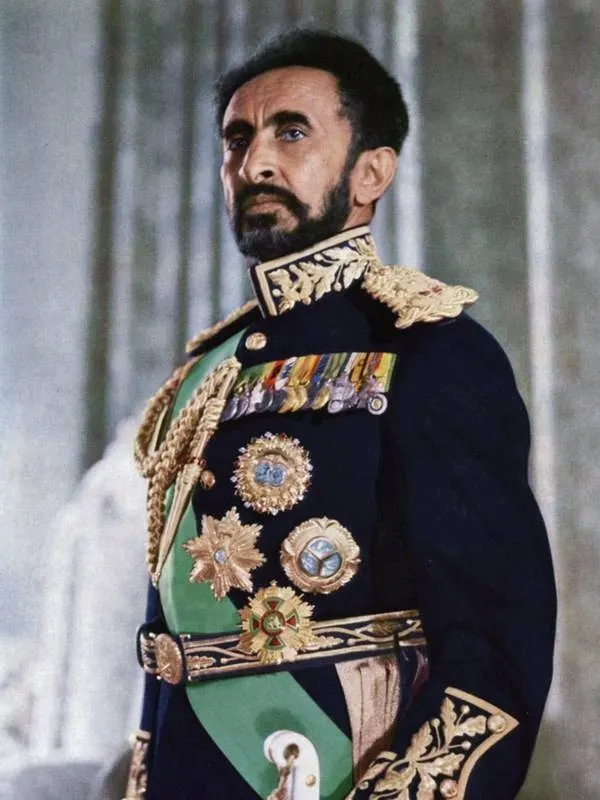
On 2 November 1930, after the death of Empress Zewditu, Ras Tafari Makonnen was crowned emperor in Addis Ababa, taking the name Haile Selassie I, ‘Might of the Trinity’. He had been regent since 1916 and king since 1928. He ruled Ethiopia until 1974. He led it into the League of Nations and the United Nations, lived in exile during the Italian occupation, and made Addis Ababa the home of the Organization of African Unity. In Jamaica, the Rastafari movement came to regard him as divine.

Source: Encyclopaedia Britannica: Haile Selassie I ↗
1936
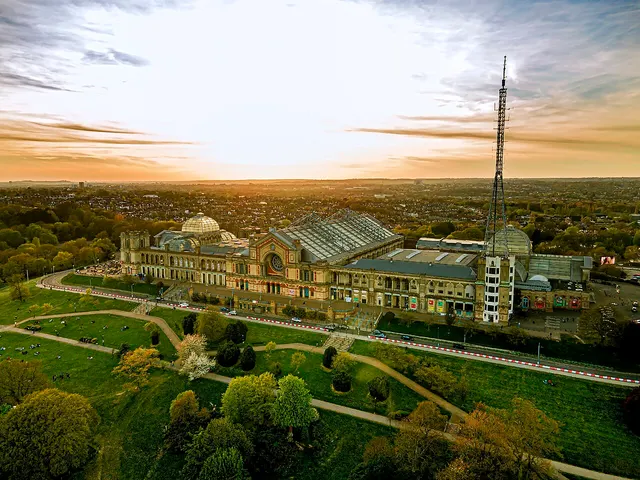
Alexandra Palace in north London, home of the first BBC television studios, photographed in 2021.Alexandra Palace in north London, home of the first BBC television studios, photographed in 2021.Image: Jack Rose · CC BY-SA 4.0
culture · Europe

BBC television goes on the air

On 2 November 1936 the BBC opened its television service from studios in the east wing of Alexandra Palace in north London, the world’s first regular ‘high-definition’ service. The announcer Leslie Mitchell welcomed viewers with the words ‘This is direct television from the studios at Alexandra Palace.’ Only a few hundred sets could receive it. At first the service alternated between two rival systems, Baird’s and Marconi-EMI’s; the Marconi-EMI 405-line system proved better and was adopted the following year.

Source: Alexandra Palace: the BBC at Alexandra Palace ↗
1983
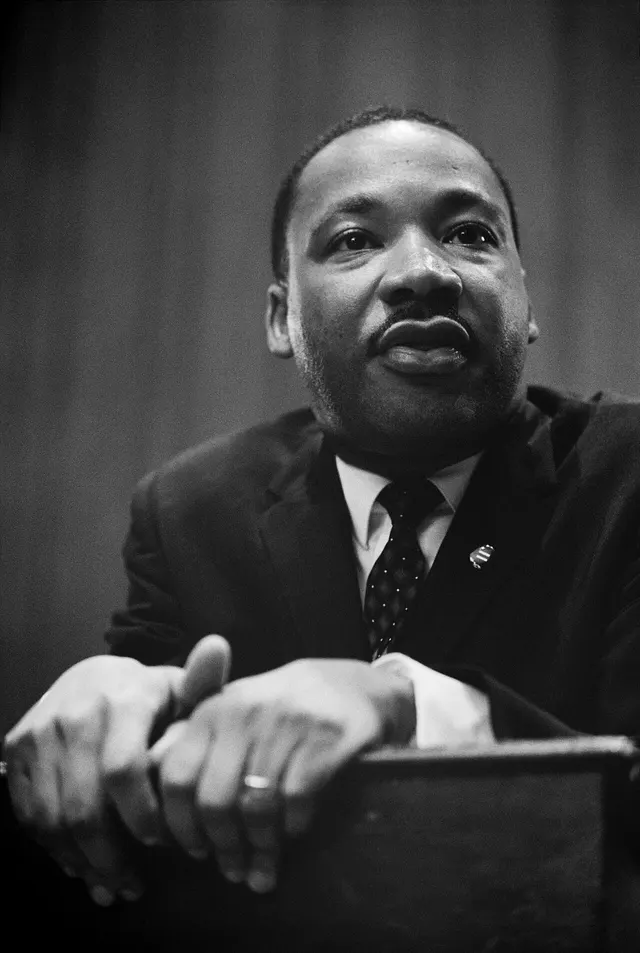
Martin Luther King Jr. at a press conference, 26 March 1964.Martin Luther King Jr. at a press conference, 26 March 1964.Image: Marion S. Trikosko · Public domain

politics · Americas

Martin Luther King Jr. Day becomes law

On 2 November 1983, in the Rose Garden of the White House and with Coretta Scott King beside him, President Ronald Reagan signed the bill making the birthday of Martin Luther King Jr. a federal holiday, kept on the third Monday in January. It was first observed on 20 January 1986.

Source: Ronald Reagan Presidential Library: remarks on signing the bill making the birthday of Martin Luther King, Jr., a national holiday ↗
1988
Robert Tappan Morris in 2008, twenty years after the worm.Robert Tappan Morris in 2008, twenty years after the worm.Image: Trevor Blackwell · CC BY-SA 3.0
science · Americas

The Morris worm spreads across the internet

On 2 November 1988 Robert Tappan Morris, a graduate student at Cornell University, released a self-copying program, a worm, onto the early internet, launching it from a computer at MIT to hide where it came from. It spread far faster than he expected, and within a day about 6,000 of the roughly 60,000 computers then online had been hit. Morris became the first person convicted under the American Computer Fraud and Abuse Act.

Source: Federal Bureau of Investigation: Morris worm ↗
VI
2000 TO TODAY

Modern Day

The events of recent decades that have already become part of the historical record.

2000
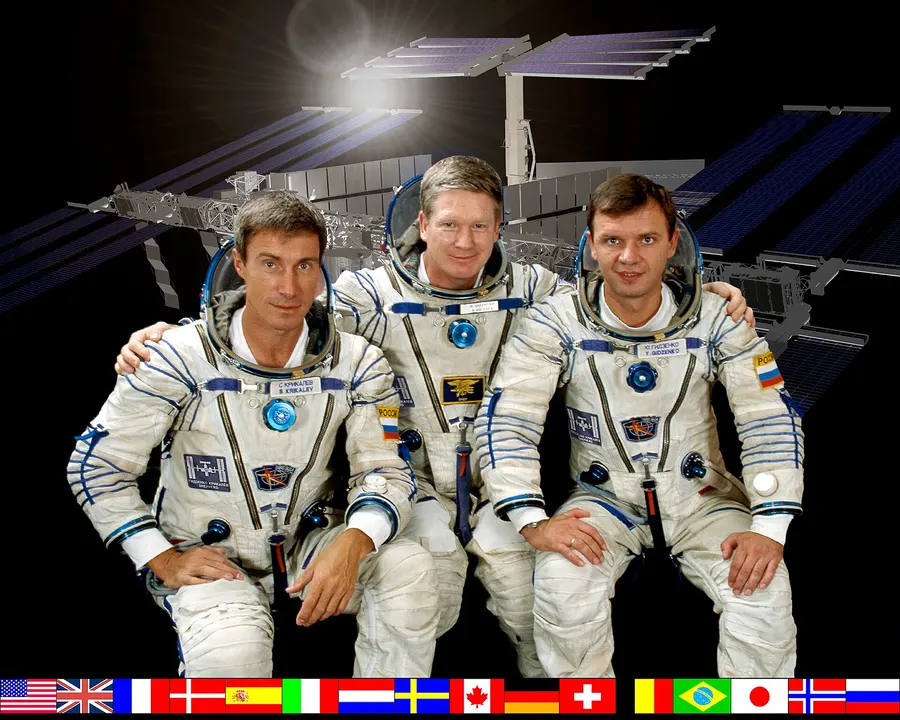
The Expedition 1 crew in training, October 2000: Sergei Krikalev, Bill Shepherd and Yuri Gidzenko.The Expedition 1 crew in training, October 2000: Sergei Krikalev, Bill Shepherd and Yuri Gidzenko.Image: NASA · Public domain
science · Global

The first crew moves into the space station

On 2 November 2000 a Soyuz spacecraft carrying the American astronaut Bill Shepherd and the Russian cosmonauts Yuri Gidzenko and Sergei Krikalev docked with the International Space Station, two days after launching from Baikonur in Kazakhstan. About an hour later they opened the hatch and went aboard. It was the start of a continuous human presence in orbit that has not been broken since. The first crew spent four months bringing the station’s life-support and communications systems to life and helping three space shuttle crews to extend it.

Source: NASA: Space Station 20th, Expedition 1 arrives at the International Space Station ↗
2008
Lewis Hamilton celebrates his world title at the Brazilian Grand Prix, 2 November 2008.Lewis Hamilton celebrates his world title at the Brazilian Grand Prix, 2 November 2008.Image: diogo dubiella from Rio de Janeiro, Brazil · CC BY-SA 2.0
sport · Americas

Lewis Hamilton wins the title on the last corner

At the Brazilian Grand Prix on 2 November 2008 the local driver Felipe Massa won the race and, for a few seconds, the world championship. Lewis Hamilton needed fifth place, and he took it by passing Timo Glock in the closing moments of the final lap. Hamilton became world champion by a single point, at 23 years and 300 days then the youngest in the history of Formula One, and the first Black driver to win the title.

Source: Formula 1: Greatest races, Lewis Hamilton snatches his first title on the final corner of the final lap, Brazil 2008 ↗
WHY THESE MOMENTS?

Significance before volume

This page is not the longest possible list of events. It is a chronological journey through 2 November, where each entry is chosen for historical significance, human interest and reliability.

Facts are checked against authoritative museums, archives, universities and reference works. Where sources disagree, the page says so.

EXPLORED THE DEEPER STORY?

Return to the highlights of 2 November

Discover the lighter side of the date with famous birthdays, culture, firsts and lives remembered.

Explore This Day →
← PREVIOUS DAY1 November
HISTORY & TIMELINE2 November
NEXT DAY →3 November