
HISTORY & TIMELINE
12 May

A journey through
12 May in history

From Richard the Lionheart’s wedding on Cyprus in 1191 to the Sichuan earthquake of 2008, 12 May gathers universities, treaties, first flights and a famous comic play. Along the way come the end of the Berlin Blockade, a computer pioneer’s demonstration and a football hat-trick at Hampden Park.

II
THE MIDDLE AGES

Medieval History

Kingdoms, conflict, faith, power and the changing medieval world.

1191
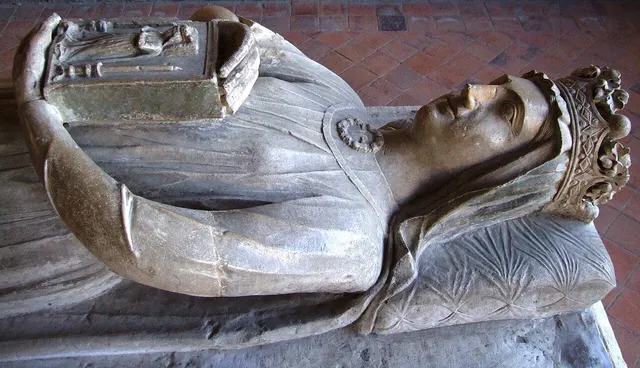
The tomb effigy of Berengaria of Navarre at L'Épau Abbey, near Le Mans.The tomb effigy of Berengaria of Navarre at L’Épau Abbey, near Le Mans.Image: MOSSOT · CC BY-SA 3.0
politics · Middle East

Richard the Lionheart marries on Cyprus

On 12 May 1191, on his way to the Third Crusade, Richard I of England married Berengaria, daughter of the King of Navarre, at Limassol in Cyprus. Richard had just seized the island after its Byzantine ruler mistreated the shipwrecked party carrying his sister Joan and his bride. Berengaria was crowned queen on the same day, but the couple spent little time together and had no children.

Source: Britannica: Berengaria of Navarre ↗
1364
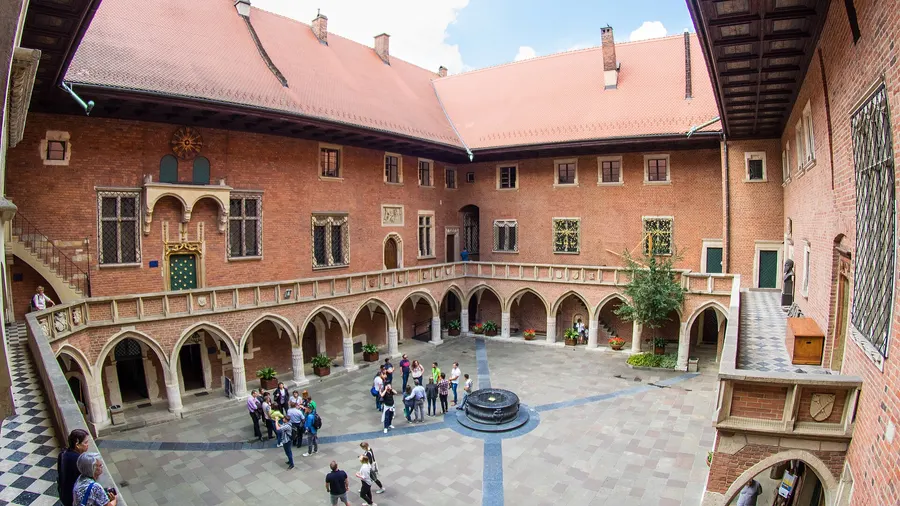
The Collegium Maius, the oldest building of the Jagiellonian University, in KrakówThe Collegium Maius, the oldest building of the Jagiellonian University, in KrakówImage: Robert Rachwał · CC BY 3.0
culture · Europe

King Casimir founds a university in Kraków

On 12 May 1364 King Casimir III the Great signed the charter of a Studium Generale in Kraków, the first university in Poland. Modelled on Bologna and Padua, it was to teach law, medicine and the liberal arts. It faded after the king’s death but was refounded by Władysław Jagiełło in 1400, and as the Jagiellonian University it later taught the young Nicolaus Copernicus.

Source: Jagiellonian University: History ↗
III
A CHANGING WORLD

Early Modern Era

Exploration, political change, scientific development and expanding global connections.

1551
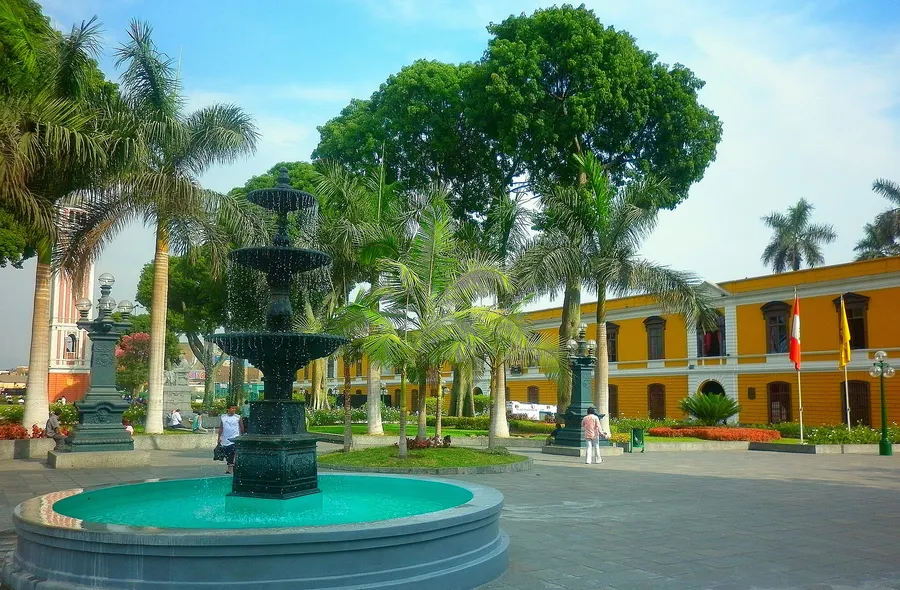
The Casona de San Marcos and the University Park in central Lima, PeruThe Casona de San Marcos and the University Park in central Lima, PeruImage: Kanon6996 · CC BY 3.0
culture · Americas

A royal decree founds the oldest university in the Americas

On 12 May 1551, at Valladolid in Spain, the Emperor Charles V and his mother Queen Joanna signed a royal decree creating a university in Lima, the capital of the Viceroyalty of Peru. First known as the Royal University of Lima, it began teaching in the city’s Dominican priory, serving the sons of colonial officials and the clergy. Pope Pius V confirmed the foundation with a bull in 1571. Today the National University of San Marcos is regarded as the oldest officially established university in the Americas and the only one from the sixteenth century that has operated without a break. Peruvians still call it the Decana de América, the dean of the continent’s universities.

Source: Britannica: Main National University of San Marcos of Lima ↗
1664
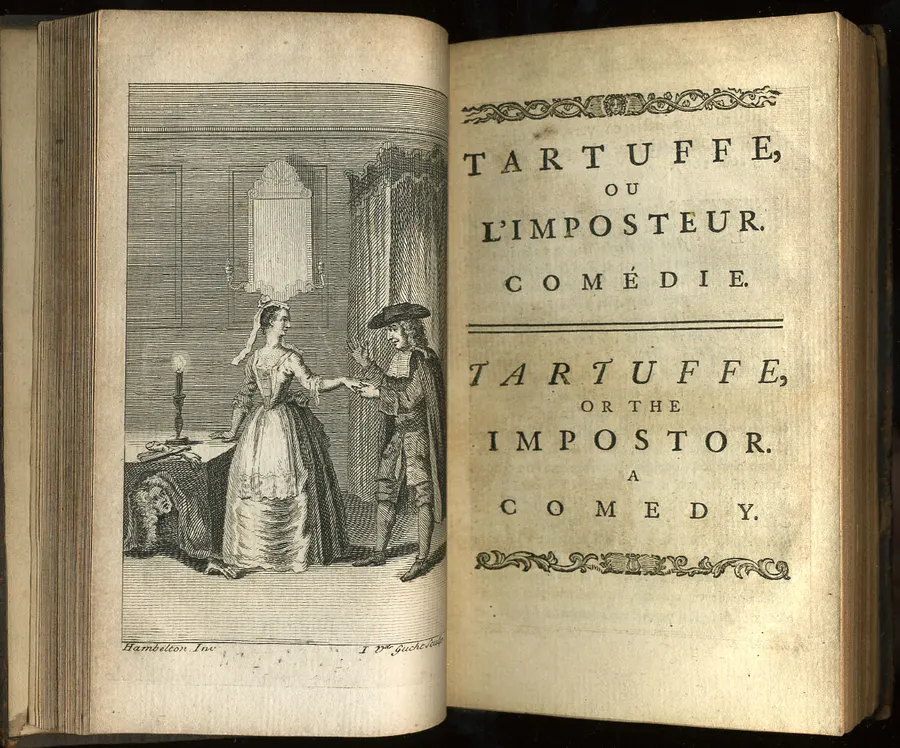
Frontispiece of a 1739 English edition of Molière's TartuffeFrontispiece of a 1739 English edition of Molière’s TartuffeImage: Engraving in the 1739 English edition published by John Watts · Public domain
culture · Europe

Molière’s Tartuffe is first performed at Versailles

On the evening of 12 May 1664 Molière’s company performed a new comedy, Tartuffe, before Louis XIV at Versailles. It was part of the Pleasures of the Enchanted Island, a week of lavish entertainments the young king held in honour of his mother and his queen. This first version, in three acts and in verse, mocked a religious hypocrite who worms his way into a wealthy household. The king enjoyed it, but churchmen and devout courtiers were outraged and the play was banned almost at once. Molière spent years revising and defending it, and a five-act version was finally allowed on the public stage in 1669. It became one of his greatest successes and remains a mainstay of French theatre.

Source: Château de Versailles: The Pleasures of the Enchanted Island, 7 to 13 May 1664 ↗
IV
THE NINETEENTH CENTURY

The 1800s

Industry, empire, invention, reform and a century of enormous transformation.

1870
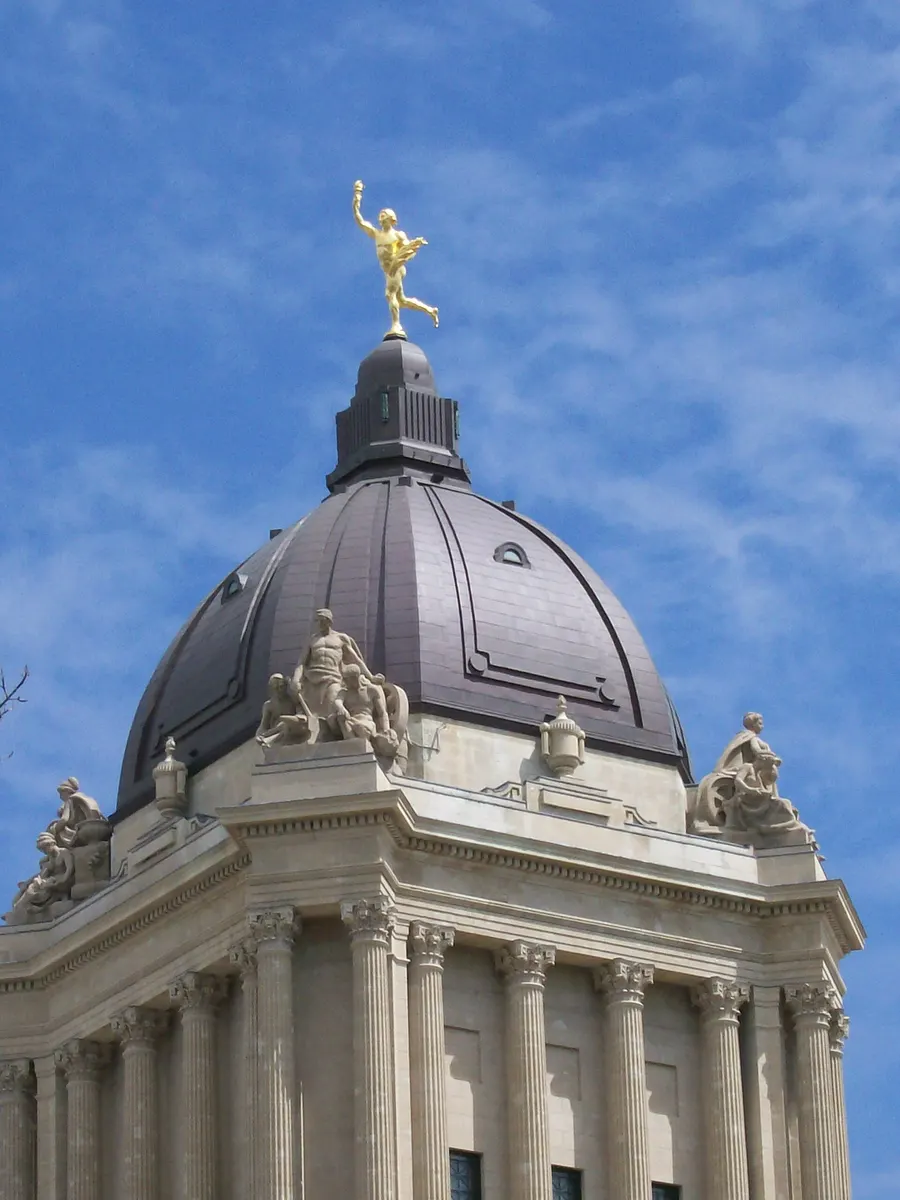
The Golden Boy statue on the dome of the Manitoba Legislative Building, WinnipegThe Golden Boy statue on the dome of the Manitoba Legislative Building, WinnipegImage: Unknown photographer · Public domain
politics · Americas

The Manitoba Act becomes law

On 12 May 1870 the Manitoba Act received royal assent, creating Manitoba as the fifth province of Canada. The act followed negotiations with the provisional government of the Red River settlement led by Louis Riel, and it promised protections for French language and Catholic schools and land for the Métis. The province formally joined Confederation on 15 July, and Manitobans now mark 12 May as Manitoba Day.

Source: The Canadian Encyclopedia: Manitoba Act ↗
1881
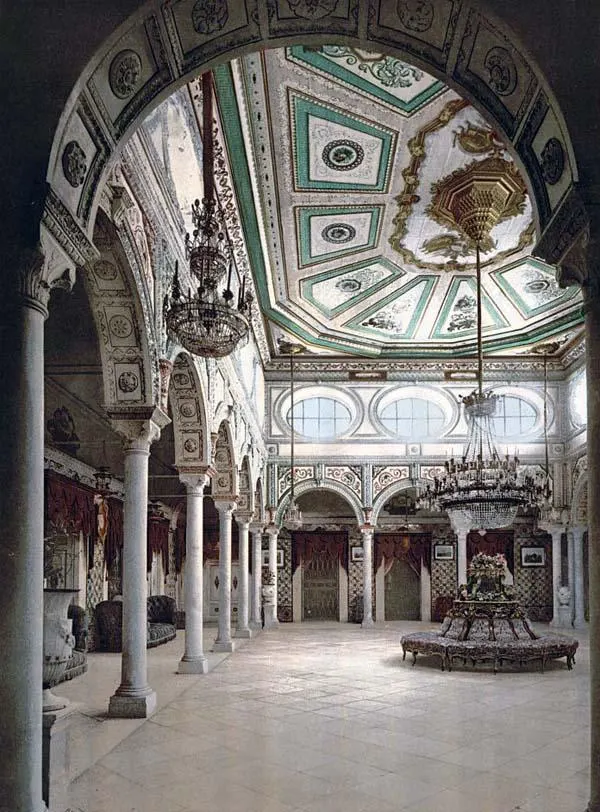
Inside the Ksar Saïd palace near Tunis, where the treaty was signed.Inside the Ksar Saïd palace near Tunis, where the treaty was signed.Image: Unknown author · Public domain
politics · Africa

The Treaty of Bardo makes Tunisia a French protectorate

On 12 May 1881, with a French army of some 36,000 men already in the country, the Bey of Tunis, Muhammad III as-Sadiq, signed the Treaty of Bardo at his Ksar Saïd palace. It allowed an open-ended French military occupation, left the bey in charge only of domestic affairs and placed a French minister beside him. Real power passed to France, and the protectorate lasted until Tunisian independence in 1956.

Source: Britannica: Treaty of Bardo ↗
V
THE TWENTIETH CENTURY

The 1900s

War and peace, technological leaps, social change, politics, sport and popular culture.

1926
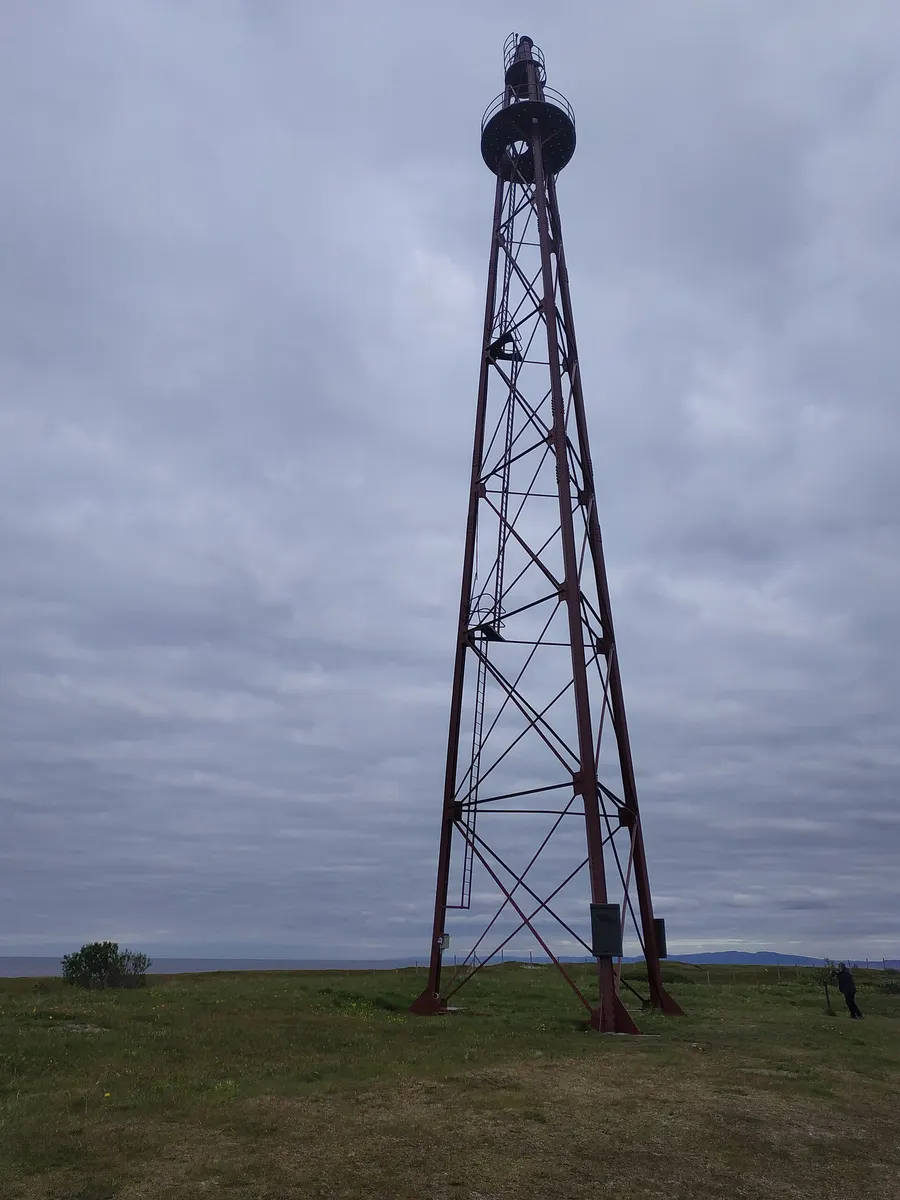
The mooring mast on Vadsøya in northern Norway, where the Norge stopped on its way north in 1926.The mooring mast on Vadsøya in northern Norway, where the Norge stopped on its way north in 1926.Image: Anniolek · CC BY 4.0
world · Global

The airship Norge flies over the North Pole

On 12 May 1926 the Italian-built airship Norge passed over the North Pole, carrying sixteen men led by the Norwegian explorer Roald Amundsen, the Italian designer and pilot Umberto Nobile and the American backer Lincoln Ellsworth. The crew dropped the flags of their three nations onto the ice below before pressing on towards Alaska. The airship had left Ny-Ålesund on Svalbard the day before and came down at Teller, Alaska, two days later, making the first crossing of the Arctic Ocean. Because an earlier claim by the American Richard Byrd has since been doubted, the Norge crew are now widely recognised as the first people certainly to have reached the Pole.

Source: Fram Museum: The Norge flight 1926 ↗
1941
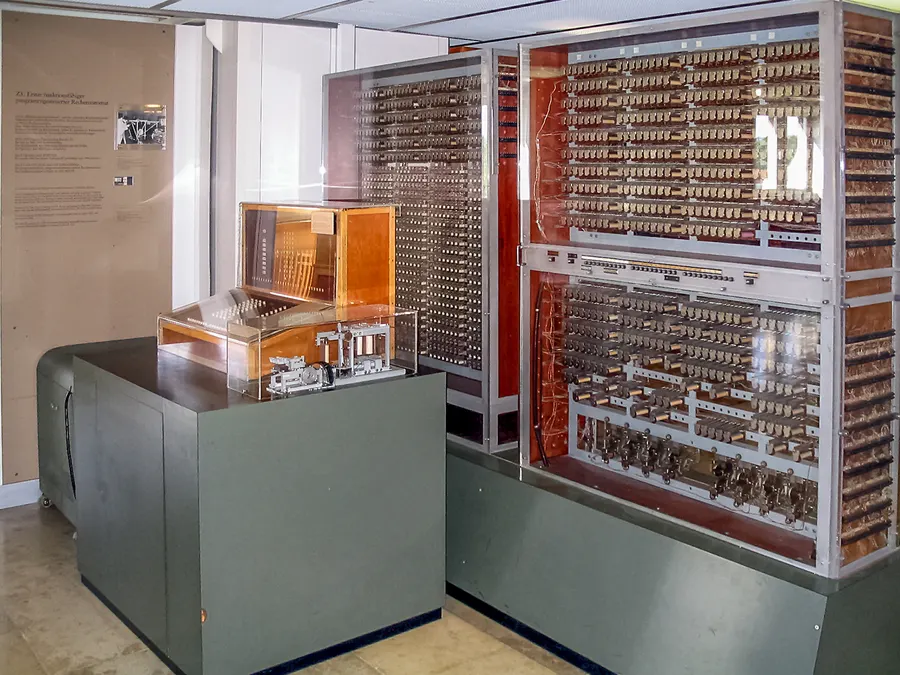
The reconstruction of Konrad Zuse's Z3 computer at the Deutsches Museum, MunichThe reconstruction of Konrad Zuse’s Z3 computer at the Deutsches Museum, MunichImage: Venusianer (derivative work by Georgfotoart) · CC BY-SA 3.0
science · Europe

Konrad Zuse demonstrates the Z3 computer

On 12 May 1941 the German engineer Konrad Zuse showed his Z3 to an audience of scientists in Berlin, including professors from the German aviation research laboratory. Built from telephone relays and reading its instructions from punched film, the Z3 worked in binary and could carry out a sequence of calculations automatically. It is widely regarded as the world’s first working programmable, fully automatic digital computer. The aircraft researchers used it to analyse wing flutter, but the original machine was destroyed by Allied bombing in 1943. Zuse’s company later built a working replica, which now stands in the Deutsches Museum in Munich.

Source: Zuse Institute Berlin: Z3 ↗
1949
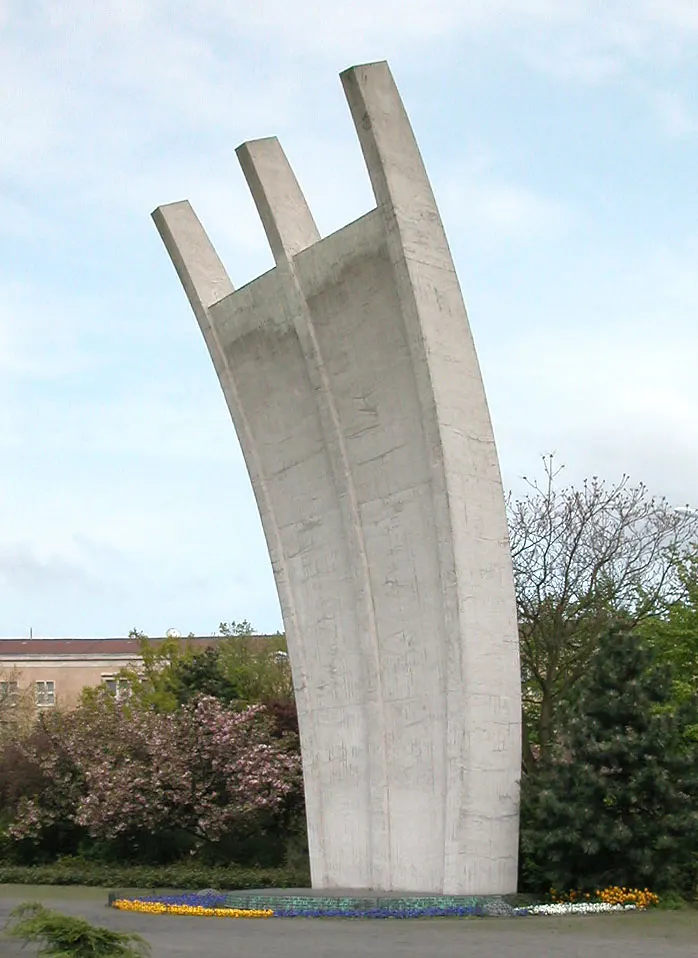
The Berlin Airlift Memorial outside Tempelhof airport, BerlinThe Berlin Airlift Memorial outside Tempelhof airport, BerlinImage: Ingrid Strauch · CC BY-SA 2.0
politics · Europe

The Soviet Union lifts the Berlin Blockade

At one minute past midnight on 12 May 1949, Soviet forces reopened the roads, railways and canals linking West Berlin to the western zones of Germany. They had been closed since June 1948, when Moscow answered a new western currency by trying to starve the Allies out of the divided city. Lorries and trains rolled in to cheering crowds within hours. The Americans and British had kept more than two million West Berliners supplied from the air for almost eleven months, flying in coal, flour and milk around the clock. The success of the airlift, and the reputation it won for the western powers, helped persuade Stalin to give way. The crisis also hastened the creation of NATO and of two separate German states later that year.

Source: Britannica: Berlin blockade ↗
1965
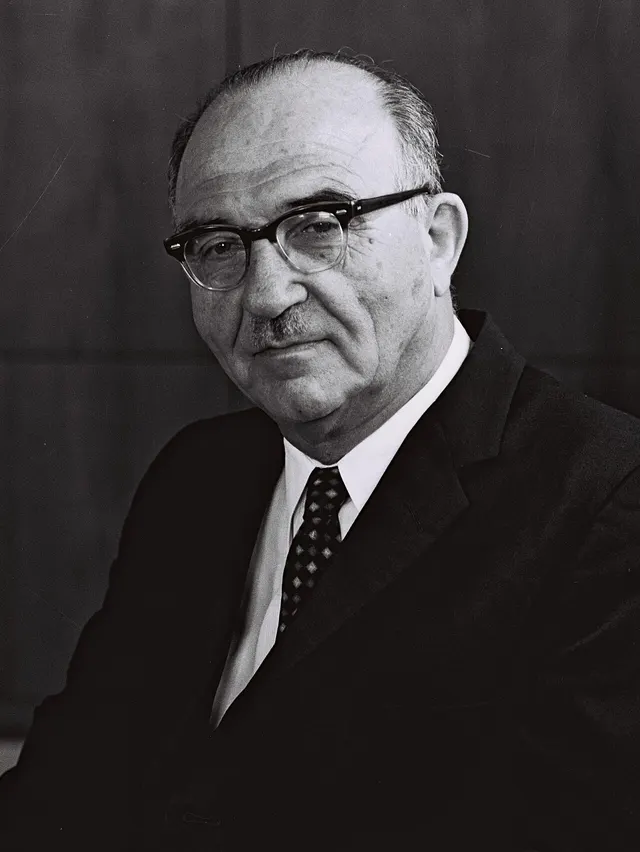
Levi Eshkol, Israel's prime minister from 1963 to 1969Levi Eshkol, Israel’s prime minister from 1963 to 1969Image: David Eldan · CC BY-SA 4.0
politics · Middle East

West Germany and Israel agree to exchange ambassadors

On 12 May 1965 the West German chancellor Ludwig Erhard and the Israeli prime minister Levi Eshkol formally agreed to establish diplomatic relations. Twenty years after the Holocaust, many had thought such a step unthinkable, though West Germany had been paying reparations to Israel since a 1952 agreement. Both governments now describe the decision as a milestone in reconciliation between Germans and Jews.

Source: German Federal Foreign Office: 60 years of diplomatic relations between Israel and Germany ↗
1975
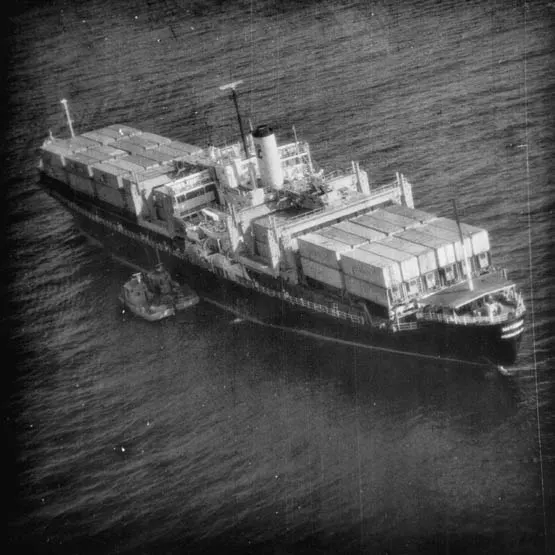
The container ship SS Mayaguez at sea, photographed by the US Air Force in 1975.The container ship SS Mayaguez at sea, photographed by the US Air Force in 1975.Image: US Air Force · Public domain
world · Asia

Khmer Rouge forces seize the SS Mayaguez

On 12 May 1975, less than a month after taking power in Cambodia, Khmer Rouge naval forces fired on and boarded the American container ship SS Mayaguez near the island of Poulo Wai. The ship was taken to Koh Tang. President Gerald Ford ordered a rescue three days later; the crew were released, but dozens of American servicemen died in the operation, the last major American combat action of the Vietnam era.

Source: Gerald R. Ford Presidential Library: SS Mayaguez, Leadership in Crisis ↗
1976
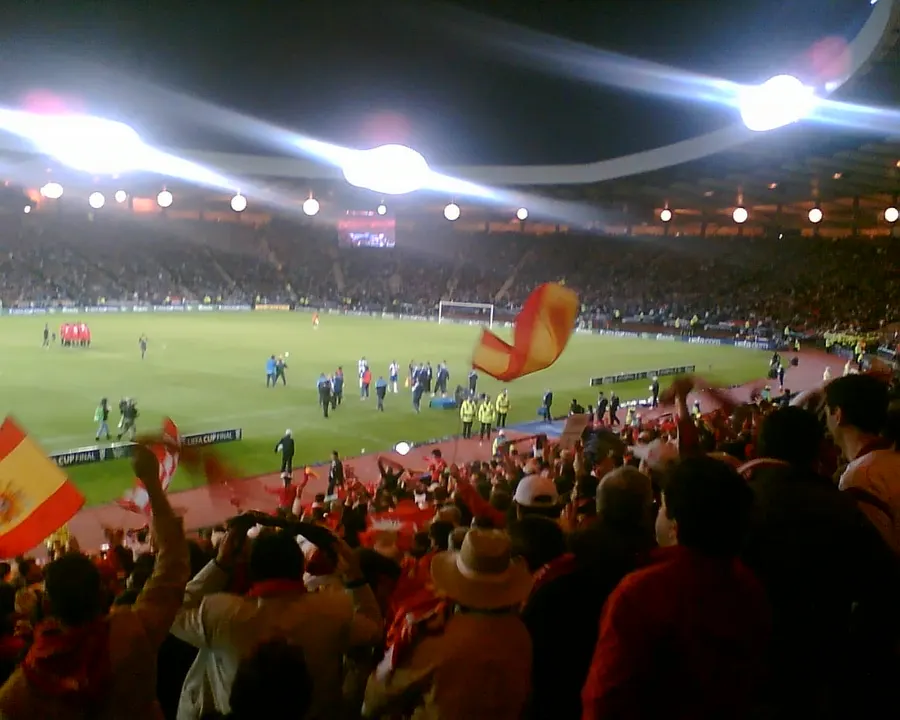
Hampden Park, Glasgow, under floodlights at the 2007 UEFA Cup final.Hampden Park, Glasgow, under floodlights at the 2007 UEFA Cup final.Image: Alan O'Dowd · CC BY-SA 2.0
sport · Europe

Bayern Munich complete a European Cup hat-trick

On a rainy 12 May 1976 at Hampden Park in Glasgow, Bayern Munich beat Saint-Étienne of France 1 to 0 in the European Cup final. The French side had the better of the first half, but in the 57th minute Franz Roth drove a free kick past the goalkeeper after Franz Beckenbauer rolled it into his path. The win gave Bayern their third European Cup in a row, after victories in 1974 and 1975, and made them only the third club to achieve the feat, following Real Madrid and Ajax. As a reward for the hat-trick the club was allowed to keep the original trophy, which is now on display in Munich.

Source: UEFA: Bayern München 1 to 0 St-Étienne, 1975/76 final ↗
VI
2000 TO TODAY

Modern Day

The events of recent decades that have already become part of the historical record.

2002
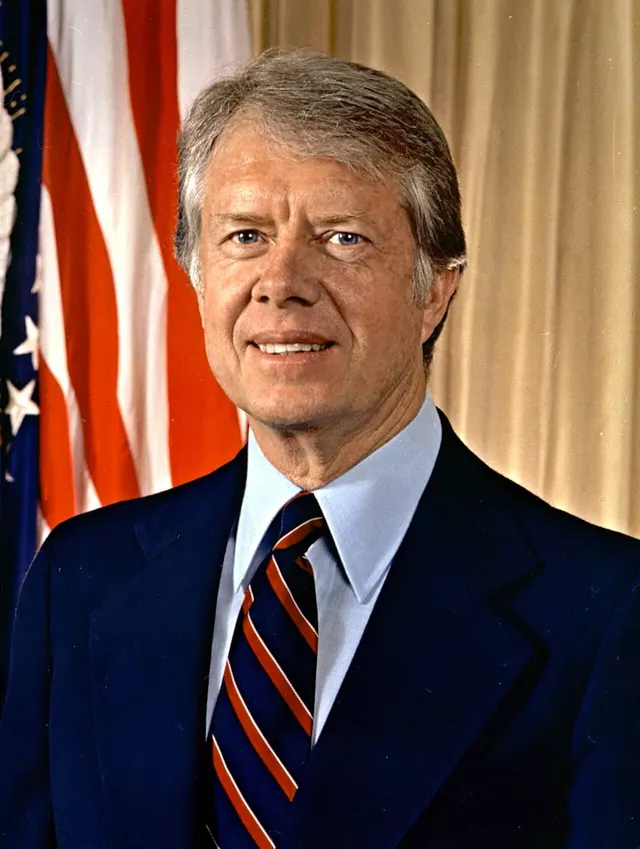
Jimmy Carter's official portrait as president.Jimmy Carter’s official portrait as president.Image: US Navy Naval Photographic Center · Public domain
politics · Americas

Jimmy Carter arrives in Havana

On 12 May 2002 Jimmy Carter and his wife Rosalynn arrived in Havana, making him the first sitting or former American president to visit Cuba since the 1959 revolution. During his stay he met Fidel Castro and dissidents alike, and in a speech broadcast live on Cuban television he urged Washington to end its long embargo and called on Havana to allow free elections and greater civil liberties.

Source: The Carter Center: Cuba ↗
2008
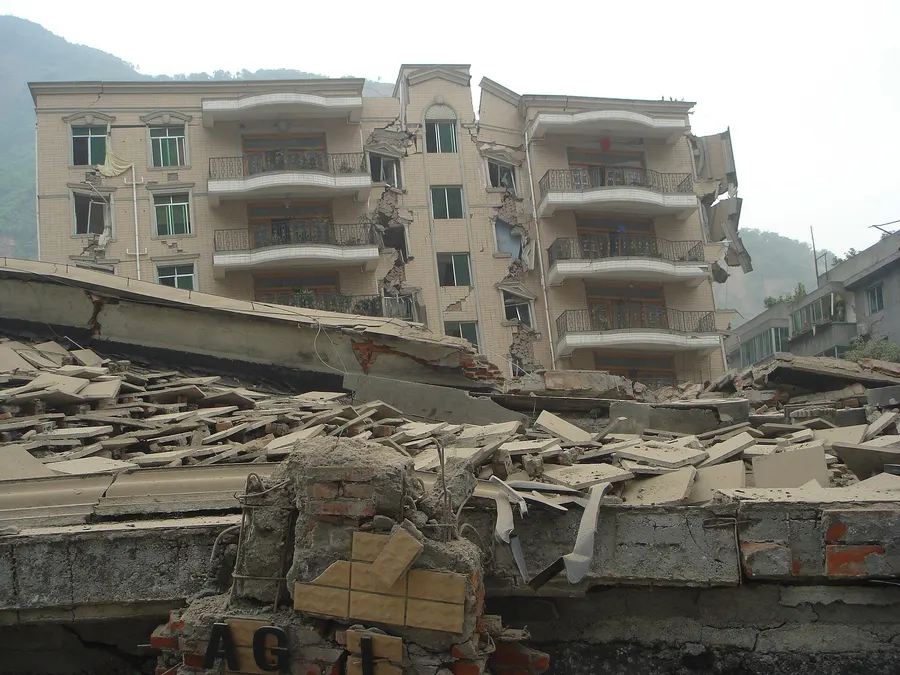
A damaged bank building in Beichuan, Sichuan, after the 2008 earthquakeA damaged bank building in Beichuan, Sichuan, after the 2008 earthquakeImage: 人神之间 · CC BY-SA 3.0
world · Asia

A great earthquake strikes Sichuan

At 2.28 in the afternoon of 12 May 2008 a magnitude 7.9 earthquake struck the mountainous heart of Sichuan province in south-west China. Its epicentre lay about 80 kilometres west-north-west of the provincial capital, Chengdu, where stress built up by the Indian plate pushing north was released along the Longmenshan Fault. Towns such as Beichuan were largely destroyed and landslides blocked valleys and rivers. The final Chinese government count put almost 90,000 people dead or missing, among them many children in collapsed schools, and nearly 375,000 injured. It was one of the deadliest earthquakes in China for decades and led to a vast rebuilding effort.

Source: Britannica: Sichuan earthquake of 2008 ↗
RESEARCH

Sources & Further Reading

Selected authoritative references supporting the events on this page.

Britannica: Berengaria of Navarre↗Westminster Abbey: Richard I↗Wikipedia: Berengaria of Navarre↗Jagiellonian University: History↗Britannica: Jagiellonian University↗Wikipedia: Jagiellonian University↗Britannica: Main National University of San Marcos of Lima↗UNMSM: Historia↗Wikipedia: National University of San Marcos↗Château de Versailles: The Pleasures of the Enchanted Island, 7 to 13 May 1664↗BnF Essentiels: Le Tartuffe ou L’Imposteur↗Wikipedia: Tartuffe↗The Canadian Encyclopedia: Manitoba Act↗Government of Manitoba: May 12 is Manitoba Day↗Wikipedia: Manitoba Act↗Britannica: Treaty of Bardo↗Britannica: Tunisia, the protectorate 1881 to 1956↗Wikipedia: Treaty of Bardo↗Fram Museum: The Norge flight 1926↗Britannica: Norge (airship)↗Wikipedia: Norge (airship)↗Zuse Institute Berlin: Z3↗Britannica: Z3 (computer)↗Wikipedia: Z3 (computer)↗Britannica: Berlin blockade↗US Office of the Historian: The Berlin Airlift, 1948 to 1949↗Wikipedia: Berlin Blockade↗German Federal Foreign Office: 60 years of diplomatic relations between Israel and Germany↗Israel Ministry of Foreign Affairs: Bilateral relations↗Wikipedia: Germany–Israel relations↗Gerald R. Ford Presidential Library: SS Mayaguez, Leadership in Crisis↗Naval History and Heritage Command: SS Mayaguez Crisis, May 1975↗Wikipedia: Mayaguez incident↗UEFA: Bayern München 1 to 0 St-Étienne, 1975/76 final↗FC Bayern: How Bayern brought the original European Cup home in 1976↗Wikipedia: 1976 European Cup final↗The Carter Center: Cuba↗The Carter Center: Trip report by former President Jimmy Carter on Cuba trip, 2002↗Wikipedia: Cuba–United States relations↗Britannica: Sichuan earthquake of 2008↗USGS: M 7.9, Eastern Sichuan, China↗Wikipedia: 2008 Sichuan earthquake↗
WHY THESE MOMENTS?

Significance before volume

This page is not the longest possible list of events. It is a chronological journey through 12 May, where each entry is chosen for historical significance, human interest and reliability.

Facts are checked against authoritative museums, archives, universities and reference works. Where sources disagree, the page says so.

EXPLORED THE DEEPER STORY?

Return to the highlights of 12 May

Discover the lighter side of the date with famous birthdays, culture, firsts and lives remembered.

Explore This Day →
← PREVIOUS DAY11 May
HISTORY & TIMELINE12 May
NEXT DAY →13 May