HISTORY & TIMELINE
27 March

A journey through
27 March in history

From the founding law of the US Navy in 1794 to the death of Yuri Gagarin in 1968, 27 March has seen the first international rugby match, the first radio message sent between two countries, the Goliad massacre in Texas and Nikita Khrushchev’s rise to lead the Soviet government. This timeline follows the date across two centuries.

JUMP THROUGH TIME
III
A CHANGING WORLD

Early Modern Era

Exploration, political change, scientific development and expanding global connections.

1794
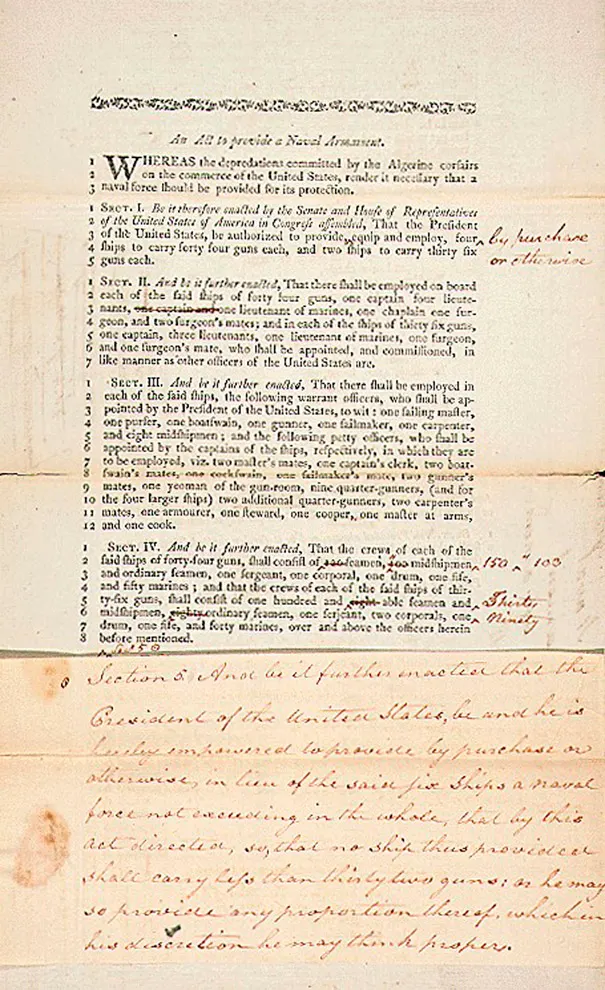
The first page of the Senate's bill 'to provide a naval armament', March 1794.The first page of the Senate’s bill ‘to provide a naval armament’, March 1794.Image: US Senate · Public domain
world · Americas

Washington signs the act that creates the US Navy

With Barbary corsairs seizing American merchant ships in the Mediterranean, President George Washington signed ‘an act to provide a naval armament’, ordering six frigates. Among them was USS Constitution, launched in 1797 and now in Boston, the world’s oldest commissioned warship still afloat.

Source: US Naval History and Heritage Command: Washington signs the Naval Act of 1794 ↗
IV
THE NINETEENTH CENTURY

The 1800s

Industry, empire, invention, reform and a century of enormous transformation.

1836
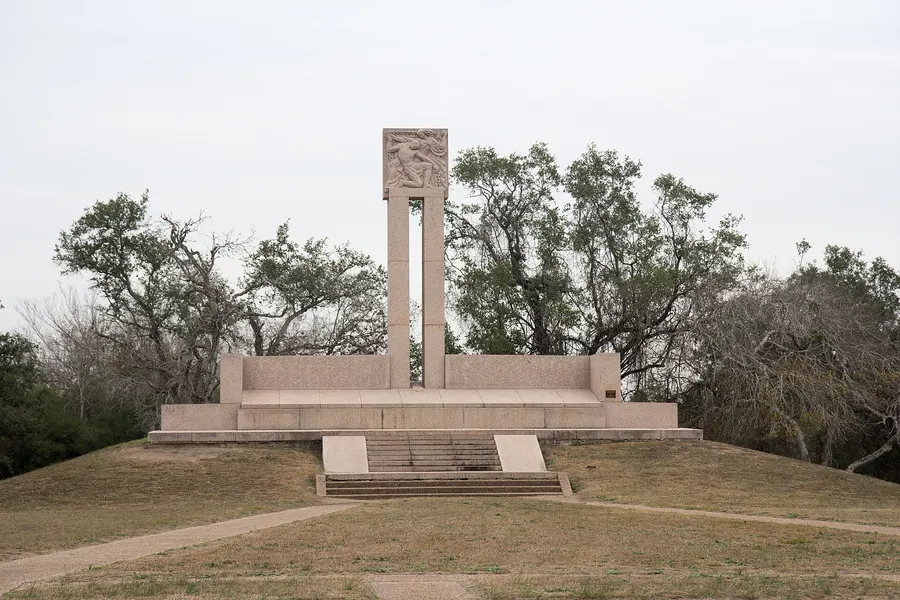
The monument over the grave of the Texian prisoners at Goliad, 2013.The monument over the grave of the Texian prisoners at Goliad, 2013.Image: P6150 · CC BY-SA 3.0
world · Americas

The Goliad massacre

During the Texas Revolution, on Palm Sunday, Mexican troops shot more than 340 Texian prisoners at Goliad on the orders of General Antonio López de Santa Anna. They had surrendered under Colonel James Fannin a week earlier. ‘Remember Goliad!’ became a battle cry alongside ‘Remember the Alamo!’

Source: Texas State Historical Association, Handbook of Texas: Goliad massacre ↗
1871
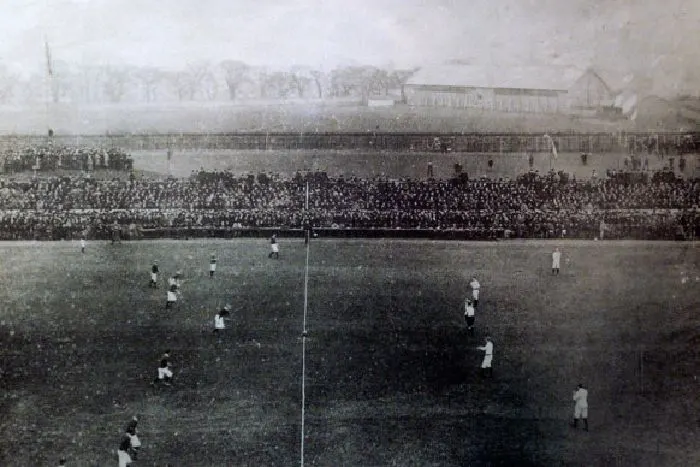
Scotland play England in the first rugby international at Raeburn Place, Edinburgh, 1871.Scotland play England in the first rugby international at Raeburn Place, Edinburgh, 1871.Image: Unknown · Public domain
sport · Europe

The first international rugby match

On 27 March 1871 Scotland met England at Raeburn Place in Edinburgh, the cricket ground of Edinburgh Academy, in the first international rugby match. It came about after Scottish club captains challenged England in the press, and about 4,000 people watched. The teams had 20 players a side. Scotland won by a goal and a try to a try, and the fixture, now part of the Six Nations, is still played for the Calcutta Cup.

Source: World Rugby Museum: Spotlight on Raeburn Place ↗
1899
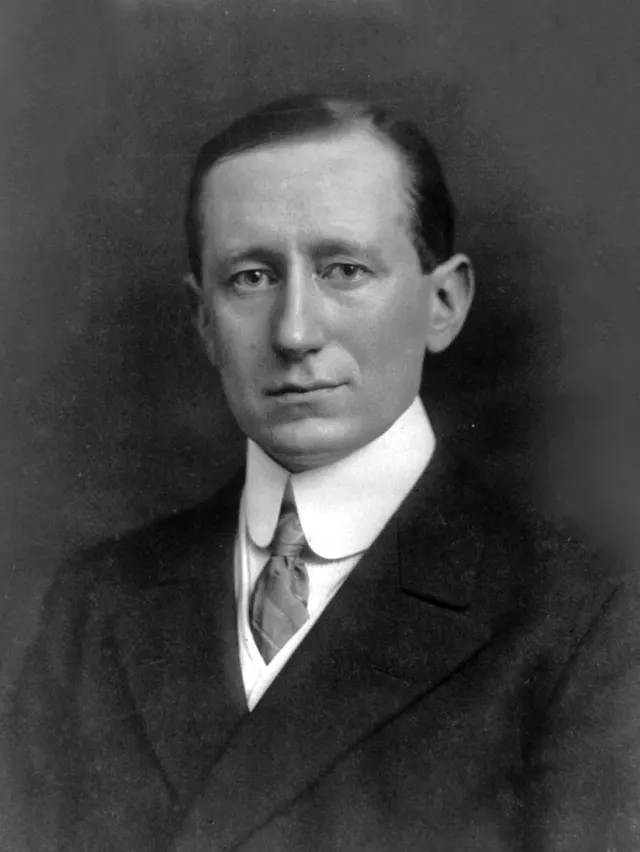
Guglielmo Marconi.Guglielmo Marconi.Image: Pach Brothers · Public domain
science · Europe

The first radio message between two countries

On 27 March 1899 Guglielmo Marconi’s wireless station at Wimereux, near Boulogne in France, sent a radio message across the English Channel to the South Foreland lighthouse near Dover, about 30 miles away. It was the first radio transmission from one country to another. Less than three years later Marconi sent a signal across the Atlantic, and radio soon became standard on ships at sea.

Source: National Trust: South Foreland Lighthouse’s history ↗
V
THE TWENTIETH CENTURY

The 1900s

War and peace, technological leaps, social change, politics, sport and popular culture.

1941
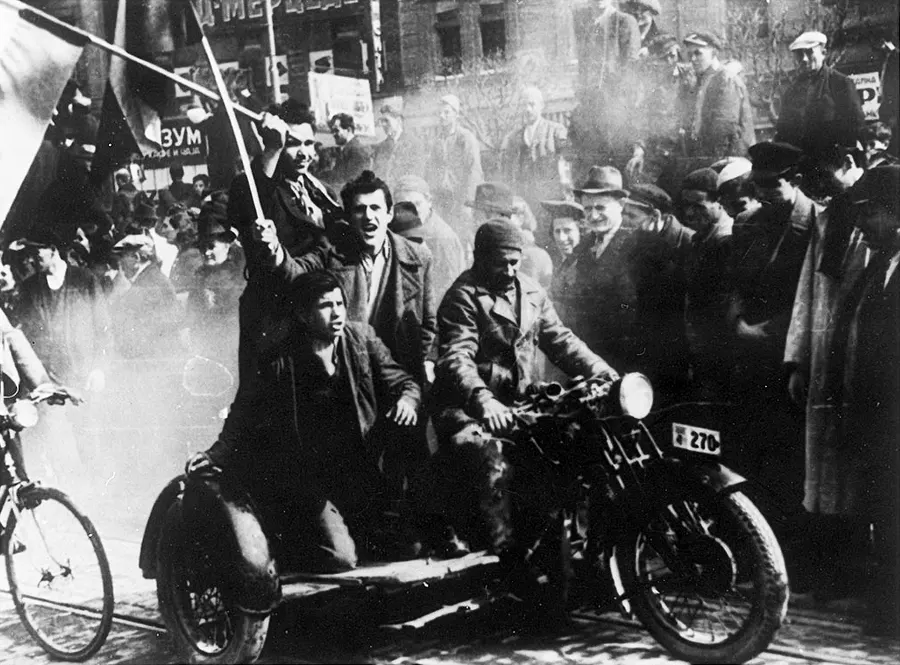
Crowds in Belgrade celebrate the break with the Axis pact, 27 March 1941.Crowds in Belgrade celebrate the break with the Axis pact, 27 March 1941.Image: Milan Roglić · Public domain
world · Europe

Belgrade rejects the Axis

Two days after Yugoslavia’s government signed up to the Tripartite Pact with Nazi Germany, Italy and Japan, officers led by General Dušan Simović overthrew it on 27 March 1941. They ended the regency of Prince Paul and declared the 17-year-old King Peter II of age to rule. Crowds filled the streets of Belgrade chanting ‘better the grave than a slave’. Hitler ordered Yugoslavia destroyed: on 6 April German bombers struck Belgrade, and within two weeks the country had been invaded and carved up.

Source: Encyclopaedia Britannica: Dušan Simović ↗
1945
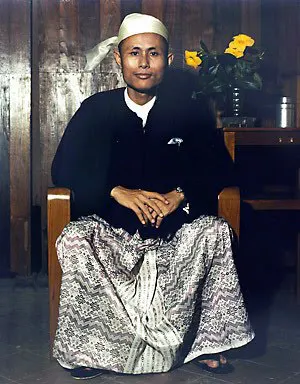
Aung San, leader of the Burma National Army.Aung San, leader of the Burma National Army.Image: Unknown authorUnknown author · Public domain
world · Asia

Burma’s army turns against Japan

Burmese nationalists led by Aung San had fought alongside Japan in 1942, hoping to drive out the British. By 1945 they had seen that Japanese rule offered no real independence. On 27 March 1945 the Burma National Army rose in revolt against the Japanese and joined the Allies, as British and Indian troops pushed south towards Rangoon. The day was first remembered as Resistance Day. Aung San went on to negotiate Burma’s independence from Britain but was assassinated in 1947, months before it came.

Source: National Army Museum: A timeline of Burma and the Army ↗
1958
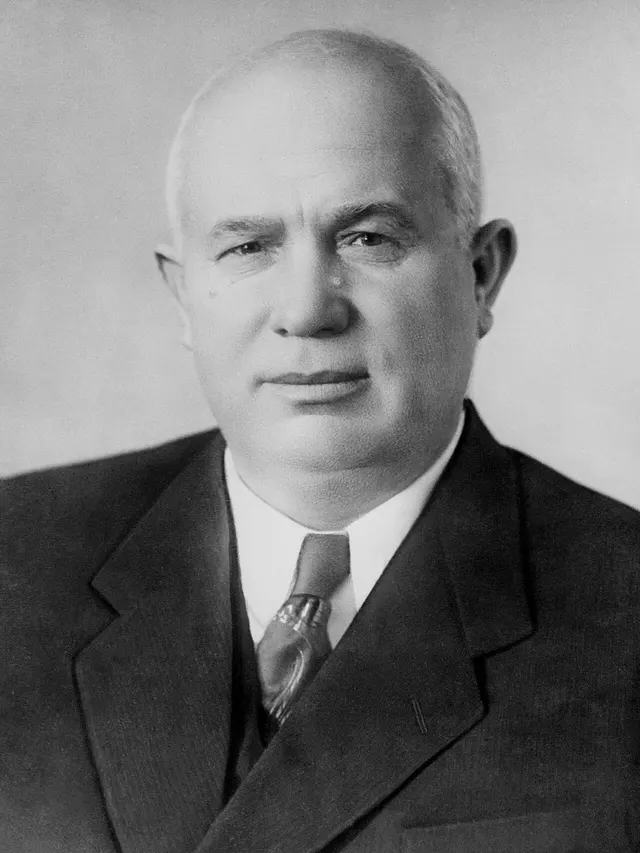
Nikita Khrushchev in Moscow, 1956.Nikita Khrushchev in Moscow, 1956.Image: TASS · Public domain
politics · Europe

Khrushchev becomes Soviet premier

The Supreme Soviet made Nikita Khrushchev chairman of the Council of Ministers in place of Nikolai Bulganin. Already first secretary of the Communist Party, he now led both party and government, ending the ‘collective leadership’ that had followed Stalin’s death. He held both posts until he was ousted in 1964.

Source: Encyclopaedia Britannica: Nikita Khrushchev, leadership of the Soviet Union ↗
1964
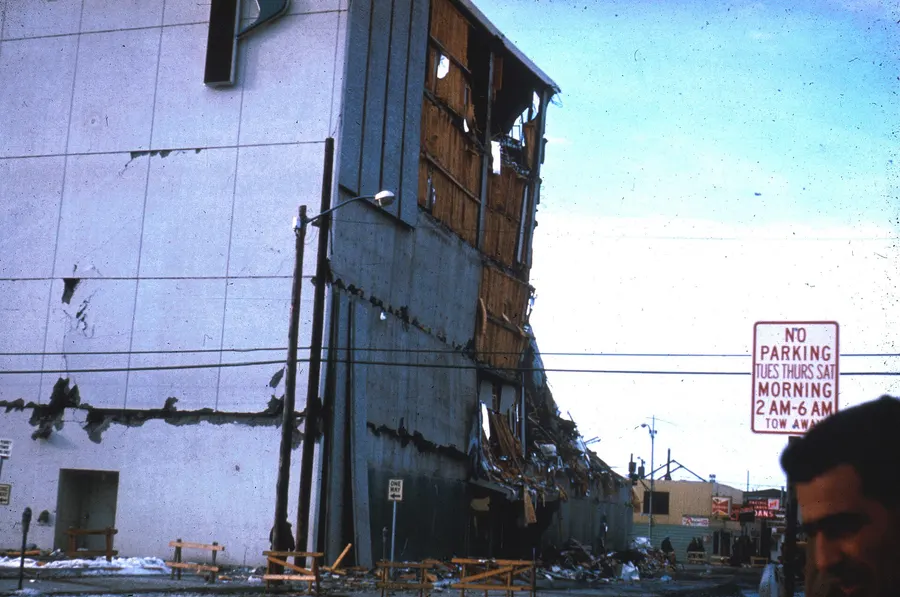
The wrecked Penney Building in Anchorage after the earthquake, 1964.The wrecked Penney Building in Anchorage after the earthquake, 1964.Image: Unknown author (US government) · Public domain
world · Americas

The Great Alaska Earthquake

At 5.36 in the evening of Good Friday, 27 March 1964, a magnitude 9.2 earthquake struck Prince William Sound in southern Alaska. It shook for about four and a half minutes and remains the most powerful earthquake recorded in US history, and the second most powerful measured anywhere. Whole neighbourhoods of Anchorage slid away, the ground rose by as much as 25 metres in places, and tsunamis swept the coast as far as California. 131 people died. A US Geological Survey scientist, George Plafker, showed it had happened where one of the Earth’s plates slides beneath another, helping to prove the theory of plate tectonics.

Source: US Geological Survey: M9.2 Alaska earthquake and tsunami of 27 March 1964 ↗
1977
The control tower at Tenerife North (Los Rodeos) airport, 2013.The control tower at Tenerife North (Los Rodeos) airport, 2013.Image: Aisano · CC BY-SA 3.0
world · Europe

The Tenerife airport disaster

On 27 March 1977 a bomb at the airport on Gran Canaria forced many flights to divert to the small Los Rodeos airport on Tenerife. That afternoon, in thick fog, a KLM Boeing 747 began its take-off run and struck a Pan Am 747 still taxiing along the same runway. 583 people died, all 248 on the KLM aircraft and 335 on the Pan Am, making it the deadliest accident in aviation history; 61 people on the Pan Am jet survived. The Spanish inquiry found that the KLM captain had begun his take-off without clearance, and the disaster changed how pilots and air traffic controllers talk to each other.

Source: Encyclopaedia Britannica: Tenerife airport disaster ↗
WHY THESE MOMENTS?

Significance before volume

This page is not the longest possible list of events. It is a chronological journey through 27 March, where each entry is chosen for historical significance, human interest and reliability.

Facts are checked against authoritative museums, archives, universities and reference works. Where sources disagree, the page says so.

EXPLORED THE DEEPER STORY?

Return to the highlights of 27 March

Discover the lighter side of the date with famous birthdays, culture, firsts and lives remembered.

Explore This Day →
← PREVIOUS DAY26 March
HISTORY & TIMELINE27 March
NEXT DAY →28 March