HISTORY & TIMELINE
16 March

A journey through
16 March in history

From the tragedy at York in 1190 to the gas attack on Halabja in 1988, 16 March has seen a king shot at a masked ball, a revolt against taxes in the Andes, the birth of modern rocketry and a prime minister’s surprise farewell. This timeline follows the date across eight centuries.

JUMP THROUGH TIME
II
THE MIDDLE AGES

Medieval History

Kingdoms, conflict, faith, power and the changing medieval world.

1190
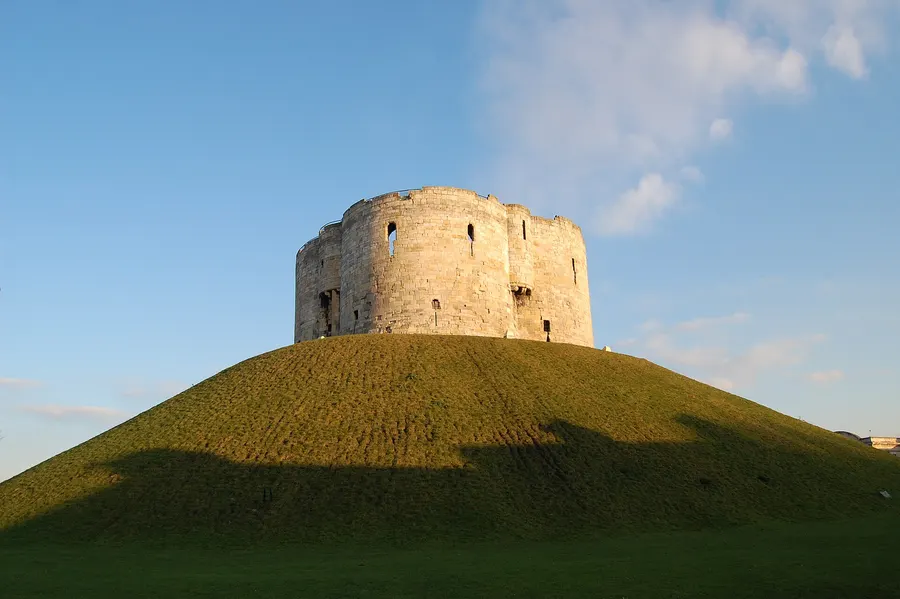
Clifford's Tower in York, 2007, the later stone keep on the mound where the massacre took place.Clifford’s Tower in York, 2007, the later stone keep on the mound where the massacre took place.Image: Steven Fruitsmaak · Public domain
culture · Europe

The massacre of the Jews of York

Fleeing a rioting mob, about 150 Jewish men, women and children of York took refuge in the royal castle’s wooden tower. Besieged on the night of Shabbat HaGadol, many took their own lives rather than be killed or forcibly baptised, and those who surrendered were murdered. The rioters then burned the records of their debts. The date is by the calendar of the day.

Source: English Heritage: The massacre of the Jews at Clifford’s Tower ↗
III
A CHANGING WORLD

Early Modern Era

Exploration, political change, scientific development and expanding global connections.

1521
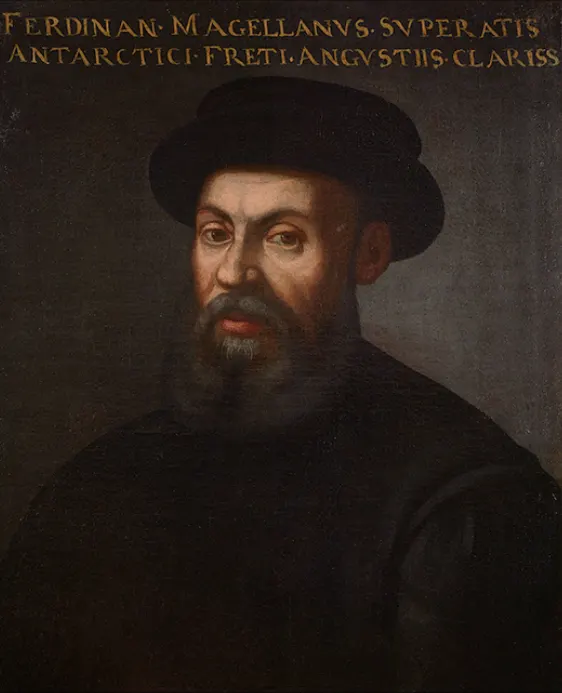
Ferdinand Magellan, in a portrait painted in the late 1500s or early 1600s.Ferdinand Magellan, in a portrait painted in the late 1500s or early 1600s.Image: Unknown authorUnknown author · Public domain
world · Asia

Magellan’s fleet reaches the Philippines

After a gruelling crossing of the Pacific that cost many of his men their lives, Ferdinand Magellan’s fleet sighted the mountains of Samar on 16 March 1521 (by the calendar of the day). The next day the ships anchored at the small island of Homonhon, where the exhausted crews rested and traded for food with islanders from nearby Suluan. It was the first recorded European arrival in the Philippine islands. Magellan himself was killed at Mactan that April, but one of his ships went on to complete the first voyage around the world in 1522.

Source: National Quincentennial Committee, Government of the Philippines: Homonhon, our contribution to the first circumnavigation ↗
1781
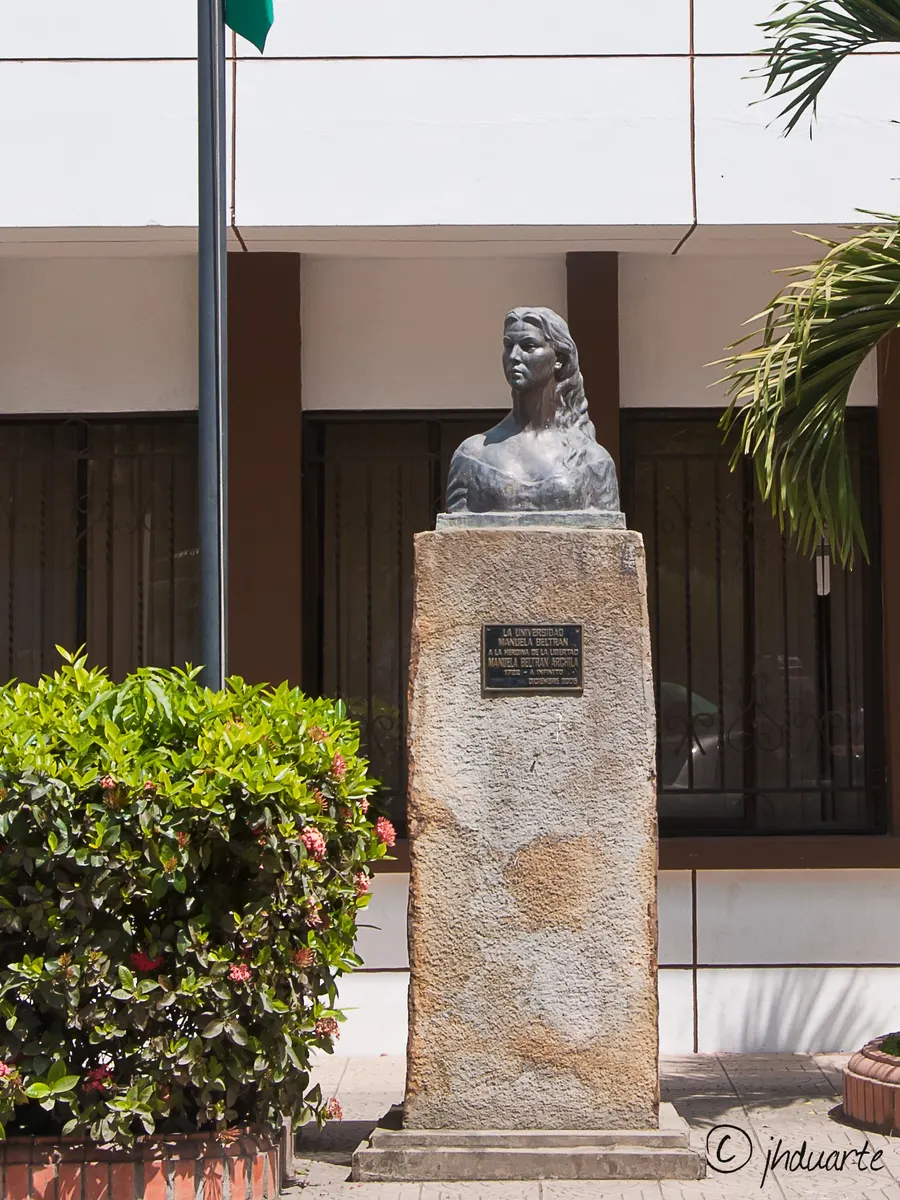
A bust of Manuela Beltrán in Socorro, Colombia, 2011.A bust of Manuela Beltrán in Socorro, Colombia, 2011.Image: Jaime Hernando Duarte · CC BY-SA 2.0
politics · Americas

The Comunero revolt begins in New Granada

In the town of Socorro, in what is now Colombia, a crowd led by the market trader Manuela Beltrán tore down the royal edict announcing new sales taxes. The protest grew into the Comunero Revolt, which spread to dozens of towns and brought an army of some 20,000 towards Bogotá before the authorities made promises they later broke.

Source: Encyclopedia.com: Comunero Revolt (New Granada) ↗
1792
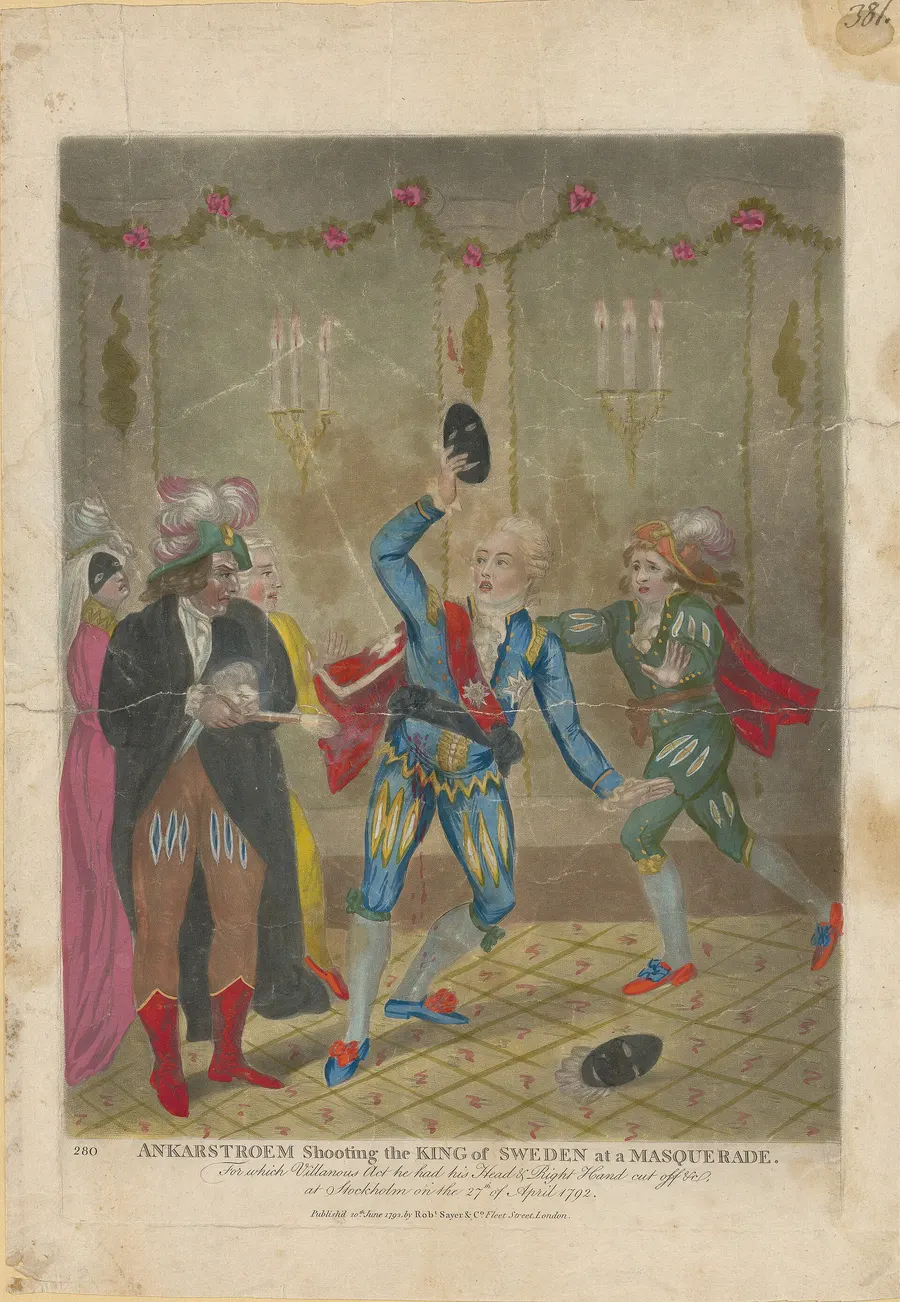
Anckarström shooting the King of Sweden at a masquerade, a London print of 1792.Anckarström shooting the King of Sweden at a masquerade, a London print of 1792.Image: anonymous / Robert Sayer · Public domain
politics · Europe

King Gustav III is shot at a masked ball

Around midnight at a masquerade in the Stockholm opera house, the former officer Jacob Johan Anckarström shot King Gustav III of Sweden in the back, on behalf of a group of aristocratic plotters. The wound became infected and the king died 13 days later. The murder inspired Verdi’s opera A Masked Ball.

Source: The Royal Court of Sweden: King Gustav III, 1771-1792 ↗
IV
THE NINETEENTH CENTURY

The 1800s

Industry, empire, invention, reform and a century of enormous transformation.

1802
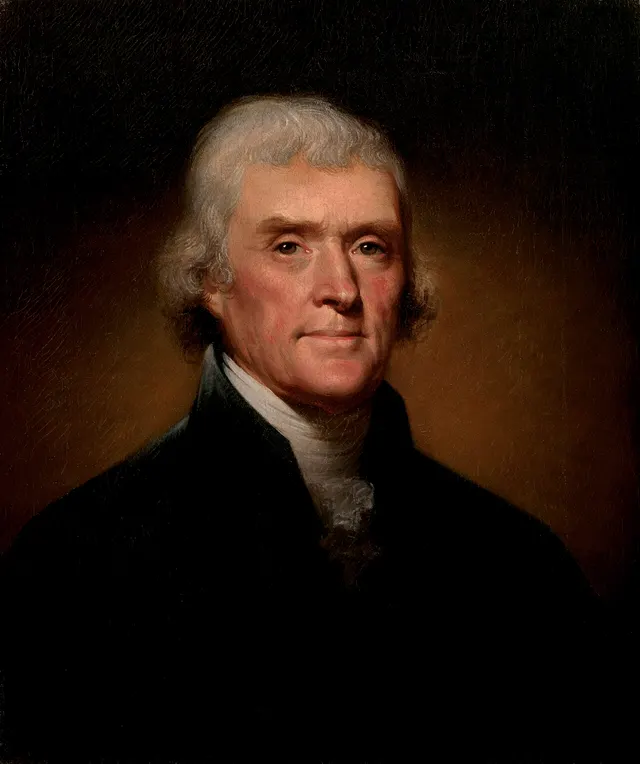
Thomas Jefferson, painted by Rembrandt Peale in 1800.Thomas Jefferson, painted by Rembrandt Peale in 1800.Image: Rembrandt Peale · Public domain
politics · Americas

West Point is established

President Thomas Jefferson signed the Military Peace Establishment Act, which set up a corps of engineers at West Point, New York, to form a military academy. Teaching began that July. The United States Military Academy went on to train generations of American officers and engineers.

Source: Thomas Jefferson’s Monticello: United States Military Academy at West Point ↗
1827
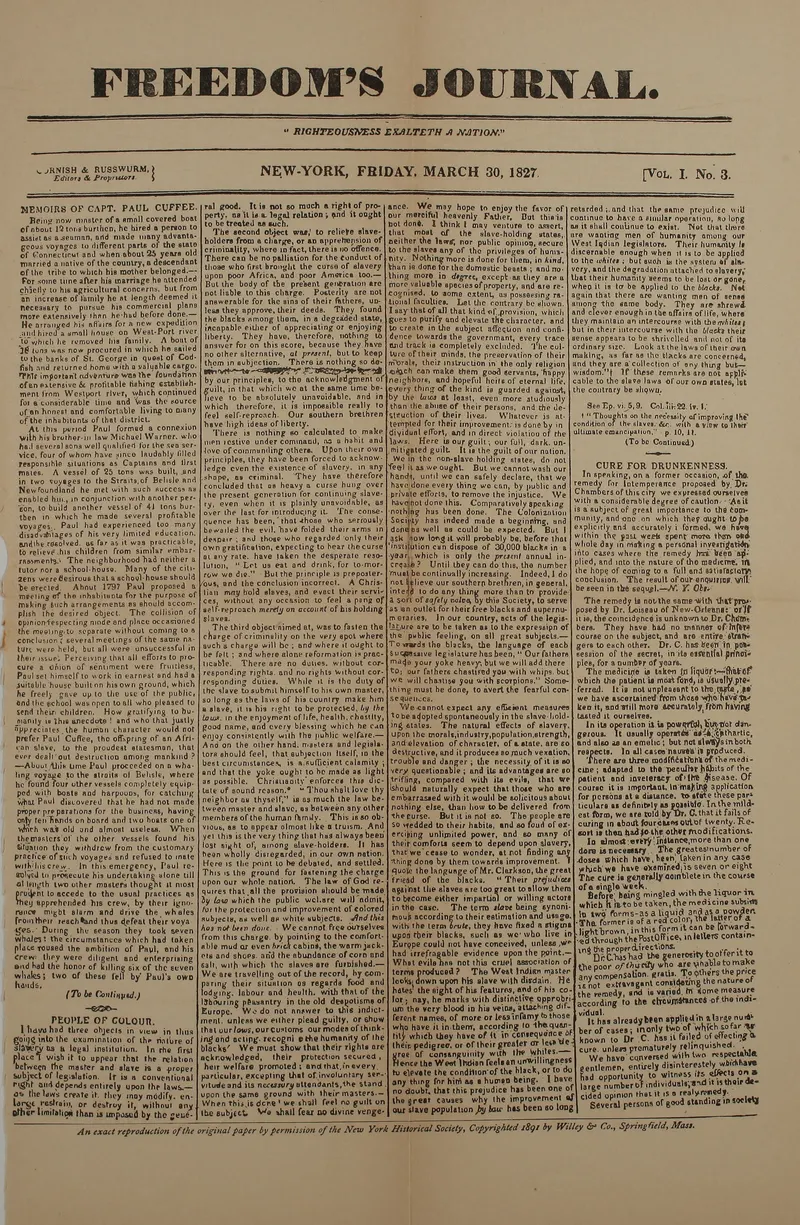
The front page of Freedom's Journal, 30 March 1827, its third issue.The front page of Freedom’s Journal, 30 March 1827, its third issue.Image: Samuel Cornish and John Russwurm (publishers) · Public domain
culture · Americas

The first African American newspaper

On 16 March 1827 the first issue of Freedom’s Journal appeared in New York City, the first newspaper in the United States owned and run by African Americans. Its editors were the minister Samuel Cornish and John Russwurm, one of the first Black graduates of an American college. Its opening editorial declared that Black Americans would now plead their own cause. The weekly attacked slavery and the racism of the mainstream press, and championed education. It lasted only two years, but inspired a long line of Black newspapers.

Source: Encyclopaedia Britannica: Freedom’s Journal ↗
1867
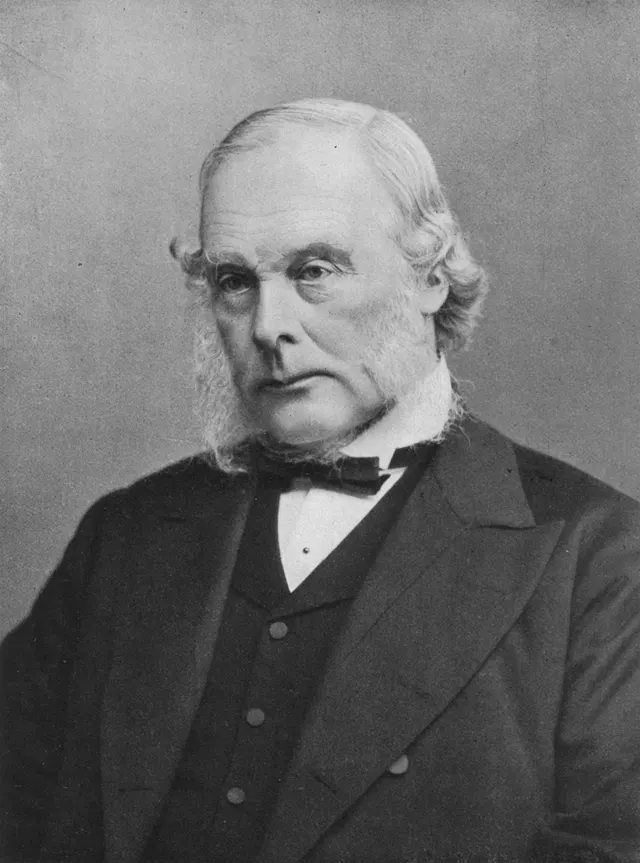
Joseph Lister in 1902.Joseph Lister in 1902.Image: Unknown photographer · Public domain
science · Europe

Lister shows how to keep wounds clean

On 16 March 1867 The Lancet published the first part of a paper by Joseph Lister, professor of surgery in Glasgow, describing a new way of treating compound fractures, where broken bone pierces the skin. Such wounds often turned septic and killed. Following Louis Pasteur’s idea that germs cause decay, Lister dressed the wounds with carbolic acid. Most of his first patients healed without infection. His antiseptic methods changed surgery around the world.

Source: The Lancet (via ScienceDirect): On a new method of treating compound fracture, abscess, etc. ↗
V
THE TWENTIETH CENTURY

The 1900s

War and peace, technological leaps, social change, politics, sport and popular culture.

1921
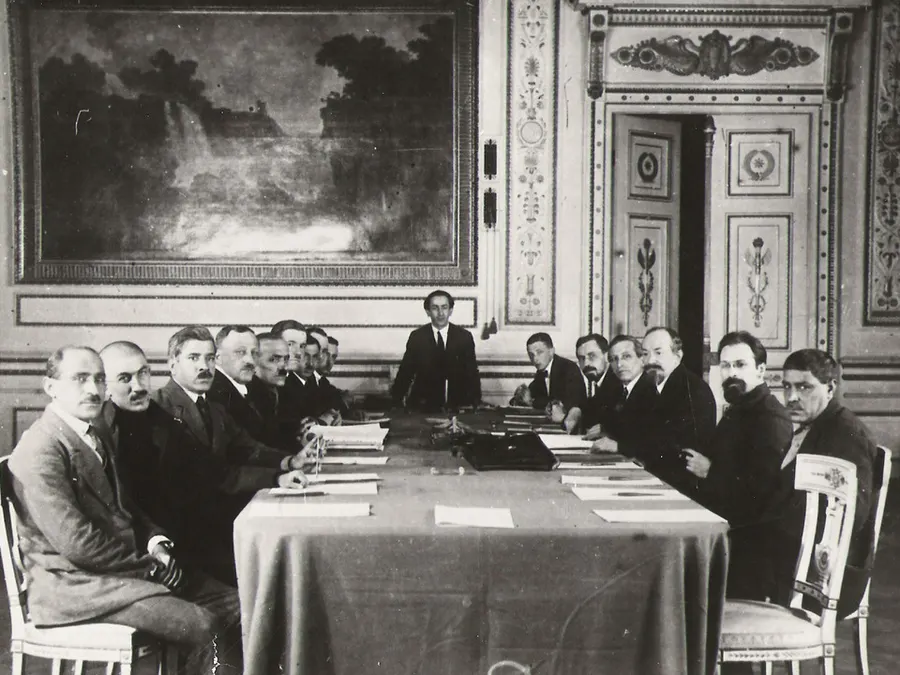
The ceremonial signing of the Treaty of Moscow, 16 March 1921.The ceremonial signing of the Treaty of Moscow, 16 March 1921.Image: Unknown photographer · Public domain
politics · Middle East

The Treaty of Moscow fixes Turkey’s eastern border

Mustafa Kemal’s nationalist government in Ankara and Soviet Russia signed a treaty of friendship in Moscow. Kars and Ardahan went to Turkey and Batumi stayed with Soviet Georgia, a border that still stands. Moscow also supplied money and arms for Turkey’s war of independence.

Source: Encyclopaedia Britannica: Treaty of Moscow (1921) ↗
1926
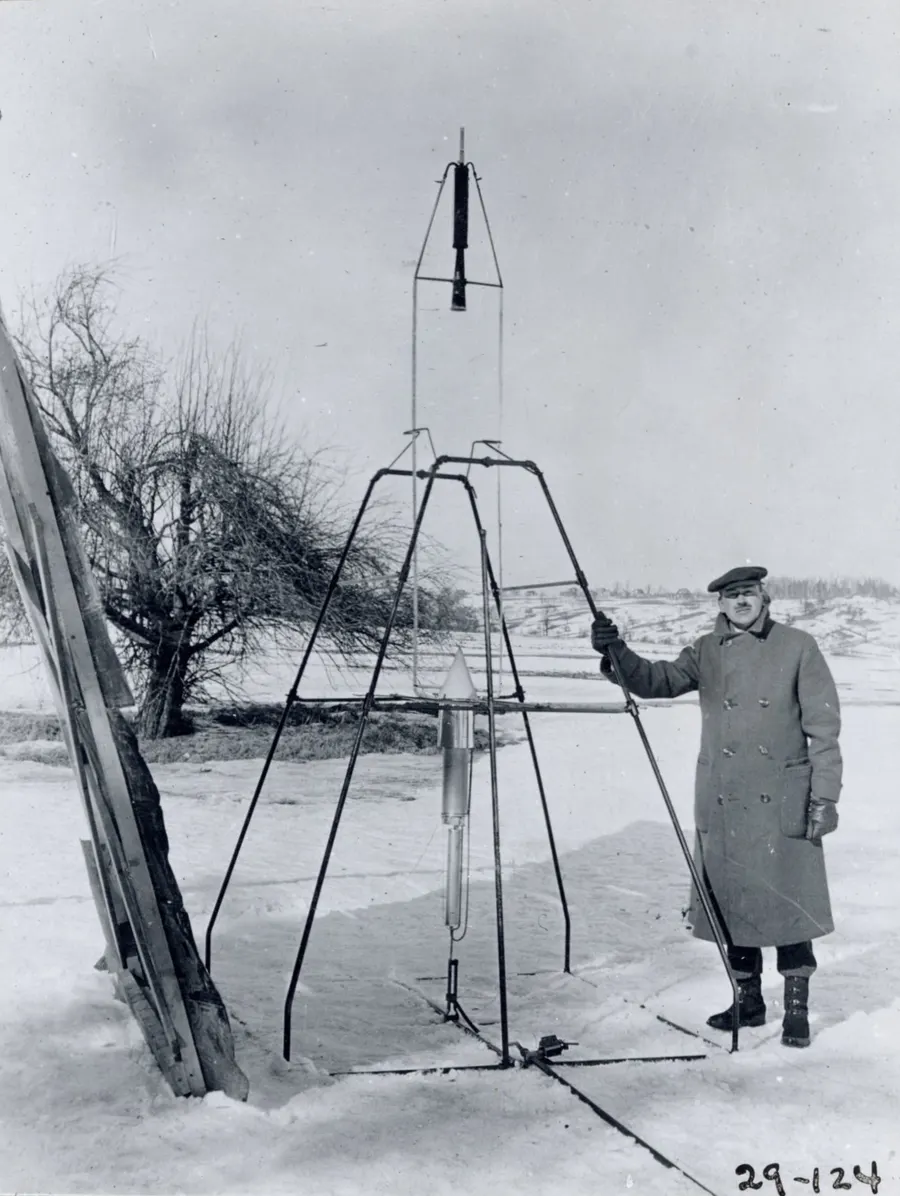
Robert Goddard beside his rocket and its launch frame at Auburn, Massachusetts, on 16 March 1926.Robert Goddard beside his rocket and its launch frame at Auburn, Massachusetts, on 16 March 1926.Image: Esther Goddard, from the Clark University archive · Public domain
science · Americas

The first liquid-fuelled rocket flies

On 16 March 1926, in a snowy field on his aunt’s farm at Auburn, Massachusetts, the physicist Robert Goddard launched a rocket burning gasoline and liquid oxygen. It flew for about two and a half seconds, rose about 12 metres and landed some 56 metres away. It was a modest hop, but it was the first flight of a liquid-fuelled rocket, the kind that would one day carry people to the Moon. NASA’s Goddard Space Flight Center is named after him.

Source: NASA: 95 years ago, Goddard’s first liquid-fueled rocket ↗
1966
David Scott and Neil Armstrong in their Gemini 8 capsule after splashdown on 16 March 1966, with Air Force rescuers.David Scott and Neil Armstrong in their Gemini 8 capsule after splashdown on 16 March 1966, with Air Force rescuers.Image: NASA · Public domain
science · Global

The first docking in space, and a narrow escape

On 16 March 1966 Neil Armstrong and David Scott flew Gemini 8 up to an unmanned Agena target and joined the two craft together, the first docking of two spacecraft in orbit. It was a skill the Moon landings would depend on. Minutes later a stuck thruster sent them into a violent spin. Armstrong undocked and used his re-entry thrusters to regain control, and the mission was cut short with a splashdown in the Pacific the same day.

Source: NASA: March 16, 1966, Gemini’s first docking of two spacecraft in Earth orbit ↗
1968
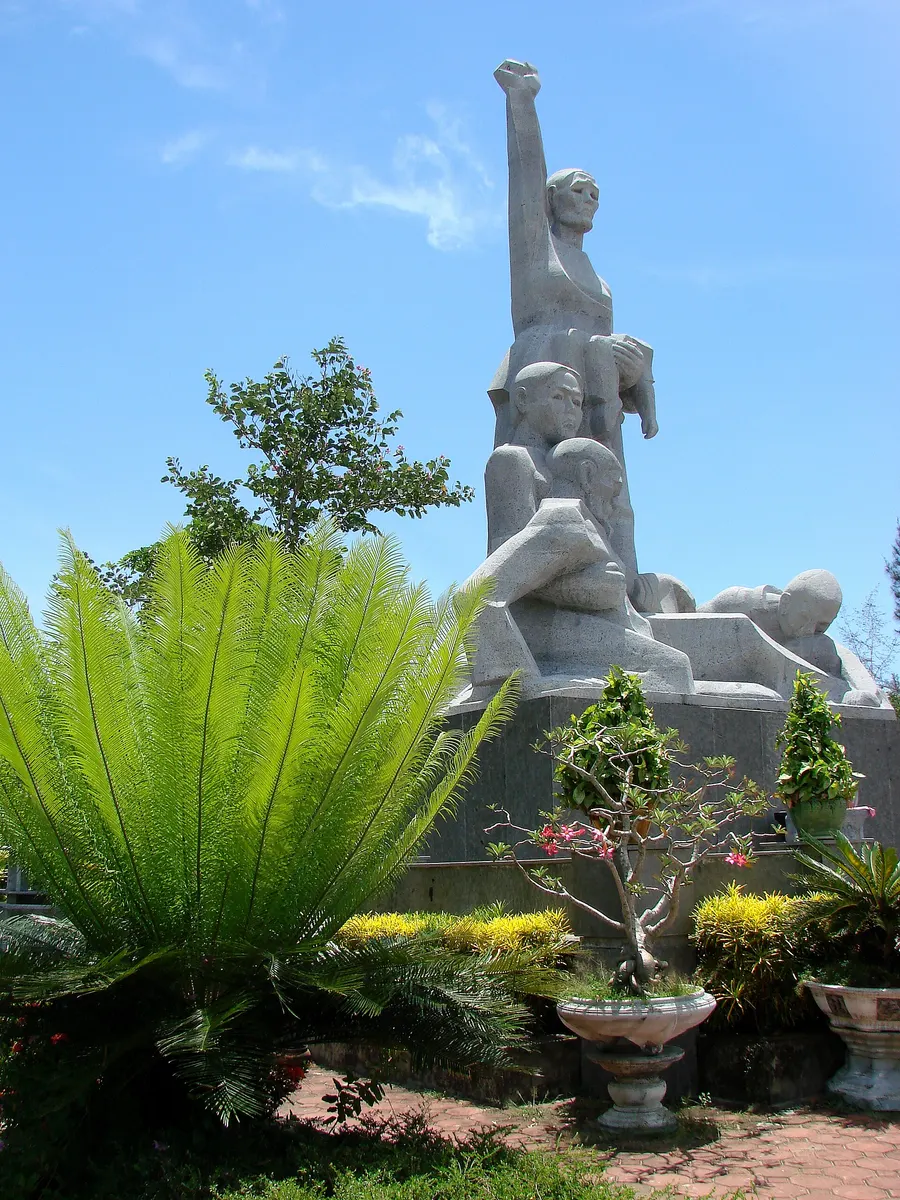
The main monument at the My Lai memorial site near Quang Ngai, Vietnam, 2009.The main monument at the My Lai memorial site near Quang Ngai, Vietnam, 2009.Image: Adam Jones Adam63 · CC BY-SA 3.0
world · Asia

The My Lai massacre

On the morning of 16 March 1968 soldiers of the US Army’s Charlie Company entered the hamlets of My Lai and My Khe in South Vietnam on a ‘search and destroy’ mission and killed unarmed villagers, most of them women, children and old men. Estimates of the dead run from about 350 to 504. A helicopter crew led by Hugh Thompson Jr. stepped in to shield some of the survivors. The killings became public only in November 1969, and of the soldiers charged, only Lieutenant William Calley was convicted.

Source: Encyclopaedia Britannica: My Lai Massacre ↗
1978
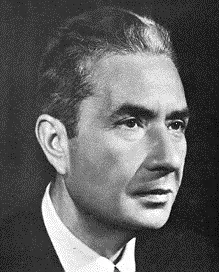
Aldo Moro, five times prime minister of Italy.Aldo Moro, five times prime minister of Italy.Image: Unknown authorUnknown author · CC BY-SA 4.0
politics · Europe

The Red Brigades seize Aldo Moro

On the morning of 16 March 1978 the Red Brigades ambushed the car of Aldo Moro, Italy’s leading Christian Democrat and five times prime minister, in Via Fani in Rome. All five of his bodyguards were killed. Moro was on his way to Parliament for a vote on a new government backed, for the first time, by the Communists. The government refused to bargain for his release. After 55 days his body was found in a car in the centre of Rome, a moment that still haunts Italian politics.

Source: Encyclopaedia Britannica: Aldo Moro ↗
1984
politics · Africa

The Nkomati Accord

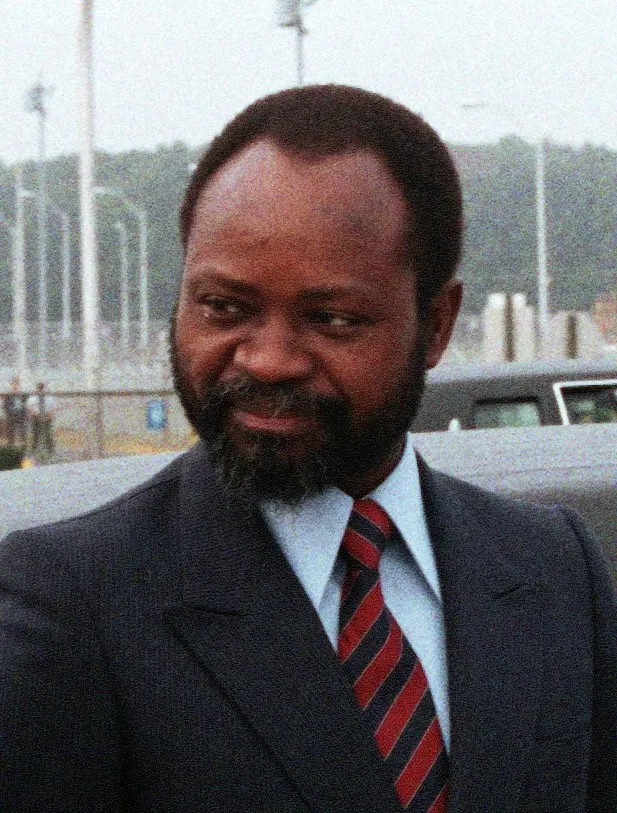
At the border on the Nkomati River, Mozambique’s president Samora Machel and South Africa’s prime minister P. W. Botha signed a pact of non-aggression. South Africa promised to stop backing the RENAMO rebels and Mozambique to stop the ANC using its territory. Mozambique largely kept its side; South Africa secretly went on supplying RENAMO.

Source: Encyclopaedia Britannica: Nkomati Accord ↗
1988
The monument to the victims of the Halabja chemical attack, seen against the light in 2018.The monument to the victims of the Halabja chemical attack, seen against the light in 2018.Image: Aya sh.yusuf · CC BY-SA 4.0
world · Middle East

The chemical attack on Halabja

Near the end of the Iran-Iraq War, Iraqi aircraft dropped chemical weapons on the Kurdish town of Halabja in north-eastern Iraq. Between about 3,200 and 5,000 people were killed, most of them civilians, in the largest chemical attack on a civilian population on record. An Iraqi court later ruled it an act of genocide.

Source: Kurdistan Regional Government, US Representation: Halabja, the chemical attack that shook the world ↗
RESEARCH

Sources & Further Reading

Selected authoritative references supporting the events on this page.

English Heritage: The massacre of the Jews at Clifford’s Tower↗University of Edinburgh, Jewish/non-Jewish Relations: William of Newburgh on the attack on the Jews of York in 1190↗National Quincentennial Committee, Government of the Philippines: Homonhon, our contribution to the first circumnavigation↗Philippine E-Journals: The 1521 Magellan landing on Homonhon Island revisited↗Encyclopedia.com: Comunero Revolt (New Granada)↗Encyclopaedia Britannica: Comunero Rebellion↗The Royal Court of Sweden: King Gustav III, 1771-1792↗The Royal Armoury, Sweden (Google Arts & Culture): That fatal shot↗Thomas Jefferson’s Monticello: United States Military Academy at West Point↗American Battlefield Trust: 1802, Military Peace Establishment Act↗Encyclopaedia Britannica: Freedom’s Journal↗BlackPast.org: Freedom’s Journal (1827-1829)↗The Lancet (via ScienceDirect): On a new method of treating compound fracture, abscess, etc.↗Royal Society, Notes and Records: Joseph Lister and the performance of antiseptic surgery↗Encyclopaedia Britannica: Treaty of Moscow (1921)↗Wikipedia: Treaty of Moscow (1921)↗NASA: 95 years ago, Goddard’s first liquid-fueled rocket↗Clark University: March 16, 1926, the first liquid-propellant rocket flight↗NASA: March 16, 1966, Gemini’s first docking of two spacecraft in Earth orbit↗Encyclopaedia Britannica: How Gemini 8 made history and avoided disaster↗Encyclopaedia Britannica: My Lai Massacre↗PBS American Experience: The My Lai Massacre↗The National Archives (UK): Harold Wilson’s resignation, 16 March 1976↗Museum of the Prime Minister: Harold Wilson↗Encyclopaedia Britannica: Aldo Moro↗Europeana: The kidnapping and killing of Aldo Moro↗Encyclopaedia Britannica: Nkomati Accord↗South African History Online: South Africa and Mozambique sign a non-aggression pact↗Kurdistan Regional Government, US Representation: Halabja, the chemical attack that shook the world↗Al Jazeera: Kurds remember Halabja victims↗
WHY THESE MOMENTS?

Significance before volume

This page is not the longest possible list of events. It is a chronological journey through 16 March, where each entry is chosen for historical significance, human interest and reliability.

Facts are checked against authoritative museums, archives, universities and reference works. Where sources disagree, the page says so.

EXPLORED THE DEEPER STORY?

Return to the highlights of 16 March

Discover the lighter side of the date with famous birthdays, culture, firsts and lives remembered.

Explore This Day →
← PREVIOUS DAY15 March
HISTORY & TIMELINE16 March
NEXT DAY →17 March