HISTORY & TIMELINE
13 March

A journey through
13 March in history

From the British capture of Bloemfontein in 1900 to the election of the first pope from the Americas in 2013, 13 March has brought discoveries in the sky, revolutions and some of the darkest days of the twentieth century. This timeline follows the date across more than two centuries.

III
A CHANGING WORLD

Early Modern Era

Exploration, political change, scientific development and expanding global connections.

1781
A model of the telescope with which William Herschel found Uranus, at the Herschel Museum of Astronomy in Bath.A model of the telescope with which William Herschel found Uranus, at the Herschel Museum of Astronomy in Bath.Image: Mike Young · Public domain
science · Europe

William Herschel finds a new planet

Late on 13 March 1781, in the back garden of his house in Bath, the musician and amateur astronomer William Herschel noticed an object in his home-made telescope that was not a star. He thought at first it was a comet. It proved to be a planet, the first found since ancient times, and it doubled the known size of the solar system. Herschel named it the Georgian Star after King George III, but the name Uranus was eventually adopted.

Source: Royal Museums Greenwich: The discovery of Uranus ↗
IV
THE NINETEENTH CENTURY

The 1800s

Industry, empire, invention, reform and a century of enormous transformation.

1881
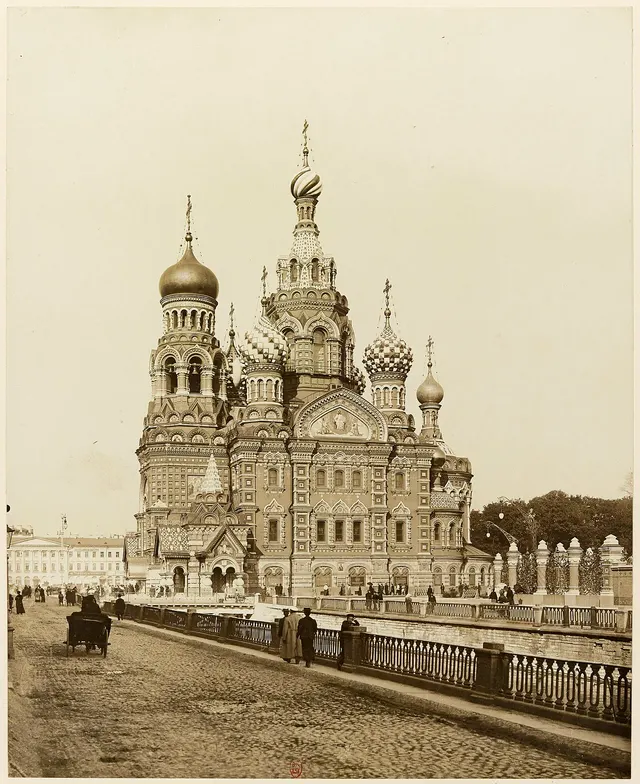
The Church of the Saviour on Spilled Blood in St Petersburg, built on the spot where Alexander II was attacked, on a postcard of about 1917.The Church of the Saviour on Spilled Blood in St Petersburg, built on the spot where Alexander II was attacked, on a postcard of about 1917.Image: Unknown (postcard) · Public domain
politics · Europe

Tsar Alexander II is assassinated

On 13 March 1881 (1 March in the old Russian calendar) members of the revolutionary group People’s Will threw bombs at the carriage of Tsar Alexander II beside a canal in St Petersburg. He was fatally wounded and died that afternoon; one of the bombers was also killed. Alexander had freed Russia’s serfs in 1861, but the revolutionaries had tried to kill him several times before. His son, Alexander III, turned against reform, and five of the plotters were hanged that April.

Source: Encyclopaedia Britannica: Alexander II ↗
V
THE TWENTIETH CENTURY

The 1900s

War and peace, technological leaps, social change, politics, sport and popular culture.

1900
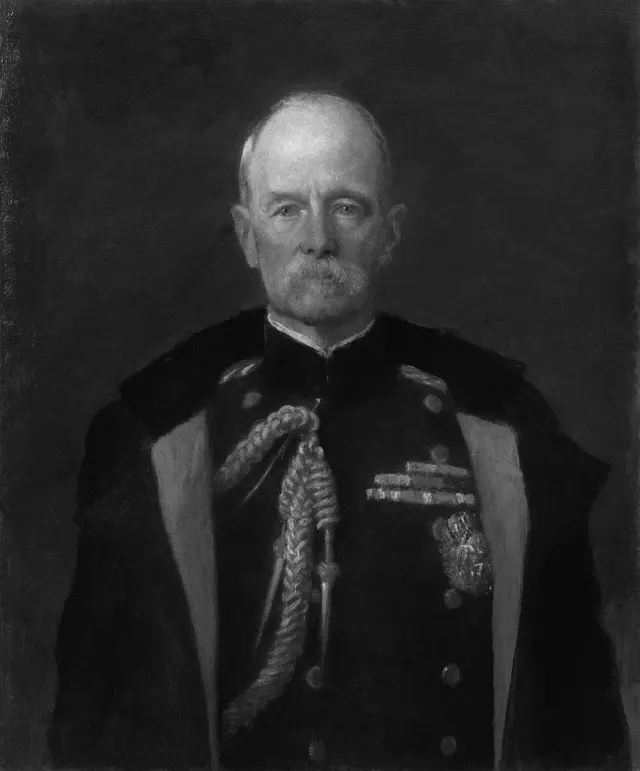
Field Marshal Lord Roberts, painted by George Frederic Watts.Field Marshal Lord Roberts, painted by George Frederic Watts.Image: George Frederic Watts · Public domain
world · Africa

British forces take Bloemfontein

In the Second Boer War, the British army under Field Marshal Lord Roberts entered Bloemfontein, capital of the Orange Free State, after its mayor and officials handed over the keys of the town. It followed the relief of Kimberley and Ladysmith. The Free State was annexed as the Orange River Colony that May.

Source: National Army Museum: The Boer War ↗
1920
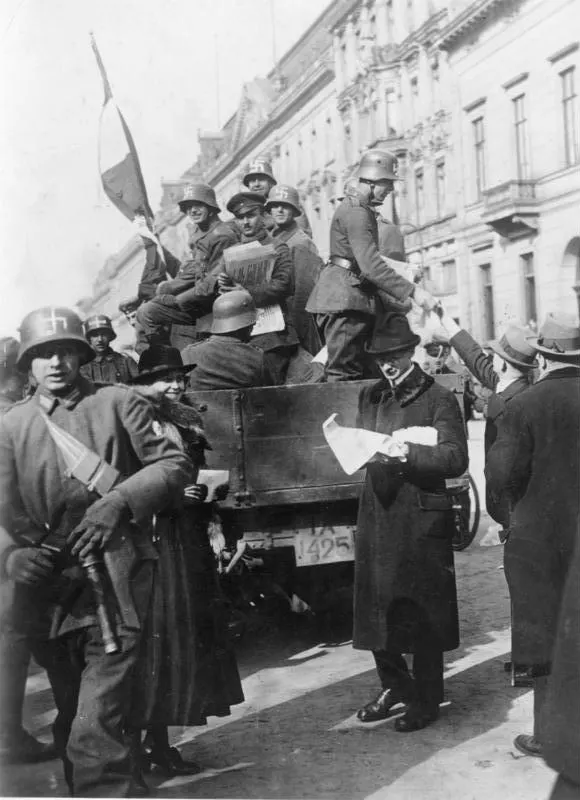
Troops of the Kapp Putsch in Berlin, 13 March 1920.Troops of the Kapp Putsch in Berlin, 13 March 1920.Image: Unknown photographer (Bundesarchiv) · CC BY-SA 3.0 de
politics · Europe

The Kapp Putsch in Berlin

Early in the morning the Ehrhardt naval brigade, a right-wing paramilitary unit, marched into Berlin’s government district, and the civil servant Wolfgang Kapp declared himself chancellor. The army refused to fire on the rebels, and the elected government fled. A general strike and civil servants’ refusal to obey brought the coup down within four days.

Source: Deutsches Historisches Museum (LeMO): The Lüttwitz-Kapp Putsch 1920 ↗
1930
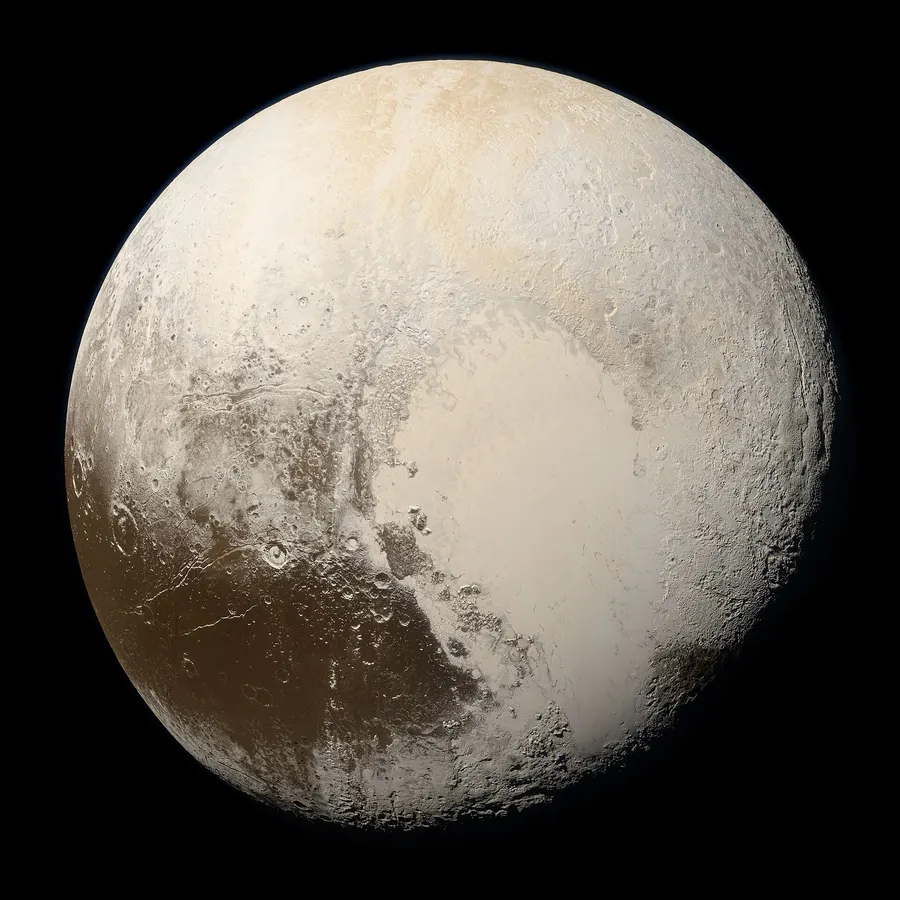
Pluto photographed by NASA's New Horizons spacecraft in July 2015.Pluto photographed by NASA’s New Horizons spacecraft in July 2015.Image: NASA/Johns Hopkins APL/Southwest Research Institute/Alex Parker · Public domain
science · Americas

The discovery of Pluto is announced

On 18 February 1930 Clyde Tombaugh, a young assistant at the Lowell Observatory in Flagstaff, Arizona, spotted a faint moving dot while comparing photographs of the night sky. After weeks of checking, the observatory announced the discovery of a ninth planet on 13 March 1930. The observatory’s founder, Percival Lowell, had begun searching for a ‘Planet X’ in 1905. The name Pluto was suggested by Venetia Burney, an eleven-year-old girl in Oxford. In 2006 astronomers reclassified it as a dwarf planet.

Source: Lowell Observatory: The discovery of Pluto ↗
1943
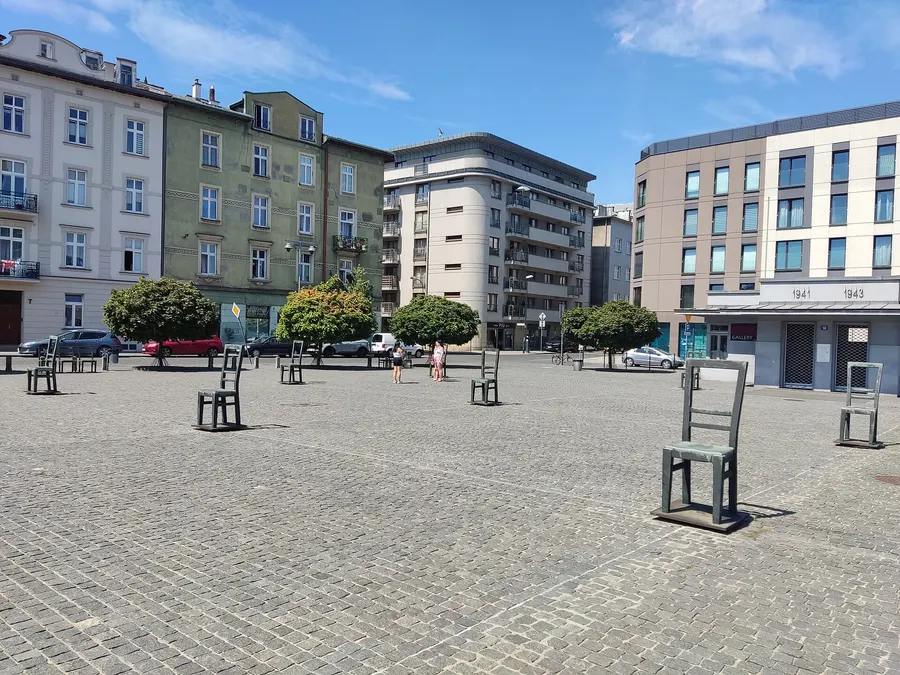
The memorial of empty chairs on Ghetto Heroes Square in Kraków, 2024.The memorial of empty chairs on Ghetto Heroes Square in Kraków, 2024.Image: Stella T98 · CC BY 4.0
world · Europe

The Kraków ghetto is destroyed

Over 13 and 14 March German SS and police liquidated the ghetto in Kraków, in occupied Poland. About 2,000 Jews were shot in the ghetto itself, some 2,000 judged fit for work were marched to the Płaszów labour camp, and about 3,000 were deported to Auschwitz-Birkenau, where most were murdered.

Source: United States Holocaust Memorial Museum: Liquidation of the Kraków ghetto ↗
1954
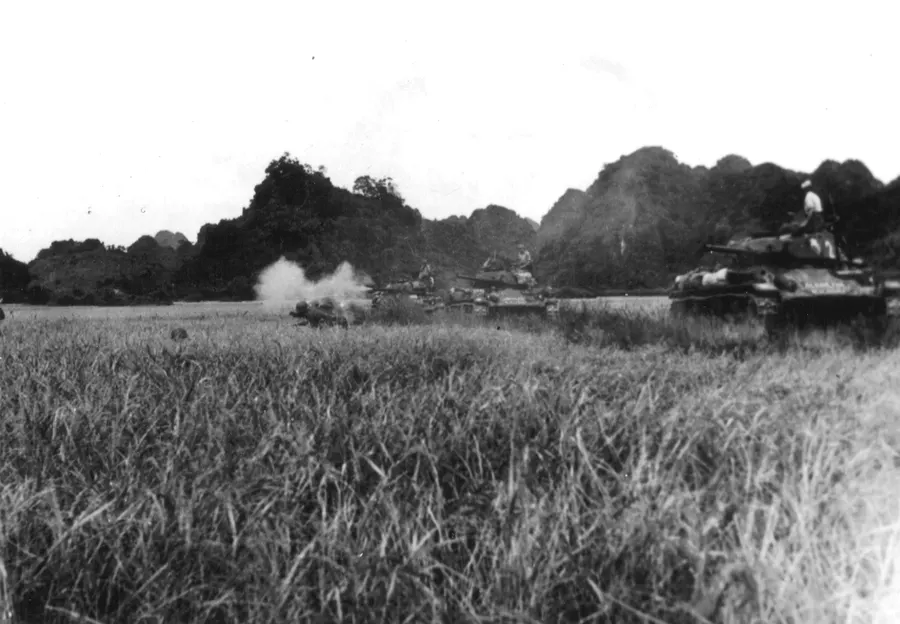
French tanks firing in support of infantry at Dien Bien Phu, 1954.French tanks firing in support of infantry at Dien Bien Phu, 1954.Image: US Army (from Donn A. Starry, Mounted Combat in Vietnam) · Public domain
world · Asia

The battle of Dien Bien Phu begins

In late 1953 French forces built a fortified base in the valley of Dien Bien Phu in north-west Vietnam, hoping to lure the Viet Minh into a pitched battle. On the evening of 13 March 1954 Viet Minh artillery, hauled into the surrounding hills, opened fire on the strongpoint called Beatrice, which fell within hours. The airstrip was soon put out of action. The siege lasted 56 days. When the garrison surrendered on 7 May, France’s rule in Indochina was effectively over, and the peace conference at Geneva divided Vietnam that July.

Source: Encyclopaedia Britannica: Battle of Dien Bien Phu ↗
1979
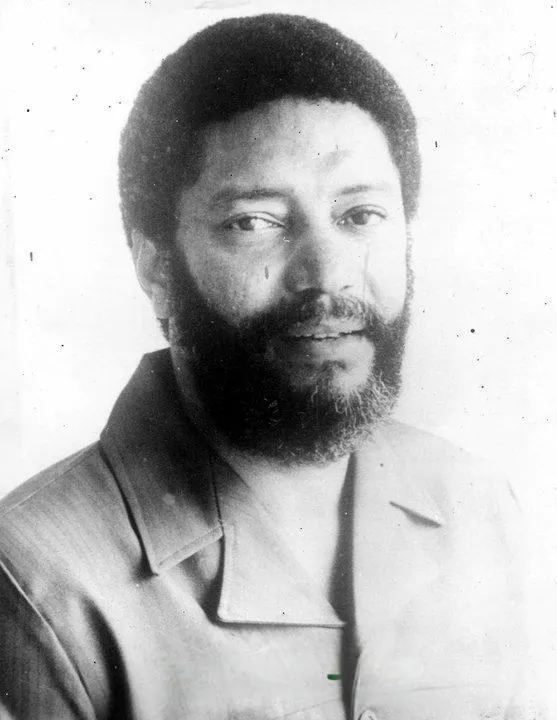
Maurice Bishop, prime minister of Grenada from 1979 to 1983.Maurice Bishop, prime minister of Grenada from 1979 to 1983.Image: Associated Press · Public domain
politics · Americas

A revolution in Grenada

Before dawn on 13 March 1979, while Prime Minister Eric Gairy was abroad, fighters of the New Jewel Movement seized the army barracks at True Blue and the radio station on the Caribbean island of Grenada. Gairy’s forces soon surrendered, and the takeover was almost bloodless. The movement’s leader, the lawyer Maurice Bishop, became prime minister of a People’s Revolutionary Government with close ties to Cuba. In October 1983 Bishop was killed in a split within his own party, and United States forces invaded days later.

Source: Encyclopaedia Britannica: New Jewel Movement ↗
1986
The European Space Agency's Giotto spacecraft.The European Space Agency’s Giotto spacecraft.Image: European Space Agency · CC BY-SA 3.0 igo
science · Global

Giotto flies through the heart of Halley’s Comet

On the night of 13-14 March 1986 the European Space Agency’s first deep-space probe, Giotto, flew within about 600 kilometres of the nucleus of Halley’s Comet. It took the first close-up pictures of a comet’s nucleus, a dark, potato-shaped body, before being battered by dust. Giotto survived the encounter and went on to fly past a second comet, Grigg-Skjellerup, in 1992.

Source: European Space Agency: Giotto overview ↗
1996
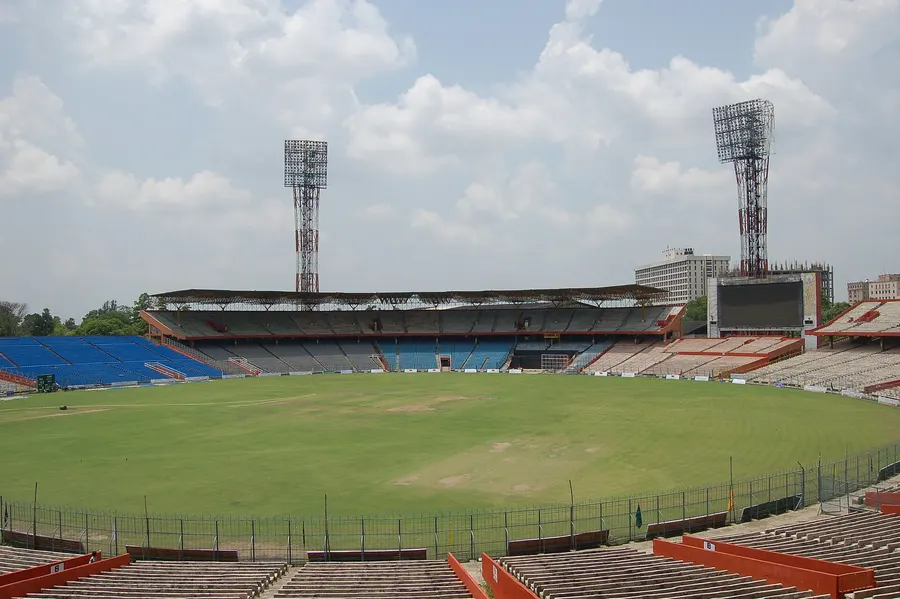
Eden Gardens in Kolkata, 2007.Eden Gardens in Kolkata, 2007.Image: Chippu Abraham · CC BY-SA 2.0
sport · Asia

A World Cup semi-final ends in uproar

On 13 March 1996 India met Sri Lanka in a Cricket World Cup semi-final at Eden Gardens in Calcutta (now Kolkata). Chasing 252, India collapsed from 98 for 1 to 120 for 8, and parts of the huge crowd began throwing bottles onto the field and setting fires in the stands. The match referee, Clive Lloyd, awarded the game to Sri Lanka, the first time a one-day international had been decided that way. Four days later Sri Lanka beat Australia in the final to win their first World Cup.

Source: ESPNcricinfo: India v Sri Lanka, 1st semi-final, World Cup 1996 ↗
1996
Dunblane Cathedral, 2008.Dunblane Cathedral, 2008.Image: Otter · CC BY-SA 3.0
world · Europe

The Dunblane school shooting

A gunman entered Dunblane Primary School in Scotland and opened fire in the gym, killing sixteen young children and their teacher, Gwen Mayor. The public inquiry that followed and a campaign by families led Parliament to ban almost all private ownership of handguns in Britain in 1997.

Source: Encyclopaedia Britannica: Dunblane school massacre ↗
VI
2000 TO TODAY

Modern Day

The events of recent decades that have already become part of the historical record.

2013
culture · Europe

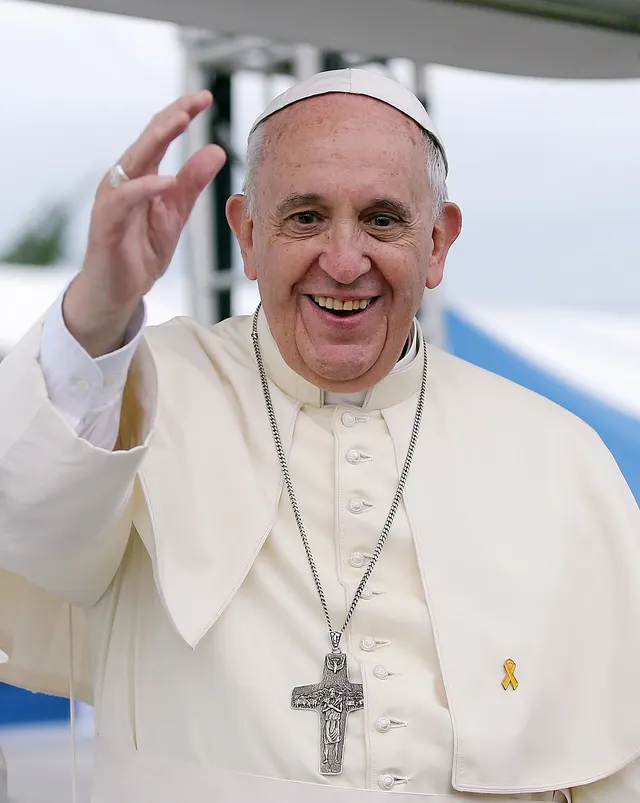
The first pope from the Americas

On the evening of 13 March 2013, after the resignation of Benedict XVI, the cardinals in the Sistine Chapel elected Jorge Mario Bergoglio, the 76-year-old Archbishop of Buenos Aires. He took the name Francis, after St Francis of Assisi. He was the first pope from the Americas and the first Jesuit pope. He led the Catholic Church for twelve years, until his death in April 2025.

Source: Holy See: Biography of Pope Francis ↗
WHY THESE MOMENTS?

Significance before volume

This page is not the longest possible list of events. It is a chronological journey through 13 March, where each entry is chosen for historical significance, human interest and reliability.

Facts are checked against authoritative museums, archives, universities and reference works. Where sources disagree, the page says so.

EXPLORED THE DEEPER STORY?

Return to the highlights of 13 March

Discover the lighter side of the date with famous birthdays, culture, firsts and lives remembered.

Explore This Day →
← PREVIOUS DAY12 March
HISTORY & TIMELINE13 March
NEXT DAY →14 March