
HISTORY & TIMELINE
14 March

A journey through
14 March in history

From Henry IV’s victory at Ivry in 1590 to the great rally in Beirut in 2005, 14 March has seen an admiral shot on his own quarterdeck, a machine that reshaped the American South, a new state carved out of Czechoslovakia and a medicine that saved its first American life. This timeline follows the date across more than four centuries.

III
A CHANGING WORLD

Early Modern Era

Exploration, political change, scientific development and expanding global connections.

1590
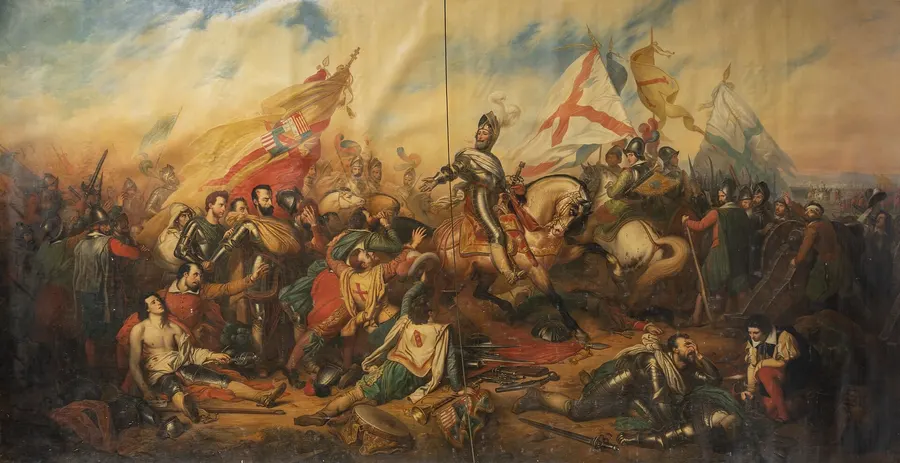
Henry IV at the end of the battle of Ivry, painted by Charles de Steuben about 1840.Henry IV at the end of the battle of Ivry, painted by Charles de Steuben about 1840.Image: Charles de Steuben · Public domain
world · Europe

Henry IV wins the battle of Ivry

In the French Wars of Religion, the Protestant Henry IV defeated the larger army of the Catholic League and its Spanish allies near Ivry in Normandy. Tradition says he told his men to follow his white plume. The victory let him besiege Paris, though he entered the city only after becoming a Catholic in 1593.

Source: EBSCO Research Starters: Battle of Ivry ↗
1757
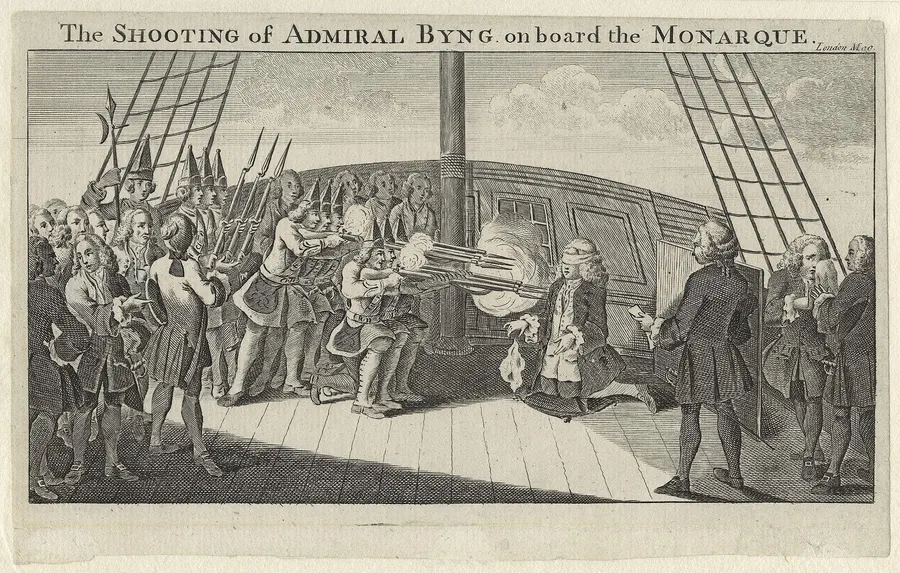
The shooting of Admiral Byng on board the Monarch, an engraving of 1757.The shooting of Admiral Byng on board the Monarch, an engraving of 1757.Image: Unknown engraver · Public domain
world · Europe

Admiral Byng is shot on his own quarterdeck

Admiral John Byng was executed by a firing squad of Royal Marines aboard HMS Monarch at Portsmouth. A court martial had found he failed to do his utmost to save Minorca from the French in 1756. He remains the only British admiral executed, and Voltaire mocked the case in Candide as a way ‘to encourage the others’.

Source: Royal Museums Greenwich: The execution of Admiral Byng, 14 March 1757 ↗
1794
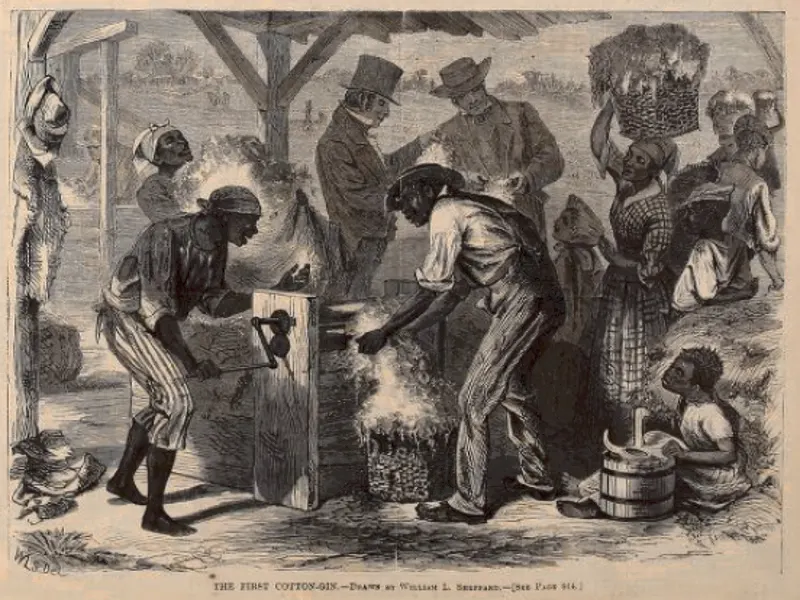
Enslaved workers at an early roller cotton gin, as imagined by William L. Sheppard for Harper's Weekly in 1869.Enslaved workers at an early roller cotton gin, as imagined by William L. Sheppard for Harper’s Weekly in 1869.Image: William L. Sheppard · Public domain
science · Americas

Eli Whitney patents the cotton gin

On 14 March 1794 the young inventor Eli Whitney received a United States patent for a machine that pulled the sticky seeds out of short-staple cotton. A task that had taken a worker a whole day for a pound or so of fibre could now be done many times faster. The gin made upland cotton hugely profitable across the American South. Cotton output soared in the decades that followed, and so did the demand for land and for enslaved labour. Whitney himself made little from it, because his design was easily copied.

Source: US National Archives: Patent for Cotton Gin (1794) ↗
IV
THE NINETEENTH CENTURY

The 1800s

Industry, empire, invention, reform and a century of enormous transformation.

1885
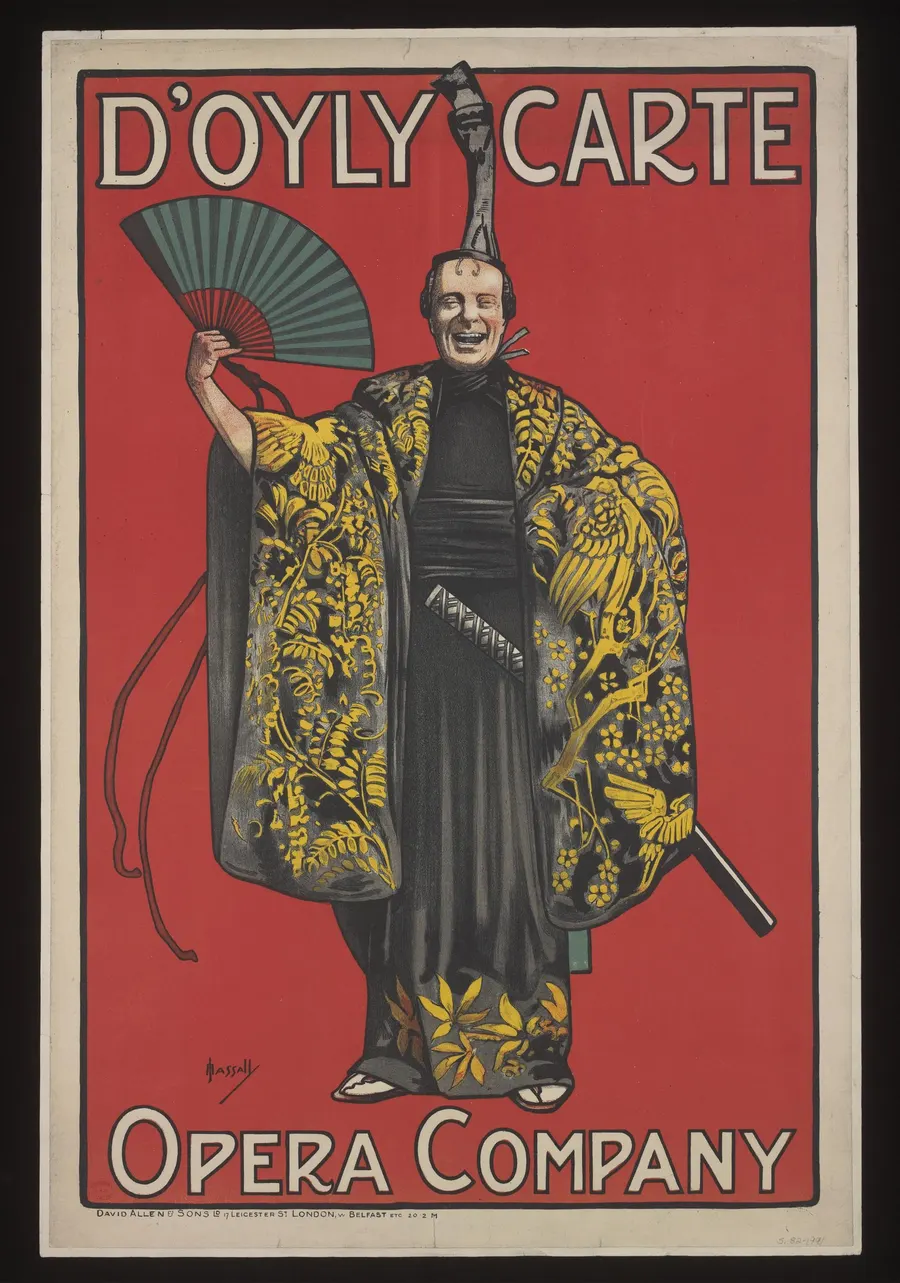
A poster by John Hassall for the D'Oyly Carte Opera Company's production of The Mikado, about 1897.A poster by John Hassall for the D’Oyly Carte Opera Company’s production of The Mikado, about 1897.Image: John Hassall · Public domain

culture · Europe

The Mikado opens in London

On 14 March 1885 Gilbert and Sullivan’s comic opera The Mikado opened at the Savoy Theatre in London, with Arthur Sullivan conducting. Set in an imaginary Japan, it poked fun at very British habits and institutions. It ran for 672 performances, one of the longest runs of any stage work up to that time, and within a year it was being staged by companies across Europe and America.

Source: Encyclopaedia Britannica: The Mikado ↗
V
THE TWENTIETH CENTURY

The 1900s

War and peace, technological leaps, social change, politics, sport and popular culture.

1931
An advertisement for Alam Ara at the Majestic Cinema in Bombay, March 1931.An advertisement for Alam Ara at the Majestic Cinema in Bombay, March 1931.Image: Imperial Film Company · Public domain
culture · Asia

India’s first sound film opens

On 14 March 1931 Ardeshir Irani’s Alam Ara opened at the Majestic Cinema in Bombay (now Mumbai). It was the first Indian feature film with sound, and crowds were so large that police had to control them. The film had seven songs, setting the pattern for the song-filled films that still define Indian cinema. No print of Alam Ara is known to survive.

Source: Press Institute of India (Vidura): Alam Ara, recalling India’s first talkie ↗
1939
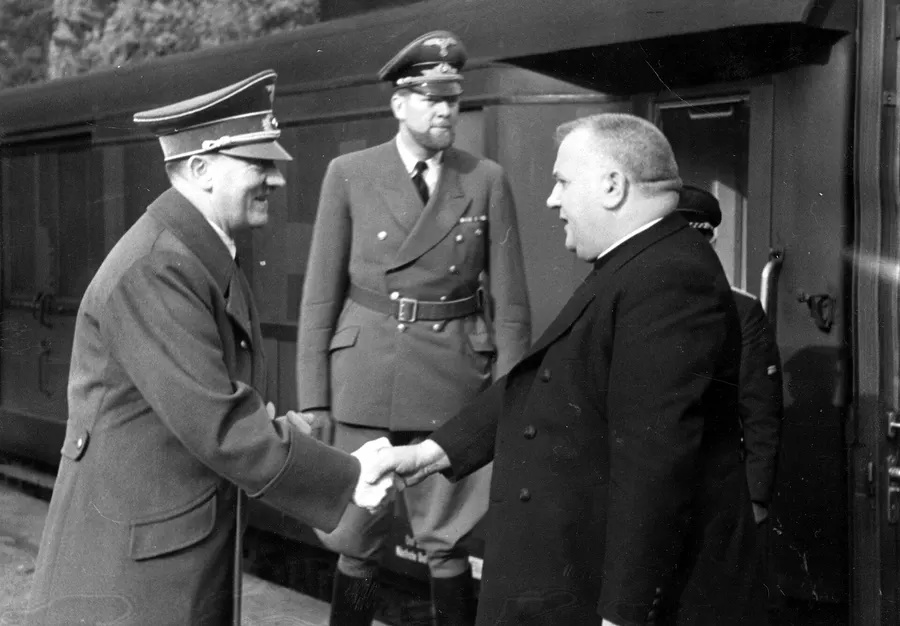
Jozef Tiso (right), president of the Slovak State, greeted by Adolf Hitler in October 1941.Jozef Tiso (right), president of the Slovak State, greeted by Adolf Hitler in October 1941.Image: Unknown photographer · Public domain
politics · Europe

Slovakia declares independence under German pressure

On 13 March 1939 Hitler summoned the Slovak priest-politician Jozef Tiso to Berlin and told him to break away from Czechoslovakia or be left to the claims of Hungary and Poland. The next day, 14 March, the Slovak parliament in Bratislava voted for independence. Within hours German troops moved into the Czech lands. The new Slovak State was a German client: it joined the Axis and deported tens of thousands of its Jewish citizens. The Slovak National Uprising of 1944 was a revolt against it.

Source: Encyclopaedia Britannica: Czechoslovak history, the breakup of the republic ↗
1942
Dorothy Hodgkin's molecular model of penicillin, made about 1945, at the Science Museum in London.Dorothy Hodgkin’s molecular model of penicillin, made about 1945, at the Science Museum in London.Image: Science Museum London / Science and Society Picture Library · CC BY-SA 2.0
science · Americas

Penicillin’s first American patient

In March 1942 Anne Miller, aged 33, lay close to death in New Haven Hospital in Connecticut with blood poisoning after a miscarriage. Her doctors obtained a few grams of the new, experimental drug penicillin, about half of all the supply in the United States at the time, and gave her the first dose on 14 March. Her fever broke overnight and she recovered. She became the first American patient whose life was credited to penicillin, and lived to the age of 90. Her case helped spur the wartime drive to mass-produce the drug.

Source: Yale School of Medicine: From penicillin to phages, Yale’s century-long fight against infection ↗
1964
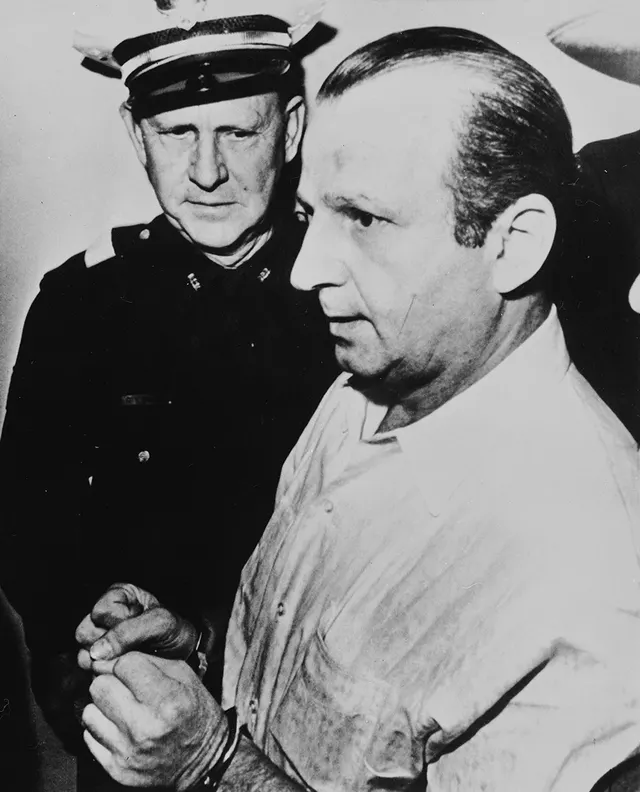
Jack Ruby after his arrest on 24 November 1963.Jack Ruby after his arrest on 24 November 1963.Image: The U.S. National Archives and Records Administration · Public domain
politics · Americas

Jack Ruby is convicted of killing Oswald

A Dallas jury found the nightclub owner Jack Ruby guilty of murdering Lee Harvey Oswald, the accused assassin of President Kennedy, and sentenced him to death. In 1966 an appeals court overturned the verdict and ordered a new trial, but Ruby died of cancer in January 1967 before it could be held.

Source: The Sixth Floor Museum at Dealey Plaza: Jack Ruby found guilty of murder with malice ↗
1978
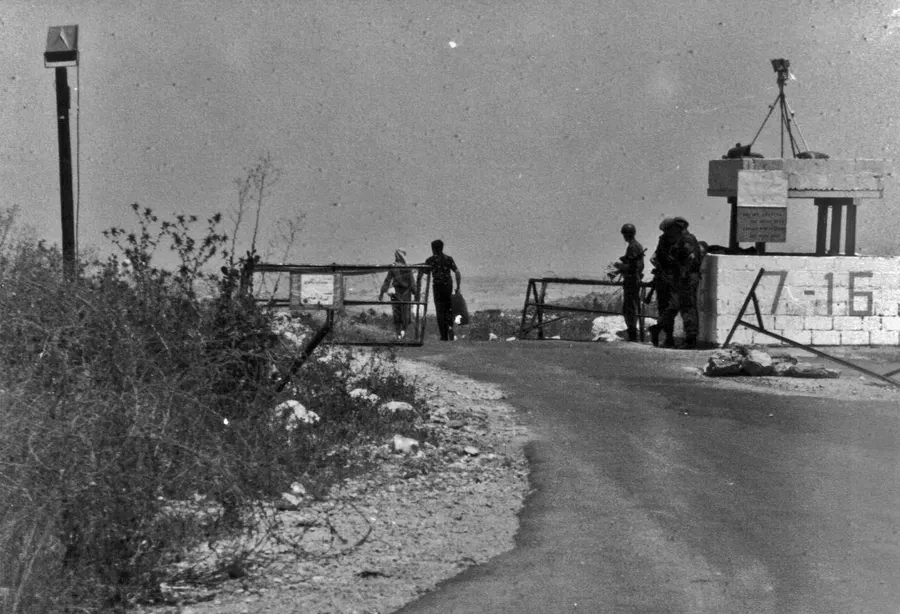
A roadblock of UNIFIL's Dutch battalion at Al-Yatun in southern Lebanon, 1981.A roadblock of UNIFIL’s Dutch battalion at Al-Yatun in southern Lebanon, 1981.Image: Marco K. from Hollanda · CC BY-SA 2.0

world · Middle East

Israel launches Operation Litani

On the night of 14-15 March Israeli forces crossed into southern Lebanon to drive Palestinian fighters north of the Litani River, days after an attack on the coast road near Tel Aviv killed more than 30 Israeli civilians. More than a thousand Lebanese and Palestinians were killed and up to 200,000 people fled their homes. On 19 March the UN Security Council created the peacekeeping force UNIFIL, still in Lebanon today.

Source: Jewish Virtual Library: Operation Litani ↗
1994
Linus Torvalds at LinuxCon Europe in 2014.Linus Torvalds at LinuxCon Europe in 2014.Image: Krd (photo)Von Sprat (crop/extraction) · CC BY-SA 4.0

science · Global

Linux 1.0 is released

On 14 March 1994 the Finnish programmer Linus Torvalds released version 1.0 of the Linux kernel, the first he considered ready for everyday use. He had begun it as a student project in Helsinki almost three years before. Released free under the GNU General Public License, and improved by volunteers around the world, Linux now runs most of the world’s web servers and supercomputers, and sits at the heart of Android phones.

Source: Linux kernel archive: the v1.0 release tag ↗
1995
The Soyuz TM-21 crew in 1994: Norman Thagard, Vladimir Dezhurov and Gennady Strekalov.The Soyuz TM-21 crew in 1994: Norman Thagard, Vladimir Dezhurov and Gennady Strekalov.Image: NASA/Johnson Space Center · Public domain
science · Global

An American flies on a Russian rocket

On 14 March 1995 a Soyuz rocket lifted off from Baikonur in Kazakhstan carrying two Russian cosmonauts, Vladimir Dezhurov and Gennady Strekalov, and the NASA astronaut Norman Thagard. He was the first American to launch aboard a Russian spacecraft. Two days later they docked with the Mir space station, where Thagard became the first American to live aboard. He stayed about 115 days, a US record at the time, and came home on the space shuttle Atlantis that July.

Source: NASA History: Mir-18 mission documentation ↗
VI
2000 TO TODAY

Modern Day

The events of recent decades that have already become part of the historical record.

2005
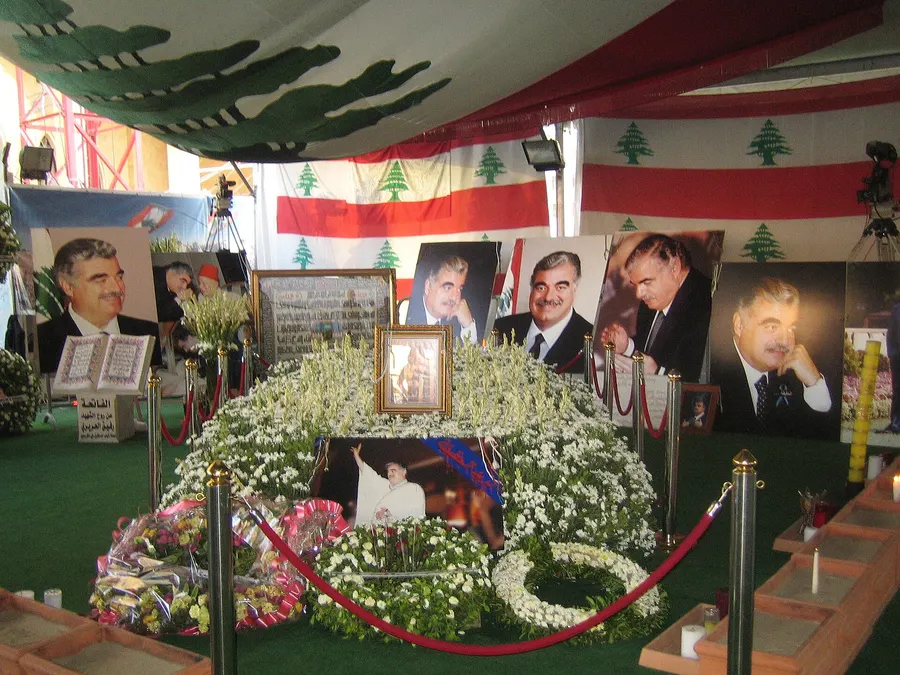
The memorial shrine to Rafik Hariri in central Beirut, September 2005.The memorial shrine to Rafik Hariri in central Beirut, September 2005.Image: st1ke · CC BY 2.0

politics · Middle East

Up to a million people rally in Beirut

A month after the former prime minister Rafik Hariri was killed by a huge car bomb, crowds poured into Martyrs’ Square in Beirut on 14 March 2005. Estimates run up to a million people, the largest demonstration in Lebanon’s history. Sunni, Christian, Druze and some Shia Lebanese marched together to demand that Syria withdraw the troops it had kept in Lebanon since 1976, and that Hariri’s killing be investigated. Syria completed its withdrawal that April. The movement became known as the Cedar Revolution, and its coalition took the name March 14.

Source: Swarthmore College, Global Nonviolent Action Database: Lebanese campaign for democracy (Cedar Revolution), 2005 ↗
2019
Flooding near Beira, Mozambique, on 19 March 2019, in false colour from the Copernicus Sentinel-1 satellite.Flooding near Beira, Mozambique, on 19 March 2019, in false colour from the Copernicus Sentinel-1 satellite.Image: Contains modified Copernicus Sentinel data (2019), processed by ESA · CC BY-SA 3.0 igo
world · Africa

Cyclone Idai strikes Mozambique

Late on 14 March 2019 Tropical Cyclone Idai came ashore near the port city of Beira in Mozambique, bringing destructive winds. Beira, home to about half a million people, was cut off. Days of torrential rain followed across Mozambique, Zimbabwe and Malawi, flooding huge areas of farmland. More than a thousand people died across the region, making Idai one of the deadliest cyclones recorded in the Southern Hemisphere.

Source: UN OCHA via ReliefWeb: Mozambique, Cyclone Idai flash update no. 1, 15 March 2019 ↗
RESEARCH

Sources & Further Reading

Selected authoritative references supporting the events on this page.

EBSCO Research Starters: Battle of Ivry↗Wikipedia: Battle of Ivry↗Royal Museums Greenwich: The execution of Admiral Byng, 14 March 1757↗US Naval Institute, Naval History: The sad fate of Admiral Byng↗US National Archives: Patent for Cotton Gin (1794)↗US National Archives, AOTUS blog: Patent of the month, Eli Whitney’s cotton gin↗Encyclopaedia Britannica: The Mikado↗Smithsonian, William Steinway Diary: The Mikado, the opening↗Press Institute of India (Vidura): Alam Ara, recalling India’s first talkie↗Wikipedia: Ardeshir Irani↗Encyclopaedia Britannica: Czechoslovak history, the breakup of the republic↗The National WWII Museum: The Slovak National Uprising of 1944↗Yale School of Medicine: From penicillin to phages, Yale’s century-long fight against infection↗Wikipedia: Orvan Hess↗The Sixth Floor Museum at Dealey Plaza: Jack Ruby found guilty of murder with malice↗Texas State Historical Association: Jack Ruby convicted of murder↗Jewish Virtual Library: Operation Litani↗Wikipedia: 1978 South Lebanon conflict↗Linux kernel archive: the v1.0 release tag↗Wikipedia: Linux kernel version history↗NASA History: Mir-18 mission documentation↗Wikipedia: Soyuz TM-21↗Swarthmore College, Global Nonviolent Action Database: Lebanese campaign for democracy (Cedar Revolution), 2005↗Carnegie Endowment for International Peace: Where March 14 came up short↗UN OCHA via ReliefWeb: Mozambique, Cyclone Idai flash update no. 1, 15 March 2019↗Oxfam International: After the storm, one year on from Cyclone Idai↗
WHY THESE MOMENTS?

Significance before volume

This page is not the longest possible list of events. It is a chronological journey through 14 March, where each entry is chosen for historical significance, human interest and reliability.

Facts are checked against authoritative museums, archives, universities and reference works. Where sources disagree, the page says so.

EXPLORED THE DEEPER STORY?

Return to the highlights of 14 March

Discover the lighter side of the date with famous birthdays, culture, firsts and lives remembered.

Explore This Day →
← PREVIOUS DAY13 March
HISTORY & TIMELINE14 March
NEXT DAY →15 March