
HISTORY & TIMELINE
17 June

A journey through
17 June in history

The story of 17 June runs from the killing of the caliph Uthman in Medina in 656 to the launch of the first Arab astronaut in 1985. In between come a coronation that joined three Scandinavian kingdoms, a motet written in a spa town, a bloody hillside outside Boston, a clash on a New Zealand stream, a treaty against poison gas, a republic born at an ancient assembly site, tanks on the streets of East Germany, a football match remembered as the game of the century and a burglary that brought down a president.

JUMP THROUGH TIME
II
THE MIDDLE AGES

Medieval History

Kingdoms, conflict, faith, power and the changing medieval world.

656
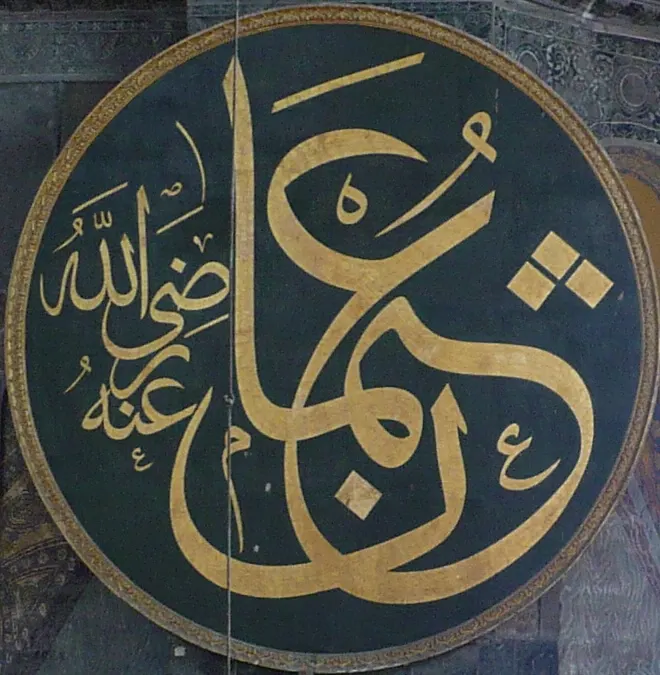
A great calligraphic roundel bearing the name of Uthman, one of the medallions hung in Hagia Sophia, IstanbulA great calligraphic roundel bearing the name of Uthman, one of the medallions hung in Hagia Sophia, IstanbulImage: Vikiçizer · CC BY-SA 4.0
politics · Middle East

The caliph Uthman is killed in Medina

Uthman ibn Affan was one of the earliest converts to Islam and a member of the wealthy Umayyad clan of Mecca. He married two of the Prophet Muhammad’s daughters in turn, and in 644 he was chosen as the third caliph. His twelve years in power saw Arab armies push further into Iran and North Africa, and he is remembered for having an authorised text of the Qur’an compiled and copies sent to the chief cities of the empire. But many Muslims resented his habit of giving governorships and wealth to his own relatives, and discontent grew in the garrison towns of Egypt and Iraq. In 656 rebels from the provinces came to Medina and besieged the aged caliph in his house. On 17 June 656 they broke in and killed him. His death opened the first civil war within the Muslim community, as Ali became caliph and was challenged by those who demanded revenge for Uthman, a split whose echoes are still felt today.

Source: Britannica: Uthman ibn Affan ↗
1397
The marble effigy of Queen Margaret on her tomb in Roskilde CathedralThe marble effigy of Queen Margaret on her tomb in Roskilde CathedralImage: Jacob Truedson Demitz assisted by Emil Eikner for Ristesson · Public domain
politics · Europe

Erik of Pomerania is crowned king of three Scandinavian realms

Queen Margaret had brought Denmark, Norway and Sweden under her rule, and she planned for all three to pass to her young great-nephew Erik of Pomerania. She summoned the councils and nobles of the three kingdoms to Kalmar in Sweden, and there, on Trinity Sunday, 17 June 1397, the fifteen-year-old Erik was crowned. The Kalmar Union that followed joined the three crowns until 1523, though Margaret kept real power until her death in 1412.

Source: Britannica: Kalmar Union ↗
III
A CHANGING WORLD

Early Modern Era

Exploration, political change, scientific development and expanding global connections.

1775
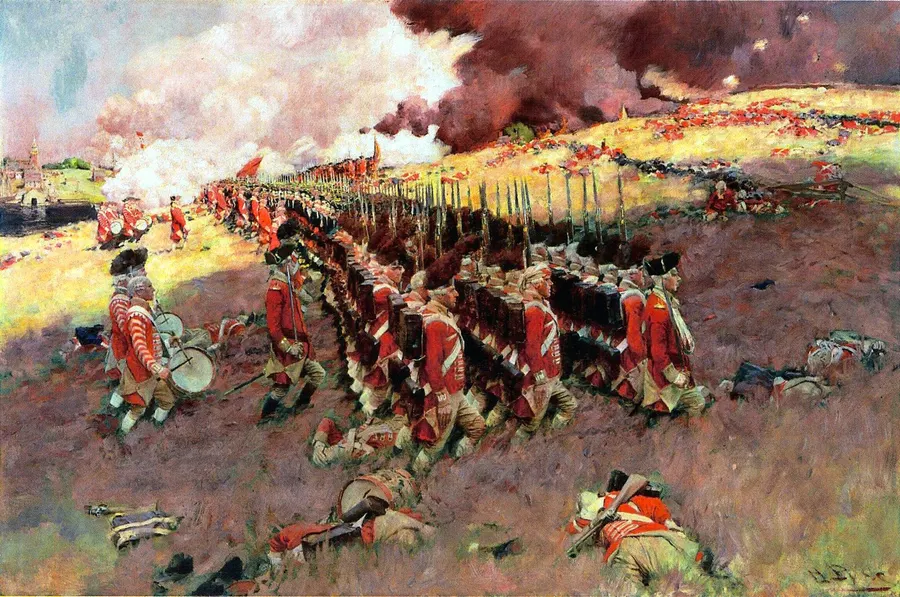
British troops advancing up the hill at Bunker Hill, a painting by Howard PyleBritish troops advancing up the hill at Bunker Hill, a painting by Howard PyleImage: Howard Pyle · Public domain
world · Americas

The Battle of Bunker Hill is fought outside Boston

Overnight on 16 June 1775, colonial militiamen besieging British-held Boston dug a redoubt on Breed’s Hill in Charlestown. On 17 June British troops attacked up the slope. Twice they were driven back by close-range musket fire; the third assault took the hill once the defenders ran short of powder. The British won, but lost more than a thousand men killed or wounded, against about 450 colonial losses, and the battle hardened the colonists’ resolve.

Source: National Park Service: The Battle of Bunker Hill ↗
1789
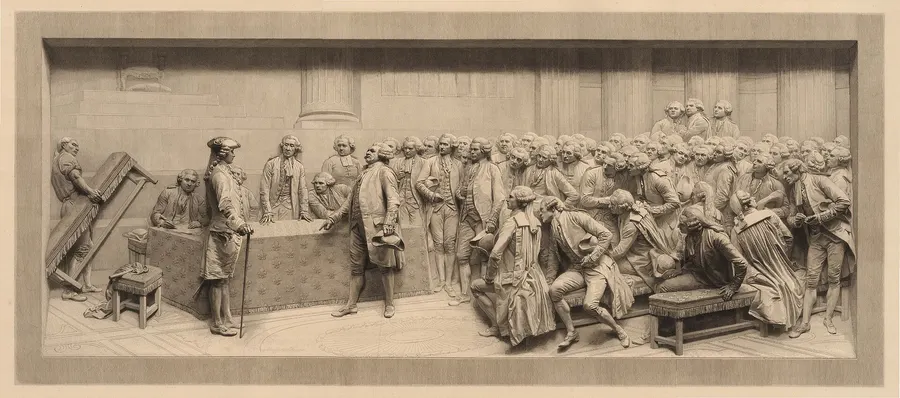
Mirabeau answering the king's master of ceremonies in June 1789, an etching by Alphonse Lamotte after a relief by Jules DalouMirabeau answering the king’s master of ceremonies in June 1789, an etching by Alphonse Lamotte after a relief by Jules DalouImage: Alphonse Lamotte after Jules Dalou · Public domain
politics · Europe

France’s commoners declare themselves the National Assembly

Faced with a bankrupt treasury, Louis XVI called the Estates-General, France’s old assembly of clergy, nobles and commoners, which had not met since 1614. It opened at Versailles on 5 May 1789 and at once became stuck on a single question: whether the deputies would vote by head, which favoured the numerous representatives of the Third Estate, or by order, which let the clergy and nobility outvote them. After weeks of deadlock the commoners acted alone. On 17 June 1789, on a motion by the Abbé Sieyès, the deputies of the Third Estate declared themselves the National Assembly, claiming to speak for the whole nation and inviting the other orders to join them. Many parish priests soon did. When they were shut out of their hall three days later, the deputies swore the Tennis Court Oath not to part until France had a constitution. The king gave way, and the old order of estates never recovered.

Source: Britannica: French Revolution, events of 1789 ↗
1791
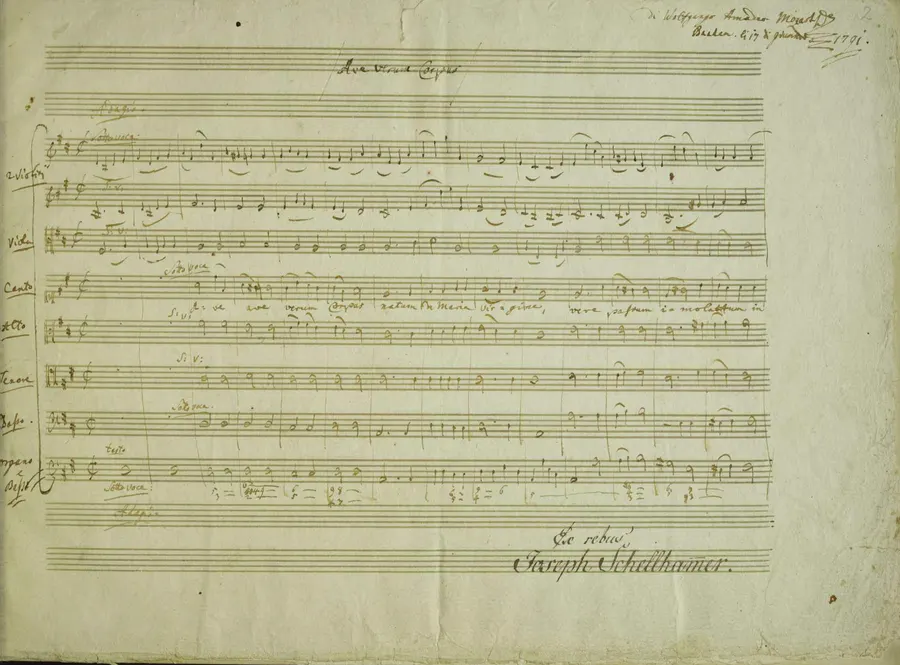
Mozart's autograph score of the motet Ave verum corpus, 1791Mozart’s autograph score of the motet Ave verum corpus, 1791Image: W. A. Mozart · Public domain
culture · Europe

Mozart writes his Ave verum corpus

In the summer of 1791 Mozart’s wife Constanze was taking the waters at Baden, a spa town south of Vienna, and Mozart visited her there. For Anton Stoll, the choirmaster of the town’s church and a friend of the couple, Mozart wrote a short setting of the medieval Eucharistic hymn Ave verum corpus, for choir, strings and organ. His own manuscript is dated 17 June 1791. The motet lasts only a few minutes, but its quiet, flowing lines have made it one of the best-loved pieces of church music ever written. It was Mozart’s first finished sacred work in eight years, and one of his last: in the months that followed he completed The Magic Flute, and he died in December 1791 leaving his Requiem unfinished.

Source: Britannica: Ave Verum Corpus, K 618 ↗
IV
THE NINETEENTH CENTURY

The 1800s

Industry, empire, invention, reform and a century of enormous transformation.

1843
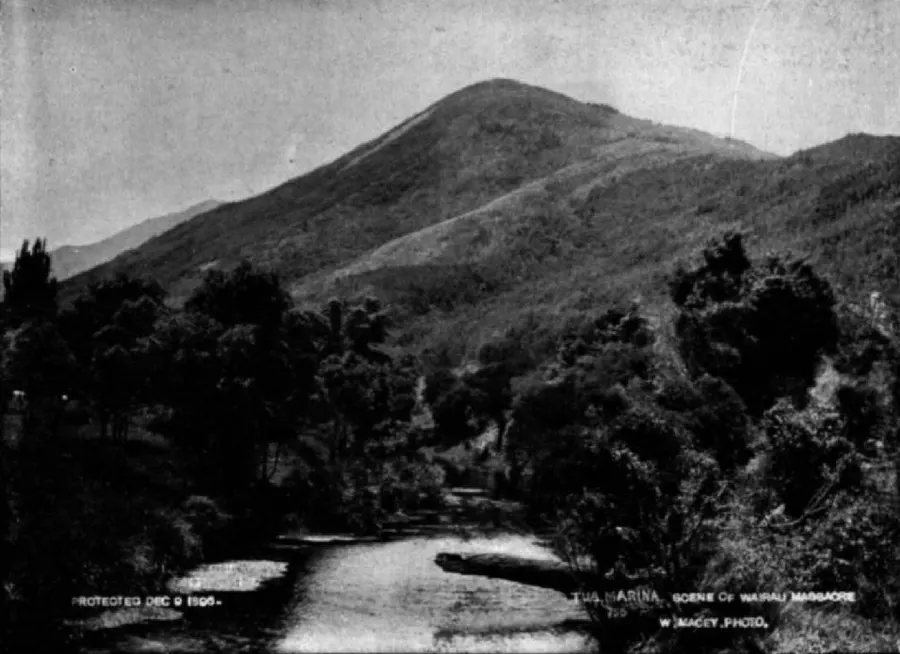
The valley at Tua Marina, the scene of the Wairau clash, photographed for the Cyclopedia of New Zealand in 1906The valley at Tua Marina, the scene of the Wairau clash, photographed for the Cyclopedia of New Zealand in 1906Image: Macey photo · Public domain
politics · Oceania

Settlers and Ngāti Toa clash at the Wairau

The New Zealand Company claimed land in the Wairau valley that the Ngāti Toa chiefs Te Rauparaha and Te Rangihaeata said they had never sold. After the chiefs turned off its surveyors, an armed party from Nelson tried to arrest them. On 17 June 1843, at the Tuamarina stream, shots were exchanged; 22 settlers and at least four Māori died, some settlers after surrendering. The new governor, Robert FitzRoy, judged that the settlers had provoked the clash.

Source: NZHistory (Ministry for Culture and Heritage): The Wairau incident ↗
V
THE TWENTIETH CENTURY

The 1900s

War and peace, technological leaps, social change, politics, sport and popular culture.

1900
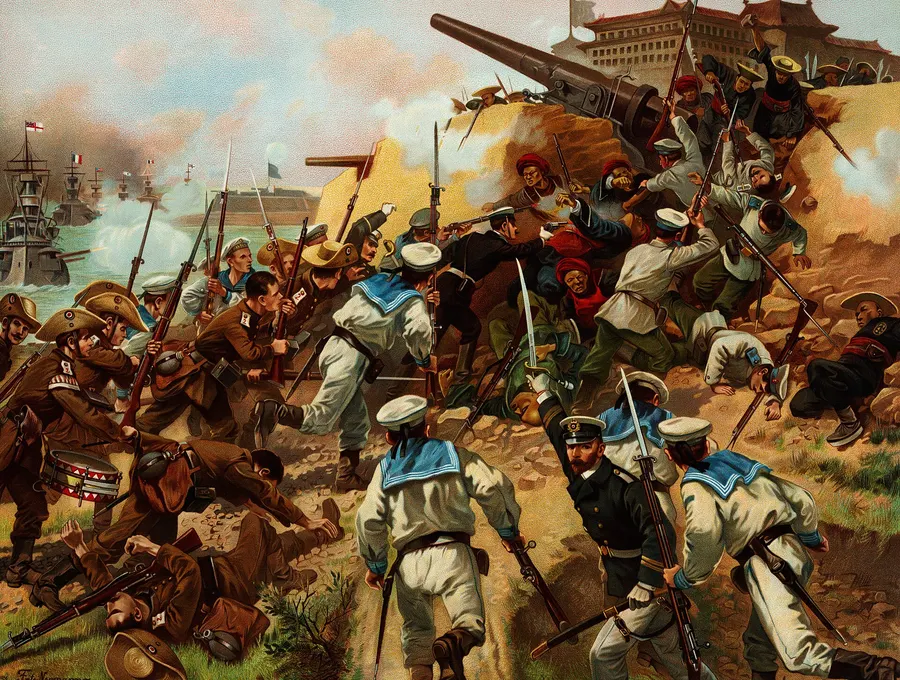
The Capture of the Forts at Taku, a colour print of the assault after Fritz NeumannThe Capture of the Forts at Taku, a colour print of the assault after Fritz NeumannImage: Fritz Neumann / Adam Cuerden · Public domain
world · Asia

Foreign warships take the Taku forts at the mouth of the Hai River

As the Boxer rising spread through northern China, foreign naval commanders off the coast feared the Qing army would close the Hai River, the route to Tianjin and Beijing. They demanded that the four Taku (Dagu) forts guarding its mouth be handed over by 2 a.m. on 17 June 1900, and when the deadline passed they attacked. By early morning the forts had fallen. The Qing court saw the assault as an act of war, and soon declared war on the foreign powers.

Source: Naval History and Heritage Command: The Boxer Rebellion ↗
1925
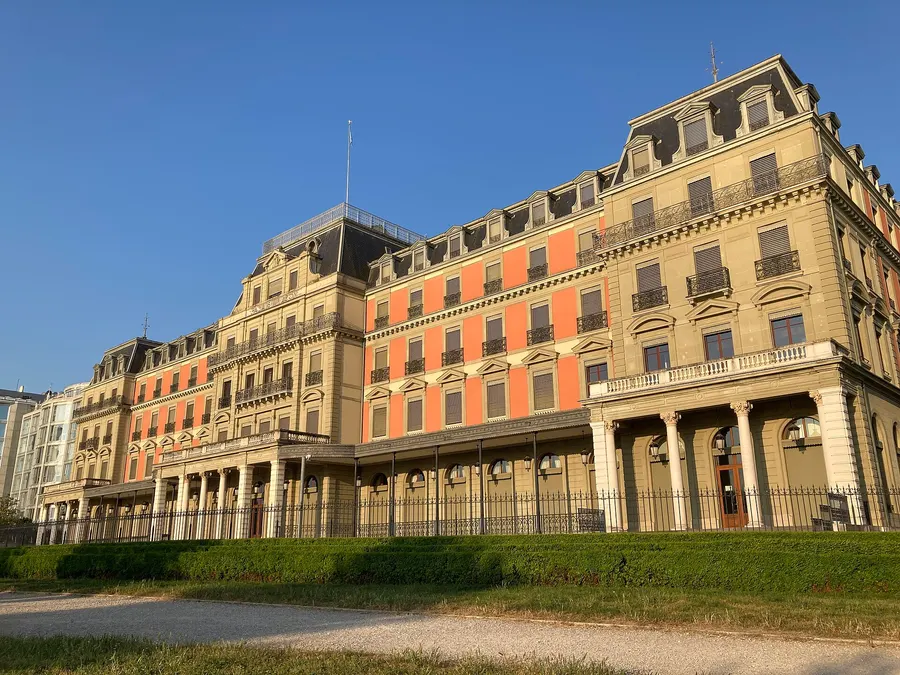
The Palais Wilson in Geneva, headquarters of the League of Nations from 1920 to 1936The Palais Wilson in Geneva, headquarters of the League of Nations from 1920 to 1936Image: Nick-D · CC BY-SA 4.0
politics · Global

Nations sign the Geneva Protocol against gas and germ warfare

The poison gas of the First World War had killed and maimed on a huge scale. At a League of Nations conference in Geneva, delegates signed a protocol on 17 June 1925 banning the use in war of asphyxiating and poisonous gases and of bacteriological weapons. It did not forbid making or stockpiling such weapons, and many states kept the right to retaliate, but it remains in force and underpins later treaties banning chemical and biological arms.

Source: ICRC: Geneva Gas Protocol, 17 June 1925 ↗
1944
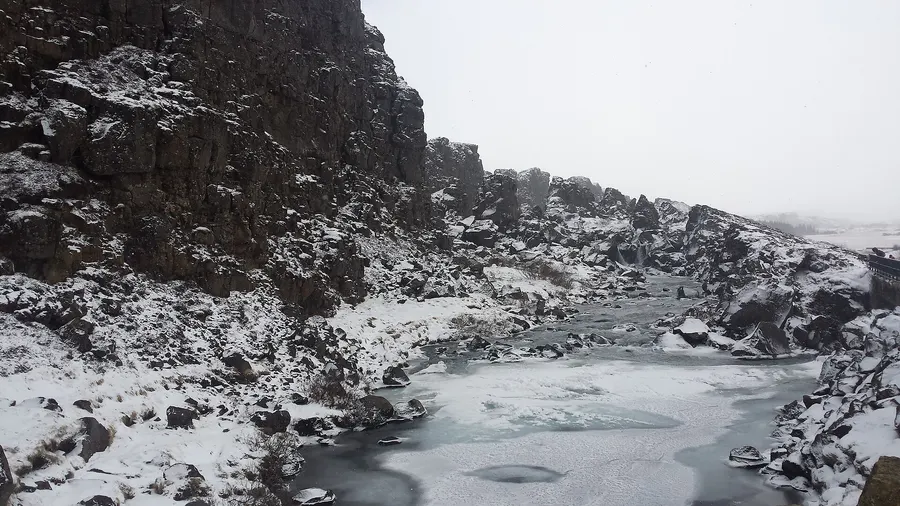
The rift valley at Þingvellir, where Iceland's old assembly met and where the republic was proclaimed in 1944The rift valley at Þingvellir, where Iceland’s old assembly met and where the republic was proclaimed in 1944Image: Murphsmurph · CC BY-SA 4.0
politics · Europe

Iceland proclaims its republic at Þingvellir

Iceland had been ruled from Norway and then Denmark since the 13th century. In 1918 it became a separate kingdom sharing the Danish king, under an agreement that could be reviewed after 25 years. When Germany occupied Denmark in April 1940, the link was cut in practice: Iceland took over its own foreign affairs, British and then American troops arrived on the island, and in 1941 the Althing chose Sveinn Björnsson as regent to exercise the king’s powers. In 1944 Icelanders voted by an overwhelming majority to end the union and found a republic. On 17 June 1944 the new state was proclaimed at Þingvellir, the plain where the Althing had first met in about 930, and Sveinn Björnsson became its first president. The date was chosen because it was the birthday of Jón Sigurðsson, the scholar who had led the 19th-century campaign for self-government, and 17 June has been Iceland’s National Day ever since.

Source: Britannica: Iceland, modern Iceland ↗
1953
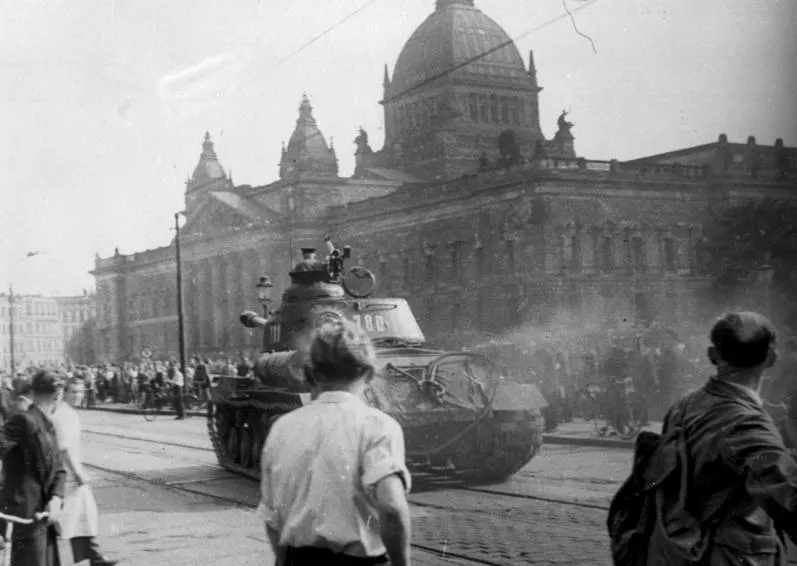
A Soviet tank in front of the former Reichsgericht building in Leipzig on 17 June 1953A Soviet tank in front of the former Reichsgericht building in Leipzig on 17 June 1953Image: Unknown photographer (Bundesarchiv) · CC BY-SA 3.0 de
politics · Europe

East German workers rise against their government

In 1953 East Germany’s communist rulers were pushing through a harsh programme of building socialism. Food was short, prices were rising and the government ordered workers to produce more for the same pay. On 16 June construction workers on East Berlin’s showpiece Stalinallee downed tools and marched on government offices, and news of their protest spread across the country by radio. On 17 June 1953 strikes and demonstrations broke out in hundreds of towns and cities, and demands for lower quotas turned into calls for free elections and the government’s resignation. It was the first popular uprising in the Soviet bloc after the Second World War. The East German regime could not control it alone: Soviet tanks were sent in and martial law was declared. Britannica counts at least 21 people killed, and other estimates are higher. West Germany made 17 June a national holiday, the Day of German Unity, until reunification in 1990.

Source: Britannica: History of Germany, the era of partition ↗
1967
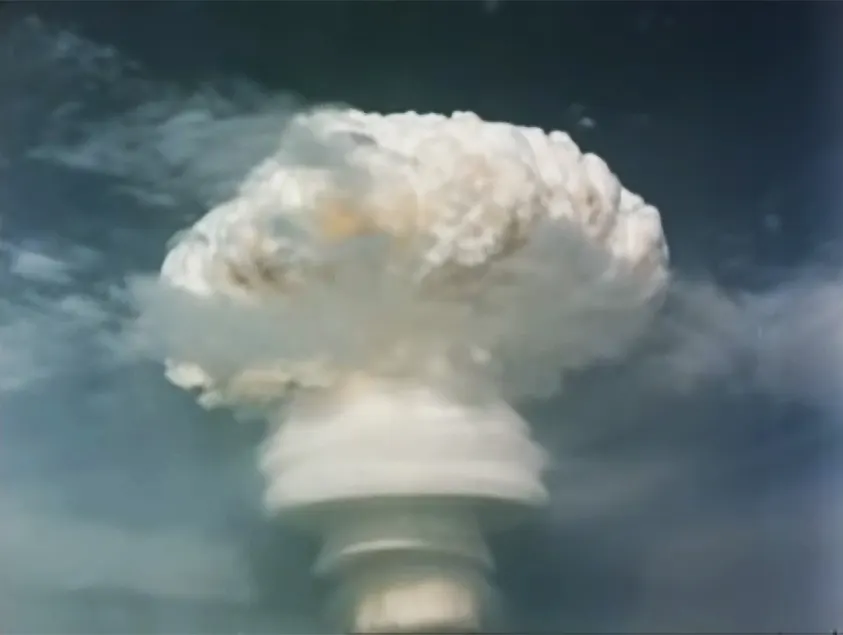
The mushroom cloud of China's sixth nuclear test, its first thermonuclear explosion, over Lop Nur in 1967The mushroom cloud of China’s sixth nuclear test, its first thermonuclear explosion, over Lop Nur in 1967Image: Unknown author · Public domain
science · Asia

China explodes its first hydrogen bomb

China tested its first atomic bomb at Lop Nur, in the deserts of Xinjiang, in October 1964. Its scientists then turned at speed to the far more powerful thermonuclear weapon, in which the heat of a fission explosion is used to fuse light elements and release much more energy. On 17 June 1967 a bomber dropped the device by parachute over the Lop Nur test site, and it exploded in the air with a yield of about 3.3 megatons. China had gone from its first atomic test to a hydrogen bomb in just 32 months, far faster than the United States, which had taken more than seven years. The test was carried out in the middle of the Cultural Revolution and made China the fourth country to explode a thermonuclear weapon.

Source: CTBTO Preparatory Commission: 17 June 1967, China’s first thermonuclear test ↗
1970
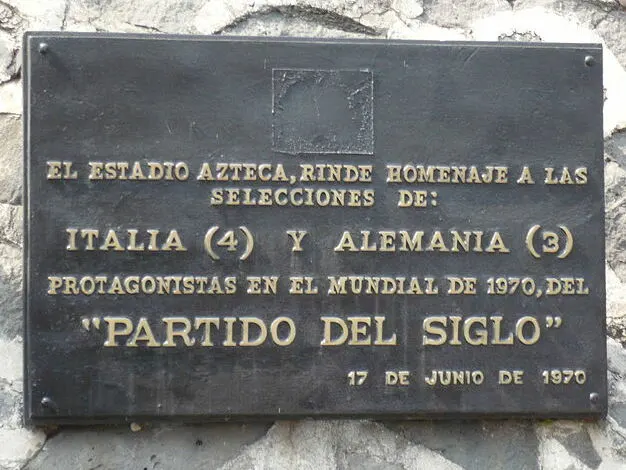
The plaque at the Estadio Azteca in Mexico City honouring Italy and Germany for the 'Partido del Siglo' of 17 June 1970The plaque at the Estadio Azteca in Mexico City honouring Italy and Germany for the ‘Partido del Siglo’ of 17 June 1970Image: Hellner · Public domain
sport · Americas

Italy and West Germany play the game of the century

The semi-final of the 1970 World Cup brought Italy and West Germany together at the Estadio Azteca in Mexico City before more than 100,000 spectators. Roberto Boninsegna put Italy ahead in the eighth minute, and for most of the match it seemed the Italians’ famous defence would hold. Then, in stoppage time, the German defender Karl-Heinz Schnellinger scored his only goal for his country to force extra time. What followed was extraordinary. Five goals came in thirty minutes of extra time, a World Cup record, as the lead changed hands: Gerd Müller scored twice for West Germany, Tarcisio Burgnich and Gigi Riva replied for Italy, and a minute after Müller’s second equaliser Gianni Rivera swept in the winner. Italy won 4-3, and a plaque at the stadium still honours the ‘game of the century’. Exhausted, they lost the final to Brazil four days later.

Source: FIFA: Italy 4-3 West Germany, Greatest Games ↗
1972
The Watergate complex beside the Potomac in Washington, seen from the airThe Watergate complex beside the Potomac in Washington, seen from the airImage: Indutiomarus at English Wikipedia · Public domain
politics · Americas

Burglars are caught inside the Watergate building

In the early hours of 17 June 1972, a security guard at the Watergate office complex in Washington, Frank Wills, noticed taped door locks and called the police. They arrested five men inside the Democratic National Committee headquarters with cash and bugging equipment; one was security chief of President Nixon’s re-election committee. Reporting and investigations over the next two years exposed a cover-up reaching the White House, and in August 1974 Nixon resigned.

Source: FBI: Watergate ↗
1985
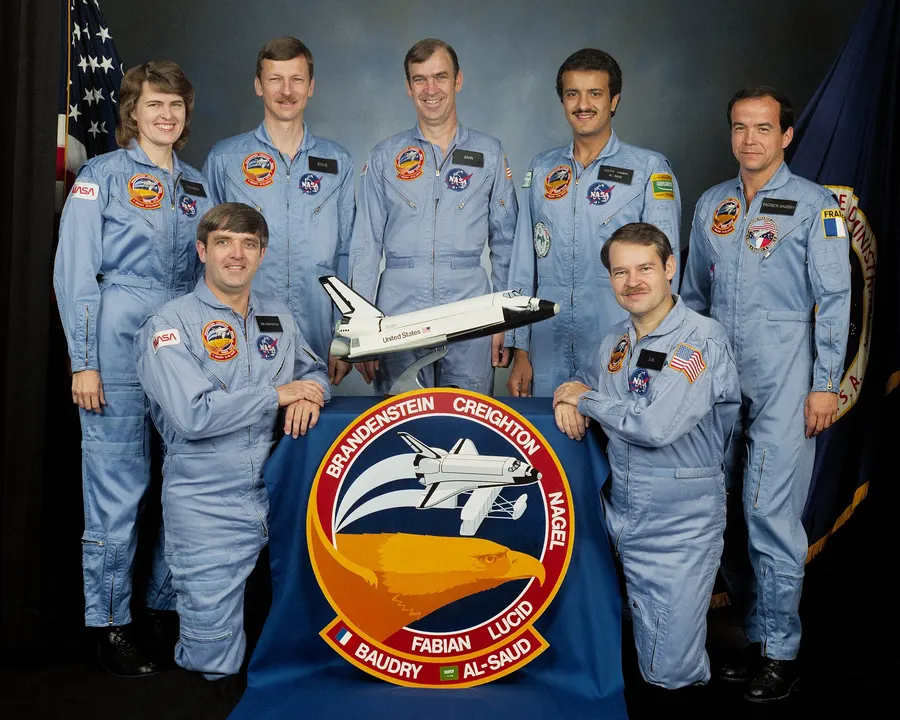
The seven-member crew of the STS-51G shuttle mission, among them Sultan bin Salman and Patrick BaudryThe seven-member crew of the STS-51G shuttle mission, among them Sultan bin Salman and Patrick BaudryImage: NASA · Public domain
science · Middle East

The first Arab astronaut flies on the shuttle Discovery

Space Shuttle Discovery lifted off from Florida on 17 June 1985 on a seven-day mission that deployed three communications satellites, among them Arabsat-1B for the Arab Satellite Communications Organization. Among its seven crew was the Saudi prince Sultan bin Salman, a payload specialist and the first Arab and first Muslim to travel into space. The French astronaut Patrick Baudry also flew on the mission.

Source: NASA: STS-51G ↗
1991
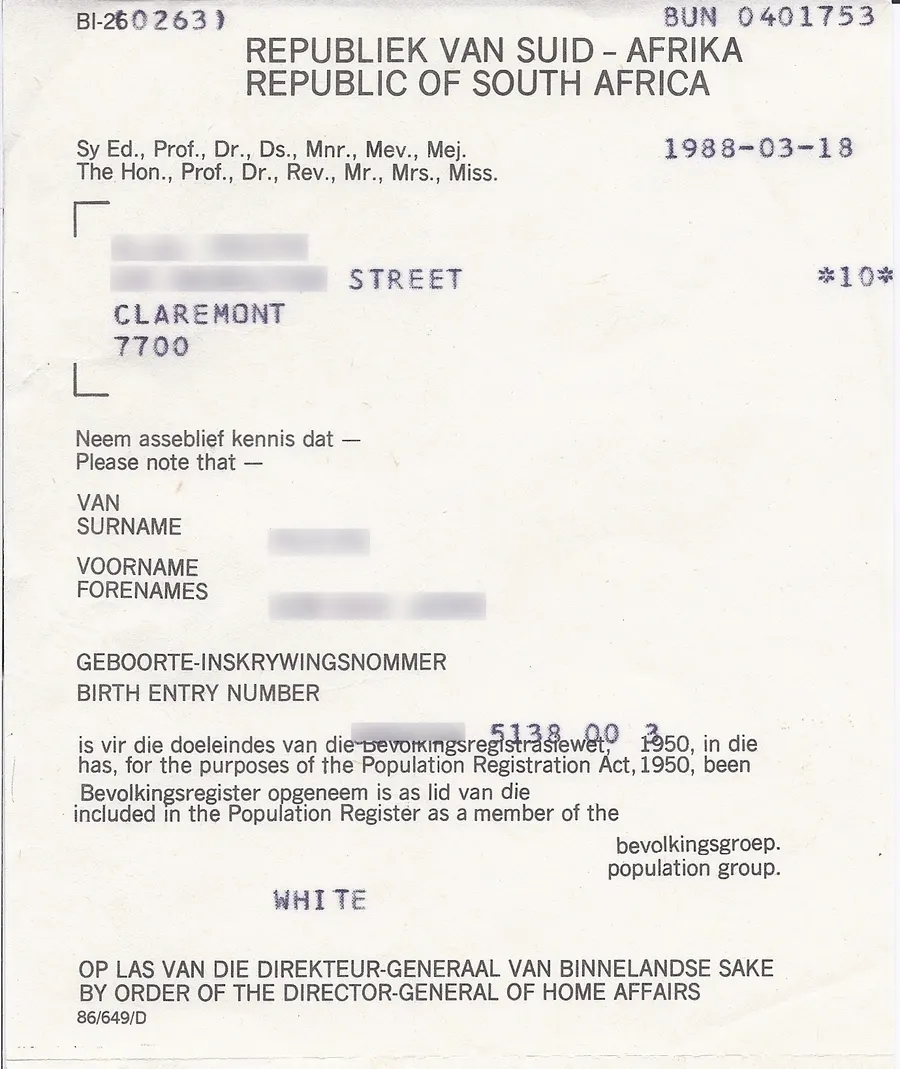
A South African population registration certificate issued in 1988, recording its holder's racial classification (personal details blanked out)A South African population registration certificate issued in 1988, recording its holder’s racial classification (personal details blanked out)Image: Government of South Africa · Public domain
politics · Africa

South Africa repeals the law that sorted its people by race

The Population Registration Act of 1950 was one of the foundations of apartheid. It required every South African to be classified by race and entered in a national register, and that classification decided where people could live, which schools they could attend, whom they could marry and what work they could do. Officials made the decisions using appearance, descent and social standing, and families could be divided when relatives were classified differently. After President F. W. de Klerk lifted the ban on the African National Congress and freed Nelson Mandela in 1990, the whites-only Parliament began dismantling apartheid’s legal framework. On 17 June 1991 it voted to repeal the Population Registration Act, and in the same session the other pillar laws that had divided land and residential areas by race were also scrapped. The vote did not give Black South Africans the vote; that came with the first democratic elections in 1994.

Source: Britannica: Population Registration Act ↗
WHY THESE MOMENTS?

Significance before volume

This page is not the longest possible list of events. It is a chronological journey through 17 June, where each entry is chosen for historical significance, human interest and reliability.

Facts are checked against authoritative museums, archives, universities and reference works. Where sources disagree, the page says so.

EXPLORED THE DEEPER STORY?

Return to the highlights of 17 June

Discover the lighter side of the date with famous birthdays, culture, firsts and lives remembered.

Explore This Day →
← PREVIOUS DAY16 June
HISTORY & TIMELINE17 June
NEXT DAY →18 June