
HISTORY & TIMELINE
16 June

A journey through
16 June in history

The story of 16 June runs from the first day of a Persian calendar era under the last Sasanian king in 632 to China’s first woman in space in 2012. In between come a boy pretender’s defeat in Nottinghamshire, a treaty that became the world’s oldest alliance, an earthquake that raised a natural dam across a river in western India, a pope elected for the longest reign in papal history, a small ship slipping out of Christiania for the Northwest Passage, a Detroit car company, a treaty to annex Hawaii, a congress that revived the Olympic Games, a dancer’s leap to freedom at a Paris airport and a student march that changed South Africa.

JUMP THROUGH TIME
II
THE MIDDLE AGES

Medieval History

Kingdoms, conflict, faith, power and the changing medieval world.

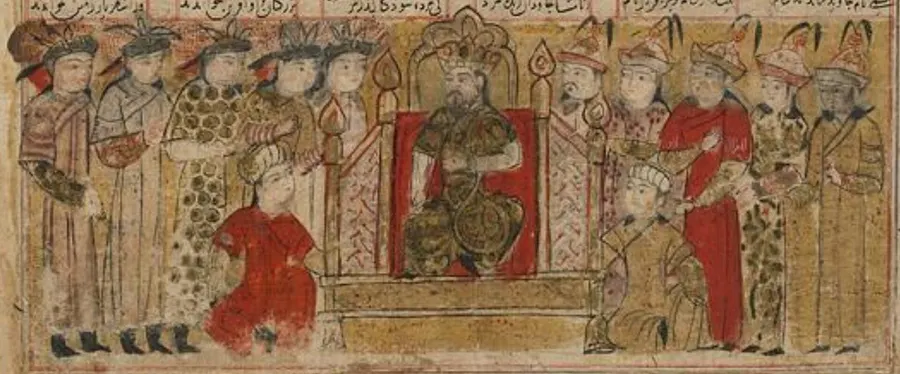
632
The coronation of Yazdegerd III, a 14th-century Persian miniatureThe coronation of Yazdegerd III, a 14th-century Persian miniatureImage: Unknown artist (14th century) · Public domain
culture · Middle East

A Persian calendar era begins with the last Sasanian king

Yazdegerd III was enthroned in 632 as King of Kings of the Sasanian empire, a young ruler of a state exhausted by war with Byzantium. The Persian year in which he came to the throne began on 16 June 632, and that day became the starting point of a calendar era named after him. His empire fell to the Arab conquests and he was killed in 651, but Zoroastrians, among them the Parsis of India, still count their years from his accession.

Source: CAIS: The Old Iranian Calendars ↗
1373
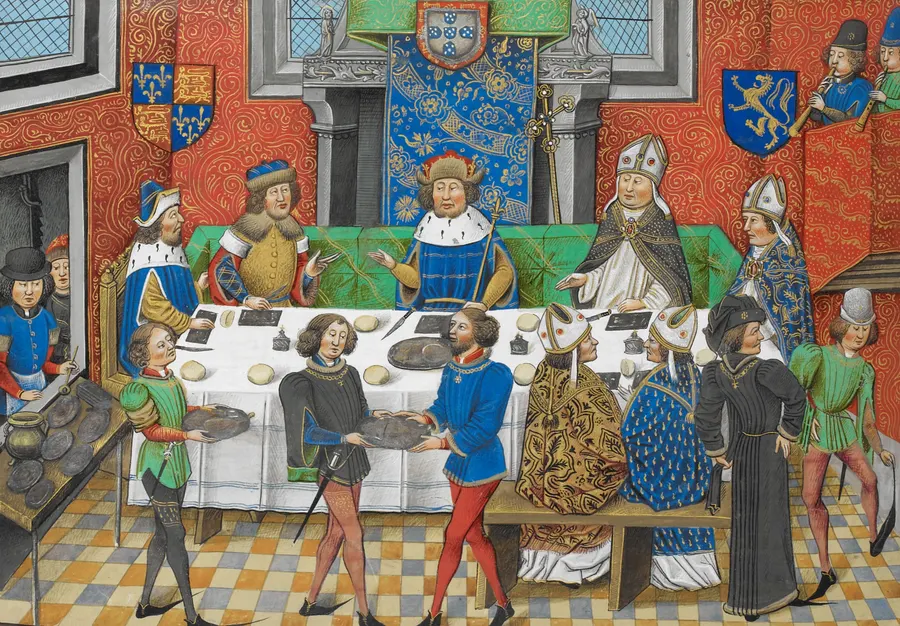
John of Gaunt dining with the King of Portugal, a late 15th-century miniature from Jean de Wavrin's chronicle of EnglandJohn of Gaunt dining with the King of Portugal, a late 15th-century miniature from Jean de Wavrin’s chronicle of EnglandImage: Jean de Wavrin; Seigneur de Forestel · Public domain
politics · Europe

England and Portugal sign the world’s oldest alliance

In the 1370s the Hundred Years’ War between England and France had spread into the Iberian peninsula, where the two sides backed rival claimants to the throne of Castile. Portugal, wary of its powerful Castilian neighbour, looked to England for support, and England wanted a friend on the far side of Castile. On 16 June 1373, in London, envoys agreed a treaty between Edward III of England and King Ferdinand and Queen Eleanor of Portugal, pledging the two kingdoms to peace, friendship and alliance. It was renewed in the Treaty of Windsor of 1386 and sealed by the marriage of John of Gaunt’s daughter Philippa to King John I of Portugal. Reaffirmed many times since, and invoked by Britain during the Second World War to use bases in the Azores, it is the oldest alliance in the world still in force. An original copy is kept at The National Archives in Kew.

Source: GOV.UK: UK and Portugal celebrate the world’s longest diplomatic alliance ↗
1487
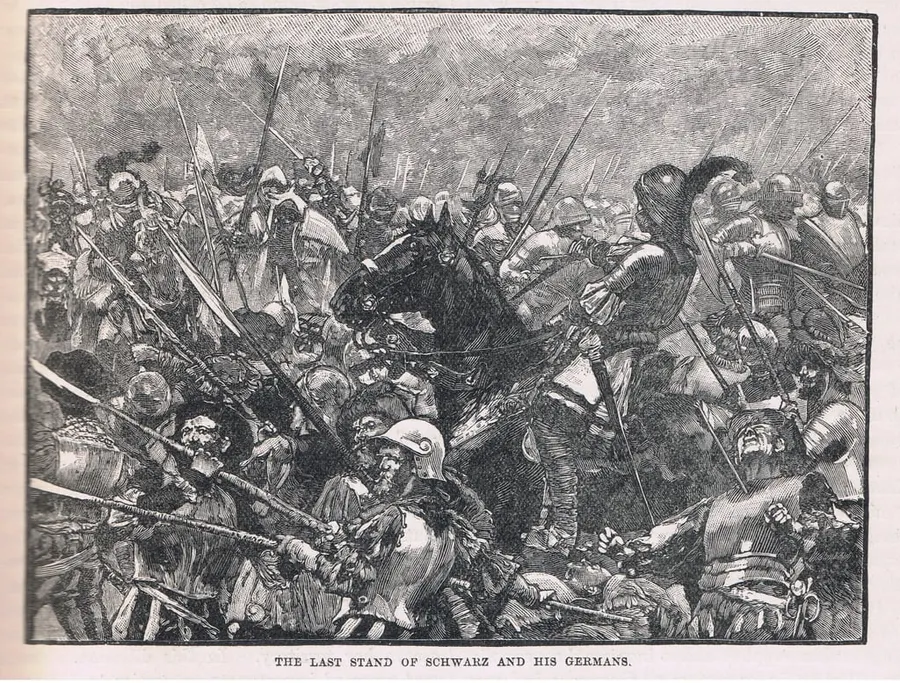
The last stand of Martin Schwarz and his German mercenaries at Stoke, an illustration by Henry Marriott Paget from around 1910The last stand of Martin Schwarz and his German mercenaries at Stoke, an illustration by Henry Marriott Paget from around 1910Image: Unknown author · Public domain
world · Europe

Henry VII wins the last battle of the Wars of the Roses

Henry Tudor had taken the English crown at Bosworth in 1485, but the Yorkist cause was not finished. Its leaders found an unlikely figurehead in Lambert Simnel, a boy of about ten from Oxford who was passed off as Edward, Earl of Warwick, the nephew of Edward IV. Backed by Edward IV’s sister Margaret, Duchess of Burgundy, and by John de la Pole, Earl of Lincoln, a genuine Yorkist claimant, the boy was proclaimed king in Ireland. In June 1487 his supporters landed in Lancashire with Irish troops and about 2,000 German mercenaries under Martin Schwarz. They marched south and took up a strong position on high ground near the village of East Stoke in Nottinghamshire. On the morning of 16 June 1487 the royal army, its vanguard led by the Earl of Oxford, attacked. The fighting lasted some hours and Henry’s victory was complete: Lincoln and Schwarz were killed along with many of their men, and Simnel was captured. Henry spared the boy, judging him a puppet, and put him to work in the royal kitchens. Stoke Field was the last pitched battle between the rival houses, and it secured the Tudor dynasty.

Source: Britannica: Battle of Stoke ↗
IV
THE NINETEENTH CENTURY

The 1800s

Industry, empire, invention, reform and a century of enormous transformation.

1819
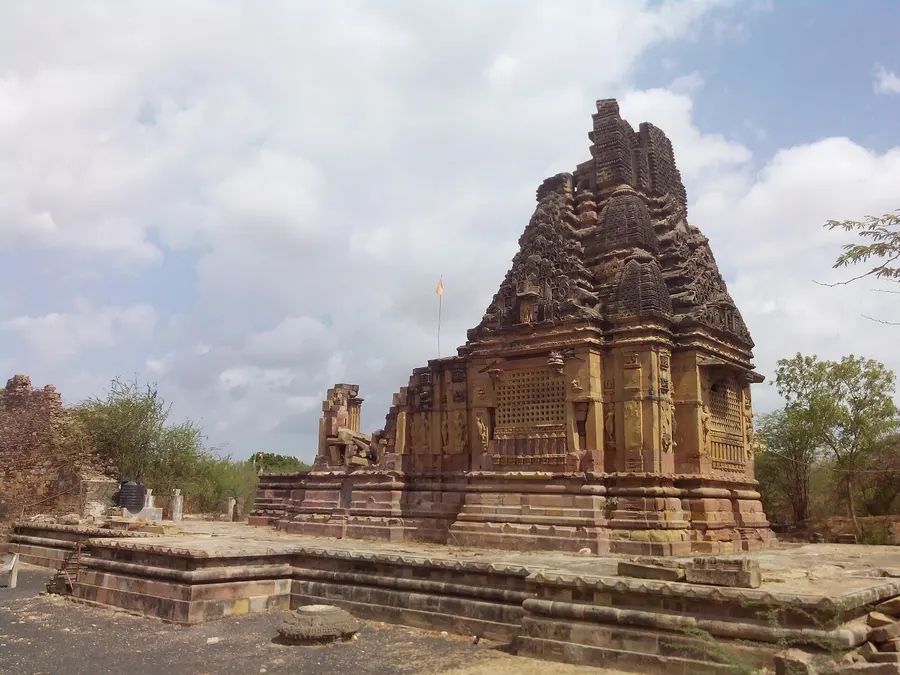
The ruined Shiva temple at Kera in Kutch, damaged in the 1819 earthquakeThe ruined Shiva temple at Kera in Kutch, damaged in the 1819 earthquakeImage: Nizil Shah · CC BY-SA 4.0
science · Asia

An earthquake in Kutch raises a natural dam, the Allah Bund

On 16 June 1819 a great earthquake struck the Rann of Kutch in western India, killing more than a thousand people. It lifted a strip of land several metres high and some 80 kilometres long, which blocked a branch of the Indus; local people called it the Allah Bund, the ‘dam of God’. Nearby, the ground sank and the fort of Sindri was flooded, leaving only a tower above the water. It is one of the best-studied earthquakes inside a continental plate.

Source: University of Colorado (Roger Bilham): Allah Bund chronology ↗
1846
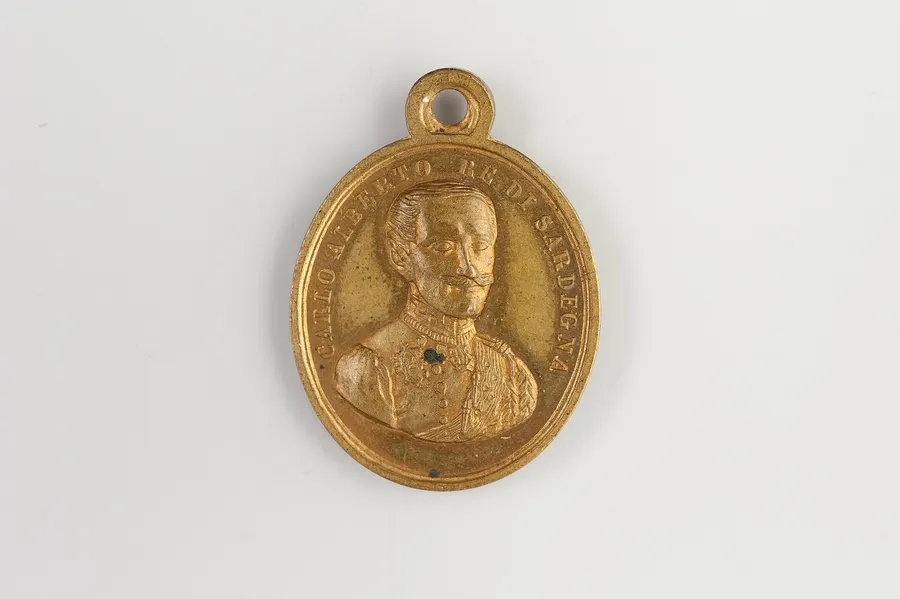
A gilt medal struck to mark the election of Pius IX on 16 June 1846A gilt medal struck to mark the election of Pius IX on 16 June 1846Image: Anonyme, graveur en médailles - Médailleur · CC0
culture · Europe

Pius IX is elected pope for the longest reign in papal history

On 16 June 1846, after a conclave of only two days in the Quirinal Palace in Rome, the cardinals elected Giovanni Maria Mastai-Ferretti, who took the name Pius IX. Hailed at first as a liberal reformer, he turned against the revolutions of 1848, lost the Papal States to a united Italy and in 1870 the city of Rome itself. His reign of nearly 32 years, which saw the First Vatican Council define papal infallibility, is the longest in the history of the papacy.

Source: Britannica: Pius IX ↗
1894
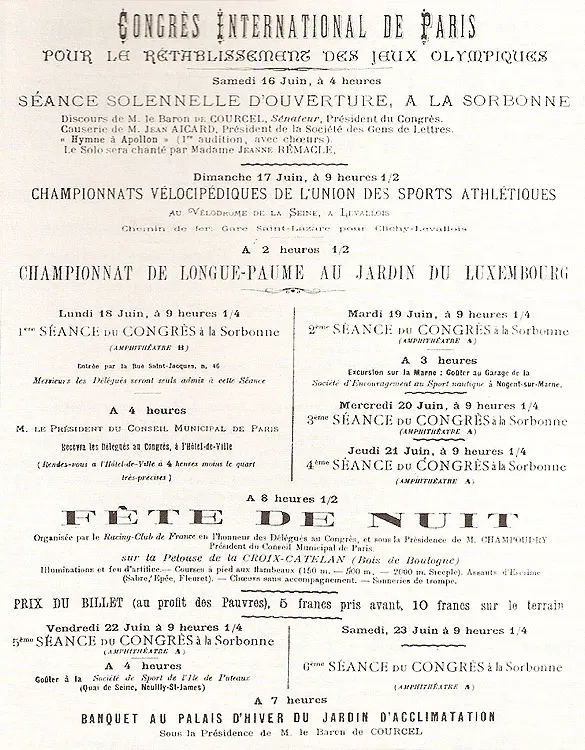
The printed programme of the 1894 International Congress of Paris for the re-establishment of the Olympic Games, opening at the SorbonneThe printed programme of the 1894 International Congress of Paris for the re-establishment of the Olympic Games, opening at the SorbonneImage: Unknown author · Public domain
sport · Europe

A congress in Paris sets out to revive the Olympic Games

The French educator Pierre de Coubertin believed that sport could build character and bring nations together, and he dreamed of reviving the athletic games of ancient Greece as a modern international festival. To win support he invited sports bodies from around the world to a congress in Paris, officially about amateur sport but with the Olympic revival as its real aim. The congress was declared open on 16 June 1894 in the great amphitheatre of the Sorbonne, before some 2,000 people. Delegates came from France and from countries including Belgium, Britain, Greece, Italy, Russia, Spain, Sweden and the United States. At its final session on 23 June the congress voted unanimously to revive the Olympic Games, created the International Olympic Committee to run them, and chose Athens to hold the first modern Games in 1896.

Source: Olympics.com: I Olympic Congress, Paris 1894 ↗
1897
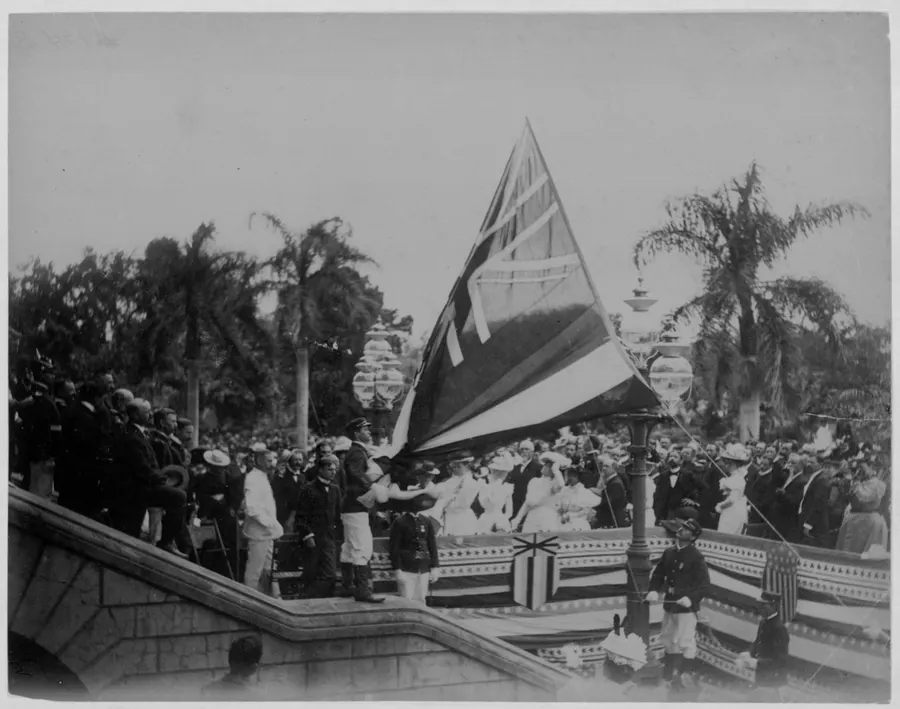
Crowds at ʻIolani Palace in Honolulu as the Hawaiian flag is lowered at the annexation ceremony of August 1898Crowds at ʻIolani Palace in Honolulu as the Hawaiian flag is lowered at the annexation ceremony of August 1898Image: Frank Davey · Public domain
politics · Oceania

A treaty is signed to annex Hawaii to the United States

In 1893 a group of American-born businessmen, backed by US marines, overthrew Queen Liliʻuokalani and set up a provisional government that soon became the Republic of Hawaii. Its leaders wanted the islands joined to the United States, but President Grover Cleveland refused. His successor, William McKinley, took a different view. On 16 June 1897 McKinley and three representatives of the Republic of Hawaii, Lorrin Thurston, Francis Hatch and William Kinney, signed a treaty of annexation, which went to the Senate for ratification. Native Hawaiians organised against it: the groups Hui Aloha ʻĀina and Hui Kālaiʻāina gathered more than 21,000 signatures on petitions opposing annexation, which were taken to Washington. The treaty never won the two-thirds majority it needed. But in 1898, during the war with Spain, Congress annexed Hawaii by a joint resolution instead, and McKinley signed it on 7 July.

Source: US National Archives: The 1897 Petition Against the Annexation of Hawaii ↗
V
THE TWENTIETH CENTURY

The 1900s

War and peace, technological leaps, social change, politics, sport and popular culture.

1903
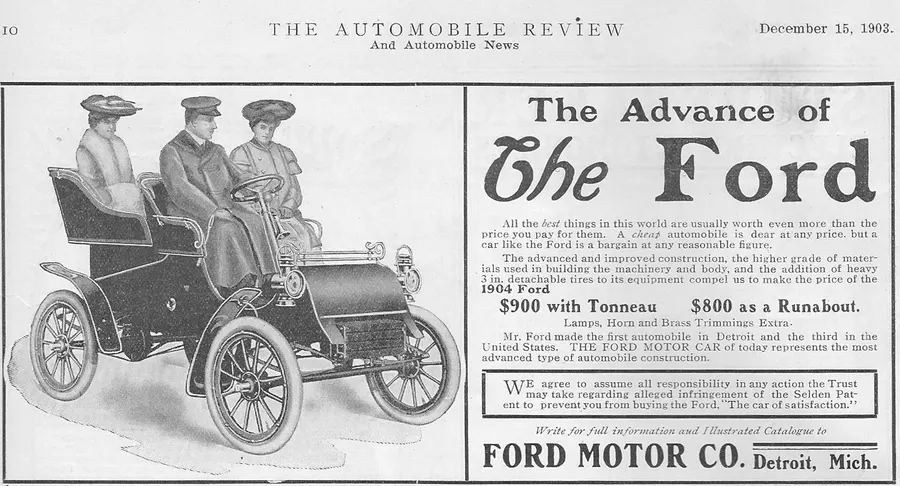
'The Advance of the Ford', an advertisement for the Ford Motor Company's first car in The Automobile Review, December 1903‘The Advance of the Ford’, an advertisement for the Ford Motor Company’s first car in The Automobile Review, December 1903Image: Unknown author · Public domain
world · Americas

The Ford Motor Company is incorporated in Detroit

Henry Ford’s first two car businesses had failed, but on 16 June 1903 he and eleven other investors, among them the coal dealer Alexander Malcomson and the Dodge brothers, filed articles of incorporation for the Ford Motor Company in Detroit. Ford and Malcomson put in plans, patents and machinery rather than cash. The company’s first car, the Model A, went on sale that summer, and within a few years the Model T would make Ford the world’s largest carmaker.

Source: The Henry Ford: Ford Motor Company Articles of Association, June 16, 1903 ↗
1903
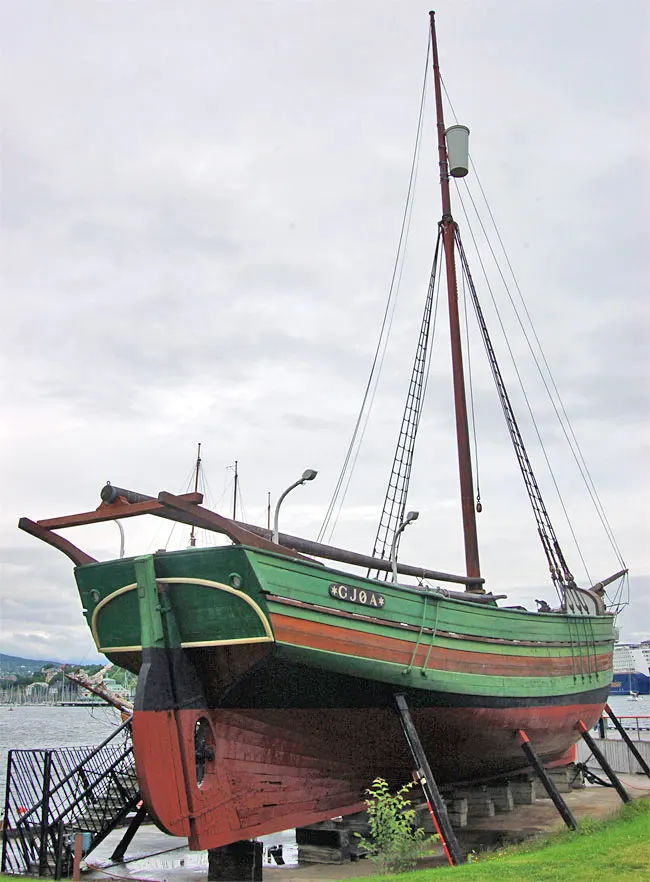
The Gjøa, the ship of Amundsen's Northwest Passage expedition, preserved on land in NorwayThe Gjøa, the ship of Amundsen’s Northwest Passage expedition, preserved on land in NorwayImage: Islandmen · CC BY-SA 3.0
world · Europe

Amundsen slips out of Christiania for the Northwest Passage

Roald Amundsen had bought the small herring boat Gjøa for an attempt on the Northwest Passage, the sea route around the top of North America that had defeated explorers for centuries. Deep in debt, and fearing a creditor would seize the ship, he sailed with six companions from Christiania (now Oslo) around midnight on 16 June 1903. Three years later, in August 1906, Gjøa reached Nome in Alaska: the first ship to sail the whole passage.

Source: Fram Museum: The Gjøa expedition, 1903-1906 ↗
1924
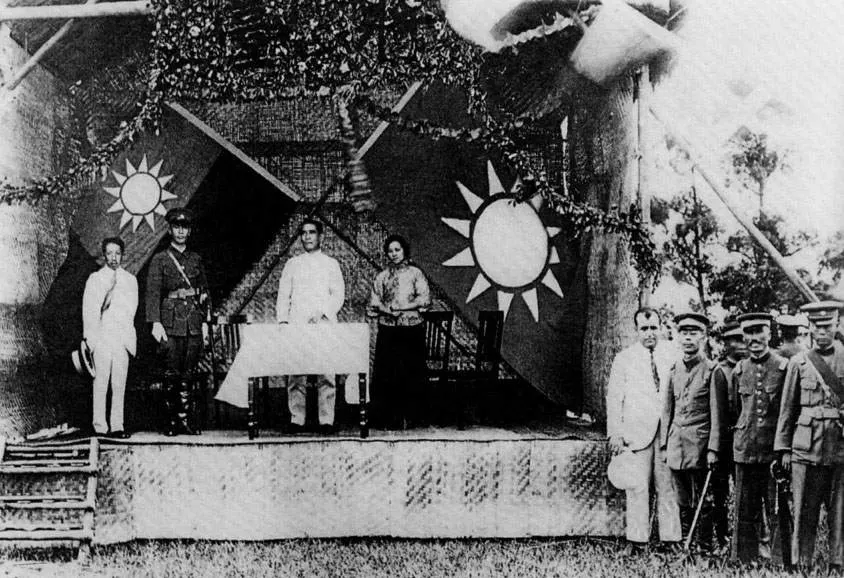
Sun Yat-sen, with Chiang Kai-shek, Liao Zhongkai and Soong Ching-ling, at the opening ceremony of the Whampoa Military Academy on 16 June 1924Sun Yat-sen, with Chiang Kai-shek, Liao Zhongkai and Soong Ching-ling, at the opening ceremony of the Whampoa Military Academy on 16 June 1924Image: Unknown photographer · Public domain

politics · Asia

Sun Yat-sen opens the Whampoa Military Academy

In the early 1920s China was divided among rival warlords, and Sun Yat-sen’s Nationalist Party held only a base around Canton (Guangzhou) in the south. Sun concluded that the revolution needed an army of its own, loyal to the party rather than to any general. With money, weapons and advisers from the Soviet Union, and in alliance with the young Chinese Communist Party, he set up an officers’ school on Changzhou Island at Whampoa (Huangpu), downriver from Canton. The academy opened on 16 June 1924, with Chiang Kai-shek as its first commandant. At the opening ceremony Sun gave an address whose words later became the national anthem of the Republic of China. Whampoa trained cadets in politics as well as soldiering, and its graduates led the Northern Expedition that reunified much of China under the Nationalists in 1926 to 1928. Former Whampoa men later commanded on both sides of China’s civil war. The academy moved with the Nationalist government to Taiwan, where it continues as the Republic of China Military Academy in Kaohsiung.

Source: Republic of China Military Academy: Academy history ↗
1961
Rudolf Nureyev, photographed in later life by Allan WarrenRudolf Nureyev, photographed in later life by Allan WarrenImage: Allan Warren · CC BY-SA 3.0
world · Europe

Rudolf Nureyev leaps to freedom at a Paris airport

Rudolf Nureyev, born on a train in Siberia and raised in Ufa, trained in Leningrad and became a soloist with the Kirov Ballet. His talent was obvious, but so was his independence, and he chafed at the tight control of Soviet ballet and at the officials who watched the dancers on tour. When the Kirov performed in Paris in the spring of 1961 he was a sensation, and he spent his free time with French friends, against orders. On 16 June 1961, as the company gathered at Le Bourget airport to fly on to London, Nureyev was told he was being sent back to Moscow instead. Slipping away from his minders, he asked the French police for asylum. He never returned to the Soviet Union while it lasted. In 1962 he began his celebrated partnership with Margot Fonteyn at the Royal Ballet in London, and he later directed the Paris Opéra Ballet. He is widely seen as the greatest male dancer of his century.

Source: Britannica: Rudolf Nureyev ↗
1963
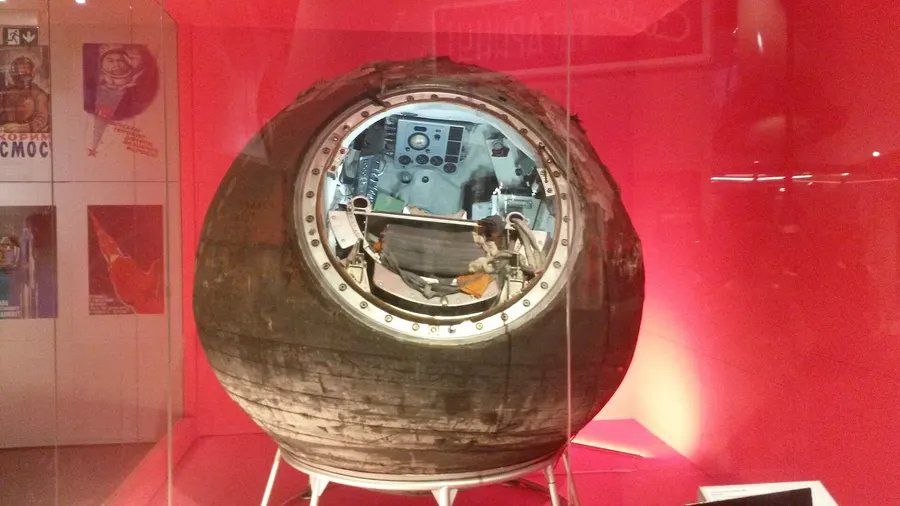
The Vostok 6 descent capsule that carried Valentina Tereshkova, on display in 2016The Vostok 6 descent capsule that carried Valentina Tereshkova, on display in 2016Image: Andrew Gray · CC BY-SA 3.0
world · Asia

Valentina Tereshkova becomes the first woman in space

Valentina Tereshkova was a textile worker from Yaroslavl with no pilot training, but she was an accomplished amateur parachutist, and in 1962 she was one of a handful of women chosen for the Soviet cosmonaut programme. Parachuting mattered: at the end of a Vostok flight the cosmonaut ejected from the capsule and came down separately under a parachute. On 16 June 1963 she was launched from Baikonur in Vostok 6. Valery Bykovsky was already in orbit in Vostok 5, launched two days earlier, and the two craft passed within about 5 kilometres of each other. Tereshkova orbited the Earth 48 times in about 71 hours, and both cosmonauts landed on 19 June. She was made a Hero of the Soviet Union. No other woman flew in space for nineteen years.

Source: Britannica: Valentina Tereshkova ↗
1976
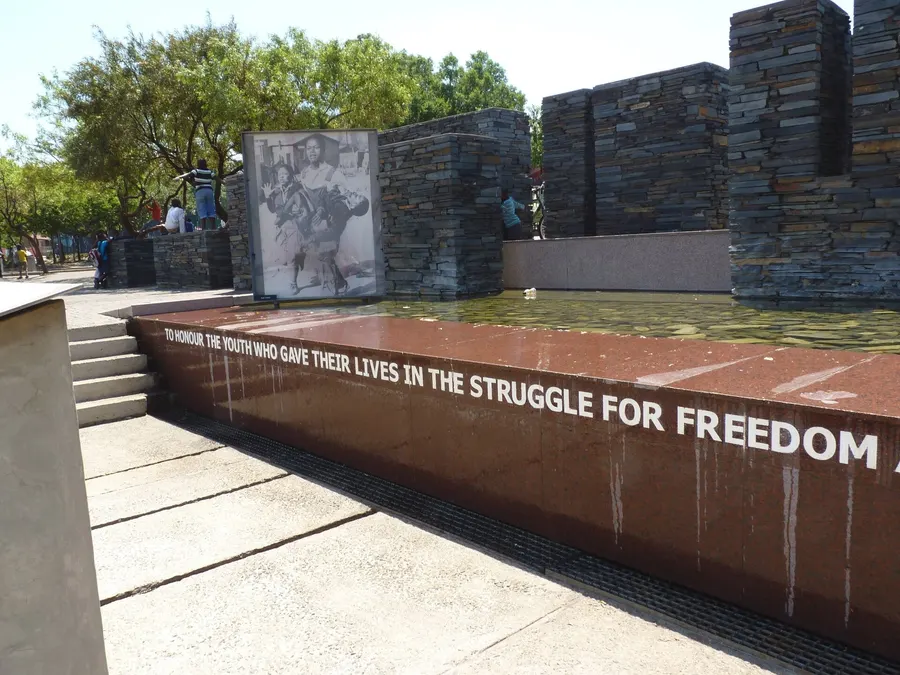
The Hector Pieterson Memorial in Soweto, dedicated to the young people who gave their lives in the struggle for freedomThe Hector Pieterson Memorial in Soweto, dedicated to the young people who gave their lives in the struggle for freedomImage: Ina96 · CC BY-SA 3.0
politics · Africa

The schoolchildren of Soweto march against apartheid education

Under apartheid, black South African children were taught in a separate and deliberately inferior system of ‘Bantu education’. In 1974 the government ordered that Afrikaans, which many black South Africans saw as the language of their oppressors, be used alongside English to teach key subjects in black secondary schools. Pupils and teachers objected, and in Soweto, the vast township outside Johannesburg, students began to organise. On the morning of 16 June 1976 more than 20,000 pupils set out on a peaceful march towards Orlando Stadium. Police blocked their way and opened fire. Among the first to die was 12-year-old Hector Pieterson; a photograph by Sam Nzima of the dying boy being carried by a fellow student was published around the world. Protests spread across the country over the following months, and hundreds of people, many of them young, were killed. The uprising drew a new generation into the struggle against apartheid, and since 1994 16 June has been a public holiday in South Africa, Youth Day.

Source: South African History Online: Hector Pieterson ↗
VI
2000 TO TODAY

Modern Day

The events of recent decades that have already become part of the historical record.

2012
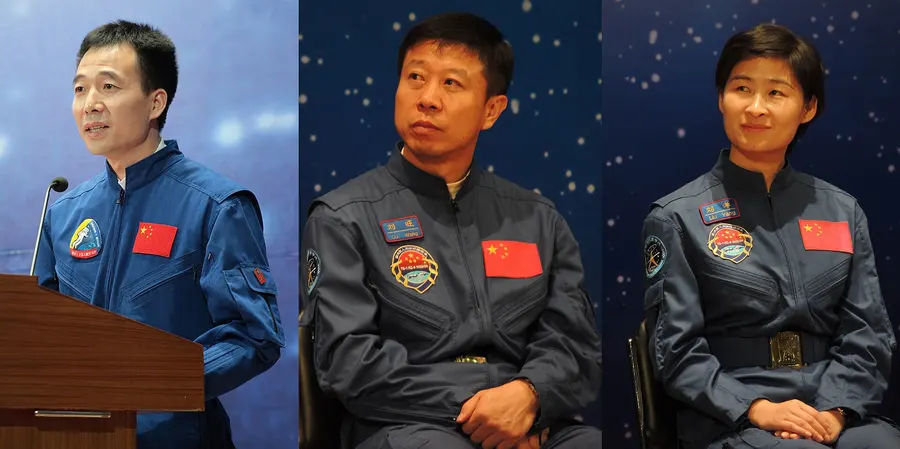
The Shenzhou 9 crew, Jing Haipeng, Liu Wang and Liu YangThe Shenzhou 9 crew, Jing Haipeng, Liu Wang and Liu YangImage: Johnson Lau, Tksteven · CC BY-SA 3.0
world · Asia

Shenzhou 9 carries China’s first woman into space

Forty-nine years to the day after Valentina Tereshkova’s flight, China launched Shenzhou 9 on 16 June 2012 with three astronauts aboard: the commander Jing Haipeng, Liu Wang and Liu Yang, the first Chinese woman in space. The crew made China’s first crewed dockings with the Tiangong 1 space laboratory, one automatic and one flown by hand, and carried out experiments aboard it before returning to Earth on 29 June.

Source: Britannica: Shenzhou 9 ↗
RESEARCH

Sources & Further Reading

Selected authoritative references supporting the events on this page.

CAIS: The Old Iranian Calendars↗Britannica: Yazdegerd III↗GOV.UK: UK and Portugal celebrate the world’s longest diplomatic alliance↗Cardiff University, History at Cardiff: The Treaty of London (1373) and the Anglo-Portuguese Alliance↗Hansard, 12 October 1943: Agreement with Portugal↗Britannica: Battle of Stoke↗Historic England: Battle of Stoke (Field) 1487↗Nottinghamshire County Council: The Battle of Stoke Field, 1487↗University of Colorado (Roger Bilham): Allah Bund chronology↗Current Science: Terrain response to the 1819 Allah Bund earthquake↗Britannica: Pius IX↗Catholic Encyclopedia (New Advent): Pope Pius IX↗Olympics.com: I Olympic Congress, Paris 1894↗Olympics.com: Series on Olympic Congresses, Paris 1894↗US National Archives: The 1897 Petition Against the Annexation of Hawaii↗US National Archives: Joint Resolution to Provide for Annexing the Hawaiian Islands (1898)↗The Henry Ford: Ford Motor Company Articles of Association, June 16, 1903↗Britannica Money: Ford Motor Company↗Fram Museum: The Gjøa expedition, 1903-1906↗Britannica: Roald Amundsen↗Republic of China Military Academy: Academy history↗Britannica: Whampoa Academy↗Britannica: Rudolf Nureyev↗Rudolf Nureyev Foundation: ‘I want to stay and to be free!’ Nureyev at Le Bourget airport↗Britannica: Valentina Tereshkova↗NASA NSSDCA: Vostok 6↗South African History Online: Hector Pieterson↗Britannica: Hector Pieterson↗South African Government: Public holidays↗Britannica: Shenzhou 9↗China Manned Space: Shenzhou-9 crew honored with medals↗
WHY THESE MOMENTS?

Significance before volume

This page is not the longest possible list of events. It is a chronological journey through 16 June, where each entry is chosen for historical significance, human interest and reliability.

Facts are checked against authoritative museums, archives, universities and reference works. Where sources disagree, the page says so.

EXPLORED THE DEEPER STORY?

Return to the highlights of 16 June

Discover the lighter side of the date with famous birthdays, culture, firsts and lives remembered.

Explore This Day →
← PREVIOUS DAY15 June
HISTORY & TIMELINE16 June
NEXT DAY →17 June