HISTORY & TIMELINE
24 July

A journey through
24 July in history

The story of 24 July runs from the crusaders’ failed siege of Damascus in 1148 to the budget that opened India’s economy in 1991. In between come the bloody Battle of Harlaw in Aberdeenshire, the forced abdication of Mary, Queen of Scots, the arbitration that gave Delagoa Bay to Portugal, the Mormon pioneers’ arrival in the Salt Lake Valley, Dorando Pietri’s heartbreak in the London Olympic marathon, Hiram Bingham’s first sight of Machu Picchu, the defeat of the Syrian army at Maysalun, the Treaty of Lausanne, the unveiling of the Menin Gate, the first climb of the Eiger’s north face, the first rocket launch from Cape Canaveral and the Kitchen Debate between Nixon and Khrushchev.

JUMP THROUGH TIME
II
THE MIDDLE AGES

Medieval History

Kingdoms, conflict, faith, power and the changing medieval world.

1148
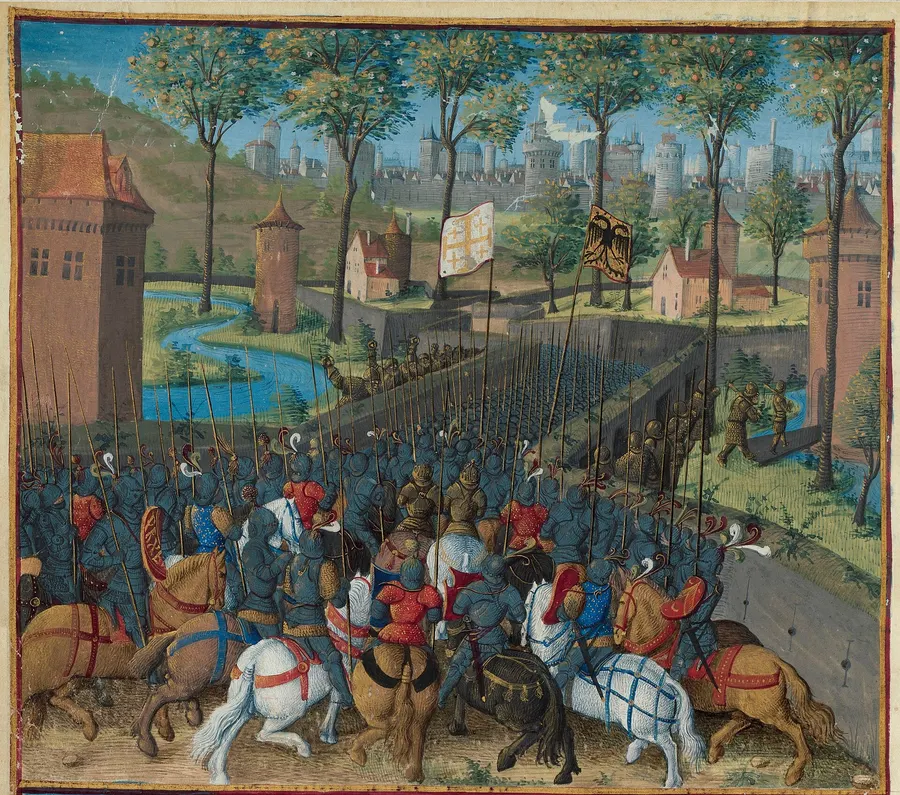
The crusaders besieging Damascus, in a 15th-century manuscript painting by Jean ColombeThe crusaders besieging Damascus, in a 15th-century manuscript painting by Jean ColombeImage: Jean Colombe (Passages d'outremer) · Public domain
world · Middle East

The armies of the Second Crusade attack Damascus

The Second Crusade was called after the fall of Edessa in 1144, and in 1148 King Louis VII of France and King Conrad III of Germany joined Baldwin III of Jerusalem in an attack on Damascus, until then an ally of the crusader kingdom. They arrived before the city on 24 July 1148 and fought their way through its orchards, but after moving their camp to the waterless east side and fearing a relief army, they gave up on 28 July. The failure ended the crusade.

Source: Britannica: Siege of Damascus (1148) ↗
1411
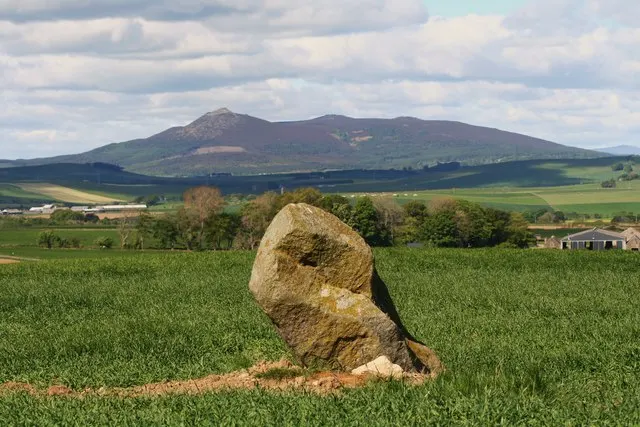
The hill of Bennachie seen from the east across Aberdeenshire farmland, the Garioch district where the Battle of Harlaw was foughtThe hill of Bennachie seen from the east across Aberdeenshire farmland, the Garioch district where the Battle of Harlaw was foughtImage: Andrew Wood · CC BY-SA 2.0
world · Europe

Highland and Lowland armies clash at Harlaw

Donald, Lord of the Isles, claimed the earldom of Ross, which controlled much of northern Scotland, and in 1411 he led a large Highland army east towards Aberdeen. Early on 24 July 1411 it was met near Inverurie by a smaller force raised by Alexander Stewart, Earl of Mar. The fighting was so fierce that the battle became known as ‘Red Harlaw’; both sides claimed victory, but Donald withdrew and Aberdeen was saved.

Source: Aberdeen City Council: The Battle of Harlaw Monument ↗
III
A CHANGING WORLD

Early Modern Era

Exploration, political change, scientific development and expanding global connections.

1567
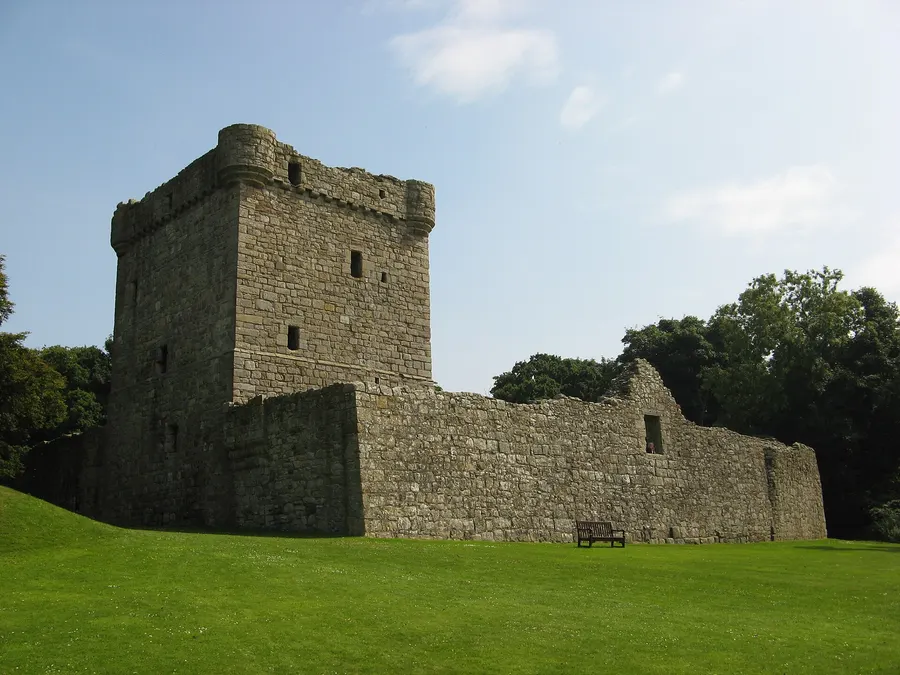
The ruins of Lochleven Castle on its island in Loch Leven, where Mary, Queen of Scots, was held in 1567The ruins of Lochleven Castle on its island in Loch Leven, where Mary, Queen of Scots, was held in 1567Image: Jonathan Oldenbuck · CC BY-SA 3.0
politics · Europe

Mary, Queen of Scots is forced to give up her crown

In February 1567 Mary’s husband, Lord Darnley, was found dead after an explosion at a house in Edinburgh, and three months later Mary married the Earl of Bothwell, the man widely blamed for the murder. Many Scottish lords turned against her. On 15 June their army faced hers at Carberry Hill; her soldiers melted away, Bothwell fled and Mary was taken prisoner and shut up in Lochleven Castle, on an island in a loch in Kinross-shire. Ill and recovering from a miscarriage, she was pressed to sign a deed of abdication, and on 24 July 1567 she gave up the throne in favour of her son James, just 13 months old. He was crowned James VI at Stirling five days later, with Mary’s half-brother the Earl of Moray as regent. Mary escaped from the island in May 1568, but after her army was beaten at Langside she fled to England, where she spent the rest of her life a prisoner.

Source: Britannica: Mary, Queen of Scots summary ↗
IV
THE NINETEENTH CENTURY

The 1800s

Industry, empire, invention, reform and a century of enormous transformation.

1875
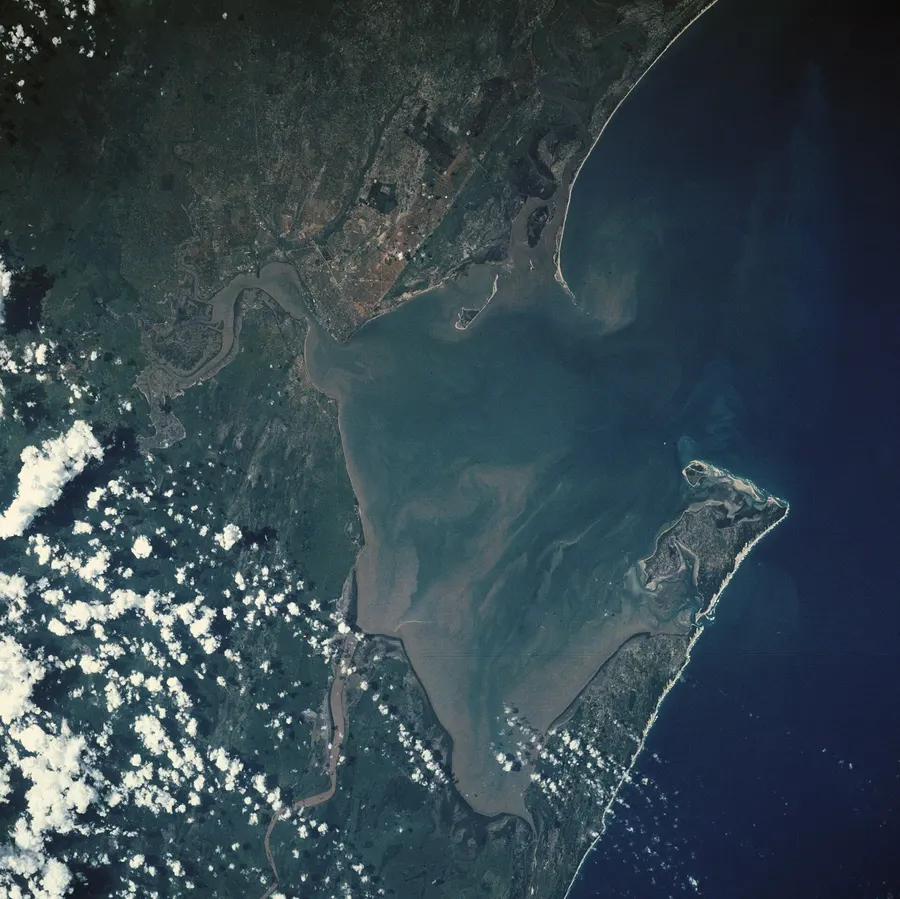
Maputo Bay, formerly Delagoa Bay, photographed from space by NASAMaputo Bay, formerly Delagoa Bay, photographed from space by NASAImage: Image Science and Analysis Laboratory, NASA-Johnson Space Center · Public domain
politics · Africa

An arbitration awards Delagoa Bay to Portugal

Delagoa Bay, a deep natural harbour on the coast of south-east Africa, had been claimed by the Portuguese since the 16th century, but Britain also laid claim to its southern shore. The two countries asked the French president, Marshal Patrice de MacMahon, to settle the dispute, and in an award dated 24 July 1875 he found in favour of Portugal. The port town at the bay, Lourenço Marques, grew into the capital of Mozambique, now Maputo.

Source: Britannica: Delagoa Bay ↗
V
THE TWENTIETH CENTURY

The 1900s

War and peace, technological leaps, social change, politics, sport and popular culture.

1908
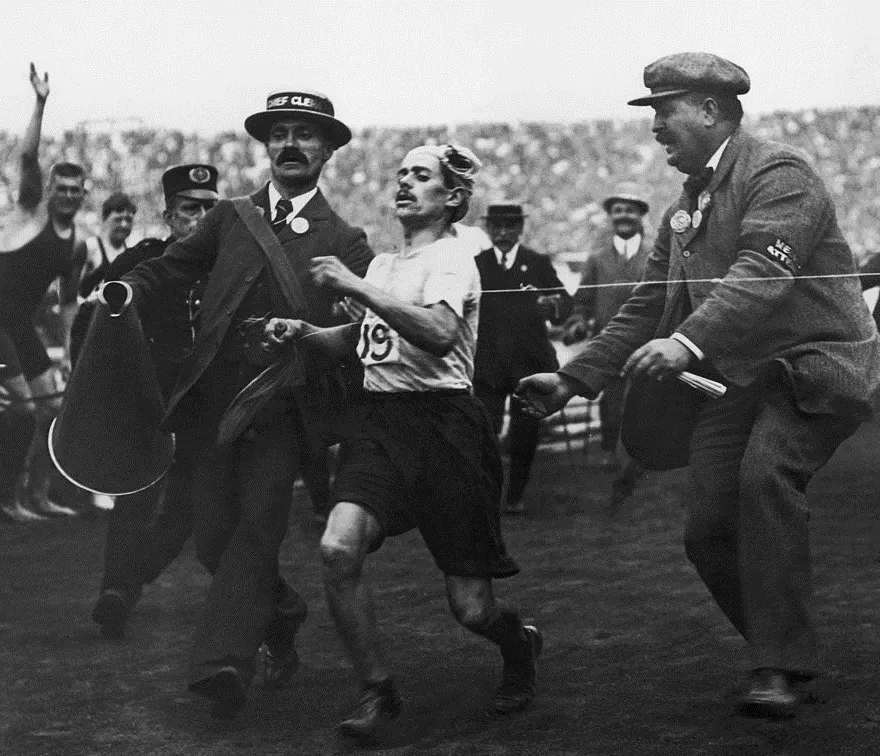
Officials help an exhausted Dorando Pietri towards the finish of the Olympic marathon in London, 1908Officials help an exhausted Dorando Pietri towards the finish of the Olympic marathon in London, 1908Image: Unknown photographer · Public domain
sport · Europe

Dorando Pietri is helped over the line in the London marathon

The marathon at the London Olympics was run on a hot afternoon, 24 July 1908, from Windsor Castle to the new stadium at White City, a distance of 26 miles 385 yards that later became the standard length of the race. Fifty-five runners started. The Italian Dorando Pietri, a small pastry cook, took the lead late in the race, but he was exhausted when he entered the stadium in front of a huge crowd. He turned the wrong way, fell and got up again several times, and officials rushed to help him. With their support he crossed the line first, just ahead of the American Johnny Hayes. The Americans protested, Pietri was disqualified and Hayes was given the gold medal. But the crowd’s hero was Pietri; the next day Queen Alexandra presented him with a special gilded cup, and his fame helped set off a craze for marathon running.

Source: Olympics.com: Marathon man Pietri wins hearts but no gold ↗
1911
Finely fitted Inca stonework at Machu Picchu, with niches set into the wallFinely fitted Inca stonework at Machu Picchu, with niches set into the wallImage: Martin St-Amant (S23678) · CC BY-SA 3.0
world · Americas

Hiram Bingham is led up to Machu Picchu

Hiram Bingham, a lecturer in Latin American history at Yale, went to Peru in 1911 to look for Vilcabamba, the last refuge of the Inca rulers who held out against the Spanish. In the Urubamba valley below Cusco a local farmer, Melchor Arteaga, told him of ruins on the mountain above, and on the morning of 24 July 1911 he led Bingham and a Peruvian police sergeant up the steep slope in the rain. Near the top they met farming families who were already living among the old terraces, and a boy guided Bingham to the ruins: temples, houses and walls of finely fitted stone, overgrown with vegetation. Machu Picchu had been built in the 15th century, probably as an estate for the Inca emperor Pachacuti. Bingham returned with Yale expeditions, and photographs published in 1913 made it world-famous. The thousands of objects he took to Yale became the subject of a long dispute, and they were returned to Peru from 2011.

Source: Britannica: Hiram Bingham ↗
1920
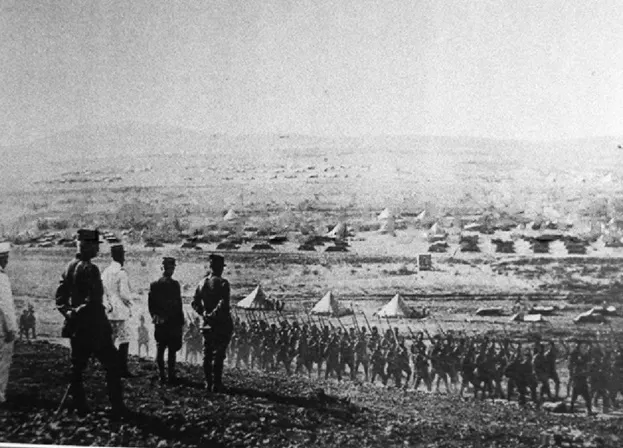
General Henri Gouraud and his officers watch French troops at Maysalun in July 1920General Henri Gouraud and his officers watch French troops at Maysalun in July 1920Image: Unknown photographer · Public domain
world · Middle East

France crushes the Syrian army at Maysalun

When Ottoman rule collapsed at the end of the First World War, an Arab government was set up in Damascus under Emir Faisal, a leader of the Arab Revolt, and in March 1920 a Syrian congress proclaimed him king. But in April the Allied powers meeting at San Remo gave France a mandate over Syria. In July the French commander in Beirut, General Henri Gouraud, sent Faisal an ultimatum demanding that he accept French control and disband his army. Faisal gave way, but too late to stop the French advance. His war minister, Yusuf al-Azma, gathered a small force of soldiers and volunteers in the Maysalun pass on the road from Beirut to Damascus, and on 24 July 1920 it was overwhelmed by the better-armed French army. Al-Azma was killed. French troops entered Damascus the next day and Faisal was forced into exile; he later became king of Iraq. Maysalun is still remembered in Syria as a symbol of resistance.

Source: University of Oxford (ORA): The emergence of the Middle East into the modern state system ↗
1923
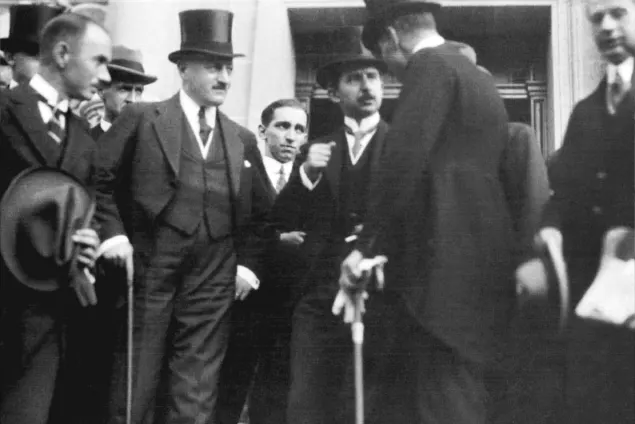
Delegates at the Lausanne peace conference of 1922-23Delegates at the Lausanne peace conference of 1922-23Image: Unknown photographer · Public domain
politics · Middle East

The Treaty of Lausanne sets the borders of modern Turkey

In 1920 the defeated Ottoman government signed the Treaty of Sèvres, which would have carved up much of Anatolia among the Allies, Greece and new Armenian and Kurdish states. Turkish nationalists led by Mustafa Kemal rejected it and fought on, and by 1922 they had driven the Greek army out of Anatolia. A new peace conference opened at Lausanne in Switzerland in November 1922, with İsmet Pasha leading the Turkish delegation. After seven months of hard bargaining the treaty was signed on 24 July 1923 by Turkey on one side and Britain, France, Italy, Japan, Greece, Romania and Yugoslavia on the other. It recognised Turkey’s borders much as they are today, with no foreign controls over its finances or army. Turkey gave up its claims to the former Arab provinces, and the straits to the Black Sea were opened to all shipping. A convention agreed at the conference also sent more than a million people between Greece and Turkey in a compulsory exchange of populations. Three months later the Republic of Turkey was proclaimed.

Source: Britannica: Treaty of Lausanne ↗
1927
world · Europe

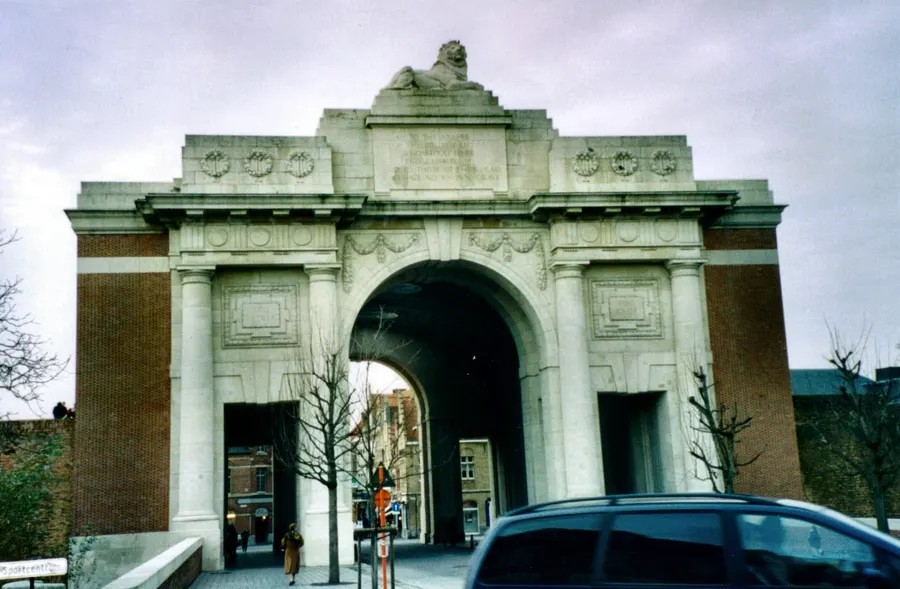
The Menin Gate memorial is unveiled at Ypres

Hundreds of thousands of British Empire soldiers fought around the Belgian town of Ypres in the First World War, and many of the dead were never found. The Menin Gate, designed by Sir Reginald Blomfield on the road where troops had marched out to the front, carries the names of more than 54,000 of the missing. It was unveiled by Field Marshal Lord Plumer on 24 July 1927 before King Albert I of the Belgians, and since 1928 the Last Post has been sounded beneath it every evening.

Source: Commonwealth War Graves Commission: The history, design and unveiling of the Menin Gate ↗
1938
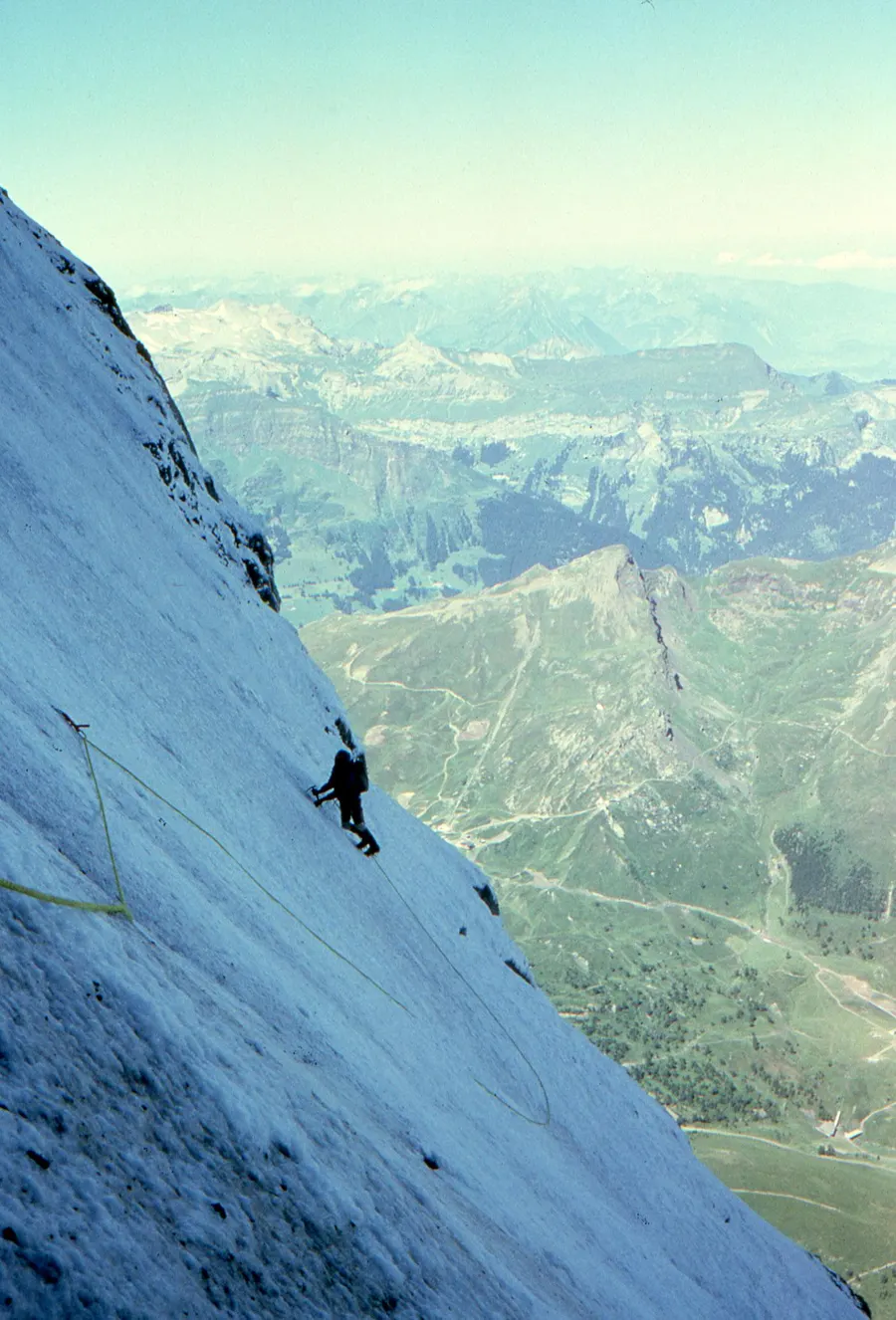
A climber on the steep ice of the Eiger north face, high above the valleyA climber on the steep ice of the Eiger north face, high above the valleyImage: Adha65 · CC BY-SA 3.0
world · Europe

The Eiger’s north face is climbed for the first time

The north face of the Eiger in the Swiss Alps, a dark wall of rock and ice about 1,800 metres high, had already killed several climbers who tried to scale it. In July 1938 two Germans, Anderl Heckmair and Ludwig Vörg, and two Austrians, Heinrich Harrer and Fritz Kasparek, joined forces on the face. After three and a half days of storms and avalanches they reached the summit on 24 July 1938.

Source: swissinfo.ch: Last of the first Eiger conquerors dies ↗
1950
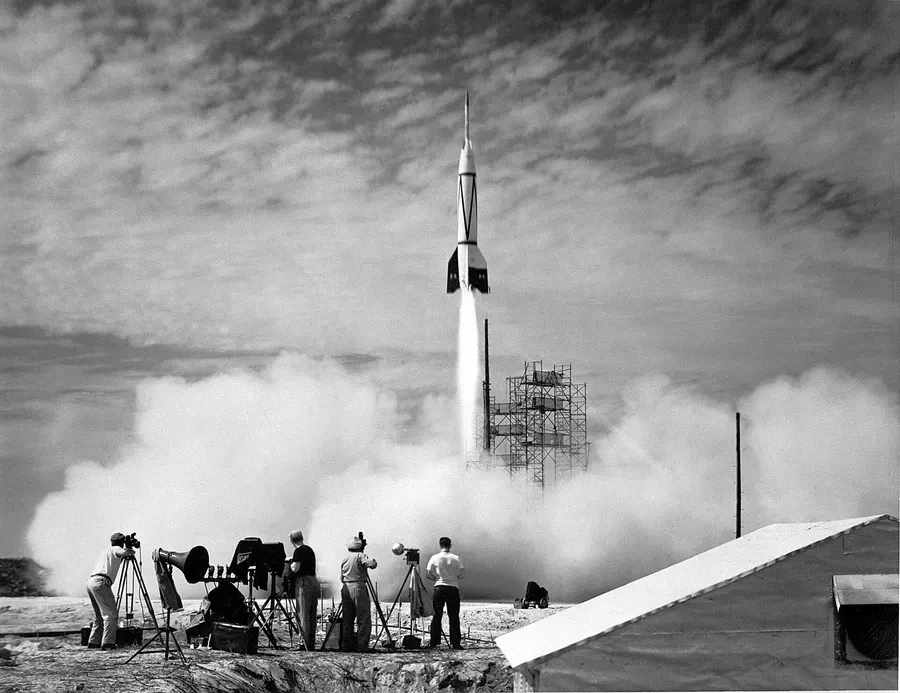
Bumper 8, a German V-2 carrying a WAC Corporal second stage, lifts off from Cape Canaveral on 24 July 1950Bumper 8, a German V-2 carrying a WAC Corporal second stage, lifts off from Cape Canaveral on 24 July 1950Image: NASA/U.S. Army · Public domain
science · Americas

The first rocket is launched from Cape Canaveral

After the Second World War the US Army experimented with captured German V-2 rockets. In the Bumper project, engineers mounted a small American WAC Corporal rocket on top of a V-2 to make the first working two-stage liquid-fuelled rocket, and in 1949 one of them climbed about 400 kilometres above the New Mexico desert. To test longer flights over the sea, the army needed a new range, and chose a stretch of scrub on the Atlantic coast of Florida called Cape Canaveral. After a failed attempt with Bumper 7 on 19 July, Bumper 8 lifted off on 24 July 1950, watched by about 50 launch crew and 20 reporters from a makeshift launch pad. It was the first rocket launched from the Cape. Within two decades the same coast was sending astronauts to the Moon, and the Cape is still one of the busiest launch sites in the world.

Source: NASA: 70 years ago, first launch from Cape Canaveral ↗
1959
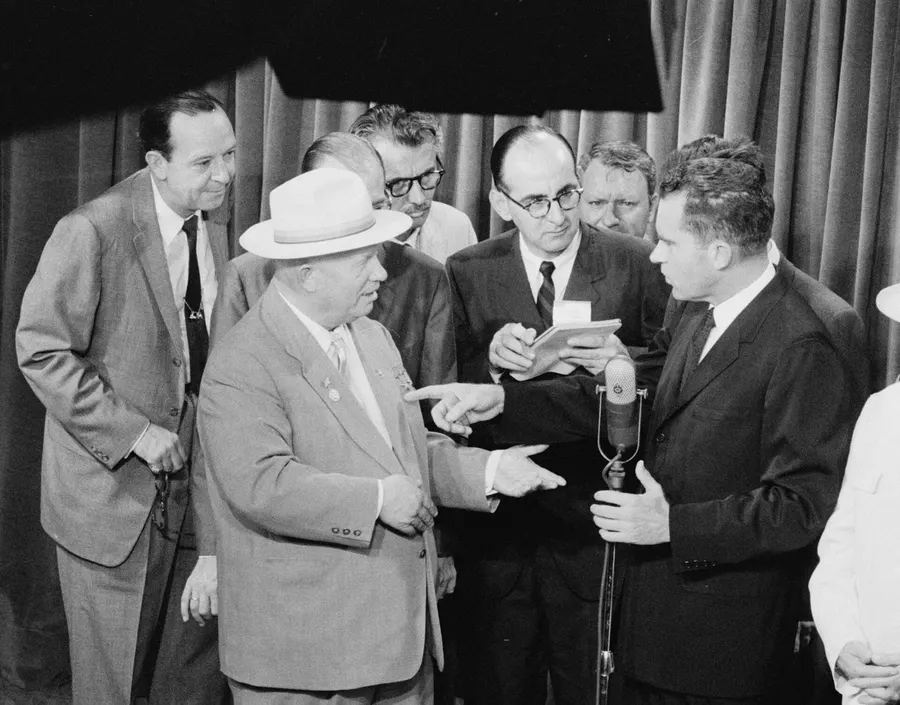
Nikita Khrushchev and Richard Nixon argue at the American National Exhibition in Moscow, July 1959Nikita Khrushchev and Richard Nixon argue at the American National Exhibition in Moscow, July 1959Image: Thomas J. O'Halloran · Public domain
culture · Europe

Nixon and Khrushchev argue in a model kitchen

Under a cultural exchange agreement, the United States and the Soviet Union agreed in 1959 to stage exhibitions in each other’s countries. The American National Exhibition in Sokolniki Park in Moscow showed off cars, televisions, fashions, a model suburban house and its gleaming kitchen, all meant to display the American way of life. Vice-President Richard Nixon went to open it and on 24 July 1959 toured it with the Soviet leader Nikita Khrushchev. Standing in the model kitchen, and earlier in a colour television studio, the two men argued, partly in jest, about washing machines, housing, whose system was better and whose rockets were stronger. Khrushchev scoffed at the gadgets and promised that the Soviet Union would soon overtake America; Nixon replied that Americans valued the freedom to choose. The unscripted ‘Kitchen Debate’ was filmed and shown in both countries, and it boosted Nixon’s standing at home.

Source: CIA Reading Room: The Kitchen Debate, transcript, 24 July 1959 ↗
1991
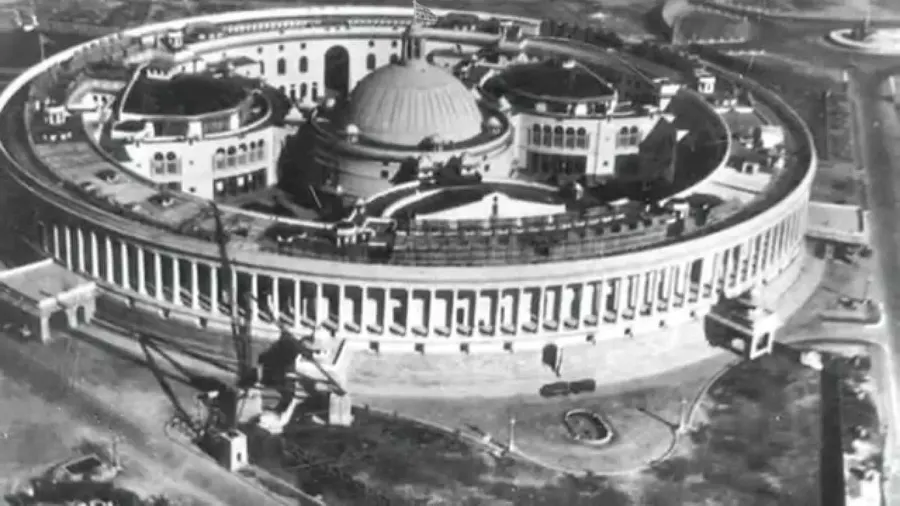
Parliament House in New Delhi, where the 1991 budget was presented, in a photograph from 1926Parliament House in New Delhi, where the 1991 budget was presented, in a photograph from 1926Image: British India · CC0
world · Asia

Manmohan Singh’s budget opens up India’s economy

By the summer of 1991 India was close to bankruptcy. The Gulf War had pushed up oil prices, money sent home by Indians working in the Gulf had dried up, and foreign lenders had lost confidence; the country had enough foreign currency left to pay for only a few weeks of imports and had to pledge part of its gold reserves abroad to raise loans. The new prime minister, P. V. Narasimha Rao, made the economist Manmohan Singh his finance minister. On 24 July 1991 Singh presented his budget to parliament. He cut the government’s deficit, lowered import duties and welcomed foreign investment, allowing foreign firms to own up to 51 per cent of companies in priority industries, and the same day the government’s new industrial policy scrapped licences for most industries, dismantling the ‘licence raj’. Closing his speech, he quoted Victor Hugo: no power on earth can stop an idea whose time has come. The budget is seen as the start of India’s economic liberalisation.

Source: Government of India, Union Budget: Budget 1991-92 speech of Shri Manmohan Singh ↗
RESEARCH

Sources & Further Reading

Selected authoritative references supporting the events on this page.

WHY THESE MOMENTS?

Significance before volume

This page is not the longest possible list of events. It is a chronological journey through 24 July, where each entry is chosen for historical significance, human interest and reliability.

Facts are checked against authoritative museums, archives, universities and reference works. Where sources disagree, the page says so.

EXPLORED THE DEEPER STORY?

Return to the highlights of 24 July

Discover the lighter side of the date with famous birthdays, culture, firsts and lives remembered.

Explore This Day →
← PREVIOUS DAY23 July
HISTORY & TIMELINE24 July
NEXT DAY →25 July