
HISTORY & TIMELINE
20 July

A journey through
20 July in history

The story of 20 July runs from Timur’s victory over Sultan Bayezid at Ankara in 1402 to the reopening of the American embassy in Havana in 2015. In between come the uprising in Bogotá that Colombia celebrates as its independence day, the Austrian ramming victory at Lissa, British Columbia joining Canada, the Montreux Convention on the Turkish Straits, the July plot against Hitler, the murder of King Abdullah I in Jerusalem, Bob Dylan’s ‘Like a Rolling Stone’, the first Special Olympics, the first landing on the Moon, the Turkish landings in Cyprus, Viking 1’s touchdown on Mars and the house arrest of Aung San Suu Kyi.

JUMP THROUGH TIME
II
THE MIDDLE AGES

Medieval History

Kingdoms, conflict, faith, power and the changing medieval world.

1402
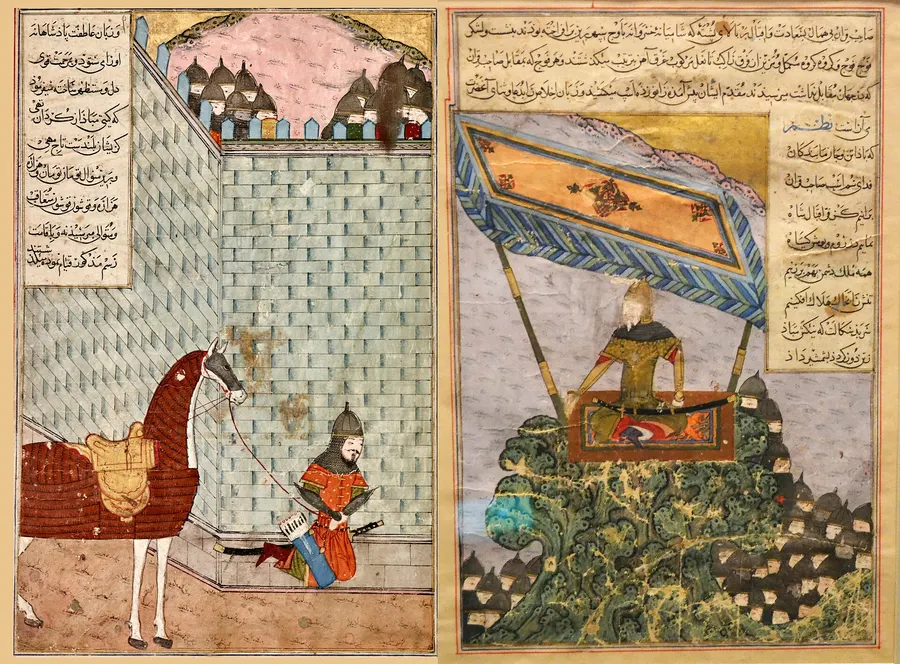
Timur reviews his troops on the plain of Sivas before the battle of Ankara, on two facing pages of a Zafarnama, the book of his victories, painted in 1436Timur reviews his troops on the plain of Sivas before the battle of Ankara, on two facing pages of a Zafarnama, the book of his victories, painted in 1436Image: Unknown artist, Zafarnama of 1436 · Public domain
world · Middle East

Timur crushes the Ottoman army at Ankara and captures Sultan Bayezid

By 1400 two conquerors were closing in on each other in Anatolia. The Ottoman sultan Bayezid I, nicknamed ‘the Thunderbolt’ for the speed of his campaigns, had overrun much of the Balkans and eastern Anatolia and was blockading Constantinople. From the east came Timur, the Turkic ruler of Samarkand, whose armies had already sacked Delhi and Baghdad. Each sheltered the other’s enemies, and in 1402 Timur marched into Ottoman lands. The armies met near Ankara on 20 July 1402. Timur’s force was much larger, and Bayezid’s men arrived tired and short of water after Timur cut off their supply. Some of the Anatolian troops in the Ottoman army went over to Timur, and although Bayezid’s Serbian allies fought hard, the sultan was defeated and taken prisoner. He died in captivity the next year. His sons fought one another for the throne for more than a decade before the Ottoman state recovered under Mehmed I.

Source: Britannica: Battle of Ankara (1402) ↗
IV
THE NINETEENTH CENTURY

The 1800s

Industry, empire, invention, reform and a century of enormous transformation.

1810
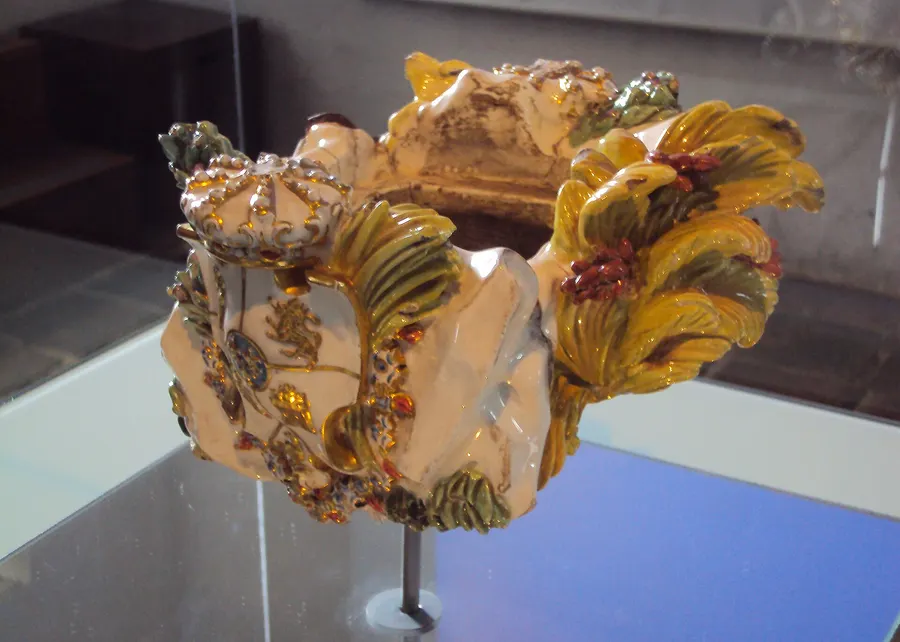
The Florero de Llorente, the ornament said to have started the quarrel of 20 July 1810, on display in the Museo de la Independencia in BogotáThe Florero de Llorente, the ornament said to have started the quarrel of 20 July 1810, on display in the Museo de la Independencia in BogotáImage: Peter Angritt · CC BY-SA 4.0
politics · Americas

A quarrel over a flower vase starts a revolution in Bogotá

In 1808 Napoleon forced the Spanish king Ferdinand VII off his throne, and across Spanish America local leaders began to ask who now had the right to govern them. In Santa Fe de Bogotá, capital of the viceroyalty of New Granada, American-born creoles resented the Spanish officials who ran the colony. On 20 July 1810, a market day, a group of them planned a dinner for a visiting royal commissioner and sent Antonio Morales to borrow an ornament, traditionally a flower vase, from the shop of the Spanish merchant José González Llorente. They expected him to refuse rudely, and he did. The brawl that followed drew a crowd into the main square, and that evening the creole leaders forced the viceroy to accept a governing junta, whose founding act was signed in the early hours of the next day. The junta still claimed to act for Ferdinand VII, and full declarations of independence came only from 1811, but 20 July is celebrated as Colombia’s Independence Day, and the shop is now the Museo de la Independencia.

Source: Banco de la República, Credencial Historia: La independencia en Bogotá, el 20 de julio de 1810 ↗
1866
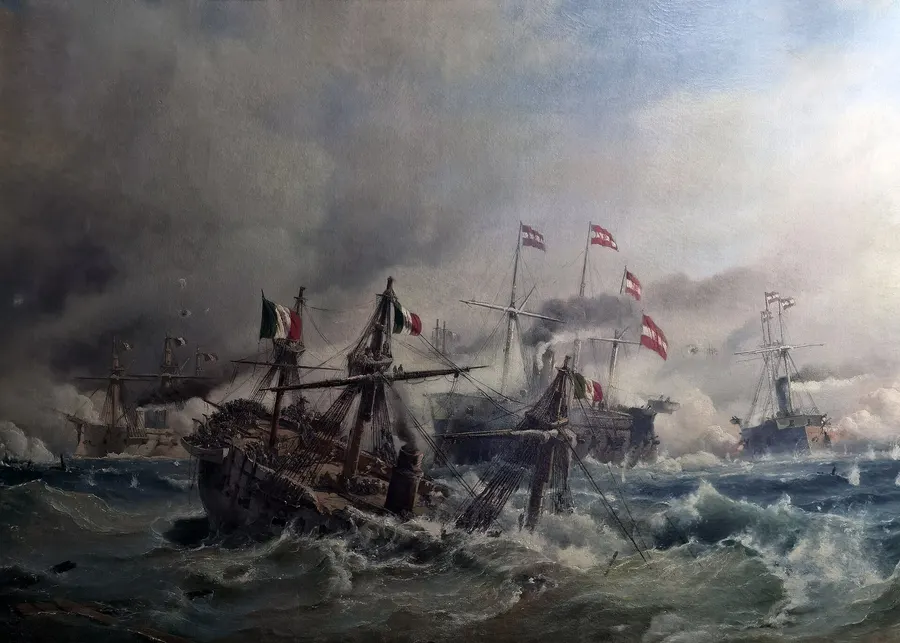
The Austrian flagship Erzherzog Ferdinand Max rams the Italian ironclad Re d'Italia at Lissa, painted by Carl Frederik SørensenThe Austrian flagship Erzherzog Ferdinand Max rams the Italian ironclad Re d’Italia at Lissa, painted by Carl Frederik SørensenImage: Carl Frederik Sørensen · Public domain
world · Europe

Austria’s fleet rams its way to victory at Lissa

In the war of 1866 Italy, allied with Prussia, sent its new ironclad fleet under Admiral Carlo Persano to seize the Austrian-held island of Lissa, now Vis in Croatia, in the Adriatic. On 20 July 1866 a smaller Austrian fleet under Rear Admiral Wilhelm von Tegetthoff steamed straight into the Italian line. His flagship rammed and sank the ironclad Re d’Italia, and the Italians withdrew. For decades afterwards navies built warships with ram bows.

Source: Britannica: Battle of Lissa ↗
1871
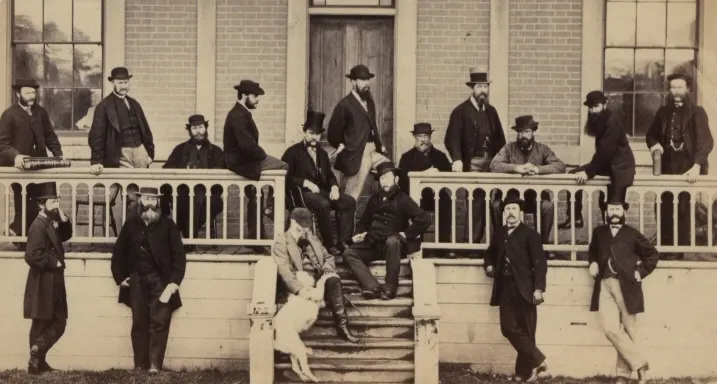
Members of the Legislative Council of the colony of British Columbia in Victoria, before the colony joined CanadaMembers of the Legislative Council of the colony of British Columbia in Victoria, before the colony joined CanadaImage: Unknown photographer · Public domain
politics · Americas

British Columbia joins Canada

The Pacific colony of British Columbia, heavily in debt after the gold rushes, weighed its future after the United States bought Alaska in 1867. Canada offered to take on the colony’s debt and to build a railway linking it to the east within ten years. On 20 July 1871 British Columbia became the sixth province of Canada. The promised railway was late, and the Canadian Pacific line reached the coast only in 1885-86.

Source: The Canadian Encyclopedia: British Columbia and Confederation ↗
V
THE TWENTIETH CENTURY

The 1900s

War and peace, technological leaps, social change, politics, sport and popular culture.

1936
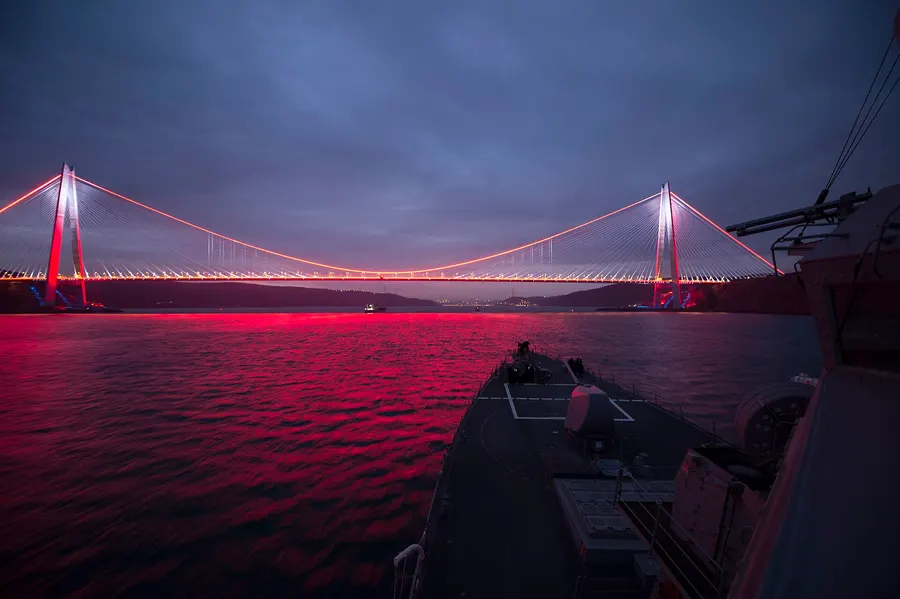
The Yavuz Sultan Selim Bridge lit up at dusk over the northern end of the Bosphorus, seen from the deck of an American destroyerThe Yavuz Sultan Selim Bridge lit up at dusk over the northern end of the Bosphorus, seen from the deck of an American destroyerImage: Petty Officer 3rd Class Weston Jones · Public domain
politics · Middle East

The Montreux Convention hands the Turkish Straits back to Turkey

Since 1923 the Bosphorus and the Dardanelles had been demilitarised and supervised by an international commission. With war clouds gathering, Turkey asked to take back control, and on 20 July 1936 nine countries signed a new convention at Montreux in Switzerland. Merchant ships kept free passage in peacetime, but Turkey could fortify the straits and close them to warships in wartime, and the warships of countries outside the Black Sea were strictly limited. The convention is still in force.

Source: US Department of State, Office of the Historian: Foreign Relations of the United States, 1951, vol. V, document 635 ↗
1944
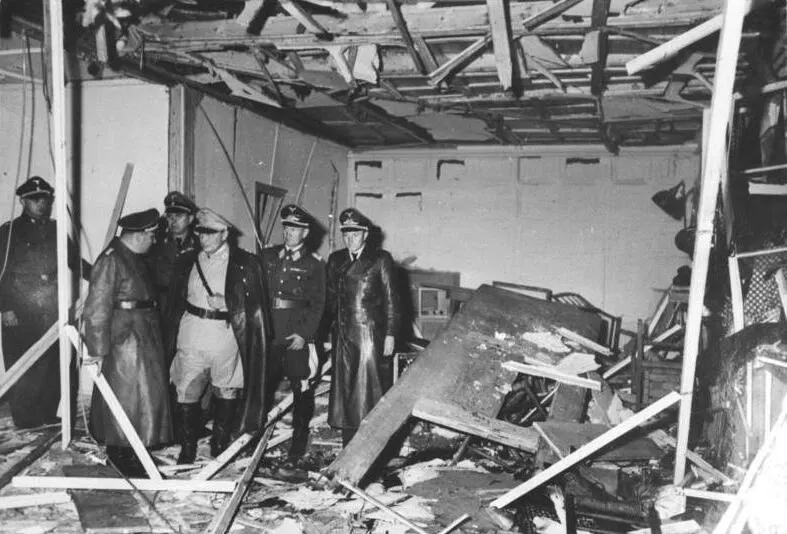
Officers inspect the wrecked briefing hut at Hitler's Wolf's Lair headquarters after the bomb of 20 July 1944Officers inspect the wrecked briefing hut at Hitler’s Wolf’s Lair headquarters after the bomb of 20 July 1944Image: Unknown photographer (Bundesarchiv, Bild 146-1972-025-10) · CC BY-SA 3.0 de
world · Europe

Stauffenberg’s bomb fails to kill Hitler

By 1944 a circle of German officers and civilians had concluded that Hitler was leading Germany to ruin and that only his death could end the war and the regime’s crimes. Colonel Claus von Stauffenberg, badly wounded in North Africa, had become chief of staff of the Replacement Army, a post that gave him access to Hitler’s briefings. The plotters planned to use an emergency order, codenamed Valkyrie, to take control in Berlin once Hitler was dead. On 20 July 1944 Stauffenberg carried a bomb in his briefcase into a conference at the Wolf’s Lair headquarters in East Prussia, set it under the map table and left. It exploded shortly before 1 p.m., killing a stenographer and three officers, but the heavy table leg shielded Hitler, who was only slightly hurt. The coup in Berlin collapsed within hours. Stauffenberg and three others were shot that night in the courtyard of the Bendler Block, and in the purge that followed the regime executed many more.

Source: German Resistance Memorial Center: Stauffenberg and the assassination attempt of July 20, 1944 ↗
1951
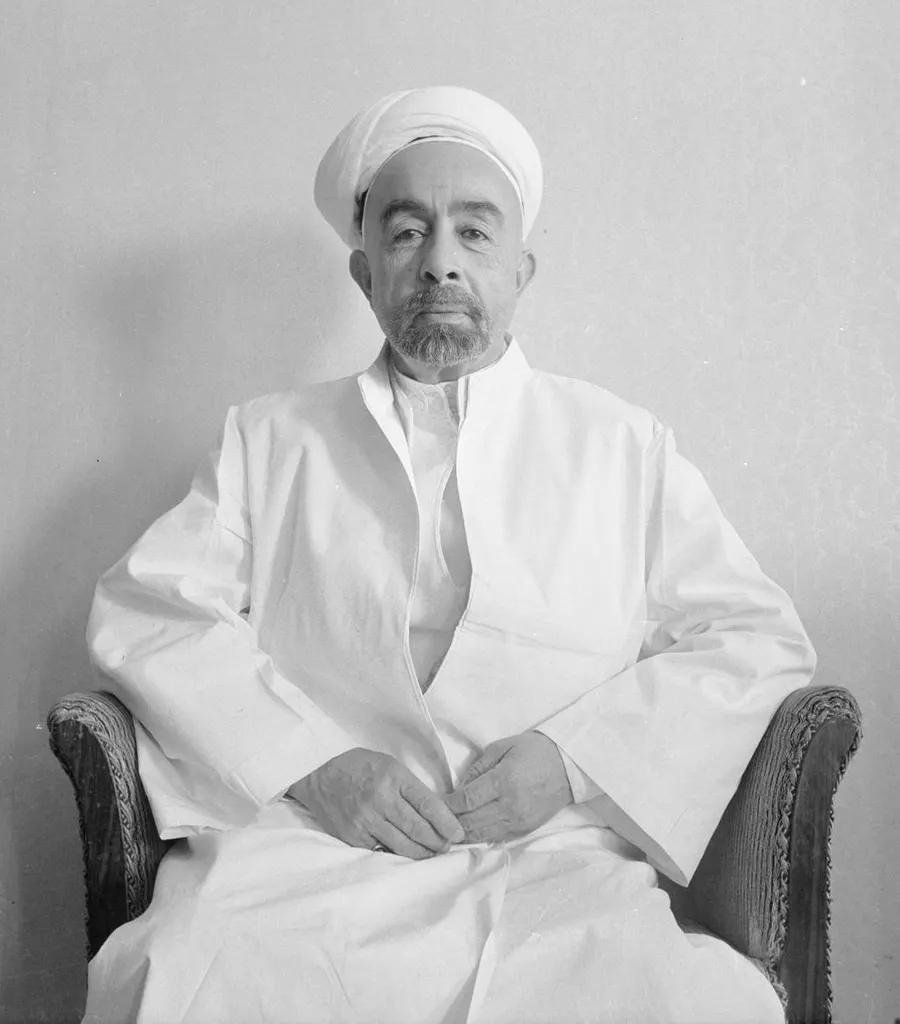
King Abdullah I of Jordan, photographed by Cecil BeatonKing Abdullah I of Jordan, photographed by Cecil BeatonImage: Cecil Beaton · Public domain
politics · Middle East

King Abdullah I of Jordan is killed in Jerusalem

Abdullah I had founded the emirate of Transjordan in 1921 and became king of an independent Jordan in 1946; after the 1948 war his kingdom held the West Bank and East Jerusalem. On Friday 20 July 1951 he was shot dead at the entrance to al-Aqsa Mosque in Jerusalem, where he had come for prayers with his grandson Hussein. The gunman, a young Palestinian, opposed the king’s policies. Hussein became king the following year.

Source: Royal Hashemite Court: King Abdullah bin Al Hussein (1882-1951) ↗
1965
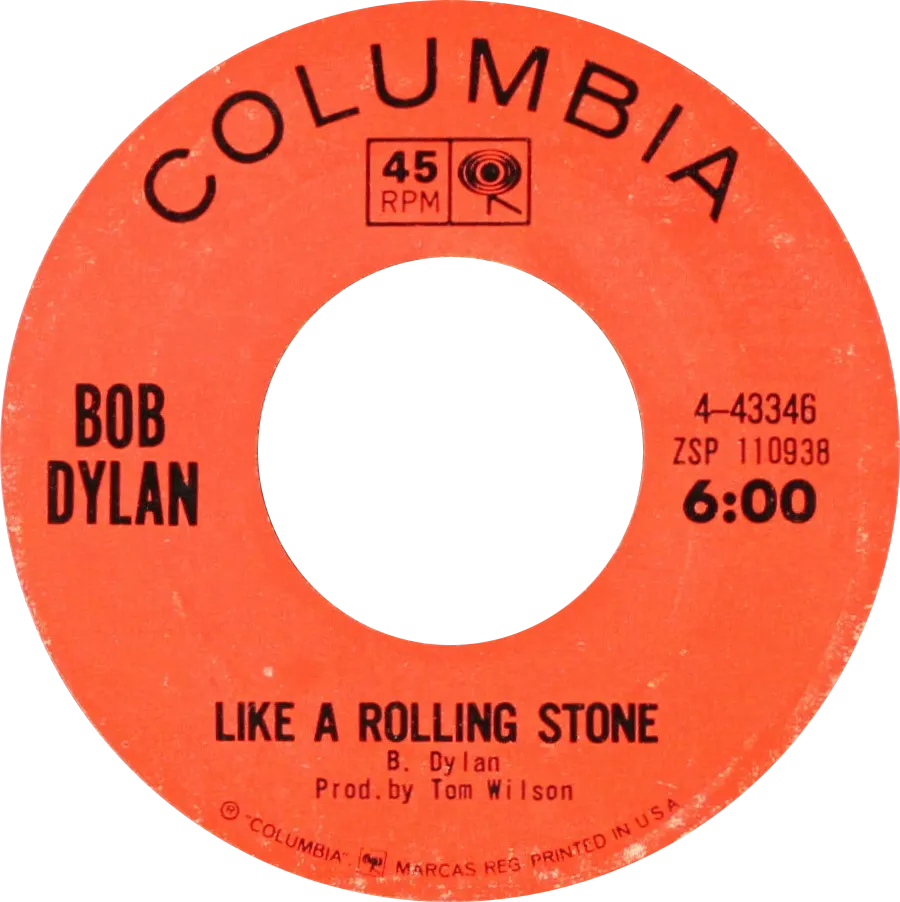
The Columbia Records label of the original American single of 'Like a Rolling Stone'The Columbia Records label of the original American single of ‘Like a Rolling Stone’Image: Columbia Records · Public domain
culture · Americas

Bob Dylan releases ‘Like a Rolling Stone’

By 1965 Bob Dylan was the best-known voice of the American folk revival, but he was tired of being cast as a protest singer. After a draining tour of England he wrote a long, scornful poem that he shaped into a song, and on 16 June 1965 he recorded it in New York with a rock band, including a young Al Kooper improvising on the organ. Columbia Records released ‘Like a Rolling Stone’ as a single on 20 July 1965. At about six minutes it was twice the usual length for a hit, and some radio stations cut it in half, but it climbed to number 2 in the American charts. Five days later Dylan played electric guitar at the Newport Folk Festival, to boos from part of the crowd. The song is often named as one of the greatest rock recordings ever made.

Source: Britannica: Like a Rolling Stone ↗
1968
Eunice Kennedy Shriver, founder of the Special Olympics, speaking at the US National Institutes of HealthEunice Kennedy Shriver, founder of the Special Olympics, speaking at the US National Institutes of HealthImage: National Institutes of Health · Public domain
sport · Americas

The first Special Olympics Games open in Chicago

In the 1950s and 1960s people with intellectual disabilities were often shut away in institutions and kept out of sport. Eunice Kennedy Shriver, whose sister Rosemary had an intellectual disability, began holding summer day camps at her home in Maryland in 1962 to show what they could do in sport and play. A Chicago Park District teacher, Anne McGlone Burke, then proposed a citywide athletics meet, and Shriver helped turn it into a national event. The first International Special Olympics Summer Games were held at Soldier Field in Chicago on Saturday 20 July 1968. About 1,000 athletes from 26 US states and Canada took part in athletics events. Today Special Olympics says it has millions of athletes in some 200 countries and territories.

Source: Special Olympics: 1968 Games ↗
1969
Buzz Aldrin on the Moon, photographed by Neil Armstrong, with the lunar module Eagle behind himBuzz Aldrin on the Moon, photographed by Neil Armstrong, with the lunar module Eagle behind himImage: NASA Neil A. Armstrong · Public domain
world · Americas

Apollo 11 lands on the Moon

Apollo 11 lifted off from Florida on 16 July 1969 with Neil Armstrong, Buzz Aldrin and Michael Collins aboard, eight years after President Kennedy had set the goal of landing a man on the Moon before the decade was out. On 20 July Armstrong and Aldrin undocked in the lunar module Eagle while Collins stayed in orbit. In the final minutes Armstrong took manual control to fly past a boulder-strewn crater, and just after 4.17 p.m. US Eastern time he reported: ‘Houston, Tranquility Base here. The Eagle has landed.’ At 10.56 p.m. Eastern time, already the early hours of 21 July in Britain, Armstrong stepped onto the Sea of Tranquility and spoke of ‘one small step’ and ‘one giant leap for mankind’. Around 650 million people watched on television. He and Aldrin spent about two and a half hours outside, planting a flag, setting up experiments and collecting rock samples, before rejoining Collins. All three splashed down safely in the Pacific on 24 July.

Source: NASA: July 20, 1969, One giant leap for mankind ↗
1974
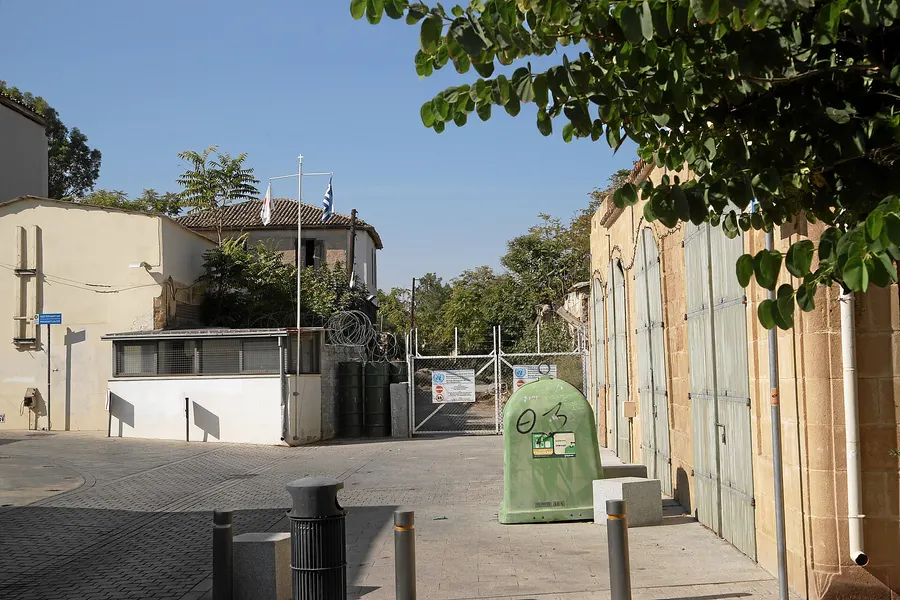
The Green Line, the United Nations buffer zone that divides NicosiaThe Green Line, the United Nations buffer zone that divides NicosiaImage: Mboesch · CC BY-SA 4.0
world · Europe

Turkish troops land in Cyprus

Five days after a coup backed by the military government in Athens overthrew President Makarios of Cyprus, Turkey, one of the island’s guarantor powers, sent in its army. On 20 July 1974 Turkish troops landed near Kyrenia on the north coast and, against stiff resistance, linked up with the Turkish Cypriot sector of Nicosia. A second offensive in August left Turkish forces holding over a third of the island, which remains divided.

Source: Britannica: Cyprus, the Republic of Cyprus ↗
1976
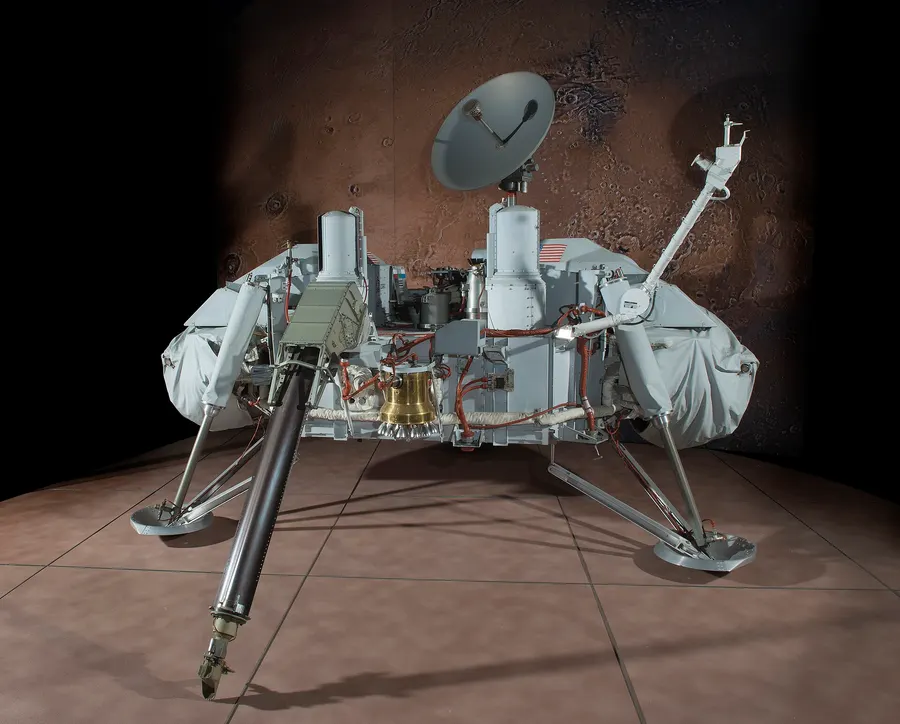
A Viking lander test model, identical to the craft that landed on Mars, at the Smithsonian National Air and Space MuseumA Viking lander test model, identical to the craft that landed on Mars, at the Smithsonian National Air and Space MuseumImage: Smithsonian · CC0
science · Americas

Viking 1 makes America’s first landing on Mars

Viking 1 was launched in August 1975 and went into orbit around Mars in June 1976. Its planned landing on 4 July, America’s bicentennial, was put off while scientists studied the orbiter’s pictures and searched for a safer spot. On 20 July 1976, seven years to the day after Apollo 11 landed on the Moon, the lander separated from the orbiter and came down on the plain of Chryse Planitia. Within minutes it began sending back the first photograph taken on the surface of Mars, showing rocks and dust around one of its footpads. It was the first American spacecraft to land on another planet. Viking 1 and its twin, Viking 2, which landed weeks later, tested the soil for signs of life, with results that are still debated, and Viking 1 kept working until 1982.

Source: NASA: 45 years ago, Viking 1 touches down on Mars ↗
1989
Aung San Suu Kyi greets supporters at her party's headquarters in Yangon after her release from house arrest in November 2010Aung San Suu Kyi greets supporters at her party’s headquarters in Yangon after her release from house arrest in November 2010Image: Htoo Tay Zar · CC BY-SA 3.0
politics · Asia

Burma’s generals put Aung San Suu Kyi under house arrest

Aung San Suu Kyi, daughter of Burma’s independence hero Aung San, had lived abroad for most of her adult life when she returned to Rangoon in 1988 to nurse her dying mother. That summer the army crushed a nationwide uprising against the military rule of Ne Win, killing thousands of protesters. Suu Kyi spoke to huge crowds calling for democracy and helped found the National League for Democracy. On 20 July 1989 the ruling junta placed her under house arrest at her family home in Rangoon, without charge or trial. The NLD won the 1990 election by a landslide, but the generals refused to hand over power. She was awarded the Nobel Peace Prize in 1991 while still confined, and over the following two decades she spent almost 15 years in detention before her release in November 2010.

Source: NobelPrize.org: Aung San Suu Kyi, biographical ↗
VI
2000 TO TODAY

Modern Day

The events of recent decades that have already become part of the historical record.

2015
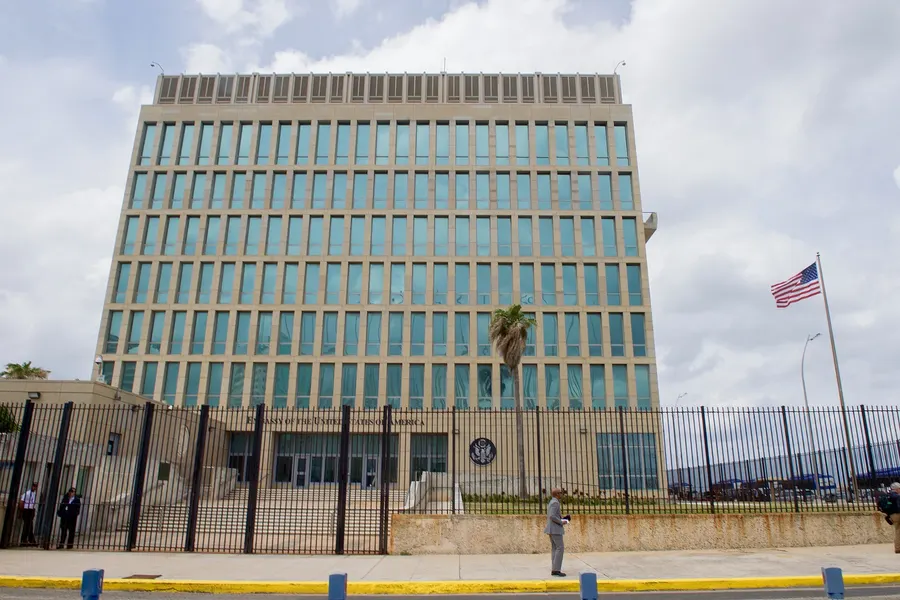
The United States flag outside the American embassy in Havana in March 2016The United States flag outside the American embassy in Havana in March 2016Image: U.S. Department of State · Public domain
politics · Americas

The United States and Cuba restore diplomatic relations

The United States broke off relations with Fidel Castro’s Cuba in January 1961, and for more than half a century the two countries dealt with each other only through ‘interests sections’. After secret talks, Presidents Barack Obama and Raúl Castro announced a thaw in December 2014. On 20 July 2015 relations were formally restored, and the interests sections in Havana and Washington became full embassies again.

Source: US Department of State: Re-establishment of diplomatic relations with Cuba ↗
RESEARCH

Sources & Further Reading

Selected authoritative references supporting the events on this page.

Britannica: Battle of Ankara (1402)↗Wikipedia: Battle of Ankara↗Banco de la República, Credencial Historia: La independencia en Bogotá, el 20 de julio de 1810↗Museo de la Independencia, Casa del Florero: El Florero de Llorente↗Britannica: Battle of Lissa↗Museum of Military History, Vienna: Austrian naval power↗The Canadian Encyclopedia: British Columbia and Confederation↗Government of Canada: British Columbia, facts, flags and symbols↗US Department of State, Office of the Historian: Foreign Relations of the United States, 1951, vol. V, document 635↗Republic of Türkiye Ministry of Foreign Affairs: Implementation of the Montreux Convention↗German Resistance Memorial Center: Stauffenberg and the assassination attempt of July 20, 1944↗United States Holocaust Memorial Museum: The July 20, 1944, plot to assassinate Adolf Hitler↗Royal Hashemite Court: King Abdullah bin Al Hussein (1882-1951)↗Britannica: Abdullah I↗Britannica: Like a Rolling Stone↗Wikipedia: Like a Rolling Stone↗Special Olympics: 1968 Games↗Chicago History Museum: The creation of the Special Olympics↗NASA: July 20, 1969, One giant leap for mankind↗Smithsonian National Air and Space Museum: Apollo 11, the Moon landing↗Britannica: Cyprus, the Republic of Cyprus↗US Department of State, Office of the Historian: Foreign Relations of the United States, 1969-1976, vol. XXX, document 113↗NASA: 45 years ago, Viking 1 touches down on Mars↗NASA Science: Viking 1↗NobelPrize.org: Aung San Suu Kyi, biographical↗Britannica: Aung San Suu Kyi↗US Department of State: Re-establishment of diplomatic relations with Cuba↗The White House (archived): Embassy openings in Washington and Havana↗
WHY THESE MOMENTS?

Significance before volume

This page is not the longest possible list of events. It is a chronological journey through 20 July, where each entry is chosen for historical significance, human interest and reliability.

Facts are checked against authoritative museums, archives, universities and reference works. Where sources disagree, the page says so.

EXPLORED THE DEEPER STORY?

Return to the highlights of 20 July

Discover the lighter side of the date with famous birthdays, culture, firsts and lives remembered.

Explore This Day →
← PREVIOUS DAY19 July
HISTORY & TIMELINE20 July
NEXT DAY →21 July