
HISTORY & TIMELINE
15 July

A journey through
15 July in history

The story of 15 July runs from a temple in the Roman Forum in 484 BC to France’s second World Cup in 2018. In between come the crusaders’ capture of Jerusalem, the Battle of Grunwald, the finding of the Rosetta Stone, Napoleon’s surrender to the Royal Navy, the birth of Manitoba, the eruption of Mount Bandai, the Nobel laureates’ warning at Mainau, the first flight of Boeing’s jet prototype, the coup in Cyprus, the launch of Nintendo’s Famicom and the founding of the Mozilla Foundation.

I
EARLIEST RECORDS

Ancient & Early History

The earliest worthwhile records and events connected with this date.

-484
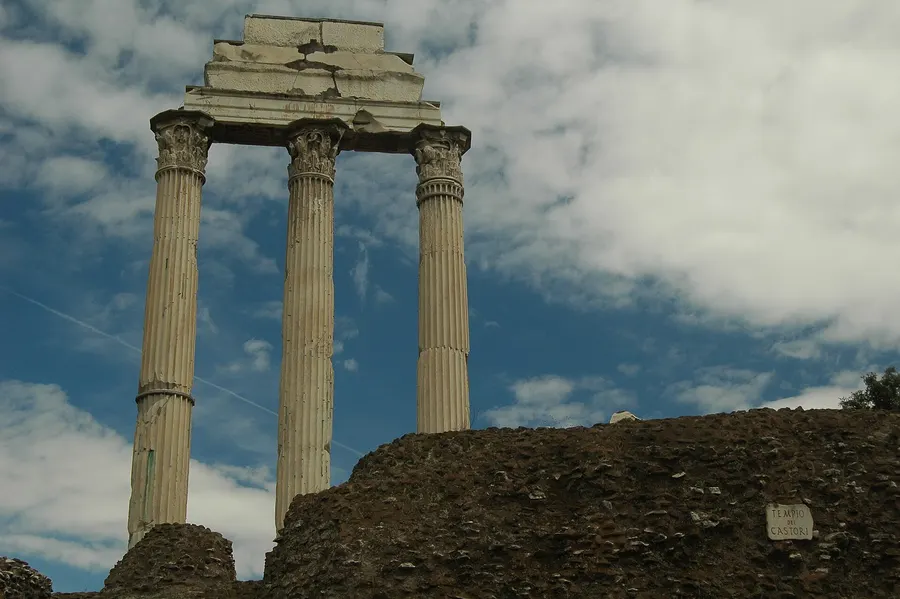
The three surviving columns of the Temple of Castor and Pollux in the Roman ForumThe three surviving columns of the Temple of Castor and Pollux in the Roman ForumImage: Luiza · CC BY 2.0
culture · Europe

A temple to Castor and Pollux is dedicated in the Roman Forum

According to Roman tradition, the twin gods Castor and Pollux fought for Rome at the Battle of Lake Regillus in 496 BC and then watered their horses at a spring in the Forum. A temple was vowed to them, and the historian Livy says it was dedicated on 15 July 484 BC, although Roman calendars give 27 January. Rebuilt several times, it served as a meeting place for the Senate, and three of its columns still stand.

Source: LacusCurtius (University of Chicago): Platner and Ashby, Aedes Castoris ↗
II
THE MIDDLE AGES

Medieval History

Kingdoms, conflict, faith, power and the changing medieval world.

1099
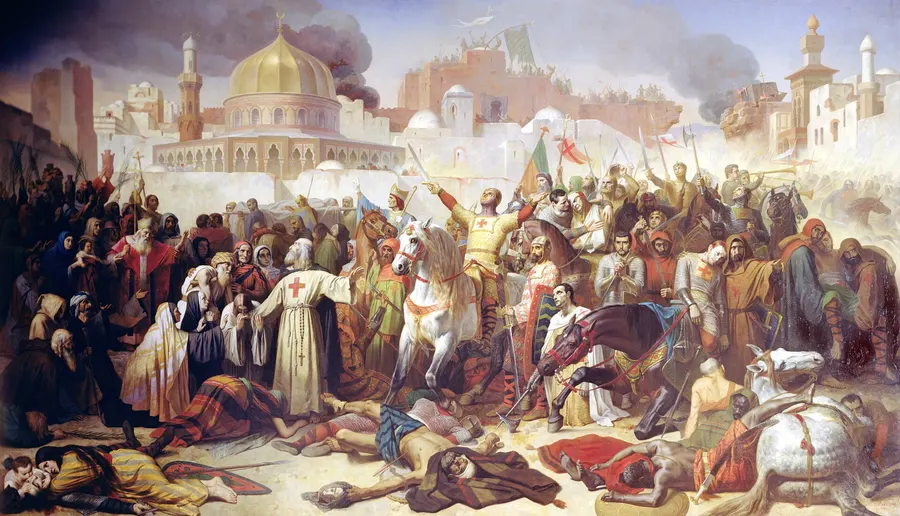
The Taking of Jerusalem by the Crusaders, 15 July 1099, painted by Émile Signol in 1847The Taking of Jerusalem by the Crusaders, 15 July 1099, painted by Émile Signol in 1847Image: Émile Signol · Public domain
world · Middle East

The crusaders storm Jerusalem

The First Crusade had set out from Europe in 1096 at the call of Pope Urban II. After three years of marching, sieges and hunger, the survivors reached Jerusalem on 7 June 1099. The city was held by the Fatimid rulers of Egypt, who had taken it from the Turks only the year before. The crusaders, reduced to perhaps 1,200 to 1,500 knights and some 12,000 foot soldiers, settled down to a siege and built wooden siege towers. The towers were pushed up to the walls on 13 and 14 July, and on 15 July 1099 the men of Godfrey of Bouillon fought their way onto a stretch of the northern wall. Others followed on ladders, and a gate was opened. The governor surrendered to Raymond of Toulouse in the Tower of David and was escorted out, but the crusaders then killed a great many of the city’s Muslim and Jewish inhabitants; how many is still disputed. Godfrey became the city’s first Latin ruler, and a Fatimid relief army was beaten at Ascalon a few weeks later.

Source: Britannica: Crusades, the siege of Jerusalem ↗
1410
The Battle of Tannenberg (Grunwald), from the illustrated Swiss chronicle of Diebold Schilling the Elder, about 1485The Battle of Tannenberg (Grunwald), from the illustrated Swiss chronicle of Diebold Schilling the Elder, about 1485Image: Diebold Schilling the Elder · Public domain
world · Europe

Poland and Lithuania crush the Teutonic Knights at Grunwald

The Teutonic Knights, a German crusading order, had built a powerful state in Prussia on the Baltic coast and spent two centuries fighting their pagan neighbours in Lithuania. When the Lithuanian grand duke Jogaila married the queen of Poland in 1386, became King Władysław II Jagiełło and accepted Christianity, the knights refused to believe the conversion was sincere. In 1409 their Grand Master, Ulrich von Jungingen, declared war on both countries. On 15 July 1410 the armies met between the villages of Grunwald and Tannenberg in Prussia. Jagiełło and his cousin Vytautas, grand duke of Lithuania, led a host of Poles, Lithuanians, Ruthenians and Tatars against the knights and their foreign volunteers, in one of the largest battles of medieval Europe. By evening the order’s army was destroyed and von Jungingen lay dead. The victors failed to take the knights’ fortress at Marienburg, but the order never recovered its strength, and Poland-Lithuania rose to be a great power. Grunwald remains a national symbol in Poland and Lithuania.

Source: Britannica: Battle of Grunwald (1410) ↗
III
A CHANGING WORLD

Early Modern Era

Exploration, political change, scientific development and expanding global connections.

1799
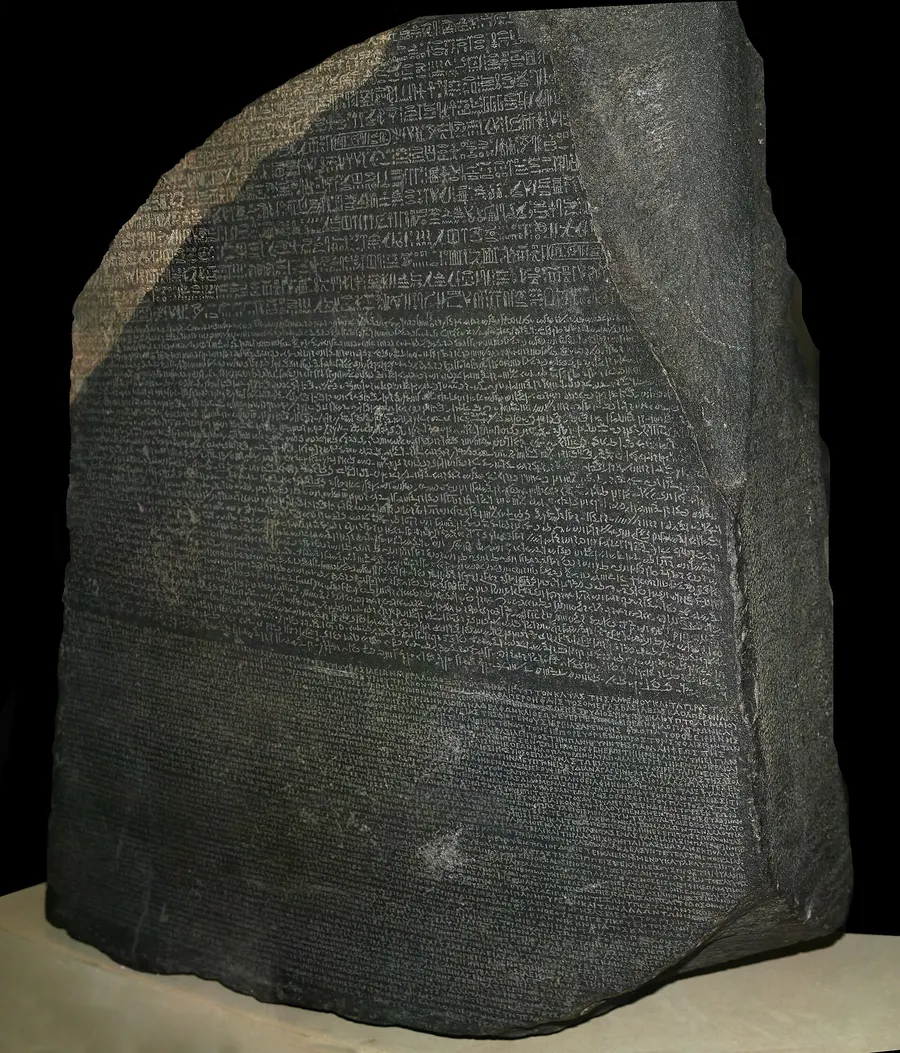
The Rosetta Stone on display in the British Museum, with its three scripts: hieroglyphs, demotic and GreekThe Rosetta Stone on display in the British Museum, with its three scripts: hieroglyphs, demotic and GreekImage: Hans Hillewaert · CC BY-SA 4.0
science · Africa

French soldiers unearth the Rosetta Stone

In 1798 Napoleon Bonaparte invaded Egypt, taking with him not only an army but also a large party of scholars to study the country. In the summer of 1799 French soldiers were repairing an old fort near the town of Rashid, which Europeans called Rosetta, in the Nile Delta. On 15 July 1799, while digging foundations, they came upon a broken slab of dark stone that had been built into an ancient wall. The officer in charge, Pierre-François Bouchard, saw that it was important, although it was probably an Egyptian labourer who first spotted it. The stone carried a decree issued by priests at Memphis in 196 BC in honour of King Ptolemy V, written three times over: in hieroglyphs, in the everyday Egyptian script called demotic, and in ancient Greek. Because the Greek could be read, it offered a key to the lost hieroglyphs. When the French in Egypt surrendered in 1801, the stone passed to the British, and it has been in the British Museum since 1802. Working from it, Jean-François Champollion announced in 1822 that he had cracked the hieroglyphic script.

Source: British Museum: The Rosetta Stone, everything you need to know ↗
IV
THE NINETEENTH CENTURY

The 1800s

Industry, empire, invention, reform and a century of enormous transformation.

1815
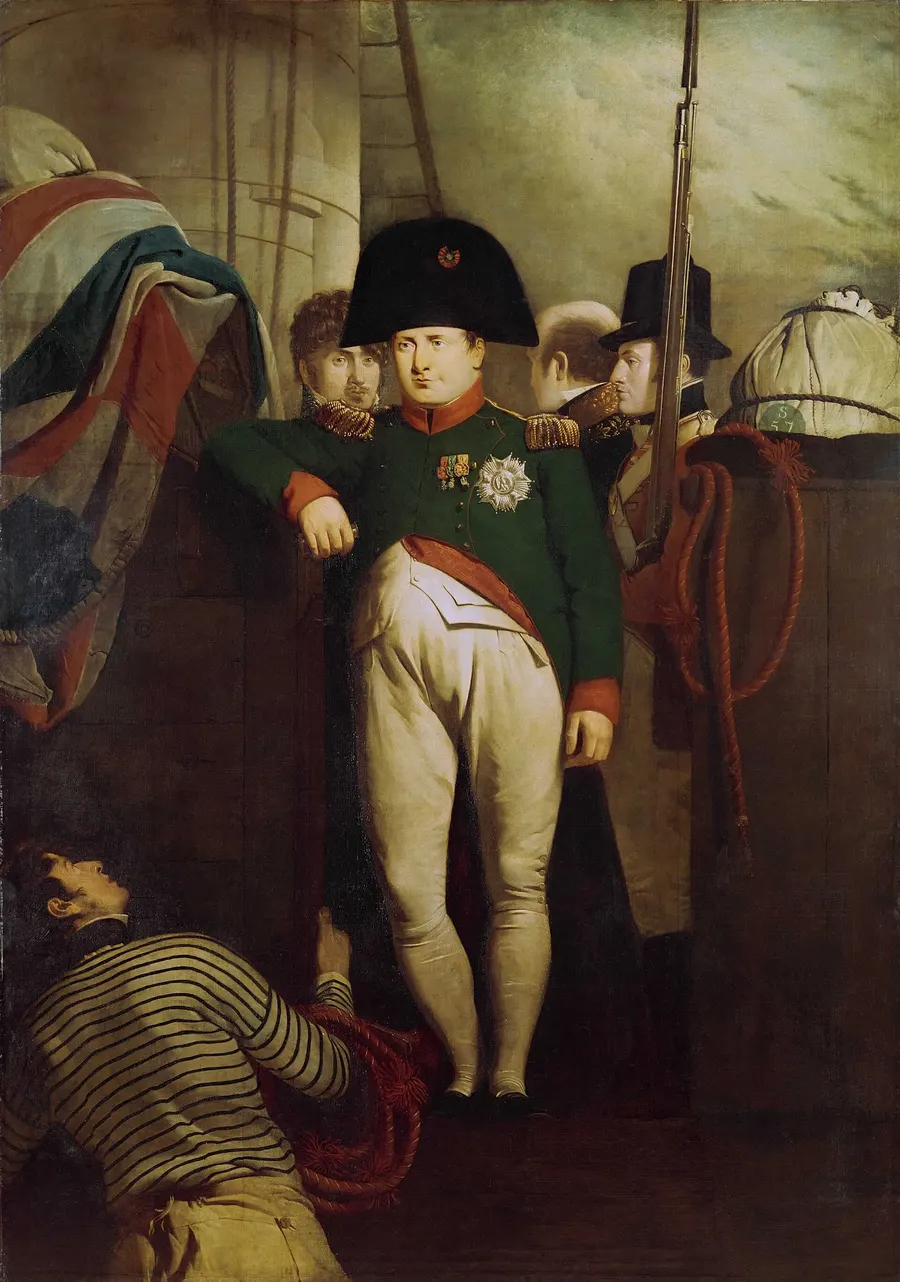
Napoleon on board the Bellerophon in Plymouth Sound, painted by Charles Lock Eastlake in 1815Napoleon on board the Bellerophon in Plymouth Sound, painted by Charles Lock Eastlake in 1815Image: Charles Lock Eastlake · Public domain
world · Europe

Napoleon surrenders to the captain of HMS Bellerophon

After his defeat at Waterloo Napoleon abdicated and made for Rochefort, hoping to sail for America, but British warships blocked the coast. On 15 July 1815 he went aboard HMS Bellerophon off the Île d’Aix and gave himself up to Captain Frederick Maitland. The ship took him to Plymouth, where crowds rowed out to catch sight of him, and in August he was moved to HMS Northumberland and carried into exile on St Helena.

Source: Royal Museums Greenwich: Napoleon surrendering to Captain Frederick Lewis Maitland on 15 July 1815 ↗
1870
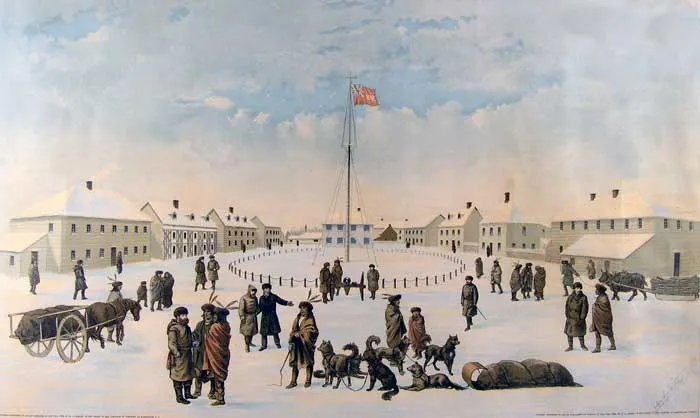
Fort Garry, the Hudson's Bay Company post at Red River, in a winter scene dated 1884Fort Garry, the Hudson’s Bay Company post at Red River, in a winter scene dated 1884Image: H. A. Strong · Public domain
politics · Americas

Manitoba becomes Canada’s fifth province

The Hudson’s Bay Company agreed to hand its vast territory of Rupert’s Land to Canada, but nobody asked the people living there. At Red River the Métis, led by Louis Riel, resisted and negotiated terms with Ottawa. The Manitoba Act, passed in May, came into force on 15 July 1870, the same day the transfer of Rupert’s Land and the North-Western Territory took effect. The new province was small, and land was promised to the Métis.

Source: The Canadian Encyclopedia: Manitoba and Confederation ↗
1888
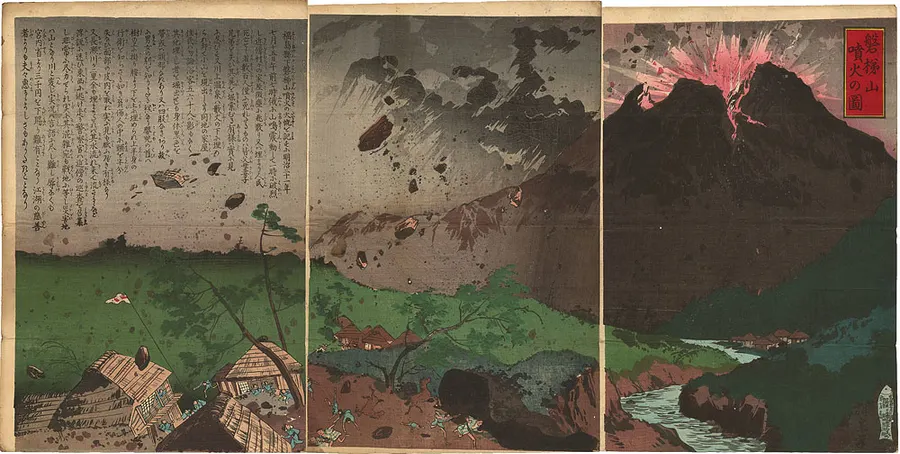
The eruption of Mount Bandai, in a Japanese woodblock print by Inoue Tankei published in 1888The eruption of Mount Bandai, in a Japanese woodblock print by Inoue Tankei published in 1888Image: Inoue Tankei · Public domain
world · Asia

Mount Bandai blows apart in northern Japan

Mount Bandai rises above the north shore of Lake Inawashiro in what is now Fukushima Prefecture. Farming villages lay on its lower slopes. On the morning of 15 July 1888 steam and groundwater trapped inside the volcano exploded. There was no fresh lava; instead the blast tore away the northern side of its peak, Ko-Bandai. A huge avalanche of rock and earth swept down the northern slopes and ran on for around 11 kilometres, burying several villages, while blasts and mudflows raced down the other side. More than 450 people were killed. The debris dammed rivers and created new lakes, among them Hibara, Onogawa and Akimoto, which today form the scenic Urabandai area. Japanese scientists studied the disaster closely, and geologists still use ‘Bandai-type’ to describe eruptions in which a volcano’s side collapses.

Source: Smithsonian Global Volcanism Program: Bandaisan ↗
V
THE TWENTIETH CENTURY

The 1900s

War and peace, technological leaps, social change, politics, sport and popular culture.

1954
The Boeing 367-80, the 'Dash 80', in flight in its brown and yellow paintThe Boeing 367-80, the ‘Dash 80’, in flight in its brown and yellow paintImage: Boeing Dreamscape · Public domain
science · Americas

Boeing’s jet prototype, the Dash 80, takes to the air

In the early 1950s the world’s airlines still flew propeller aircraft; Britain’s de Havilland Comet had pioneered jet travel but was grounded after fatal crashes in 1954. Boeing, which had built jet bombers for the US Air Force, gambled some 16 million dollars of its own money on a prototype jet transport, known inside the company as the 367-80, or Dash 80. With four Pratt & Whitney turbojets under its swept wings, it first flew above Seattle on 15 July 1954. It was faster than the Comet and could fly more than 3,500 miles. The Air Force ordered a tanker version, the KC-135, and the airliner version, the Boeing 707, entered service in 1958 and helped launch the age of mass jet travel. The prototype itself was given to the Smithsonian in 1972 and is displayed at the Steven F. Udvar-Hazy Center in Virginia.

Source: National Air and Space Museum: Boeing 367-80 jet transport ↗
1955
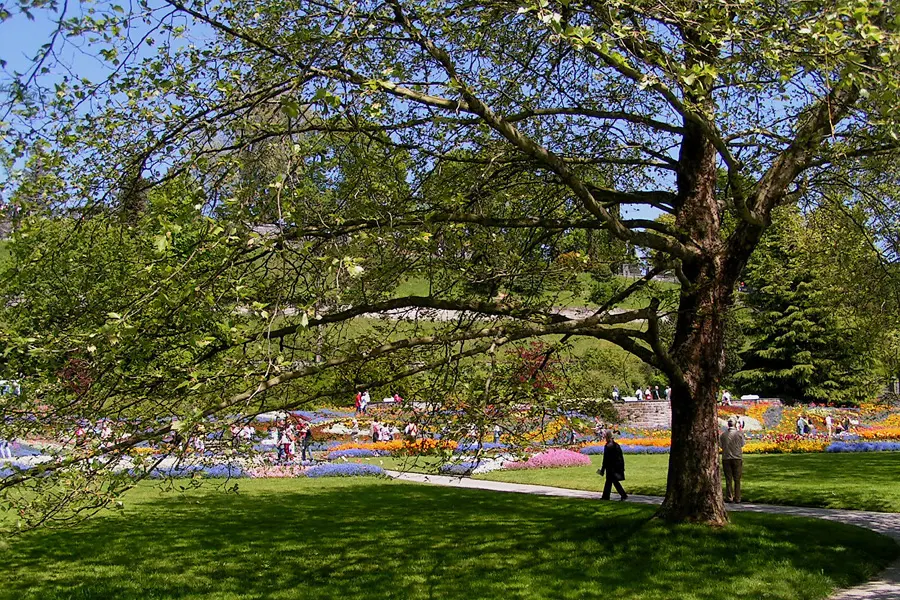
Parkland on Mainau, the island in Lake Constance where the declaration was presentedParkland on Mainau, the island in Lake Constance where the declaration was presentedImage: Tango7174 · CC BY-SA 4.0
science · Europe

Nobel laureates warn against nuclear weapons at Mainau

Otto Hahn, whose discovery of nuclear fission had made the atomic bomb possible, and the physicist Max Born drafted an appeal against nuclear weapons during the Nobel laureates’ meeting at Lindau. On 15 July 1955 it was presented on Mainau, an island in Lake Constance, signed by 18 laureates including Werner Heisenberg. It warned that science was giving humanity the means to destroy itself, and within a year 52 laureates had signed.

Source: Lindau Nobel Laureate Meetings: Mainau Declaration 2024 on Nuclear Weapons ↗
1974
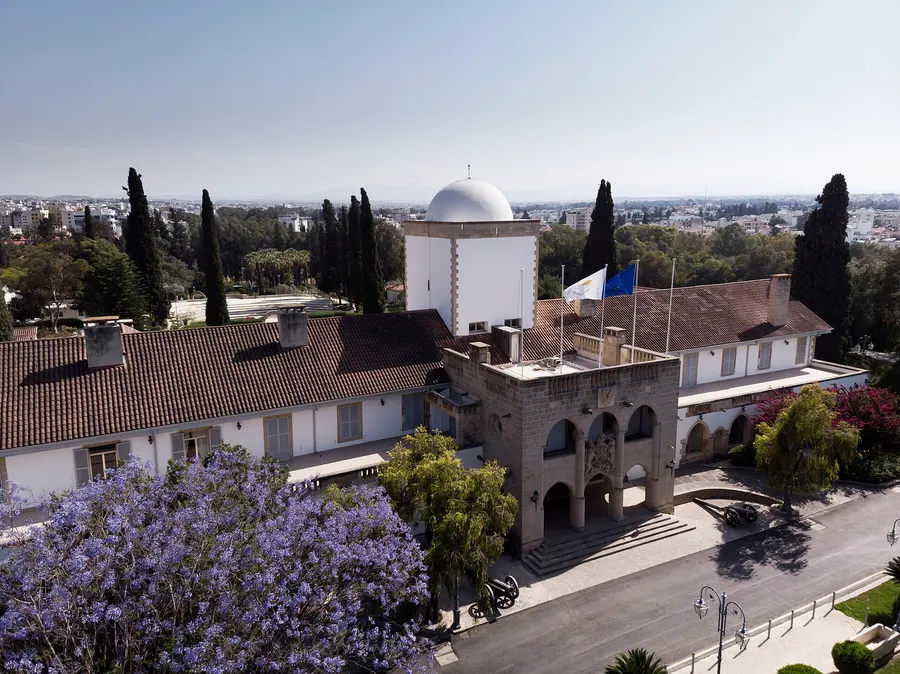
The Presidential Palace in Nicosia, attacked during the coup of July 1974 and later rebuiltThe Presidential Palace in Nicosia, attacked during the coup of July 1974 and later rebuiltImage: Iakovos Hatzistavrou, European Commission · CC BY 4.0
politics · Europe

A coup in Nicosia overthrows Archbishop Makarios

Cyprus became independent from Britain in 1960 with a constitution meant to share power between its Greek and Turkish Cypriot communities, but it soon broke down amid violence between them. Many Greek Cypriots still wanted enosis, union with Greece. The president, Archbishop Makarios III, had drifted away from that goal, and after a hard-line faction of Greece’s military junta took power in Athens in 1973, relations with him grew bitter. When Makarios moved to reduce the Greek officers’ hold on the island’s National Guard, Athens struck first. On 15 July 1974 units of the National Guard, led by officers from mainland Greece, attacked the Presidential Palace in Nicosia and seized key points on the island. Makarios escaped and was flown out of the country by the British, and Nikos Sampson, a veteran of the anti-British EOKA campaign, was installed as president. Five days later Turkey invaded, saying it was acting to protect the Turkish Cypriots. Sampson soon stepped down and the Athens junta collapsed, but by mid-August Turkish forces held the north of the island, which remains divided today.

Source: Britannica: Cyprus, the Republic of Cyprus ↗
1983
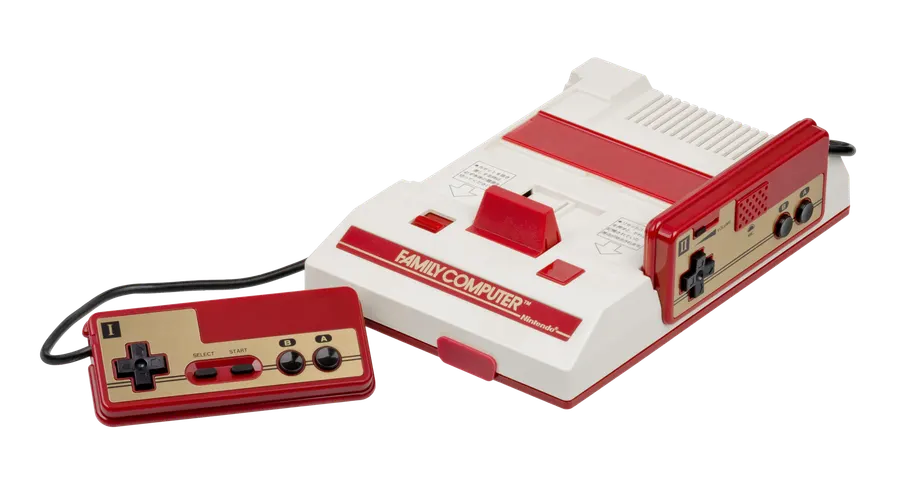
The Nintendo Family Computer, or Famicom, with one of its hard-wired controllersThe Nintendo Family Computer, or Famicom, with one of its hard-wired controllersImage: Evan-Amos · Public domain
culture · Asia

Nintendo launches the Famicom in Japan

Nintendo, a Kyoto company that had begun in 1889 by making playing cards, had found success with arcade games such as Donkey Kong and with its handheld Game & Watch toys. Its engineer Masayuki Uemura led the design of a cheap home console that took games on plug-in cartridges, and on 15 July 1983 the Family Computer, soon known as the Famicom, went on sale in Japan. More than half a million were sold in two months, although a faulty part forced a recall before sales took off again. In 1985 a redesigned version reached the United States as the Nintendo Entertainment System, reviving a home video game market that had collapsed in 1983. Games such as Super Mario Bros. and The Legend of Zelda made Nintendo’s characters known around the world, and tens of millions of the consoles were sold.

Source: The Strong National Museum of Play: First there was Famicom ↗
VI
2000 TO TODAY

Modern Day

The events of recent decades that have already become part of the historical record.

2003
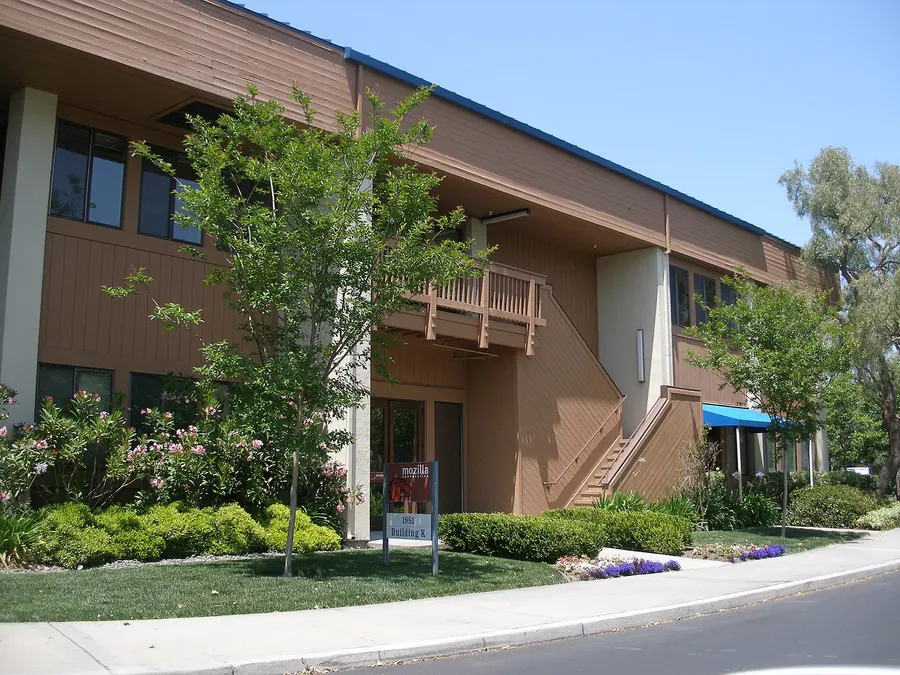
Mozilla's former headquarters in Mountain View, CaliforniaMozilla’s former headquarters in Mountain View, CaliforniaImage: Coolcaesar (English Wikipedia) · CC BY-SA 3.0
science · Americas

The Mozilla Foundation is launched

Netscape had opened up the code of its web browser in 1998, creating the Mozilla project, but its owner, AOL, was scaling back. On 15 July 2003 Mozilla announced an independent non-profit foundation to carry on the work, with two million dollars from AOL and the software pioneer Mitch Kapor as chairman. Its Firefox browser, released in 2004, broke Internet Explorer’s near-monopoly and helped keep the web open.

Source: Mozilla Press Center: Mozilla.org announces launch of the Mozilla Foundation ↗
2018
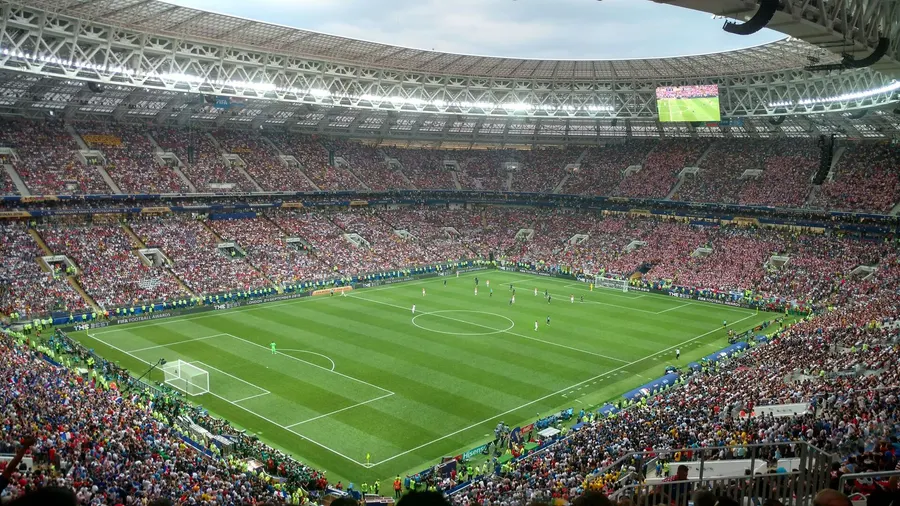
France and Croatia during the first half of the 2018 World Cup final at the Luzhniki Stadium in MoscowFrance and Croatia during the first half of the 2018 World Cup final at the Luzhniki Stadium in MoscowImage: Morogris · CC BY-SA 4.0
sport · Europe

France beat Croatia to win their second World Cup

The 2018 World Cup in Russia ended at the Luzhniki Stadium in Moscow on 15 July, before 78,011 spectators. France, champions in 1998, faced Croatia, a country of about four million people playing in its first final after three extra-time matches in the knockout rounds. Mario Mandžukić headed a French free kick into his own net, the first own goal in a World Cup final, and Ivan Perišić levelled. Perišić then handled in the area, and after a video review Antoine Griezmann scored the penalty. In the second half Paul Pogba and the 19-year-old Kylian Mbappé made it 4-1 before Mandžukić pulled one back. Didier Deschamps, France’s captain in 1998, became only the third man to win the World Cup as both player and coach.

Source: FIFA: Formidable France secure second title ↗
RESEARCH

Sources & Further Reading

Selected authoritative references supporting the events on this page.

LacusCurtius (University of Chicago): Platner and Ashby, Aedes Castoris↗Encyclopaedia Romana (University of Chicago): Temple of Castor and Pollux↗Britannica: Crusades, the siege of Jerusalem↗Wikipedia: Siege of Jerusalem (1099)↗Britannica: Battle of Grunwald (1410)↗Wikipedia: Battle of Grunwald↗British Museum: The Rosetta Stone, everything you need to know↗Britannica: Rosetta Stone↗Royal Museums Greenwich: Napoleon surrendering to Captain Frederick Lewis Maitland on 15 July 1815↗Royal Museums Greenwich: The Bellerophon with Napoleon aboard at Plymouth↗The Canadian Encyclopedia: Manitoba and Confederation↗The Canadian Encyclopedia: Rupert’s Land↗Smithsonian Global Volcanism Program: Bandaisan↗US Geological Survey: Volcanic hazards from Bezymianny- and Bandai-type eruptions↗National Air and Space Museum: Boeing 367-80 jet transport↗National Air and Space Museum: An anniversary for Dash 80↗Lindau Nobel Laureate Meetings: Mainau Declaration 2024 on Nuclear Weapons↗Nobel Prize: An unrelenting opposition to Earth’s most dangerous weapons↗Britannica: Cyprus, the Republic of Cyprus↗Britannica: Makarios III↗The Strong National Museum of Play: First there was Famicom↗Britannica: What is the Nintendo Entertainment System (NES)?↗Mozilla Press Center: Mozilla.org announces launch of the Mozilla Foundation↗Mozilla: Milestone, the Mozilla Foundation is born↗FIFA: Formidable France secure second title↗Wikipedia: 2018 FIFA World Cup final↗
WHY THESE MOMENTS?

Significance before volume

This page is not the longest possible list of events. It is a chronological journey through 15 July, where each entry is chosen for historical significance, human interest and reliability.

Facts are checked against authoritative museums, archives, universities and reference works. Where sources disagree, the page says so.

EXPLORED THE DEEPER STORY?

Return to the highlights of 15 July

Discover the lighter side of the date with famous birthdays, culture, firsts and lives remembered.

Explore This Day →
← PREVIOUS DAY14 July
HISTORY & TIMELINE15 July
NEXT DAY →16 July