
HISTORY & TIMELINE
14 July

A journey through
14 July in history

The story of 14 July runs from a Hussite victory outside Prague in 1420 to a spacecraft’s flight past Pluto in 2015. In between come the fall of the Bastille, America’s first world’s fair, the first ascent of the Matterhorn, the capture of Tientsin, the collapse of the bell tower in St Mark’s Square, the Nazi ban on rival parties, the end of Iraq’s monarchy, Jane Goodall’s arrival at Gombe, the first close-up pictures of Mars, the Football War and Canada’s vote to abolish the death penalty.

II
THE MIDDLE AGES

Medieval History

Kingdoms, conflict, faith, power and the changing medieval world.

1420
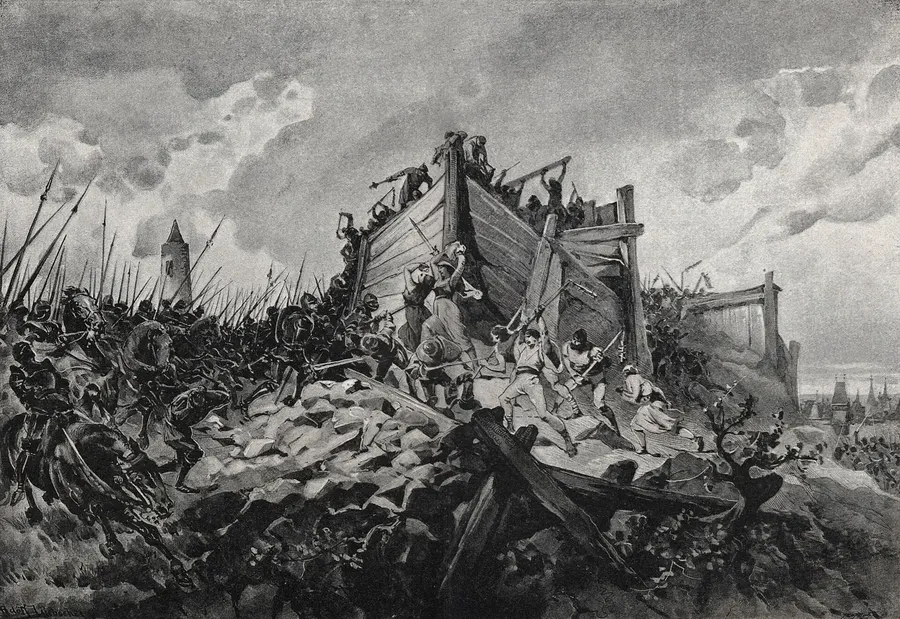
The Hussites driving the crusaders off Vítkov Hill on 14 July 1420, in a 19th-century picture by Adolf LiebscherThe Hussites driving the crusaders off Vítkov Hill on 14 July 1420, in a 19th-century picture by Adolf LiebscherImage: Adolf Liebscher · Public domain
world · Europe

Jan Žižka’s Hussites save Prague on Vítkov Hill

The Czech preacher Jan Hus was burned as a heretic at the Council of Constance in 1415, and his followers in Bohemia, the Hussites, rose against the Church and against Sigismund, the king of Hungary and heir to the Bohemian crown. In 1420 the pope proclaimed a crusade against them, and Sigismund led a large army of German, Hungarian and Bohemian Catholic knights to Prague to take the city. The Hussites held Vítkov, a narrow ridge just east of Prague that guarded the city’s supply route. Its defenders were few, commanded by the one-eyed veteran Jan Žižka, and on 14 July 1420 the crusaders’ cavalry attacked their hasty earthworks. The defenders held, and when Hussite troops and townspeople from Prague struck the attackers in the flank, the knights were driven down the steep slopes, some drowning in the Vltava. Sigismund soon withdrew. The victory made Žižka a national hero, and the hill, and later the whole district, took his name: Žižkov.

Source: Prague City Tourism: National Memorial on Vítkov Hill ↗
III
A CHANGING WORLD

Early Modern Era

Exploration, political change, scientific development and expanding global connections.

1789
The storming of the Bastille, in a painting by an unknown artist of the timeThe storming of the Bastille, in a painting by an unknown artist of the timeImage: Unidentified painter · Public domain
politics · Europe

Parisians storm the Bastille

By July 1789 France was bankrupt, bread was dear, and the Estates-General summoned by Louis XVI had turned itself into a National Assembly that claimed to speak for the nation. Royal troops were gathering around Paris, and when the king dismissed his popular finance minister, Jacques Necker, on 11 July, Parisians feared that the Assembly was about to be crushed. Crowds seized arms, and on the morning of 14 July they took muskets from the Invalides. They then marched on the Bastille, a medieval fortress used as a state prison, to find gunpowder. Its governor, the Marquis de Launay, refused to hand it over, his men opened fire, and after hours of fighting, joined by mutinous soldiers with cannon, the crowd forced the garrison to surrender. Around a hundred attackers died. Only seven prisoners were found inside, but de Launay was killed and his head paraded on a pike. The fortress was soon demolished, and its fall became the great symbol of the French Revolution.

Source: Britannica: Bastille ↗
IV
THE NINETEENTH CENTURY

The 1800s

Industry, empire, invention, reform and a century of enormous transformation.

1853
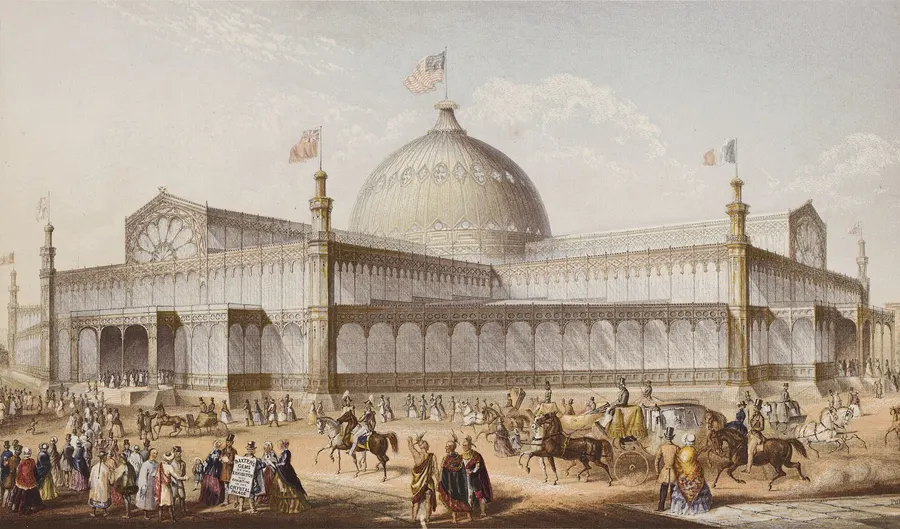
The New York Crystal Palace, in a coloured print after its architect Karl GildemeisterThe New York Crystal Palace, in a coloured print after its architect Karl GildemeisterImage: After Karl Gildemeister (1820-1869) · Public domain
culture · Americas

America’s first world’s fair opens in New York

London’s Great Exhibition of 1851, housed in the glass-and-iron Crystal Palace, had drawn millions of visitors, and a group of New York businessmen set out to match it. They built their own Crystal Palace, designed by Georg Carstensen and Karl Gildemeister, on a site beside the city’s reservoir at Sixth Avenue and 42nd Street, where Bryant Park is today. The building, in the shape of a Greek cross, was crowned by a great dome. The Exhibition of the Industry of All Nations was opened on 14 July 1853 by President Franklin Pierce. Thousands of exhibits from the United States and abroad filled the halls, from paintings and sculpture to machines and inventions, and the following year Elisha Otis demonstrated his safety lift there, cutting the rope of the platform he stood on. The fair lost money and closed in 1854, and the Crystal Palace burned down in 1858.

Source: Britannica: Exhibition of the Industry of All Nations ↗
1865
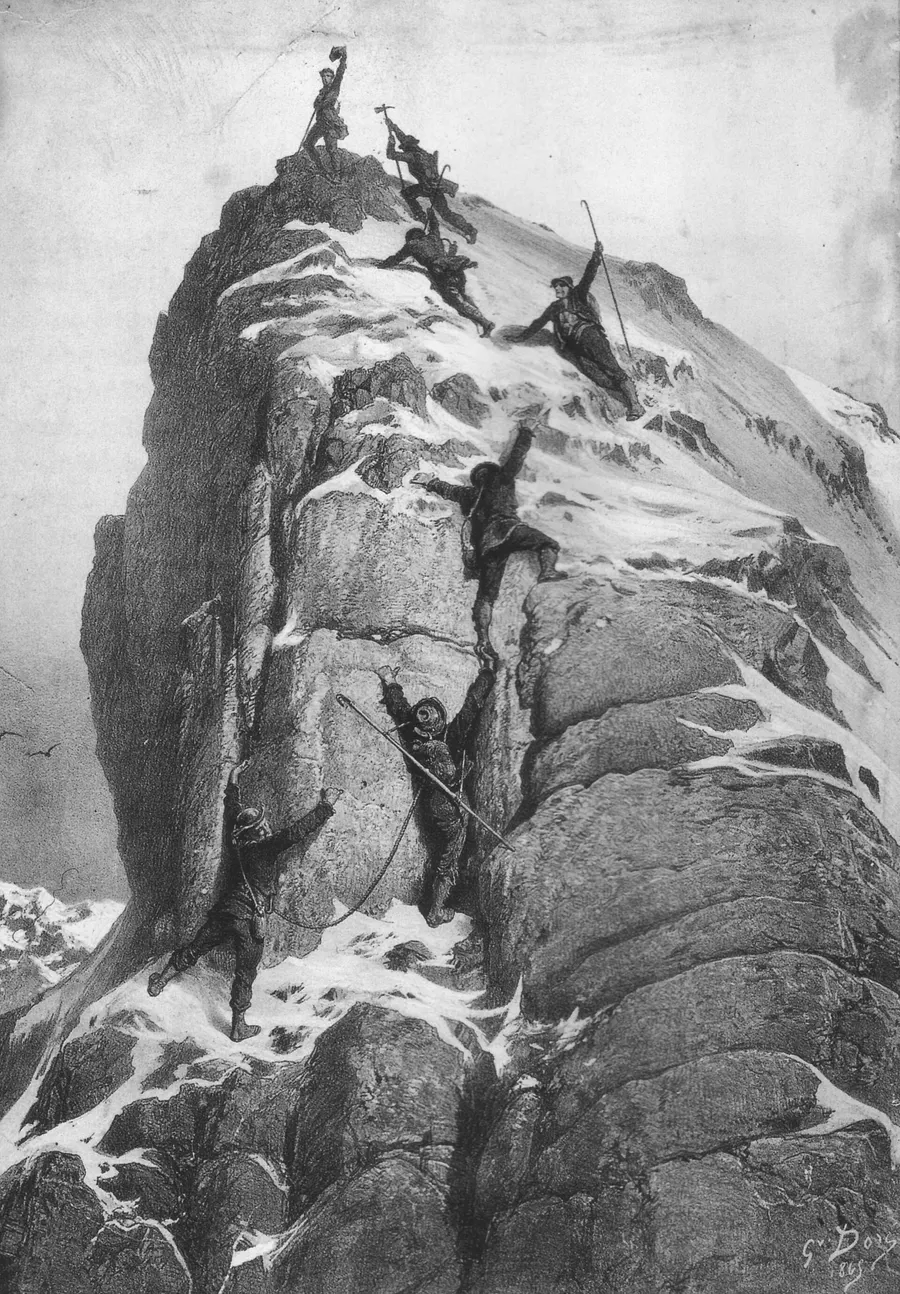
Whymper's party reaching the summit of the Matterhorn, in an engraving by Gustave DoréWhymper’s party reaching the summit of the Matterhorn, in an engraving by Gustave DoréImage: Gustave Doré · Public domain
sport · Europe

Whymper’s party makes the first ascent of the Matterhorn

By the 1860s nearly all the great Alpine peaks had been climbed, but the steep pyramid of the Matterhorn, on the border between Switzerland and Italy, had defeated every attempt. The young English engraver Edward Whymper had tried seven times, and in July 1865 he was racing an Italian party led by the guide Jean-Antoine Carrel, who was climbing from the Italian side. Whymper’s party of seven, with the Chamonix guide Michel Croz and the Zermatt guides Peter Taugwalder and his son, climbed the Hörnli ridge from Zermatt and reached the summit on 14 July 1865, ahead of the Italians. On the way down the inexperienced Douglas Hadow slipped and pulled Croz, Charles Hudson and Lord Francis Douglas with him; the rope broke, and all four fell to their deaths. The disaster made the climb notorious across Europe, and the Matterhorn became the most famous mountain in the Alps.

Source: Britannica: Edward Whymper ↗
V
THE TWENTIETH CENTURY

The 1900s

War and peace, technological leaps, social change, politics, sport and popular culture.

1900
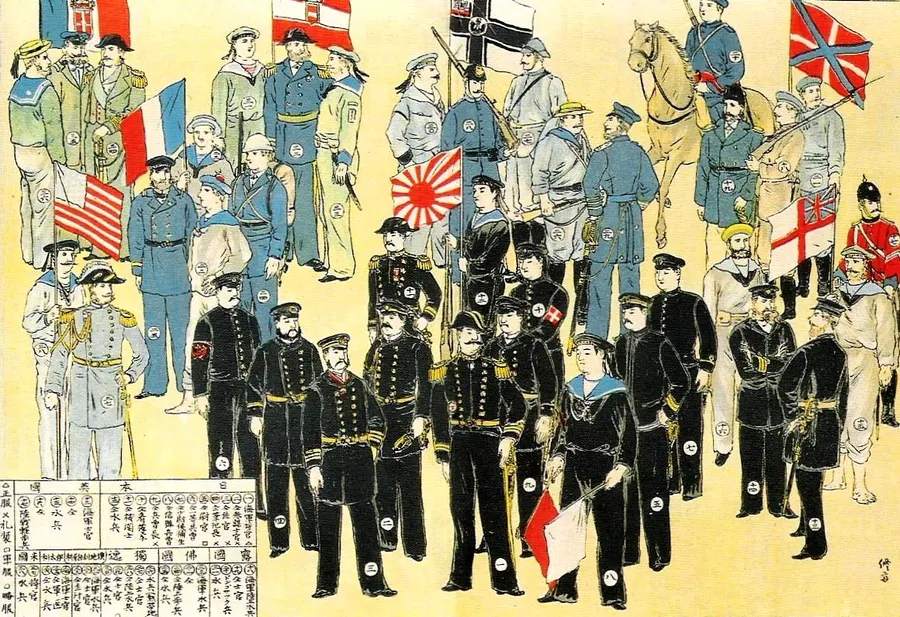
Soldiers of the eight allied nations in their different uniforms and flags, in a coloured print of the timeSoldiers of the eight allied nations in their different uniforms and flags, in a coloured print of the timeImage: Unknown author · Public domain
world · Asia

Foreign troops capture Tientsin in the Boxer War

In the summer of 1900 the anti-foreign Boxer movement, backed by the Qing court, besieged the foreign legations in Beijing and the foreign concessions at Tientsin (Tianjin), the port on the route to the capital. An alliance of eight foreign powers, including Japan, Russia, Britain and the United States, attacked the walled Chinese city of Tientsin on 13 July; after heavy losses they took it early on 14 July 1900. A month later they marched on Beijing and relieved the legations.

Source: Naval History and Heritage Command: Tientsin, the capture of Tientsin, 13 July 1900 ↗
1902
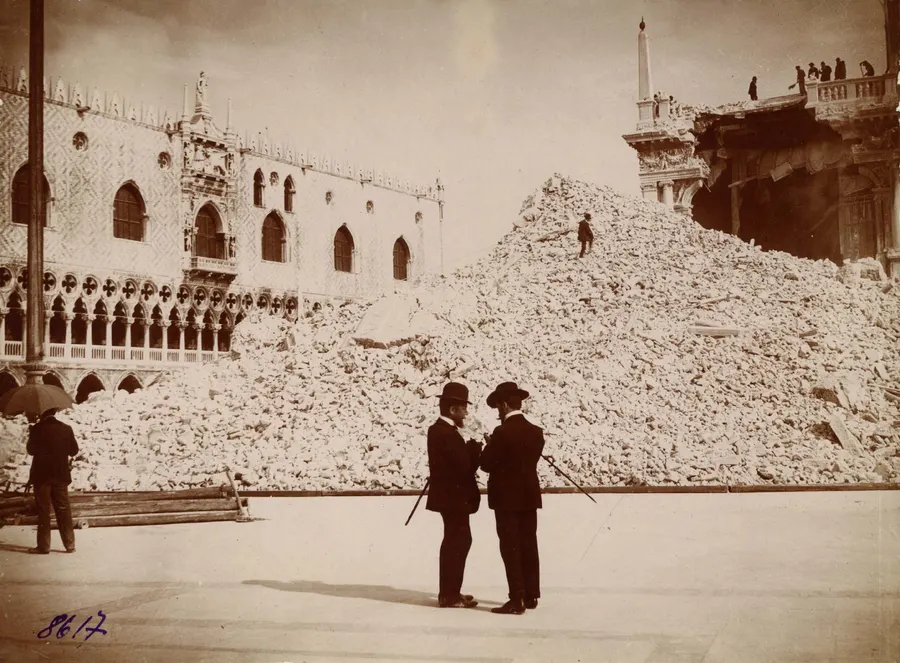
The rubble of the fallen campanile in St Mark's Square, Venice, in 1902The rubble of the fallen campanile in St Mark’s Square, Venice, in 1902Image: Unknown author · Public domain
world · Europe

The bell tower of St Mark’s in Venice collapses

The campanile of St Mark’s Basilica had stood over the square in Venice, in one form or another, for about a thousand years. Cracks had been spreading, and on the morning of 14 July 1902 the tower collapsed into a heap of rubble, crushing Sansovino’s Loggetta at its foot but sparing the basilica. Nobody was killed. The city council voted that same day to rebuild it exactly as it had been, and the new tower was inaugurated on St Mark’s Day, 25 April 1912.

Source: Basilica di San Marco: Bell tower ↗
1933
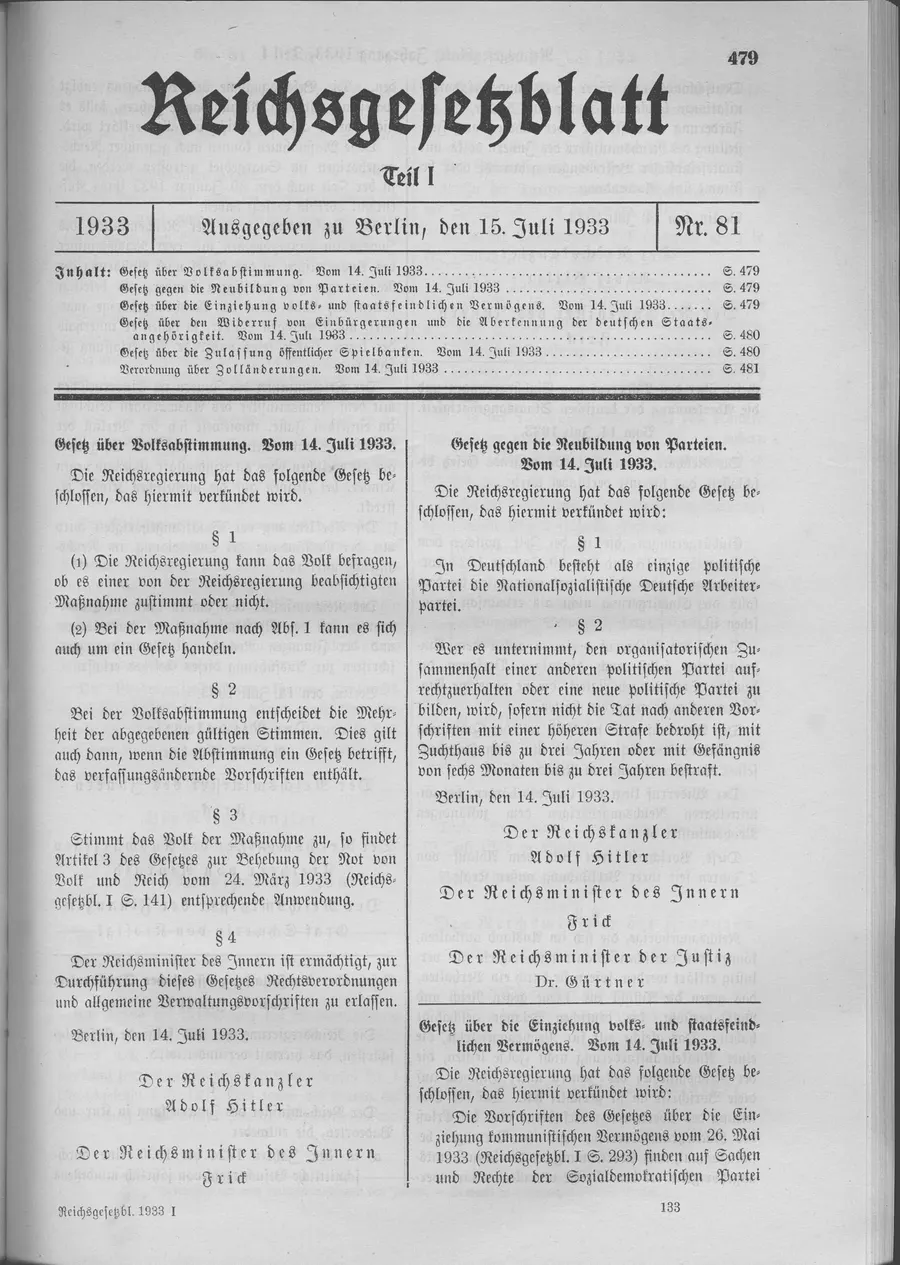
The law against the formation of new parties, dated 14 July 1933, as printed in the Reichsgesetzblatt, Germany's official law gazetteThe law against the formation of new parties, dated 14 July 1933, as printed in the Reichsgesetzblatt, Germany’s official law gazetteImage: Reichsministerium des Innern (Reichsgesetzblatt, Teil I, 1933) · Public domain
politics · Europe

Germany’s Nazi government bans all other parties

Within months of Adolf Hitler becoming chancellor in January 1933, the trade unions had been broken up and the Communist and Social Democratic parties banned, while the other parties dissolved themselves under pressure. On 14 July 1933 the government passed a law declaring the Nazi party the only party in Germany and making it a crime to form or keep up any other. The same day it adopted a law allowing the forced sterilisation of people deemed to have hereditary illnesses.

Source: Deutsches Historisches Museum, LeMO: Jahreschronik 1933 ↗
1958
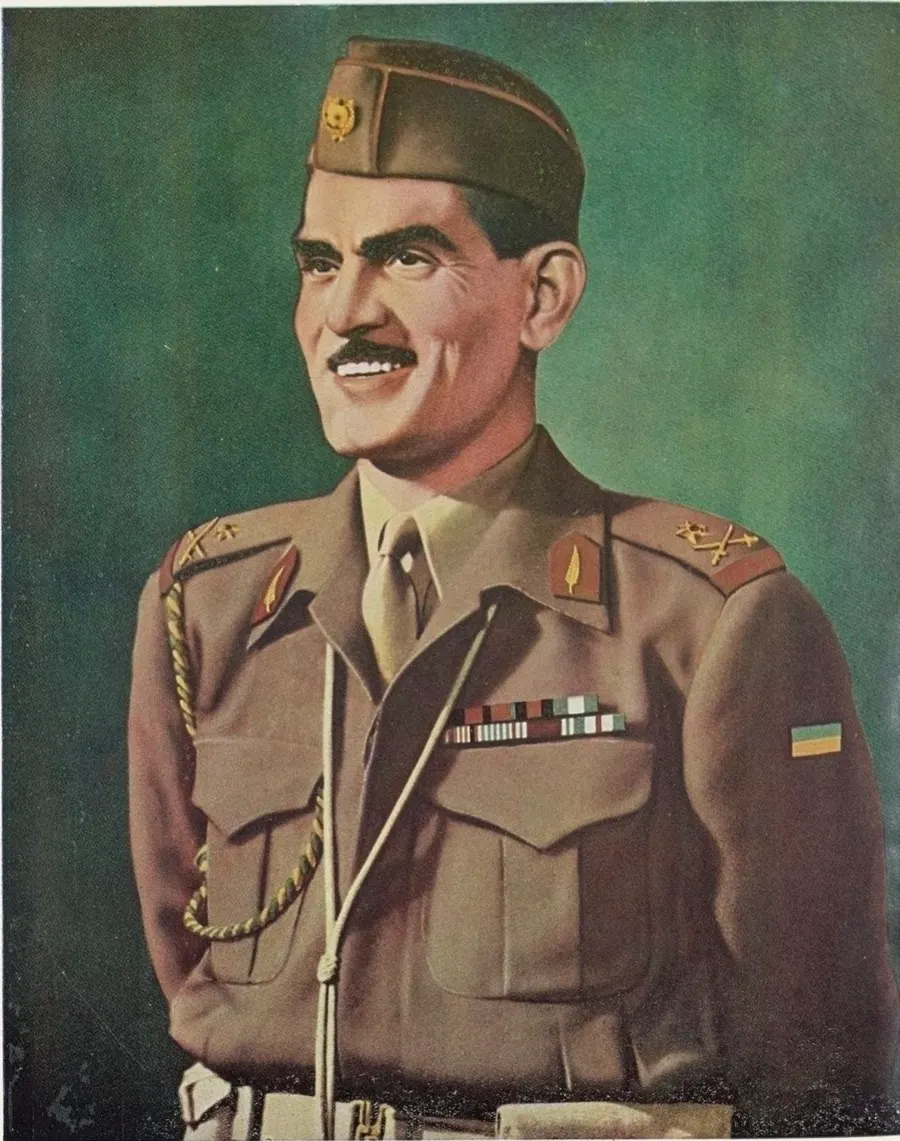
Abd al-Karim Qasim, leader of the revolution and Iraq's first prime minister as a republic, in 1960Abd al-Karim Qasim, leader of the revolution and Iraq’s first prime minister as a republic, in 1960Image: وزارة المعارف العراقية · Public domain
politics · Middle East

Army officers overthrow Iraq’s monarchy

Iraq had been a kingdom since 1921, under a Hashemite dynasty installed by Britain. By the 1950s the young King Faisal II reigned, but power lay with his uncle, the former regent Abd al-Ilah, and the veteran prime minister Nuri al-Said, who kept Iraq tied to Britain and the West. Many Iraqis, and a secret group of ‘Free Officers’ in the army, were inspired instead by the Arab nationalism of Egypt’s Gamal Abdel Nasser. In July 1958 the government ordered a brigade to Jordan. Its route took it through Baghdad, and the officers Abd al-Karim Qasim and Abd al-Salam Arif used the move to seize the capital at dawn on 14 July. They proclaimed a republic, and the king, the crown prince and other members of the royal family were killed at the palace; Nuri al-Said was killed the next day. Qasim became prime minister. The revolution ended British influence in Iraq, and Iraq long marked 14 July as its national day.

Source: Britannica: Abd al-Karim Qasim ↗
1960
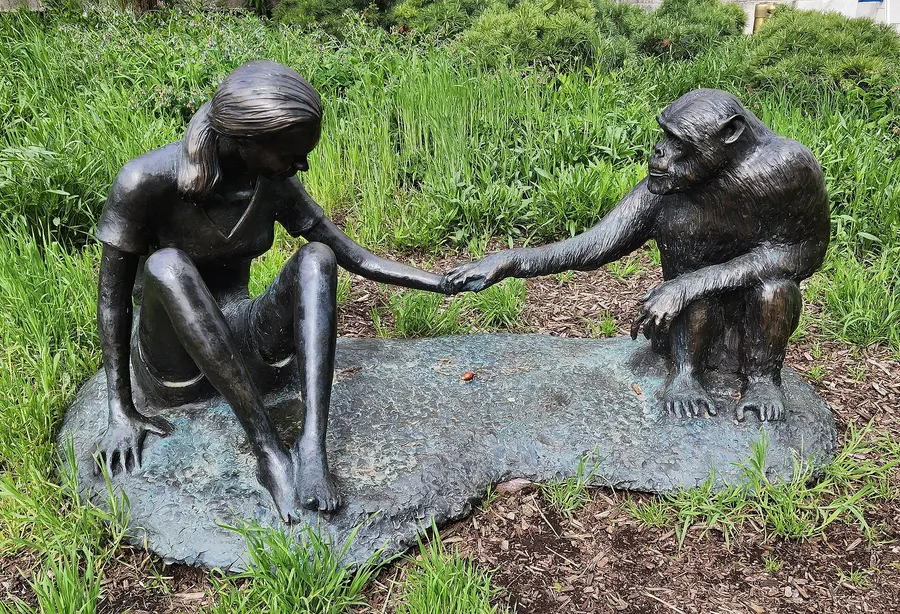
A sculpture of Jane Goodall with David Greybeard, the Gombe chimpanzee who first let her watch him use toolsA sculpture of Jane Goodall with David Greybeard, the Gombe chimpanzee who first let her watch him use toolsImage: Geary · CC0
science · Africa

Jane Goodall arrives at Gombe to study chimpanzees

Jane Goodall had no university degree when the Kenyan palaeontologist Louis Leakey took her on as a secretary and then chose her to study wild chimpanzees, whose behaviour he hoped would shed light on early humans. The site was the Gombe Stream Game Reserve on the eastern shore of Lake Tanganyika, in what was then British-ruled Tanganyika. The authorities would not let a young woman go alone, so her mother went with her. On 14 July 1960, aged 26, Goodall stepped ashore at Gombe with a tent and a cheap pair of binoculars. For months the chimpanzees fled from her, but in time she was accepted, and that autumn she watched a male she named David Greybeard strip leaves from a twig and use it to fish termites from a mound. Toolmaking had been thought to be unique to humans. Her study at Gombe became one of the longest-running of any wild animal, and 14 July is now marked as World Chimpanzee Day.

Source: Jane Goodall Institute: Gombe Stream Research Center ↗
1965
The first image of Mars from Mariner 4, coloured in by hand by JPL engineers from printed strips of data in July 1965, now framedThe first image of Mars from Mariner 4, coloured in by hand by JPL engineers from printed strips of data in July 1965, now framedImage: NASA/JPL/Dan Goods · Public domain
science · Global

Mariner 4 sends back the first close-up pictures of Mars

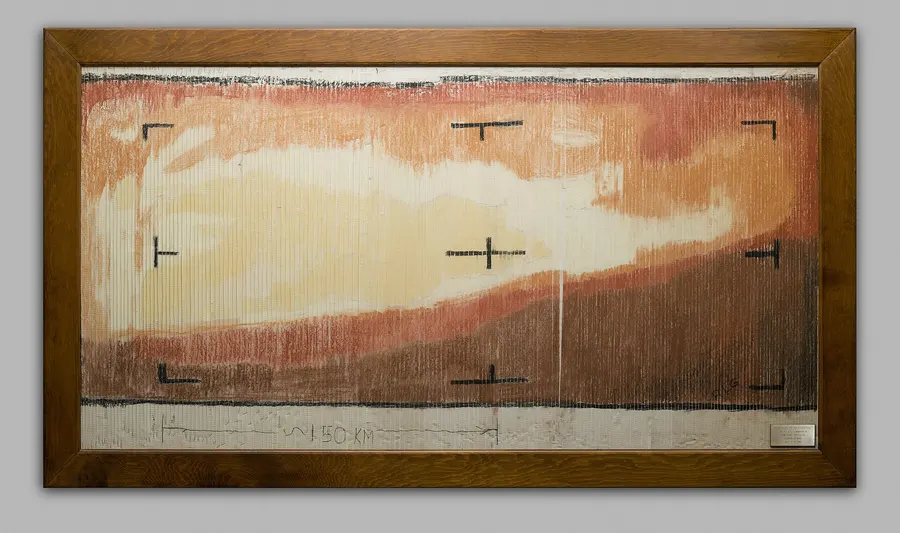
NASA’s Mariner 4 was launched in November 1964, and after a journey of 228 days it became the first spacecraft to fly past Mars. At its closest, on the evening of 14 July 1965 US time, it passed about 9,800 kilometres from the surface and took 21 pictures. They showed a cratered, Moon-like desert, ending hopes of canals or a living world. So eager were engineers to see the first image that they coloured in a printout of its numbers by hand.

Source: NASA: 55 years ago, Mariner 4 first to explore Mars ↗
1969
A map of Honduras and its neighbour El Salvador, the two sides in the war of July 1969A map of Honduras and its neighbour El Salvador, the two sides in the war of July 1969Image: JuanJose1969 · CC BY-SA 4.0
world · Americas

The Football War breaks out between El Salvador and Honduras

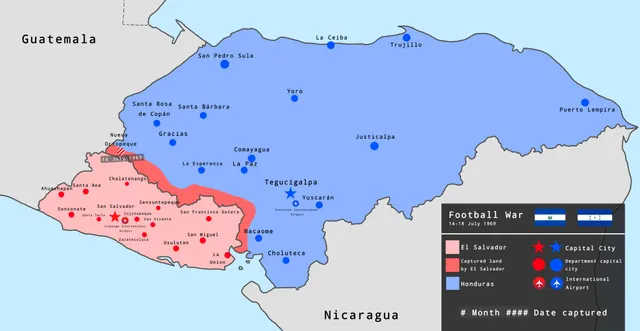
El Salvador was small and crowded, and by the 1960s some 300,000 Salvadorans had crossed into larger, emptier Honduras to farm and work. In 1969 Honduras began a land reform that took land from Salvadoran settlers and drove many of them out, and relations between the two governments turned hostile. In June the two national teams met in a three-game World Cup qualifying series, marked by violence between fans, and El Salvador won the deciding match. On 14 July 1969 the Salvadoran air force bombed Honduran airfields and its army invaded, taking several towns. Honduras hit back from the air, and after about four days the Organization of American States arranged a ceasefire; Salvadoran troops withdrew in early August. The war, remembered as the Football War or the Hundred Hours War, killed a few thousand people, most of them civilians, and left tens of thousands of Salvadorans displaced. A peace treaty was not signed until 1980.

Source: Britannica: Football War ↗
1976
The chamber of the House of Commons in Ottawa, where the vote was heldThe chamber of the House of Commons in Ottawa, where the vote was heldImage: Makaristos · Public domain
politics · Americas

Canada’s Parliament votes to abolish the death penalty

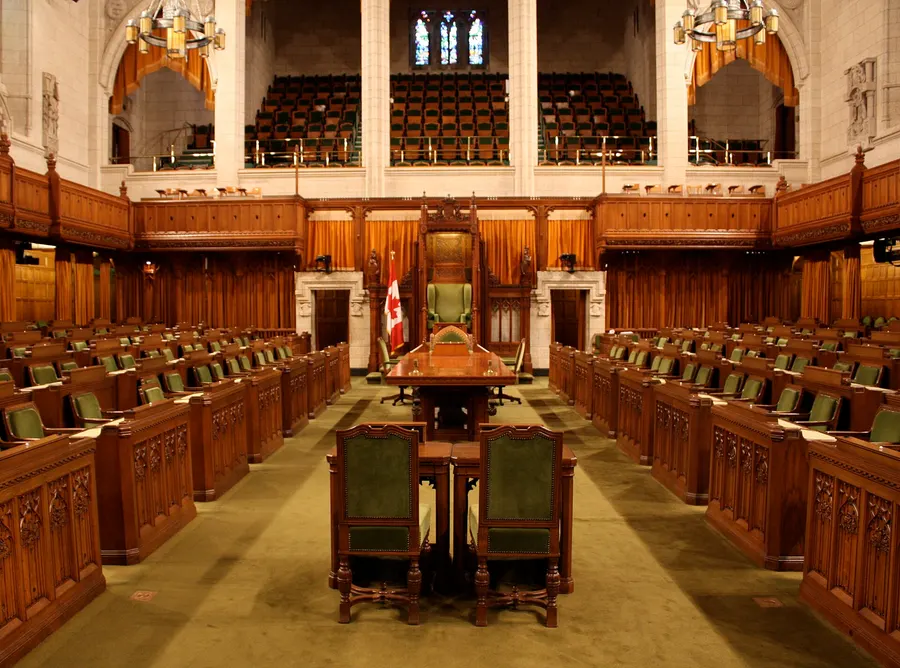
Canada had hanged 710 people since 1859, but no execution had taken place since 1962, and death sentences were routinely commuted. Pierre Trudeau’s government brought in a bill to end capital punishment for murder, and on 14 July 1976 the House of Commons passed it on a free vote by a majority of just six. Murder was divided into first and second degree, with life imprisonment for the first. The death penalty for military crimes lasted until 1998.

Source: The Canadian Encyclopedia: Capital punishment in Canada ↗
VI
2000 TO TODAY

Modern Day

The events of recent decades that have already become part of the historical record.

2015
Pluto in true colour, pieced together from New Horizons images taken during the flyby, with the pale heart-shaped plain on its facePluto in true colour, pieced together from New Horizons images taken during the flyby, with the pale heart-shaped plain on its faceImage: NASA/Johns Hopkins APL/Southwest Research Institute/Alex Parker · Public domain
science · Global

New Horizons sweeps past Pluto

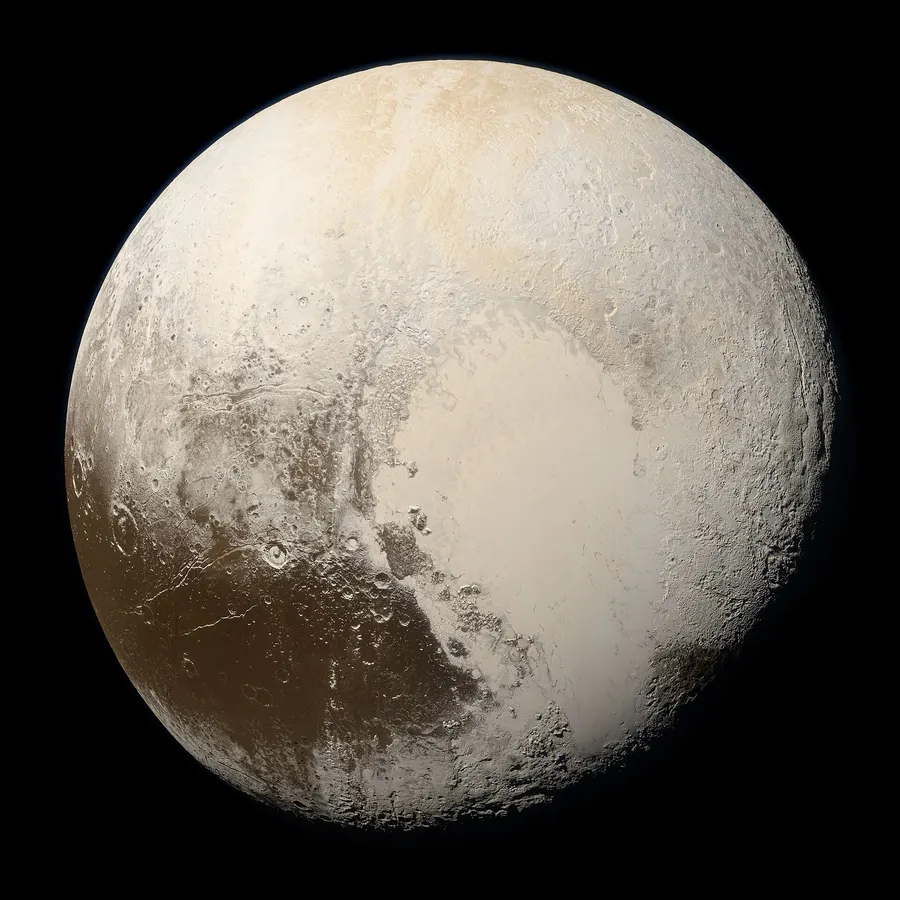
When NASA’s New Horizons probe was launched in January 2006, Pluto was still counted as the ninth planet and had never been seen as more than a blur of pixels. By the time the piano-sized spacecraft arrived, after more than nine years and about 3 billion miles, astronomers had reclassified it as a dwarf planet, but it remained the last of the classical planets never visited by a spacecraft. At 11:50 GMT on 14 July 2015 New Horizons passed about 12,500 kilometres above Pluto’s surface, travelling at more than 49,000 kilometres an hour, and then flew on past its large moon Charon. Its pictures revealed a far more active world than expected: mountains of water ice, a vast smooth plain of nitrogen ice, later named Sputnik Planitia, that forms part of a bright heart-shaped region, and a thin blue haze. The spacecraft went on into the Kuiper Belt and flew past the small, distant object Arrokoth in 2019.

Source: NASA: NASA’s three-billion-mile journey to Pluto reaches historic encounter ↗
WHY THESE MOMENTS?

Significance before volume

This page is not the longest possible list of events. It is a chronological journey through 14 July, where each entry is chosen for historical significance, human interest and reliability.

Facts are checked against authoritative museums, archives, universities and reference works. Where sources disagree, the page says so.

EXPLORED THE DEEPER STORY?

Return to the highlights of 14 July

Discover the lighter side of the date with famous birthdays, culture, firsts and lives remembered.

Explore This Day →
← PREVIOUS DAY13 July
HISTORY & TIMELINE14 July
NEXT DAY →15 July