
HISTORY & TIMELINE
3 February

A journey through
3 February in history

The third day of February has seen the first soft landing on the Moon, New Zealand’s deadliest earthquake, the plane crash that killed Buddy Holly and the opening of the first Winter Olympics in Asia. This timeline follows 3 February from the fifteenth century to the twentieth.

JUMP THROUGH TIME
II
THE MIDDLE AGES

Medieval History

Kingdoms, conflict, faith, power and the changing medieval world.

1488
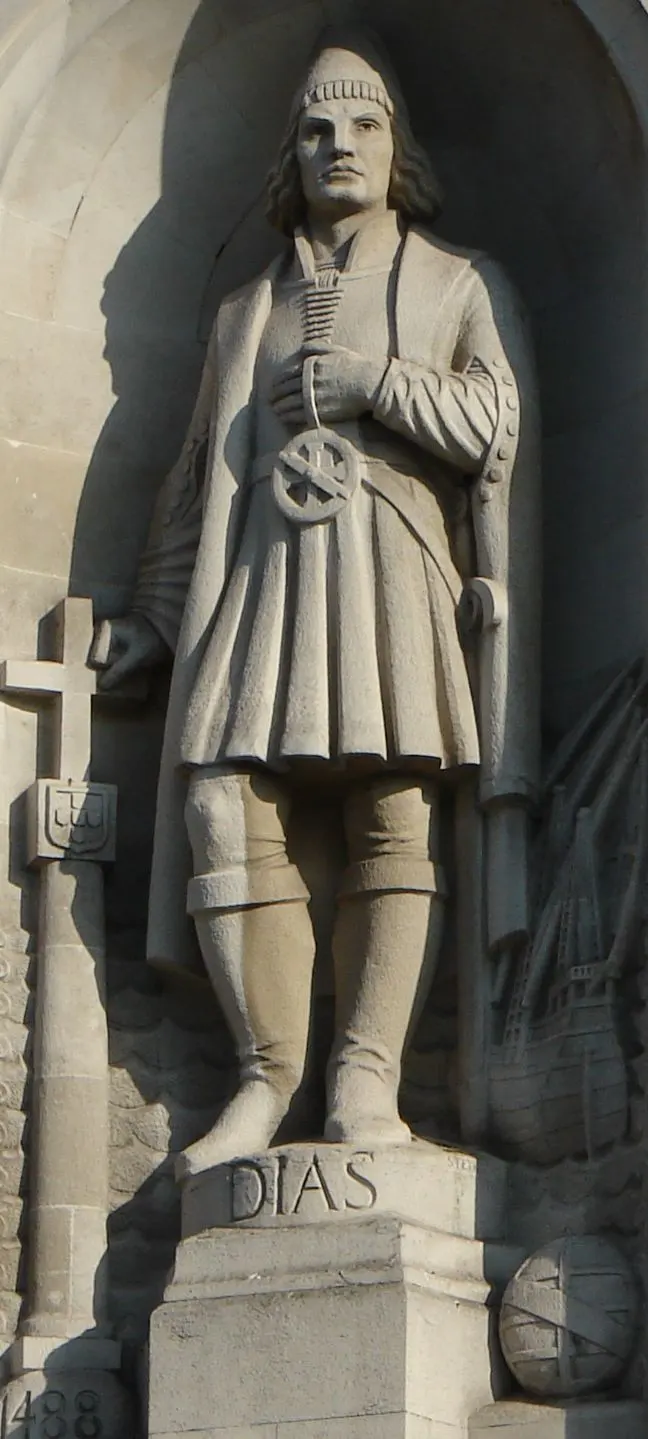
The statue of Bartolomeu Dias on South Africa House, the South African High Commission in London.The statue of Bartolomeu Dias on South Africa House, the South African High Commission in London.Image: Bartolomeu_Dias,_South_Africa_House.JPG: RedCoat (en:User:RedCoat10) derivative work: Biser Todorov (talk) · CC BY-SA 3.0
world · Africa

Bartolomeu Dias lands at Mossel Bay after rounding the tip of Africa

For decades Portuguese captains had crept down the west coast of Africa, looking for a sea route to the spices of India. In 1487 King John II sent Bartolomeu Dias south with three ships. Off the coast of present-day Namibia a storm drove them far out to sea for days. When Dias turned east and then north again, there was no coast where he expected it: without seeing it, he had passed the southern end of the continent. On 3 February 1488 his ships put in at a bay he named São Brás, now Mossel Bay in South Africa, where the crews took on water and traded with Khoikhoi herders; the meeting ended in a clash in which one Khoikhoi man was killed. Dias’s voyage proved that the Atlantic and Indian Oceans met, and a decade later Vasco da Gama followed his route to India.

Source: South African History Online: Bartolomeu Dias reaches present-day Mossel Bay ↗
IV
THE NINETEENTH CENTURY

The 1800s

Industry, empire, invention, reform and a century of enormous transformation.

1830
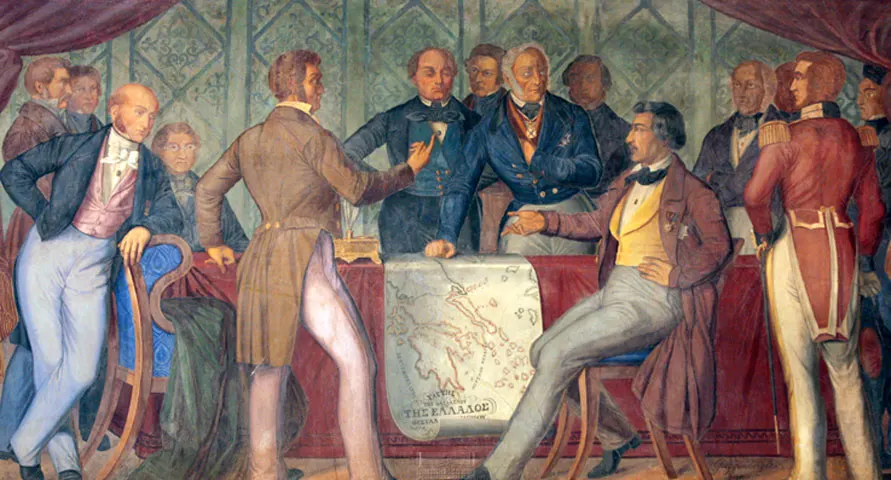
The signing of the London Protocol, painted in 1842 by Ludwig Michael von Schwanthaler for the frieze of the Trophy Hall in the Greek Parliament building.The signing of the London Protocol, painted in 1842 by Ludwig Michael von Schwanthaler for the frieze of the Trophy Hall in the Greek Parliament building.Image: Ludwig Michael von Schwanthaler · Public domain
politics · Europe

The Great Powers declare Greece an independent state

The Greeks rose against Ottoman rule in 1821, and after years of fighting Britain, France and Russia stepped in, destroying the Ottoman and Egyptian fleet at Navarino in 1827. The question was what kind of Greece would follow: a self-governing province paying tribute to the sultan, or a state of its own. On 3 February 1830 the three powers signed a protocol in London declaring that Greece would be an independent monarchy under their protection, with all the rights of a sovereign state. It was the first international act to recognise Greece as fully independent, though its borders were drawn more tightly than the Greeks had hoped. The Ottoman government accepted the protocol that spring, and in 1832 the powers chose a Bavarian prince, Otto, as the first king.

Source: Hellenic Ministry of Foreign Affairs, Greece Liberated: international treaties and protocols ↗
1870
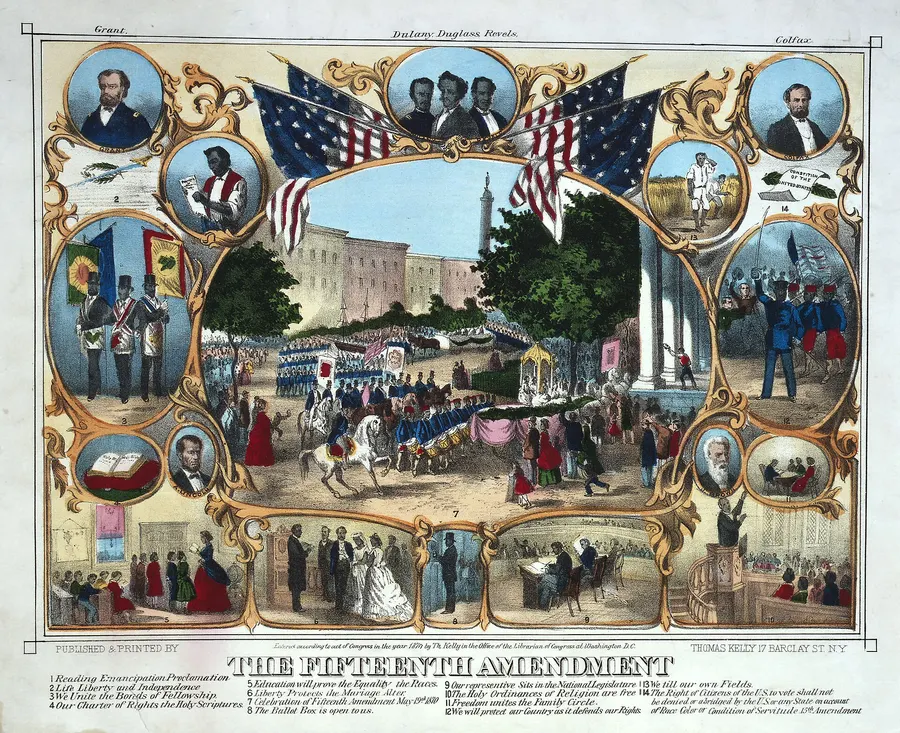
The Fifteenth Amendment, an 1870 print by Thomas Kelly celebrating the amendment with a parade and portraits of Black leaders and abolitionists.The Fifteenth Amendment, an 1870 print by Thomas Kelly celebrating the amendment with a parade and portraits of Black leaders and abolitionists.Image: Thomas Kelly · Public domain
world · Americas

The Fifteenth Amendment is ratified

After the Civil War the United States abolished slavery and, in the Fourteenth Amendment, made the formerly enslaved citizens. But whether a citizen could vote was still decided by each state, and many refused the vote to Black men. Congress passed a new amendment in February 1869, and on 3 February 1870 it was ratified, forbidding the federal government and the states to deny the vote ‘on account of race, color, or previous condition of servitude’. Black men voted and were elected in large numbers during Reconstruction, but after it ended Southern states used poll taxes, literacy tests and violence to shut them out again. Women of all races were still excluded, and the amendment’s promise was only fully enforced after the Voting Rights Act of 1965.

Source: US National Archives: 15th Amendment to the U.S. Constitution, voting rights (1870) ↗
V
THE TWENTIETH CENTURY

The 1900s

War and peace, technological leaps, social change, politics, sport and popular culture.

1913
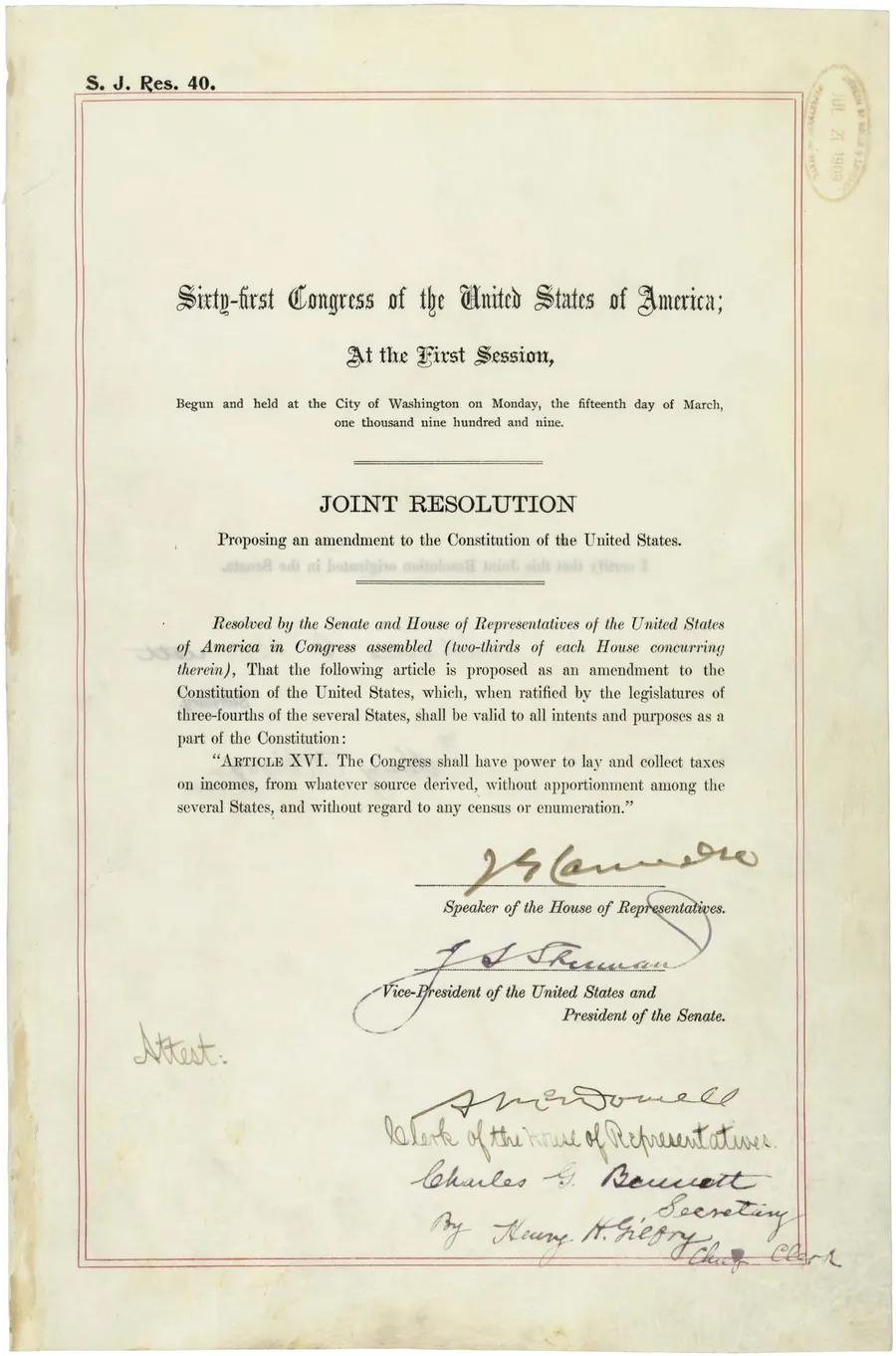
The joint resolution of Congress proposing the Sixteenth Amendment, signed in 1909 (US National Archives).The joint resolution of Congress proposing the Sixteenth Amendment, signed in 1909 (US National Archives).Image: National Archives of the United States · Public domain
politics · Americas

The United States gains the power to levy an income tax

In 1895 the Supreme Court had struck down a federal income tax, so the only way to bring one back was to change the Constitution. The Sixteenth Amendment, passed by Congress in 1909, was ratified on 3 February 1913, when Delaware became the thirty-sixth state to approve it. Congress set the first tax that autumn at 1 per cent, and fewer than one American in a hundred paid it.

Source: US National Archives: 16th Amendment to the U.S. Constitution, federal income tax (1913) ↗
1930
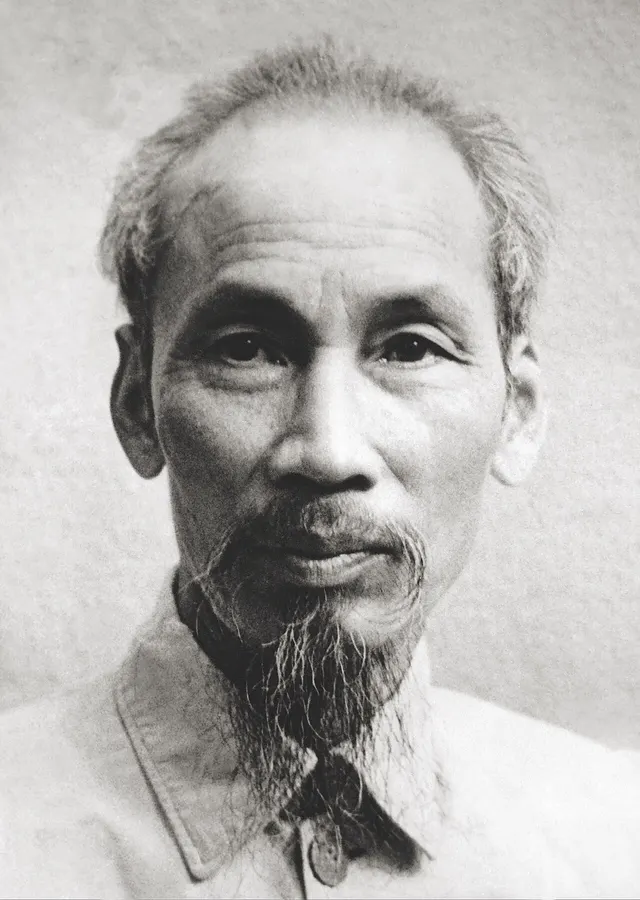
Ho Chi Minh, who chaired the founding conference under the name Nguyen Ai Quoc, in a portrait from 1946.Ho Chi Minh, who chaired the founding conference under the name Nguyen Ai Quoc, in a portrait from 1946.Image: Unknown authorUnknown author · Public domain
politics · Asia

The Communist Party of Vietnam is founded in Hong Kong

In the late 1920s French rule in Indochina faced a growing opposition, but Vietnam’s communists were split into rival groups. The Communist International sent Nguyen Ai Quoc, the revolutionary later known as Ho Chi Minh, to bring them together. Meeting in secret in Kowloon, in British-ruled Hong Kong, delegates agreed to merge their organisations into one party, and 3 February 1930 is kept as its founding day. Renamed the Indochinese Communist Party later that year, it led the fight against France and then the long war that ended with the reunification of Vietnam in 1975. It has governed the country ever since.

Source: Encyclopaedia Britannica: Indochinese Communist Party ↗
1931
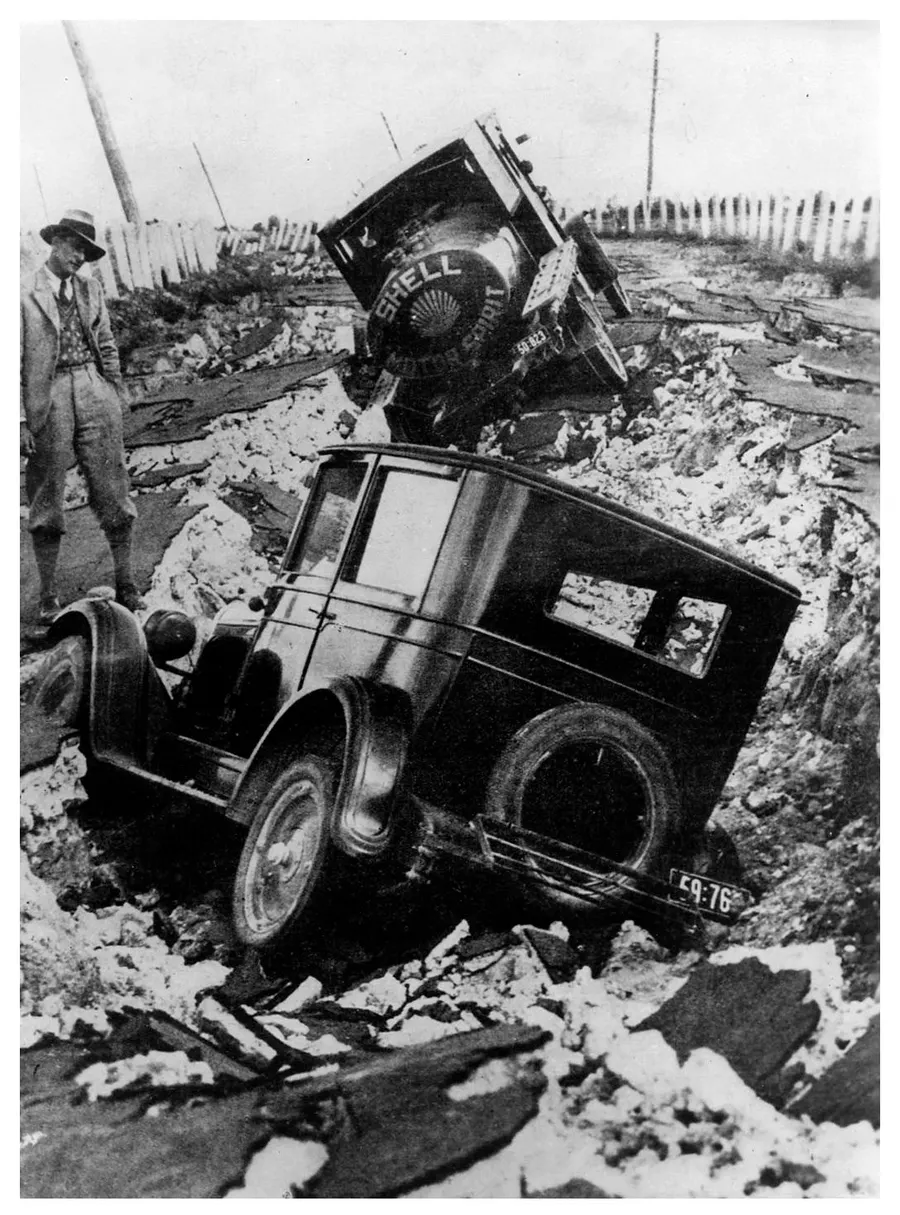
A car wrecked among the rubble after the Hawke's Bay earthquake of 1931 (Archives New Zealand).A car wrecked among the rubble after the Hawke’s Bay earthquake of 1931 (Archives New Zealand).Image: Archives New Zealand from New Zealand · Public domain
world · Oceania

An earthquake destroys Napier and Hastings in New Zealand

At 10.47 on the morning of 3 February 1931 a magnitude 7.8 earthquake struck Hawke’s Bay on New Zealand’s North Island. Buildings collapsed in Napier and Hastings, and fire swept through central Napier; 256 people died, making it the country’s deadliest natural disaster. The land rose by up to two metres, lifting a lagoon out of the sea, and Napier was rebuilt in the Art Deco style it is known for today.

Source: NZHistory, Ministry for Culture and Heritage: Hawke’s Bay earthquake ↗
1945
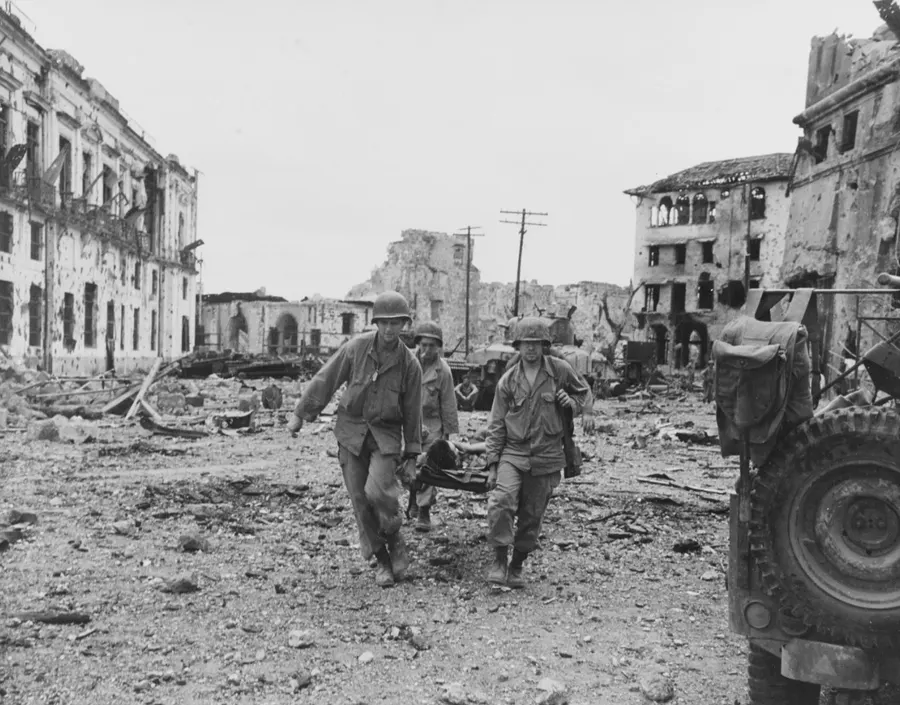
US soldiers carry a wounded man on a stretcher through wrecked buildings in Manila's walled city, 23 February 1945.US soldiers carry a wounded man on a stretcher through wrecked buildings in Manila’s walled city, 23 February 1945.Image: National Archives 80-G-273406 · Public domain

world · Asia

American troops reach Manila and free the Santo Tomas internees

On the evening of 3 February 1945 a fast-moving column of the US 1st Cavalry Division entered Manila and broke into the University of Santo Tomas, where the Japanese had held more than 3,700 Allied civilians for three years. It was the start of a month of street fighting for the Philippine capital. By early March much of the old city lay in ruins, and around 100,000 Filipino civilians had been killed, many of them murdered by Japanese forces.

Source: The National WWII Museum: liberation of the Philippines, 1945 ↗
1959
The memorial at the crash site near Clear Lake, Iowa, to Buddy Holly, Ritchie Valens, J. P. Richardson and their pilot.The memorial at the crash site near Clear Lake, Iowa, to Buddy Holly, Ritchie Valens, J. P. Richardson and their pilot.Image: Travellers & Tinkers · CC BY-SA 4.0
culture · Americas

Buddy Holly, Ritchie Valens and the Big Bopper die in a plane crash

In the winter of 1959 a package of rock and roll acts was touring the American Midwest on a cold, unreliable bus. After a show in Clear Lake, Iowa, Buddy Holly chartered a small plane to take him ahead to the next date, and Ritchie Valens and J. P. Richardson, ‘the Big Bopper’, took the other seats. The plane came down in a snowy cornfield soon after take-off in the early hours of 3 February 1959, killing all three musicians and the 21-year-old pilot, Roger Peterson. Holly was 22 and Valens 17. Don McLean later called it ‘the day the music died’ in his song American Pie.

Source: Encyclopaedia Britannica: The Day the Music Died ↗
1966
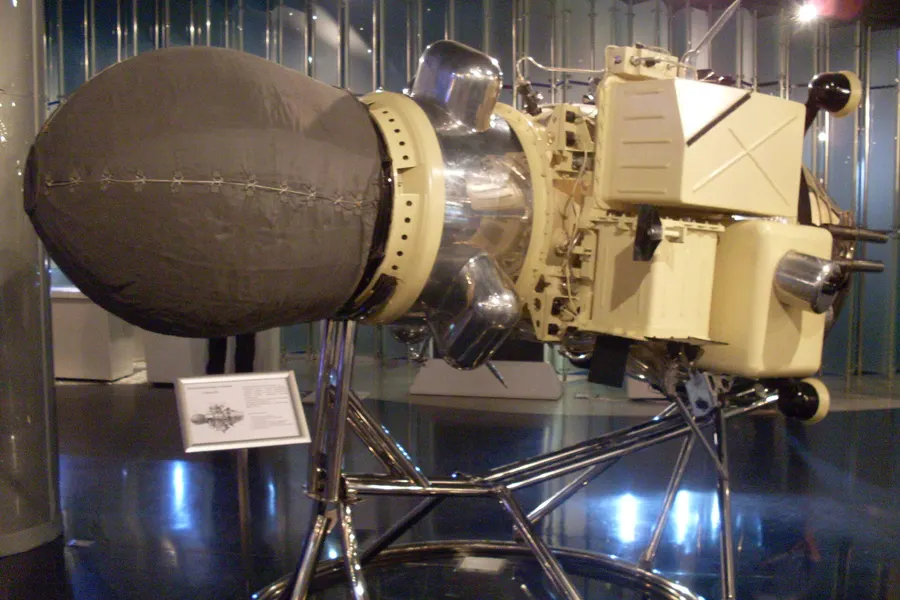
A full-size model of the Luna 9 spacecraft in the Memorial Museum of Astronautics, Moscow.A full-size model of the Luna 9 spacecraft in the Memorial Museum of Astronautics, Moscow.Image: Armael · CC0
science · Europe

Luna 9 makes the first soft landing on the Moon

Before anyone could land on the Moon, engineers needed to know whether its surface would bear weight at all; some scientists feared a craft might sink into deep dust. Several Soviet attempts at a soft landing had failed. Luna 9 was launched on 31 January 1966. On 3 February its small landing capsule was set down in the Ocean of Storms, bounced to a halt and opened its petals. Over the next three days, running on batteries, it sent back the first pictures taken on the surface of another world, showing solid ground scattered with stones. The way was clear for landers, and for people.

Source: NASA Space Science Data Coordinated Archive: Luna 9 ↗
1972
The Okurayama ski jump in Sapporo, the large-hill venue of the 1972 Winter Olympics, photographed in summer.The Okurayama ski jump in Sapporo, the large-hill venue of the 1972 Winter Olympics, photographed in summer.Image: Daigaku2051 · CC BY-SA 3.0
sport · Asia

The Sapporo Winter Olympics open, the first in Asia

Sapporo, the largest city on Japan’s northern island of Hokkaido, had been chosen to hold the Winter Olympics of 1940, but the war took the Games away. More than three decades later it got its chance. The Games opened on 3 February 1972, with about a thousand athletes from 35 nations. They were the first Winter Olympics held outside Europe and North America, and Japanese ski jumpers took all three medals on the normal hill, led by Yukio Kasaya. The city was left with a subway, new roads and venues that still host winter sport.

Source: Olympics.com: Sapporo 1972, the first Olympic Winter Games in Asia ↗
WHY THESE MOMENTS?

Significance before volume

This page is not the longest possible list of events. It is a chronological journey through 3 February, where each entry is chosen for historical significance, human interest and reliability.

Facts are checked against authoritative museums, archives, universities and reference works. Where sources disagree, the page says so.

EXPLORED THE DEEPER STORY?

Return to the highlights of 3 February

Discover the lighter side of the date with famous birthdays, culture, firsts and lives remembered.

Explore This Day →
← PREVIOUS DAY2 February
HISTORY & TIMELINE3 February
NEXT DAY →4 February