
HISTORY & TIMELINE
20 February

A journey through
20 February in history

From Scotland’s claim to Orkney and Shetland in 1472 to the fall of a dictator’s statue in Tirana in 1991, 20 February has brought new frontiers on land, in the arts and in orbit. This timeline follows the date across five centuries.

JUMP THROUGH TIME
II
THE MIDDLE AGES

Medieval History

Kingdoms, conflict, faith, power and the changing medieval world.

1472
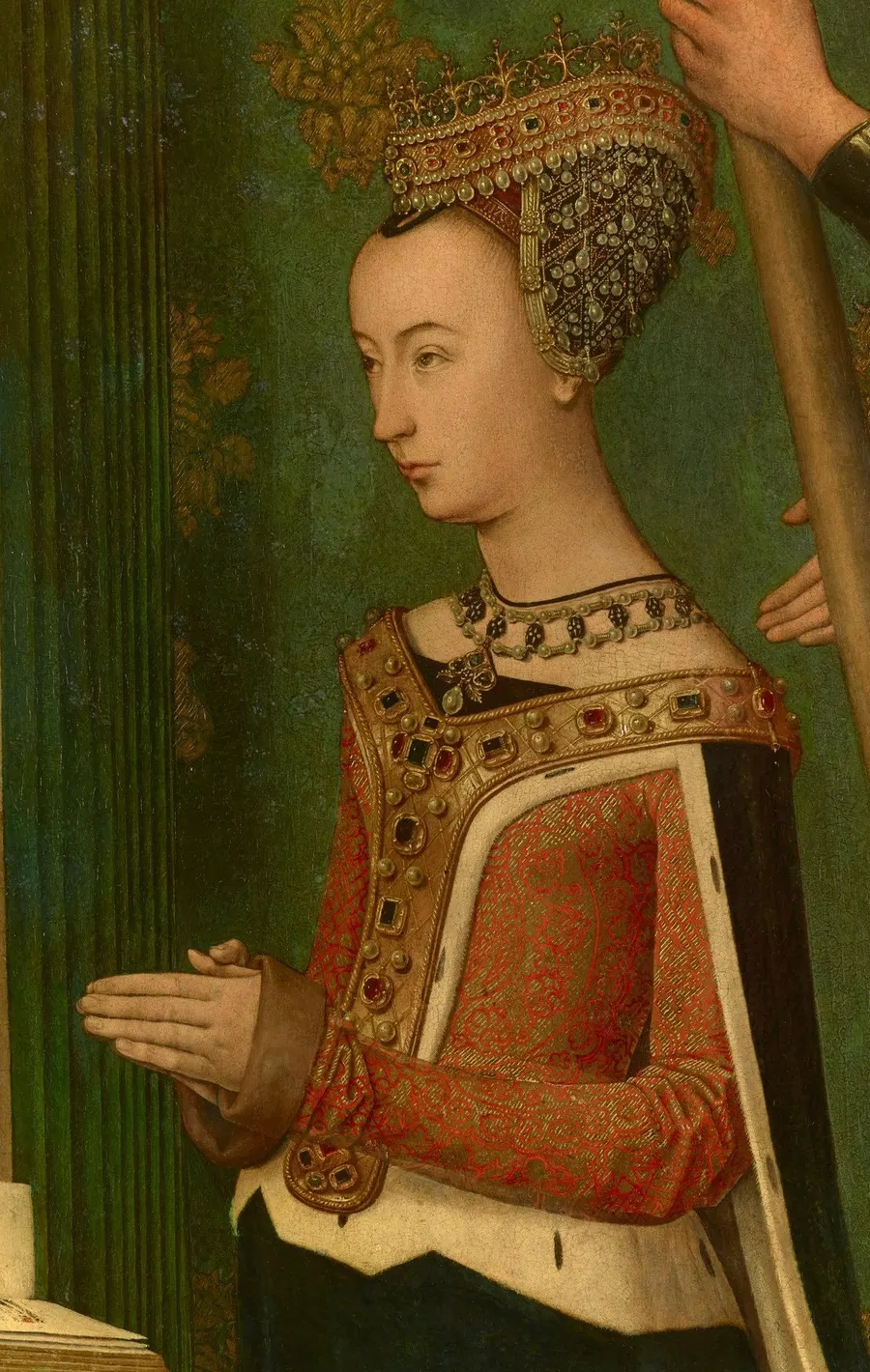
Margaret of Denmark, Queen of Scotland, from the Trinity Altarpiece by Hugo van der Goes, about 1478.Margaret of Denmark, Queen of Scotland, from the Trinity Altarpiece by Hugo van der Goes, about 1478.Image: Hugo van der Goes · Public domain
politics · Europe

Scotland annexes Orkney and Shetland

When James III of Scotland married Margaret of Denmark in 1469, her father, King Christian I of Denmark and Norway, could not pay her dowry. He pledged first Orkney and then Shetland instead, meaning to redeem them later. The money never came. On 20 February 1472 James annexed the islands to the Scottish crown, promising they would never be given away except to a legitimate son of the king. Their Norse laws and language faded only slowly over the following centuries.

Source: Shetland Museum and Archives: 550 years ago, how Shetland became part of Scotland ↗
IV
THE NINETEENTH CENTURY

The 1800s

Industry, empire, invention, reform and a century of enormous transformation.

1816
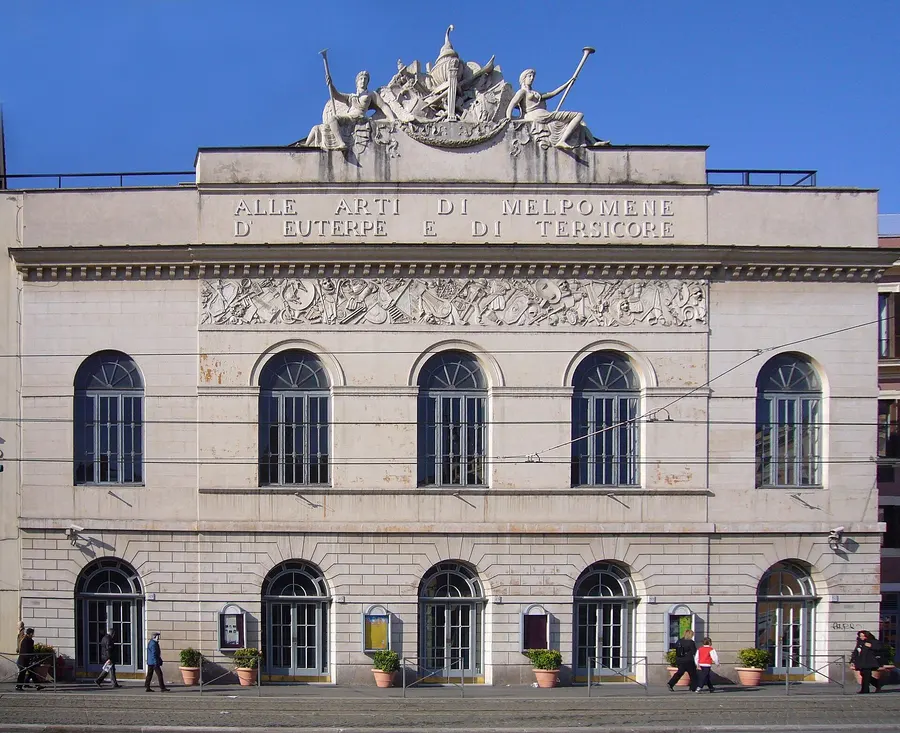
The Teatro Argentina in Rome, where The Barber of Seville was first performed.The Teatro Argentina in Rome, where The Barber of Seville was first performed.Image: Lalupa · CC BY-SA 3.0
culture · Europe

Rossini’s Barber of Seville is booed at its premiere

Gioachino Rossini’s comic opera The Barber of Seville opened at the Teatro Argentina in Rome on 20 February 1816, under the title Almaviva, or the Useless Precaution. Rossini had written it in a few weeks, and the first night went badly: admirers of the older composer Giovanni Paisiello, who had set the same story, jeered, and things went wrong on stage. The second performance went far better, and the opera became one of the most popular ever written.

Source: Encyclopaedia Britannica: The Barber of Seville ↗
1835
The ruins of Concepción cathedral after the earthquake, drawn by John Clements Wickham of HMS Beagle.The ruins of Concepción cathedral after the earthquake, drawn by John Clements Wickham of HMS Beagle.Image: Drawing: John Clements Wickham (1798–1864); Engraving: S. Bull fl. 1838 - 1846 · Public domain
science · Americas

An earthquake destroys Concepción, with Darwin nearby

On the morning of 20 February 1835 a great earthquake struck southern Chile, and it and the sea wave that followed ruined the city of Concepción. Charles Darwin, travelling with HMS Beagle, felt it while lying in a forest near Valdivia, and later walked through the rubble of Concepción. He saw that mussel beds had been lifted above the tide line, evidence that earthquakes could raise the land, which shaped his thinking about how mountains form.

Source: Darwin Correspondence Project, University of Cambridge: Darwin’s earthquakes ↗
1872
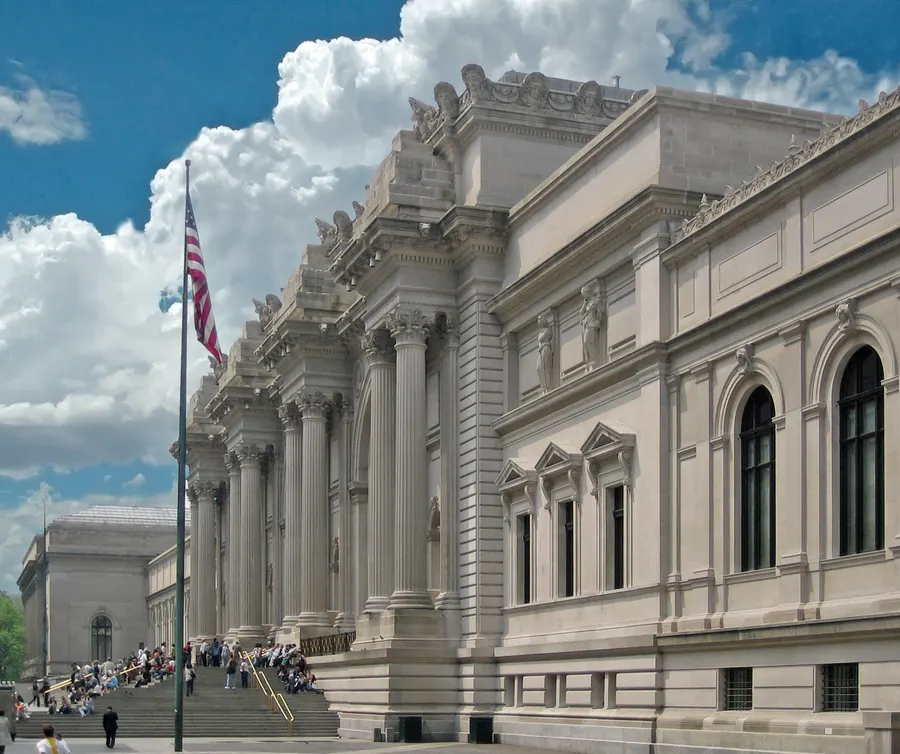
The Metropolitan Museum's Fifth Avenue entrance in 2007. The museum moved to this Central Park site in 1880.The Metropolitan Museum’s Fifth Avenue entrance in 2007. The museum moved to this Central Park site in 1880.Image: Arad · CC BY-SA 3.0
culture · Americas

The Metropolitan Museum of Art opens its doors

The Metropolitan Museum of Art opened to the public for the first time on 20 February 1872, in a rented former dance academy, the Dodworth Building, at 681 Fifth Avenue in New York. Founded in 1870 by businessmen, artists and thinkers who wanted to bring art and art education to Americans, it began with no building and no collection. Its trustees quickly bought 174 European paintings, known as the ‘Purchase of 1871’, to form its core. In 1880 the museum moved to its present home on the edge of Central Park, and it has grown into one of the largest art museums in the world.

Source: The Metropolitan Museum of Art: This weekend in Met history, February 20 ↗
V
THE TWENTIETH CENTURY

The 1900s

War and peace, technological leaps, social change, politics, sport and popular culture.

1909
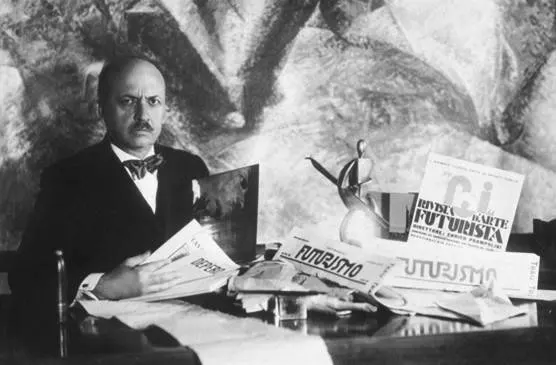
Filippo Tommaso Marinetti with Futurist newspapers, in a press photograph of about 1909.Filippo Tommaso Marinetti with Futurist newspapers, in a press photograph of about 1909.Image: Unknown · Public domain
culture · Europe

The Futurist Manifesto appears in Le Figaro

On 20 February 1909 the Paris newspaper Le Figaro printed Filippo Tommaso Marinetti’s ‘Manifesto of Futurism’ on its front page. It praised speed, machines and violence, and called for museums and libraries to be swept away. An Italian newspaper had printed it earlier that month, but Le Figaro gave it an international audience. The manifesto launched Futurism, a movement that spread from poetry to painting, sculpture, architecture and music. Marinetti led it until his death in 1944, and many of its members became closely tied to Mussolini’s Fascism.

Source: Encyclopaedia Britannica: Manifesto of Futurism ↗
1935
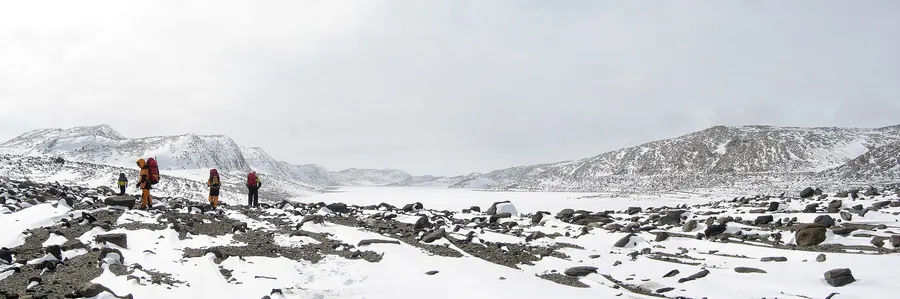
The Vestfold Hills, East Antarctica, in 2008.The Vestfold Hills, East Antarctica, in 2008.Image: Peter Schuller · CC BY-SA 3.0
world · Global

Caroline Mikkelsen lands in Antarctica

On 20 February 1935 the Norwegian whaling ship Thorshavn anchored off what are now called the Vestfold Hills in East Antarctica. A party of seven, including Caroline Mikkelsen, the Danish-born wife of the captain, rowed ashore to a small island, raised the Norwegian flag and left a cache of supplies. Later research showed she had landed on an offshore island rather than the mainland, but she is remembered as the first woman to set foot in Antarctica.

Source: Australian Antarctic Program: The first woman in Antarctica ↗
1943
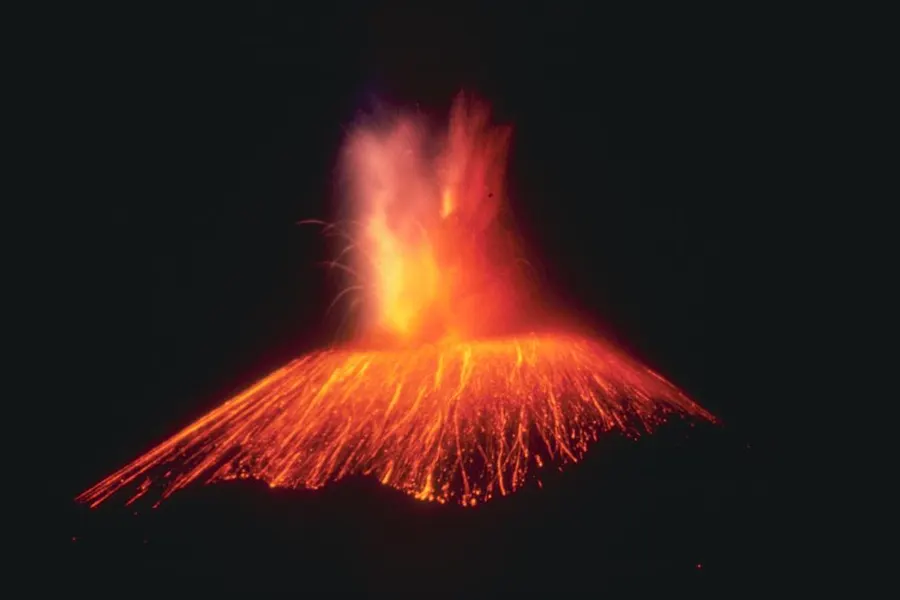
Parícutin erupting at night in 1943, photographed by R. E. Wilcox of the US Geological Survey.Parícutin erupting at night in 1943, photographed by R. E. Wilcox of the US Geological Survey.Image: R.E. Wilcox, U.S. Geological Survey · Public domain
science · Americas

A volcano is born in a Mexican cornfield

After weeks of earthquakes, a crack opened on 20 February 1943 in a cornfield belonging to Dionisio and Paula Pulido near the village of Parícutin, in the Mexican state of Michoacán. Within a day a cone of ash and cinders was rising from it. Parícutin erupted until 1952, burying two villages under lava. It was the first time scientists could follow a volcano’s whole life from its birth, and their studies changed how cinder cones are understood.

Source: Smithsonian Institution Archives: Parícutin volcano in its early stage of formation ↗
1962
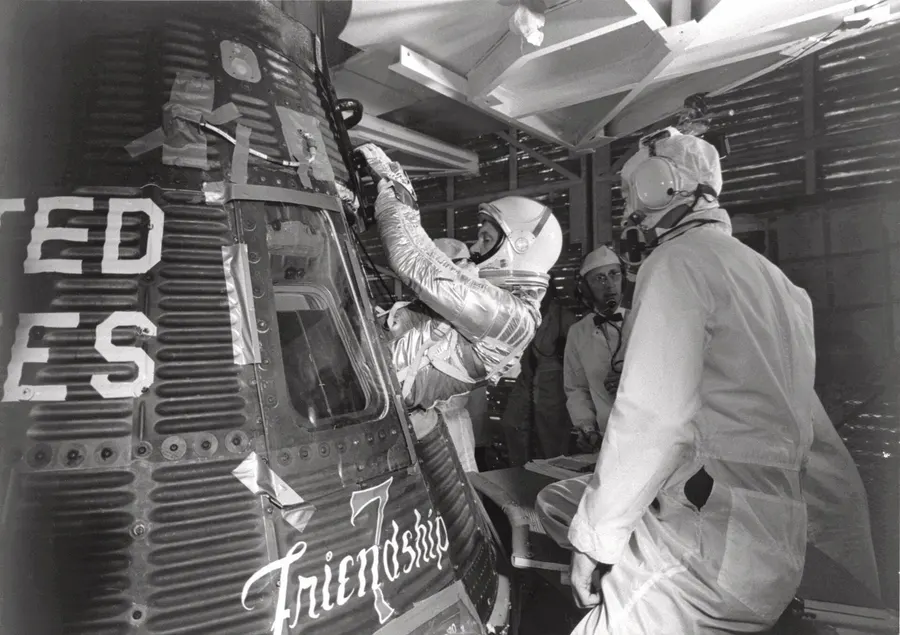
John Glenn climbs into Friendship 7 before launch on 20 February 1962.John Glenn climbs into Friendship 7 before launch on 20 February 1962.Image: NASA · Public domain
science · Americas

John Glenn orbits the Earth

At 9.47 in the morning on 20 February 1962 John Glenn lifted off from Cape Canaveral aboard Friendship 7 and became the first American to orbit the Earth. He circled the planet three times in 4 hours and 55 minutes. A faulty thruster forced him to fly parts of the mission by hand, and a warning light suggested his heat shield might be loose, so he was told to keep his retro-rocket pack on during re-entry. The capsule came down safely in the Atlantic, where the destroyer USS Noa picked it up.

Source: NASA: 60 years ago, John Glenn, the first American to orbit the Earth ↗
1986
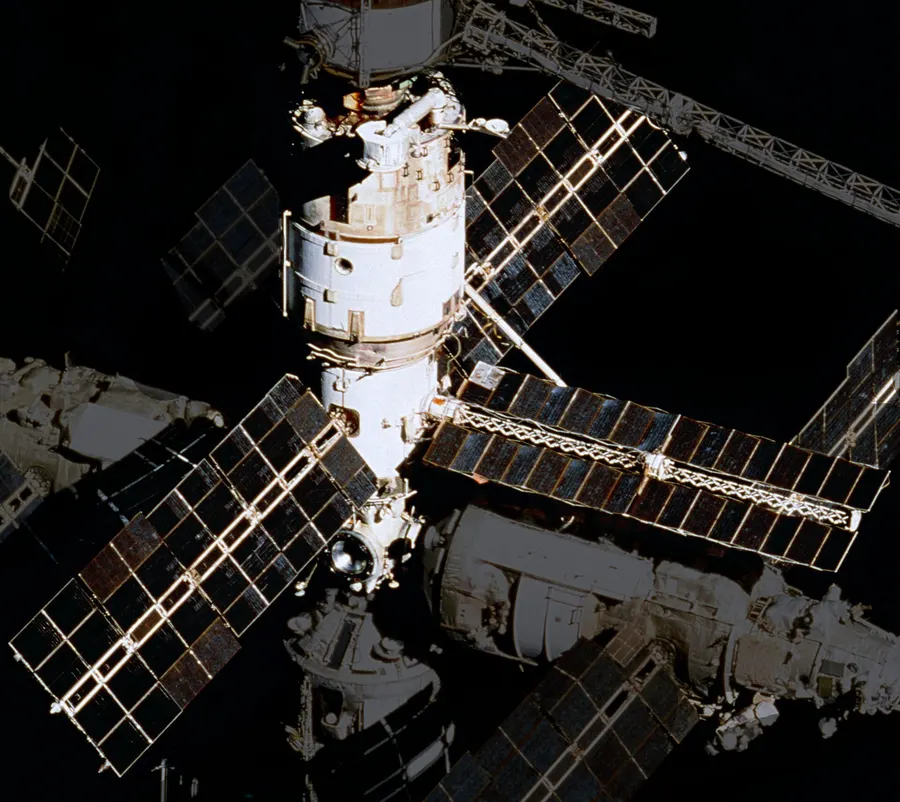
The Mir space station photographed from the space shuttle Atlantis in 1995, after more modules had been added.The Mir space station photographed from the space shuttle Atlantis in 1995, after more modules had been added.Image: NASA · Public domain
science · Europe

The Soviet Union launches Mir

The first module of the Soviet space station Mir was launched from the Baikonur Cosmodrome on a Proton rocket late on 19 February 1986 by Greenwich time, when it was already 20 February in Moscow. The core module held living quarters, life support and the station’s controls. Six more modules were added over ten years. Mir was occupied almost continuously from 1989 to 1999, hosted astronauts from many countries, and was brought down into the Pacific in 2001.

Source: NASA: 35 years ago, launch of Mir space station’s first module ↗
1988
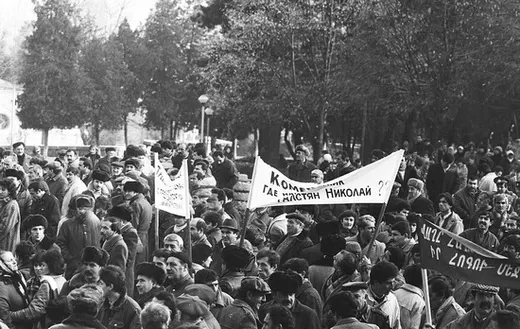
A rally of the Karabakh movement; its Commons record dates the photograph 20 February 1988.A rally of the Karabakh movement; its Commons record dates the photograph 20 February 1988.Image: Ռուսլան Սարգսյան · CC BY-SA 4.0
politics · Asia

Nagorno-Karabakh asks to join Armenia

On 20 February 1988 the regional council of Nagorno-Karabakh, a mainly Armenian autonomous region inside Soviet Azerbaijan, voted to ask for the region to be transferred to Soviet Armenia. Azerbaijan’s leaders refused the next day, and huge demonstrations in support of the request filled the streets of Yerevan. The vote opened one of the longest conflicts of the late Soviet era. Fighting between Armenians and Azerbaijanis grew into a full war after the Soviet Union broke up, and the dispute over the region lasted for more than three decades.

Source: Encyclopaedia Britannica: Nagorno-Karabakh ↗
1991
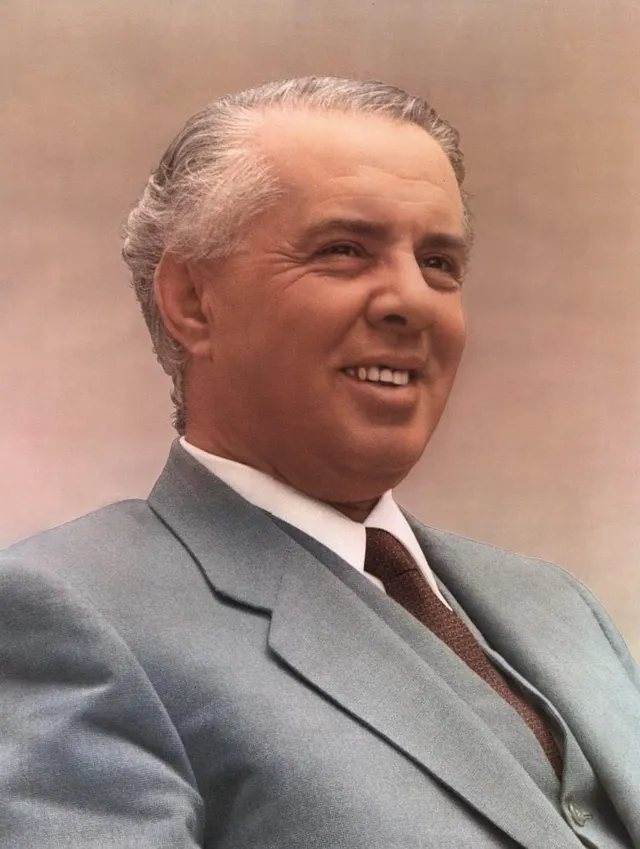
Enver Hoxha, who ruled Albania from 1944 until his death in 1985.Enver Hoxha, who ruled Albania from 1944 until his death in 1985.Image: Petrit Kumi · Public domain
politics · Europe

Albanians topple Enver Hoxha’s statue

On 20 February 1991 a large crowd in Tirana pulled down the giant statue of Enver Hoxha, the communist leader who had ruled Albania from 1944 until his death in 1985. Students had been boycotting classes and some were on hunger strike, demanding among other things that their university drop Hoxha’s name. The statue’s fall in the capital’s main square marked the symbolic end of nearly half a century of isolated communist rule. Albania held its first multi-party elections a few weeks later.

Source: Encyclopaedia Britannica: Tirana ↗
RESEARCH

Sources & Further Reading

Selected authoritative references supporting the events on this page.

WHY THESE MOMENTS?

Significance before volume

This page is not the longest possible list of events. It is a chronological journey through 20 February, where each entry is chosen for historical significance, human interest and reliability.

Facts are checked against authoritative museums, archives, universities and reference works. Where sources disagree, the page says so.

EXPLORED THE DEEPER STORY?

Return to the highlights of 20 February

Discover the lighter side of the date with famous birthdays, culture, firsts and lives remembered.

Explore This Day →