
HISTORY & TIMELINE
19 February

A journey through
19 February in history

From a Roman civil war decided outside Lyon in 197 to Fidel Castro stepping down in 2008, 19 February has seen empires tested, a volcano darken the sky and a president’s order uproot a community. This timeline follows the date across eighteen centuries.

I
EARLIEST RECORDS

Ancient & Early History

The earliest worthwhile records and events connected with this date.

197
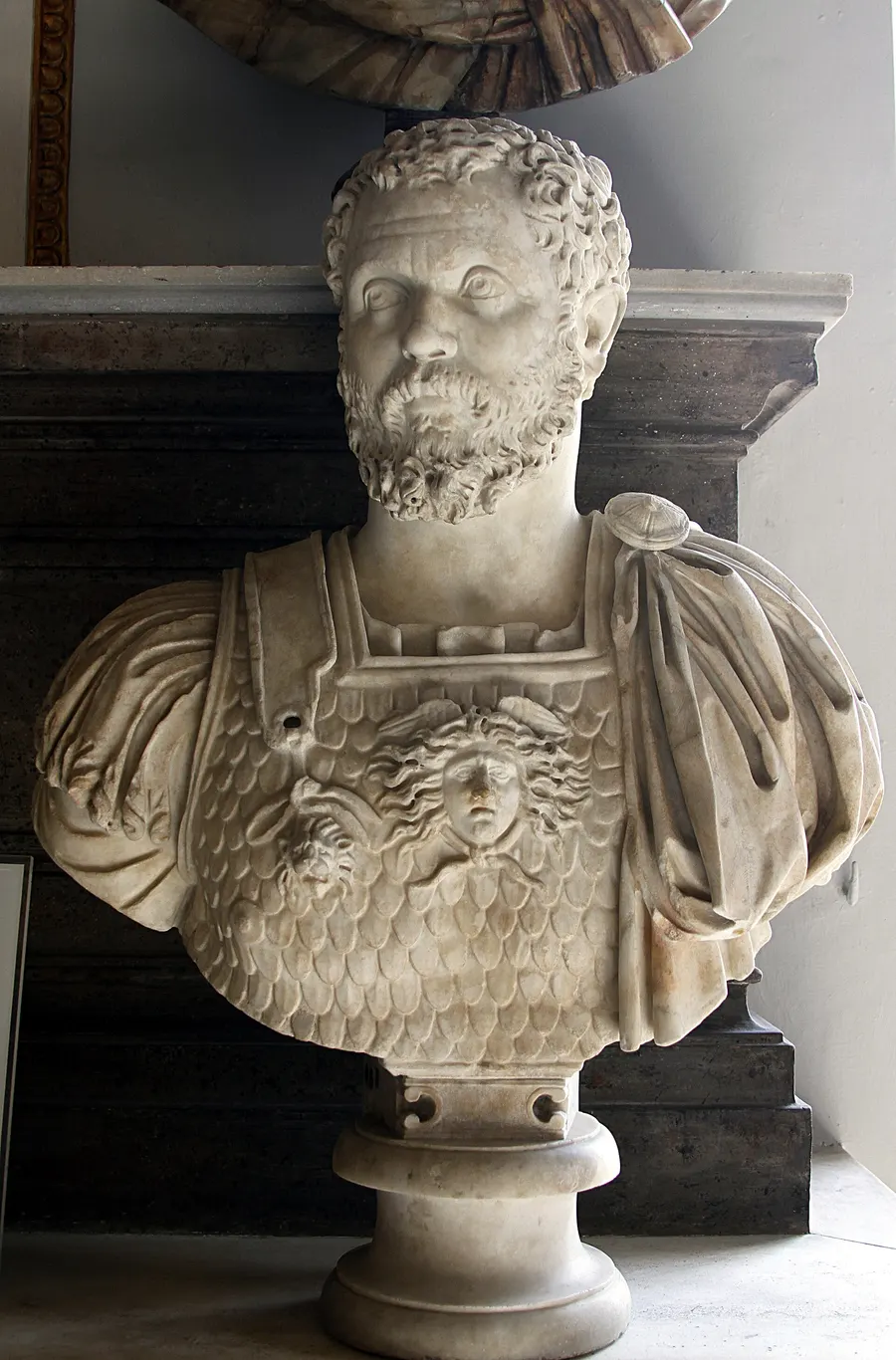
Bust of Clodius Albinus in the Capitoline Museums, Rome.Bust of Clodius Albinus in the Capitoline Museums, Rome.Image: José Luiz · CC BY-SA 4.0
world · Europe

Severus defeats Clodius Albinus at Lugdunum

On 19 February 197 the emperor Septimius Severus defeated his rival Clodius Albinus outside Lugdunum, today’s Lyon, in one of the largest battles fought between Roman armies. Albinus, who had brought the legions of Britain across to Gaul, died the same day, and Severus was left sole master of the empire.

Source: Encyclopaedia Britannica: Decimus Clodius Septimius Albinus ↗
III
A CHANGING WORLD

Early Modern Era

Exploration, political change, scientific development and expanding global connections.

1600
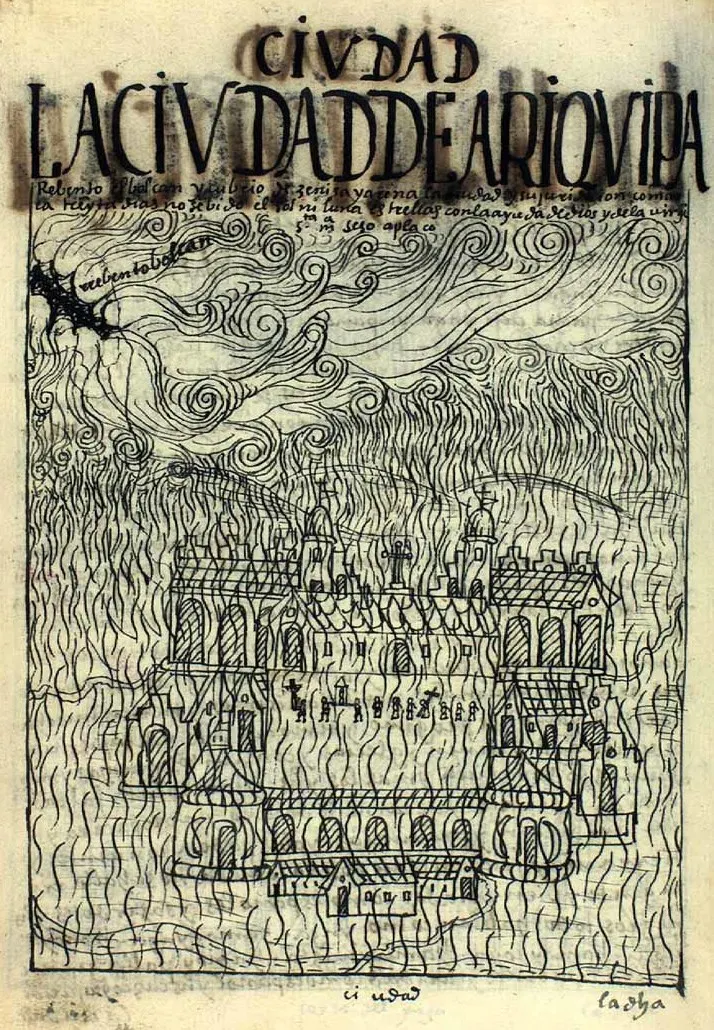
Ash falling on Arequipa during the eruption, in a drawing by the Andean chronicler Felipe Guaman Poma de Ayala, about 1615.Ash falling on Arequipa during the eruption, in a drawing by the Andean chronicler Felipe Guaman Poma de Ayala, about 1615.Image: Felipe Huaman Puma de Ayala · Public domain
world · Americas

Huaynaputina erupts in Peru

After several days of earthquakes, the Peruvian volcano Huaynaputina exploded on 19 February 1600, according to the Spanish chronicles that volcanologists use to reconstruct the event. It was the largest eruption in South America’s recorded history, throwing out around 30 cubic kilometres of ash and rock. Ash buried villages and fell thickly on Arequipa, and mudflows reached the Pacific, 120 km away. Scientists have linked the eruption to cold summers and failed harvests far beyond the Andes in the years that followed.

Source: Smithsonian Institution, Global Volcanism Program: Huaynaputina ↗
IV
THE NINETEENTH CENTURY

The 1800s

Industry, empire, invention, reform and a century of enormous transformation.

1878
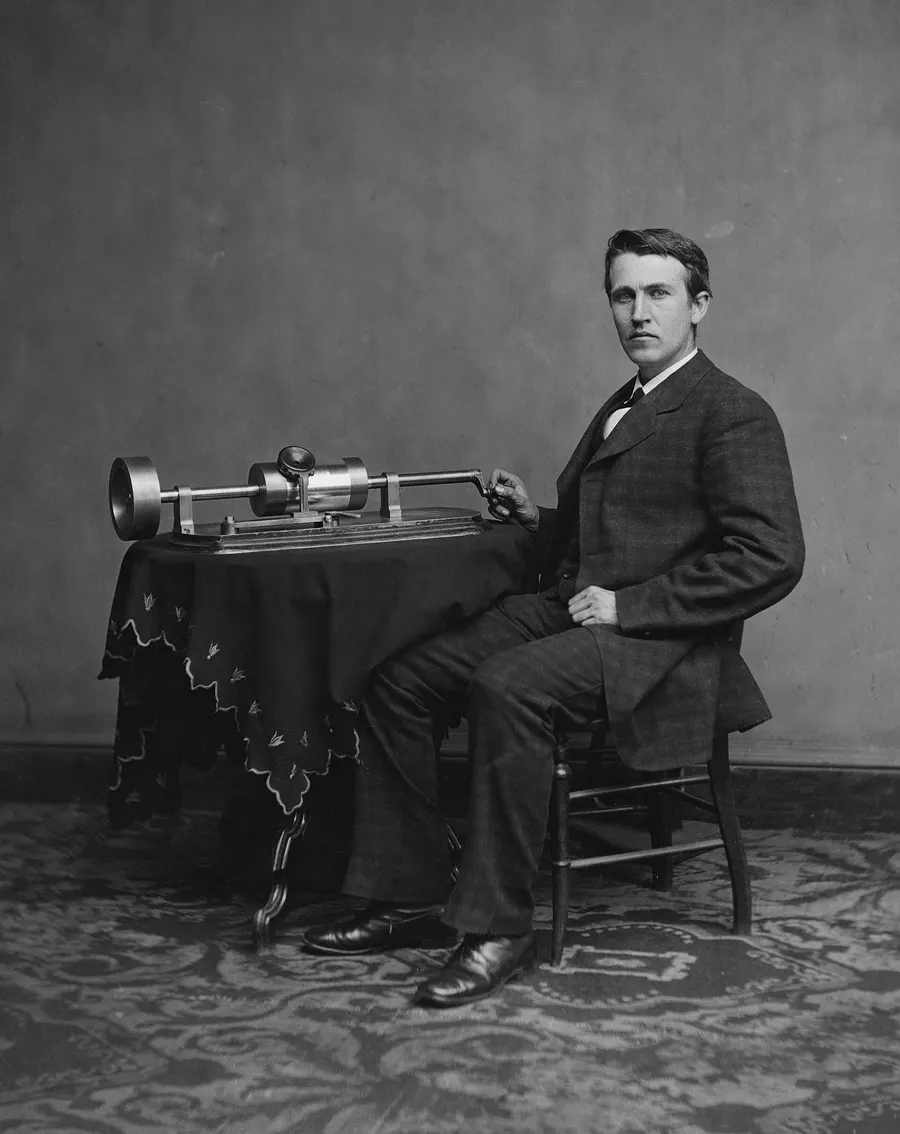
Thomas Edison with his tinfoil phonograph, photographed at Mathew Brady's studio.Thomas Edison with his tinfoil phonograph, photographed at Mathew Brady’s studio.Image: Levin C. Handy (per http://hdl.loc.gov/loc.pnp/cwpbh.04326) · Public domain
science · Americas

Edison is granted the phonograph patent

Thomas Edison’s patent for the phonograph was issued on 19 February 1878. He had filed it on 24 December 1877, only weeks after his workshop at Menlo Park built the first machine, which recorded sound as dents in a sheet of tinfoil wrapped round a turning cylinder. It was the first machine that could both record sound and play it back, and it made Edison famous. The tinfoil was fragile, and practical wax-cylinder phonographs arrived only in the late 1880s.

Source: Library of Congress: History of the cylinder phonograph ↗
V
THE TWENTIETH CENTURY

The 1900s

War and peace, technological leaps, social change, politics, sport and popular culture.

1915
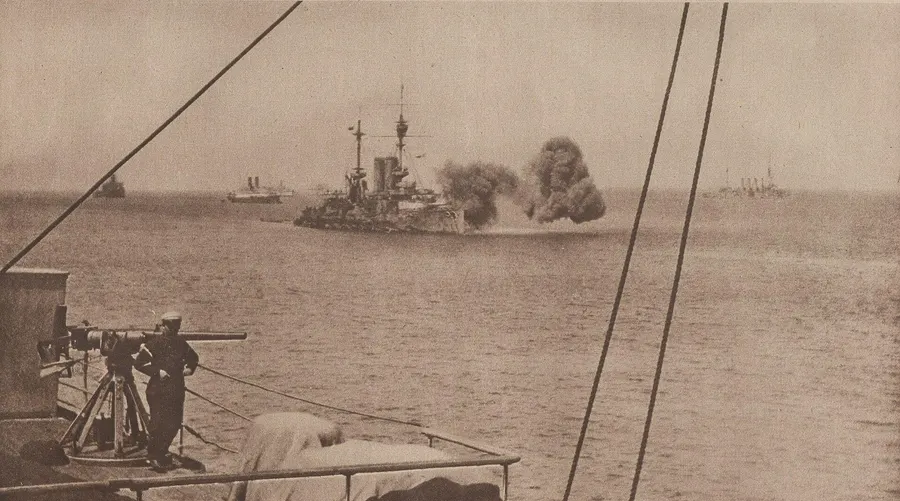
HMS Cornwallis, one of the battleships in the opening bombardment, firing on the Gallipoli peninsula later in 1915, seen from a French warship.HMS Cornwallis, one of the battleships in the opening bombardment, firing on the Gallipoli peninsula later in 1915, seen from a French warship.Image: Unknown authorUnknown author · Public domain
world · Asia

Allied warships open fire on the Dardanelles

On 19 February 1915 British and French warships began bombarding the Ottoman forts at the mouth of the Dardanelles, hoping to force the straits and reach Constantinople. The outer forts fell within a week, but the defences further in held, and after heavy losses to mines on 18 March the Allies turned to landing troops on Gallipoli.

Source: Imperial War Museums: A short history of the Dardanelles campaign ↗
1937
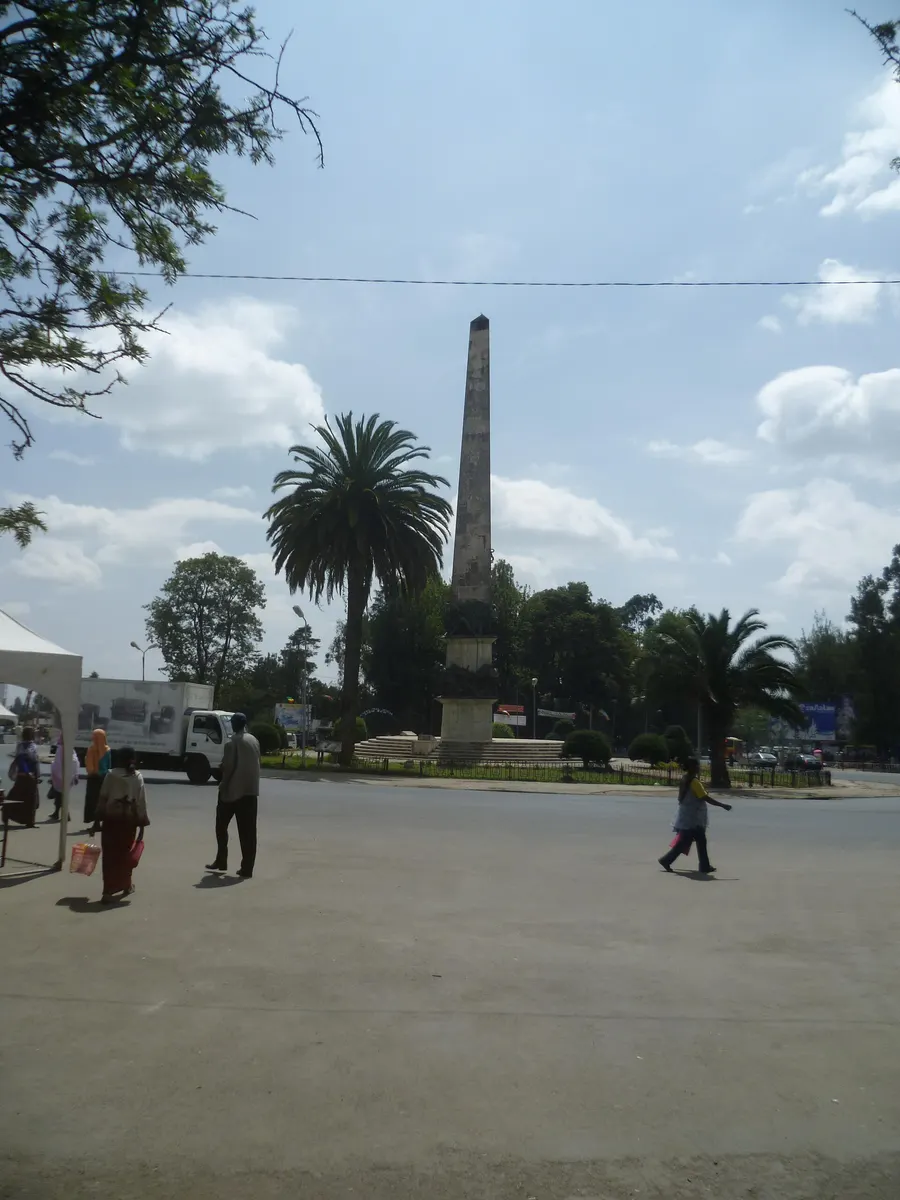
The Yekatit 12 Monument in Addis Ababa, which honours the victims.The Yekatit 12 Monument in Addis Ababa, which honours the victims.Image: Radosław Botev · CC BY 3.0 pl
world · Africa

The Yekatit 12 massacre begins in Addis Ababa

On 19 February 1937 (Yekatit 12 in the Ethiopian calendar) two men threw grenades at a ceremony held by Rodolfo Graziani, Italy’s viceroy in occupied Ethiopia. In the reprisals that followed, Italian forces and civilians killed thousands of Ethiopians in Addis Ababa over three days, and killings continued across the country for months. Historians’ estimates reach about 20,000 dead. The day is marked in Ethiopia as Martyrs’ Day.

Source: Cambridge University Press, Modern Italy: Italian massacres in occupied Ethiopia ↗
1942
An 'I am an American' sign in the window of a Japanese American grocery in Oakland, California, photographed by Dorothea Lange in March 1942 after the owner was ordered to leave.An ‘I am an American’ sign in the window of a Japanese American grocery in Oakland, California, photographed by Dorothea Lange in March 1942 after the owner was ordered to leave.Image: Dorothea Lange · Public domain
politics · Americas

Roosevelt signs Executive Order 9066

On 19 February 1942, ten weeks after Pearl Harbor, President Franklin D. Roosevelt signed Executive Order 9066. It allowed the Secretary of War and his commanders to declare military areas from which ‘any or all persons may be excluded’. It did not name any group, but it was used to remove people of Japanese ancestry from the West Coast. About 112,000 men, women and children, most of them American citizens, were forced into camps inland. In 1983 a federal commission found that the order had not been justified by military necessity, blaming ‘race prejudice, war hysteria and a failure of political leadership’.

Source: National Archives: Executive Order 9066 (1942) ↗
1942
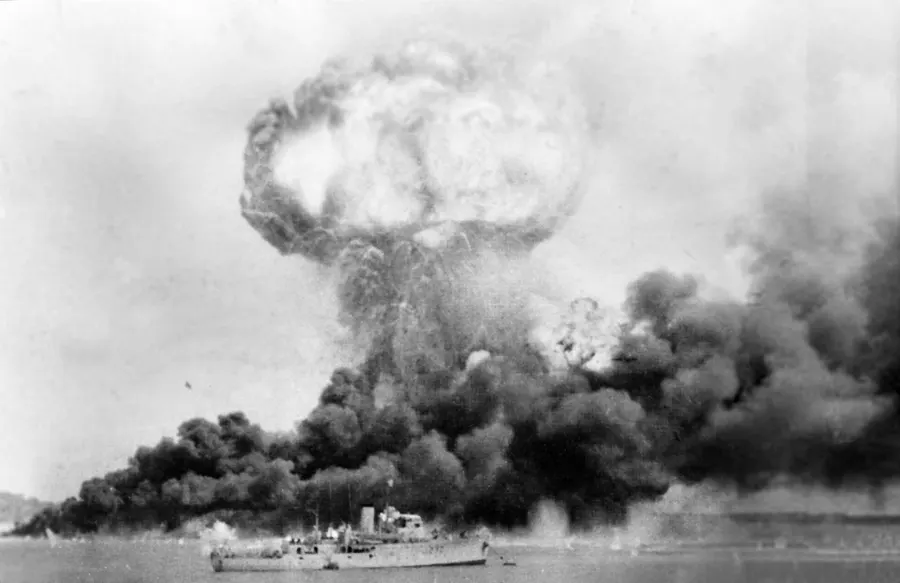
The ammunition ship MV Neptuna explodes in Darwin harbour during the first raid, 19 February 1942, with oil tanks burning behind; HMAS Deloraine is in the foreground.The ammunition ship MV Neptuna explodes in Darwin harbour during the first raid, 19 February 1942, with oil tanks burning behind; HMAS Deloraine is in the foreground.Image: RAN Historical Collection · Public domain
world · Oceania

Japanese aircraft bomb Darwin

On the morning of 19 February 1942 Japanese aircraft attacked Darwin in the first and largest air raid on mainland Australia. The first wave, of 188 aircraft from four carriers in the Timor Sea, was planned and led by the commander of the Pearl Harbor attack. A second raid by 54 land-based bombers followed before noon. Ships were sunk in the harbour, aircraft destroyed and much of the town damaged. The official inquiry counted 243 dead; later estimates run a little higher. Darwin was raided many more times over the next 21 months.

Source: Australian War Memorial: Darwin air raids ↗
1945
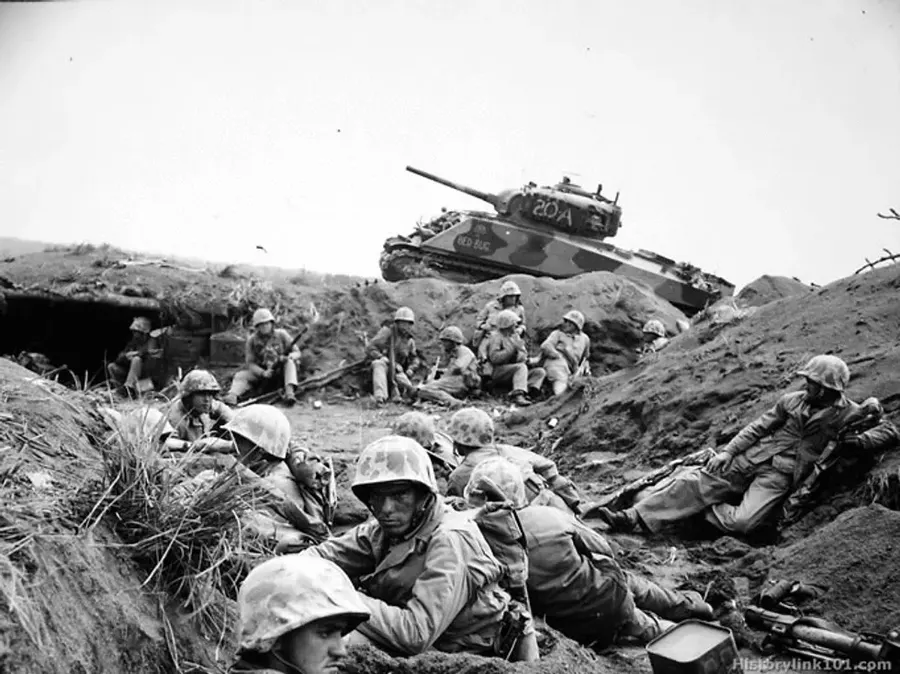
Marines of the 24th Marine Regiment on Iwo Jima, with a tank on the ridge above them.Marines of the 24th Marine Regiment on Iwo Jima, with a tank on the ridge above them.Image: United States Marine Corps · Public domain
world · Asia

US Marines land on Iwo Jima

After three days of naval bombardment, about 30,000 US Marines of the 4th and 5th Divisions landed on the Japanese island of Iwo Jima on the morning of 19 February 1945. Soft volcanic sand slowed them on the beaches, and the defenders fought from tunnels and bunkers. The island was declared secure on 16 March, after close to 7,000 Marines had been killed; almost the whole Japanese garrison died.

Source: Naval History and Heritage Command: Iwo Jima, landing the US Marines, 19 February 1945 ↗
1959
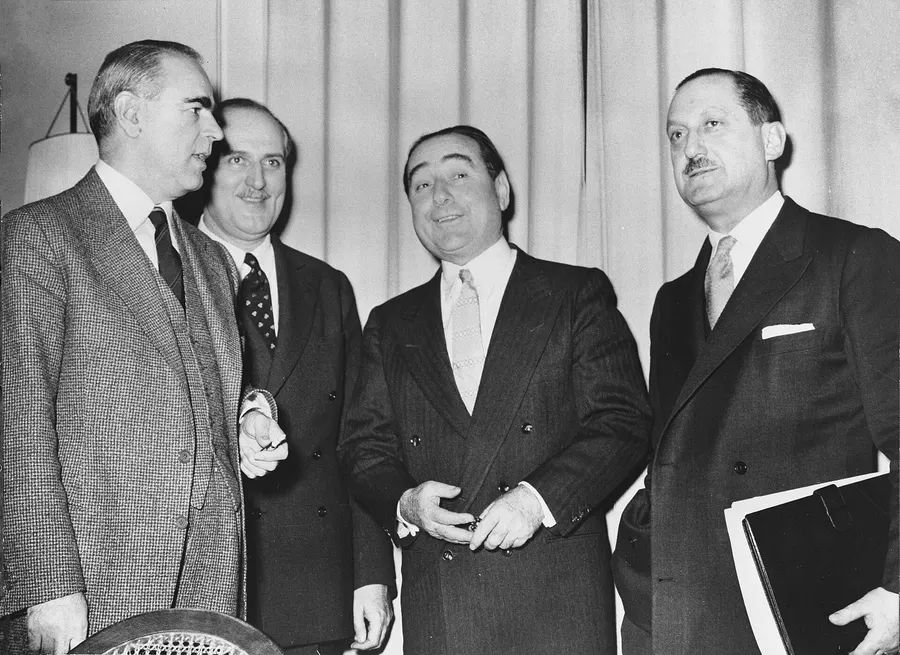
Greek and Turkish leaders at the Zurich talks on Cyprus, 10 February 1959: Konstantinos Karamanlis, Fatin Rüştü Zorlu, Adnan Menderes and Evangelos Averoff.Greek and Turkish leaders at the Zurich talks on Cyprus, 10 February 1959: Konstantinos Karamanlis, Fatin Rüştü Zorlu, Adnan Menderes and Evangelos Averoff.Image: Behrens, Herbert / Anefo · CC BY 4.0
politics · Europe

A deal is struck on Cypriot independence

At Lancaster House in London on 19 February 1959, Britain, Greece and Turkey, with Archbishop Makarios for the Greek Cypriots and Dr Fazıl Küçük for the Turkish Cypriots, accepted the settlement worked out at Zurich the week before. The documents were initialled that day. The agreements laid down a constitution and three treaties of guarantee, alliance and establishment, under which Britain kept two military bases. Cyprus became an independent republic on 16 August 1960.

Source: UK Parliament, Hansard: Cyprus (Agreement), 19 February 1959 ↗
VI
2000 TO TODAY

Modern Day

The events of recent decades that have already become part of the historical record.

2008
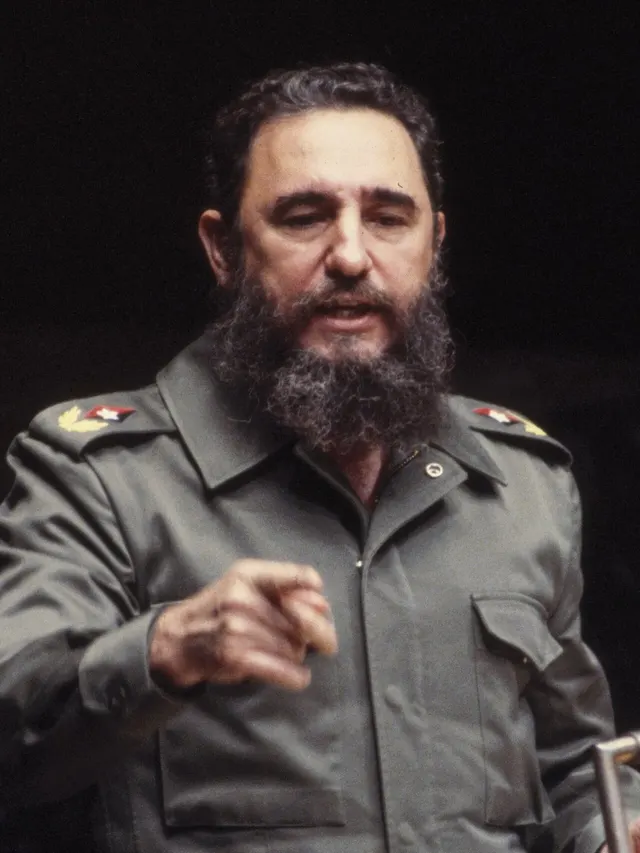
Fidel Castro at the United Nations in New York, 1979.Fidel Castro at the United Nations in New York, 1979.Image: Bernard Gotfryd · Public domain
politics · Americas

Fidel Castro steps down

On 19 February 2008 Fidel Castro announced in a letter published by Cuba’s state newspaper that he would ‘neither aspire to nor accept’ the posts of president and commander in chief. Aged 81 and ill, he had handed power temporarily to his brother Raúl in 2006, after 47 years at the head of Cuba’s government. Raúl was chosen as president five days later.

Source: NPR: Castro resigns presidency of Cuba after 49 years ↗
WHY THESE MOMENTS?

Significance before volume

This page is not the longest possible list of events. It is a chronological journey through 19 February, where each entry is chosen for historical significance, human interest and reliability.

Facts are checked against authoritative museums, archives, universities and reference works. Where sources disagree, the page says so.

EXPLORED THE DEEPER STORY?

Return to the highlights of 19 February

Discover the lighter side of the date with famous birthdays, culture, firsts and lives remembered.

Explore This Day →