
1689
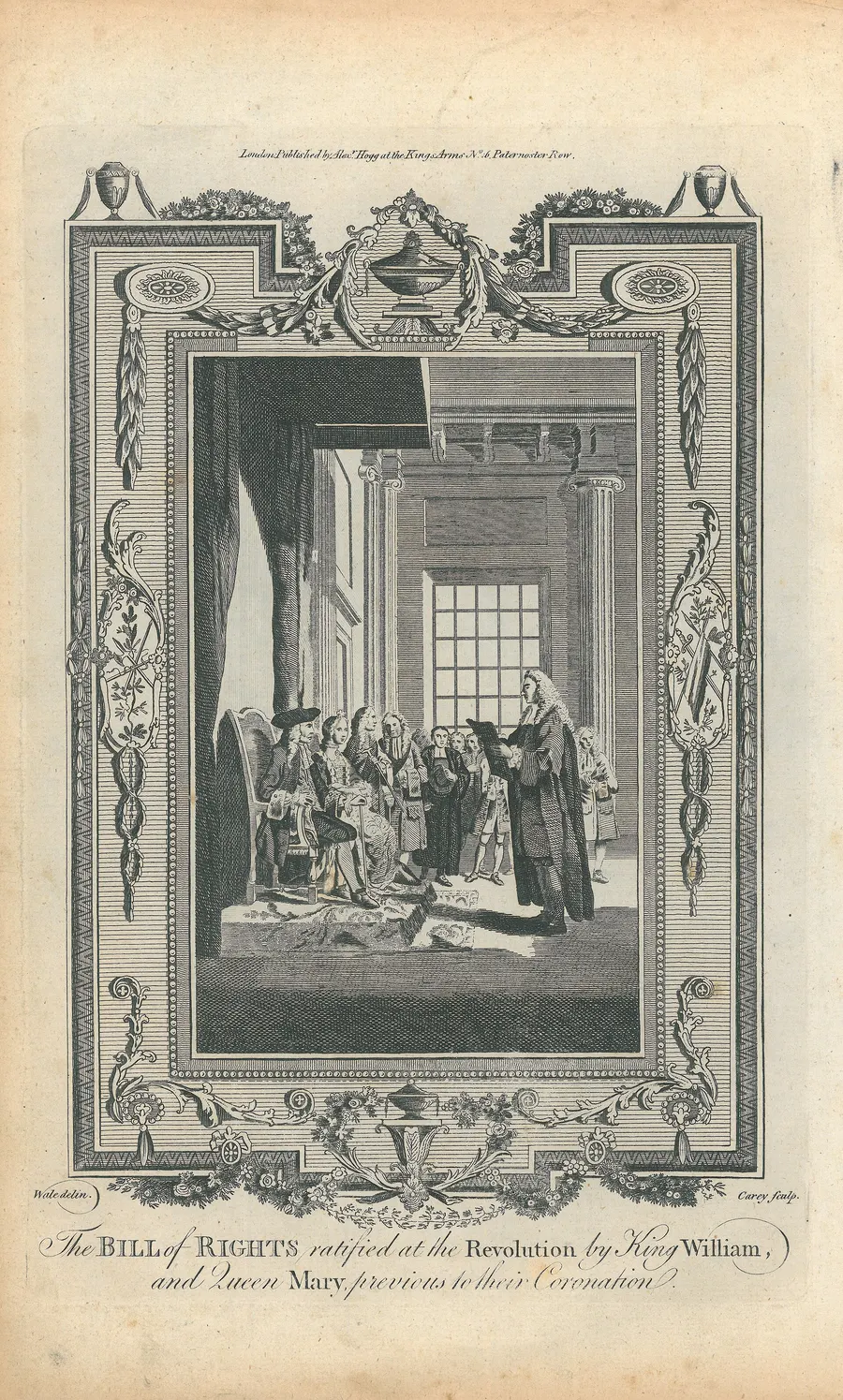 The Bill of Rights ratified by King William and Queen Mary before their coronation, an engraving after Samuel Wale, 1783.Image: Samuel Wale · Public domain
politics · Europe
Parliament offers the English crown to William and Mary
In November 1688 William of Orange, the Dutch stadtholder, landed in England with an army at the invitation of leading Protestants who feared the Catholic rule of his father-in-law, James II. James’s support melted away and he fled to France. A Convention Parliament declared that James had abandoned the throne, and on 13 February 1689, in the Banqueting House in Whitehall, it offered the crown jointly to William and his wife Mary, James’s elder daughter, after reading out a Declaration of Rights that listed the liberties the Stuarts had broken. The Declaration became the Bill of Rights later that year, and the ‘Glorious Revolution’ confirmed that the monarch would rule with, and not over, Parliament.
Source: UK Parliament: the Convention and Bill of Rights ↗ The memorial to the Glencoe massacre in the village of Glencoe.Image:
 General Manfredo Fanti with Piedmontese troops at Mola di Gaeta, a drawing by Raffaele Pontremoli, about 1880.Image:
 The Hunterdon County Courthouse in Flemington, New Jersey, where the trial was held.Image:
 The wrecked Chain Bridge over the Danube and the ruined Royal Palace on Castle Hill, Budapest, 1945.Image:
 The start of the Tanezrouft road south of Reggane in the Algerian Sahara, the area of the first French tests, photographed in 1990.Image:
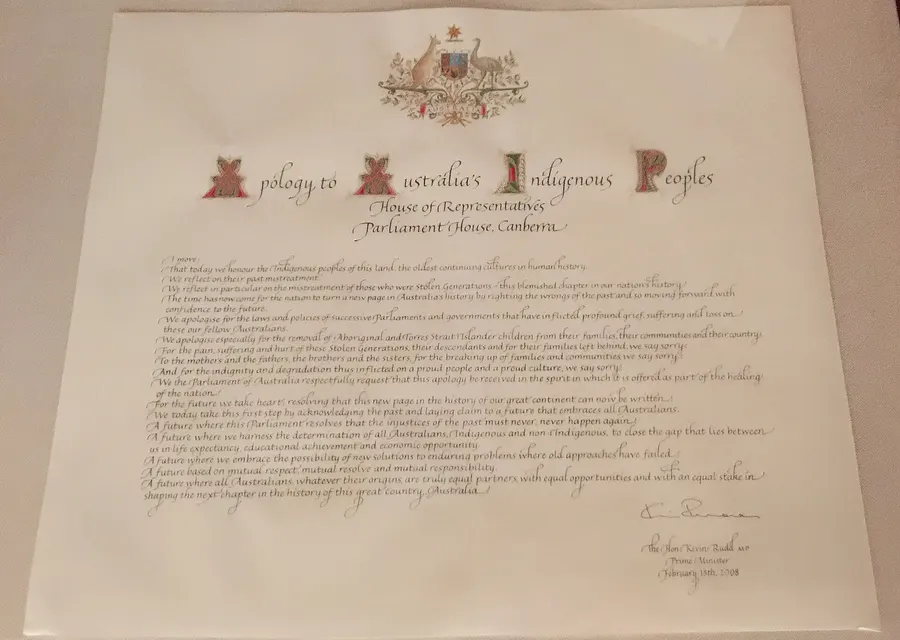 The text of the Apology to Australia’s Indigenous Peoples, displayed at Parliament House, Canberra.Image:
 A Vega rocket on its launch pad at Europe’s Spaceport in Kourou, French Guiana, before a later launch in June 2015.Image: