HISTORY & TIMELINE
16 December

A journey through
16 December in history

From the death of the only woman ever to rule China as emperor to the independence of Kazakhstan, 16 December is one of the busiest dates in the year. This timeline follows it across thirteen centuries.

I
EARLIEST RECORDS

Ancient & Early History

The earliest worthwhile records and events connected with this date.

705
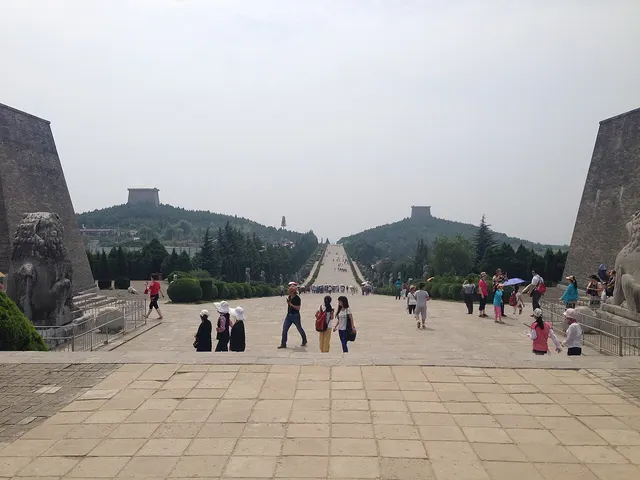
The approach to the Qianling mausoleum, where Wu Zetian is buried.The approach to the Qianling mausoleum, where Wu Zetian is buried.Image: Bairuilong · CC BY-SA 4.0
politics · Asia

The death of China’s only woman emperor

Wu Zetian died on 16 December 705 at Luoyang, ten months after ministers and generals seized the palace and forced her to hand power back to her son. She had entered the imperial harem as a teenager, become empress in 655, ruled through two sons, and in 690 taken the throne in her own name as emperor of a new Zhou dynasty — the only woman in China’s history to do so. She is buried with her husband Gaozong at Qianling, under a stele that was left deliberately blank.

Source: Encyclopaedia Britannica: Wuhou ↗
III
A CHANGING WORLD

Early Modern Era

Exploration, political change, scientific development and expanding global connections.

1653
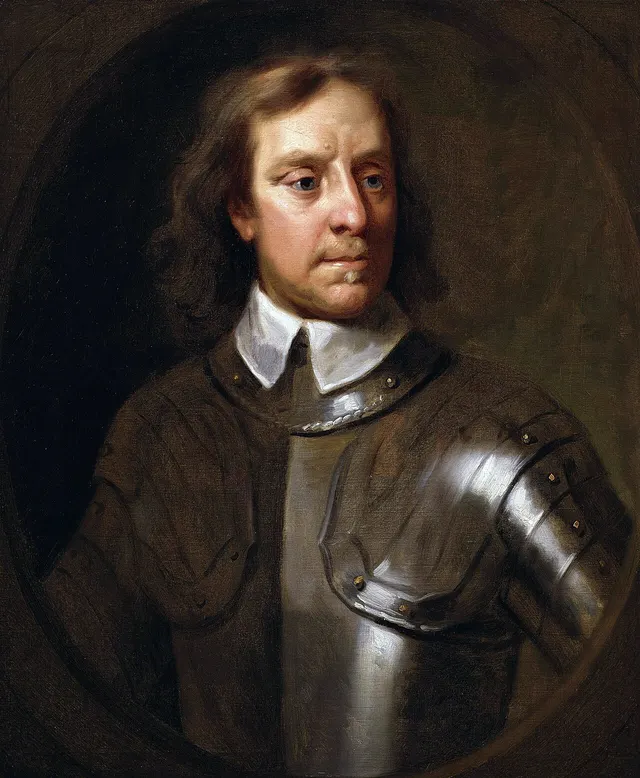
Oliver Cromwell, after the portrait by Samuel Cooper.Oliver Cromwell, after the portrait by Samuel Cooper.Image: After Samuel Cooper · Public domain
politics · Europe

Cromwell becomes Lord Protector

Oliver Cromwell was installed as Lord Protector of England, Scotland and Ireland on 16 December 1653, under the Instrument of Government — forty-two articles drafted by Major-General John Lambert and the first detailed written constitution any modern state has adopted. Power lay with a protector and a council of up to twenty-one, both appointed for life, with parliaments elected every three years. Cromwell was offered the crown in 1657 and refused it. He held the office until his death in September 1658; the monarchy was restored two years later.

Source: Encyclopaedia Britannica: Instrument of Government ↗
1773
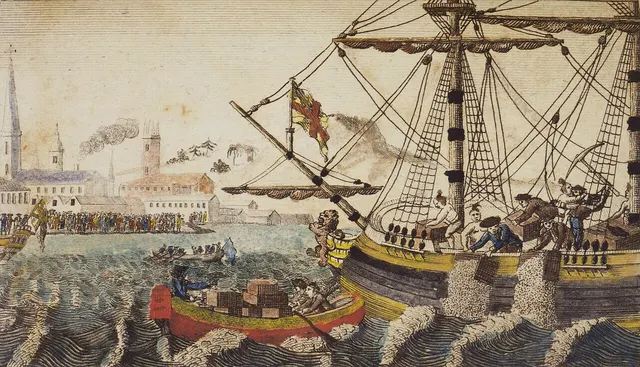
A nineteenth-century print of the destruction of the tea in Boston harbour.A nineteenth-century print of the destruction of the tea in Boston harbour.Image: Original uploader was Cornischong at lb.wikipedia · Public domain
politics · Americas

The Boston Tea Party

On the night of 16 December 1773, after a mass meeting at the Old South Meeting House at which the governor refused to let the tea ships leave without unloading, between thirty and sixty men in rough disguise walked down to Griffin’s Wharf. Over about three hours they broke open 340 chests aboard the Dartmouth, Eleanor and Beaver and tipped some 90,000 pounds of East India Company tea into the harbour. Nothing else was damaged and nobody was hurt. Parliament’s answer was the Coercive Acts of 1774, closing the port of Boston and stripping Massachusetts of self-government; the colonies called them the Intolerable Acts, and the first Continental Congress met that September.

Source: Massachusetts Historical Society: collections relating to the Boston Tea Party ↗
IV
THE NINETEENTH CENTURY

The 1800s

Industry, empire, invention, reform and a century of enormous transformation.

1838
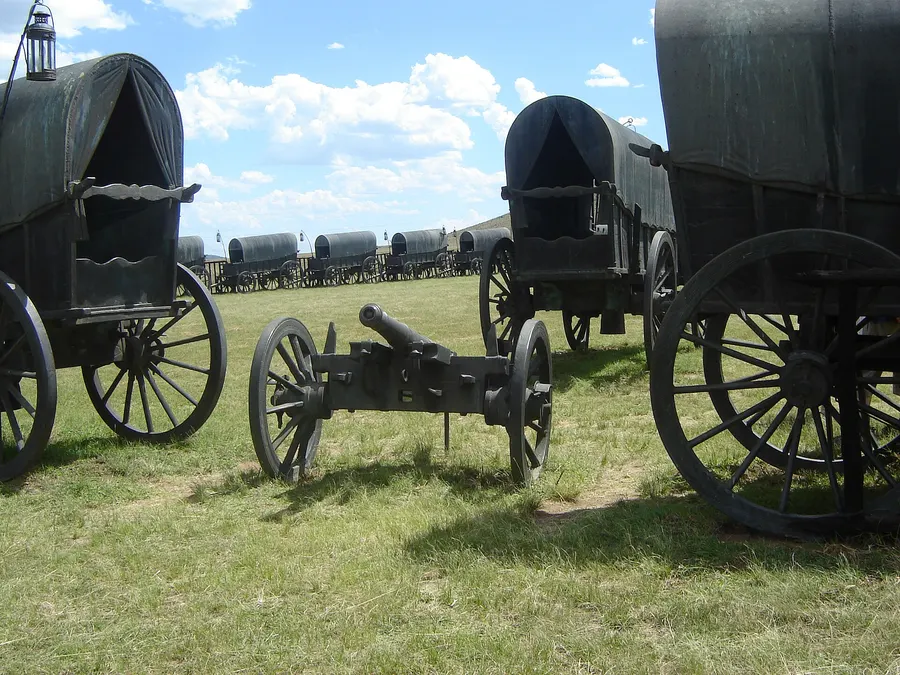
The bronze wagons of the Blood River memorial, set out as the laager stood.The bronze wagons of the Blood River memorial, set out as the laager stood.Image: Renier Maritz · CC BY-SA 3.0
world · Africa

The Battle of Blood River

On 16 December 1838 a Voortrekker commando of about 470 men under Andries Pretorius, drawn up in a wagon laager on the Ncome River with muskets and cannon, was attacked by a Zulu army several thousand strong armed with spears and shields. More than 3,000 Zulu were killed; three Voortrekkers were wounded and none died. The Boers had sworn a vow beforehand to keep the day holy if they won, and their descendants marked it for a century and a half as the Day of the Vow.

Source: Encyclopaedia Britannica: Battle of Blood River ↗
V
THE TWENTIETH CENTURY

The 1900s

War and peace, technological leaps, social change, politics, sport and popular culture.

1899
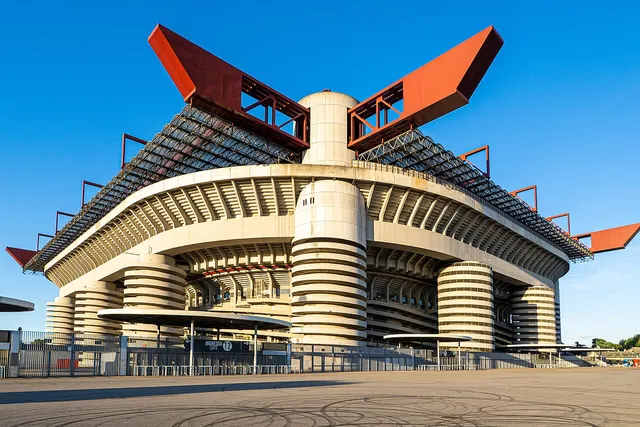
San Siro, the stadium AC Milan has shared with Internazionale since 1947.San Siro, the stadium AC Milan has shared with Internazionale since 1947.Image: Prelvini · CC BY-SA 4.0
sport · Europe

AC Milan is founded

The Milan Football and Cricket Club was founded on 16 December 1899 by a group of Englishmen and Italians, among them Herbert Kilpin, a lace worker from Nottingham who became the club’s first captain and coach, and Alfred Edwards, its first president. The English spelling of the city’s name has been kept ever since. The club won the Italian championship for the first time on 5 May 1901, beating Genoa 3-0. It has since won the European Cup or Champions League seven times.

Source: AC Milan: club history ↗
1944
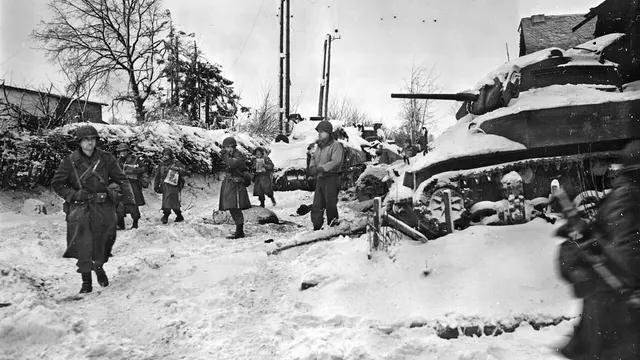
American troops in the snow during the fighting in the Ardennes.American troops in the snow during the fighting in the Ardennes.Image: U.S. Army · Public domain
world · Europe

The Battle of the Bulge begins

Before dawn on 16 December 1944 more than 200,000 German troops and close to a thousand tanks came out of the Ardennes forest into a thinly held stretch of the American line. The plan was to cross the Meuse, take Antwerp and split the British and American armies; the fog and snow that made it a surprise also kept Allied aircraft on the ground. The bulge the attack pushed into the line gave the battle its name. It lasted six weeks and was the largest the United States Army has ever fought: 75,000 American casualties, 19,276 of them dead, and perhaps 100,000 German. It used up the last German reserves in the west.

Source: The National WWII Museum: the Battle of the Bulge ↗
1971
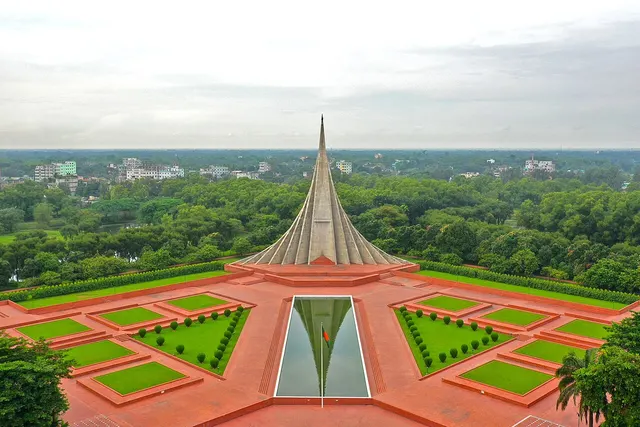
The National Martyrs' Memorial at Savar, outside Dhaka.The National Martyrs’ Memorial at Savar, outside Dhaka.Image: Pinu Rahman · CC BY-SA 4.0
politics · Asia

Pakistan surrenders at Dhaka and Bangladesh is free

The Pakistani commander in the east, Lieutenant General A. A. K. Niazi, signed the instrument of surrender at the Ramna Race Course in Dhaka on 16 December 1971, handing over some 90,000 men to the joint command of Bangladeshi and Indian forces. Nine months of war ended that afternoon. It had begun on 25 March with Operation Searchlight, the Pakistani army’s attempt to crush the Bengali independence movement by force; millions fled into India. The date is kept in Bangladesh as Bijoy Dibosh, Victory Day, and in India as Vijay Diwas.

Source: The National Archives (UK): the independence of Bangladesh in 1971 ↗
1989
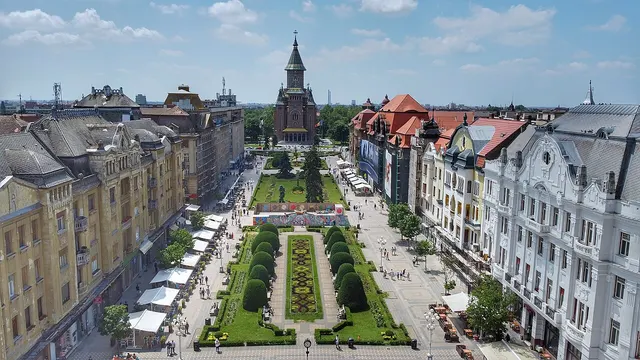
Timișoara today; the revolution began in its streets.Timișoara today; the revolution began in its streets.Image: Marius Catalin Boldeanu · CC BY-SA 4.0
politics · Europe

The Romanian revolution starts in Timișoara

The crowd that gathered outside a flat in Timișoara on 15 and 16 December 1989 was there to stop the eviction of László Tőkés, a Hungarian Reformed pastor who had criticised the government. By the 16th it had turned into an open protest against Nicolae Ceaușescu — the first in Romania for years that did not melt away. The security forces opened fire the next day. The protests spread to Bucharest; on 22 December the army changed sides and the Ceaușescus fled by helicopter. They were caught, tried by a military tribunal and shot on Christmas Day. It was the only one of 1989’s revolutions in Europe that ended in bloodshed.

Source: Encyclopaedia Britannica: Romania — national communism ↗
1990
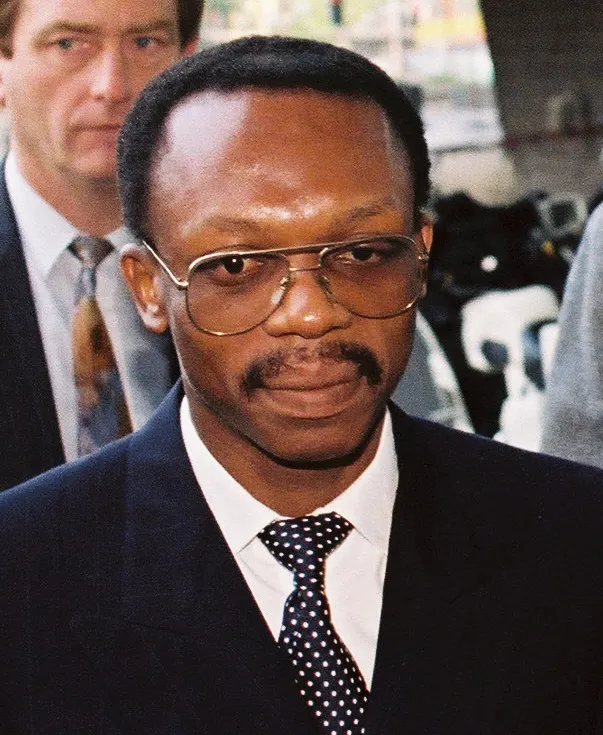
Jean-Bertrand Aristide in 1991.Jean-Bertrand Aristide in 1991.Image: European Communities, 1991 / EC - Audiovisual Service · CC BY 4.0
politics · Americas

Haiti’s first free election

Jean-Bertrand Aristide, a Catholic priest from the slums of Port-au-Prince, won about seventy per cent of the vote in Haiti’s presidential election on 16 December 1990 — widely reported as the first free election in the country’s history, four years after the fall of the Duvaliers. He was inaugurated on 7 February 1991 and overthrown by the army eight months later, returning in 1994 under American protection.

Source: Inter-American Commission on Human Rights (OAS): Annual Report 1991, Haiti ↗
1991
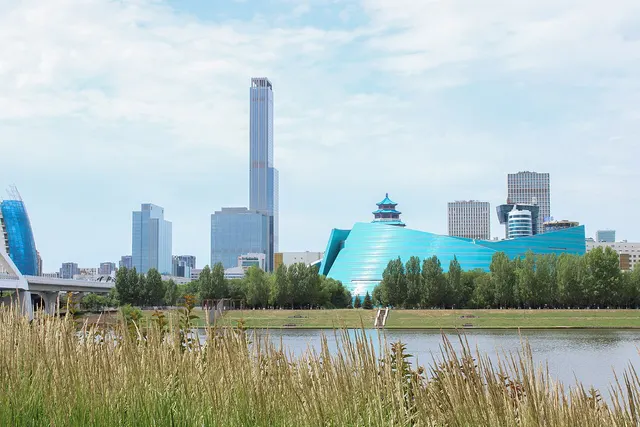
Astana, capital of Kazakhstan since 1997.Astana, capital of Kazakhstan since 1997.Image: Dauren Nabijan · CC0
politics · Asia

Kazakhstan declares independence

Kazakhstan adopted the constitutional law on state independence on 16 December 1991, the last Soviet republic to declare itself independent; the Soviet Union was formally dissolved nine days later. Nursultan Nazarbayev, first secretary of the republic’s communist party since 1989 and its elected president from 1990, stayed in power until 2019. The country inherited the world’s fourth largest nuclear arsenal and gave it up, and moved its capital from Almaty to the steppe city now called Astana in 1997.

Source: Encyclopaedia Britannica: history of Kazakhstan ↗
WHY THESE MOMENTS?

Significance before volume

This page is not the longest possible list of events. It is a chronological journey through 16 December, where each entry is chosen for historical significance, human interest and reliability.

Facts are checked against authoritative museums, archives, universities and reference works. Where sources disagree, the page says so.

EXPLORED THE DEEPER STORY?

Return to the highlights of 16 December

Discover the lighter side of the date with famous birthdays, culture, firsts and lives remembered.

Explore This Day →