
HISTORY & TIMELINE
10 December

A journey through
10 December in history

From a friar burning a papal bull in 1520 to a president signing a constitution on the site of a massacre in 1996, 10 December is a date about rights claimed and rights written down. This timeline follows it across five centuries.

JUMP THROUGH TIME
III
A CHANGING WORLD

Early Modern Era

Exploration, political change, scientific development and expanding global connections.

1520
Martin Luther, painted by Lucas Cranach the Elder.Martin Luther, painted by Lucas Cranach the Elder.Image: Lucas Cranach the Elder · Public domain
world · Europe

Luther burns the papal bull

Pope Leo X had issued the bull Exsurge Domine on 15 June 1520, condemning forty-one propositions drawn from Martin Luther’s writings and giving him sixty days to recant. On 10 December 1520 Luther cancelled his lectures, walked out to a bonfire lit by students outside Wittenberg’s Elster Gate and threw his copy of the bull into it, together with volumes of canon law. It was a point of no return. Leo excommunicated him on 3 January 1521 with the bull Decet Romanum Pontificem, and in April Luther refused to recant before the emperor at the Diet of Worms.

Source: Encyclopaedia Britannica: Exsurge Domine ↗
IV
THE NINETEENTH CENTURY

The 1800s

Industry, empire, invention, reform and a century of enormous transformation.

1817
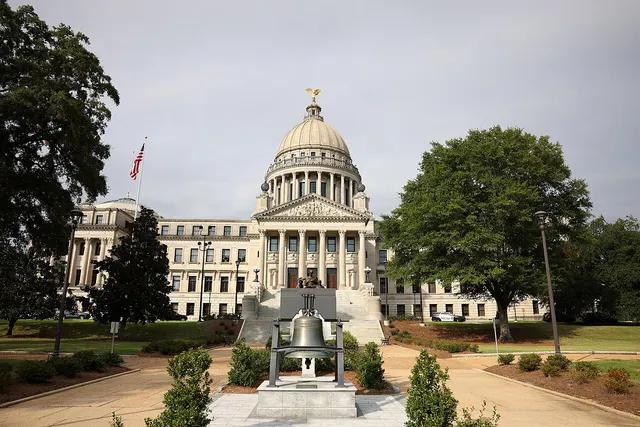
The Mississippi State Capitol in Jackson, completed in 1903.The Mississippi State Capitol in Jackson, completed in 1903.Image: Gage Skidmore from Surprise, AZ, United States of America · CC BY-SA 4.0
politics · Americas

Mississippi joins the Union

President James Monroe signed the resolution admitting Mississippi as the twentieth state of the United States on 10 December 1817. Forty-eight delegates had met at the town of Washington, Mississippi, in July that year and written the state’s first constitution in five weeks; Congress approved it in the autumn. The eastern half of the old Mississippi Territory was left behind and became the Territory of Alabama, which followed into the Union two years later.

Source: Mississippi Department of Archives and History: Mississippi’s territorial years, 1798-1817 ↗
1869
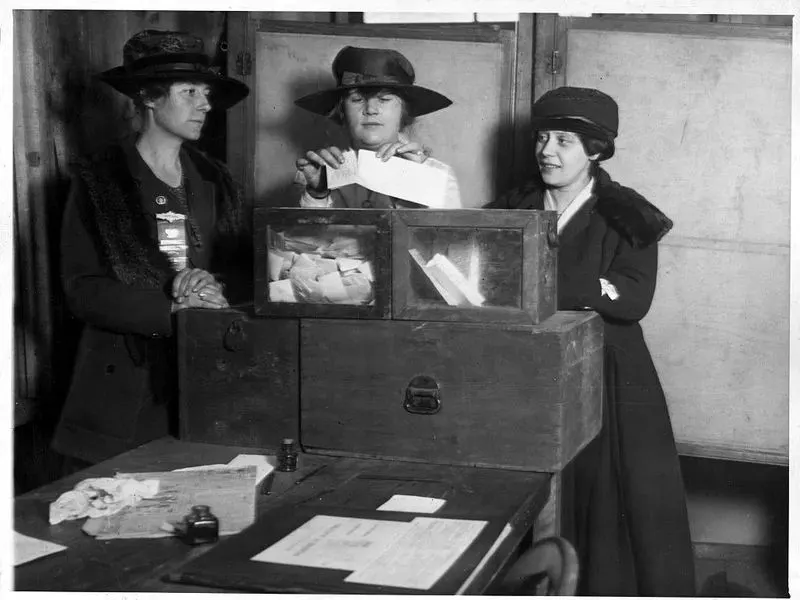
Women casting votes in Wyoming; the photograph is from a later generation than the 1869 act.Women casting votes in Wyoming; the photograph is from a later generation than the 1869 act.Image: Unknown authorUnknown author · Public domain
politics · Americas

Wyoming gives women the vote

On 10 December 1869 John Allen Campbell, governor of Wyoming Territory, signed an act granting the women of the territory the right to vote and to hold office — the first such law in the United States. It had been introduced by William Bright, a Democrat, and several legislators are said to have treated it as a joke; men outnumbered women in the territory roughly six to one, and some hoped the law would attract settlers. When Wyoming applied for statehood in 1890 it refused to give it up, and entered the Union as the only state where women could vote.

Source: Library of Congress: An Act to Grant to the Women of Wyoming Territory the Right of Suffrage and to Hold Office ↗
1898
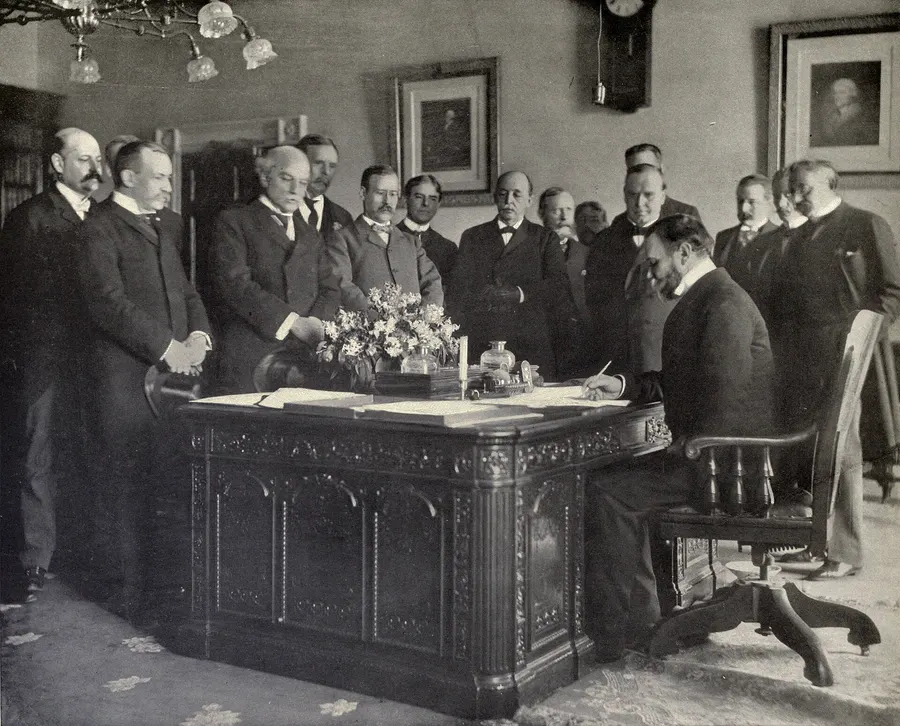
Secretary of State John Hay signing the Treaty of Paris memorandum of ratification in 1899, a few months after the treaty itself was signed.Secretary of State John Hay signing the Treaty of Paris memorandum of ratification in 1899, a few months after the treaty itself was signed.Image: Frances Benjamin Johnston · Public domain
politics · Global

The Treaty of Paris ends the Spanish-American War

American and Spanish commissioners signed the Treaty of Paris on 10 December 1898, ending a war that had lasted ten weeks. Spain gave up all claim to Cuba, ceded Puerto Rico and Guam to the United States, and handed over the Philippines for twenty million dollars. The Spanish delegates argued that Manila had fallen after the armistice and could not be treated as a conquest, but gave way. The treaty made the United States a colonial power in two oceans, and the Senate approved it in February 1899 by a single vote.

Source: Library of Congress: Treaty of Paris of 1898 ↗
V
THE TWENTIETH CENTURY

The 1900s

War and peace, technological leaps, social change, politics, sport and popular culture.

1901
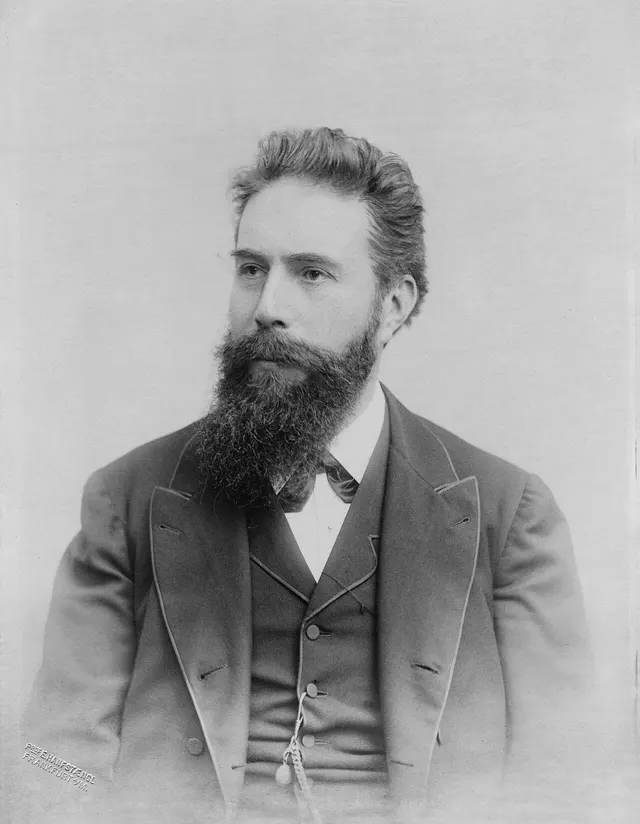
Wilhelm Conrad Röntgen, the first winner of the Nobel Prize in Physics.Wilhelm Conrad Röntgen, the first winner of the Nobel Prize in Physics.Image: Erwin Hanfstaengl · Public domain
science · Europe

Röntgen collects the first Nobel Prize in Physics

The first Nobel Prize in Physics was presented on 10 December 1901 to Wilhelm Conrad Röntgen, professor at Munich, for the rays he had discovered six years earlier and called X-rays because he did not know what they were. Röntgen had noticed in November 1895 that a screen coated in barium platinocyanide glowed when a shielded discharge tube was running nearby, and within weeks he had photographed the bones of his wife’s hand. He took out no patent, holding that the discovery belonged to everyone; hospitals were using X-rays within a year.

Source: The Nobel Prize: award ceremony speech, Physics 1901 ↗
1901
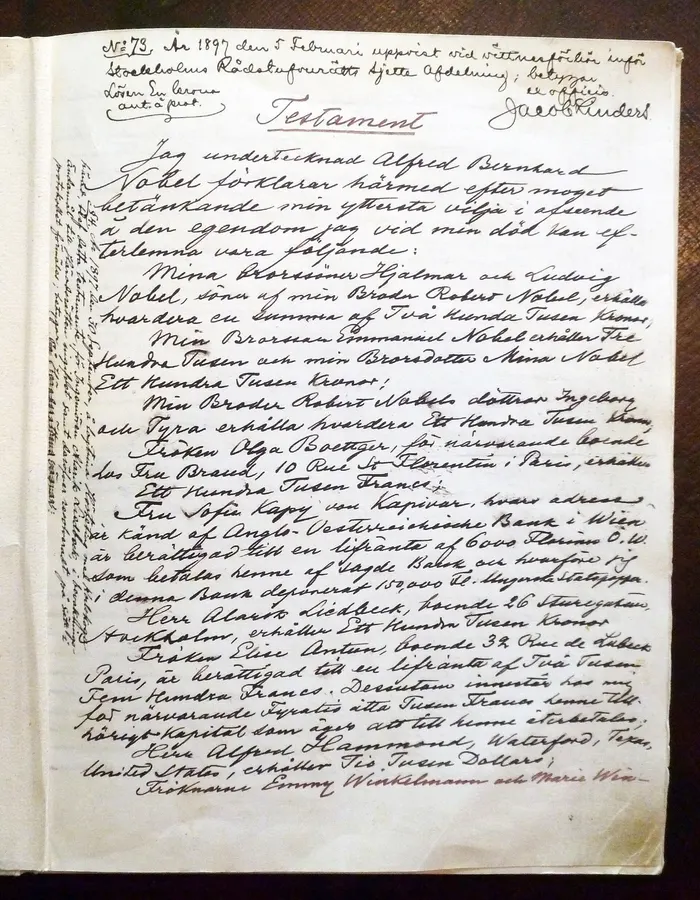
Alfred Nobel's will of 27 November 1895, which created the prizes.Alfred Nobel’s will of 27 November 1895, which created the prizes.Image: Waage · CC BY-SA 3.0
culture · Europe

The first Nobel Prizes are presented

The first Nobel Prizes were handed out on 10 December 1901, five years to the day after Alfred Nobel died at San Remo. Four were presented at the Old Royal Academy of Music in Stockholm — physics, chemistry, medicine and literature — and the Peace Prize in Christiania, as Oslo was then called. Nobel had signed the will that created them in Paris on 27 November 1895, leaving the bulk of a fortune built on dynamite to reward those who had conferred the greatest benefit on humankind. His relatives contested it, and it took the executors four years to settle the matter.

Source: The Nobel Prize: from the first Nobel Prize award ceremony, 10 December 1901 ↗
1932
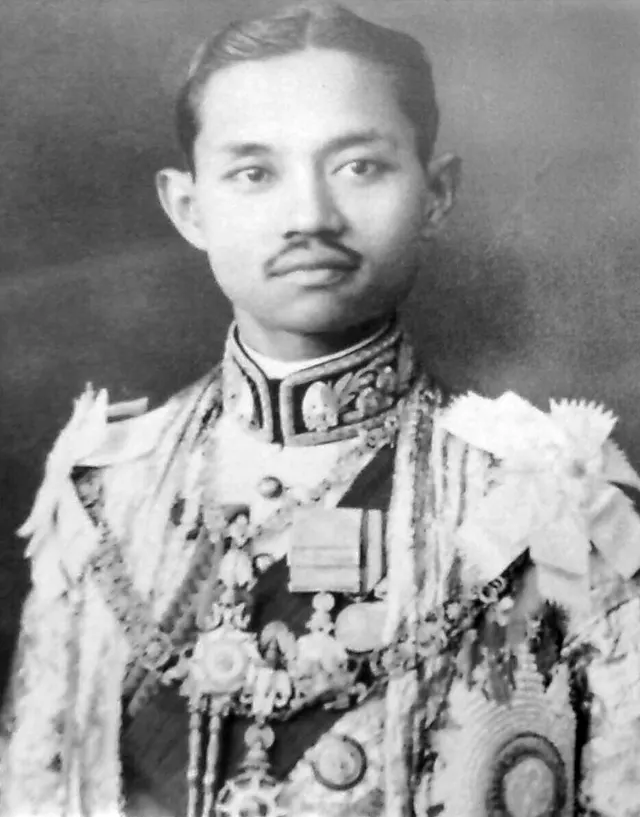
King Prajadhipok of Siam, who granted the 1932 constitution.King Prajadhipok of Siam, who granted the 1932 constitution.Image: Unknown authorUnknown author · Public domain
politics · Asia

Siam gets a permanent constitution

King Prajadhipok granted Siam its first permanent constitution on 10 December 1932, six months after a bloodless coup by a group of officers and officials had ended absolute monarchy. The charter left the crown its dignity and very little power, and the king abdicated in 1935. Thailand has had twenty constitutions since, but 10 December is still kept as Constitution Day.

Source: Encyclopaedia Britannica: Thailand — the 1932 coup and the creation of a constitutional order ↗
1936
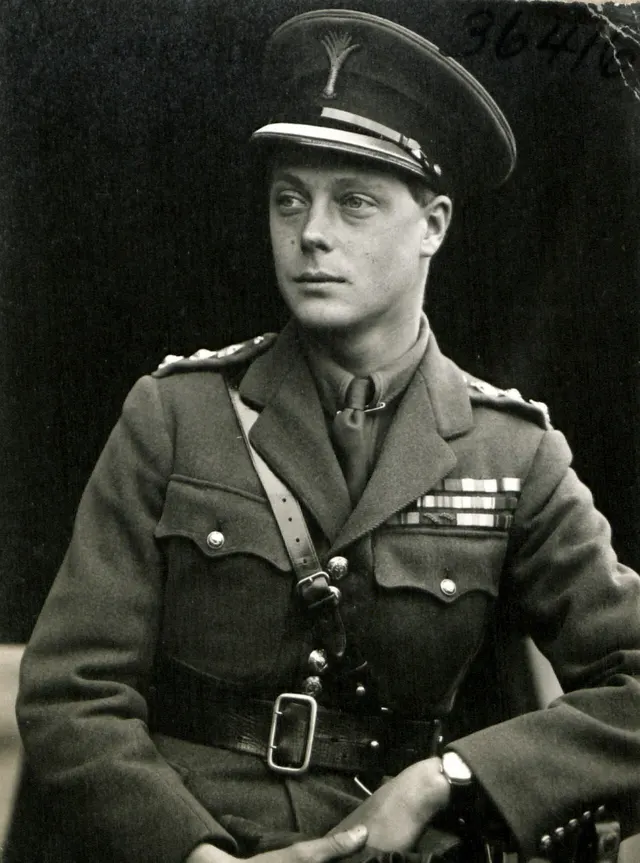
Edward VIII, photographed before his accession.Edward VIII, photographed before his accession.Image: Freeland Studio · Public domain
politics · Europe

Edward VIII signs the Instrument of Abdication

On 10 December 1936 Edward VIII signed an Instrument of Abdication declaring his irrevocable determination to renounce the throne for himself and his descendants. His three brothers — the Dukes of York, Gloucester and Kent — witnessed his signature. His message was read to both Houses of Parliament the same day. The abdication took legal effect the following day, when he gave royal assent to His Majesty’s Declaration of Abdication Act and his brother became George VI.

Source: The Royal Family: Edward VIII (Jan-Dec 1936) ↗
1941
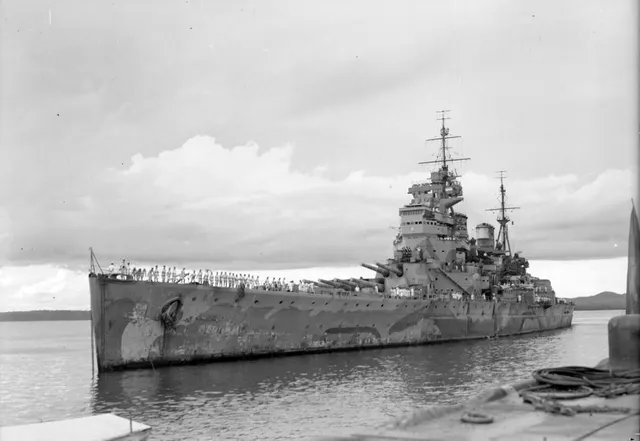
HMS Prince of Wales, photographed before her loss.HMS Prince of Wales, photographed before her loss.Image: Abrahams, H J (Lt), Royal Navy official photographer. Post-Work: User:W.wolny · Public domain
world · Asia

Prince of Wales and Repulse are sunk off Malaya

On 10 December 1941 Japanese torpedo bombers sank the battleship HMS Prince of Wales and the battlecruiser HMS Repulse in the South China Sea off Kuantan. The two ships had sailed from Singapore without air cover to attack Japanese landings on the Malayan coast. Some 840 men died, including Admiral Sir Tom Phillips; most of the crews were picked up by escorting destroyers. It was the first time capital ships at sea and under way had been sunk by aircraft alone, and it ended any idea that big guns could hold the Far East.

Source: Imperial War Museums: the loss of HMS Prince of Wales and Repulse, 10 December 1941 ↗
1948
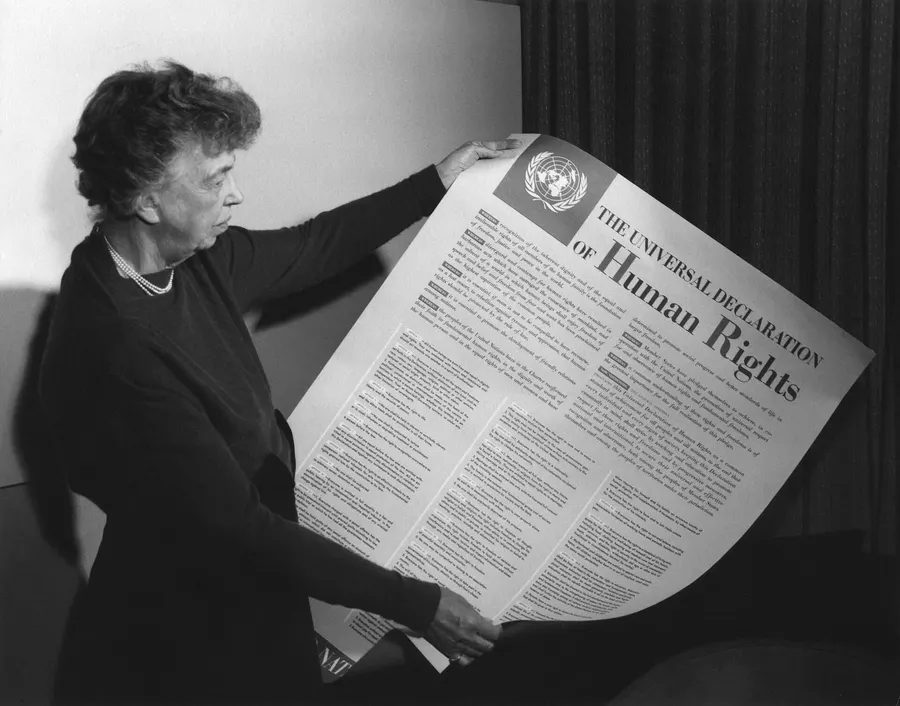
Eleanor Roosevelt holding a printed copy of the Universal Declaration of Human Rights.Eleanor Roosevelt holding a printed copy of the Universal Declaration of Human Rights.Image: FDR Presidential Library & Museum · CC BY 2.0
politics · Global

The Universal Declaration of Human Rights is proclaimed

On 10 December 1948, in the grande salle of the Palais de Chaillot in Paris, the United Nations General Assembly adopted the Universal Declaration of Human Rights as resolution 217 A (III). Forty-eight states voted in favour, none against, and eight abstained. The drafting committee had been chaired by Eleanor Roosevelt, working with the Lebanese philosopher Charles Malik, the Chinese diplomat P. C. Chang and the French jurist René Cassin among others. The declaration is not a treaty and binds nobody by itself, but its thirty articles have been written into constitutions and treaties ever since, and it has been translated into more languages than any other document.

Source: United Nations: Universal Declaration of Human Rights ↗
1963
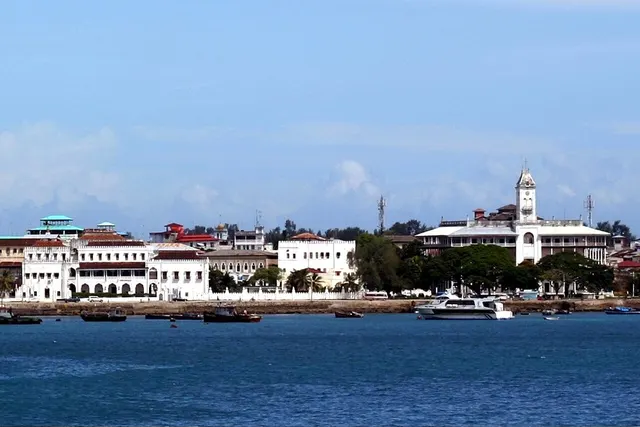
Stone Town, the old quarter of Zanzibar City, seen from the water.Stone Town, the old quarter of Zanzibar City, seen from the water.Image: No machine-readable author provided. Mbz1 assumed (based on copyright claims). · CC BY-SA 3.0
politics · Africa

Zanzibar becomes independent

Zanzibar became independent of Britain on 10 December 1963, a day after neighbouring Tanganyika marked its second anniversary. It left as a constitutional monarchy within the Commonwealth, under Sultan Sayyid Jamshid bin Abdullah, who had succeeded his father only five months earlier. The arrangement lasted a month. In January 1964 a revolution overthrew the government, the sultan was deposed and a republic proclaimed under Abeid Amani Karume. In April that year Zanzibar joined Tanganyika; by October the union had been renamed Tanzania.

Source: Encyclopaedia Britannica: Sultanate of Zanzibar ↗
1983
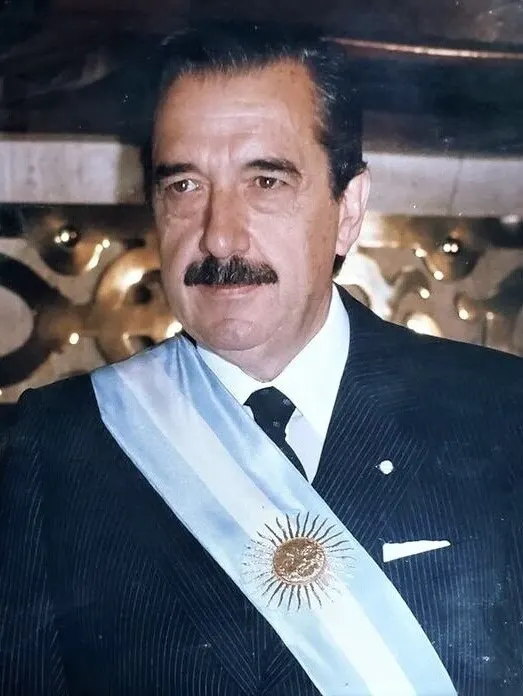
Raúl Alfonsín, president of Argentina from 1983 to 1989.Raúl Alfonsín, president of Argentina from 1983 to 1989.Image: Presidencia de la Nación Argentina · CC BY 2.5 ar
politics · Americas

Democracy returns to Argentina

Raúl Alfonsín was sworn in as president of Argentina on 10 December 1983, ending more than seven years of military rule. He had won the election of 30 October, the first free presidential vote since 1973. Within days he had set up the national commission on the disappearance of persons and ordered the prosecution of the ruling juntas; hundreds of officers were eventually tried. Argentina has held uninterrupted elections since, and in 2007 Congress made 10 December the Day of the Restoration of Democracy.

Source: Encyclopaedia Britannica: Raúl Alfonsín ↗
1996
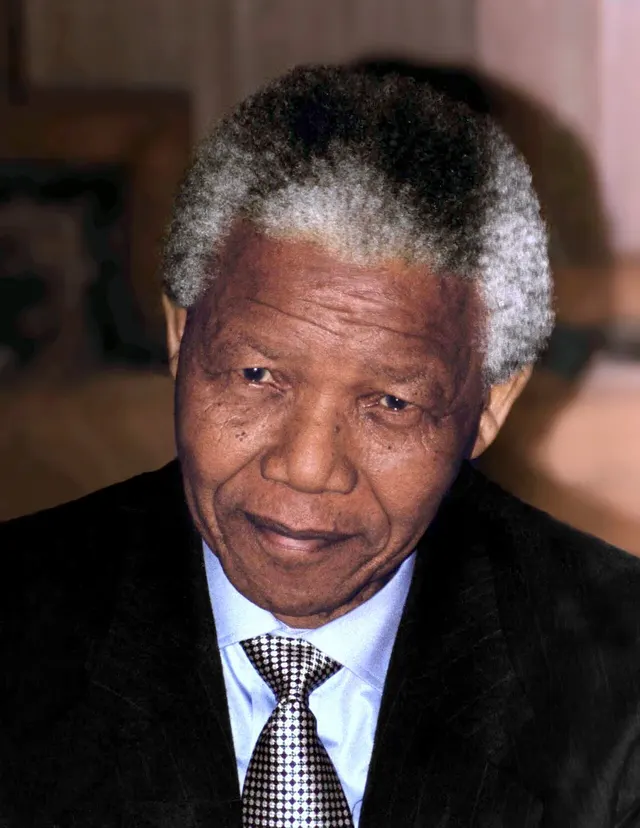
Nelson Mandela, who signed the constitution into law.Nelson Mandela, who signed the constitution into law.Image: Kingkongphoto & www.celebrity-photos.com from Laurel · CC BY-SA 2.0
politics · Africa

Mandela signs South Africa’s constitution at Sharpeville

President Nelson Mandela signed the new Constitution of the Republic of South Africa into law on 10 December 1996. He did it at Sharpeville, in the Vaal Triangle, where police had shot dead demonstrators protesting against the pass laws on 21 March 1960 — a deliberate choice of place, and a deliberate choice of day, Human Rights Day. The constitution had been written by an elected Constitutional Assembly and certified by the Constitutional Court. It came into force on 4 February 1997, replacing the interim constitution of 1993, and its Bill of Rights is among the most far-reaching in the world.

Source: South African Department of Justice and Constitutional Development: 25th anniversary of the Constitution ↗
RESEARCH

Sources & Further Reading

Selected authoritative references supporting the events on this page.

Encyclopaedia Britannica: Exsurge Domine↗Luther.de (Wittenberg): Luther’s life — excommunication↗Mississippi Department of Archives and History: Mississippi’s territorial years, 1798-1817↗Mississippi Department of Archives and History: about the Mississippi Constitution of 1817↗Library of Congress: An Act to Grant to the Women of Wyoming Territory the Right of Suffrage and to Hold Office↗National Park Service: Wyoming and the 19th Amendment↗Library of Congress: Treaty of Paris of 1898↗US Department of State, Office of the Historian: The Spanish-American War, 1898↗The Nobel Prize: award ceremony speech, Physics 1901↗The Nobel Prize: the very first Nobel Prizes↗The Nobel Prize: from the first Nobel Prize award ceremony, 10 December 1901↗The Nobel Prize: Alfred Nobel’s life and work↗Encyclopaedia Britannica: Thailand — the 1932 coup and the creation of a constitutional order↗Encyclopaedia Britannica: Prajadhipok↗The Royal Family: Edward VIII (Jan-Dec 1936)↗The National Archives: Instrument of Abdication of Edward VIII↗Imperial War Museums: the loss of HMS Prince of Wales and Repulse, 10 December 1941↗Imperial War Museums: the sinking of HMS Repulse and HMS Prince of Wales, December 1941↗United Nations: Universal Declaration of Human Rights↗United Nations: history of the Declaration↗Encyclopaedia Britannica: Sultanate of Zanzibar↗Encyclopaedia Britannica: Tanzania — Independence↗Encyclopaedia Britannica: Raúl Alfonsín↗Ministry of Culture, Argentina: Día de la democracia↗South African Department of Justice and Constitutional Development: 25th anniversary of the Constitution↗South African History Online: Mandela signs SA Constitution into law↗
WHY THESE MOMENTS?

Significance before volume

This page is not the longest possible list of events. It is a chronological journey through 10 December, where each entry is chosen for historical significance, human interest and reliability.

Facts are checked against authoritative museums, archives, universities and reference works. Where sources disagree, the page says so.

EXPLORED THE DEEPER STORY?

Return to the highlights of 10 December

Discover the lighter side of the date with famous birthdays, culture, firsts and lives remembered.

Explore This Day →
← PREVIOUS DAY9 December
HISTORY & TIMELINE10 December
NEXT DAY →11 December