
HISTORY & TIMELINE
21 August

A journey through
21 August in history

The story of 21 August runs from the solar eclipse that turned a teenage Tycho Brahe to astronomy in 1560 to the restoration of Latvia’s independence in 1991. In between come Portugal’s capture of Ceuta, Nat Turner’s revolt in Virginia, the first Lincoln-Douglas debate, the theft of the Mona Lisa from the Louvre, the death of Leon Trotsky, the opening of the Dumbarton Oaks talks on a United Nations, the first successful flight of the Soviet R-7 missile, Hawaii’s admission as a state, Ceaușescu’s defiance of the invasion of Czechoslovakia, the fire at the al-Aqsa Mosque, the assassination of Ninoy Aquino and the gas disaster at Lake Nyos.

JUMP THROUGH TIME
II
THE MIDDLE AGES

Medieval History

Kingdoms, conflict, faith, power and the changing medieval world.

1415
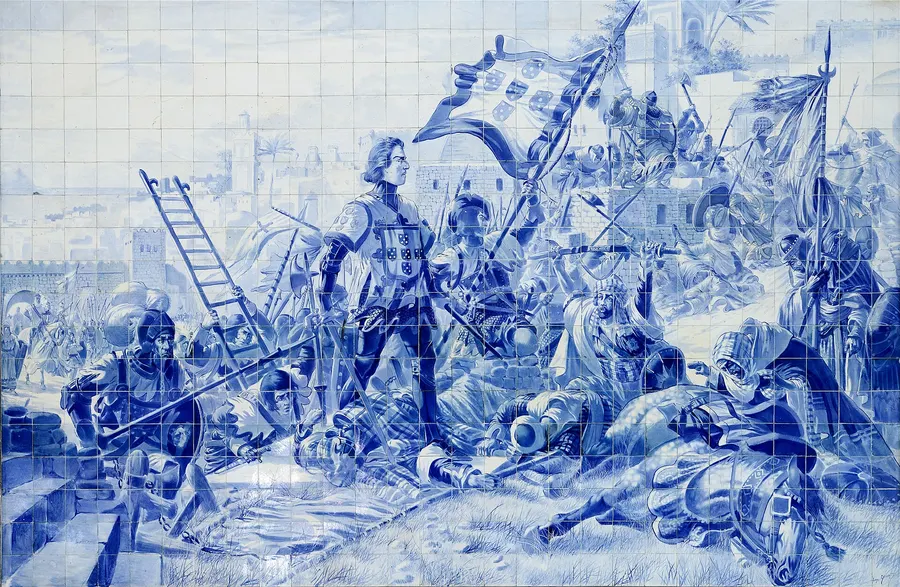
The capture of Ceuta, with Prince Henry the Navigator, in a 20th-century tile panel by Jorge Colaço at São Bento station in PortoThe capture of Ceuta, with Prince Henry the Navigator, in a 20th-century tile panel by Jorge Colaço at São Bento station in PortoImage: Alvesgaspar · CC BY-SA 4.0
world · Africa

Portugal seizes Ceuta and begins its overseas expansion

Ceuta, on the African shore of the Strait of Gibraltar, was a rich Muslim trading port under the Marinid rulers of Morocco, at the end of caravan routes that brought gold and other goods north across the Sahara. King João I of Portugal, whose kingdom had made peace with Castile, prepared a large fleet in secret, partly to give his sons a chance to win knighthood in battle and partly to strike at the Muslim powers across the strait. On 21 August 1415 the Portuguese army, led by the king and his sons Duarte, Pedro and Henrique, stormed and took the city. The great mosque was turned into a cathedral, where the princes were knighted, and a Portuguese garrison was left to hold Ceuta. Historians often date the start of Portugal’s age of expansion to this conquest; Prince Henry, later called ‘the Navigator’, went on to sponsor the voyages down the coast of Africa.

Source: Arquivo Nacional da Torre do Tombo: Conquista de Ceuta ↗
III
A CHANGING WORLD

Early Modern Era

Exploration, political change, scientific development and expanding global connections.

1560
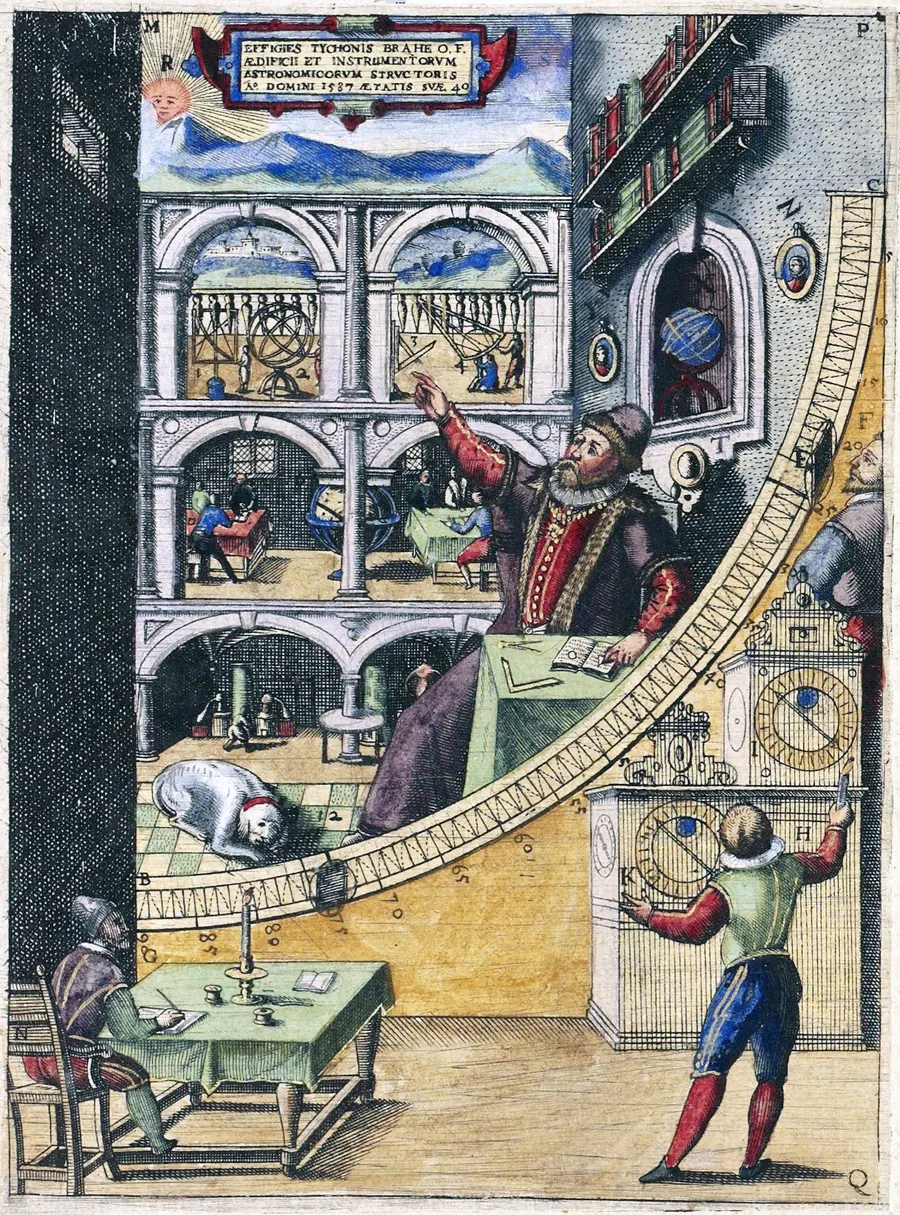
Tycho Brahe's great mural quadrant at his Uraniborg observatory, from his book on his instruments of 1598Tycho Brahe’s great mural quadrant at his Uraniborg observatory, from his book on his instruments of 1598Image: Unknown author · Public domain
science · Europe

A predicted eclipse turns the young Tycho Brahe to astronomy

In 1560 Tycho Brahe, a young Danish nobleman, was studying at the University of Copenhagen, where his family expected him to prepare for a career in law and government. On 21 August 1560 (in the Julian calendar then used in Denmark) he watched a partial eclipse of the Sun that astronomers had predicted in advance. He was struck that the heavens could be foretold so exactly, bought astronomical tables and books, and went on to become the greatest observer of the sky before the telescope.

Source: Niels Bohr Institute, University of Copenhagen: The life of Tycho Brahe ↗
IV
THE NINETEENTH CENTURY

The 1800s

Industry, empire, invention, reform and a century of enormous transformation.

1831
Nat Turner and his companions in conference, an engraving of 1880 in the New York Public LibraryNat Turner and his companions in conference, an engraving of 1880 in the New York Public LibraryImage: F. O. C. Darley, artist; J. Rogers, engraver Created: 1863 · Public domain
politics · Americas

Nat Turner leads a revolt of enslaved people in Virginia

On the night of 21 to 22 August 1831 Nat Turner, an enslaved preacher in Southampton County, Virginia, who believed he had been called by visions to strike against slavery, began a revolt with a small group of followers. Over the next day and a half they moved from farm to farm and killed about 55 white people before militia and troops broke up the rising. In the reprisals that followed many Black people, most of them uninvolved, were killed; Turner was caught in October and hanged, and Virginia and other Southern states passed harsher laws against enslaved and free Black people.

Source: Encyclopedia Virginia: Nat Turner’s Revolt (1831) ↗
1858
The public square at Ottawa, Illinois, where the first Lincoln-Douglas debate was held, in a photograph published in 1908The public square at Ottawa, Illinois, where the first Lincoln-Douglas debate was held, in a photograph published in 1908Image: Abraham Lincoln, Stephen Douglas, Edwin Erle Sparks · Public domain
politics · Americas

Lincoln and Douglas hold their first debate at Ottawa, Illinois

In 1858 Abraham Lincoln, a little-known Republican lawyer, challenged the powerful Democratic senator Stephen A. Douglas for his seat in the US Senate. The two agreed to seven open-air debates across Illinois, and the first took place in the public square of Ottawa on the afternoon of 21 August 1858, before a crowd of 10,000 or more. Their arguments over whether slavery should spread into the western territories were printed across the country; Douglas kept his seat, but the debates made Lincoln a national figure.

Source: US National Park Service: First debate, Ottawa, Illinois ↗
V
THE TWENTIETH CENTURY

The 1900s

War and peace, technological leaps, social change, politics, sport and popular culture.

1911
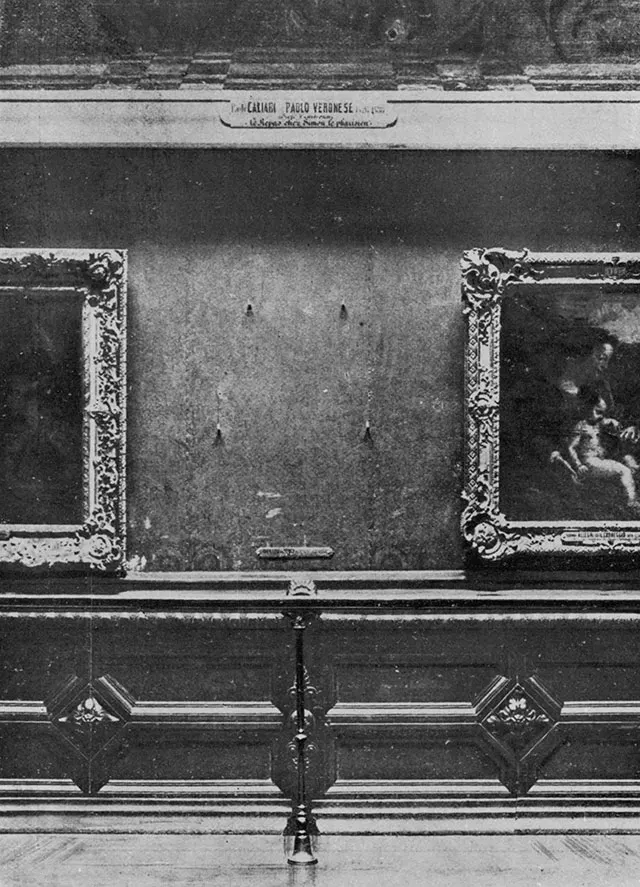
The empty space on the wall of the Salon Carré in the Louvre after the Mona Lisa was stolen in 1911The empty space on the wall of the Salon Carré in the Louvre after the Mona Lisa was stolen in 1911Image: Unknown author · Public domain
culture · Europe

The Mona Lisa is stolen from the Louvre

On Monday 21 August 1911, when the Louvre was closed to the public, Leonardo da Vinci’s portrait of Lisa del Giocondo was lifted off the wall of the Salon Carré and carried out of the museum. The thief was Vincenzo Peruggia, an Italian handyman who had worked at the Louvre and had helped to fit the glass case that protected the painting. Hardly anyone noticed the gap until the next day. The theft caused a sensation. The museum closed for a week, crowds came to stare at the empty hooks, and newspapers around the world printed the painting’s image. For more than two years Peruggia kept it in his Paris lodgings, until in December 1913 he tried to sell it to an art dealer in Florence, who called the police. The painting returned to the Louvre in January 1914, far more famous than it had ever been.

Source: Britannica: Mona Lisa ↗
1940
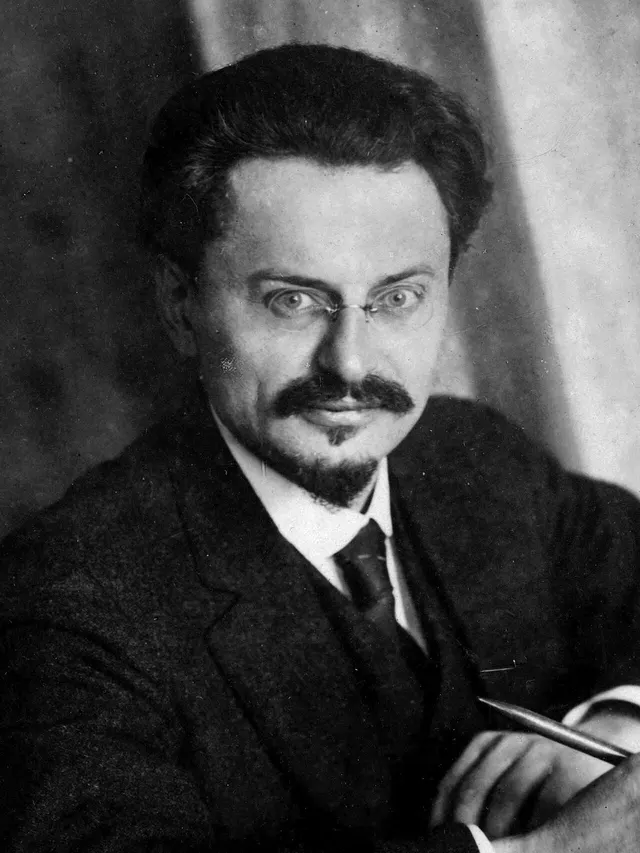
Leon Trotsky in 1918, when he was building the Red ArmyLeon Trotsky in 1918, when he was building the Red ArmyImage: Rijksmuseum · CC0
politics · Americas

Leon Trotsky dies after an attack in Mexico City

Leon Trotsky had been one of the leaders of the Bolshevik Revolution of 1917 and the founder of the Red Army. After Lenin’s death he lost the struggle for power to Joseph Stalin, was expelled from the Communist Party and in 1929 was deported from the Soviet Union. From exile in Turkey, France, Norway and finally Mexico, where he settled in Coyoacán in 1937, he kept up a stream of writing against Stalin’s rule. On 20 August 1940 Ramón Mercader, a Spanish communist who had won the confidence of Trotsky’s household under a false name, attacked him with an ice axe in his study. Trotsky died in hospital the next day, 21 August 1940, aged 60. Mercader was convicted and served 20 years in a Mexican prison; it was later confirmed that he had acted for Stalin’s secret police. Trotsky’s house in Coyoacán is now a museum.

Source: Britannica: The assassination of Leon Trotsky ↗
1944
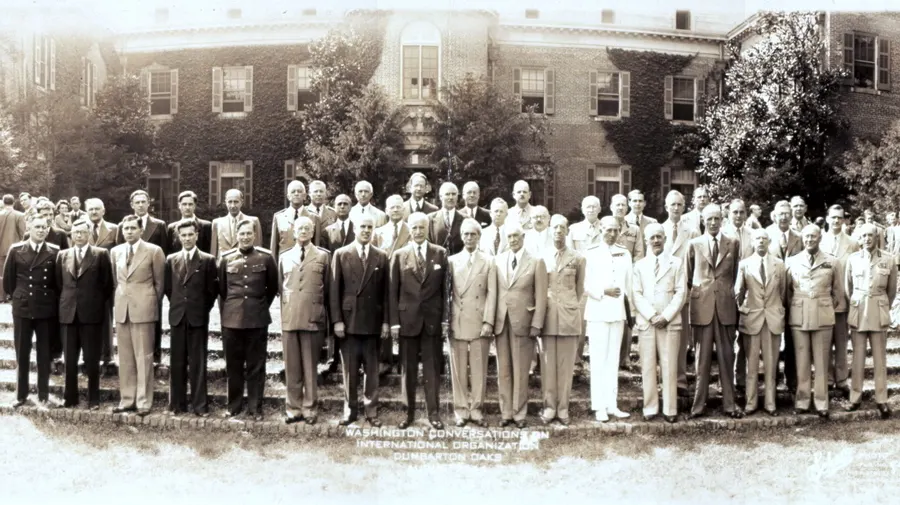
Delegates to the Washington conversations on international organisation at Dumbarton Oaks, August 1944Delegates to the Washington conversations on international organisation at Dumbarton Oaks, August 1944Image: Schutz Group Photographers (Washington, D.C.), photographer · Public domain
politics · Global

Talks at Dumbarton Oaks begin to plan the United Nations

On 21 August 1944, while the Second World War was still being fought, delegates of the United States, Britain and the Soviet Union met at Dumbarton Oaks, a historic house in the Georgetown district of Washington, D.C., to plan a new international organisation to replace the League of Nations. China joined a second round of talks that ended on 7 October. Their proposals for a General Assembly and a Security Council became the basis of the United Nations Charter, signed at San Francisco in 1945.

Source: Dumbarton Oaks: The Dumbarton Oaks Conversations ↗
1957
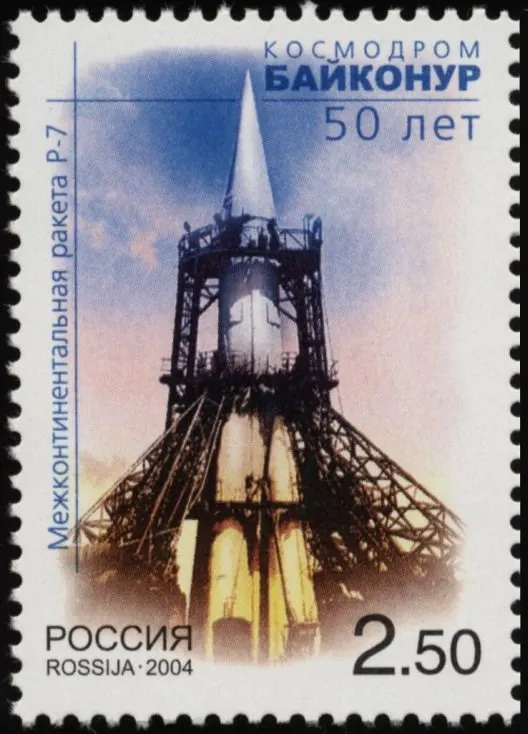
A Russian stamp of 2004 marking 50 years of the Baikonur Cosmodrome, showing an R-7 rocket on its launch padA Russian stamp of 2004 marking 50 years of the Baikonur Cosmodrome, showing an R-7 rocket on its launch padImage: Meshok.net · Public domain
science · Asia

The Soviet R-7, the first intercontinental missile, completes its first successful flight

Under the direction of the designer Sergei Korolev, Soviet engineers built the R-7 rocket to carry a heavy nuclear warhead across continents. After several failures, on 21 August 1957 an R-7 launched from the new test site in Kazakhstan, now the Baikonur Cosmodrome, carried a dummy warhead some 6,000 kilometres to the Kamchatka peninsula. It was the first successful flight of an intercontinental ballistic missile, and just six weeks later an R-7 put Sputnik 1 into orbit. Rockets descended from it still launch Soyuz spacecraft today.

Source: Britannica: R-7 ↗
1959
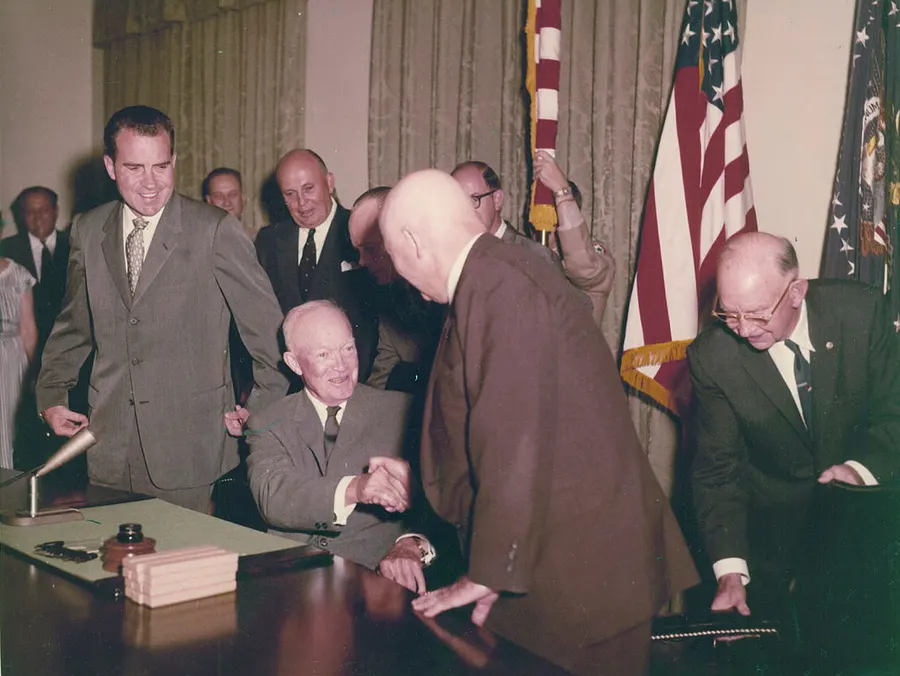
President Dwight D. Eisenhower, seated, at the signing of the proclamation admitting Hawaii as the 50th state, 21 August 1959President Dwight D. Eisenhower, seated, at the signing of the proclamation admitting Hawaii as the 50th state, 21 August 1959Image: U.S. Army Pictorial Agency · Public domain
politics · Oceania

Hawaii becomes the 50th state of the United States

The Hawaiian Islands had been an independent kingdom until 1893, when American businessmen overthrew Queen Liliʻuokalani, and the United States annexed them in 1898. Hawaii became a US territory in 1900, but for decades Congress put off statehood, held back by doubts about a territory so far from the mainland and by prejudice against its largely Asian and Native Hawaiian population. After the Second World War the pressure grew, and in March 1959 President Eisenhower signed the Hawaii Admission Act. In June the islanders voted overwhelmingly to accept statehood, and on 21 August 1959 Eisenhower signed the proclamation formally admitting Hawaii as the 50th state. On the same day he unveiled the new 50-star flag that would fly from the following Fourth of July.

Source: Eisenhower Presidential Library: Hawaii statehood ↗
1968
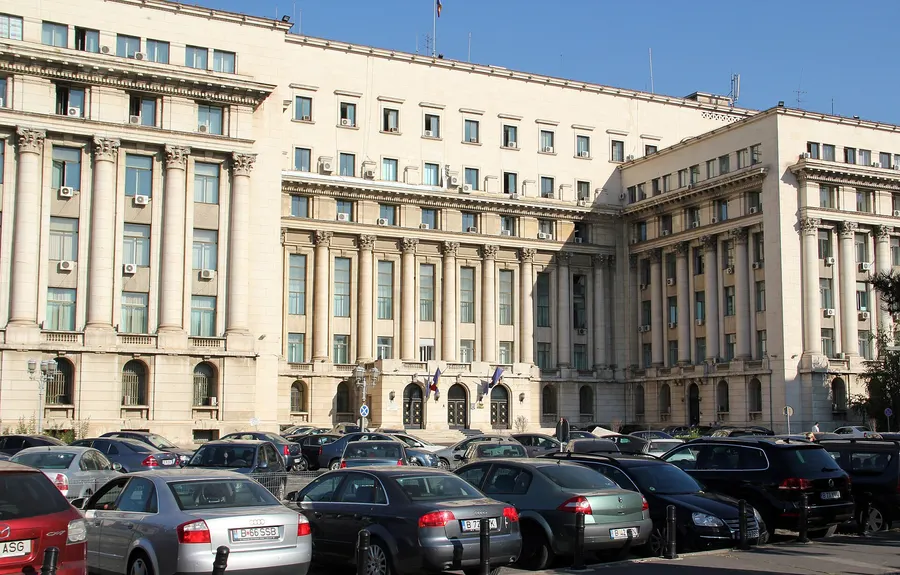
The former Central Committee building of the Romanian Communist Party in Bucharest, from whose balcony Ceaușescu spokeThe former Central Committee building of the Romanian Communist Party in Bucharest, from whose balcony Ceaușescu spokeImage: Antony Stanley from Gloucester, UK · CC BY-SA 2.0
politics · Europe

Ceaușescu condemns the invasion of Czechoslovakia from a Bucharest balcony

Romania was the only Warsaw Pact member that refused to join the invasion of Czechoslovakia. On 21 August 1968, hours after the tanks crossed the border, the Romanian leader Nicolae Ceaușescu spoke from the balcony of the Communist Party headquarters in Bucharest to a huge crowd, calling the invasion a grave danger to peace in Europe and announcing the creation of armed Patriotic Guards. The speech made him popular at home and admired in the West for a time, though his rule later became one of the harshest in Eastern Europe.

Source: Radio Free Europe/Radio Liberty: East European Perspectives ↗
1969
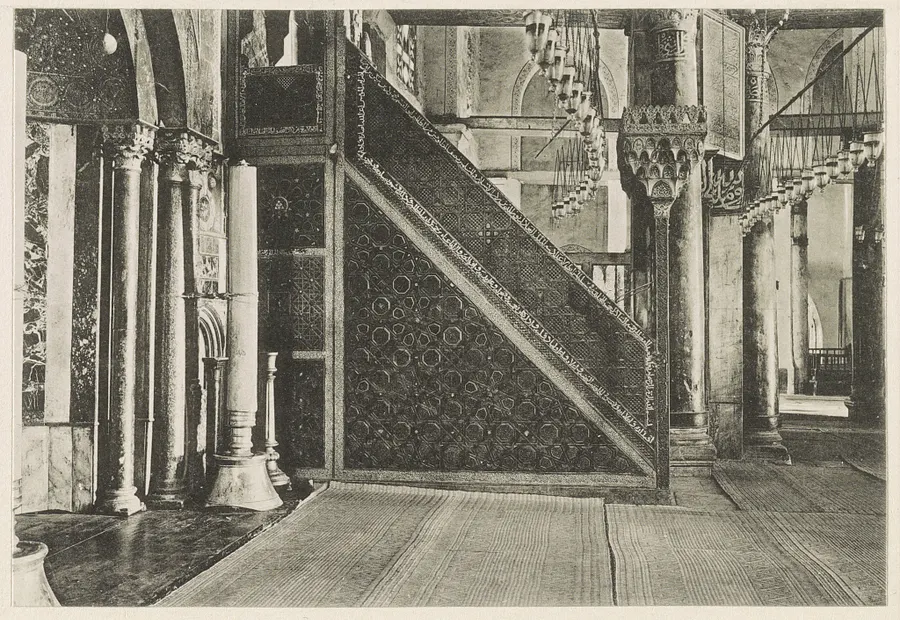
Saladin's carved pulpit in the al-Aqsa Mosque, made in Aleppo in 1168, photographed about 1916 before it was destroyed in the fireSaladin’s carved pulpit in the al-Aqsa Mosque, made in Aleppo in 1168, photographed about 1916 before it was destroyed in the fireImage: Bernhard Moritz · Public domain
world · Middle East

A fire set by an arsonist damages the al-Aqsa Mosque in Jerusalem

On the morning of 21 August 1969 Denis Michael Rohan, an Australian Christian visitor, started a fire inside the al-Aqsa Mosque in Jerusalem, one of the holiest sites in Islam. The fire burned for hours, damaged part of the roof and destroyed the carved wooden pulpit that Saladin had installed after taking Jerusalem in 1187. The attack caused outrage across the Muslim world, led to a UN Security Council resolution and prompted the summit in Rabat that founded what is now the Organisation of Islamic Cooperation.

Source: United Nations: Al-Aqsa Mosque damaged by arson, letter from Jordan ↗
1983
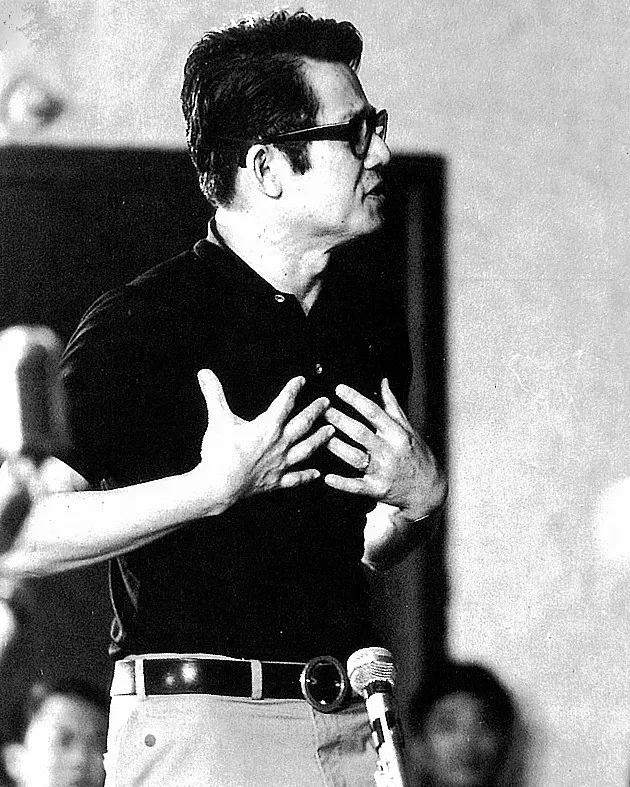
Benigno 'Ninoy' Aquino Jr. speaking at his trial before a military commission in 1973Benigno ‘Ninoy’ Aquino Jr. speaking at his trial before a military commission in 1973Image: Malacañang Palace · Public domain
politics · Asia

Ninoy Aquino is shot on his return to Manila

Benigno ‘Ninoy’ Aquino Jr. was a senator and the best-known opponent of President Ferdinand Marcos, who placed the Philippines under martial law in 1972. Aquino was arrested and held for more than seven years, and sentenced to death by a military court, before Marcos allowed him to leave for heart surgery in the United States in 1980. After three years in exile he decided to go home, despite warnings that his life was in danger. On 21 August 1983 he was shot dead moments after leaving his plane at Manila International Airport, while in the custody of soldiers. An independent board later concluded that the killing was a military conspiracy, though the accused were acquitted under Marcos. His death turned a divided opposition into a mass movement, brought his widow Corazon into politics and led to the People Power revolution of 1986. The airport now bears his name.

Source: National Historical Commission of the Philippines: death anniversary of Sen. Benigno ‘Ninoy’ Aquino Jr. ↗
1986
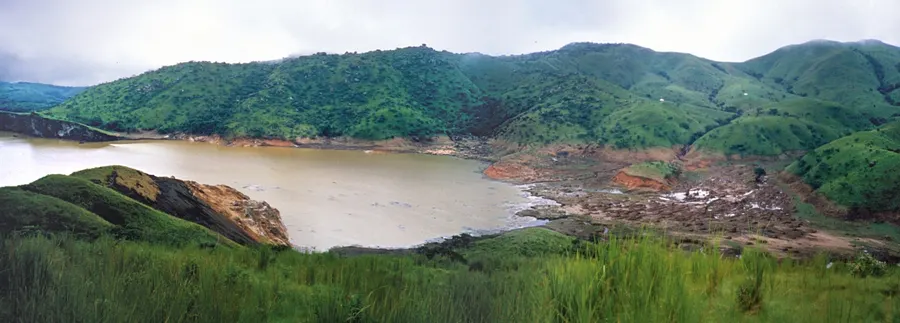
Lake Nyos in Cameroon on 29 August 1986, eight days after the gas release, in a view made from two photographsLake Nyos in Cameroon on 29 August 1986, eight days after the gas release, in a view made from two photographsImage: United States Geological Survey · Public domain
science · Africa

A cloud of carbon dioxide pours out of Lake Nyos in Cameroon

Lake Nyos lies in the crater of an old volcano in the highlands of north-western Cameroon. Carbon dioxide seeping up from magma deep below had been dissolving into its bottom waters for years, held down by the weight of the water above, much as gas is held in a sealed bottle of fizzy drink. Nobody living around the lake knew of the danger. On the evening of 21 August 1986 the deep water was suddenly disturbed, perhaps by a landslide, and a huge volume of gas burst out. The heavy, invisible cloud rolled down the valleys and suffocated about 1,700 people and thousands of cattle in nearby villages. Scientists recognised it as a rare ‘limnic eruption’, and since 2001 pipes have been installed to let the gas escape from the lake gradually.

Source: Britannica: Lake Nyos ↗
1991
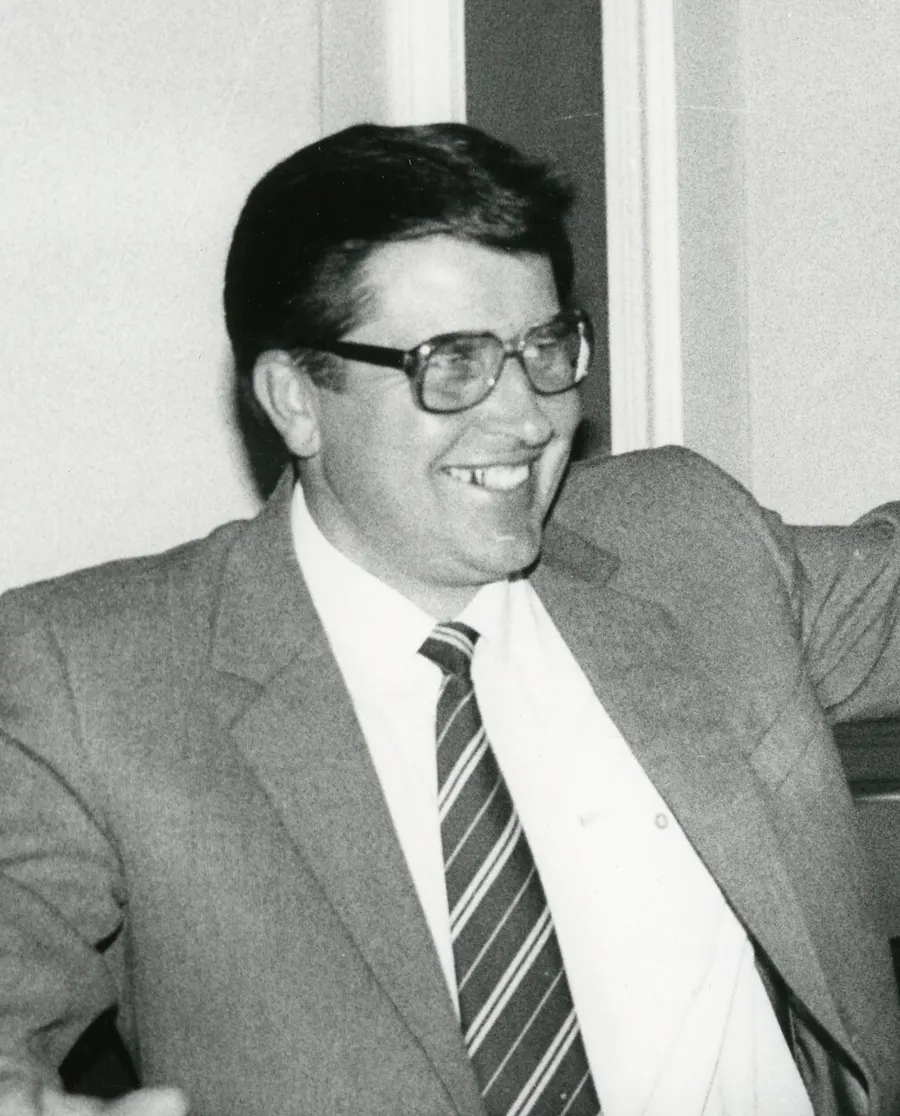
Anatolijs Gorbunovs, chairman of Latvia's Supreme Council, on 2 September 1991, the day the United States recognised Latvia's restored independence, from the Saeima photo archiveAnatolijs Gorbunovs, chairman of Latvia’s Supreme Council, on 2 September 1991, the day the United States recognised Latvia’s restored independence, from the Saeima photo archiveImage: Uldis Pāže, Saeima · CC BY-SA 2.0
politics · Europe

Latvia restores its independence as the Moscow coup collapses

Latvia had been an independent republic from 1918 until 1940, when the Soviet Union occupied and annexed it. As Mikhail Gorbachev’s reforms loosened the Soviet grip, Latvians organised mass protests and the Baltic Way human chain, and on 4 May 1990 the Supreme Council in Riga declared the restoration of independence, with a period of transition to follow. Moscow refused to accept it, and in January 1991 Rigans built barricades to defend their parliament against Soviet troops. On 19 August 1991 hardliners in Moscow tried to seize power from Gorbachev. Two days later, as the coup was failing, the Supreme Council adopted the Constitutional Law on the Statehood of the Republic of Latvia on 21 August 1991, ending the transition period and restoring the country’s full independence under its 1922 constitution. Soviet laws ceased to apply, foreign governments quickly recognised the restored state, and the Soviet Union itself did so in September.

Source: Saeima of the Republic of Latvia: 21 August, the de facto restoration of Latvia’s independence ↗
RESEARCH

Sources & Further Reading

Selected authoritative references supporting the events on this page.

WHY THESE MOMENTS?

Significance before volume

This page is not the longest possible list of events. It is a chronological journey through 21 August, where each entry is chosen for historical significance, human interest and reliability.

Facts are checked against authoritative museums, archives, universities and reference works. Where sources disagree, the page says so.

EXPLORED THE DEEPER STORY?

Return to the highlights of 21 August

Discover the lighter side of the date with famous birthdays, culture, firsts and lives remembered.

Explore This Day →
← PREVIOUS DAY20 August
HISTORY & TIMELINE21 August
NEXT DAY →22 August